Cynnor

2.3K posts

Cynnor

Cynnor

@Cynn0r

Canada Katılım Ekim 2015
81 Takip Edilen48 Takipçiler
Cynnor
Cynnor@Cynn0r·
@gator_gum But chickens. Let them roam free and there are. No more ticks. Kinda like watching liberals spreading misinformation
English
0
0
0
36
Gator⚡Gum
Gator⚡Gum@gator_gum·
Hey RW Twitter, here's a golden opportunity! Go out and ensure you get as many tick infections as you possibly can. Don't let the damn Libs tell you what to do. Let's call them "Freedom Fleas" and get infected to show our American friends how much we support them.
Melissa 🇨🇦@MelissaLMRogers

HOLY CRAP 😅 Canada’s state media, CBC, is really trying to get Canadians to fear & hate the United States even more by using the fear of a TICK 🤯 I want my tax dollars back, this is fraud

English
17
22
115
2.7K
Cynnor
Cynnor@Cynn0r·
Several federal Canadian policies and intergovernmental strategies significantly changed how wildfire management is handled in Canada. The biggest shift was from a model focused mostly on fire suppression toward one emphasizing risk reduction, community resilience, Indigenous knowledge, climate adaptation, and coordinated national response. Here are the key federal policies and frameworks that changed wildfire management: ⸻ 1. Canadian Interagency Forest Fire Centre (CIFFC) – National Mutual Aid System (1982) The creation of CIFFC in 1982 fundamentally changed wildfire response coordination across provinces and territories. Before this, provinces largely fought fires independently. Key changes: * National sharing of firefighters, aircraft, and equipment * Standardized interagency coordination * Centralized resource mobilization during extreme fire seasons * International resource-sharing agreements This became especially important as climate-driven megafires began overwhelming provincial capacity. ⸻ 2. Canadian Council of Forest Ministers – Canadian Wildland Fire Strategy (2005) The Canadian Wildland Fire Strategy (CWFS) is probably the most influential policy shift in modern Canadian wildfire management. It changed policy from: * “put out every fire” to * “manage wildfire risk strategically” Major policy shifts included: * Recognizing wildfire as a natural ecological process * Moving away from universal suppression * Prioritizing protection of communities and critical infrastructure * Encouraging prescribed burning and fuel management * Integrating prevention, preparedness, response, and recovery * Promoting FireSmart community design The strategy also emphasized: * federal-provincial-territorial coordination * Indigenous participation * long-term adaptation to climate change ⸻ 3. FireSmart Canada Programs (expanded nationally in the 2000s–2020s) The federal government supported the expansion of FireSmart Canada through CIFFC and federal-provincial funding partnerships. This changed wildfire management by shifting responsibility partly toward: * homeowners * municipalities * Indigenous communities * land-use planners Instead of relying only on firefighters, policy began emphasizing: * defensible space around homes * fuel reduction * fire-resistant building practices * community wildfire protection planning This represented a major shift toward prevention and resilience policy. ⸻ 4. Emergency Management Act (2007) The federal Emergency Management Act formally integrated wildfire into Canada’s broader national emergency management framework. Key impacts: * Required federal departments to prepare emergency management plans * Improved federal coordination during disasters * Expanded federal support to provinces during major wildfire emergencies * Increased focus on mitigation and preparedness, not just response This law helped institutionalize wildfire as a national public-safety issue rather than only a forestry issue. ⸻ 5. Indigenous Services Canada – Emergency Management Assistance Program (EMAP) Federal EMAP reforms and FireSmart funding streams changed wildfire management in many First Nations communities. Key policy changes: * Dedicated wildfire preparedness funding * Indigenous-led mitigation projects * Fuel management and vegetation clearing programs * Firefighter training in Indigenous communities * Recognition of Indigenous fire stewardship and traditional practices This marked a shift toward Indigenous partnership and resilience-building instead of emergency-only intervention. ⸻ 6. Canada’s National Adaptation Strategy & Adaptation Action Plan (2023 onward) Recent climate adaptation policies significantly changed wildfire governance by treating wildfire as a climate adaptation challenge rather than only a seasonal emergency. I can add more but pretty sure you stopped reading long ago as it does not fit your narrative.
English
1
0
0
13
DamBeaver
DamBeaver@Miffed_Beaver·
@Cynn0r @Deepak_gill29 "Allowed to manage" the forests? Which provinces took direction from the federal 'Liberals' on how to manage their forests? I remember only stuff like this:
DamBeaver tweet media
English
1
0
0
7
Scott Robertson
Scott Robertson@sarobertson_·
PM Carney: "Those whose politics is to destroy, to demolish, dismantle, they're not going to change their instincts. This is, in many respects, this is their moment. We can't match them by being timid imitations of them. We can't answer them by pining for an old order that's not going to return ... it can only be answered by positive action, by building that which comes next."
English
395
1.9K
7K
184.3K
Cynnor
Cynnor@Cynn0r·
@Miffed_Beaver @Deepak_gill29 Policies go into effect, not wildfires. Wildfires are the direct result of poor force management caused by liberal policies that changed how provinces were allowed to manage the forests. I would keep explaining it to you, but I ran out of crayons explaining economics to a banker
English
1
0
0
7
DamBeaver
DamBeaver@Miffed_Beaver·
@Cynn0r @Deepak_gill29 So.... there were no wildfires during Stephen Harper's terms in office? PS: Wildfires don't "go into effect"... they're caused by carbon emissions which in turn warm our atmosphere & climate. If you want to blame everything on 'liberals', you're going to have to be more creative.
English
1
0
0
8
Val
Val@LolaLives·
@JustinTrudeau It literally just asked me what language I spoke, what gender i was at birth and what gender i am now. That was absolutely all. Please tell me how this helps me as a senior in any way.
English
17
6
78
7.9K
Justin Trudeau
Justin Trudeau@JustinTrudeau·
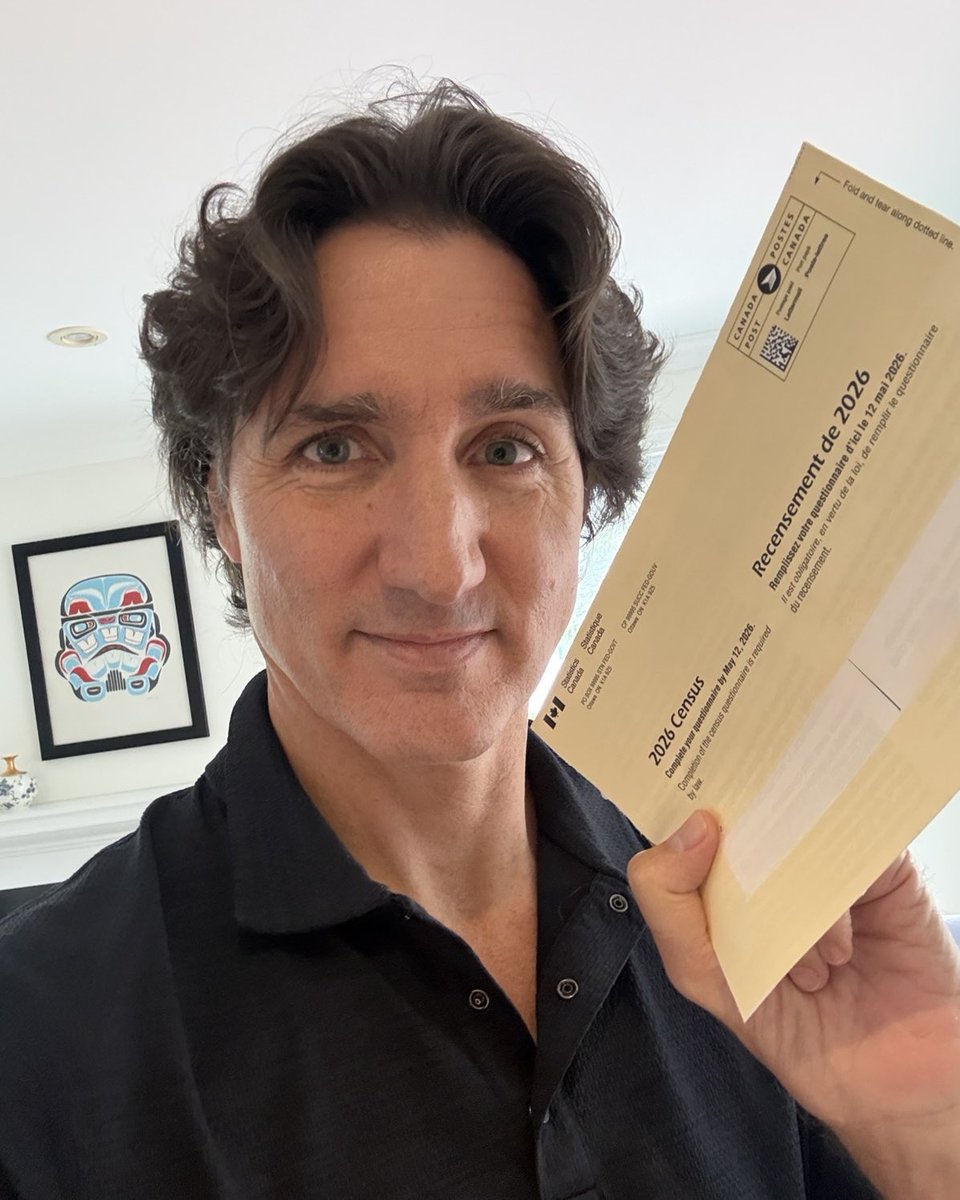
It’s Census season — make sure to complete yours by tomorrow’s deadline to support data-based decision making in Canada.
Justin Trudeau tweet media
English
5.9K
682
7.2K
2.7M
Cynnor
Cynnor@Cynn0r·
@GiantBlueRing @ABDanielleSmith It’s called a democratic process. You know where the majority of the people get to decide their own fate. Unlike Canada where the east rules the west.
English
0
0
3
25
Cynnor
Cynnor@Cynn0r·
Here’s a fun fact for you. Most natives are on board with separation because they see how this is going to play out for them with the federal government. If you really think the libs are in this for Canada you might be the dumbest person on the internet. Or I’m arguing with a Samsung phone in China.
English
0
0
1
25
Bev 🇨🇦
Bev 🇨🇦@Garnet_2203·
If you could read Eric and understood Canadian history and politics, Alberta is not becoming the “51st state.” This is political fantasy designed to farm outrage and division. You cannot simply separate a province because a loud group collected signatures. It would trigger constitutional chaos, federal negotiations, Indigenous treaty rights issues, economic uncertainty, debt division, currency questions, border issues, pensions, trade agreements, and years of court battles. And let’s be very clear: First Nations treaties were signed with the Crown and Canada not with a breakaway province trying to join another country. Indigenous rights and treaty obligations alone make this vastly more complicated than these separatists pretend. Most Albertans do not want to leave Canada. People are frustrated with affordability, politics, and Ottawa at times but frustration is not the same thing as wanting to destroy Confederation. Canada isn’t breaking apart because a few extremists on X say so.
Eric Daugherty@EricLDaugh

🚨 WOW! Alberta, Canada secessionists say they’ve SUBMITTED enough signatures to trigger a vote to leave Canada It must now be approved to come to a final vote THIS IS HUGE! These patriots deserve to be liberated from the leftists 🇺🇸🇨🇦 Alberta is the MOST conservative province. I wouldn’t mind them becoming the 51st or 52nd state after this 🔥

English
108
87
597
31.6K
Steve
Steve@Steve40167559·
@gator_gum You keep bringing this up, but I may be wrong, but no province has removed any taxes. Remember, the Liberals added a new tax of 7 cents at the beginning of April just to remove another one of 10 cents. So, really, they gave us 3 cents off gas
English
2
0
4
132
Cynnor
Cynnor@Cynn0r·
@gator_gum Yet another fake liberal poll. As Rosie said. It’s all made up anyway.
English
0
0
0
8
Cynnor
Cynnor@Cynn0r·
@guyfelicella Here’s how you fix the issue. It’s really quite simple. Death sentace for all drug dealers. They are all mass murders and deserve an over dose of their own product. No more supply no more drug addicts. Pretty simple really.
English
0
0
0
1
guyfelicella🇨🇦🍁
guyfelicella🇨🇦🍁@guyfelicella·
If you don't support supervised consumption sites then I guess you support open drug use in front of people .... including children 🤯
English
436
49
327
26.8K
Laura Babcock 🇨🇦
Laura Babcock 🇨🇦@LauraBabcock·
I don’t know if Danielle Smith is a bad person but as I said just said on radio and on OShow the separatist threat in Alberta is allegedly supported by Russia and USA MAGA forces who want to tear apart 🇨🇦. We must take it deadly seriously. youtu.be/e0m7WQjS1Gk?si… #Cndpoli #Ableg
YouTube video
YouTube
J.M. Hamilton@jmhamiltonblog

She's a very, very, very bad person. Greed and her career before everything else... she'd sellout Canada for a $1 and hang it on the wall.

English
286
139
290
14.3K
Ryan Gerritsen🇨🇦🇳🇱
The problems facing Canadians over the last 11 years has always been these two parties. They are the cause of every crisis.
Ryan Gerritsen🇨🇦🇳🇱 tweet media
English
190
822
3.9K
75K
Cynnor
Cynnor@Cynn0r·
The biggest federal policies most often cited by Alberta industry groups, investors, and provincial governments were: 1. Bill C-69 (Impact Assessment Act, 2019) Often called the “no more pipelines bill” by critics. It expanded federal environmental review requirements for major energy projects and added broader criteria like climate impacts and Indigenous consultation. Industry groups argued it increased approval timelines, legal uncertainty, and political risk for large projects. 2. Bill C-48 (Oil Tanker Moratorium Act, 2019) This banned large oil tankers along northern BC’s coast, which critics said effectively blocked a northern Pacific export route for Alberta crude. 3. Federal carbon pricing * The federal carbon tax and industrial carbon pricing systems increased operating costs for emitters. * Supporters argued it created long-term certainty and incentives for cleaner investment. * Critics argued it reduced competitiveness versus the U.S., especially after shale investment exploded south of the border. 4. Proposed oil & gas emissions cap The Trudeau government proposed sector-specific emissions limits. Alberta and industry groups argued this would function as a de facto production cap and discourage investment in long-life projects. 5. Pipeline approval and cancellation environment Several major projects failed or were cancelled during this era: * Northern Gateway pipeline cancellation * Energy East pipeline cancellation * Keystone XL cancellation (mostly U.S.-driven, but still hit Canadian investment sentiment) Investors increasingly viewed Canada as harder to build in compared with U.S. shale basins like Texas and North Dakota. Alberta investment is still well below the 2014 peak. ATB noted 2025 upstream investment intentions around C$33.9 billion versus C$58.1 billion in 2014 in Alberta extraction.
English
0
0
1
12
Mark Slapinski
Mark Slapinski@mark_slapinski·
The Alberta Separation movement does nothing but create political instability, which deters investment.
English
152
53
304
6.3K
Cynnor
Cynnor@Cynn0r·
@Miffed_Beaver @Deepak_gill29 Wildfires are due to liberal policies that prevented controlled burns and logging. These went into effect in the late 80’s. Floods happen due to liberal policies that prevent water way control which would prevent flooding.
English
1
0
0
7
DamBeaver
DamBeaver@Miffed_Beaver·
@Deepak_gill29 @sarobertsonca Well, if you haven't lost your home to a wildfire.... or had water restrictions on use for your household... or had floods destroy your neighbourhood.... you might not care about our climate. But if *money* is your only consideration. . . maybe you're not a very good Canadian.
English
1
0
0
13
truly
truly@2ateal·
@Martyupnorth He ran in a Muslim community and shockingly they voted for … a Muslim. Thats the think tank of our liberal government.
English
1
0
3
95
zoey
zoey@Zoey_B_·
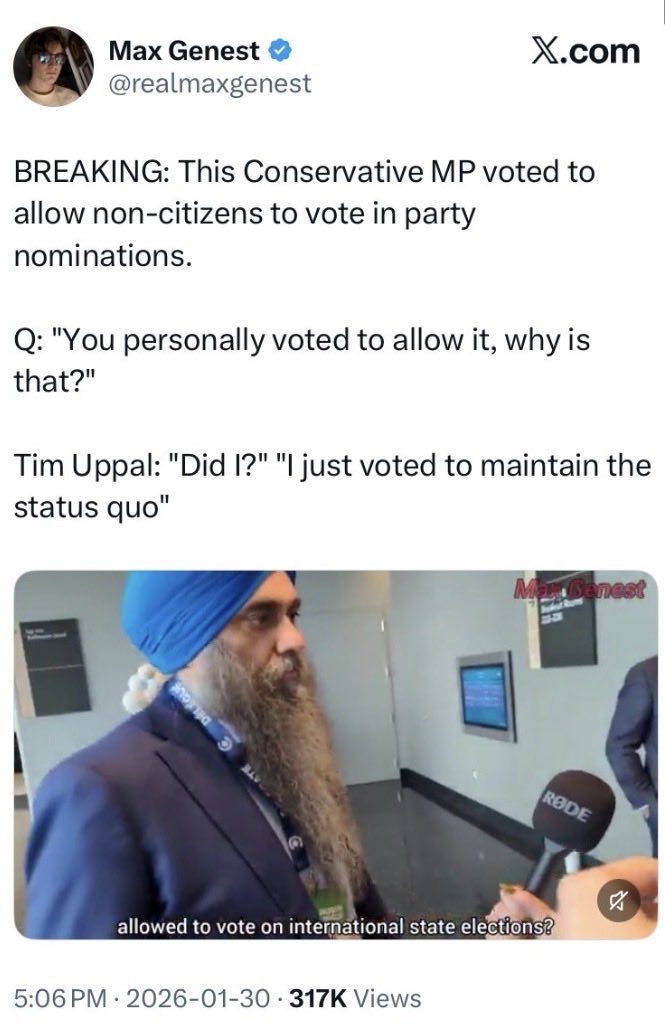
@Martyupnorth The libs wanted noncitizen to vote and it backfired!!! FOREIGNERS should NOT have voting rights in OUR country!!! Hopefully this will raise awareness and change. Conservative Party on federal level also allows noncitizens to vote in nominations of who the MPs will be. INSANITY
zoey tweet media
English
1
1
16
411
TW73
TW73@TaliaImaqt·
@Martyupnorth Good. Canadians should rise up And take back the businesses, houses and cars that the government have given these people on taxpayers dollars. Hello working Canadians over 60% of your hard earned money is supplying them with food, homes and cars so take back what’s yours!
English
2
0
7
236
Cynnor
Cynnor@Cynn0r·
@RabbitofHorror @alleria_eh You don’t even realize you’re wrong. I’d feel sad for you but then I’d have to pretend I care. You go she/her/it/they.
English
1
0
0
11
Laura Babcock 🇨🇦
Laura Babcock 🇨🇦@LauraBabcock·
Hey Ontario: would each of you like $31.25 million dollars? Or do you want Ford’s friend to get 500 million for fake air rights he never even bought?
English
26
34
149
2.2K