David Birchmier
189 posts
David Birchmier
@DavidBirchmier
Builder, matcha-obsessed, musician (sort-of)
Fairfield, IA Katılım Şubat 2013
195 Takip Edilen284 Takipçiler


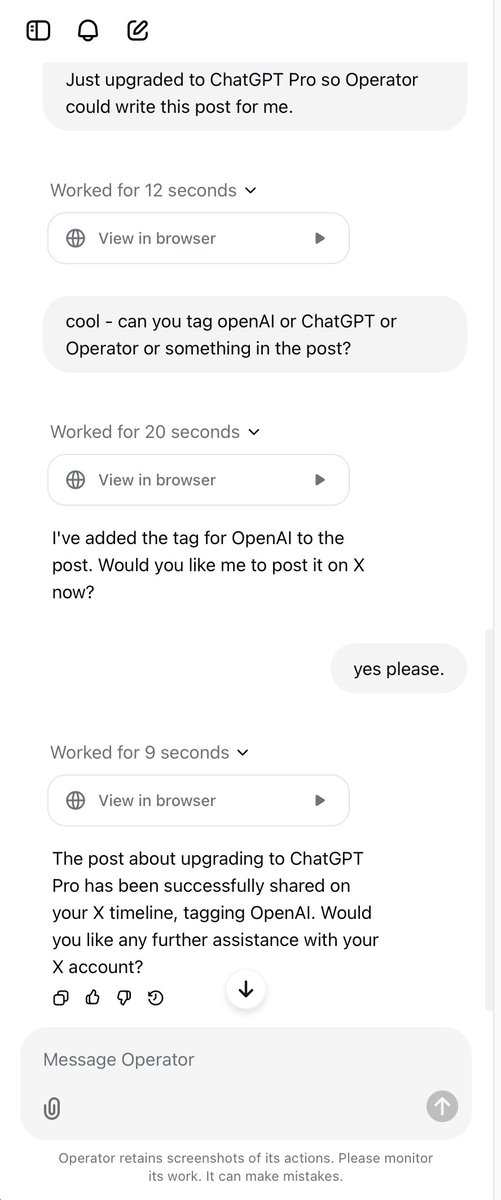
Just upgraded to ChatGPT Pro so Operator could write this post for me. @OpenAI
English
2 takeaways:
1: If reflection/introspection + a tight feedback loop are key to learning and growth of human consciousness (I believe they are) - this is going to massively accelerate it.Takeaway
2: The level of immersion is bananas. And this is only step 1. Imagine what step 2 will bring...
every.to/chain-of-thoug…
English
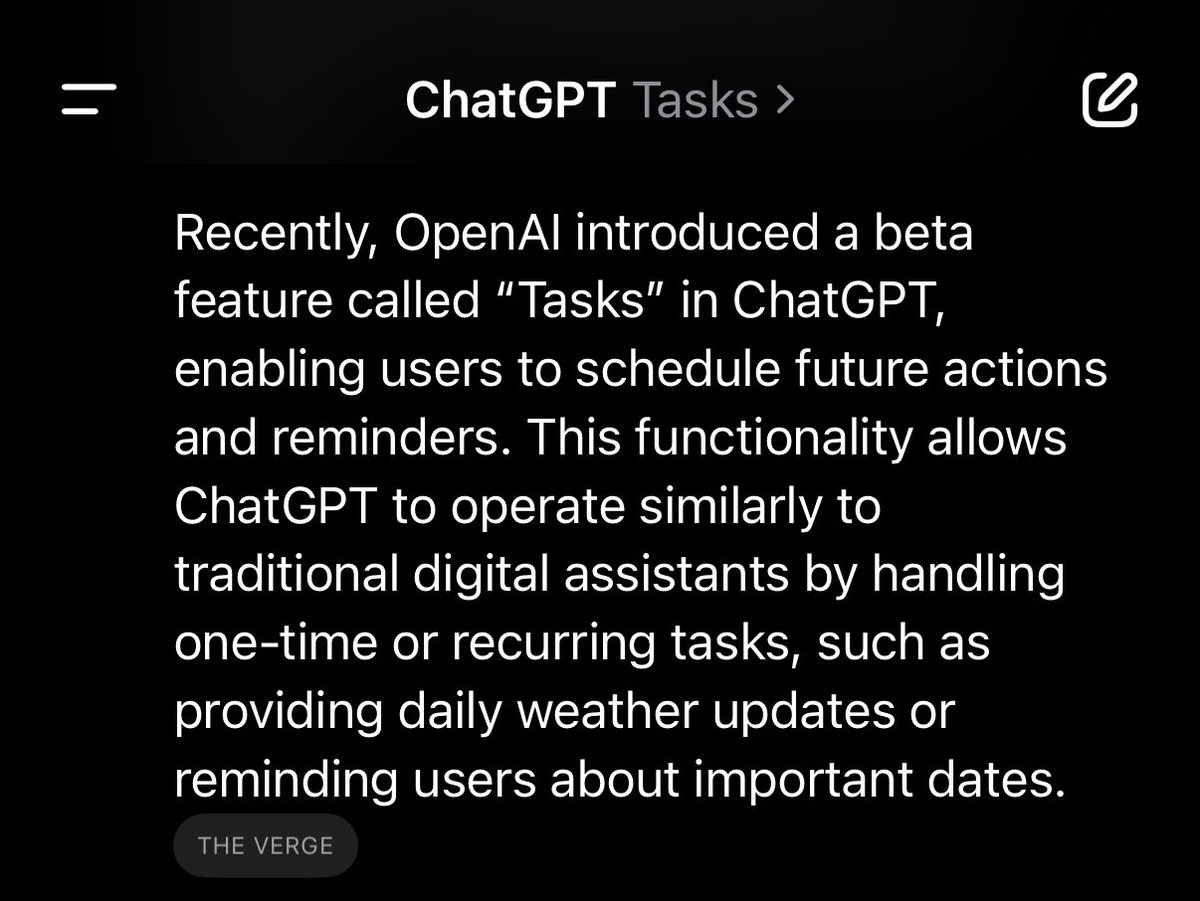
interesting to think about how @OpenAI sparks the imagination of millions with these “simple” functional improvements. Just imagine what people will build.
English

Coming off of meeting a couple dozen enterprises around the future of their AI strategies, here are a few notes on the state of AI in the enterprise right now.
1. The AI-first enterprise is emerging. Given AI increasingly is starting to be used across coding, customer support, marketing content creation, risk management, client onboarding, contract management, and more, it’s clear AI will touch almost every department in some way. Companies are starting to think through how entire functions get reimagined in a world of AI.
2. Enterprises want choice in their AI stack. The past couple of years have proven out that there are going to be models that perform different tasks in different ways, and enterprises increasingly want to flexibility in what they use. Further, the rate of innovation coming from the frontier model labs is so incredible that companies want to be in a position to leverage the latest breakthroughs from these players and not be stuck on a single architecture.
3. We will need more interoperability in AI. Especially as AI Agents emerge, and your software has to complete entire tasks for you just like a person would, increasingly there’s going to be a need for AI Agents from disparate systems to talk to each other. As an AI industry, we’re only in the earliest of stages of figuring out standards around this, but it’s going to have major implications on enterprise adoption.
4. Your AI stack will define who you can hire. Employees of the future are going to simply expect that the company they work for is going to enable them to be as productive as possible, and AI is going to be a core part of that. This is going to become more acute as the next generation enters the workforce. Having used AI in high school or college for years, the way they research, collaborate, and generate work product is going to be totally different. You won’t join a company that makes you work 40 hours to get 20 hours done when there’s another company that lets you get 80 hours worth of work done. This will define employee choices in the future.
5. The role of IT is continuing to change tremendously. Jensen called this out in his CES keynote, but we’re seeing a reshaping of what the IT organization will do in the future. In the past, IT has been responsible for deploying and maintaining software that enables the workforce; in a world of AI Agents, IT will increasingly be responsible for actually getting the work itself done. This has massive implications around how strategic IT becomes, and how this org more tightly coordinates with the company.
6. We’re still insanely early. What’s remarkable is that while we’ve seen a tremendous amount of growth in consumer AI, datacenter growth, GPU sales, and many initial breakthrough AI use-cases, we’re still very early. This feels eerily similar to the the first few years of cloud, where adoption is starting with the first movers inside an organization (IT teams, creative employees, etc.) and then expanding from there. Unlike the cloud, however, it’s perceived to be inevitable that every enterprise will be transformed by AI. The main hurdles to getting there are generally ones of AI quality, change management, privacy and compliance work — but not fundamental philosophy challenges, like we saw in cloud.
Overall, this is the most energized I’ve seen enterprises in nearly two decades of being in enterprise software. There’s a palpable sense that we’re on the cusp of major changes to how business and work happens in the future, and it’s unbelievably exciting.
English

After 1.5 years of using ChatGPT, I can say that it is the technology that has revolutionized my life the most, along with the Internet.
So here are 12 prompts that have transformed my day-to-day life and that could do the same for you.

English

i had an LLM experience that's making me really question some things
liz said that baseball players have big butts
this didn't make sense to me, i claimed they were no bigger than other pro athletes
so she pulled out her phone and asked an LLM that confirmed baseball players have big butts and gave a bunch of reasons
she asked if they were bigger than basketball players butts and it confirmed with an explanation
then i started a new chat and asked why basketball players had bigger butts than baseball players
it agreed with me and explained why - perfectly contradicting liz's results
i asked if it was a myth that baseball players had bigger butts and it said yes with a bunch of theories on why
i've been aware for a while LLMs seem tuned for agreeableness and they're unlikely to disagree with you except on certain topics
but it's kind of crazy to see how far it will go to do this. i also thought it was way more obvious when i was getting wrong information - was kind of subtle in this case
it's making me wonder how often i've been tricked into hearing what it thought i wanted to hear
English
@danshipper kudos on your continued thoughtful writing that resonates
English
@nicolasosharp @_heatherrowland What your building feels like the foundation of what @itsurboyevan calls ambient software once LLMs evolve sufficiently… every.to/napkin-math/a-…
English

It’s an amazing time to be building a CRM.
One of the hardest problems with CRM has always been needing a person to bridge the gap between humans and computers. LLMs have the potential to eliminate that dependency for the first time ever.
This means no manual work and much higher quality data, leading to better insights and a huge amount of automation.
I couldn’t be more excited about what we’re building at @attio.
Read about our vision for the future: attio.xyz/next-gen
English
Couple interesting trends:
1. Much of the tech stack is being rewritten by modern tooling like Plain, Linear, Attio, and Swell
2. Established tech companies are adding AI...everywhere.
A trend I don't yet see but expect is coming is truly useful products built from the ground-up w/ AI. I think that kicks off the final big tech stack rewrite. Let's see.
English
2/3 people at a coffee shop drinking matcha lattes. Coffee beans on the shelf. No matcha. Interesting.
English
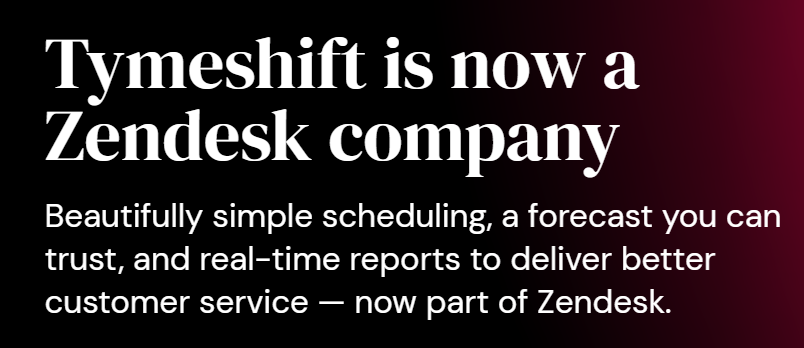
A big shoutout to our customers and the entire @tymeshift team. We wouldn't be here without you & we're thrilled to be taking the next step of our journey as part of the Zendesk family. And, we're even more excited for what's to come... Stay tuned!
Zendesk@Zendesk
We are happy to announce @Tymeshift is now a part of Zendesk, bringing AI-powered workforce management to all our customers. This acquisition furthers Zendesk's commitment to offer innovative omnichannel and AI capabilities powering exceptional CX: zdsk.co/3qZXf7W
English
@McGeeSmith @Zendesk @tymeshift @TomDaytonFlyers Thanks for sharing the news — we're thrilled to join the Zendesk family!
English

.@Zendesk acquires @Tymeshift, bringing AI-powered workforce management to customers < "Acquiring Tymeshift is a step in Zendesk’s journey to a new era of Intelligent CX." AKA the lines between #CCaaS and #CRM continue to blur. @TomDaytonFlyers buff.ly/3qV08am
English
David Birchmier retweetledi
English
This is beautiful! My takeaways:
👉 The interplay between the product & marketing
👉 Selling the Why (they use the term is “Result”)
👉 How Slack sold organizational transformation
👉 “It’s everyone’s job” mentality
bit.ly/3GCP3N8
English
My biggest takeaway? It was weirdly awesome seeing other human again…
English