Get Out the Vote

11.5K posts

Get Out the Vote banner
Get Out the Vote

Get Out the Vote

@DavidSEvans29

Pragmatic progressive. 90% politics, 10% movies.

Los Angeles, CA Katılım Mayıs 2019
540 Takip Edilen676 Takipçiler
Get Out the Vote retweetledi
Public Citizen
Public Citizen@Public_Citizen·
A GOP proposal would grant the fossil fuel industry immunity from laws or lawsuits. This would make it nearly impossible for Big Oil to be held accountable for the climate catastrophe they’re enabling. Once again, Republicans are trying to protect corporate polluters at Americans' expense.
English
0
15
23
2.1K
Get Out the Vote retweetledi
Bernie Sanders
Bernie Sanders@BernieSanders·
It's not just Gaza, Iran and Lebanon. In the West Bank since October 2023, Israeli soldiers and settlers have: Killed 1,071 Palestinians Demolished 6,000+ homes Built 200+ illegal outposts No more U.S. military aid to Israel.
English
1.4K
7.4K
34.2K
460.5K
Get Out the Vote
Get Out the Vote@DavidSEvans29·
@RpsAgainstTrump The first coup was in December 2000. It's been accelerating since. But the roots go deep. I blame Roy Cohn (advised Nixon, Reagan, Trump) and Justice Lewis Powell, for his Aug 1971 memo. Our fork in the road was the 1980 election.
English
0
0
0
11
Get Out the Vote
Get Out the Vote@DavidSEvans29·
@RBReich Love your posts, but we need to stop playing 2028 candidate parlor games and do two things. Get out the vote, and pressure/keep an eye on local elections officials to not buckle to pressure from election deniers and Trump officials/enablers. Worry about THIS election, people.
English
0
0
1
205
Scott MacFarlane
Scott MacFarlane@MacFarlaneNews·
Updated list of US House GOP bills that would honor Trump 1) Carve his face into Mt. Rushmore 2) Rename Palm Beach airport after Trump 2a) Rename Dulles airport after Trump 3) Require State Dept to award a "Trump Peace Prize" 4) Declare Trump's birthday a federal holiday 5) Award Trump a Congressional Gold Medal 6) Mint a $250 bill in US currency w/ Trump's image 7) Several resolutions urging Trump be given Nobel Prize 8) Directing N.I.H. to conduct research on "Trump Derangement Syndrome"
English
1.9K
3.2K
7K
1.4M
Get Out the Vote retweetledi
Knoxie
Knoxie@KnoxieLuv·
Your 4th Amendment is under attack and Congress has until April 30 to fix it. Two massive loopholes let the government spy on Americans without warrants: FISA Section 702 (expanded by 2024s RISAA) plus the data broker loophole. Your data. Your movements. Your communications. All warrantless. First: Section 702 plus RISAAs dangerous expansion. This lets the NSA collect foreigners comms abroad but it vacuums up millions of innocent Americans emails, texts, and calls as incidental collection. The FBI then runs warrantless backdoor searches on that database (3.4 million U.S. person queries in 2021 alone many on protesters, journalists, donors, even Congress members). Worse: RISAA expanded who can be forced to help collect your data. Now landlords, cable installers, data center staff anyone with physical or technical access to comms equipment can be compelled to assist. Turning everyday Americans into unwilling surveillance tools. Second: The Data Broker Loophole. FBI Director Kash Patel just confirmed: the FBI is buying your precise location history, app data, browsing records, and more from shady commercial brokers. No warrant. No court order. Just cash. They bypass the 4th Amendment (and Carpenter v. US) by purchasing what they'd otherwise need a subpoena or warrant to get. Together? A perfect storm of warrantless domestic surveillance. Section 702 gives them your private conversations. Data brokers give them everywhere you've been and everything you've done online. This isn't about foreign threats its mass, suspicionless spying on us. Congress just passed a 10 day clean extension with no reforms. Now they're negotiating the full reauth. Demand they pass real protections: Warrant requirement for searching Americans data in 702 Close the data broker loophole (bipartisan bills like the Government Surveillance Reform Act already exist) The Fourth Amendment is NOT for sale
English
27
273
597
8.9K
Get Out the Vote
Get Out the Vote@DavidSEvans29·
@mikemoviez A little of both, but worth watching. Potentially prescient, too. We'll find out soon enough, I suspect.
English
0
0
1
65
Mike David
Mike David@mikemoviez·
SOYLENT GREEN [1973] Directed by Richard Fleischer Trash or treasure? 🧐
Mike David tweet media
English
97
15
170
5.6K
Get Out the Vote retweetledi
Melanie D'Arrigo
Melanie D'Arrigo@DarrigoMelanie·
If you think these mass surveillance tools will only be used on immigrants, and not to collect data on every single American, then you haven’t been paying attention. Fascism doesn’t care about your immigration status or who you voted for.
Ken Klippenstein@kenklippenstein

🚨 ICE Glasses are coming - specialized smart glasses designed by and for the Department of Homeland Security, documents reveal: kenklippenstein.com/p/exclusive-ic…

English
8
405
886
10.6K
Get Out the Vote retweetledi
Bernie Sanders
Bernie Sanders@BernieSanders·
According to a recent poll, 77% of voters support raising taxes on billionaires. Maybe, just maybe, at a time of unprecedented income and wealth inequality, it’s time for Congress to listen to the American people and pass a wealth tax on billionaires.
English
6.7K
3.3K
17K
818.5K
Micah Erfan
Micah Erfan@micah_erfan·
Who do you prefer in the California Governor’s race?
English
17
7
25
4K
Mike David
Mike David@mikemoviez·
Which do you like most? 🤔
Mike David tweet media
English
87
7
79
4.4K
Get Out the Vote retweetledi
Brian Allen
Brian Allen@allenanalysis·
BREAKING: About 120 U.S. military veterans were arrested inside the Cannon House Office Building today protesting Trump's war on Iran. Some were on crutches. Some were in wheelchairs. Some carried the burial flags of fallen soldiers. They are members of About Face — veterans who know what war costs because they have already paid for one. Capitol Police handcuffed disabled veterans and dragged them out of the rotunda. 53% of American voters oppose the war. 74% oppose ground troops. 61% disapprove of Trump's handling of it. The people who fought America's last wars are now being arrested for trying to stop the next one. Never stop connecting the dots.
English
947
13.1K
33.2K
569.6K
Get Out the Vote retweetledi
MASTR
MASTR@MastrXYZ·
This gets even uglier when you look at what happens after Palantir gets inside a system. It is pure dependency engineering. In Britain, MPs are now openly warning that Palantir is becoming ubiquitous across government, while the same regulator that hired it had already warned that heavy reliance on a small number of big tech firms creates systemic risk. Read that again. Even while taking the deal, they are admitting the model itself is dangerous. And the NHS angle is worse than many people realize. In Parliament, MPs said that after more than £330m, the contract leaves the NHS with no software ownership, no IP, and no lasting know how. The supplier keeps the rights. So the public pays, the private contractor learns, and the state stays stuck renting the machinery. Now add the military side. Palantir’s Maven platform is moving deeper into permanent Pentagon status, with a previous contract ceiling already raised to $1.3b and a separate Army enterprise agreement worth up to $10b. During a recent Palantir event, a Pentagon official even demonstrated how Maven could be used for weapons targeting in the Middle East. People keep pretending this is just “data software” while it is literally being normalized closer and closer to the kill chain. And while all this is happening, Palantir’s CEO is out there defending the company’s surveillance tech as government sales surge. Palantir U.S. government revenue jumped 66% in Q4 2025 to $570m. So no, this is not some edgy startup fighting the machine. The machine is feeding it. Rapidly. This is the warning people need to get through their skulls: You are looking at an unelected operating layer for power. And once the state gets addicted to that layer, good luck removing it before it starts deciding what a society is allowed to see, sort, flag, punish, and optimize. And the Vance angle makes it even darker. J.D. Vance is not some neutral bystander who just happens to be standing next to this machine. He is a political product of Peter Thiel’s network. Thiel hired him into Mithril. Thiel backed his rise. Thiel then poured $15 million into the super PAC that helped shove Vance through the Ohio Senate primary. So when people act like Palantir and the current US power structure are separate worlds, they are lying to themselves. The vice president came out of the same patronage ecosystem that built Palantir. And this is no longer just about “defense tech.” The US government is wiring itself around Palantir as infrastructure. The Army collapsed about 75 separate contracts into 1 Palantir enterprise agreement for its future software and data needs. DHS then opened a $1 billion blanket purchase agreement so agencies like ICE, CBP, TSA, FEMA, and Secret Service can buy Palantir faster and with less friction. That is not ordinary procurement. That is institutional lock in. The military piece is worse still. The Pentagon’s own budget documents already placed Maven Smart System and Army Vantage inside the data and application layer used to support the Chairman of the Joint Chiefs in giving decision support to the President, the National Security Council, and the Secretary of Defense. Read that again. Palantir linked systems are not sitting on the edge. They are moving into the bloodstream of top level state decision making. Then add immigration. So the same company orbit is now sitting across war planning, federal data integration, and deportation machinery, while one of the most powerful men in Washington rose through the patronage network of its chairman. That should terrify people. Because this is how democratic states rot in the digital age. Not when 1 cartoon villain grabs a microphone. When private software, private patronage, and public force merge so completely that nobody can tell where government ends and the contractor begins.
MASTR tweet media
MASTR@MastrXYZ

Palantir is building a privately managed state! Let’s stop the bullshit. Palantir is not a normal tech company, and it never was. It is what happens when surveillance, militarism, elite ideology, and software get fused into one machine. Its own public messaging now reads less like product marketing and more like a doctrine for a colder political order, one where war, control, and obedience are treated as moral necessities rather than things that should terrify free people. This company is already fed by the state btw. In its 2025 annual report, Palantir said 54% of its revenue came from government customers. The Pentagon then moved Palantir’s Maven system into CORE military status, with long term institutional funding, and NATO acquired Palantir’s AI enabled warfighting system for Allied Command Operations. So when Palantir talks like a political actor, people should understand that it is not speaking from the sidelines. No, it is already wired into the bloodstream of Western power. And that is the part too many idiots still miss. Palantir is not “just” analytics. It is an instrument for making populations, borders, battlefields, bureaucracies, and institutions more legible to power. Palantir won a $30 million ICE contract in 2025 tied to identifying undocumented immigrants. In Britain (wtf are you doing brits?), Palantir is already deeply embedded in the NHS Federated Data Platform under a £330 million, 7 year contract, and many warned 2 days ago that the UK now has a weak hand in that test case because dependency is already setting in. . That is how this shit works. First it is a tool. Then it becomes infrastructure. Then it becomes impossible to remove without pain. This is why Palantir is so dangerous to any serious idea of democracy. Populists do not just want applause. They want machinery. They want systems that can classify faster, flag faster, correlate faster, and act faster. They want less friction, less oversight, less delay, less human hesitation. Palantir offers exactly that. Not persuasion, but sorting. Not public reason, but operational dominance. Not democratic patience, but decision compression at scale. The modern authoritarian does not arrive with a speech first. He arrives with software and money. The governance structure makes it even worse. Palantir’s filings show that the founders retain extraordinary voting power through special share structures and founder voting arrangements that can preserve up to 49.999999% of voting power in key circumstances. Peter Thiel remains chairman, and he is an early supporter of Trump. So what you have here is not just a contractor. You have a founder controlled company, tied to hard power, embedded in state systems, adjacent to reactionary political networks, and openly drifting from “we build tools” into “we will tell civilization what it needs.” That is rotten as fuck. And no, the problem is not that Palantir is “controversial.” The problem is that it is normalizing a model in which private firms become the operating layer beneath war, borders, health, and internal administration at the same time. Once that happens, elections still exist, parliaments still talk, judges still issue opinions, but real power starts drifting downward into systems most citizens will never see and cannot meaningfully challenge. That is how freedom dies in the digital age. Not with 1 giant dramatic moment. With procurement contracts, dependency, classified integrations, and executives telling you this is all necessary for security. Palantir is the kind of company that should make people deeply uncomfortable. Because it is effective. Because it is connected. Because it is ideological. Because it sits exactly where the worst instincts of the state meet the most powerful tools of modern computation. And because once a machine like that is fully normalized, good luck trying to claw the fucking power back.


English
56
1.1K
1.9K
67.5K
Get Out the Vote
Get Out the Vote@DavidSEvans29·
@Tzunotic @ElliscbIV Steyer is a billionaire cosplaying as a progressive. Porter has a few red flags for me, and Thurmond is going nowhere. That would be a wasted vote. I will have to vote strategically. We need RCV, stat.
English
0
0
0
8
Get Out the Vote
Get Out the Vote@DavidSEvans29·
@ElxMapping People, stop playing 2028 parlor games and get out the vote for *this* year. Way too much is at stake.
English
0
0
0
9
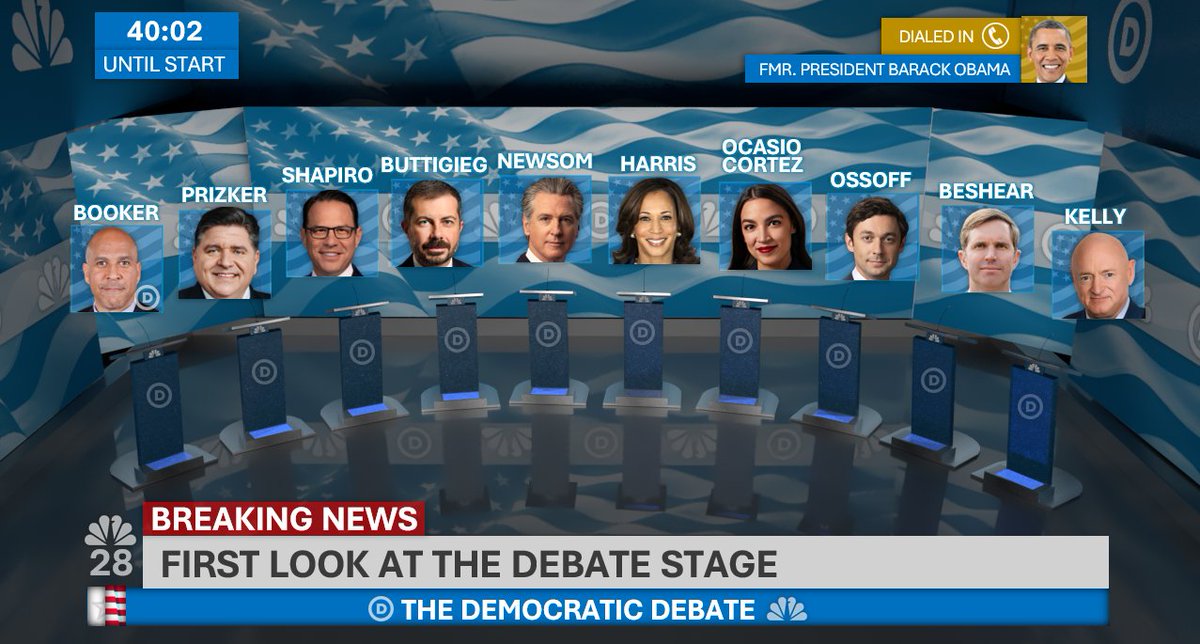
Election Enjoyer 🇺🇸
If these were the Democratic candidates for President in the 2028 primary, who would you support?
Election Enjoyer 🇺🇸 tweet media
English
1.8K
130
1.4K
383.8K
Get Out the Vote retweetledi
Proton
Proton@ProtonPrivacy·
"Why should I care about privacy? I have nothing to hide". We hear it every week. Today, the company that builds software for law enforcement by mining your medical records just published a 22-point manifesto about "freedom" and "democracy". This is why you should care.
Palantir@PalantirTech

Because we get asked a lot. The Technological Republic, in brief. 1. Silicon Valley owes a moral debt to the country that made its rise possible. The engineering elite of Silicon Valley has an affirmative obligation to participate in the defense of the nation. 2. We must rebel against the tyranny of the apps. Is the iPhone our greatest creative if not crowning achievement as a civilization? The object has changed our lives, but it may also now be limiting and constraining our sense of the possible. 3. Free email is not enough. The decadence of a culture or civilization, and indeed its ruling class, will be forgiven only if that culture is capable of delivering economic growth and security for the public. 4. The limits of soft power, of soaring rhetoric alone, have been exposed. The ability of free and democratic societies to prevail requires something more than moral appeal. It requires hard power, and hard power in this century will be built on software. 5. The question is not whether A.I. weapons will be built; it is who will build them and for what purpose. Our adversaries will not pause to indulge in theatrical debates about the merits of developing technologies with critical military and national security applications. They will proceed. 6. National service should be a universal duty. We should, as a society, seriously consider moving away from an all-volunteer force and only fight the next war if everyone shares in the risk and the cost. 7. If a U.S. Marine asks for a better rifle, we should build it; and the same goes for software. We should as a country be capable of continuing a debate about the appropriateness of military action abroad while remaining unflinching in our commitment to those we have asked to step into harm’s way. 8. Public servants need not be our priests. Any business that compensated its employees in the way that the federal government compensates public servants would struggle to survive. 9. We should show far more grace towards those who have subjected themselves to public life. The eradication of any space for forgiveness—a jettisoning of any tolerance for the complexities and contradictions of the human psyche—may leave us with a cast of characters at the helm we will grow to regret. 10. The psychologization of modern politics is leading us astray. Those who look to the political arena to nourish their soul and sense of self, who rely too heavily on their internal life finding expression in people they may never meet, will be left disappointed. 11. Our society has grown too eager to hasten, and is often gleeful at, the demise of its enemies. The vanquishing of an opponent is a moment to pause, not rejoice. 12. The atomic age is ending. One age of deterrence, the atomic age, is ending, and a new era of deterrence built on A.I. is set to begin. 13. No other country in the history of the world has advanced progressive values more than this one. The United States is far from perfect. But it is easy to forget how much more opportunity exists in this country for those who are not hereditary elites than in any other nation on the planet. 14. American power has made possible an extraordinarily long peace. Too many have forgotten or perhaps take for granted that nearly a century of some version of peace has prevailed in the world without a great power military conflict. At least three generations — billions of people and their children and now grandchildren — have never known a world war. 15. The postwar neutering of Germany and Japan must be undone. The defanging of Germany was an overcorrection for which Europe is now paying a heavy price. A similar and highly theatrical commitment to Japanese pacifism will, if maintained, also threaten to shift the balance of power in Asia. 16. We should applaud those who attempt to build where the market has failed to act. The culture almost snickers at Musk’s interest in grand narrative, as if billionaires ought to simply stay in their lane of enriching themselves . . . . Any curiosity or genuine interest in the value of what he has created is essentially dismissed, or perhaps lurks from beneath a thinly veiled scorn. 17. Silicon Valley must play a role in addressing violent crime. Many politicians across the United States have essentially shrugged when it comes to violent crime, abandoning any serious efforts to address the problem or take on any risk with their constituencies or donors in coming up with solutions and experiments in what should be a desperate bid to save lives. 18. The ruthless exposure of the private lives of public figures drives far too much talent away from government service. The public arena—and the shallow and petty assaults against those who dare to do something other than enrich themselves—has become so unforgiving that the republic is left with a significant roster of ineffectual, empty vessels whose ambition one would forgive if there were any genuine belief structure lurking within. 19. The caution in public life that we unwittingly encourage is corrosive. Those who say nothing wrong often say nothing much at all. 20. The pervasive intolerance of religious belief in certain circles must be resisted. The elite’s intolerance of religious belief is perhaps one of the most telling signs that its political project constitutes a less open intellectual movement than many within it would claim. 21. Some cultures have produced vital advances; others remain dysfunctional and regressive. All cultures are now equal. Criticism and value judgments are forbidden. Yet this new dogma glosses over the fact that certain cultures and indeed subcultures . . . have produced wonders. Others have proven middling, and worse, regressive and harmful. 22. We must resist the shallow temptation of a vacant and hollow pluralism. We, in America and more broadly the West, have for the past half century resisted defining national cultures in the name of inclusivity. But inclusion into what? Excerpts from the #1 New York Times Bestseller The Technological Republic: Hard Power, Soft Belief, and the Future of the West, by Alexander C. Karp & Nicholas W. Zamiska techrepublicbook.com

English
100
2.7K
15.7K
325.7K
Get Out the Vote retweetledi
Arnaud Bertrand
Arnaud Bertrand@RnaudBertrand·
If governments were actually doing their job, this Palantir document 👇 wouldn't be a manifesto they proudly boast about, but a clear sign of the urgent need to purge its software from the public institutions it has infiltrated. What are they saying, essentially? They basically promote a clash of civilization worldview in which there exists a "they" - the supposed enemies of Western civilization, whose cultures the document codes as inferior - and a "we" who must stop indulging in decadent restraint and invest massively in AI weapons and defense software (which conveniently makes Palantir's product catalog the civilizational cure). Look at point 4 for instance. They write that "the limits of soft power, of soaring rhetoric alone, have been exposed. The ability of free and democratic societies to prevail requires something more than moral appeal. It requires hard power, and hard power in this century will be built on software." It all rests on a pretty massive assumption: that coexistence is impossible. Why would "free and democratic societies" (by which they obviously mean Western-style liberal-democracies) need to "prevail"? Why can't they simply coexist with other civilizations or political systems out there? Nowhere in the document do they defend this assumption: it's simply asserted as the starting condition of the argument. But it's the entire ballgame: if civilizations and political systems can coexist - as they largely have, imperfectly but recognizably, throughout history - then the entire case they make in the document evaporates. In fact one can argue that, studying history, the big problem was not that civilizations couldn't coexist: it was that, from time to time, one of them decided that others were inferior, threatening, or standing in the way of its rightful expansion - and acted accordingly. So many catastrophes and so much human suffering in history trace back not to the fact of plural civilizations, but to one of them deciding it could no longer tolerate the others. The problem, in other words, has almost always been exactly the worldview Palantir is now selling. Their manifesto isn't warning against the cause of some of the worst periods in history: it's arguing for reviving them! Or take point 15: they explicitly call for the re-armament of Germany and Japan, and an end to "Japanese pacifism". Basically undoing one of the foundational settlements of the post-WW2 order. I mean, think about the insanity of this for a second: a private company - unelected, answerable only to its shareholders - is casually proposing to overturn the security architecture of two continents. A settlement that took a world war, and tens of millions of dead to establish. Why do they propose this? There is obviously a commercial motivation: a remilitarized Germany and Japan are massive new defense-software markets. But the more troubling answer is that point 15 fits into the ideological project the rest of the manifesto lays out - a civilizational contest requires a consolidated Western bloc, and pacifist members are a liability in such a contest. So taking a step back we now have what's the most influential defense-software company in the world, with its code deeply embedded in all the machinery of Western states - intelligence agencies, militaries, police forces, welfare systems, border controls - openly outing itself as an ideological project. They're effectively saying "our tools aren't meant to serve your foreign policy. They're meant to enforce ours." Because, worryingly, that's what they CAN do. Palantir software is all about basically telling states: "these are your threats, these are the people and groups to watch, these are the patterns that matter, these are the targets that warrant action." For instance the DGSI - the French intelligence services - use Palantir (see: x.com/RnaudBertrand/…): do you honestly think the software is warning them about, say, the NSA tapping the phones of French government officials? About the weaponization of US extraterritorial law against French companies? Did it warn them about the AUKUS ambush that cost France a sixty-billion-euro submarine contract? Obviously not. And that's exactly what the manifesto is saying. They've positioned themselves as advocates of Western civilizational unity, so their software can't undermine it. The ideological position and the product roadmap have to align, or the whole project falls apart. This makes their software not only deeply dangerous for the world as a whole but also, almost by definition, for any country using it. When it comes to your security as a state, it is primordial you base yourself on truth as opposed to ideology. The entire point of an intelligence agency is to tell its government what is true, not what your so-called "allies'" defense contractors would like you to see. A state that outsources its threat assessment to a company with an explicit ideological agenda is not gathering intelligence, it is essentially subscribing to propaganda. The conclusion couldn't be more obvious. Every government still running Palantir software in its intelligence, security, or public-service infrastructure needs to start ripping it out, now! Lest they want to be embarked on the delusional and deeply destructive clash-of-civilizations crusade Palantir has now openly committed itself to.
Palantir@PalantirTech

Because we get asked a lot. The Technological Republic, in brief. 1. Silicon Valley owes a moral debt to the country that made its rise possible. The engineering elite of Silicon Valley has an affirmative obligation to participate in the defense of the nation. 2. We must rebel against the tyranny of the apps. Is the iPhone our greatest creative if not crowning achievement as a civilization? The object has changed our lives, but it may also now be limiting and constraining our sense of the possible. 3. Free email is not enough. The decadence of a culture or civilization, and indeed its ruling class, will be forgiven only if that culture is capable of delivering economic growth and security for the public. 4. The limits of soft power, of soaring rhetoric alone, have been exposed. The ability of free and democratic societies to prevail requires something more than moral appeal. It requires hard power, and hard power in this century will be built on software. 5. The question is not whether A.I. weapons will be built; it is who will build them and for what purpose. Our adversaries will not pause to indulge in theatrical debates about the merits of developing technologies with critical military and national security applications. They will proceed. 6. National service should be a universal duty. We should, as a society, seriously consider moving away from an all-volunteer force and only fight the next war if everyone shares in the risk and the cost. 7. If a U.S. Marine asks for a better rifle, we should build it; and the same goes for software. We should as a country be capable of continuing a debate about the appropriateness of military action abroad while remaining unflinching in our commitment to those we have asked to step into harm’s way. 8. Public servants need not be our priests. Any business that compensated its employees in the way that the federal government compensates public servants would struggle to survive. 9. We should show far more grace towards those who have subjected themselves to public life. The eradication of any space for forgiveness—a jettisoning of any tolerance for the complexities and contradictions of the human psyche—may leave us with a cast of characters at the helm we will grow to regret. 10. The psychologization of modern politics is leading us astray. Those who look to the political arena to nourish their soul and sense of self, who rely too heavily on their internal life finding expression in people they may never meet, will be left disappointed. 11. Our society has grown too eager to hasten, and is often gleeful at, the demise of its enemies. The vanquishing of an opponent is a moment to pause, not rejoice. 12. The atomic age is ending. One age of deterrence, the atomic age, is ending, and a new era of deterrence built on A.I. is set to begin. 13. No other country in the history of the world has advanced progressive values more than this one. The United States is far from perfect. But it is easy to forget how much more opportunity exists in this country for those who are not hereditary elites than in any other nation on the planet. 14. American power has made possible an extraordinarily long peace. Too many have forgotten or perhaps take for granted that nearly a century of some version of peace has prevailed in the world without a great power military conflict. At least three generations — billions of people and their children and now grandchildren — have never known a world war. 15. The postwar neutering of Germany and Japan must be undone. The defanging of Germany was an overcorrection for which Europe is now paying a heavy price. A similar and highly theatrical commitment to Japanese pacifism will, if maintained, also threaten to shift the balance of power in Asia. 16. We should applaud those who attempt to build where the market has failed to act. The culture almost snickers at Musk’s interest in grand narrative, as if billionaires ought to simply stay in their lane of enriching themselves . . . . Any curiosity or genuine interest in the value of what he has created is essentially dismissed, or perhaps lurks from beneath a thinly veiled scorn. 17. Silicon Valley must play a role in addressing violent crime. Many politicians across the United States have essentially shrugged when it comes to violent crime, abandoning any serious efforts to address the problem or take on any risk with their constituencies or donors in coming up with solutions and experiments in what should be a desperate bid to save lives. 18. The ruthless exposure of the private lives of public figures drives far too much talent away from government service. The public arena—and the shallow and petty assaults against those who dare to do something other than enrich themselves—has become so unforgiving that the republic is left with a significant roster of ineffectual, empty vessels whose ambition one would forgive if there were any genuine belief structure lurking within. 19. The caution in public life that we unwittingly encourage is corrosive. Those who say nothing wrong often say nothing much at all. 20. The pervasive intolerance of religious belief in certain circles must be resisted. The elite’s intolerance of religious belief is perhaps one of the most telling signs that its political project constitutes a less open intellectual movement than many within it would claim. 21. Some cultures have produced vital advances; others remain dysfunctional and regressive. All cultures are now equal. Criticism and value judgments are forbidden. Yet this new dogma glosses over the fact that certain cultures and indeed subcultures . . . have produced wonders. Others have proven middling, and worse, regressive and harmful. 22. We must resist the shallow temptation of a vacant and hollow pluralism. We, in America and more broadly the West, have for the past half century resisted defining national cultures in the name of inclusivity. But inclusion into what? Excerpts from the #1 New York Times Bestseller The Technological Republic: Hard Power, Soft Belief, and the Future of the West, by Alexander C. Karp & Nicholas W. Zamiska techrepublicbook.com

English
337
5.3K
13.6K
911.5K