Dr. J

494 posts

Dr. J banner
Dr. J

Dr. J

@DrJOnCall

I'm a physician, entrepreneur, all-around enthusiast. Founder/Chief MD @Bluechew & @Meds.com
Miami Beach, FL Katılım Temmuz 2010
1.1K Takip Edilen342 Takipçiler
Dr. J
Dr. J@DrJOnCall·
@signulll Put bacon in it. You’re welcome.
English
0
0
0
156
signüll
signüll@signulll·
my idea for a new cpg product is high protein salad dressing. why? well cuz most salad dressings are basically liquid calories laced with cheap oils, no real nutrition, & zero protein. most ppl either don’t have time to prep it or just skip it entirely. a genuinely delicious, low calorie, high protein dressing that turns a bowl of greens into a complete meal in seconds would be a game changer. it's greens + protein, solved at the only layer everyone already uses.
English
60
2
417
156.1K
Dr. J retweetledi
Robert Lufkin MD
Robert Lufkin MD@robertlufkinmd·
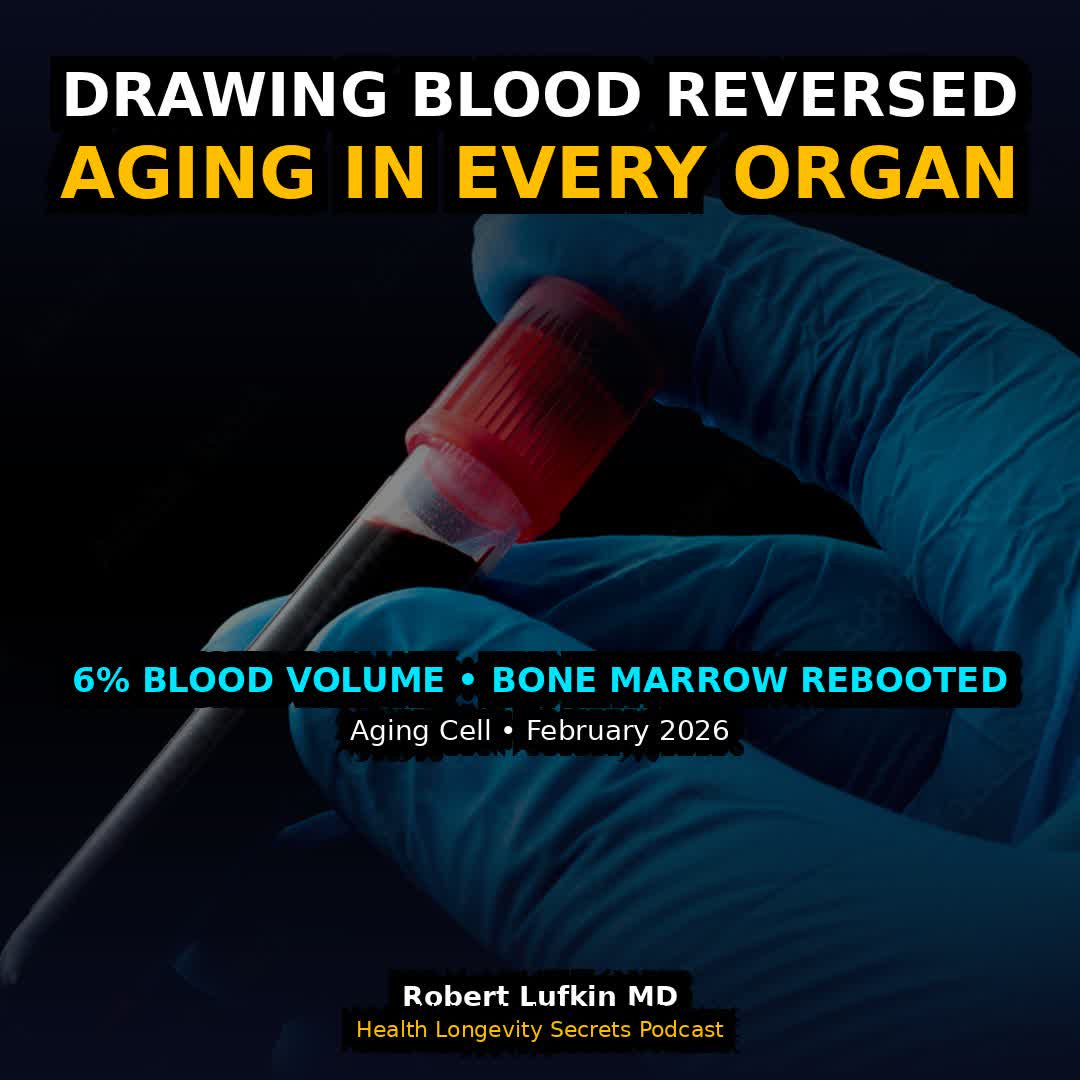
As a medical school professor, I've taught about blood transfusions for decades. But this study from Aging Cell just showed that removing blood may be even more powerful. Researchers performed periodic phlebotomy -- drawing just 6% of blood volume every two weeks -- on aging models. The results were staggering: -> Memory and cognition restored to youthful levels -> New neurons grew in the hippocampus -> Liver, kidney, heart, skin, and bone all rejuvenated -> Inflammatory senescence proteins (SASP) dropped dramatically -> Klotho (the longevity protein) levels restored The mechanism? Phlebotomy rebooted bone marrow stem cells, shifting blood production back from the inflammatory myeloid bias of aging to a youthful pattern. This is metabolic dysfunction in reverse. Aging bone marrow floods your blood with pro-inflammatory signals. Remove some blood, and the marrow resets. A technically simple procedure with profound anti-aging potential. Full breakdown coming on the Health Longevity Secrets podcast. Source: onlinelibrary.wiley.com/doi/full/10.11… #AntiAging #MetabolicHealth #Longevity #StemCells #HealthLongevitySecrets
Robert Lufkin MD tweet media
English
229
497
2K
161K
Dr. J retweetledi
Sovey
Sovey@SoveyX·
I never thought I’d pay for digital art, but I would absolutely spend irresponsible money on this. You could lose an entire weekend in it and come back with a different blood type.
English
131
185
1.3K
100.4K
Dr. J
Dr. J@DrJOnCall·
Efficient operators with hyper-focus
Aakash Gupta@aakashgupta

The data on neurodivergent workers is so lopsided it looks like a typo. JPMorgan Chase ran an Autism at Work program and found participants were 90% to 140% more productive than neurotypical employees. With fewer errors. UiPath partnered with AutonomyWorks on AI data labeling and reported neurodivergent associates were 150% more productive than non-neurodiverse talent. Hewlett-Packard integrated neurodivergent professionals into software testing teams and measured a 30% productivity gain. EY reported neurodiverse teams were 1.2 to 1.4x more productive and more accurate than comparable groups. At SAP, a single neurodivergent employee’s solution saved the company $40 million. Now zoom out. 15 to 20% of the global population is neurodivergent. One in five adults. Yet only 22% of autistic adults in the UK are employed. And 73% of neurodivergent people don’t disclose during hiring because they’re afraid of being discriminated against. That means the most productive talent pool in the workforce is also the most underemployed and the most hidden. Karp sees this and is building a pipeline to capture it. Palantir’s Neurodivergent Fellowship pays $110,000 to $200,000 a year. The job posting says outright that neurodivergent individuals will “disproportionately shape the future of America and the West.” A Gartner study projects that one in five Fortune 500 sales organizations will actively recruit neurodivergent talent by 2027. Palantir is two years ahead of that curve. The roster of neurodivergent founders reads like a hall of fame. Branson built Virgin with ADHD and dyslexia. Kamprad founded IKEA and invented the naming system because he couldn’t remember product codes. Musk disclosed Asperger’s on live television. Steve Jobs was dyslexic and dropped out. 40% of self-made millionaires in the UK are dyslexic. People with ADHD are estimated to be up to 500% more likely to become entrepreneurs. Karp himself is dyslexic. He built a $370 billion company. And he’s saying the system that filtered him out, the standardized tests, the credential pipelines, the interview formats designed for neurotypical candidates, is about to become even more obsolete as AI eats every routine cognitive task those systems were built to evaluate. The bet is simple: AI commoditizes average. The people who see patterns no one else sees, who obsess for 14 hours on a problem everyone else quit after 2, who build IKEA’s naming system because the “normal” approach didn’t work for their brain, those are the ones who can’t be replaced by a model. Karp is recruiting them while everyone else is still writing job descriptions that screen them out.

English
0
0
0
13
Aakash Gupta
Aakash Gupta@aakashgupta·
In 1996, a guy in Portland who’d already had one novel rejected figured he was never getting published. So he stopped trying to impress anyone and wrote the angriest thing he could. He sold it to a publisher for $6,000. Fewer than 5,000 people bought it. Fox picked up the film rights for $10,000. They gave it to David Fincher. Gave him $63 million, Brad Pitt at $17.5 million, Edward Norton on a redirected pay-or-play deal from a completely different movie. The studio was buzzing internally. Executives loved it. Then they actually watched the finished film. The marketing budget quietly got slashed. The world premiere was at the Venice Film Festival, September 1999. Giorgio Armani was in the audience. The head of the festival was in his seat. Pitt and Norton had smoked a joint and were sitting up in the balcony together. Helena Bonham Carter delivered the line. The festival director stood up and left. The audience booed. Loudly. People walked out. Norton remembered the boos drowning out the film. Two people in the entire building were laughing. You could hear them cackling from the balcony. It was Pitt and Norton. As the credits rolled, Pitt turned to Norton in the dark and said: “That’s the best movie I’m ever going to be in.” Norton said, “I think so too.” They hugged each other. Norton says they were both almost crying. Not from embarrassment. From joy. The film opened to $11 million. The producer got the weekend projection fax and called it “a stab in your heart.” Within a month, Fight Club was out of the top ten. $37 million domestic on a $63 million budget. The Wall Street Journal, Entertainment Weekly, the LA Times all destroyed it. One British critic called it “an inadmissible assault on personal decency.” Fincher printed that review on the DVD case. That DVD sold 13 million copies. Fox had to reissue the special edition after fans bought out the original run. $55 million in rentals on top of that. Entertainment Weekly ranked it the #1 Essential DVD ever made. The novel that sold 5,000 copies became the film rated 8.8 on IMDb with a 96% audience score. The New York Times later called it “the defining cult movie of our time.” The people who booed were sure they were right. The two guys cackling in the balcony knew something the room didn’t. Every generation’s most important work gets rejected by the audience that sees it first. The audience that makes it immortal always comes later.
cinesthetic.@TheCinesthetic

Fight Club was booed when it premiered at the Venice Film Festival (1999) Edward Norton remembers it “got booed hard.” and organizers walked out. During the backlash, Brad Pitt turned to Norton and said: “That’s the best movie I’m ever going to be in.”
English
48
276
2.4K
379K
Dr. J retweetledi
Tracy Kim Townsend, MD
Tracy Kim Townsend, MD@tracyktownsend·
People have no idea how much psychedelics have influenced modern scientific and technological breakthroughs. Francis Crick: Visualized the DNA double helix structure while tripping on acid. Kary Mullis: Credits LSD for his invention of PCR (DNA amplification). Ralph Abraham: Pioneered chaos theory and dynamical systems, and was deeply influenced by LSD, DMT, and other psychedelics. Douglas Engelbart: Participated in LSD sessions at the International Foundation for Advanced Study, and invented the computer mouse and graphical user interface. Bill Atkinson: Created HyperCard, the precursor to modern web/hypermedia software right after an LSD trip. Richard Feynman: Legendary physicist and well known fan of LSD. Steve Jobs: Regularly dropped acid in his bedroom and credits those trips for inspiring him to create Apple. Psychedelics demonstrably increase trait openness, a core dimension of creativity, and are used to unlock the full potential of the human mind.
David Sun@arcticinstincts

Has anyone ever come out of these “profound” psychedelic trips with a verifiable scientific insight or breakthrough in physics or psychology or something? Can you fix Africa now? Why do these trip reports just read like Eckhart Tolle Burning man Deepak Chopramaxxed guruslop

English
44
158
1K
58.3K
Dr. J retweetledi
Robert Lufkin MD
Robert Lufkin MD@robertlufkinmd·
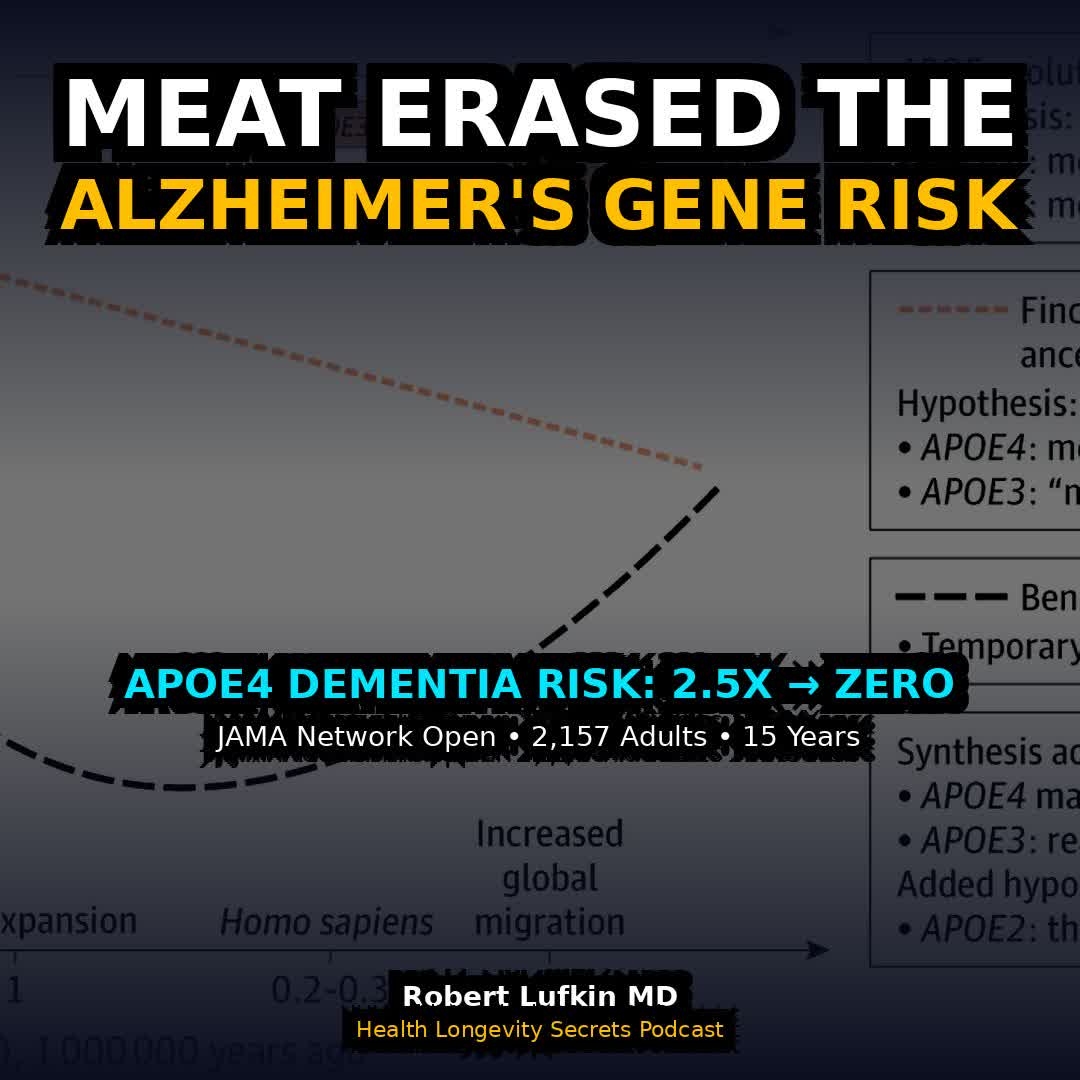
As a medical school professor, I teach about APOE4 -- the gene that makes you 2.5x more likely to develop Alzheimer's. We've told patients there's nothing they can do about it. A new JAMA Network Open study of 2,157 adults just proved us wrong. Higher meat consumption completely abolished the APOE4 dementia risk. The data: -> APOE4 carriers with highest meat intake: 55% lower dementia risk -> Their typical 2.5x excess Alzheimer's risk? Gone entirely -> Cognitive decline reversed: +0.32 standard deviations over 10 years -> Unprocessed meat was protective; processed meat was harmful regardless of genotype Researchers propose APOE4 is an evolutionary adaptation to meat-rich diets. The gene isn't a defect -- we just stopped feeding it correctly. This is personalized metabolic medicine. Your genes load the gun, but your diet pulls the trigger -- or puts the safety back on. Full breakdown coming on the Health Longevity Secrets podcast. Source: jamanetwork.com/journals/jaman… #APOE4 #Alzheimers #MetabolicHealth #Nutrition #HealthLongevity
Robert Lufkin MD tweet media
English
188
1.7K
4.5K
253.6K
Dr. J retweetledi
Physics In History
Physics In History@PhysInHistory·
When you change the way you look at things, the things you look at change. - Max Planck (1858 - 1947)
English
76
1.2K
6.2K
499.4K
Dr. J
Dr. J@DrJOnCall·
So that’s why I stayed up until 2am playing my guitar 7 days a week in high school!
Aakash Gupta@aakashgupta

Your brain peaked musically somewhere around age 16. Everything since then has been a dopamine echo. Between the ages of 12 and 22, the mesolimbic dopamine pathway, the same circuit that processes cocaine and sex, fires at levels in response to sound that it will never reach again for the rest of your life. A 2011 McGill study used PET scans and fMRI simultaneously and found that music triggers dopamine release in the striatum at peak emotional arousal. The caudate nucleus lights up during anticipation of the good part. The nucleus accumbens lights up when it hits. Your brain is treating a guitar riff with the same reward architecture it uses for food-seeking and pair bonding. During adolescence, that response is dramatically amplified. Pubertal hormones are flooding the system. The prefrontal cortex is still wiring itself. Memories formed during this window get encoded with a density of emotional tagging that nothing in your 30s or 40s can replicate. Researchers at the University of Leeds identified this as the “reminiscence bump”: the period when your sense of self is forming, and the music playing during that formation becomes structurally integrated into your identity. A 2025 longitudinal study from the University of Gothenburg analyzed 40,000 users’ streaming data across 15 years. Younger listeners explored broadly across genres. Older listeners collapsed into increasingly narrow loops, almost entirely anchored to music from their teens and early twenties. Your brain stopped losing interest in new music years ago. It’s running a cost-benefit analysis. Familiar songs deliver guaranteed dopamine with zero processing cost. New songs require pattern recognition, expectation-building, and repeated exposure before the reward circuit kicks in. Past 25, most people stop paying that tax. The one variable that predicts whether someone keeps exploring: the personality trait “openness to experience.” Score high, you keep seeking. Score average, you default to the familiar forever. The fix, if you want one: deliberate exposure. Three listens minimum before your auditory cortex builds enough predictive models to generate a reward response. One passive listen on a playlist will never get there. Your brain needs repetition to find the pattern, and it needs the pattern to release dopamine.

English
0
0
0
3
Doni 🏴
Doni 🏴@DoniTheMisfit·
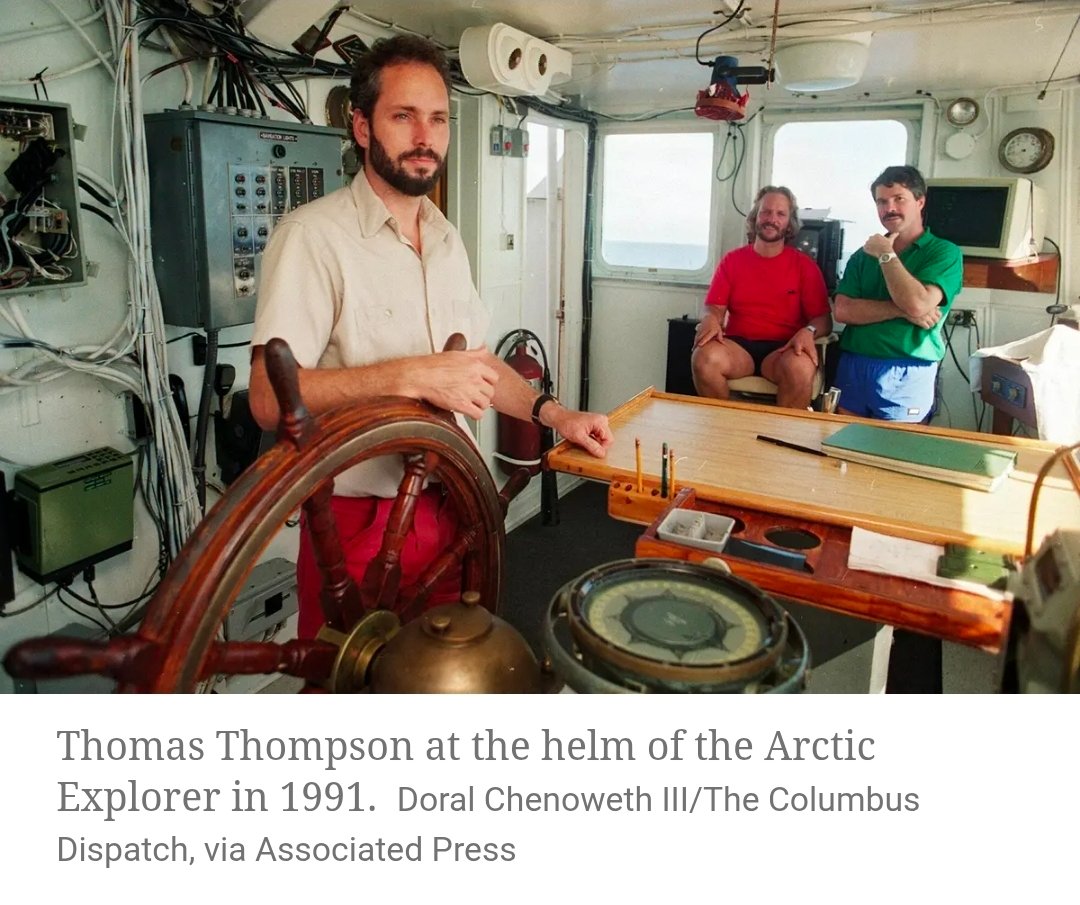
A Ohio treasure hunter who was sent to prison for refusing to tell authorities and investors where he stashed $50 million worth of gold discovered in an 1857 shipwreck has been released from jail. Thomas Thompson, now 73, was sent to prison in 2015 after he refused to tell a federal judge, his own lawyers, and his investors where he hid a collection of gold coins and bars he discovered on the shipwreck of the S.S. Central America.
Doni 🏴 tweet media
English
136
229
4.8K
578.3K
Massimo
Massimo@Rainmaker1973·
Riding a bike along an extremely narrow cliffside path. What could go wrong?
English
118
77
1.1K
398.9K
Dr. J
Dr. J@DrJOnCall·
@RobertKennedyJr the faster we can move this to Cat 1 compounding list the faster we can save lives
Paul F. Austin@PaulAustin3w

My personal prescription for depression: Take 20 micrograms of LSD and go for a hike. 1-2x per week, ideally when it's sunny outside. I posted this on X a few days ago, and it struck a nerve. Some people loved it, some thought I was reckless, & many were simply curious. So let me explain the science. A new paper just dropped in Discover Mental Health from Nicholas Fabiano, Robin Carhart-Harris, and colleagues. It's the first formal commentary arguing that exercise and psychedelics should be studied together for major depression. Up to 50% of people don't respond to antidepressants or therapy. Exercise works for roughly 1 in every 2 people with depression, a stronger hit rate than most antidepressants. Psychedelics show effects comparable to antidepressants that persist after the drug leaves your system. Both are powerful alone. But the real story is what happens when you layer them. The paper (linked below) maps out complementary mechanisms. Psychedelics spike cortical neuroplasticity through direct TrkB receptor binding, producing rapid spinogenesis within hours. Exercise drives hippocampal neurogenesis and sustained elevation of BDNF over time. Psychedelics temporarily disrupt default mode network connectivity, breaking rigid thought patterns. Exercise normalizes that connectivity, locking in the gains. They also converge on shared pathways: serotonin, glutamate/LTP, and dopamine signaling. Different entry points, but basically the same downstream effect: a more plastic, resilient brain. The behavioral data is just as compelling. In psilocybin therapy trials, up to half of the participants spontaneously reported improvements in diet and exercise. Ayahuasca users are consistently more physically active. People with lifetime psychedelic use show lower rates of heart disease, obesity, and diabetes. Psychedelics don't just change your brain chemistry. They actually change what you do with your body. This is why I coined the term "hikrodosing." It's not just a cute portmanteau. It's a protocol built on the convergence of these mechanisms. A sub-intoxicating dose of LSD paired with aerobic exercise in nature combines psychedelic neuroplasticity with exercise-driven BDNF, serotonin release, and hippocampal stimulation. Sunlight adds vitamin D and circadian regulation. The hike provides cardiovascular load. The microdose opens the plasticity window. No clinic, no 6-week waiting period, & no sexual side effects (I'm looking at you, SSRIs). The paper calls for formal research. I agree. But practitioners don't need to wait for an RCT to start moving their bodies on the days they microdose. Hikrodosing. Look it up. Or better yet, try it.


English
1
0
0
19
claudia roussel
claudia roussel@claudiaroussel_·
i'm 21, aussie, and just moved to SF last time i was in the US, i got picked up in this NYC street video that went viral the comments were all some version of "this girl would kill it in the US" or "move here!!!" reader, that's exactly what i did. i'm here with all the other displaced Aussies building @superpower, a new health system focused on longevity. a few things about me: - i like electric guitar, ballet, vintage clothing, architecture, and the great outdoors - i have an accent that adds +30 credibility to everything i say - i tend to smile at strangers in the street (which is controversial here, allegedly) if you're in SF and want to grab a coffee or show me your favorite spot, say hiii
claudia roussel tweet media
English
414
33
2.9K
1.4M
Dr. J retweetledi
Just a Dude Who Invests
Just a Dude Who Invests@DudeWhoInvests·
Financial advisors putting your money in an index fund for you…
English
57
225
4.1K
379.5K
NightHawk Capital
NightHawk Capital@NighthawkTradez·
You're not ready for this announcement. $HIMS x $LLY
NightHawk Capital tweet media
English
37
31
882
106.8K
Dr. J
Dr. J@DrJOnCall·
Let’s move this from Schedule 1 to Category 1 while we’re at it @RobertKennedyJr
Massimo@Rainmaker1973

The world's most potent psychedelic, 5-MeO-DMT—nicknamed the "God Molecule" and sourced from the venom of the Sonoran Desert toad (Incilius alvarius, also known as the Colorado River toad)—is showing promising potential as a rapid-acting treatment for depression, anxiety, and addiction. This powerful tryptamine compound, which acts primarily as a potent agonist at serotonin receptors (with affinity up to 20 times greater than classic DMT at certain sites), triggers an extraordinarily intense, short-lived "whiteout" or ego-dissolving experience lasting just 15–20 minutes when inhaled or vaporized. Emerging clinical evidence and observational data indicate it can produce swift reductions in depressive symptoms, anxiety, and substance cravings, often with effects noticeable within 24 hours and persisting for days to weeks. Small-scale clinical trials and prospective studies have demonstrated that 5-MeO-DMT (synthetic or toad-derived) is generally well-tolerated in controlled settings, leading to marked improvements in treatment-resistant depression (TRD). For instance, inhaled formulations have achieved rapid antidepressant responses, with some participants reaching remission shortly after administration. Surveys of naturalistic users also report significant decreases in depression, anxiety, and addiction-related issues, alongside enhanced life satisfaction and mindfulness. However, experts stress that 5-MeO-DMT is not a standalone "cure"—its benefits appear to stem from catalyzing profound psychological shifts that must be integrated through therapy. Risks remain substantial: unsupervised use can trigger acute panic, persistent perceptual changes (e.g., hallucinogen persisting perception disorder, or HPPD), or rare psychotic episodes. Legally, it is classified as a Schedule I substance in the U.S., with severe penalties for possession or distribution. Additionally, the rising demand for "toad medicine" has raised serious conservation concerns, as harvesting venom from wild Sonoran Desert toads threatens local populations. Sustainable, synthetic versions are being prioritized in ongoing research to avoid ecological harm. Responsible advancement requires rigorous clinical trials, professional supervision, and ethical sourcing—shifting focus from sensational online trends to evidence-based psychedelic medicine. [Journal of Health Economics and Outcomes Research. (2023). Key Findings on 5-MeO-DMT and Addiction Treatment]

English
0
0
1
45