Sabitlenmiş Tweet
Sean Wheeler, MD
4.5K posts

Sean Wheeler, MD
@DrSeanWheeler
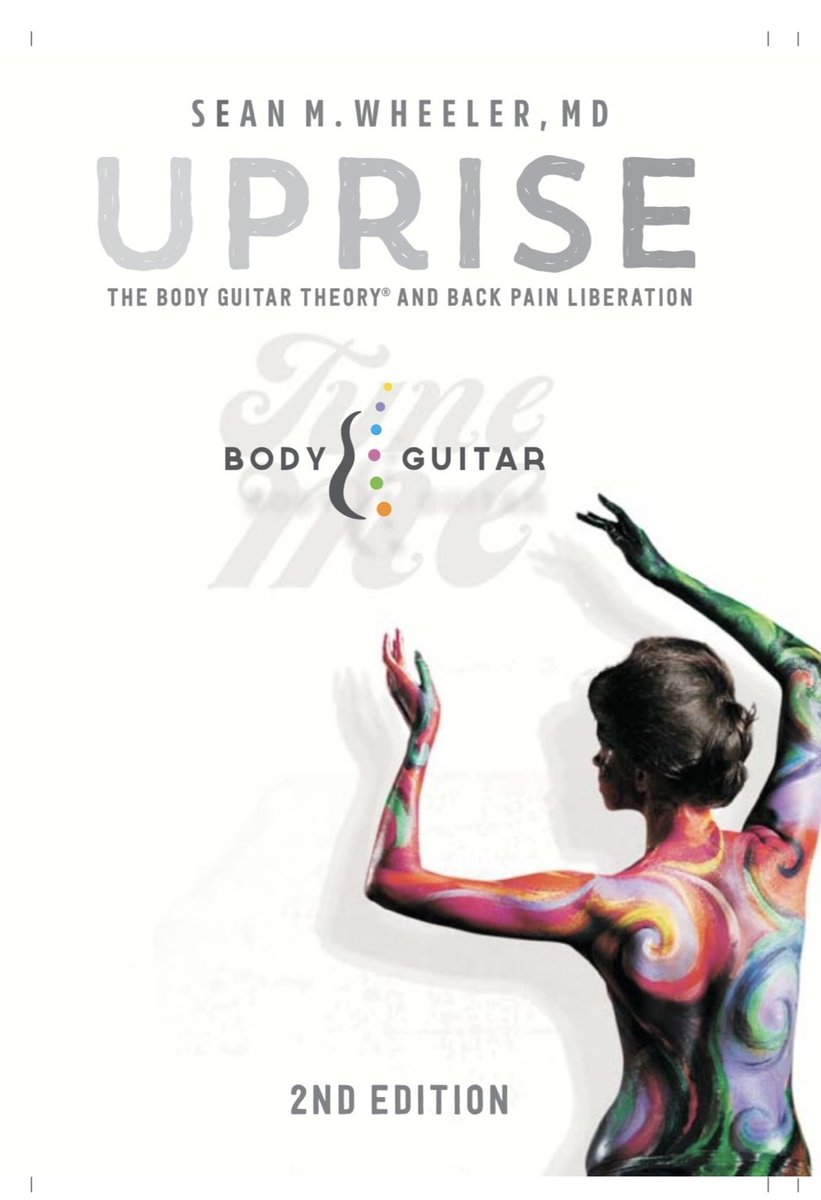
#BackPain Expert & Doctor | Author: 'UPRISE’| President Bodyguitar Clinic | Spine & Body Podcast | Proud Husband and Father
United States Katılım Ağustos 2014
290 Takip Edilen1.7K Takipçiler

@noahkaufmanmd @KaufCare Look at his face… this is what mission and purpose looks like.
Congrats Noah! Excited to see how you do.
English

Day 30.
A month ago this didn’t exist.
Now it’s real.
After 20 years in ERs, building something from scratch hits different.
@KaufCare
Opening soon in Denver.
English

Break up, yes. My state medical board and insurance commissioner are hesitant to take on the insurance companies because they are (sometimes) bigger and better funded than the state. This allows to insurance companies to be more and more aggressive in all profit-driven decisions because there is no viable oversight. If insurance is a 800 lb gorilla, we need oversight to be 8000 lb gorillas. They haven't been, so maybe the insurance companies can be broken into a bunch of 200 lb gorillas
English

I don’t think people realize how much healthcare costs are driving big companies to fire and not hire.
It costs them $30k per family, per year for premiums and care. Most of that goes to the massive, vertically integrated insurance companies that send weekly bills that no one reviews in details. And it doesn’t include the company overhead to deal with it all. It’s usually the 2nd largest expense after payroll. Which is insane
It’s far easier to blame AI than it is to blame Healthcare costs.
Want to increase jobs, wages and improve affordability for every American ?
Break up the biggest insurance companies. Make divest non insurance companies. They don’t need thousands of subsidiaries. That’s how they game and abuse the system and increase costs for all of us.
Call your senator and tell them to support the BreakUp Big Medicine Bill by @HawleyMO and @SenWarren.
English

1. Share a story of personal struggle with openness and vulnerability.
2. Get shellacked with criticism, people piling on to make sure you know why you are wrong and a terrible person.
3. Do your best to engage disagreement in good faith and with an appreciation for nuance.
4. Have a self-proclaimed “polymath” tell you to “SHUT UP DUMMY”
5. Remember why you stopped engaging with this platform a long time ago.
6. Wonder why you thought maybe it might be different this time.
7. Log off.
- ✌🏼out
Ernesto Eduardo@eedobarganes
@richroll SHUT UP DUMMY I FIXED IT ON MY SELF
English

Rich, we have 2 different muscle groups that stabilize us. Fight-or-flight muscles that stabilize us when sprinting or lifting, and rest-and-digest muscles that stabilize us when relaxed. Which muscles do we lose when we hurt? The second. Spend your recovery time working hard on diaphragm breathing when strengthening, walking, with posture, etc. Good luck
English

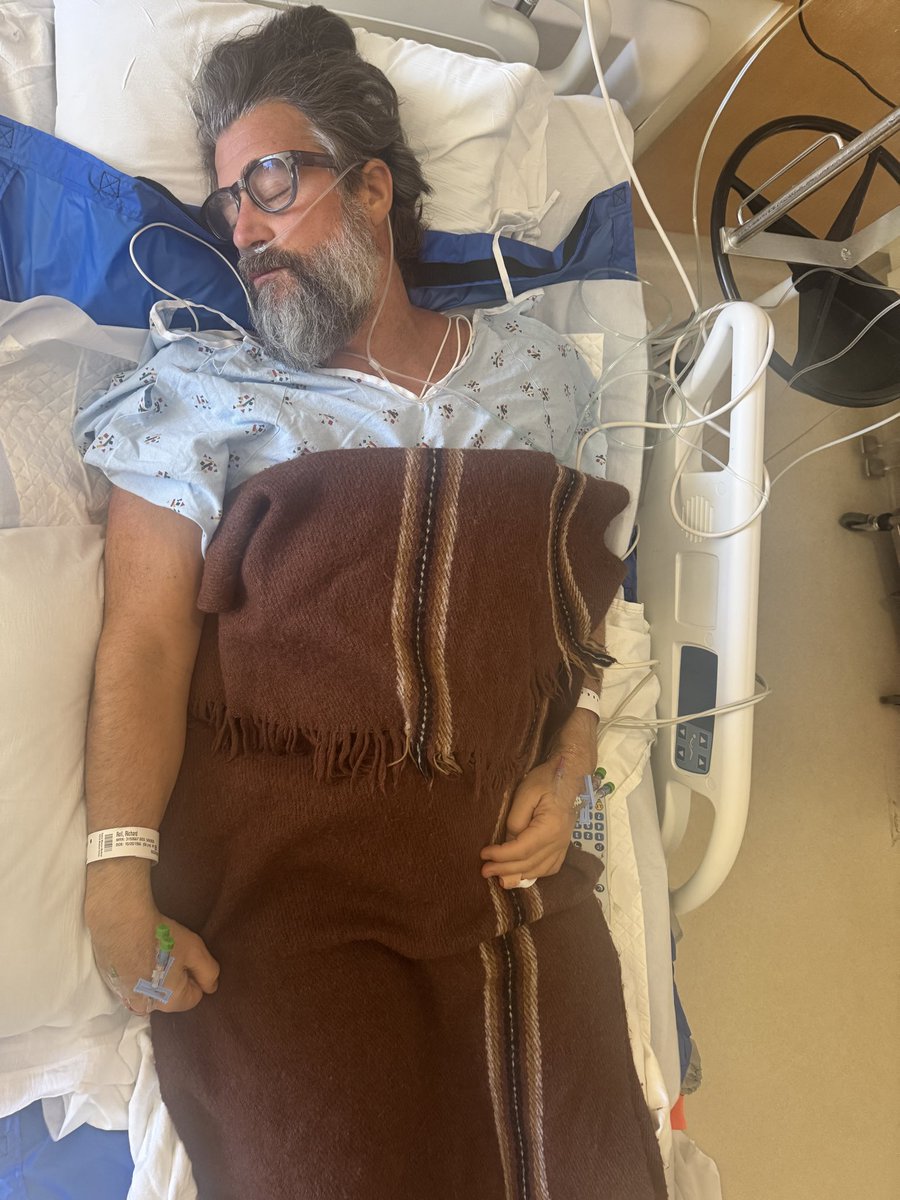
On May 8, 2025 I underwent spinal fusion surgery, a 6 hour procedure in which I was filleted from front to back.
First, my abdomen was opened up so that the surgeon could scrape out the disc between L5 and S1, replacing it with a perforated cage containing bone grafting material that was screwed into my vertebra.
Then I was flipped over and opened up on my back so that my surgeon could screw vertical rods into L5 and S1 to secure my spine position to ensure the fusion sets properly.
The procedure was successful, correcting 15 years of lower back debilitation due to severe Spondylolisthesis. However, the recovery process demanded I endure far more than I bargained for, debilitating me in ways I thought might handicap me permanently.
For the first 3 months I could barely move. For the first six months my activity was limited to walking only. Pain was constant.
At nine months I was still in so much discomfort, still so limited in my range of motion, still too unstable to do anything to elevate my heart rate.
My weight ballooned. My muscles atrophied. My mood plummeted. And I was becoming resigned to the idea that my athletic identity (let alone performing extreme feats of ultra-endurance) was a thing of the past, a memory well behind me.
But very slowly after that I began to turn a corner. At ten months, I finally felt stable enough to resume a very modest non-spine compressing return to fitness exercise regimen. Zone 1 indoor cycling, gentle core work, extremely low weight / high rep resistance training.
Proceeding on a ‘less is more’ mandate in late November (which demands discipline for someone like myself prone to taking everything to the extreme, I just showed up every single morning to do what I could, and stop well before doing more than I should.
Today I am down 35 pounds from November (207 to 171) including a body fat reduction from 20% to 11%. More importantly, I am beginning to feel like myself again. Grateful and hopeful.
I still have a long way to go—it takes 12-18 months for the fusion to fully set. My surgeon was not optimistic that I will be able to run again. Time will tell of course, but I’m confident that provided I continue to proceed patiently that I have a future in which running can become part of my new reality.
Towards that end I have a goal—which is to celebrate my 60th birthday this Fall by participating in the NYC Marathon.
But here’s the thing. I’m not trying to return to who I once was. I’ve leaned into the stillness this experience has demanded of me to become someone new and better.
I am posting this story not for external validation but rather to say that change is always possible. And the way to do it is the same way I have navigated every one of my many life transformations, from alcoholism to sobriety, from sedentary to middle aged ultra endurance athlete, and from a corporate lawyer career to becoming an author and podcaster: getting sober and staying sober: by taking contrary action consistently and religiously—one day at a time.
As Chris Paul said on my podcast, “keep stacking days.”
And remember, every obstacle life presents you is simply an opportunity custom-designed for your growth and evolution.


English

@handre Oh, I thought we were talking about independent physicians who take insurance and Medicare. There is no free market.
And everyone who is pushing for socialized medicine. We have it.
English

Mises obliterated the entire socialist project in 1920 with one devastating insight: "Where there is no free market, there is no pricing mechanism; without a pricing mechanism, there is no economic calculation." The socialists spent the next century pretending this problem didn't exist while their economies collapsed around them.
And yet here we are, watching politicians promise they can "fix" healthcare, housing, and energy markets through central planning. They can't even calculate the cost of their own programs correctly — how exactly are they going to allocate resources across an entire economy?
Every Venezuelan breadline, every Soviet grain shortage, every Chinese famine was just Mises being proven right in the most brutal way possible. But sure, let's try democratic socialism this time. What could go wrong?
English

I’m reading a business book where they are suggesting that when you are really good at what you do, you are doing a disservice by not charging a premium price. I laughed, because I knew that physicians get no real say in what they get paid. The insurance charges a premium price and people are forced to pay it. There is no room for anyone else to do the same.
English

One of the major problems with Medicare is that prices are set by a political process, not a market process.
And hospitals have a lot of political power.
Paragon Health Institute@Paragon_Inst
Since 2016, Medicare hospital base payment rates have risen—30% for inpatient and 26% for outpatient. Meanwhile, the physician base payment rate has fallen 7%. These uneven updates create distortions and may fuel consolidation. Learn more: t2m.io/xpN3h7X
English

Great post! Complicated and nuanced. Mammals are only species with a muscular diaphragm and humans are the only mammals that relax and run upright. To do that we balance hip flexors and pull into facets/bones. (A truss system) Pain inhibits pull (AMI) and shifts balance to hip flexors. This can become chronic. Early PT can help pain, keep hip flexors from dominating and modify breathing patterns while allowing bones to heal. NOT by increasing activity at area of bone damage. Nuanced.
English

New study backs up my approach for the entirety of my career = AGAINST🚨 rest and bracing...
In adolescent athletes with active lumbar spondylolysis, starting physical therapy immediately (vs rest first) led to faster pain and function improvement, a 38-day quicker return to sport, and far fewer recurrences of low back pain (3% vs 29%)—without impairing healing.
It is way past due to RETHINK 🧐 prolonged rest.
🔗 doi.org/10.1136/bjspor…
{@DrSeanWheeler likely has more to say on that}
English

I see patients from around the country and the world. Had a patient from London last year. Showed up and had an insurance card from a company I had a contract with. Had been seen by numerous physicians. Saw her, treated her and fixed her chronic problem.
Reimbursement was under $300. Taxes on her flight were probably more.
English

@DrSeanWheeler They of course don't care if you drop them but it's all you can do really.
English

Dropped by UHC in January. Now they say it was a mistake. Signed us right back up a month later without a discussion.
Asked for contract and they say, - you can look at it, but it is industry standard and we have no window for negotiation until November.
It is 30% under local average rates.
- I said, if this were a free market I would be charging 2-3x the market average.
-you are paying for ramen and getting steak
I think I am going to drop UHC right back
English

They ask for records on everyone. Make up their own rules (practice Medicine). Give authorization and then come back and deny after it is done. Do peer-to-peers where the doctor calls and tells you they have no authority to change the decision. To which I say- then why did you call and not a secretary.
English

More from teens and posture instagram.com/reel/DUzZ34oEc…
English

Teen's bad posture is not the same as adults. Teen's flaws keep them from achieving their best coordination. Adult's flaws reveal instability and compensation. See full video: lnkd.in/gnfAUn67
Article: bodyguitar.com/back-pain-doct…
podcast: lnkd.in/gmH2tseQ
English

Video youtu.be/r7e2_OrSZbU?si…
Article bodyguitar.com/posture-what-i…
Podcast podcasts.apple.com/us/podcast/spi…

YouTube
English

See this Instagram video by @getyourbodyintune instagram.com/reel/DUi3gv5kS…
English

New podcast on Posture out today! podcasts.apple.com/us/podcast/spi…
Posture is not what you have been led to believe. It is a way to combat our stressful, sitting world. It may even lead to a longer more active life. It also reveals Bracing muscle weakness. Dive in and Let's Get Your Body in Tune!
English

I am a dinosaur.
I know it and embrace it.
I am a single practitioner who works 2-3x as hard and barely makes payroll.
But you know what?
I love my patients and I am personally the bread that is broken for others.
It doesn’t have to be this way.
But I look forward to Mondays and love getting my patients better.
So keep pushing. Because, someday, I hope it does get better.
English

This didn’t collapse overnight.
It was a slow burn.
Private practice was once the model.
Then hospitals began acquiring clinics.
In response, the remaining independents banded together—
forming large multi-specialty groups.
The idea was simple: size as armor against the growing bargaining power of hospitals, insurers, and government payors.
But it was messy from the start.
Overhead exploded.
Productivity was unequal.
High-income specialties quietly subsidized lower-revenue ones.
Primary care could never keep pace with orthopedics.
Some physicians worked three times harder than the doctor next to them—and were paid nearly the same.
Resentment grew.
Debt mounted.
Internal conflict became routine.
And while these groups struggled to hold themselves together,
external forces were already in motion—
offering hospitals the perfect opportunity to step in and buy them out.
One by one, they did.
The truth is uncomfortable:
Single-specialty private practice was the most sustainable model.
And it is the one that has nearly disappeared.
Not because it failed—
but because the slope, the payments, and the consolidation made survival impossible.
This is the story being told every day by physicians across X.
English

@gotrice2024 Had the exact thing happen. Was told that the delivery guys get paid whether they install it or not. They have incentivized their delivery and installation people to do this.
English

You bought a new washing machine from Lowe’s, you even took off work so that you could be home for the delivery because your washing machine isn’t working right. After an hour after the delivery window ended, you call them and see why they didn’t come yet. They tell you they did come and that you didn’t answer the door so they left a note on the door. You go out and sure enough, there’s a note. You check your camera and see this. At this point would you even bother with the delivery again or would you just cancel and go buy from another store that values their customers more?
English

When you think about healthcare reform, start from the end. In the end, we want healthcare to drive towards better results, better health, better care and better comfort. Any plan that incentivizes the above, will lead to improvement in each of those parameters.
We currently have a plan that incentivizes sicker people, more expensive procedures and drugs that need to be taken forever. It doesn’t reward for the excellent healers, it punishes everyone because of a few fraudsters. It doesn’t celebrate the humanity of healthcare, it dismisses care into a computer. It doesn’t elevate compassion, it wants a system.
Capitalism is the greatest economic system in human history when the results that you want are incentivized. Healthcare is incentivized towards the wrong goals.
With great power comes great responsibility. Insurance companies have proven that their responsibility is only to their CEO and shareholders. It is up to our elected officials to seize this opportunity (and great responsibility) to fix the goals of insurance and health systems. @mcuban @JerryMoran
English

@lauraloomer @RepGregMurphy @AOC @SenWarren and many more on both sides are saying the exact same thing. Break up the 3 big insurance companies. They are Too Big To Care !!!
@realDonaldTrump , time to tell @PamBondi to go get it done ! ( I know you have his number @LauraLoomer :)
If you want your representative to support having the big insurance companies divest their non insurance assets , tag them in the replies !
English