E. Walong

32.7K posts

E. Walong banner
E. Walong

E. Walong

@EOWalong

Pathologist, AP/CP. #Autopsy

Nairobi, Kenya Katılım Temmuz 2010
4.2K Takip Edilen4.9K Takipçiler
E. Walong retweetledi
Kenya Data & Stats
Kenya Data & Stats@Stats_Kenya·
What do people in Kenya die from? In 2023: 44% died from non-communicable diseases, where -12% died from cancers -11% heart diseases -8.6% diabetes and kidney diseases 35% died from infectious diseases, where -11% HIV/AIDS -10% Respiratory infections 15% died from injuries, where -4.6% transport injuries -2.8% homicide -1.7% suicide
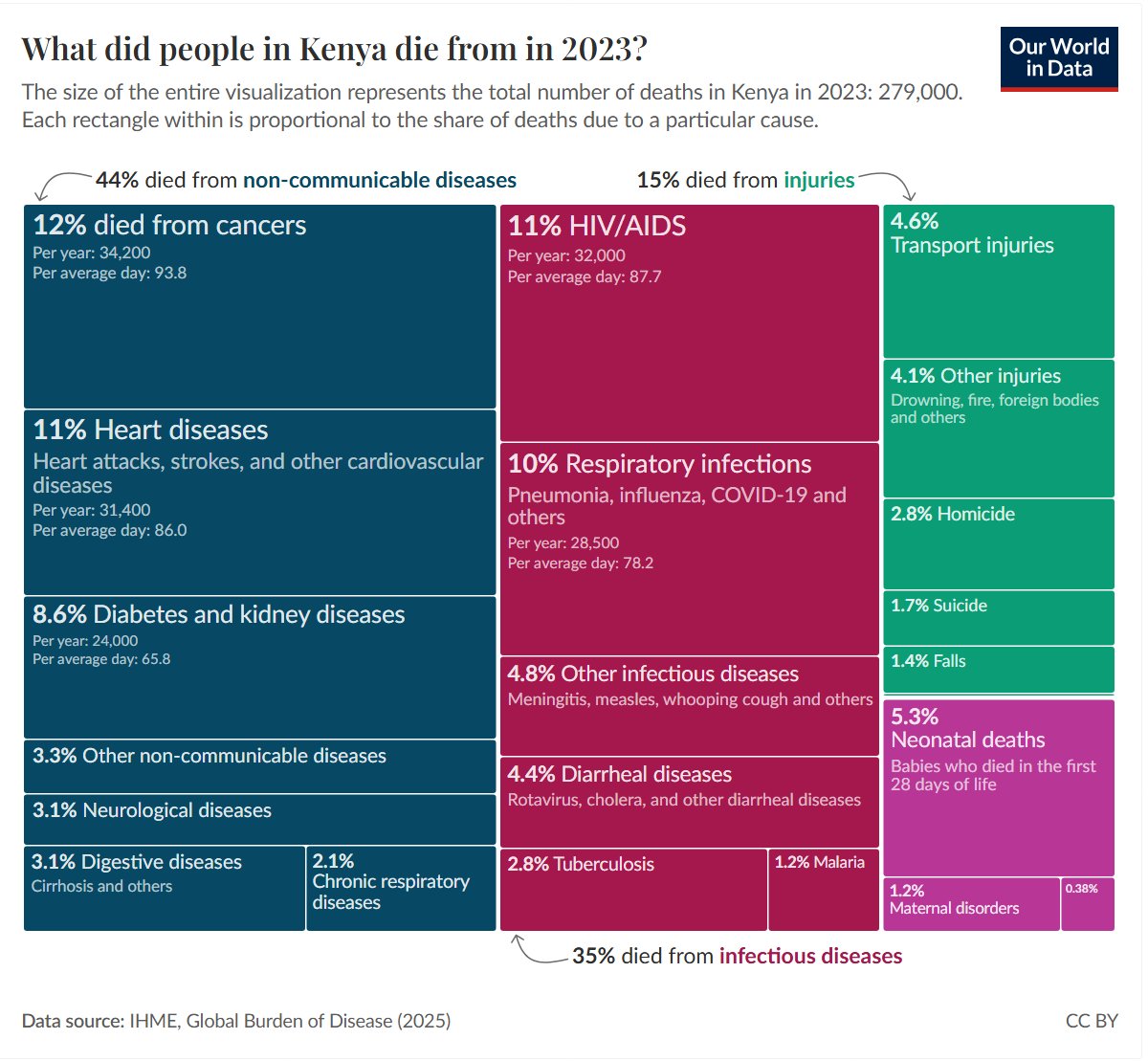
Kenya Data & Stats tweet media
English
7
94
88
13.3K
E. Walong retweetledi
Russ Shaw MLS - Lab Scientist
Russ Shaw MLS - Lab Scientist@RussellShaw_MLS·
Sounds good until you think about it for 30 seconds. How would you pay a medical oncologist in this model? Their patients walk in with cancer. Some of them die. Not because the oncologist failed. Because the disease is advanced, aggressive, and sometimes unbeatable regardless of how perfectly the treatment is delivered. Under your model, the best oncologist in the country who treats the sickest patients gets paid the least because the outcomes are the worst. The one who cherry-picks early-stage cases with high survival rates gets paid the most. That’s not a healthcare system. That’s an incentive to avoid sick people. How would you pay the ER physician whose patient arrives in cardiac arrest after ignoring their health for 30 years? The nephrologist managing stage 4 kidney disease? The psychiatrist treating treatment-resistant depression? The palliative care doctor whose entire job is helping people die with dignity? Every one of those physicians would be financially punished for treating the patients who need them most. The idea that doctors are responsible for patient health outcomes ignores that the biggest determinants of health, diet, sleep, exercise, stress, compliance with treatment, whether the patient even shows up for the follow-up, are entirely outside the physician’s control. A doctor can prescribe perfectly and the patient can fill the script, put it in a drawer, and never take it. Under your model the doctor’s pay drops for that. I’ve worked in healthcare for 15 years. The system is broken in a hundred ways I talk about on this account daily. But “pay doctors based on outcomes” would create a system where no physician wants the hard cases, the complex patients, or the populations with the worst social determinants of health. The patients who need the most help would become the patients nobody can afford to treat. The system needs fixing. This isn’t the fix.
Christy 💕@Christy4Change

Doctors should be paid based on the health of their patients. Things would look a lot different.

English
13
9
80
7K
E. Walong retweetledi
Medscape
Medscape@Medscape·
Next-generation sequencing is widely regarded as a transformative technology that delivers potentially life-prolonging therapies to patients with advanced cancers. Yet the testing is still underused and often delayed, a new study shows. Researchers found that among more than 63,000 US patients with advanced cancers, over 40% received no genomic testing. And some patients — including those who were Black, Hispanic, or low-income — waited longer for testing than others. “Both the lack of testing and lag times are problems,” said senior author Umang Swami, MD, of the Huntsman Cancer Institute, University of Utah in Salt Lake City. mdsc.pe/41vPg1y
Medscape tweet media
English
1
5
11
979
E. Walong retweetledi
Ramin Nasibov
Ramin Nasibov@RaminNasibov·
My dog after eating my philosophy book
Ramin Nasibov tweet media
English
1.6K
20.9K
146.7K
2.2M
E. Walong
E. Walong@EOWalong·
@Logically_JC Uganda, Burundi, South Sudan, Nigeria, Cameroon, Equatorial Guinea, Chad, CAR, Zimbabwe and Tanzania.
English

0
0
0
66
John Collins
John Collins@Logically_JC·
Where should we send him next?
John Collins tweet media
English
7.7K
6.6K
50.9K
1.2M
David *Objection* Ngong
“If powerful states were rare in precolonial Africa, that was because Africans did not want to build them. Statelessness was a sign of success, not failure.”
David *Objection* Ngong tweet media
English
72
466
2.6K
225.9K
E. Walong
E. Walong@EOWalong·
Biphasic Sleep in the real deal.
Aakash Gupta@aakashgupta

The scariest finding in this paper: the subjects couldn't tell it was happening. UPenn ran this study on 48 healthy adults. One group slept 8 hours. Another slept 6. Another slept 4. For 14 straight days. They tested cognitive performance every 2 hours from 7:30am to 11:30pm. The 6-hour group's reaction times, working memory, and sustained attention deteriorated on a near-linear curve. By day 14 they were performing at the same level as someone who hadn't slept at all in 48 hours. The 4-hour group hit that threshold by day 6. Here's the part that should unsettle everyone who thinks they "do fine" on 6 hours: the subjects' self-reported sleepiness flatlined after the first few days. Their brains kept getting worse. Their perception of how impaired they were stopped updating. The cognitive decline was invisible to the person experiencing it. The researchers found a hard threshold. Any wakefulness beyond 15.84 hours in a day produces cumulative neurobiological cost. That cost compounds every single day you exceed it and does not reset with a weekend of sleeping in. About 35% of American adults sleep less than 7 hours a night. 40% of those get 6 hours or less. In 1942 that number was 11%. We built an entire professional culture around a sleep schedule that this paper says is functionally equivalent to pulling consecutive all-nighters. "I'm fine on 6 hours" is the most common response to sleep research. The first thing chronic sleep debt destroys is your ability to notice chronic sleep debt.

English
0
0
0
99
E. Walong retweetledi
BensenHsu
BensenHsu@BensenHsu·
Many people do not get enough sleep during the work week, and scientists have long debated whether this is harmful. Some people believe that if you sleep less for a long time, your body eventually gets used to it and you stop feeling tired or performing poorly. This study looked at whether that is true by watching healthy young adults who were allowed to sleep for different amounts of time for two weeks. The people who slept for only four or six hours performed worse and worse every day. They did not get used to the lack of sleep; instead, their performance kept dropping. Interestingly, these people said they did not feel very sleepy, even though their test scores showed they were struggling. The study found that the brain does not just care about the total hours of sleep lost, but rather how long it has been forced to stay awake past a certain point.
BensenHsu tweet media
English
2
20
71
7.2K
E. Walong retweetledi
E. Walong
E. Walong@EOWalong·
I haven't met an African who does not speak at least 3 languages.
Anish Moonka@anishmoonka

Your kid's piano teacher was reshaping their brain. A Harvard-led team tracked children from age 6 to 9 and found that kids who practiced an instrument at least 2.5 hours a week grew the corpus callosum (the cable connecting the left and right halves of the brain) by about 25% in the region that handles movement planning. Kids who practiced less or quit showed zero growth there. USC ran a separate study starting in 2012 that followed children from low-income LA neighborhoods. One group learned violin through the LA Philharmonic's youth orchestra program. A second did soccer. A third had no structured after-school program. Two years in, only the music group showed brain changes: stronger white-matter connectivity, faster maturation of auditory processing, and greater activation in networks involved in decision-making and impulse control. The soccer and no-program groups looked the same on brain scans. A randomized trial at the University of Toronto tested 144 six-year-olds assigned to keyboard lessons, voice lessons, drama, or nothing for a full school year. The music kids gained about 7 IQ points on average. Drama and no-lessons kids gained 4-5. That roughly 3-point gap showed up across every subtest, including reading and math. Now the language side. Bilingual kids outperform monolingual kids on task-switching tests (jumping between different sets of rules quickly), and it holds regardless of which second language they speak. Brain scans of nearly 1,300 children and young adults from a 2021 Georgetown and University of Reading study showed that bilinguals kept more grey matter (the layer where the brain's processing cells live) as they grew up than kids who spoke one language. The long game is where this gets serious. A 2025 Monash University study of 10,893 Australians over 70 found that people who regularly played an instrument had 35% lower odds of developing dementia. Bilingualism shows an even sharper effect. Studies across India, Canada, and the US consistently find that bilingual adults develop dementia symptoms 4 to 5 years later than monolingual adults. A 2024 door-to-door survey of 1,234 people over 60 in Bengaluru, India, found dementia in 4.9% of monolinguals and just 0.4% of bilinguals. Both piano and a second language work through a similar mechanism. They force the brain to manage competing systems at once, left hand versus right hand, one language versus another. That constant switching strengthens the frontal regions responsible for planning, focus, and filtering distractions, building what neurologists call cognitive reserve: a buffer that lets the brain keep working even as age-related damage accumulates. Those parents running their kids between piano on Tuesdays and Mandarin on Thursdays were basically running a two-front neuroplasticity program without knowing it.

English
0
0
1
283
E. Walong retweetledi
Hanny Butter💕
Hanny Butter💕@hannytomi·
It's quite easy to spot cars driven by men. They play too much 🤣🤣🤣
English
460
2.7K
40.6K
2.4M
E. Walong retweetledi
Phatsimo 👑💕
Phatsimo 👑💕@Queen_Phatsi·
@oddettem Diseases like Diabetes, HIV/AIDS, and Cancer are all serious but very different. Some are manageable long-term, others can be life threatening quickly,it really depends on diagnosis, treatment, and access to care.
English
2
3
114
22.1K
E. Walong
E. Walong@EOWalong·
Surgery is not for everyone, only the resilient need to apply.
Dr Shawn Baker 🥩@SBakerMD

It was the worst month of my life!! September 2001, I was a surgical intern at the University of Texas Medical Branch in Galveston, Texas and I was doing a rotation at the Shriner Pediatric Burn Hospital. Now remember this was back in the day before they passed laws limiting how many hours you were allowed to work and historically surgical residency has often been fairly abusive. Long hours, little sleep and consistently being berated was a pretty typical experience for many residents, more so with the surgical ones. My size, being 6’5” and 280 lbs, coupled with the fact that I pretended to be slightly unstable kept my beratement to a minimum. Size has its advantages! Anyway, the burn hospital had the reputation among the residents as a pretty hellish experience and I was right in the middle of it. When you saw another colleague around the hospital and they asked you what rotation were you doing and you said Shriner’s, it was alway met with an “ouch, hang in there” or something similar. As an intern, even though you just finished medical school, you are basically at the level of an idiot, when it comes to managing patients. And the Shriner Burn hospital was filled with critically burned little kids in the intensive care unit where you were assigned. Now as I was just at the beginning of my journey I had not yet become used to the constant fatigue that I would learn to embrace over the next 5 years of my orthopedic residency. After 4 years of college, 4 more years of medical school I was about 60% of the way through my education, but the light at the end of the tunnel was still a long way off. Residents in general, were largely just cheap labor for the hospitals as our salaries were way less than minimum wage given the number of hours we were expected to work and quitting was never a good option. Orthopedic surgical spots were extremely competitive and highly coveted among medical students and if you were not in the top 10% of your medical school class good luck getting in. Fortunately, I was a very good medical student, good grades, good at standardized testing and a hard worker. I got my spot and wasn’t going to let being tired or anything else deter me from finishing. As I mentioned sleep was a luxury during residency, some months better than others. Over the years I can remember being so exhausted that I would be falling asleep while standing up assisting in surgery. It was a common trick to clamp non penetrating towel clips to our arms, chests or even nipples in order that the pain would keep us awake during surgery. I remember many times I avoided sitting down in the clinic because the second I sat down I would immediately fall asleep. The burn hospital was the worse place for not being able to sleep. We were on what is known as Q2 call, which means every other night you would be staying at the hospital on call to take care of the sick kids and often would be up all night. This coupled with the typical daily schedule which started at around 4 am and often lasted to 10 pm meant that you basically worked 40 hrs straight, went home for 7-8 hours and then did another 40 hours over and over again for the whole month. 120-130 hours per week was the average for the month rotation and that aspect really beat you up. Now, the guy who ran the hospital, was a world renowned burn surgeon named David Herndon, who I think might still be the chief of staff there. Anyway the rumor was that he was a little bit crazy and the staff and burn fellows were terrified of him. He was loud, yelled a lot and had no problem letting someone know that they were an idiot in front of the entire staff. Morning rounds with him was a stressful event. Each intern, residents, and fellow would be responsible for 2-3 of the ICU kids and we’d walk around the ICU going from bed to bed presenting our patients when it was our turn. It was always a dog and pony show with about 20 people following Dr

English
0
0
0
217
Miguel Reyes-Múgica
Miguel Reyes-Múgica@mreyesm·
@NobelPrize @NeilFlochMD I remember our shock when we learned about this discovery!😳 We saw many gastric biopsies with H. pylori which was invisible to us, as if we were blind! 🧑‍🦯 Then, the discovery of these two giants changed everything.
English
2
4
17
1.2K
The Nobel Prize
The Nobel Prize@NobelPrize·
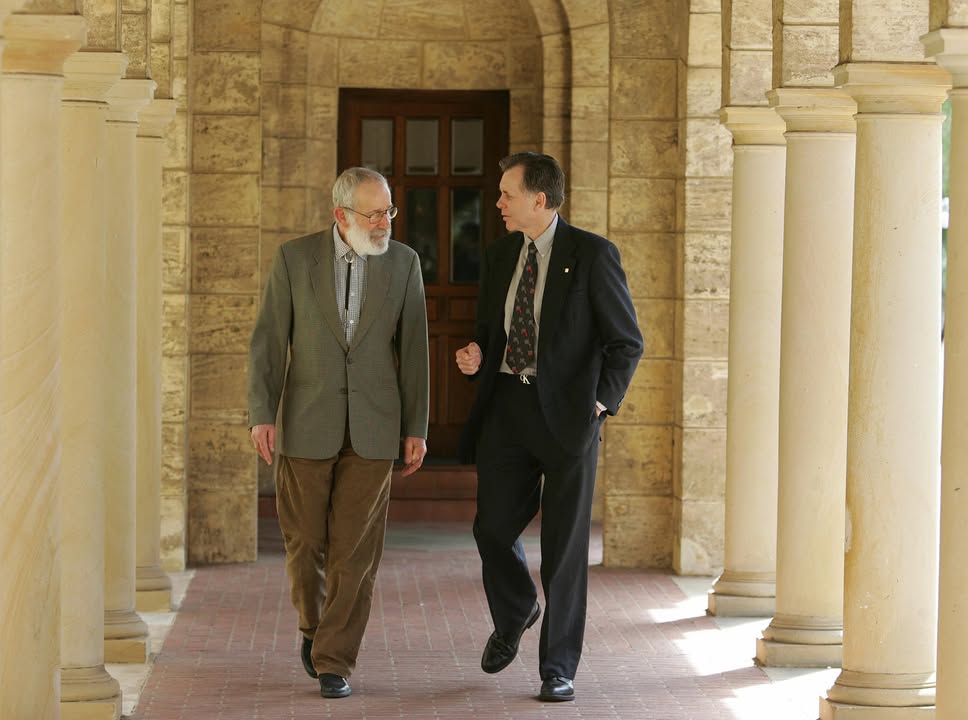
During Easter 1982 the bacteria that causes most stomach ulcers and can lead to gastric cancer was first discovered. Robin Warren (left) and Barry Marshall (right) tried and failed to grow the organism several times. It was only when the agar plates were left in the incubator over the five-day Easter holiday that numerous colonies of the bacterium developed. It became clear that a new bacterial genus had been isolated, which was eventually named Helicobacter pylori. In 2005, Marshall and Warren were awarded the Nobel Prize in Physiology or Medicine for their discovery: bit.ly/3d9oth5
The Nobel Prize tweet media
English
16
319
1.1K
87.1K