Eduardo Alvarez

82.3K posts

Eduardo Alvarez banner
Eduardo Alvarez

Eduardo Alvarez

@EdAlvarezB

Man, son,2X immigrant, husband, father

Mid South Katılım Şubat 2013
2.1K Takip Edilen818 Takipçiler
Eduardo Alvarez
Eduardo Alvarez@EdAlvarezB·
@heymiller From Bonfire of the Vanities: An extraordinary quote on fatherhood, just in time for Father’s Day season
Eduardo Alvarez tweet media
English
0
0
0
40
Eduardo Alvarez retweetledi
MoundLore
MoundLore@MoundLore·
RadioShack was the last store where being confused felt useful. You’d walk in for batteries and end up standing in front of tiny drawers full of parts you didn’t understand yet. Resistors. Switches. Speaker wire. Fuses. Project kits. Adapters for problems so specific they sounded made up until somebody behind the counter nodded immediately and disappeared into aisle six. People remember the batteries. They forget the feeling. RadioShack made technology feel close enough to touch. You could buy a soldering iron, a police scanner, a bag of LEDs, a replacement remote part, a weird cable, a battery club card, or one tiny component that somehow brought the whole thing back to life. Kids built crystal radios. People repaired RC cars. Teens stripped speaker wire in garages. Some employee who looked like he had worked there since 1987 could translate your terrible explanation into exactly the part you needed. That kind of place teaches a different relationship with the world. Machines had backs and screws and wires. Things failed for reasons. You could open them. You could make mistakes. You could learn enough to stop being intimidated. Then the world changed. Screens replaced screws. Batteries got glued in. Devices got sealed. Parts disappeared. Stores stopped assuming people wanted to understand anything below the surface. People call that convenience. But there’s a reason people remember RadioShack harder than they should. It was one of the last places that made technology feel unfinished. Like normal people still had permission to participate. Now most of us carry objects more powerful than anything in that store ever sold and most of us would not even know where to begin if one stopped working.
MoundLore tweet mediaMoundLore tweet mediaMoundLore tweet mediaMoundLore tweet media
English
119
269
2.3K
74.2K
Eduardo Alvarez retweetledi
David Burge
David Burge@iowahawkblog·
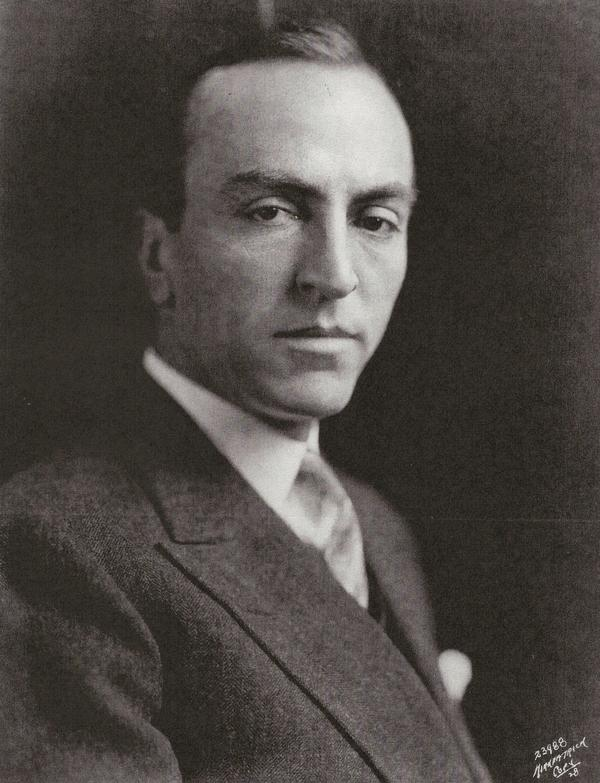
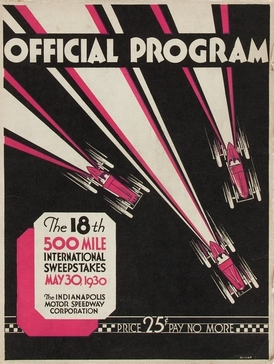
Happy Indianapolis 500 Day to all who celebrate from Dave's Car ID Service! Today we pay homage to Indy's "Junk Formula" Era of 1930-37. Why celebrate a formula for junk? Let me give you some context. At its inception Indy featured some cars that were pretty much stock. In that first 1911 race, the 5th place finisher was a stripped-down but otherwise complete stock Marmon 32 passenger car that was street-driven to the track. It was in the realm of possibility for a regular upper-middle class Joe with cojones and a dream to participate. That all changed quickly, especially after WW1. By then it was strictly a rich man's sport, dominated by very exotic and expensive specialized racing machines, primarily Millers and Duesenbergs. Rules demanded smaller and smaller engine displacement. Until 1922 cars were limited to 3 liters (183 cubic inches), then from 1923-25 2 liters (122 ci) and starting in 1926, 1.5 liters (91 ci). The reduction in displacement was to curb speeds in an age where death on the track was common, but also to spark innovation. Those rules worked almost too well. Geniuses like Harry Miller and the Duesenberg brothers figured out ways to coax ever more power out of ever smaller engines: overhead cams, integrated head-engine block casting, arrays of carburetors, exotic superchargers. Those cars, to me, are the Sistine Chapel of American car racing. But they were incredibly expensive, and you had to have one if you wanted to be competitive at Indy. This all but closed off the field to anyone who didn't have cubic buttloads of cash. That was okay for a while. During the Roaring Twenties there were plenty of high-living Gatsbys who wanted to sink some mad money into the exciting glamorous world of big time auto racing. But then came October 29, 1929. The Black Tuesday stock market crash wiped out a good number of those Indy-curious Gatsbys, kicking off what would soon become the Great Depression. Enter Eddie Rickenbacker. Best known as a World War I fighter ace, Rickenbacker was already famed as a successful racing driver for Duesenberg before the war. In 1927, the war hero had enough financial backing to buy Indianapolis Motor Speedway. Less then two years later he was faced with a grim reality: there were probably not going to be enough entries in the 1930 race to fill the 33-car grid. The economy's impact on ticket demand meant that the total prize purse for 1930 would be reduced from $98,000 to $54,000, and the winner's share from $50,000 to $18,000. Which made it even harder to attract entrants, etc. A vicious cycle that threatened to end the Indy 500 for good. In response, Rickenbacker announced a new set of rules for 1930: displacement up to 6 liters (366 cubic inches) was allowed, supercharging was banned, there would be a return to Indy's mandatory ride-along mechanic rule 1911-22, and the field was expanded from 33 to 38. This rule was derided by the high-dollar Miller and Duesenberg teams as the "Junk Formula," because it meant there'd be cars in the field with unsophisticated stock block engines. But that was sort of the point. It gave quasi-regular Joes and backyard mechanics a fighting chance to field a car at Indy, powered by a big modified Buick or Studebaker engine. It didn't end the dominance of Miller & Duesenberg, who created their own bigass engines under the new rules, and no true "Junk Formula" car ever one. But helped keep Indy alive during 1930-37, amid the darkest days of the Great Depression.
David Burge tweet mediaDavid Burge tweet media
English
17
61
455
67.5K
Eduardo Alvarez
Eduardo Alvarez@EdAlvarezB·
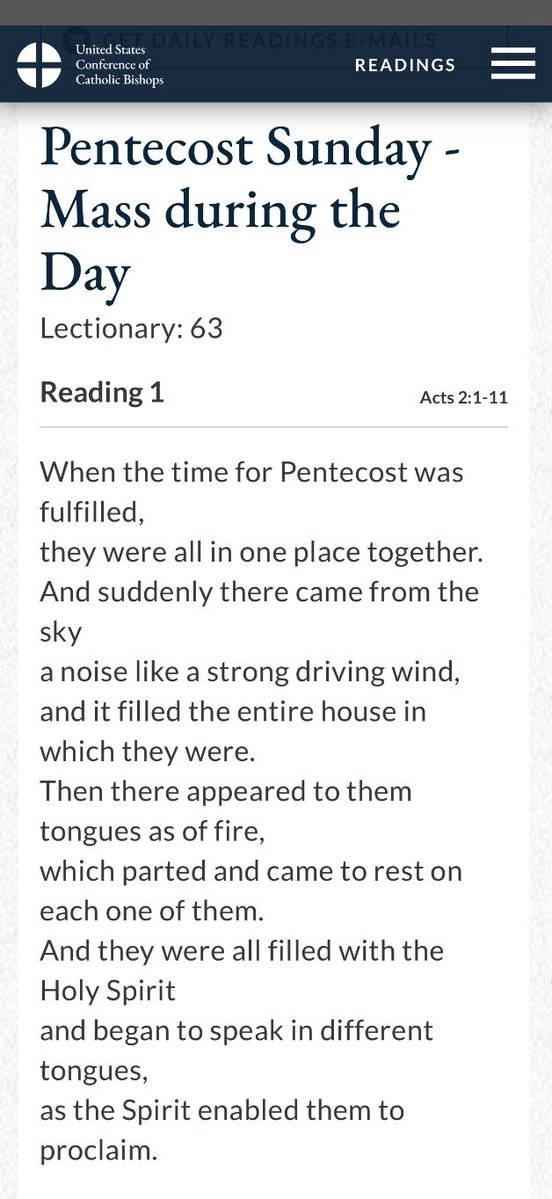
Extraordinary homily today, Pentecost Sunday, juxtaposing the Tower of Babel confusion with the clarity brought by Holy Spirit
Eduardo Alvarez tweet mediaEduardo Alvarez tweet mediaEduardo Alvarez tweet media
English
0
0
0
9
Eduardo Alvarez
Eduardo Alvarez@EdAlvarezB·
@maxdaniellawton My beloved Pigment Handbook (Wiley) was $300 in the early 90s and when I received it it is labeled as a “facsimile” The second edition now goes for >$850
English
0
0
0
487
Max Lawton
Max Lawton@maxdaniellawton·
The greatest harbinger of end times is not plague or war, but the sudden enormous proliferation of Xerox-quality POD editions (unmarked! no warning!) from houses like Penguin.
Max Lawton tweet media
English
79
188
2.8K
295.7K
VB Knives
VB Knives@Empty_America·
I was able to get my Dad's take (b. 1929) on the difficulty of life in different eras. 30's and 40's were rough and almost no one would actually go back. Illnesses, hard work, cold houses, etc. 50's were easy. Rent was still low, extremely easy to get work, inflation hadn't really started yet. The boom was real, Dad always preferred renting and he noted repeatedly how low the rent was versus income. By the 70's the "bill became due" and life became harder again, physical comforts only increased but it was competitive again, more like pre-war. 80's was my childhood and it wasn't particularly easy at all to raise a family then, you had inflation, high interest rates, this is the "cheap/anxious parents" period that many over 40's remember as kids. He seems to find the current year to be OK, rents in a 55+ apartment complex in AZ with good maintenance that takes care of everything and nice facilities.
English
21
10
344
22.4K
Eduardo Alvarez
Eduardo Alvarez@EdAlvarezB·
@RogerSeheult Doctors and healthcare professionals are not very available(5 minute visits) and expensive leaving a vacuum
English
1
0
2
62
Roger Seheult, MD
Roger Seheult, MD@RogerSeheult·
Who Are America’s Health and Wellness Influencers? "Half of U.S. adults under 50 say they get health and wellness information from social media influencers or podcasts. About 4 in 10 of these influencers describe themselves as health care professionals; coaches and entrepreneurs are almost as common" (I don't consider myself a social media influencer. Many social media influencers have ambitions to be wealthy and famous. My aspiration is to spread as much truthful information about health through whatever medium I have available. Sometimes it's through YouTube to an individual and sometimes it's my patient sitting in front of me.) pewresearch.org/data-labs/2026…
English
5
4
35
4.2K
The Culturist
The Culturist@the_culturist_·
The annual Pentecost tradition (today!) at Rome's Pantheon is a moment of extraordinary beauty. It occurs every year on the seventh Sunday after Easter. At noon, after the Holy Mass, thousands of rose petals are dropped through the oculus of the mighty dome. As the petals fall, a choir sings "Veni Sancte Spiritus," known as the Golden Sequence, a masterpiece of sacred Latin poetry. This is to celebrate the descent of the Holy Spirit on the Virgin Mary and the Apostles. The rose petal ritual likely dates back to 607 AD when the pagan temple became a Christian church.
English
141
3K
15.9K
951.9K
Eduardo Alvarez retweetledi
David Sun
David Sun@arcticinstincts·
Amazing. Out of 100 Marxist professors not a single one is in a STEM field
Phil Magness@PhilWMagness

Here you go, Nick. A list of 100 currently living Marxist professors: David Abraham — University of Miami (Law, retired) Ervand Abrahamian — CUNY Baruch College (History, emeritus) Jaafar Aksikas — Columbia College Chicago (Cultural Studies) Jack Amariglio — Merrimack College (Economics, emeritus) Bill Ayers — University of Illinois Chicago (Education, emeritus) Asatar Bair — Riverside City College (Economics) Rick Baldoz — Oberlin College (Sociology) Gopal Balakrishnan — UC Santa Cruz (History) Tithi Bhattacharya — Purdue University (History) Bruno Bosteels — Columbia University (Latin American Studies) Samuel Bowles — Santa Fe Institute (Economics) Neil Brenner — Harvard University (Urban Theory) Robert Brenner — UCLA (History) Wendy Brown — Columbia University (Political Science) Ben Burgis — Morehouse College (Philosophy/Logic) Michael Burawoy — UC Berkeley (Sociology, emeritus) Paul Burkett — Indiana State University (Economics) Charisse Burden-Stelly — University of Wisconsin Madison (African American Studies) Hazel Carby — Yale University (African American Studies, emeritus) Vivek Chibber — NYU (Sociology) Ronald H. Chilcote — UC Riverside (Political Science, emeritus) Harry Cleaver — UT Austin (Economics, emeritus) George Ciccariello-Maher — formerly Drexel University (Politics) Joshua Clover — UC Davis (English) Angela Davis — UC Santa Cruz (History of Consciousness, emerita) Greg Dawes — NC State University (Latin American Studies) Jodi Dean — Hobart and William Smith Colleges (Political Science) Cedric de Leon — UMass Amherst (Sociology) Lisa Duggan — NYU (American Studies) Roxanne Dunbar-Ortiz — CSU East Bay (History, emerita) Silvia Federici — Hofstra University (Political Philosophy, emerita) Samuel Farber — CUNY Brooklyn College (Political Science, emeritus) Johanna Fernández — CUNY Baruch College (History) Duncan K. Foley — New School for Social Research (Economics, emeritus) Barbara Foley — Rutgers University (English, emerita) John Bellamy Foster — University of Oregon (Sociology) Harriet Fraad — New School (Psychology) H. Bruce Franklin — Rutgers University (English, emeritus) Nancy Fraser — New School for Social Research (Philosophy) Grover Furr — Montclair State University (English) Michael Goldfield — Wayne State University (Political Science) Alyosha Goldstein — University of New Mexico (American Studies) Michael Hardt — Duke University (Literature) David Harvey — CUNY Graduate Center (Anthropology, emeritus) Gerald Horne — University of Houston (History) Michael Hudson — University of Missouri Kansas City (Economics, emeritus) Aaron Jaffe — SUNY Old Westbury (Philosophy) Adrian Johnston — University of New Mexico (Philosophy) Sharryn Kasmir — Hofstra University (Anthropology) Robin D.G. Kelley — UCLA (History) Andrew Kliman — Pace University (Economics) Karl Klare — Northeastern University School of Law (Labor & Employment Law) David Laibman — CUNY Brooklyn College (Economics, emeritus) Paul Le Blanc — La Roche University (History) Li Minqi — University of Utah (Economics) Peter Linebaugh — University of Toledo (History, emeritus) George Lipsitz — UC Santa Barbara (Black Studies) Stephanie Luce — CUNY School of Labor and Urban Studies (Labor Studies) Biju Mathew — Rider University (Business) Paul Mattick Jr. — Adelphi University (Philosophy) Robert McChesney — University of Illinois (Communications, emeritus) Randall H. McGuire — SUNY Binghamton (Anthropology) Peter McLaren — Chapman University (Education, emeritus) David McNally — University of Houston (Political Science) Jodi Melamed — Marquette University (English) Salar Mohandesi — University of Pennsylvania (History) Jason W. Moore — Binghamton University (Sociology) Fred Moseley — Mount Holyoke College (Economics) Kirstin Munro — New School for Social Research (Economics) Immanuel Ness — CUNY Brooklyn College (Political Science) Bertell Ollman — NYU (Politics) Christian Parenti — CUNY (Journalism/Economics) Michael Perelman — California State University Chico (Economics, emeritus) Michael J. Piore — MIT (Economics, emeritus) Minnie Bruce Pratt — Syracuse University (Writing, emerita) Barbara Ransby — University of Illinois Chicago (History) Adolph L. Reed Jr. — University of Pennsylvania (Political Science, emeritus) Touré Reed — Illinois State University (History) Gabriel Rockhill — Villanova University (Philosophy) David Roediger — University of Kansas (American Studies) John Roemer — Yale University (Economics) William I. Robinson — UC Santa Barbara (Sociology) Mike Rotkin — UC Santa Cruz (Lecturer) E. San Juan Jr. — University of Connecticut (English, emeritus) Anwar Shaikh — New School for Social Research (Economics) Tommie Shelby — Harvard University (Philosophy/African American Studies) Nikhil Pal Singh — NYU (Social and Cultural Analysis) Robyn Spencer — Lehman College CUNY (History) Neferti Tadiar — Barnard College (Women's Studies) Keeanga-Yamahtta Taylor — Princeton University (African American Studies) Alberto Toscano — UC San Diego (Sociology) Mark Tushnet — Harvard Law School (Constitutional Law, emeritus) Alan M. Wald — University of Michigan (English, emeritus) Thomas E. Weisskopf — University of Michigan (Economics, emeritus) Richard Wolff — New School for Social Research (Economics, emeritus) John Womack — Harvard University (History, emeritus) Robert Wrenn — University of Maine (Economics, emeritus) Michael D. Yates — formerly University of Pittsburgh at Johnstown (Economics) Gale A. Yee — Episcopal Divinity School (Biblical Studies) Michael Zweig — SUNY Stony Brook (Economics, emeritus)

English
67
215
3.1K
96.9K
Ryan Haecker
Ryan Haecker@RyanHaecker·
A new romantic comedy by Wes Anderson
Ryan Haecker tweet media
Austin, TX 🇺🇸 English
197
1.5K
15.1K
1.7M
Eduardo Alvarez
Eduardo Alvarez@EdAlvarezB·
@CartonCalderon Ayudo a mitigar la fiebre amarilla (quitando agua estancada), lo que permitió terminar el canal de Panamá. Mi abuela lo conoció
Español
0
0
0
167