Eileen henot

1.2K posts

Eileen henot

Eileen henot

@EileenHenot

Katılım Kasım 2013
761 Takip Edilen299 Takipçiler
Sabitlenmiş Tweet
Eileen henot
Eileen henot@EileenHenot·
Our beloved 19 year old with mod-severe autism requires 24/7 supervision. Barring a miracle, he will require it for the rest of his life. People with his level generally never marry, have children, drive a car, or live independently so it's quite different from dyslexia.
Lorena Gonzalez Fletcher@LorenaSGonzalez

Thank you for this reminder @vosdscott - Autism (like my Dyslexia) is a disability not a disease. Nothing wrong with us, we are simply differently abled. Vaccines don’t cause autism. But that misses part of the point.

English
4
29
102
0
Eileen henot
Eileen henot@EileenHenot·
@Lowes customer service is a horror. Was told washing machine under warranty wasn’t repairable on the 9th. Told it couldn’t be replaced and we would receive an e-certificate last week. Hung up on twice by customer service reps who now say they want to order parts & fix machine
English
5
1
2
68
Eileen henot retweetledi
Melissa O'Connor
Melissa O'Connor@Melissa_in_CA·
The 2023 Nexstar acquisition of KUSI hauntingly erased much of the counter-narrative documented during the pandemic. It’s critical to remember the hundreds of San Diegans who repeatedly voiced concerns about mandates and vaccine risks—only to be ignored and mocked by our local politicians, agencies and institutions.
KUSI News@KUSINews

August 21, 2021 San Diego residents spoke to the Board of Supervisors in opposition to their COVID-19 response. The lockdowns and mask/vaccine mandates are still top of mind to voters, and they will make their voices heard on Election Day. Here is a thread of the speeches:

English
6
4
24
2.4K
Eileen henot retweetledi
Bill Melugin
Bill Melugin@BillMelugin_·
BREAKING: Senate Homeland Security Committee Chairman Sen. Rand Paul (R-KY) tells me that the COVID-19 whistleblower who will testify publicly & in person before his committee tomorrow morning is an active CIA employee who will testify that the intelligence community has covered up the origins of the COVID-19 pandemic for years. "I think this whistleblower will help to confirm that this was known, has been known for a long time, and that when the scientists at the CIA looked at this, they discovered or they concluded that the virus had come from the lab," Sen. Paul tells me. "What we're going to find is that the cover up is a real thing, that there are members of the community, the intelligence community, that still don't want the truth to come out. I've said the government was involved not only in funding this research, but then in trying to obscure the truth. And the truth is the US government funded research in Wuhan, China, and that research led to a virus that escaped, escaped the lab, in all likelihood accidentally." I asked Senator Paul for any more details on who this CIA whistleblower is ahead of tomorrow's hearing? "This is a brave person who's spent a career in the CIA," Sen. Paul said. "I don't know how much can be revealed, but is actually famous within the community for being someone who, behind the scenes, has really helped our country." I will be in the room & covering the hearing for @FoxNews tomorrow morning.
English
656
3.3K
12.2K
1.8M
Eileen henot retweetledi
Jeffrey A Tucker
Jeffrey A Tucker@jeffreytucker·
This is a fascinating case, extremely well known within communities concerned with autism and the link with vaccines, and otherwise spoken about in medical-freedom circles. Unknown otherwise. The guy has been extradited. Not a peep about this news in MSM. x.com/NDGAnews/statu…
US Attorney NDGA@NDGAnews

Poul Thorsen, a Danish researcher who was one of the U.S. Health and Human Services Office of Inspector General’s top ten most wanted fugitives, was arraigned today on federal wire fraud and money laundering charges after his extradition from Germany. justice.gov/usao-ndga/pr/a…

English
21
210
555
37.2K
Eileen henot retweetledi
Sylvia Fogel MD
Sylvia Fogel MD@FogelSylvia·
A systems biology framework—one that considers cellular metabolism, including signaling pathways, redox balance, and mitochondrial function, alongside the dynamic interplay among reciprocally regulating body systems such as the immune system—is crucial to advancing autism research. As researcher Robert K. Naviaux and others have emphasized, diverse genetic and environmental factors may converge on disruptions in cellular metabolism, resulting in systems-level dysfunction across the body. Historically, autism research has focused primarily on the brain. However, the high rates of co-occurring medical conditions, together with multiple converging lines of evidence, increasingly suggest that for at least some cohorts, autism may involve whole-body pathophysiology rather than isolated neurodevelopmental differences alone. Expanding research efforts to include underlying systems biology therefore represents an important complement to existing lines of investigation. This paper is a tour de force and underscores that perspective. pubmed.ncbi.nlm.nih.gov/41242673/ Visit the Autism Innovation Coalition for more of these perspectives. autisminnovationcoalition.com
Profound Autism Alliance@ProfoundAutism

“What’s emerging from this and other research labs is not just a shift in thinking, but the early outlines of new treatments.” washingtonpost.com/health/2026/04…

English
2
15
38
1.9K
Eileen henot retweetledi
Sylvia Fogel MD
Sylvia Fogel MD@FogelSylvia·
Dear Ms. Singer, Your April 28 press release identifies several areas of agreement with the proposals adopted by the IACC on April 28 — among them, the urgency of wandering and elopement, inadequate medical care attributable to diagnostic overshadowing, and the persistent under-representation of individuals with profound autism in both research and federal policy. That common ground is real and valued and it is precisely because we share these priorities that the significant inaccuracies in your statement warrant a careful and direct response, in the interest of an accurate public record and the integrity of the work before us. On wandering and elopement specifically — associated with at least 7–8 preventable deaths per month, estimated from media reports in the absence of active surveillance — the April 28 proposals built directly on years of prior IACC presentations and public comment. Families and advocates have raised this issue before the Committee repeatedly, and for years the urgency of those voices was not translated into concrete action. The April 28 proposals represent exactly that translation — finally moving from acknowledgment to recommendation. That progress deserves to be recognized for what it is. Because we share common ground on these issues, I want to address several significant inaccuracies in your statement, in the interest of ensuring that the public record is accurate and that our shared goals are not undermined by mischaracterization. The Statutory Authority of the IACC Your statement asserts that the IACC's proper role is solely to "develop a strategic plan for the conduct of and support for autism research," and that the April 28 proposals fell outside that mandate. This is incorrect. I understand that this view may reflect the operational practice of the Committee during prior service periods, in which the strategic plan functioned as the primary — and at times, effectively the sole — vehicle for Committee output. That history is acknowledged. It does not, however, define the statute. The Autism CARES Act, reauthorized in 2024 (Pub. L. 118-267), establishes a broad, lifespan mandate for the IACC that extends well beyond the strategic plan requirement. While the Committee is required to develop and update a strategic plan for autism research, that requirement exists alongside, not instead of, the Committee's authority to advise the Secretary of HHS directly, coordinate federal autism activities, and make recommendations addressing prevention, identification, intervention, treatment, services, supports, and real-world outcomes across the lifespan. These are co-equal statutory functions, not subordinate ones. Contrary to the assertion in your statement, translating lived experience and urgent community needs into actionable policy recommendations is therefore not outside the Committee's role — it is central to it. The authority to make direct recommendations to the Secretary — outside of and in addition to the strategic plan — has existed since the Committee's authorizing legislation was first enacted. Whether that authority was exercised in prior cycles is a matter of historical record that this Committee does not presume to characterize on behalf of those who served before us. What is clear is that a thorough reading of the statute informed the April 28 recommendations from their inception. The Committee acted within its authority because it understood its authority. The families who have waited years — in some cases, decades — for action on these issues did not require the Committee to discover new powers. They required the Committee to exercise the powers it has always possessed. April 28 was that exercise. Profound Autism Designation and the Hughes et al. Study With regard to your critique of the Committee's recommended criteria for the "profound autism" designation, we agree that continuous (24/7) support is the central defining criterion — emphasized by both the Lancet Commission (Lord et al.) and the INSAR Delphi process (Siegel et al.) in which you participated. It is therefore particularly notable that Hughes et al. — a study on which you are an author — did not operationalize this criterion at all. I want to address both that methodological problem and your claim that excluding IQ would eliminate nearly half the profound autism population. Your press release states that 42.7% of individuals in Hughes et al. qualified for profound autism solely on the basis of IQ. What that figure does not reflect is that the study's alternative criterion — being "nonverbal or minimally verbal" — was defined so narrowly as to exclude many individuals who would be considered minimally verbal in standard clinical practice.* In other words, the 42.7% figure is an artifact of an unusually restrictive speech threshold, not evidence that IQ is the only reliable way to capture this population. Had the study used a clinically representative definition of minimally verbal, the proportion qualifying on speech criteria alone would have been substantially higher — and the case for IQ as an indispensable criterion correspondingly weaker. There is a further methodological problem with Hughes et al. that bears directly on this debate: the study did not operationalize the requirement for continuous, 24/7 support — which is widely understood to be the defining feature of profound autism. IQ appears to have served as a substitute for that criterion, not because it is the conceptually correct measure, but because continuous support needs were not assessed. Where a study does not measure what matters most, the proxies it uses in its place should not be held as the standard. Additionally, approximately 20% of participants in Hughes et al. had no IQ data available. In those cases, IQ was imputed using functional and behavioral measures — including the Vineland and the presence or absence of self-injury and aggression. This is precisely the kind of functional proxy the IACC's criteria are designed to use directly. It is difficult to argue that IQ is essential when the study itself relied on functional measures to estimate it for one in five participants. This is not unique to Hughes et al. The 2018 CDC ADDM surveillance report (Maenner et al.) — one of the most comprehensive autism datasets available, covering over 5,000 eight-year-olds across 11 states — found that nearly 40% of children with ASD had no cognitive ability data at all. If IQ is unavailable for four in ten children in a rigorously conducted federal surveillance study, it cannot reasonably serve as a required criterion for identifying profound autism in research or policy contexts. While the INSAR Delphi process included support from approximately two-thirds of participants for incorporating IQ, a substantial minority of qualified experts did not consider it necessary. IQ testing is resource-intensive, variably available, and may not be feasible or reliable for individuals with significant communication and motor challenges. In more than two decades of clinical experience, I have not encountered a single individual with a measured IQ below 50 who did not require continuous or near-continuous supervision for safety. That relationship exists — but it exists because low IQ tracks with high support needs, not because IQ is the construct we actually care about. The IACC's criteria are designed to measure that construct directly. I recognize there may be genuine disagreement here among qualified researchers and clinicians. What I hope we can agree on is the underlying purpose: ensuring that individuals with the highest support needs are no longer excluded from research and policy. A definition grounded in functional support needs — directly measured rather than proxied — is more likely to achieve that goal, not less. FACA Compliance Your allegation that the Committee did not operate within Federal Advisory Committee Act (FACA) requirements is serious, and it is inaccurate. I would ask that you review these claims with counsel experienced in FACA before making such assertions in a public press release. I address each claim in turn. Your assertion that materials were "marked final" is factually incorrect as framed. Materials carried "final" in their working file names solely to distinguish them from earlier drafts and to ensure the correct version was transmitted to ONAC on April 20. The decision by ONAC staff to post documents to the public website using the original working file names — without relabeling them appropriately, as would be standard practice — was entirely ONAC's, not the Committee's. This was not a trivial oversight; it created a misleading public record for which the Committee bears no responsibility. Moreover, the claim that documents were treated as final and not subject to amendment is directly contradicted by the record. Committee member Elizabeth Bonker added language to Attachment C on profound autism during the meeting itself — precisely the kind of deliberative amendment that characterizes an open, functioning advisory committee. Members were specifically instructed to read each attachment and offer their views. That is not the behavior of a committee rubber-stamping pre-determined outcomes. It is the behavior of a committee doing its job. The procedural record is equally clear. The meeting agenda was developed in collaboration with the Designated Federal Officer (DFO). The Office of National Autism Coordination (ONAC) received proposals for full Committee deliberation on the evening of Monday, April 20. IACC members received the agenda and proposals on Thursday, April 23—five days in advance of the meeting, which is typical for a FACA committee. The agenda and proposals were made publicly available on the IACC website as part of standard transparency practices. As is customary, the distribution and posting of materials were handled by ONAC, not Committee members, and ONAC had intended for materials to be distributed on Thursday, April 23. The proposals then underwent more than two hours of open Committee deliberation, including the amendment of one proposal, before being adopted by a clear majority that included many federal members. This is precisely how a deliberative body is supposed to function. Families and advocates had brought the issue of wandering and elopement before the IACC for years, and for years it was heard and not acted upon. This meeting acted. Given your extensive twelve-year experience with the IACC, I am sure you are aware that FACA requires transparency and public access to advisory committee materials but does not establish a minimum advance distribution period. There is no specified number of days by which materials must be provided prior to a meeting. Likewise, FACA requires that advisory committee meetings be open to the public, ensuring that proposals are discussed in a transparent forum, but it does not prescribe any minimum duration for deliberation. It does not require that votes be deferred to subsequent meetings. These are the actual requirements of the statute. The April 28 meeting met all of them. I encourage you to issue corrections on both points — the "marked final" assertion and the allegation that FACA requirements were not followed. More importantly, the urgent real-world needs of the autism community — and the thoughtful, evidence-based recommendations that emerged from the April 28 IACC meeting — deserve to be celebrated and built upon. The individuals and families we both care about are best served when we direct our energy there, rather than toward assertions that do not withstand scrutiny. Looking Forward We are aligned on the issues that matter most — wandering and elopement, diagnostic overshadowing, and ensuring that individuals with the highest support needs are seen and served by research and policy. I hope we can build on that common ground. The families who have waited years — decades — for action on these issues deserve nothing less than our full collaboration and our most rigorous work. There is far more that unites us than divides us, and I remain committed to keeping the focus where it belongs: on the individuals and families who are counting on us to get this right. Regards, Sylvia Fogel M.D. Chair, Interagency Autism Coordinating Committee These statements are made in my personal capacity and do not necessarily reflect the views of the IACC or any federal government entity. *Footnote — Technical Note on the Hughes et al. "Minimally Verbal" Criterion The criteria used to define "minimally verbal" in Hughes et al. were considerably more conservative than the way the term is typically used in clinical practice. In the study, children were categorized as "nonverbal" if they had no words or word approximations — that criterion is straightforward. "Minimally verbal" was defined very narrowly: either speech consisting primarily of echolalia or jargon, or a history of administration of ADOS Module 1, which is specifically designed for individuals who do not consistently use phrase speech. The ADOS defines phrase speech as flexible, non-echoed three-word utterances that include a verb. In practice, an individual who uses a limited number of simple phrases — such as "wanna go potty" or "wanna go out" — may be administered Module 2, yet still lack the generative, flexible language expected even in early childhood. In clinical settings, such individuals would commonly still be considered minimally verbal. Importantly, the study did not use Module 2 administration as the threshold — it used Module 1 — reflecting a particularly narrow definition that does not fully align with how the term is used in clinical practice. The real-world significance of this distinction is considerable. An individual may have some simple, context-specific speech and still lack the functional communication needed for safety — for example, the ability to call 911 and effectively seek help in an emergency. The IACC's broader definition of minimally verbal is designed to capture this population accurately, rather than exclude them on the basis of a speech threshold that does not reflect functional communicative ability in the ways that matter most for research and policy.
English
15
32
89
3.5K
Eileen henot retweetledi
Barb Loe, NVIC
Barb Loe, NVIC@NVICLoeDown·
Military ends flu vaccine mandate for all service members | @SharylAttkisson | ow.ly/N9y450YQ08S The policy change was announced in a DoD memorandum, with @SecWar @PeteHegseth saying, “We’re seizing this moment to discard any absurd, overreaching mandates.” The US military has ended its flu vaccine mandate for active-duty and reserve service members, as well as civilian personnel, effective immediately. #Military #FluVaccine #InformedConsent #NoMandates
English
2
4
9
261
The White House
The White House@WhiteHouse·
Proud to be an American. 🇺🇸🇺🇸
English
2.7K
19.1K
137.5K
3.8M
Eileen henot retweetledi
Gunnar🍊🌊
Gunnar🍊🌊@FarvingCo·
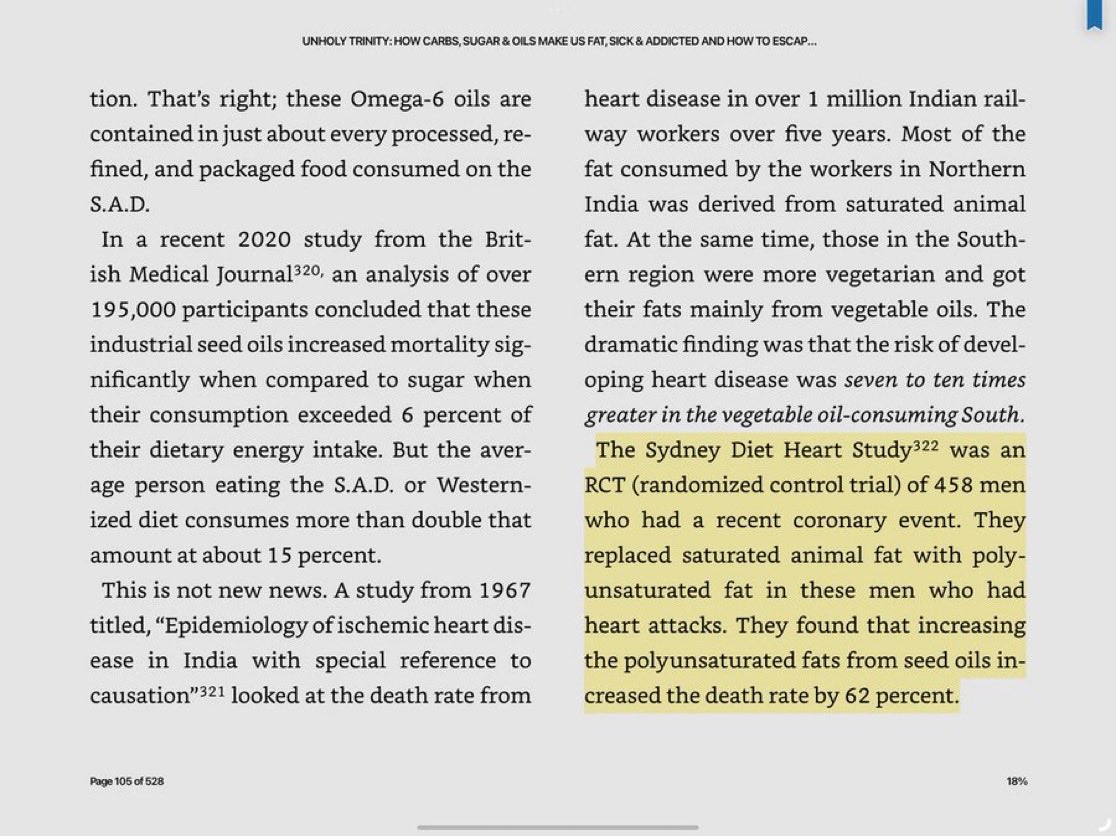
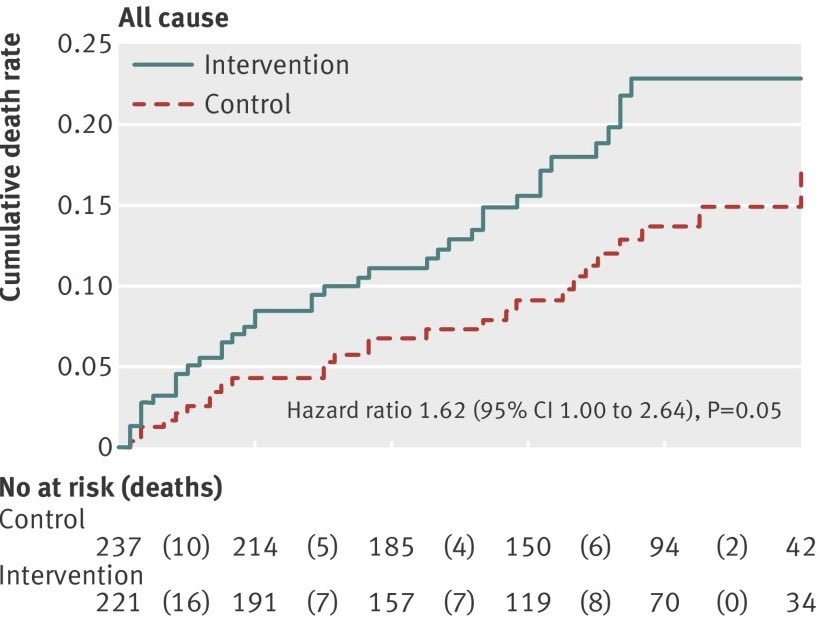
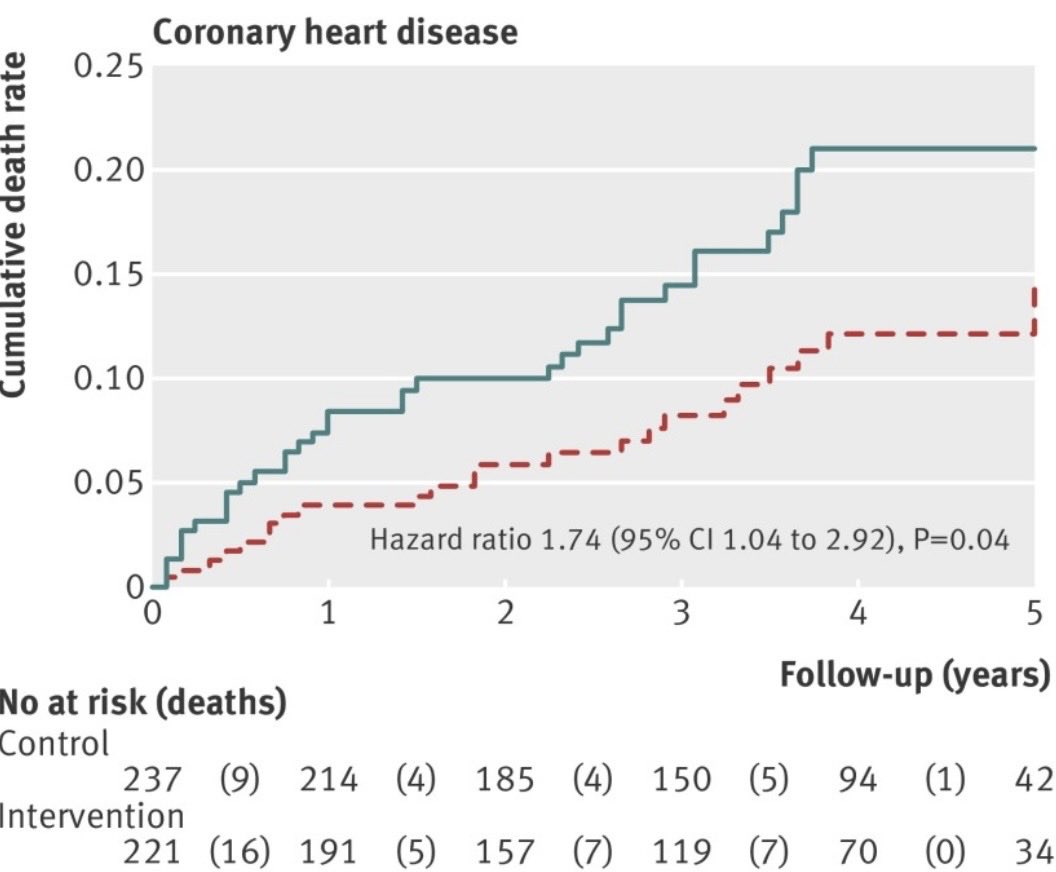
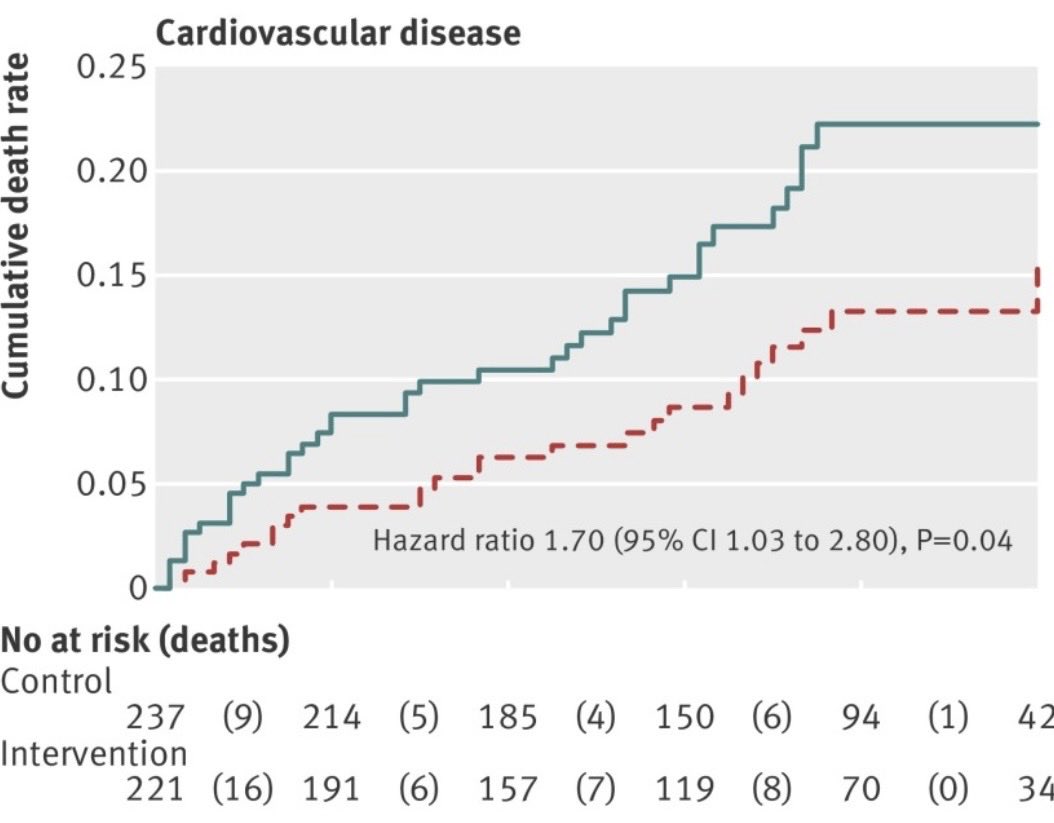
They KNEW seed oils killed 74% more people — and buried the key data for 35 years In 1966, researchers ran the Sydney Diet Heart Study to prove seed oils prevent heart disease. 458 heart attack survivors. Randomized controlled trial. 7 years of follow-up. Half replaced butter with “heart-healthy” safflower oil and polyunsaturated margarine. The other half ate their normal diet. The results should have changed everything: (PMID: 23386268) → Seed oil group: 74% higher coronary death rate → Seed oil group: 70% higher cardiovascular death rate → Seed oil group: 62% higher all-cause mortality The “healthy” fats killed people faster. In every category. Here’s the part that should make your blood boil: The all-cause mortality data was quietly published in 1978 — but the cardiovascular and coronary death numbers were NEVER reported by group. The most damaging evidence was withheld. It took until 2013 for researchers to recover the original dataset from a magnetic tape and publish what had been hidden. 35 years of suppressed data. While the same dietary guidelines kept telling millions of people to replace butter with seed oils. The mechanism: safflower oil is 75% omega-6 linoleic acid → oxidizes at cooking temperatures → forms toxic aldehydes (malondialdehyde, 4-hydroxynonenal) → damages blood vessel walls → accelerates atherosclerosis This isn’t the only study they buried. The Minnesota Coronary Experiment (9,423 participants) found the same thing — seed oils lowered cholesterol but INCREASED death rates. Those results were also hidden for 16 years. Replace with: butter, ghee, tallow, coconut oil for cooking. Extra virgin olive oil for cold use only (never heat it). What’s the most ridiculous “healthy” product you’ve found with seed oils in the ingredients? They’re hiding in everything — even at Whole Foods. Drop it below 👇
Gunnar🍊🌊 tweet mediaGunnar🍊🌊 tweet mediaGunnar🍊🌊 tweet mediaGunnar🍊🌊 tweet media
English
74
1.4K
3.5K
207.4K
Eileen henot retweetledi
Health Freedom Defense Fund
BREAKING: The Supreme Court just took a huge step towards restoring medical freedom. Last year, a federal court quietly delivered one of the most terrifying rulings ever. 99% of people didn’t notice. They said the government can force ANY medical intervention on you. With no evidence. No judicial review. The Ninth Circuit Court in California ruled against our organization, California Educators for Medical Freedom and several named plaintiffs in our lawsuit against the Los Angeles Unified School District over their Covid-19 vaccine mandate. The Court ruled that as long as authorities say a mandate is for “public health,” courts shouldn’t question them. They said it didn’t matter whether the Covid shots actually worked. All that mattered was that authorities said it did. “This opens the door to virtually limitless government power to mandate medical interventions in our lives.” But we fought back. In December, we petitioned the Supreme Court to review this dangerous and unprecedented ruling. And today, the Supreme Court responded. Our President Leslie Manookian just broke down their response and why it matters: “Just today, we got a notice from the Supreme Court that the Court has issued what’s called a ‘call for response’ to the Los Angeles Unified School District.” “The school district mandated that all [employees] take the Covid shot, and denied accommodation for their religious exemptions.” “They fired or displaced over a thousand employees.” “The School District waived its right to respond to our petition that we filed with the Supreme Court on December 29, 2025 requesting review.” Today, “the court has issued a call for response to the School District, ordering them to respond to our petition.” “Court watchers say that this increases our chances of being accepted by the Supreme Court for review.” “This case is of supreme importance, and I’m thrilled to hear this latest development.” “I believe this case … will make history.” Stay tuned. Follow @theHFDF
English
135
1.3K
3.4K
143.2K
Eileen henot retweetledi
Collin Rugg
Collin Rugg@CollinRugg·
NEW: 13-year-old Australian boy swims for four hours in cold and dangerous waters to save his mom and siblings who were swept into the ocean, says God is who got him to shore. The family was on kayaks & paddleboards when they were swept about 2.5 miles out to sea. After a conversation with his mother, Austin Appelbee decided he would swim back to shore to find help. Appelbee says he prayed throughout the four-hour swim and told God he would get baptized if he made it out alive. "I don't think it was actually me [swimming]... It was God the whole time. I kept on praying, kept on praying. I said to God, 'I'll get baptized.'" "The waves are massive, and I have no life jacket on… I just kept thinking 'just keep swimming, just keep swimming,'" he said. "And then I finally made it to shore, and I hit the bottom of the beach, and I just collapsed." Appelbee says when he got to shore, he had to sprint for about a mile to find help. According to AP, the family drifted 9 miles from Quindalup and spent 10 hours in the water. When he reached the shore, Appelbee alerted authorities, who then sent out a helicopter to find his mom, 12-year-old brother, and 8-year-old sister. Austin's mother, Joanne Appelbee, said one of the hardest decisions of her life was sending her son to shore. "One of the hardest decisions I ever had to make was to say to Austin: 'Try and get to shore and get some help. This could get really serious really quickly,'" she said. What a remarkable kid. Video: 7 News.
English
3.1K
21.9K
144.3K
6.7M
Today Updates 🇺🇸
Today Updates 🇺🇸@TodayUpdates0·
🚨BREAKING: Secretary Robert F. Kennedy Jr. announces "folate deficiency in a child's brain can lead to autism." And an "exciting therapy" for kids with autism: leucovorin. Up to 60% of deficient children can have improved communication if they take it. GREAT NEWS. This is groundbreaking. Do you firmly support this? A. Huge Yes B. No IF Yes, Give me a THUMBS-UP👍!! MAKE THIS GO VIRAL ON 𝕏. LET’S GO 👏
English
61
536
1.9K
81.9K
Eileen henot retweetledi
David Charns
David Charns@davidcharns·
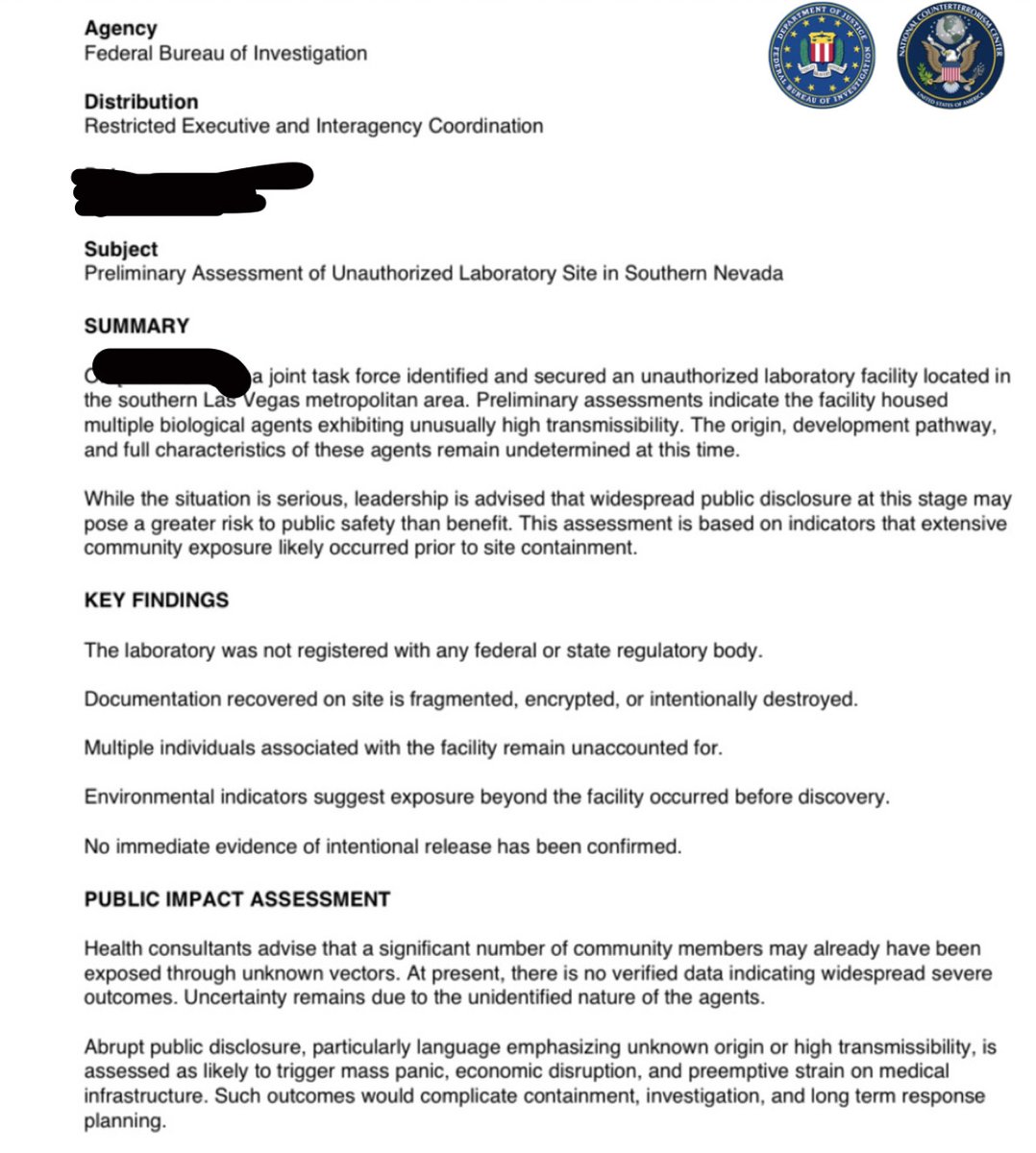
A suspected biological laboratory raided by Las Vegas police and the FBI may be connected to a similar incident in California, where officials found infectious agents such as HIV and malaria, the 8 News Now Investigators have learned. 8newsnow.com/investigators/…
English
82
805
1.9K
420.6K
Eileen henot retweetledi
Mary Talley Bowden MD
Mary Talley Bowden MD@MaryBowdenMD·
Coming soon... a website to check if your doctor or other provider reported your possible injury to VAERS. If you sought medical attention and it wasn't reported, you can sue!
Mary Talley Bowden MD tweet media
English
115
1.2K
3.3K
40K
Eileen henot retweetledi
Dr. Simone Gold
Dr. Simone Gold@drsimonegold·
BREAKING: AFLDS has filed an amicus brief urging the Supreme Court to stop states from punishing doctors for telling the truth. Government-mandated medical speech destroys informed consent. Doctors should never have to surrender the First Amendment to keep a license. Medical freedom is not negotiable.
Dr. Simone Gold tweet mediaDr. Simone Gold tweet media
English
36
572
1.4K
20.3K