Coach Mario

5.5K posts

Coach Mario banner
Coach Mario

Coach Mario

@FirstTouchDev

Father & husband. Passionate teacher & student of the beautiful game ( opinions are my own) @solofthecities @tcsolfutsal https://t.co/Qt1pDHSbcW

Mpls/ St. Paul 🇺🇸 Katılım Eylül 2017
2.2K Takip Edilen1.1K Takipçiler
Coach Mario
Coach Mario@FirstTouchDev·
Another perspective…
Marsha Lycan@mlycan12

So many things in life that seem phenomenal in theory are terrible in reality. The proposed split season for college soccer is one of them. Do I get the practical applications of a split season??? For sure! We complain all the time that soccer is the most demanding sport with the shortest runway. It’s crazy that we go to 0 to 60 in the amount of time that we do and cram all our games into an 11 week season. (tho at least they extended our season this year). But there are so many variables at play here. Think back to Covid when most conferences had their seasons cancelled but the P4 did not. They played all fall when the rest of us did not. Then when the NCAA announced we would have our official season in the spring, they all got a second season. This was in essence a trial run for the split season. One of my close friends who coaches at a P4 school detailed an eye opening account of all the reasons why the coaches and the players absolutely hated it. (And keep in mind this is a big time program, lots of national team players, and presumably, the most talented and most committed college players there are) 1) The obvious answer was it was just too long. He said they were all absolutely fried and over it by the end of the spring semester. And again, you are talking the upper echelons of talent and even they were miserable 2) When we are in season and focusing on games, the training is completely different than the spring. We are basically surviving and preparing for each subsequent game. We often say that every bit of player development comes in the spring. Hand in hand with that also comes playing time for the entire bottom, half of your bench who are given game opportunities to prove themselves. The same coach elaborated that those players we’re very discouraged after basically sitting on a bench, the whole YEAR and feeling like they were not getting the individual development that had occurred in a real off-season. 3) After sacrificing more than a decade of life, our seniors are so looking forward to being a “normal“ person for senior year spring semester. For the first time in life, as long as they can remember, they are able to relax and not have every single choice dictated by a sport for their last few months of “childhood”. The split season obviously requires that they play right up until graduation. 4) College athletes have a huge burnout factor, and the winter break is such a great opportunity for them to take a breather and recharge and come back with a renewed sense of commitment. A split season means that Christmas break is spent grinding with zero downtime as they prepare to come back and play games out of the gate. 5) Never mind where recruiting fits into all of this? Spring is huge for our recruiting efforts and we all just might lose our minds if we are trying to juggle all of that with also running an entire real season. 6) The entire northern half of the country will be completely screwed with this. This past winter that was so cold and snowy is a perfect example. There would have been no way in hell that games would have been able to be played in parts of February and March in many places. There are plenty of schools who have grass fields in cold climates as well—are they just supposed to now play some games on grass and some on turf and have zero consistency? 7) This will undoubtedly result in schools being forced to build turf fields and create logistical administrative nightmares given that many lacrosse teams and soccer team share fields. Someone else pointed out that it will be a good excuse for schools to eliminate more soccer programs especially when we are at a point with NIL that schools need to figure out how to save money on Olympic sports not create monumental new costs

English
0
0
0
354
Coach Mario
Coach Mario@FirstTouchDev·
@Don_K_Williams Wondering how this will impact USL 2 and their reliance on college players? Seems to favor MLS Next Pro quite well however. 🤔
English
0
0
1
87
Coach Mario retweetledi
Don Williams
Don Williams@Don_K_Williams·
🚨 THIS WOULD BE A Major shift for DI Men’s Soccer! The NCAA Division I Men’s Soccer Oversight Committee has approved a 2-semester playing season model, effective for the 2027-28 season. • Fall: Up to 18 games (late Aug → Saturday before Thanksgiving) • Spring: Up to 10 games (mid-Feb onward) • Total contests remain at 25 • Men’s College Cup moves to spring Key benefits for student-athletes: better academic-athletic balance, fewer midweek games, more recovery time, and stronger campus integration. Also: Transfer notification window changes to one 15-day spring window after the championship. Subject to final Cabinet review in June. Full story: ncaa.org/news/2026/5/13…
English
8
6
44
17.9K
Coach Mario
Coach Mario@FirstTouchDev·
@THEChrisKessell @ldock93 Super draft not going away yet to my knowledge but I love this rule as a coach and parent of incoming NCAA D1 freshman. More contact and load management. Major upgrade for college men
English
0
0
1
33
Chris Kessell
Chris Kessell@THEChrisKessell·
@ldock93 I thought the super draft was going away... or am I making that up in my head?
English
1
0
0
142
Coach Mario
Coach Mario@FirstTouchDev·
Grab your BEST THREE from wherever for a 3v3 and I’ll put my 💰 up! 😤
English
0
0
2
50
Coach Mario
Coach Mario@FirstTouchDev·
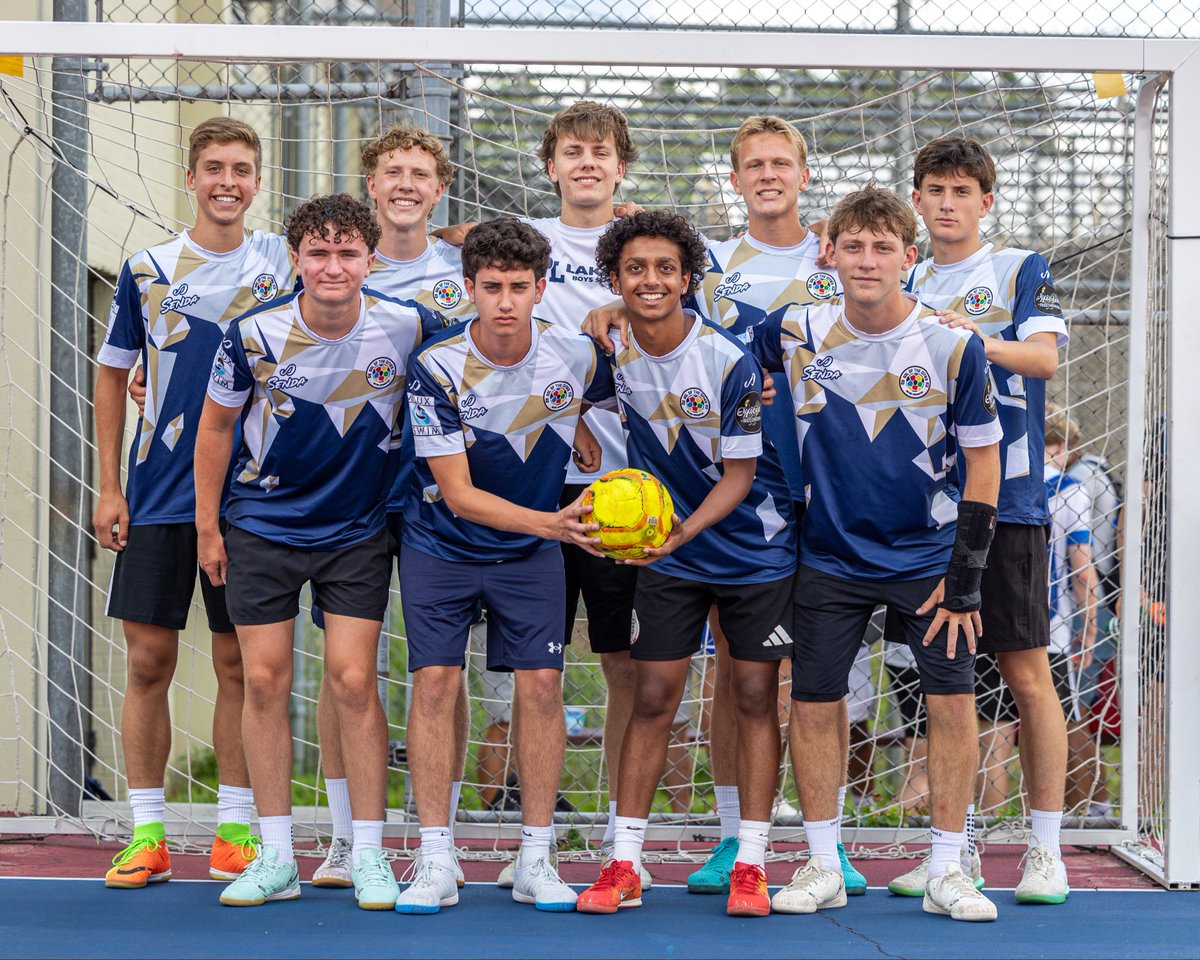
Kam, Jabari & Dono. Proud of the young men you’ve become. The highs, lows, wins, losses, and comebacks prepared you for what’s next. Generational talent, but even finer young Kings. Proud of my boys as they continue at Howard University, University of Dayton & Bowdoin College ⚽️
Coach Mario tweet mediaCoach Mario tweet mediaCoach Mario tweet mediaCoach Mario tweet media
English
3
5
7
271
Coach Mario retweetledi
Tom Byerトム•バイヤー
After reading countless posts and debates about youth development, I often shake my head at how little many people truly understand about how kids actually progress in football. The reality is simple: there are essentially two types of young players who join a team. Type 1 – The prepared player. They’ve already mastered the basic technical skills before joining. They can control the ball, perform fundamental movements, and execute simple actions with confidence. These kids are a joy to coach. Progress is visible, success comes naturally, and they develop rapidly. Type 2 – The unprepared player. They’ve barely touched a ball. They lack basic coordination, ball control, and movement patterns. These kids struggle from day one, fall further behind, and are the ones most likely to quit. We overcomplicate everything with endless discussions about coaching philosophies, methodologies, “player-centered” approaches, and making it “fun.” Of course enjoyment matters, but we miss the obvious truth: nothing is more fun or motivating than being good at something. Most kids arrive technically very poor. Because of that, all the sophisticated coaching expertise in the world has limited impact on them. They simply don’t have the foundation to absorb it. Coaches argue endlessly about tactics, fun games, or the latest trends, yet the core issue remains unaddressed. Good coaching has real limits. The best coach on the planet cannot fully compensate for a child who missed the critical early window to develop fundamental technical skills. Those early technical foundations act as a filter: they largely determine whether a child will develop into a solid, average, or above-average player, or drop out entirely. Bottom line: Prioritize technical proficiency early. Everything else flows from it.
English
7
18
141
10.9K
Chad Smith
Chad Smith@PlayFor90·
📰 "Sporting Kansas City recently contributed $250,000 to help fund a total investment of over $400,000 to renovate 19 futsal courts across 10 locations in Wyandotte County ahead of FIFA World Cup 26™"
English
3
1
59
4.5K
🆒 Chris Parry
🆒 Chris Parry@ChrisParry·
Once again, North American soccer misses the chance to build from the ground up, and instead lumps in with private equity to go top down. You need a pro-rel grassroots league in every state/province, feeding a semi-pro regional league system, that feeds your pro national league.
Tom Byerトム•バイヤー@tomsan106

There seems to be an escalating arms race happening in American soccer. USL recently brought in the BellTower Partners investment group, while MLS NEXT Pro partnered with global private equity giant KKR through Hometown Soccer Holdings. Billions are being raised and spent in a battle to grow professional soccer in the United States. But here’s the uncomfortable reality: you cannot buy culture. You cannot spend your way into creating a true soccer nation if the game is disconnected from the everyday lives of children and families. While billions are being poured into leagues, stadiums, media rights, and a one-month tournament, our children are becoming less healthy, less active, and academically weaker. In New York City, where the FIFA World Cup Final will be played in 2026, nearly 50% of K-12 students are failing reading proficiency standards, around 70% are failing math proficiency standards, and one in three children in grades K-3 cannot read at grade level. This is happening while NYC’s public school budget approaches $44 billion annually. In October 2023, I met with one of MLS’s top executives and presented research from a pilot study we conducted in Houston alongside Houston Dynamo and the University of Houston. We studied several hundred children and the impact Ball Mastery training had on academic performance and physical activity. The results were encouraging: improved mathematics scores, improved reading scores, and reduced sedentary behavior on weekends. More research absolutely needs to be done, but the findings suggested something important: simple soccer-based movement activities, supported by parents, teachers, and schools, may positively impact both learning and health outcomes. The Houston pilot was conducted with KIPP Schools, an organization widely respected for producing strong outcomes in underserved communities. Because KIPP operates nationally, the model has the potential to scale nationally as well. I suggested to MLS that, with the 2026 World Cup approaching, they should work with the New York City Department of Education to explore piloting this approach in NYC and eventually across the country. Unfortunately, nothing came from those discussions. To me, this should have been the true legacy project of the 2026 FIFA World Cup. Not another sponsorship deal, celebrity investor, or billion-dollar valuation, but a nationwide initiative using soccer to improve childhood health, learning, confidence, focus, and family engagement. “Soccer Starts at Home” is simple, affordable, scalable, and inclusive. Several CONCACAF member associations have already reached out asking how a program like this could be implemented in their own countries. That tells you everything. The future of soccer in America will not be determined by how much money leagues can raise. It will be determined by what the game actually does for children. Right now, this feels like a massive missed opportunity.

English
5
8
26
4.5K
Coach Mario retweetledi
TCSolFutsal
TCSolFutsal@TCSolFutsal·
Sol coaches learning from the next level today. Through the Minnesota United FC Alliance Program, we attended a MNUFC2 training session—observing pro methodology, networking, and bringing tools back to our environment. #TCSolfutsal 💪😤⚽️
TCSolFutsal tweet mediaTCSolFutsal tweet mediaTCSolFutsal tweet media
English
0
1
3
232
Coach Mario retweetledi
Tom Byerトム•バイヤー
The pay-to-play model in U.S. soccer isn’t just a sports issue, it reflects a broader pattern where access and advancement are tied to money. Instead of prioritizing pure talent and long-term development, the system often rewards those who can afford high fees, travel, and exposure. It echoes critiques of other industries: in pharma, where incentives can lean toward managing illness over curing it, and in defense, where ongoing conflict sustains production. Similarly, pay-to-play can depend on keeping the system expensive and exclusive rather than widening access. The result? A narrower talent pool, missed potential, and a structure that can prioritize revenue over merit.
English
16
21
78
11K
Coach Mario retweetledi
Nick Siscoe
Nick Siscoe@siscoe·
The entire $40B youth sports industry is, structurally, a prediction market about future evaluation. Parents aren't paying $25K/year because their kid wants to play more ball—they're paying because the recruiting apparatus only sees kids at expensive travel showcases. Visibility-to-evaluators has been physically gated by who shows up at the right tournament with the right team. PE rolled up the infrastructure because they correctly identified that they weren't selling baseball, they were selling tickets to the scholarship lottery... The lottery's payout is determined by who gets seen.
More Perfect Union@MorePerfectUS

NEW: Youth sports is now costing parents as much as $25,000 a year. Private equity and corporations are turning a childhood pastime into something only the wealthy can afford. Youth sports has become a $40 billion industry, and the steep costs are crushing American families.

English
2
5
14
6.2K
National Soccer HOF
National Soccer HOF@soccerhof·
"When are our best athletes going to play soccer?" Tony gives his answer to the often-asked question ⤵️
English
1
0
11
945
Coach Mario retweetledi
Jonathan Stoop
Jonathan Stoop@jonathanstoop·
The San Jose Earthquakes are the best team in MLS right now with the lowest squad value in the league. San Jose's squad is valued at $25.3M (per Transfermarkt), the league average is $53.7M. 69% of their squad is American, the highest in the league, with the majority sourced from NCAA. 10 of their 12 core Americans aged 20-28 came through the college pathway. 7 arrived directly via the draft across 4 consecutive cycles. The combined value of that 12 player cohort: ~$15M - some MLS clubs spend more on a single player. The cost efficiency is impressive but the real point is the squad's shared context. Many of San Jose's players came through overlapping pipelines and development environments - same draft cycle, California colleges and hometowns, integrated via the 2nd team. They have shared developmental DNA. This level of squad cohesion has real on-pitch impact and is a clear competitive advantage in a league where most clubs have little to no domestic core or shared backgrounds. The results are a significant enough for every MLS club to re-think how they build teams in this league. The dominant model - DPs on enormous salaries, internationals recruited at a premium, the domestic market as squad filler, draft picks as currency - optimizes for expenditure and acquisition at the expense of cohesion. A team with shared DNA is very different than a collection of talent.
Jonathan Stoop tweet mediaJonathan Stoop tweet media
English
33
69
561
85.3K
Coach Mario retweetledi
Andre Luciano
Andre Luciano@LVHoosierGK·
Parents and Recruits: Want a super clear picture of how recruiting works in today’s world? Division I programs are actively posting on social media seeking transfer portal players. Which means that your 2026 senior son or daughter that has not committed is not a priority in their recruiting. They are leaving 1-2 spots for portal transfers. Older, vetted, stronger. The landscape has changed. The old adage of play in games, post highlight film, emails coaches is no longer effective. Transfer Portal, Roster Limits, 5 for 5. All of it has an effect on the process. Trust me, it’s not the same.
English
1
5
16
4.4K
Coach Mario retweetledi
Jonathan Stoop
Jonathan Stoop@jonathanstoop·
A longitudinal study of 47 players at a top Spanish academy used bone-age data to classify biological maturation, with career outcomes tracked 15 years later. Late maturers reached professional football at 30.8% vs. 5.6% for early maturers. Every player from the cohort competing in a top 5 European league at follow-up belonged to the late-maturing group. Biological maturation and relative age effect research are measuring the same selection error from different angles: academy and international selection systematically favors the physically advanced, at the cost of long-term development potential. mdpi.com/2411-5142/10/2…
Jonathan Stoop tweet media
English
21
128
563
231.4K