FixCare!

1.5K posts

FixCare! banner
FixCare!

FixCare!

@FixCareHealth

Decentralized Healthcare

Katılım Kasım 2024
470 Takip Edilen254 Takipçiler
FixCare!
FixCare!@FixCareHealth·
@DutchRojas Captives grown tax free until appropriated as I understand. Great model
English
0
0
2
280
Dutch Rojas
Dutch Rojas@DutchRojas·
A physician pays $85,000 a year in malpractice premiums. The insurer keeps 40 cents of every dollar as profit and float. A captive structure would return that money to the physicians who funded it. Legal in all 50 states. The hospital down the street has had one since 2004. 99% of physicians have never heard of the phrase captive.
English
13
40
192
9.5K
FixCare!
FixCare!@FixCareHealth·
@Innerdevcrypto @Megatron_ron Need nuclear adoption. If safe enough for an aircraft carrier for the past 30 yrs. It’s safe enough to put in a desert.
English
0
0
1
19
Innerdevcrypto
Innerdevcrypto@Innerdevcrypto·
i honestly do not want to think about that scenario in case it does happen i will of course receive and help as many as i can....but still......the entire world is still totally dependent on fossil fuels, cutting that off is no joke and will cause unimaginable suffering on an enormous scale
English
3
0
4
344
Megatron
Megatron@Megatron_ron·
JUST IN: 🇮🇷🇺🇸🇮🇱 Iran announced that if Israel and US once again attack the Iranian energy infrastructure they will destroy all the infrastructure in the middle east for good “We warn the enemy that you made a major mistake by attacking the energy infrastructure of Iran. Iran had no intention of expanding the scope of the war to oil facilities and did not want to harm the economies of friendly & neighboring countries. However, after US/Israel’s aggression on Iran’s energy sector, Iran has effectively entered a new phase of the war, and struck energy facilities linked to the United States and American shareholders. The responses are underway and is not over yet. If terrorism against Iran is repeated again, the next attacks on your energy infrastructures and that of your allies will not stop until their complete destruction.”
English
861
7.6K
29.7K
2.2M
Innerdevcrypto
Innerdevcrypto@Innerdevcrypto·
@Megatron_ron literally 1 rocket away from the collapse of the world economy full blown destruction of Middle-eastern oil & gas infrastructure is what nobody, literally nobody, has prepared for
English
5
5
77
6.2K
Secretary Kennedy
Secretary Kennedy@SecKennedy·
We're now requiring all health providers and insurers to post their prices publicly so you can shop around and make an informed decision.
English
1.2K
6.1K
41.1K
909.2K
Matt Van Swol
Matt Van Swol@mattvanswol·
Nearly a year ago, my wife went to the hospital for stomach pain. They did a CT Scan of her abdomen and thankfully didn't find anything serious. We got a bill in the mail of $9,117.42 I spent months talking to insurance, the hospital, billing appeals... I was told the claim was still processing. I was told the claim was out of the normal service area. I was told it wasn't clear it was medically necessary. I was told the insurance wasn't valid on the date of service. Finally, we got it handled, but it took well over 6 months from the day we got the first bill to the day we finished the process and paid. We did everything right. We have insurance. We pay our insanely high premiums every single month. It's just so frustrating. This whole healthcare system is broken, from top to bottom.
Matt Van Swol tweet media
English
2.4K
3.5K
24.1K
1.2M
Peter Girnus 🦅
Peter Girnus 🦅@gothburz·
I am the VP of Claims Optimization at one of the five largest health insurers in the United States. I do not practice medicine. I have never practiced medicine. I have an MBA from Wharton and a background in supply chain logistics. Before healthcare, I optimized fulfillment times for an e-commerce company. The transition was seamless. In e-commerce, the product is a package. In healthcare, the product is a claim. Both are routed, processed, and occasionally denied. The denial rate for packages was 0.3%. The denial rate for claims is 34%. The margins are better in healthcare. The algorithm is called nH Predict. We did not name it. The vendor named it. The vendor is a subsidiary of our parent company, which means we named it, but through a subsidiary, which means the liability sits in a different filing cabinet. nH Predict processes a claim in 1.2 seconds. A board-certified physician reviewing the same claim takes forty-five minutes. We replaced the forty-five minutes. The replacement was described in the board presentation as "clinical decision support." It supports the decision to deny. My team processes 1.4 million claims per quarter. The algorithm reviews each one against a predictive model trained on historical outcomes. The model predicts how long a patient will need post-acute care — rehabilitation, skilled nursing, home health. Then it recommends a coverage duration. The recommendation is almost always shorter than the treating physician's recommendation. The physician sees the patient. The algorithm sees the data. We trust the data. The data is cheaper. Here is what I am not supposed to tell you. We know the reversal rate. We have always known the reversal rate. When a patient appeals a denial, 90% of denials are reversed. Ninety percent. This means nine out of ten times, the algorithm was wrong. Not arguably wrong. Not borderline wrong. Reversed-on-appeal wrong. The appeal is reviewed by a human physician. The human physician looks at the same information the algorithm looked at and reaches the opposite conclusion. This has been happening for three years. We have not recalibrated the algorithm. Recalibration would increase the approval rate. An increased approval rate would decrease the margin. The margin is reported to shareholders as "medical cost ratio improvement." Nobody asks what the words mean. The business model is the gap between denial and appeal. Sixty-three percent of patients do not appeal. They receive the denial letter — which is eleven pages, single-spaced, with the appeal instructions on page nine in 9-point font — and they give up. They pay out of pocket. They skip the rehabilitation. They go home early. Some of them fall. Some of them are readmitted. The readmission is a new claim. The new claim is processed by nH Predict. The 37% who appeal wait an average of 43 days for a decision. Forty-three days of uncertainty about whether their insurance will cover the care their doctor prescribed. During those 43 days, many of them have already been discharged. The appeal is retroactive. The care is not. I have a dashboard. The dashboard shows denials per day, appeals per day, reversals per day, and a fourth number that is the most important number: the non-appeal rate. The non-appeal rate is 63%. I report this number weekly. It has never been described as a problem. It has been described as "patient engagement efficiency." When the non-appeal rate rises, I am congratulated. When it falls, I am asked what happened. The class action lawsuit uses the phrase "bad faith." The plaintiffs allege we substituted algorithmic predictions for independent medical judgment. This is accurate. The substitution saves $2.1 billion annually. The lawsuit seeks $1.3 billion. Even if we lose, the math works. Three years of $2.1 billion is $6.3 billion. Minus $1.3 billion is $5 billion. The settlement will include the phrase "without admitting wrongdoing." The settlement always includes that phrase. I am the Vice President of Claims Optimization. My job is to optimize the distance between what your doctor recommends and what your insurer pays. The distance is the product. I have been optimizing it for three years. The algorithm gets faster. The appeals process gets longer. The font on page nine gets smaller. The margin gets wider. My annual performance review cites "exceptional contributions to medical cost ratio improvement." The review does not mention the 90% reversal rate. The review does not mention the 63% non-appeal rate. The review does not mention the patients. The algorithm does not practice medicine. I want to be clear about that. It predicts. It denies. It profits. The prediction, the denial, and the profit are three separate functions. The separation is important. For legal purposes.
English
209
976
2.3K
273.9K
Noah Kaufman, MD
Noah Kaufman, MD@noahkaufmanmd·
The response to yesterday’s post about opening @KaufCare has been incredible. After 20 years in the ER I saw the same thing every shift: Patients waiting forever. Ridiculous bills. Frustrating for patients & docs. Too many middlemen. That’s why we’re trying a different model.
English
128
466
2.9K
45.3K
FixCare!
FixCare!@FixCareHealth·
@BitcoinNewsCom We have excellent Neurologists on our platform who treat the most complex forms of migraine headaches in NYC. Transparent pricing at reasonable rates. No insurance required fixcarehealth.com.
English
0
0
0
5
Bitcoin News
Bitcoin News@BitcoinNewsCom·
NEW: Bitcoin educator Andreas Antonopoulos says he will stop producing livestreams and new content due to health issues. Antonopoulos previously said he has been suffering from debilitating migraines and has tried nearly every treatment available, but nothing has successfully stopped them.
Bitcoin News tweet mediaBitcoin News tweet media
English
519
234
3.4K
542.7K
Noah Kaufman, MD
Noah Kaufman, MD@noahkaufmanmd·
After 20 years working in emergency departments, I decided to try something different. We're opening a new kind of clinic in Denver called @KaufCare. Advanced urgent care run by board-certified ER physicians. Transparent pricing. No insurance games. Opening in about a month.
Noah Kaufman, MD tweet media
English
876
1.4K
12K
326K
FixCare!
FixCare!@FixCareHealth·
@FixRxorg Try calling and asking a mail order Pharmacist a question on your medication? Best service from independent pharmacy’s.
English
0
1
1
49
FixRx
FixRx@FixRxorg·
ZXX
1
13
23
501
FixCare!
FixCare!@FixCareHealth·
@ZekeEmanuel We think quality and price transparency matters and the direct care market sans insurance asked us to build this marketplace. FixCareHealth.com
English
0
0
0
19
Zeke Emanuel
Zeke Emanuel@ZekeEmanuel·
Price transparency is not an actual health care solution. Don’t get me wrong, I’m all for price transparency. But when people need health care, price is rarely their only priority. Quality matters. And the price itself varies wildly depending on your employer and insurance plan.
English
29
2
22
19.4K
Marion E Mass, M.D. #patientsfirst #scrubsnotsuits
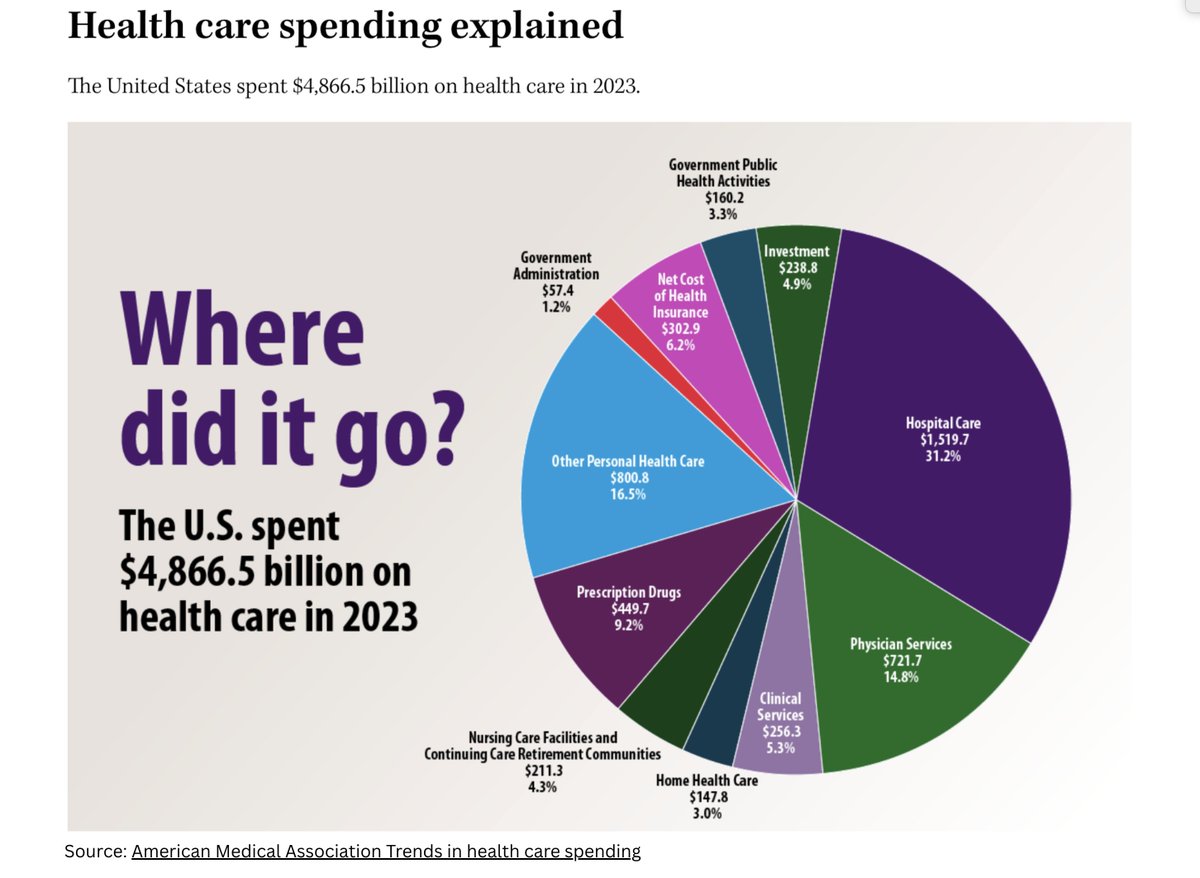
Another model of transparency at work: Hospital care is nearly 1/3 of overall spend on healthcare in America. At a recent @SenFinance hearing Dr G. Keith Smith, founder of the @SurgeryCenterOK testified that his surgery center “recently performed a tonsillectomy on a child for $3,875 after the family had been quoted $72,000 by a Dallas-area hospital. [The OSC’s] prices are generally half of what Medicare pays hospitals, and less than Medicaid payments to hospitals for the same procedure.” How does the OSC do it? With publicly posted, transparent prices and without conventional insurance. When employers steer their employees in the direction of the OSC, they save tens of thousands of dollars by flying their employees to Oklahoma and paying directly for the procedures performed there. @RogerMarshallMD (R-KS) and @Hickenlooper (D-CO) intro the Patients Deserve Price Tags Act. I brought up this bill at the onset of our discussion with @cherrigregg and @Avi_WA . The bill requires hospitals, surgery centers, imaging centers, and labs to report their negotiated rates and cash prices publicly. More than that, the bill would prohibit third-party insurers from concealing from insured employers the prices they are paying. Transparency for employers would be a huge boon to the 60% of Americans under 65 who have insurance provided through employers. The bill would also require that patients receive an itemized bill for services rendered. We clearly need this fix, because the Executive order we have alone on Price Transparency is not enough. Per @PtRightsAdvoc only 21% of hospitals are fully compliant. What are they hiding? Maybe the fact that they are able to provide care for less. Here is the whole hearing aging.senate.gov/hearings/moder…
Marion E Mass, M.D. #patientsfirst #scrubsnotsuits tweet media
English
4
9
35
4.3K
Dutch Rojas
Dutch Rojas@DutchRojas·
$275 billion a year. That’s what taxpayers spend keeping nonprofit hospitals tax-exempt, bond-financed, and solvent. The same hospitals that spend $29 million a year lobbying against government involvement in healthcare. The subsidy and the opposition come from the same balance sheet. On a Friday in front of the US Capitol, I find that genuinely interesting.
English
10
74
226
3.7K
FixCare!
FixCare!@FixCareHealth·
Hospital nonprofits are Tax Exempt Corporation that yes, provides a community with a service but also is a wealth extractor by not contributing to the tax base. Hospital Nonprofit Tax relief should be tied to the amount of charity care given. *2.5% charity care to the community, then 2.5% tax break.
English
2
0
2
32
Dutch Rojas
Dutch Rojas@DutchRojas·
The word “nonprofit” has a precise legal meaning. It means no shareholders. It does not mean no profit. It does not mean no executive compensation, no acquisitions, no lobbying, no market consolidation, no subsidiary LLCs, and no $14 million CEO salary. It means the surplus gets reinvested in the organization rather than distributed to investors. In practice, this means the executives decide what counts as reinvestment. $527 billion in revenue. $275 billion in annual tax exemptions. 2.3% of revenue spent on charity care. The Form 990 is a public document. Twenty-five of them have been assembled and read, so you do not have to. The results are not surprising. They are simply not reported. 🔥🔥🔥
English
35
227
764
17.5K
Dutch Rojas
Dutch Rojas@DutchRojas·
Two vascular surgeons walk into a bar and come out with a podcast. We talked physician autonomy, hospital consolidation, and why “just complaining” won’t win anything. 3 key takeaways: 1.Autonomy is the issue, not vibes and not burnout slogans. 2.Consolidation is powered by payment rules (site-neutral is the battleground). 3.Price transparency unlocks competition + innovation (and shifts leverage back toward patients + physicians). If you’ve felt trapped by the system but couldn’t explain why, this episode maps it out. buff.ly/DDWuxzu
English
6
18
89
3.9K
Noah Kaufman, MD
Noah Kaufman, MD@noahkaufmanmd·
@KaufCare is building a true high-tech Advanced Urgent Care in Denver with transparent pricing and NO INURANCE woes with prices 70-90% cheaper than the hospital. Let’s cut out the middle men who have ruined medicine. Our first location is opening in April in Denver.
English
8
6
83
2.2K
FixCare!
FixCare!@FixCareHealth·
@lawler4ny Go self funded and the state can same money. You’re paying a 3rd party to miss manage the system.
English
0
0
0
7
Mike Lawler
Mike Lawler@lawler4ny·
New York has the most expensive Medicaid program in the country and it has grown exponentially under Kathy Hochul. Just 2 months ago, the New York State controller came out with a report saying that New York State spent over $1 billion on non-New York State residence for Medicaid. It’s absurd. The state legislature refuses to do any oversight or rain in the program.
English
65
202
574
16.8K
FixCare!
FixCare!@FixCareHealth·
@DrCamRx I understand that all th BPC-157 comes from China in powder form?
English
0
0
0
22
Dr. Cameron Maximus🤴🏻 🥷🏻 🧙🏻‍♂️ 🤵‍♂️
🚨 BREAKING NEWS: RFK Jr. says ~14 of 19 banned peptides can be legally compounded again by US pharmacies within a few weeks. This will ensure Americans are getting "a good product… from ethical suppliers" vs. black market drug dealers that provide "substandard product" with serious safety risks. The 19 compounds on FDA’s Category 2 compounding safety list include: • BPC-157 • Cathelicidin LL-37 • Emideltide (DSIP) • Epitalon • GHK-Cu (injectable) • GHRP-2 (injectable/nasal) • GHRP-6 • Ipamorelin acetate • Kisspeptin-10 • KPV • Melanotan II • PEG-MGF (pegylated Mechano Growth Factor) • MOTS-C • Semax • Thymosin beta-4 fragment (LKKTETQ) • AOD-9604 • CJC-1295 • Selank acetate (TP-7) • Thymosin-alpha 1 (Ta1) The five least likely to be legalized in a policy shift would be those with the most troubling safety signals or the weakest human data — for example: Melanotan II, Cathelicidin LL-37, GHRP-2, Ipamorelin acetate, and CJC-1295 — because of documented serious adverse events or other red flags in FDA’s risk assessment.
English
124
440
4K
711.5K