Four Pillars

10 posts

Four Pillars banner
Four Pillars

Four Pillars

@FourPillars

Abstract Away, Build the Real Blocks

Seoul Katılım Ekim 2010
0 Takip Edilen15 Takipçiler
Four Pillars retweetledi
Four Pillars
Four Pillars@FourPillarsFP·
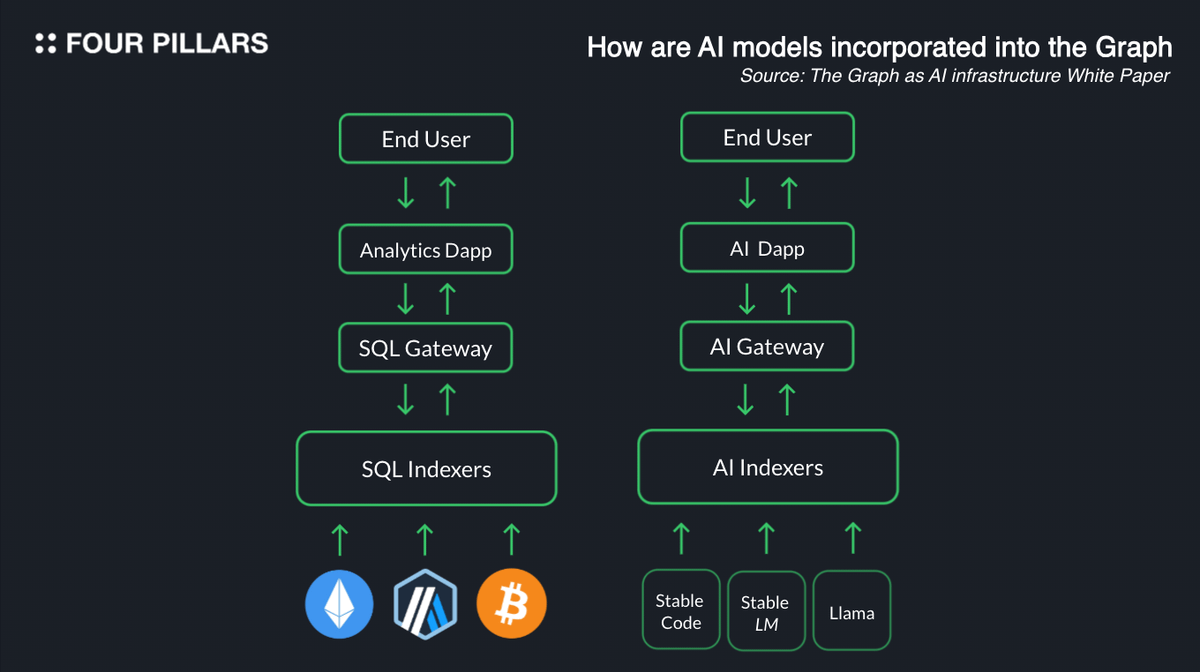
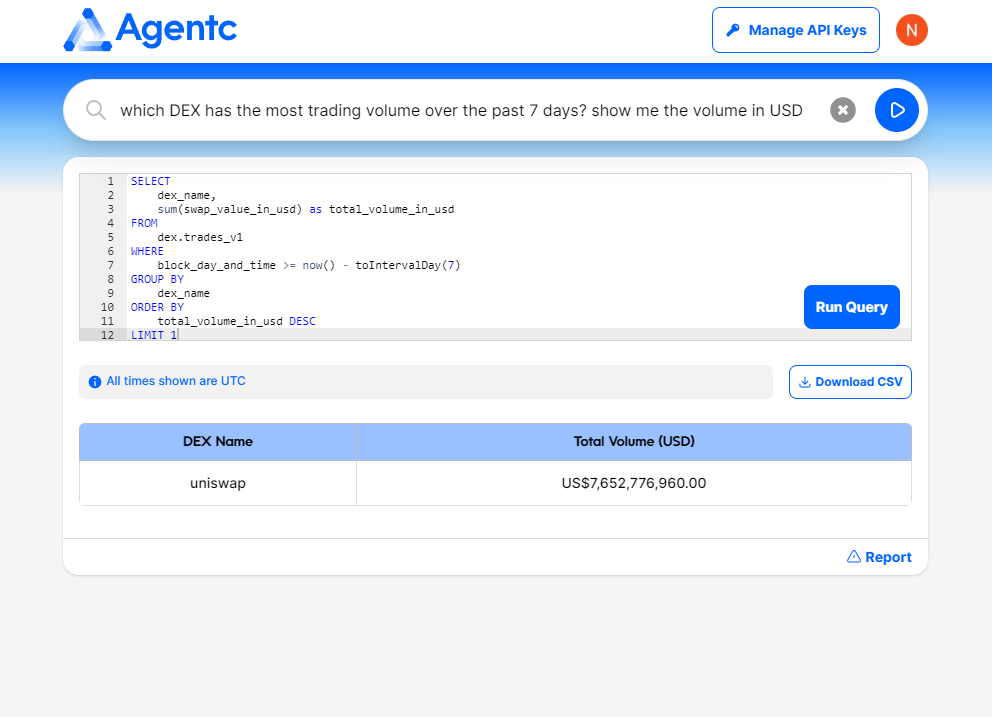
: : From an Indexing Protocol to AI Infrastructure: The Story of The Graph Article by @Steve_4P (Full Text) 4pillars.io/en/articles/th… (Summary of Text) Amidst various projects that rely on short-term narratives and airdrops, causing sustainability issues, there are protocols that have steadily developed and refined their products over the years. The Graph is a prime example of such projects. As a data indexing/querying infrastructure, The Graph has provided these services to various applications and blockchains for the past three years. Notably, its usage has steadily increased without relying on airdrops or point systems, making it an encouraging case. Furthermore, The Graph’s vast infrastructure and data position it to play a crucial role in the upcoming convergence of AI and blockchain, suggesting a promising future. Let’s delve into these points: 1. Focusing on Real Issues, Not Short-Term Narrative The Graph differentiates itself by addressing genuine problems. Unlike other protocols that jump on short-term narratives, The Graph identifies the inconveniences faced by blockchain services and provides relevant solutions, specifically blockchain data indexing and querying. This is a challenging task due to the nature of blockchain data, which includes finality, chain reorganization, and orphan blocks. Despite these challenges, The Graph emerged to meet these needs, leading to consistent demand independent of token rewards. Applications like Farcaster, Lido, Uniswap, Aave, Compound, and Curve use The Graph for data indexing/querying, demonstrating its value in solving crucial problems. 2. Beyond Indexing: AI Infrastructure The Graph is taking a step further by leveraging its accumulated data and indexer network to provide AI infrastructure. The vast blockchain data The Graph has collected over the years is highly valuable for AI training. The performance of AI models is largely dependent on the volume of data they can learn from, making The Graph’s data an excellent resource for developing AI-based on-chain data tools, such as AgentC. Additionally, The Graph’s extensive indexer network offers significant computing resources, enabling the direct hosting of AI inference models. Thus, The Graph is not merely a data indexer; its potential to host AI models positions it for even greater growth. This evolution is why The Graph should not be viewed solely as a data indexer and query service. By hosting AI models, The Graph can achieve significant growth beyond its current scope. 3. Why Focus on The Graph Now? The Graph exemplifies a model protocol, addressing market issues and expanding its problem-solving capabilities through its infrastructure. The Graph’s future looks promising as it continues to focus on “necessary” solutions rather than “appealing” problems, making it a protocol worth watching. ------------------ You can see the full version of "From an Indexing Protocol to AI Infrastructure: The Story of The Graph" in the link below: 4pillars.io/en/articles/th…

Four Pillars tweet mediaFour Pillars tweet mediaFour Pillars tweet mediaFour Pillars tweet media
English
5
16
71
10.4K
Four Pillars retweetledi
Four Pillars
Four Pillars@FourPillarsFP·
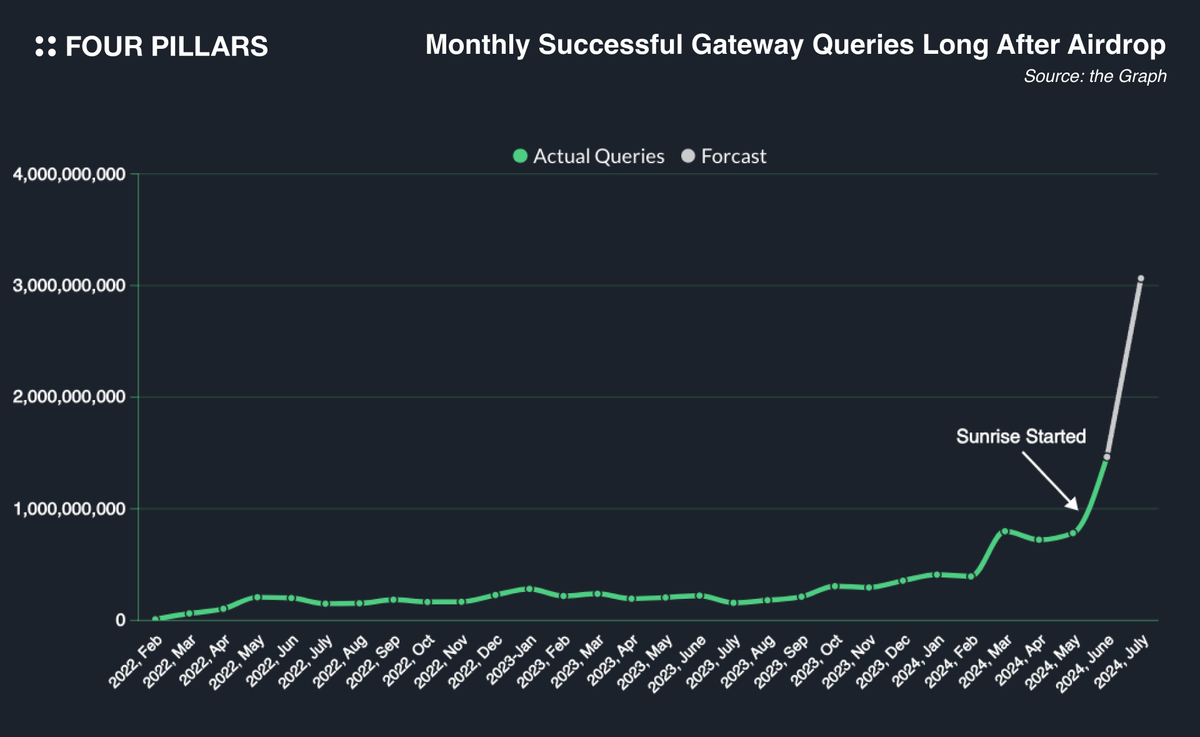
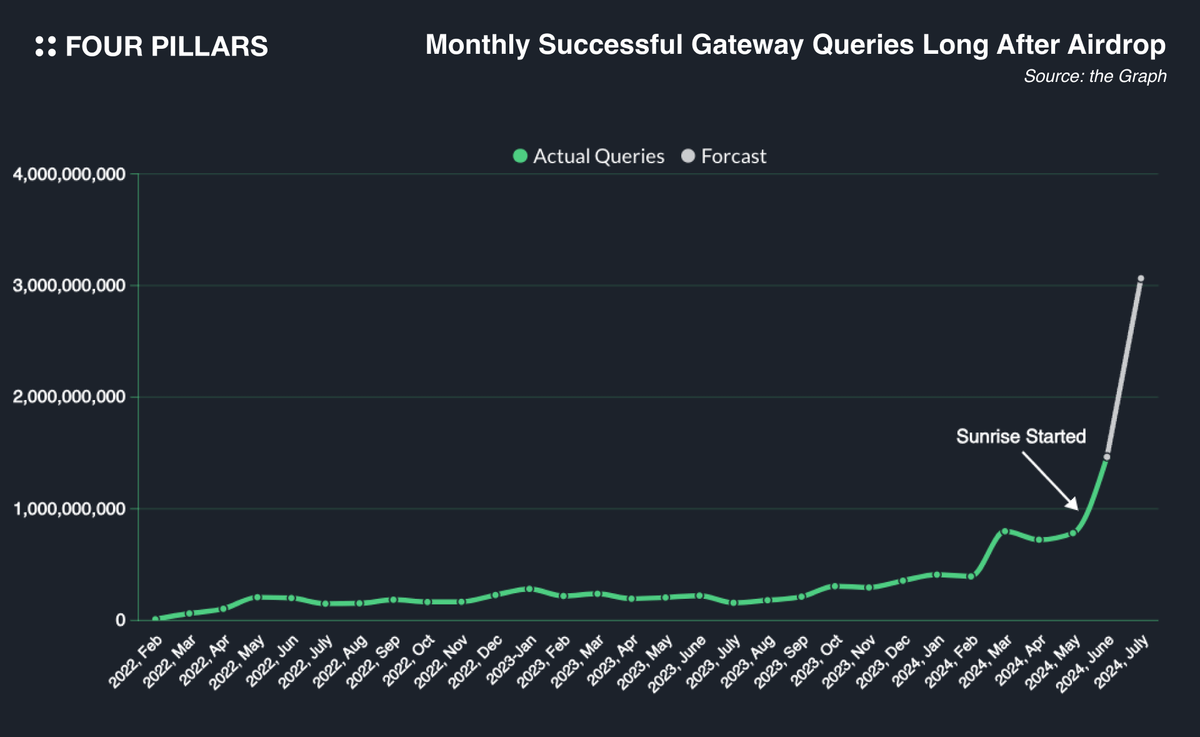
: : [Opinion] The Graph’s Usage Tells Us a Lot About Protocol’s Sustainability Opinion by @Steve_4P 1. Background - Point System and its sustainability In crypto industry, airdrops have long been regarded as an indispensable tool for launching new projects. From the project’s perspective, issuing tokens as rewards to users is an excellent way to generate network effects without incurring marketing costs. This strategy aligns the interests of early users with the project, encouraging them to contribute consistently to the network. Similarly, points have served a comparable role. However, unlike tokens, points offer the advantage of flexible application, as they are not bound by the same constraints. The uncertainty regarding the exact exchange rate of points for tokens can also be an effective tool for building user anticipation. However, these systems are often exploited by both users and protocols. Users frequently become airdrop hunters, constantly chasing airdrops without becoming regular users. Meanwhile, protocols often struggle to maintain momentum after the airdrop, leading to difficulties in retaining users. Ultimately, while airdrops are important, the most crucial aspect is whether the project genuinely delivers what is needed and clearly addresses the problem it aims to solve. Incentive systems like airdrops and points can be highly effective for projects that have a good product but lack visibility and thus require marketing and networking efforts. So, what constitutes a good product? It is one that can solve a problem. In this context, The Graph serves as a good example. 2. Takeaway - Airdrops are for initial marketing; ultimately, sustainability comes from the product itself (This graph illustrates the monthly successful gateway queries since early 2022. Queries before June 2024 appear relatively low because most data were hosted by centralized services. However, after the "Sunrise" event, which marked the complete decentralization of the querying interface, you can see a significant increase in volume. As I am preparing this analysis in early July, I will forecast the monthly successful queries for July based on the daily successful queries recorded by The Graph so far this month.) Although the Graph rewarded early indexers with tokens, it’s significant that protocol usage continued to rise even after the airdrop. This demonstrates that the demand for the protocol was not artificially generated. The airdrop genuinely aimed to reward early contributors rather than artificially inflate protocol usage. Why is that? It is because the Graph focused on addressing real problems that needed solving(data query and data indexing), rather than artificially creating demand for something that wasn’t genuinely needed. I believe that now is an opportune time to reconsider the sustainability of protocols. While I do not condemn the airdrop strategy itself, I do criticize the practice of replicating identical services and promising large airdrops to attract initial users. The primary focus should be on the quality and utility of the product itself, rather than on the effectiveness of incentives. The Graph is evolving btw, now positioning itself as an infrastructure for the crypto and AI sector. Beyond serving as an indexer, it provides a platform for running inference models. The Graph has consistently focused its resources on addressing meaningful industry needs rather than on trivial pursuits. I believe that protocols like The Graph deserve greater recognition. Of course, @FourPillarsFP is planning to publish about detail architecture and structure of the Graph soon. So stay tuned for detailed research! 3. Others' Opinion 3.1 Ingeun Kim from Four Pillars Everything in the world is subject to the fate of rise and fall, from human lifespans to the birth and death of stars. In the scientific community, these phenomena are collectively explained by entropy, while in economic or social contexts, they are often described in terms of fatigue. From this perspective, the rampant issuance of tokens and points in the current crypto scene is causing significant fatigue for those involved in the industry. This situation is preventing high-quality projects with truly excellent narratives and supporting use cases from gaining the recognition they deserve. Therefore, to reduce fatigue in the Web3 industry, we need to reflect on ourselves and seek out projects with noble goals. In other words, we should pursue value rather than blindly chasing money. By recognizing and DYOR on projects that promote actual usage data, like the aforementioned case of The Graph, we can reward value and foster a healthier Web3 ecosystem. At the very least, within this ecosystem, our small actions can counteract entropy. 3.2 Jay Jeong from Four Pillars One of the strengths of crypto is its potential to facilitate a wide range of activities through incentives schemes. Airdrops are a prime example of this. As Steve mentioned, airdrops initially started as a way to generously reward early contributors who did not intend to seek profit, but their use has expanded and they are now actively used as marketing tools for various protocols. Unlike traditional marketing, airdrops allow protocols to effectively allocate their desired budget directly to target users without intermediaries. However, the more important question is the next step: how can we keep users who join through airdrops continuously engaged on the platform? To strengthen and solidify the customer lifetime funnel, the protocol's subsequent strategy is crucial. In this regard, it is not just about marketing to increase on-chain transaction volume, but rather about providing a carefully designed product experience that is genuinely valuable. Observing cases where new users are converted into organic users through such well-thought-out marketing strategies would not only create a more sustainable initiative for the product but also significantly enhance the quality of the market, which is often filled with cherry pickers. 3.3 Eren from Four Pillars Except for a few L1/L2, the only models that seem to have found product-market fit (PMF) and are sustainably running without relying on buzzwords are projects with B2B2C structures such as Oracle (Chainlink, Pyth), Bridge Network (LayerZero, Wormhole), and RPC (Pocket Network). Among these, The Graph, which intermediates blockchain data indexing services, stands out as a representative example of a project that has found PMF by consistently providing necessary services to the market. The indiscriminate use of airdrop campaigns by projects without technological or market differentiation to perform fake loyalty tests is problematic. However, the more significant issue is the mass dumping of tokens that become unnecessary after the airdrop, leading to a continual decline in value. Recently this has caused many retail investors to leave the market. As Steve suggests, it is only after providing services genuinely needed by the market that airdrops and tokenomics can find their true purpose. $GRT functions as the internal currency needed to operate a service, used for tasks such as staking by indexers, qualifying subgraph validators, and paying query consumers. This exemplifies the typical use of a "work token." The Graph underscores the importance of the principle that "sustainable services create sustainable tokenomics" and presents a meaningful direction in terms of both PMF and tokenomics. 4. Resource Related Articles, News, Tweets, etc. : • thegraph.com/blog/the-graph…thegraph.com/blog/announcin…thegraph.com/blog/20billion… Related People, Projects : @graphprotocol @Steve_4P @IngsParty @JayLovesPotato @G_Gyeomm
Four Pillars tweet mediaFour Pillars tweet media
English
2
10
32
7.7K
Four Pillars retweetledi
Four Pillars
Four Pillars@FourPillarsFP·
: : Changing Crypto’s Order: Reflection On Dynamics and Future Direction of the Industry Article by @pillarbear_ (Full Text) 4pillars.io/en/articles/ch… (Summary of Text) 1. The Narrative Game The 'narrative game' in crypto, sparked by Bitcoin, has created a unique culture where compelling storytelling is the most important market entry strategy for projects. However, the rules of the narrative game are gradually changing. Market participants are developing a meta-awareness of the game itself, and the recent meme coin craze is a direct satire of the existing culture. 2. Where Are We Now? The strong preference for infrastructure and platforms in the crypto industry has greatly contributed to its development. However, even as blockchain infrastructure approaches maturity, old habits persist like inertia. The crypto industry can no longer justify not providing applications for general users. It has reached a point where there is a pressing need for applications that can generate demand for block space. 3. Tokenization of Everything The greatest strength of crypto lies in its ability to assign economic value to any idea and provide a platform for trading it. Recently, the crypto market has seen the emergence and rise of onchain applications leveraging the attention economy and speculative characteristics. Experiments with new forms of services such as memecoins, social trading, and prediction markets are ongoing, signaling the potential for more diverse on-chain applications and business models in the future. 4. Speculation Is a Feature, Not a Bug For onchain applications, speculation is one of the most powerful functions. The increasing social demand for speculation can attract users known as "degens," who can become familiar with the on-chain environment through this. However, in the long term, the goal should be to provide value beyond speculation. It is necessary to convert users drawn by speculative demand into those who appreciate the core value of the service, build a sustainable token economy, and ultimately offer a social graph and product value that surpass speculation. --- You can see the full version of "Changing Crypto’s Order: Reflection On Dynamics and Future Direction of the Industry" in the link below: 4pillars.io/en/articles/ch…
Four Pillars tweet mediaFour Pillars tweet mediaFour Pillars tweet mediaFour Pillars tweet media
English
0
6
17
1.4K
Four Pillars retweetledi
Four Pillars
Four Pillars@FourPillarsFP·
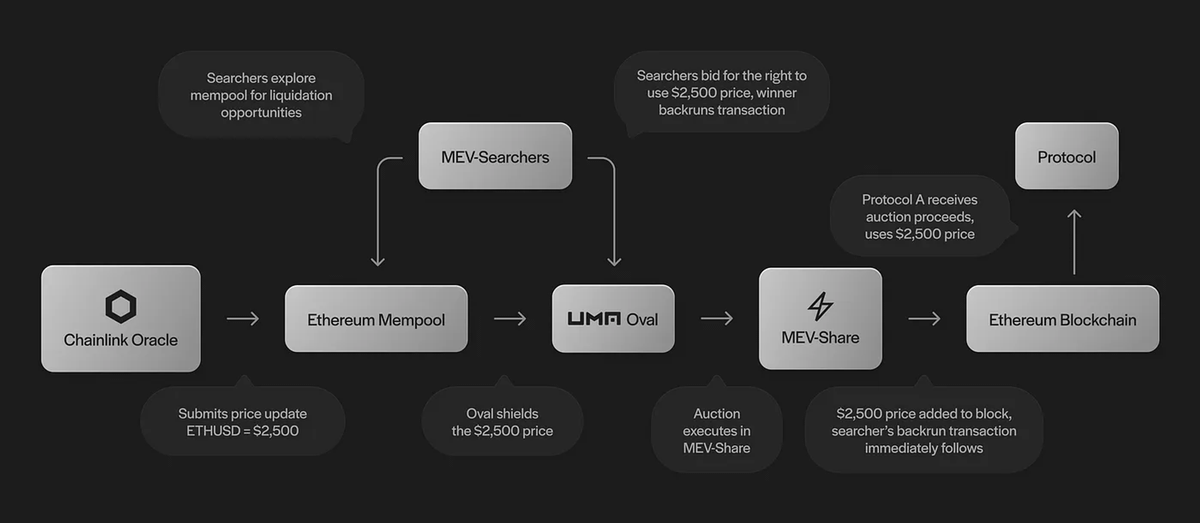
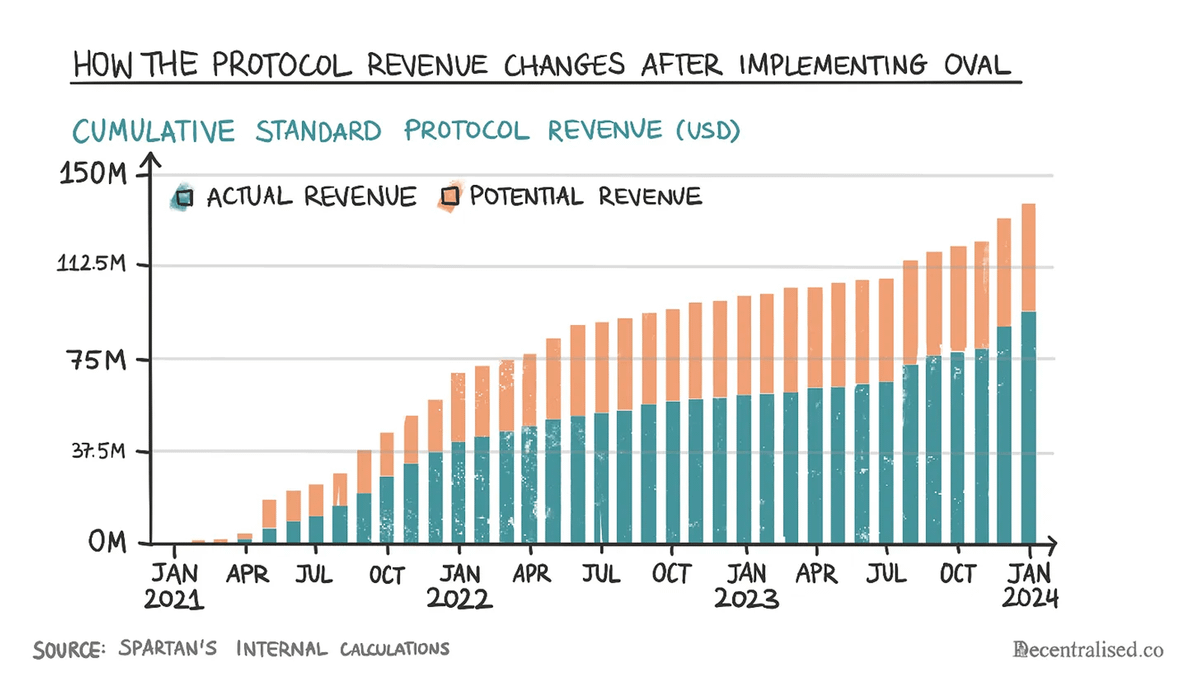
: : [Opinion] OEV and Strategy of Building DeFi Protocols is Changing Opinion by @xparadigms The first OEV (Oracle Extractable Value) has been captured in Ethereum by Oval. This means the profits previously captured by searchers from oracle price updates can now be captured by DeFi dapps. This could open up a new revenue source for dapps that was previously captured at the infrastructure level. The way dapps capture value is changing. They are building their own rollup or appchain, launching their tokens, and implementing additional measures to capture revenue for token holders. Although not many protocols have built effective profit-sharing models for token holders and for themselves, initiatives like OEV are a great approach to creating sustainable business models. 1. Background - What is OEV and What are the Related Projects 1.1 What is OEV? OEV is a specific type of Maximal Extractable Value (MEV) that arises from the updates provided by oracles, which are essential for supplying external data such as asset prices to blockchain-based smart contracts. OEV is generated when there is a time lag between the oracle's price update and the market's response, creating opportunities for searchers to exploit this information asymmetry for profit. This value leakage can be significant, especially in DeFi protocols where timely and accurate price feeds are crucial for functions like liquidations and arbitrage. Source: Announcing Oval: Earn Protocol Revenue by Capturing Oracle MEV The diagram illustrates the process of OEV extraction and distribution in the Ethereum. This process ensures that MEV opportunities from oracle feed are efficiently captured and distributed. Here is a step-by-step breakdown: a. Chainlink Oracle submits a price update to the Ethereum Mempool, e.g., ETH/USD = $2,500. b. Ethereum Mempool receives the price update and holds it temporarily. c. MEV-Searchers explore the mempool for liquidation opportunities. They bid for the right to use the $2,500 price update. The highest bidder wins and backruns the transaction. d. UMA Oval shields the $2,500 price update. Executes an auction within MEV-Share. e. With MEV-Share, the auction proceeds are received by Protocol A. The $2,500 price update is added to the block, and the searcher's backrun transaction follows immediately. f. The transaction is added to Etherereum blockchain, and the revenue is shared. 1.2 Projects Building OEV Infra Several projects are actively working on capturing OEV: a. Oval, developed by UMA in collaboration with Flashbots, aims to capture OEV by auctioning the right to access oracle data updates, thereby allowing protocols to retain and profit from this value rather than losing it to external actors. b. API3 is building an OEV network as a Layer2, built with Polygon zkEVM that focuses on creating a market for oracle updates, enabling more timely and accurate data provision and providing additonal revenue to protocols. c. Pyth Network is another project that has the potential to provide OEV for projects. it has a pull-based oracle mechanism that can create a unique opportunity for OEV by giving applications more control over how and when they incorporate price updates. Unlike push-based systems where the transaction space following an oracle update is highly contested, Pyth's pull model allows applications to request price updates on-demand. This design could enable protocols to implement custom MEV extraction or redistribution systems. 2. Takeaway Dapps are looking for new ways to generate additional revenue, rather than letting it be captured at the infrastructure level. Some experimental approaches include launching their own Layer2, appchains, and front-end fees. The primitives of DeFi are now sufficient, and current efforts focus on capturing missed revenue opportunities and making protocols more sustainable. The strategy for building DeFi is changing. Especially on OEV, this development could lead to a more sustainable and efficient DeFi ecosystem, where value is not lost to third-party searchers but is instead used to benefit the protocol and its participants. As the technology and mechanisms for capturing OEV mature, it is anticipated that more DeFi projects will adopt these solutions. Source: Unlocking DeFi Revenue by Maximizing OEV for Protocols 3. Others’ Opinion 3.1 Hasu from Flashbots - “Oval is Providing Additonal Revenue to DeFi and Users” Source: Phil Daian (Cornell) "MEV Wat Do" “At Flashbots, we’ve long held the view that dapps can drastically limit the amount of MEV they expose,” says Hasu, Strategy Lead for Flashbots. “The key insight is that, instead of blindly broadcasting a transaction to the public mempool, protocols should auction off the right to execute this transaction to a competitive market of searchers. Oval is building on that insight to finally return Oracle-Extractable Value (OEV) back to Defi protocols and their users. We look forward to supporting them on that journey.” 3.2 Eren from Four Pillars If the market recognizes the stable profitability from OEV, there is a possibility that OEV-based yield-bearing tokens could be incorporated as collateral for synthetic assets, similar to how veCRV or LRT-backed synthetic assets in the past. This idea might still be more of a speculation at this point, but it opens up intriguing possibilities for DeFi token. The potential for OEV to serve as a reliable collateral could significantly enhance the robustness and appeal of synthetic assets, providing a new layer of profitability for investors. 4. Resource: Related Articles/News/Tweets... • UMA - Announcing Oval: Earn Protocol Revenue by Capturing Oracle MEV • Multicoin Capital - Oracles and the New Frontier for Application-Owned Orderflow Auctions • Decentrlized co - Unlocking DeFi Revenue by Maximizing OEV for Protocols • Flashbots - Introduction to MEV Share • IOSG - What is OEV and Why You Should Care: Uma Oval Related People/Projects: @UMAprotocol @API3DAO @PythNetwork @chainlink @hal2001 @Decentralisedco @tumilet @desh_saurabh @hasufl @G_Gyeomm
Four Pillars tweet mediaFour Pillars tweet media
English
0
13
37
4.3K
Four Pillars retweetledi
Four Pillars
Four Pillars@FourPillarsFP·
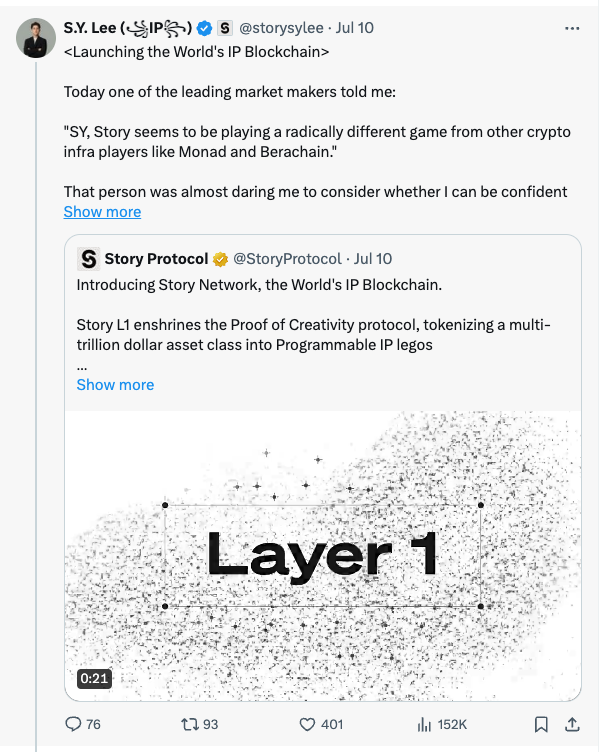
: : [Opinion] Can Story Truly Revolutionize the Existing IP Market? Opinion by @Jaylovespotato & @Steve_4P (Full Text) 1. Background On July 10, 2024, with the announcement of Story's Layer 1, CEO @storysylee addressed the "problems" that highly anticipated projects like Monad, Berachain, and other Web3 initiatives are trying to solve. Berachain’s co-founder, @SmokeyTheBera, responded, sparking a heated debate on Twitter over the past couple of days. @storysylee and the Story team emphasized their mission to "solve real-world problems," prompting various discussions and arguments among the community. The discussion wasn't dominated by one-sided criticism; rather, opinions were split between those who agreed with Story and those who opposed it : x.com/JuhyukB/status… On July 11, 2024, content creator @morbid19 from DeSpread shared a critical perspective on "why we need Story," tagging Story and its content creators and initiating diverse discussions. @morbid19 's skepticism about Story can be summarized as follows: The most crucial aspect of intellectual property is how disputes are handled and resolved. But Story, like any other system, cannot fully solve these issues. If dispute resolution cannot be conducted in a 100% reliable and accurate environment, creating another ambiguous system seems pointless. For instance, if I cover a Radiohead song and someone prefers my cover over the original, how should we calculate Radiohead's contribution? If it’s solely because of my cover that the person listens to the song, should I receive some of the intellectual property rights? Or does Radiohead retain 100% of the rights just because they created the original song? The fundamental premise of Story is to trust the protocol’s consensus as the "source of truth." But what is the truth here? No one knows. 2. Takeaway 2.1 Jay from Four Pillars The importance of defining a problem can vary from person to person. As many would agree, blockchain intersects with numerous real-world issues, allowing individuals to view and define problems in various ways. However, the blockchain industry is still in its infancy, and we have yet to see cases where it has definitively solved real-world problems. Instead, infrastructure players seem confined to the so-called "trilemma" defined by @VitalikButerin , passing the responsibility of solving practical issues to application builders. With the increasing interest and investment in Bitcoin and blockchain, evidenced by the approval of ETFs, it seems timely to anticipate the emergence of infrastructure focused on practical scalability rather than technical scalability. In this regard, the problems Story aims to solve are 1) clearer and 2) more impactful than those tackled by any other protocol. Of course, it is challenging to determine if Story's vision alone can truly address real-world issues from both a technical and design perspective at the moment. Hence, I believe @morbid19 's critique very valid. However, rather than being a issue that the Story team needs to refute, I see @morbid19 's critique as a productive discussion to help Story grow faster and more robustly. Embracing and evolving through diverse community perspectives is the philosophy that decentralized systems and Web3 aim to uphold, isn't it? Finally, I personally do not resonate with the overly pessimistic views that dismiss Story's potential just because it has not yet solved its targeted problems. The Story team is attempting to address real-world issues that no one else has tackled, and their efforts are already significant in spreading the belief among many stakeholders that the existing IP market needs to be redefined. 2.2 Steve from Four Pillars Honestly, I don't have detailed knowledge about the IP industry or the disputes that occur within it, nor do I have domain expertise to discuss each specific case that @morbid19 mentioned. However, the problem that Story can definitively solve is the "who, what, how, and how much" issue. For instance, if Radiohead were to register the copyright for their music on Story, questions like who, what, how, and how much can be significantly simplified. When someone uploads intellectual property to the Story network, Story predetermines how the license will be handled, how royalties will be set, and what arbitration policies will apply in case of disputes. This way, those who create derivative works can clearly understand how, based on what criteria, and how much royalty they need to pay when using Radiohead's intellectual property. They can use the intellectual property with full awareness and smoothly resolve economic incentives with the original creators. The Story network cannot suddenly impose its rules on the existing IP market, nor can it protect what happens off-chain. Some may try to free-ride on this system. Nevertheless, as @jdubpark mentioned in comparison to Spotify, the market is evolving towards a model where people are willing to pay to use assets. Therefore, the marketplace that Story proposes for IPs could become a very convenient tool for many. Just like you can't expect to be full from the first spoonful, the Story network needs to build its network and gain experience from various cases to strengthen its system. The significance of Story is undoubtedly present. 3. Others' Opinion Supportive Opinion 3.1 Jason Zhao from Story Ultimately, the resolution sought through blockchain boils down to "consensus." In the case of Bitcoin, it was about establishing a consensus on money. The essence of Bitcoin's consensus is creating a monetary system without the need for force, coercion, or violence, which have traditionally been used to maintain such systems. Similarly, Story aims to resolve disputes over IP assets by establishing its own consensus (i.e., Proof of Creativity). However, achieving such consensus without any subjective elements is extremely challenging. Moreover, even in the real world, many dispute resolution modules involve subjective elements. While Story's consensus logic cannot entirely eliminate subjective factors, it will continue to evolve through the rich history of various blockchains and future trials and errors. The current issue with the IP system is its complexity. Artists and content creators often do not register their creations because the process is difficult and cumbersome. As a result, those who wish to use these creations are left uncertain about the standards, royalties, and conditions, leading to the problems that @morbid19 pointed out. Story aims to simplify this by allowing anyone to register their creations and specify the conditions, making it easier for third parties to use these works for derivative creations. It's understandable to think that people might bypass paying for using creations, but nowadays, many, especially businesses involved in commercial activities, prefer to pay for using intellectual property. This is to avoid legal troubles or lawsuits from creators—there are already multi-billion dollar IP businesses, like Getty, based on licensing IPs online. Regarding Story's arbitration policies, the platform offers a high degree of freedom to both creators and IP users. For instance, every IP asset uploaded to Story can choose its own arbitration policy, and users can review these publicly disclosed policies to assess the credibility of the IP. Moreover, anyone on Story can create arbitration policies and even establish an economic market for these policies. If someone feels an IP is being misused, they can challenge it, and if the challenge is successful, they receive a bounty. If the challenge fails, the challenger forfeits the assets they staked for the dispute(i.e., slashing system). Of course, we can imagine a worst-case scenario where none of the arbitration policies work. In such cases, legal arbitration could be considered. This is feasible because all IPs on Story are backed by Programmable IP licenses, even if Story fails to protect someone's IP. Nevertheless, this worst-case scenario is something we aim to avoid, and thus, we are working to refine the dispute process, always prioritizing the protection of creators. 3.2 Simon Kim from Hashed Story focuses on creating an IP ecosystem in a way that differs from traditional industries. However, this doesn't mean it can solve all the problems of traditional industry at once. Instead, it is significant in that it aims to redefine the IP ecosystem from the ground up through code-based contracts that ensure trust for everyone. Story is a team of experts who have thoroughly considered IP issues and have a clear vision to address real-world meaningful problems. The IP ecosystem they are defining on Web3 is expanding daily and is definitely worth keeping an eye on. Critical Opinion 3.3 Corduroy from Berachain We are all looking forward to IP being brought on-chain. However, the reason this issue remains unresolved is not due to lack of effort, but because universal copyright protection is an incredibly complex field. This area has been studied for decades, with many people working on it. Numerous projects have attempted to adapt NFT-based IP rights management and creation, and various ERC standards such as ERC-5218, ERC-5553, and ERC-5554 remain in draft form. Additionally, existing blockchains, Chainlink's OCR (Off-Chain Reporting framework), distributed key management protocols, and protocols like Lit Protocol, Ocean Protocol, and TN Network, which allow access to private data, have all been combined to tackle intellectual property and universal copyright protection issues. Despite these efforts, a perfect solution has not yet been achieved. In this context, it is unclear whether a separate blockchain solely dedicated to solving this problem is necessary. 3.4 Critical View from Four Pillars While we understand the problem that Story is trying to solve, the way it is conveyed is somewhat disappointing. Criticizing projects that are gaining a lot of interest in the market by saying, "they are not solving the real problem" is enough to make many people frown upon Story. The criticism that other chains have made only "little technical tweaks" to existing technologies might also apply to Story, as they have launched their chain by modifying the Cosmos SDK (Comet BFT). Story just needs to fulfill the reason for its existence, just as other protocols need to fulfill theirs. Those who are not generous to others must hold themselves to the same strict standards. Just as bringing others down does not elevate oneself, we hope that future discussions will focus more on how Story specifically intends to solve its problems, rather than criticizing other protocols. 4. Resource: Related Articles/News/Tweets... • Jason Zhao’s Thread - x.com/jasonjzhao/sta… • Simon Kim’s Thread - x.com/simonkim_nft/s… • Corduroy’s Thread - x.com/0xCorduroy/sta… • Jongwon’s Thread - x.com/jwpark02/statu… • SY Lee’s Vision Statement for Story - x.com/storysylee/sta… • Juhyuk’s Thread - x.com/JuhyukB/status… • Korean Translation of Jason Zhao's Thread - 4pillars.notion.site/Korean-transla… Related People/Projects: @jasonzhao @simonkim_nft @0xCorduroy @jdubpark @storysylee @morbid19 @JayLovesPotato @Steve_4P @StoryProtocol
Four Pillars tweet media
English
4
20
70
16.4K
Four Pillars retweetledi
JayLovesPotato
JayLovesPotato@JayLovesPotato·
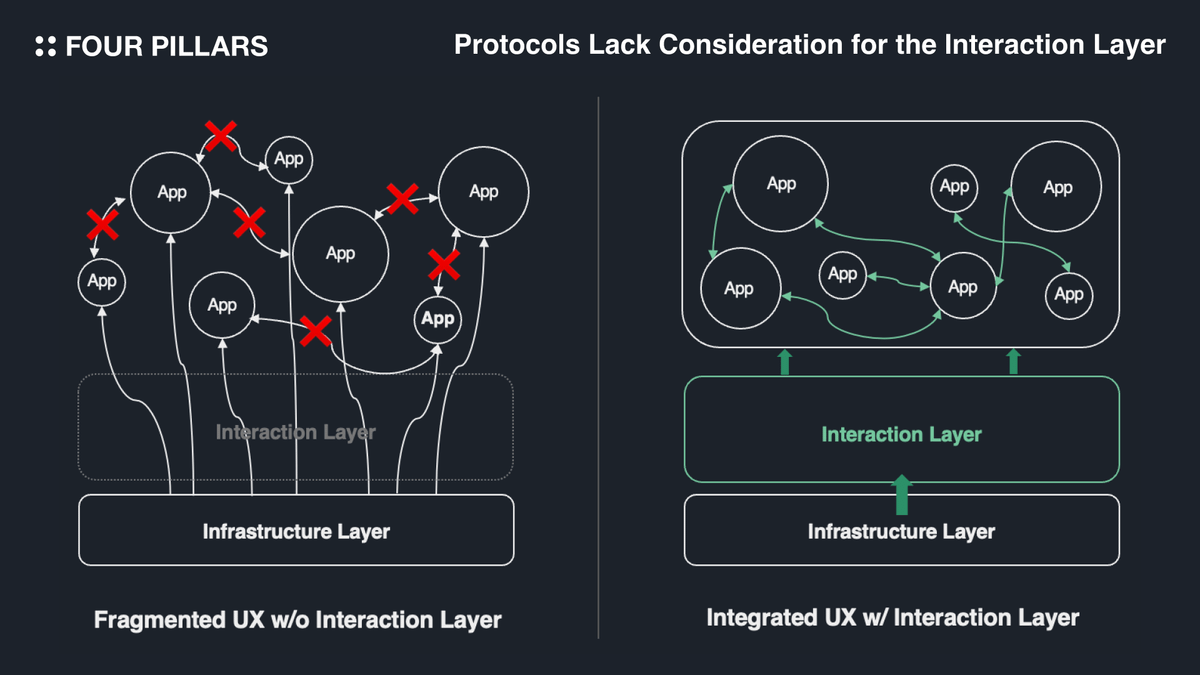
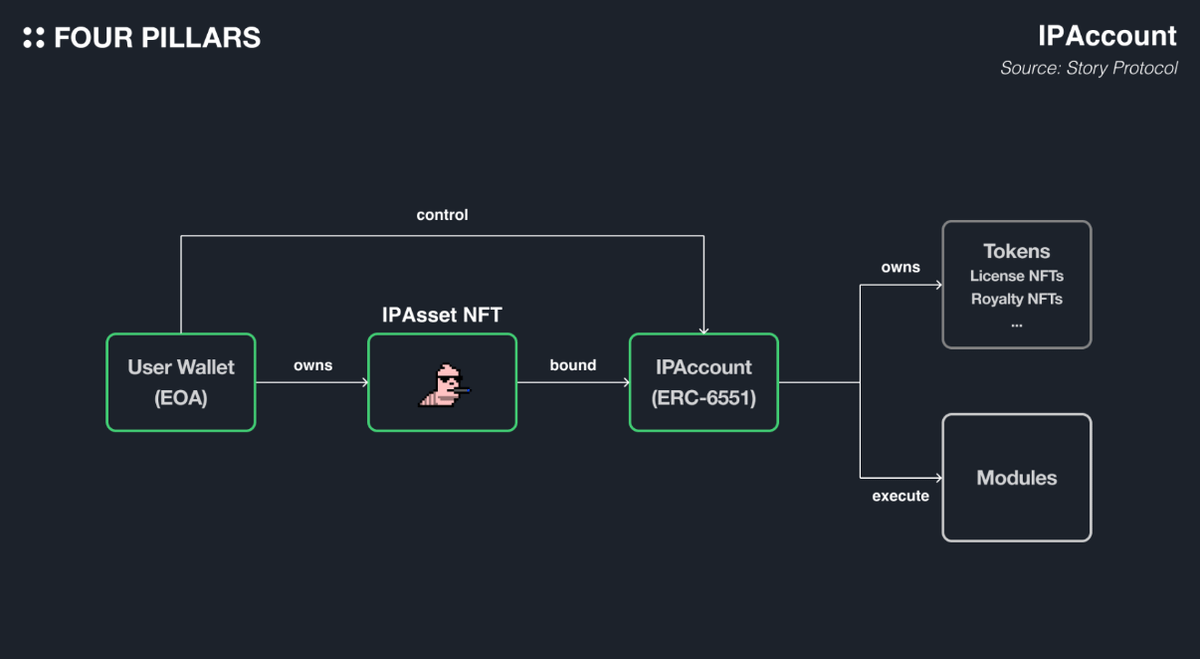
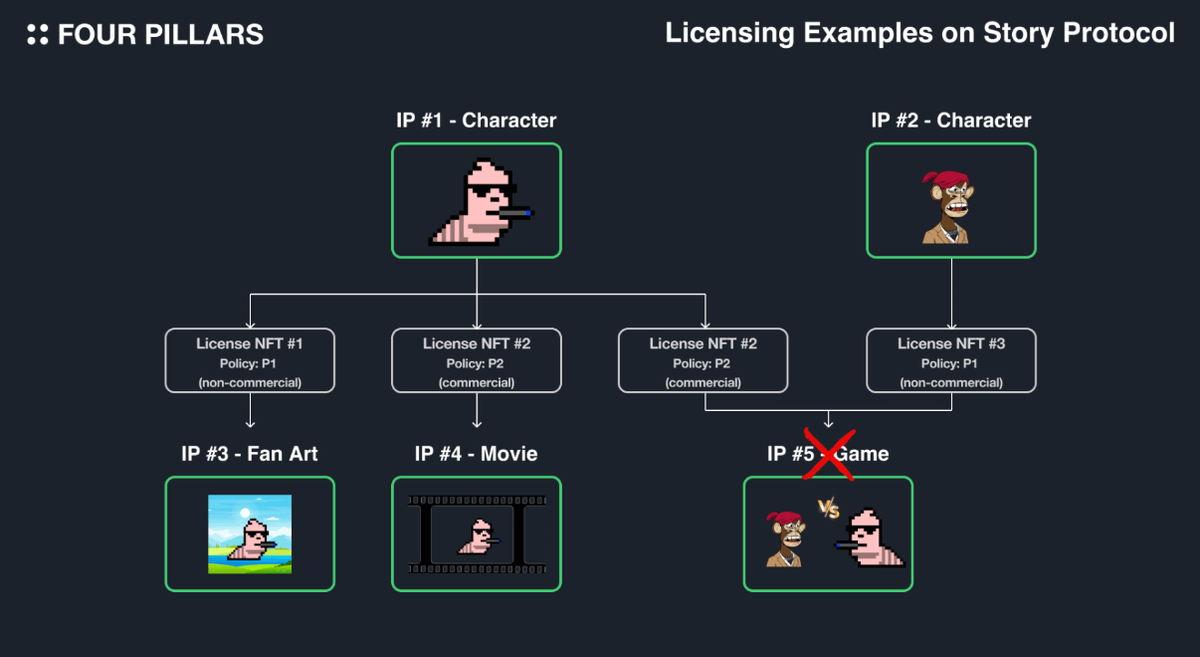
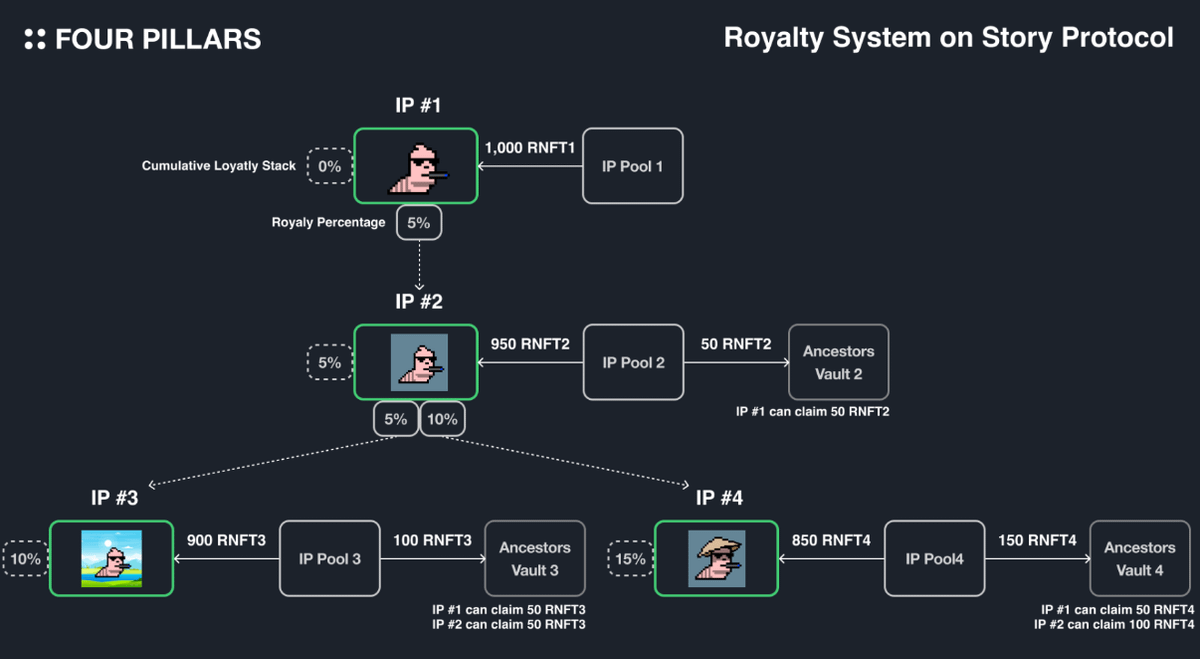
: : Implications of Story's Design Approach 1. Current L1s Are Overly Fixated on Solving the Trilemma Stuff It's been over a decade since smart contract platforms were defined, yet we still haven't seen meaningful applications emerge. While new platforms for builders continue to appear, they remain trapped within the framework of @VitalikButerin 's trilemma, focusing solely on improving network/communication layer performance such as TPS and finality. Of course, these advancements are valuable. However, given the widespread interest from retail, institutions, and governments alike, it's time for blockchain to demonstrate practical use-cases. To achieve this, protocols must go beyond solving the trilemma and build an enhanced and consistent interaction layer that allows application developers to focus solely on business logic. Currently, many chains define these interaction layers under the guise of 'standards.' 2. Limitations of General-Purpose Blockchains However, these standards are not adequately discussed in most protocols, and even when they are, the discussions primarily occur within general-purpose blockchains like Ethereum. Establishing a standard set in a general-purpose blockchain may not be suitable for comprehensively addressing specific use-cases. a. The process of adopting standards is slow and inefficient General-purpose protocols need to support various types of interactions within the network reliably. Therefore, when introducing new standards, careful consideration over an extended period is required to ensure compatibility with existing standards, avoid redundancy, prevent conflicts with established conventions, and allow for future modifications. b. Standards are implemented minimally As new standards are added, the network's complexity increases, leading to longer deliberation times. Consequently, the level at which standards are implemented tends to be minimal, aimed at avoiding conflicts rather than being optimized for flexibility and scalability - one of the remarkable proposals of blockchain is the ability to tokenize various assets in the digital space for interaction. However, in the real world, different assets exist, each with its own infrastructure and legal requirements to prevent disputes during transactions(e.g., IP, Tangible Asset, Natural Resources, etc.). Ultimately, building infrastructure for the interaction of all assets on a general-purpose blockchain is inefficient and lacks visibility. In other words, to quickly observe use-cases within a specific asset class, an interaction layer tailored for that asset class is necessary. On this layer, builders and consumers can focus on the value provided by the application with minimal understanding of the protocol's backend logic. Yes, this does resemble the existing app-chain thesis. However, as previously mentioned, most current app-chains do not pay much attention to the interaction layer - specifically, app-chains designed with the trading of specific asset classes (e.g., RWAs) in mind are either not yet launched or are underdeveloped. 3. The Way Story Defines Interactions for IP Assets In this context, the approach of @StoryProtocol is worth noting. In a nutshell, Story is an infrastructure that provides an on-chain IP registry and a framework for expanding these IP assets. Inspired by the traditional TCP/IP structure, Story aims to be an IP layer where IP assets are implemented and interact in a programmable manner. Story consists of three main components: Nouns (Data Layer), which define IP assets; Verbs (Interaction Layer), a collection of modules that define how these IP assets interact; and the Application Layer, which is the ecosystem built using these protocols. IPAsset & IPAccount The IPAsset (NFT) is the fundamental unit in which IP is defined within Story. All business logic for this IP Asset is executed through the IPAccount, a Token-bound Account implemented via ERC-6551. The Module framework serves as the interface for defining interactions of each IP Asset, allowing anyone to register desired modules in the GitHub repository managed by the Story team following a set procedure. Currently, there are three main modules within the Story: 1) Licensing Module, 2) Royalty Module, and 3) Dispute Module. Licensing Module Licensing Module allows each IP asset to be recreated/remixed according to its specific policies. Royalty Module Royalty Module utilizes Story's social graph to define a royalty collection mechanism, ensuring that both IP owners and creators who recreate/remix the IP receive fair royalties for their work. Dispute Module Dispute Module is designed to define a series of arbitration policies to effectively resolve various dispute situations, such as the use of inappropriate content, license infringements, etc. 4. Let's Keep Our Eyes on Story’s Journey Of course, since Story is still in its early stages, there may be a lack of types of modules or detail regarding existing modules (e.g., whether the dispute module can resolve off-chain disputes). Additionally, there could be many challenges from a design perspective (e.g., whether the current protocol architecture is optimized for building the IP layer), a go-to-market perspective (e.g., how to strategically onboard many IPs to Story), and etc. However, it is clear that as digital experiences become increasingly universal, there will be a need for diverse assets to interact in a trustworthy manner within digital networks. And in this process, integrating and implementing the complex logic for each asset all together on a general-purpose blockchain can be highly inefficient/ineffective. In that sense, the approach of Story as a programmable IP layer goes beyond merely democratizing IP assets; it offers valuable insights into designing protocol structures that can be practically adopted in the real world. *Last February, @FourPillarsFP published an article about Story, but a new article with more details is set to be released soon. Previous article : 4pillars.io/en/articles/wh…
JayLovesPotato tweet mediaJayLovesPotato tweet mediaJayLovesPotato tweet mediaJayLovesPotato tweet media
Story@StoryProtocol

Introducing Story Network, the World's IP Blockchain. Story L1 enshrines the Proof of Creativity protocol, tokenizing a multi-trillion dollar asset class into Programmable IP legos In the era of AI-powered creativity, Story is powering an IP legoland👇

English
13
29
147
35.4K
Four Pillars retweetledi
Four Pillars
Four Pillars@FourPillarsFP·
We are thrilled to announce that @FourPillarsFP has been awarded a research grant from the @KYVEFoundation. This achievement is particularly significant as it was secured through a formal governance proposal and received approval from the KYVE community. This grant, endorsed by the collective members of the KYVE community rather than a single entity, holds great value for us. We are committed to thoroughly analyzing KYVE's technology and features, providing insights to both Korean and English-speaking audiences. Stay tuned for our comprehensive article on KYVE, and look forward to the hard-copy release during @kbwofficial and @token2049!
The KYVE Foundation@KYVEFoundation

🌐 KYVE Grants Program, Phase 0 update: Proposal #32 passed, and after a final review by the KYVE Foundation, @FourPillarsFP's grant application to publish comprehensive research articles about KYVE has been approved. Via these research papers, Four Pillars, one of the most active research firms in Asia, aims to further attract retail users, developers, and B2B clients by increasing awareness of KYVE's use cases and achievements. Learn more: commonwealth.im/kyve/discussio…

English
1
8
36
2.4K
Four Pillars retweetledi
Four Pillars
Four Pillars@FourPillarsFP·
: : Initia - What If We Rebuild Ethereum For The Rollups? Article by @xparadigms (Full Text) 4pillars.io/en/articles/in… (Summary of Text) Ethereum's roadmap emphasizes rollups as a primary scaling solution, incorporating initiatives like EIP-4844, statelessness, and state expiry. Despite these improvements, since Ethereum has diverse stakeholders, it is difficult to build specific features for rollups such as enshrined bridges and shared liquidity. In this context, Initia introduces an interwoven rollup ecosystem with Initia L1 acting as a secure settlement layer and Minitia L2s providing diverse execution environments, including EVM, MoveVM, and WasmVM. Unique features like the Omnitia Liquidity Hub, Ecosystem Incentive tokenomics(i.e. Kickback, VIP), and IBC-enabled interoperability distinguish Initia from Ethereum. With plans to launch the $INIT token and expand the Minitia L2 Ecosystem with various DeFi, social, and NFT rollups, Initia aims to offer a user-centric, interconnected infrastructure, potentially positioning itself as a favorable option for future rollup deployments. Let's first look into what the Ethereum ecosystem is like for rollups and what lies ahead for Initia. --- You can see the full version of "Initia - What If We Rebuild Ethereum For The Rollups?" in the link below: 4pillars.io/en/articles/in… Also check out Initia Research Dashboard by @FourPillarsFP : tinyurl.com/fourpillars-in… Team Building Initia: @initiaFDN @ItsAlwaysZonny @sinitias @0xJESSIE_ @0xMista @0xINBAE @OmniscientAsian @dali__design Some of the Minitia L2s: @blackwing_fi @civitiaorg @controrg @Inertia_fi @lunch_xyz @milky_way_zone @Minity_xyz @TucanaNetwork @zaar_gg
Four Pillars tweet media
English
2
15
71
46.3K
Four Pillars retweetledi
Bluefin
Bluefin@bluefinapp·
Week 8 rewards have been distributed! A brief recap of the previous week: Bluefin tokenomics is live, we crossed $30B in all-time volume, and we’re fast approaching token launch! We also shared our vision of building the most powerful financial ecosystem and welcomed Flow Traders as a backer. Here are a few posts from our community, partners and the media that we’d like to highlight: 1. Research paper by @FourPillarsFP: x.com/FourPillarsFP/… 2. X Thread by @wealthygodman, a Bluefin community member: x.com/Wealthygodman/… 3. Coindesk article: x.com/CoinDesk/statu…
English
32
28
94
11.3K