Gary Lee Gibson

6.7K posts

Gary Lee Gibson banner
Gary Lee Gibson

Gary Lee Gibson

@GaryLeeGibson

Retired. Former accounting teacher. Have wonderful grandchildren.

London, KY Katılım Mayıs 2012
710 Takip Edilen314 Takipçiler
Gary Lee Gibson retweetledi
Aakash Gupta
Aakash Gupta@aakashgupta·
Universities had 17 years of warning. They responded by doing the opposite of what the math demanded. In 2008, American birth rates fell off a cliff. The Great Recession made people stop having kids. Those never-born children would be turning 18 right now. The number of U.S. high school graduates peaked at roughly 3.9 million in 2025. By 2029, that number drops 15%. By 2041, it drops by nearly half a million students per year. Every school in this tweet had access to the same Census data. They all saw the same curve. Administrative positions at U.S. colleges grew 60% between 1993 and 2009, ten times the rate of tenured faculty growth. Non-instructional spending (student services, administration) grew 29% from 2010 to 2018. Instructional spending grew 17%. Average tuition at public four-year schools went from $3,500 in 2000 to $10,560 in 2023. Yale now has more administrators than undergraduate students. 5,460 administrators for fewer than 5,000 undergrads. They built the cost structure of a growth company on top of a customer base that was mathematically guaranteed to shrink. The split in this data tells you everything. Clemson, Syracuse, Duke, UNC, and Indiana are all cutting because the model broke. Alabama, Ole Miss, and the University of Florida are turning away more applicants than ever. Harvard gets five applications for every spot. The middle is where the cliff hits. Elite schools absorb demand. Everyone between elite and community college fights over a shrinking pool. The Fed published a study in December 2024 predicting 80 colleges will close in the next five years. Since 2016, over 100 already have. In 2024 alone, 28 shut down. One per week. These program cuts and layoffs are a decade late. The birth rate data was sitting in Census spreadsheets the entire time. Everyone in higher education administration saw the enrollment cliff coming. They hired more administrators anyway.
Anthony Bradley@drantbradley

Clemson is $1.5B in debt. Syracuse is closing or pausing 93 programs, UNC-Chapel Hill plans to cut spending by $89M over 3 years. Duke recently let 600 employees go in a $350M budget cut. Indiana public colleges announced a plan to eliminate or merge 580 programs statewide.

English

170
547
2.9K
621.7K
Gary Lee Gibson retweetledi
Vivek Sen
Vivek Sen@Vivek4real_·
JENSEN HUANG: “IF I HAVE A CHOICE BETWEEN A NEW COLLEGE GRADUATE WITH NO CLUE WHAT AI IS AND ONE THAT IS EXPERT IN USING AI, I WOULD HIRE THE ONE WHO'S EXPERT IN USING AI. ACCOUNTANT, MARKETING, SUPPLY CHAIN, LAWYER, SALESPERSON. EVERY SINGLE TIME.”
English
98
300
3.5K
596.9K
Gary Lee Gibson retweetledi
Thomas Sowell Quotes
Thomas Sowell Quotes@ThomasSowell·
Milton Friedman: “It is so hard for people to get out of the notion that life is a zero-sum game. They think if one man benefits, another must lose. But in a free market, both people can benefit.”
English
10
140
631
18.4K
Gary Lee Gibson retweetledi
All Rock Music
All Rock Music@allrockmusic·
Is this a 10/10 song?
All Rock Music tweet media
English
11
3
37
1.6K
Gary Lee Gibson retweetledi
Crazy Vibes
Crazy Vibes@CrazyVibes_1·
At 65 years old, he sat in his car outside a closed restaurant with $105 in his pocket — his entire life's savings reduced to a single monthly Social Security check. He had failed at more than a dozen careers. He had just lost everything he owned. He could have gone home and stayed there. Instead, he started driving. His name was Harland David Sanders. And the world would come to know him simply as The Colonel. He was born on September 9, 1890, on a small 4-room farm near Henryville, Indiana. The oldest of 3 children. His father died when Harland was just 6 years old, leaving his mother to work long shifts at a canning factory to survive. At 6 years old, Harland Sanders learned to cook. Not as a hobby. As a necessity. His mother left before dawn every morning and came home exhausted every night. Someone had to feed the family. That someone was Harland. He mastered cornbread, vegetables, and meats before most children his age could tie their own shoes. By 7, he could cook a proper meal from scratch. By 10, he had a job working on a nearby farm for a dollar a month. By 12, he had dropped out of school entirely. At 16, he lied about his age and enlisted in the United States Army. He was honorably discharged 1 year later. He came home to Indiana with a military record, a 7th-grade education, and no clear plan. What followed was one of the most spectacularly turbulent careers in American history. He worked for the railroad as a laborer. He got fired after a fistfight with a coworker. He studied law through a correspondence course — then destroyed his legal career by getting into another fight, this time with a client, in the middle of a courtroom proceeding. He sold life insurance. He was fired. He sold tires. He was let go due to company downsizing. He operated a ferry boat service on the Ohio River, then sold it. He used the proceeds to start a lamp manufacturing company. It lost almost everything he put into it. He was 40 years old and had almost nothing to show for 24 years of adult life. Then something happened. In 1930, he leased a small service station in Nicholasville, Kentucky. When travelers stopped for gas, they sometimes mentioned they were hungry. He started feeding them — at his own dining room table, in his own living quarters behind the station. Just whatever he was cooking for himself. Word spread fast. Sanders moved to a larger service station in Corbin, Kentucky in 1934. He took over a motel across the road and converted part of it into a proper restaurant. He spent the next several years obsessively perfecting his fried chicken recipe — developing a unique blend of what he eventually settled on as 11 herbs and spices, and inventing a new cooking method using a pressure fryer that could produce perfectly juicy fried chicken in under 10 minutes. He had found his thing. By the early 1950s, his restaurant in Corbin was famous across Kentucky. The food critic Duncan Hines — yes, the same Duncan Hines whose name still appears on cake mixes today — featured Sanders' restaurant in his respected travel guide Adventures in Good Eating. Governor Lawrence Wetherby of Kentucky gave Harland Sanders the honorary title of Kentucky Colonel in 1950 — a state honor recognizing significant contributions to the community. He had been given the title once before, in 1935. He loved it so much he adopted the white suit, the black string tie, and the silver goatee as his permanent public image. The Colonel was born. In 1952, at age 62, Sanders partnered with a Utah restaurant owner named Pete Harman to open the very first Kentucky Fried Chicken franchise in South Salt Lake, Utah. A sign painter named Don Anderson came up with the name "Kentucky Fried Chicken." Sanders received 4 cents for every piece of chicken sold. It worked brilliantly. Within 1 year, Pete Harman's restaurant had doubled its revenue. Sanders was convinced. This was the future. And then, in 1956, the ground fell out from under him. The state of Kentucky announced a new interstate highway — I-75 — that would bypass Corbin entirely. The steady stream of travelers that had kept his restaurant alive for 20 years evaporated almost overnight. His customer traffic collapsed. In 1956, at age 66, Harland Sanders was forced to auction off his beloved Corbin restaurant. After paying his debts, he was left with almost nothing. His entire net worth at that moment was his Social Security check — $105 a month. Here's what he did next. He loaded his car with a pressure cooker and a bag of his secret spice blend. He started driving from town to town across America, walking into restaurants completely unannounced, cooking his chicken recipe for the owner on the spot, and asking for a handshake deal. The deal was simple. The restaurant would pay him 4 cents per chicken sold. Sanders would supply the spice blend in sealed packets so no one could steal the recipe. Restaurant after restaurant said no. They told him the recipe was too complicated. Too much trouble. Too different. Too risky. They already had their own chicken. They didn't need his. He kept driving. He slept in his car to save money. He cooked in restaurant kitchens for free just to show people what he had. He drove through heat and cold, through small towns and big cities, through 1 rejection and then 10 and then 100 and then hundreds more. By the time he found his second franchisee, he had heard the word "no" from 1,009 different restaurant owners. One thousand and nine times. He kept a tally. He never stopped. The 1,010th restaurant said yes. Then another. Then another. By the early 1960s, Kentucky Fried Chicken had expanded to more than 200 locations across America. By 1964, there were more than 600 franchise locations across the United States and Canada — all built by 1 old man in a white suit driving himself from town to town and cooking chicken for strangers. In 1964, at age 73, Sanders sold Kentucky Fried Chicken to a group of investors for $2 million — the equivalent of more than $20 million today. He retained the rights to the Canadian operations and stayed on as the company's brand ambassador. In 1976, an independent survey ranked Colonel Harland Sanders as the second most recognizable celebrity in the entire world. Second only to Muhammad Ali. The man who had been fired, failed, fought, bankrupted, and bypassed was now 1 of the 2 most recognized faces on the planet. He remained ferociously protective of his recipe for the rest of his life. When the company simplified his gravy recipe to cut costs, he showed up at franchises unannounced to sample it and, if it fell short, pushed it onto the floor in disgust. He publicly called it "slop" and "wallpaper paste." He sued the parent company in 1973 over the use of his image. He lost the lawsuit. He kept complaining anyway. He was still making surprise visits to KFC restaurants at age 89, in 1979, to make sure they were doing it right. On December 16, 1980, Harland David Sanders died of leukemia at the age of 90. At the time of his death, there were more than 6,000 KFC locations in 48 countries generating over $2 billion in annual revenue. He was buried in his white suit and black string tie. The man who dropped out of school at 12, lost more jobs than most people ever have, and received 1,009 rejections while sleeping in his car at age 65 died as 1 of the most successful, recognizable, and beloved entrepreneurs in human history. He never had a single advantage except one. He refused to stop. Share this with someone who is on rejection number 50 or 100 or 500 and needs to remember that 1,009 is not the end of the story — it is just the part before it begins.
Crazy Vibes tweet media
English
20
139
508
47.1K
Gary Lee Gibson retweetledi
Astronomy Vibes
Astronomy Vibes@AstronomyVibes·
Every star you can see in the night sky is within this little circle. On a clear, dark night a person can typically see around 2,000 to 2,500 stars with the naked eye. Scientists estimate that there are around 200 billion stars in the Milky Way and about 2 *trillion* galaxies in the universe. Everything we can see is just a tiny speck in the cosmos.
Astronomy Vibes tweet media
English
12
82
300
8.2K
Gary Lee Gibson retweetledi
Astronomy Vibes
Astronomy Vibes@AstronomyVibes·
🚨 Voyage 1 is about to reach one light-day from Earth
Astronomy Vibes tweet media
English
15
144
695
10.6K
Gary Lee Gibson retweetledi
World updates
World updates@itswpceo·
🇨🇳 China Just Smashed Another Huge Milestone, China Becomes First Country in the World to Hit $44 Trillion GDP (PPP). 🇨🇳China’s Economy Just Hit 19.89% of the Whole World. The Largest economies in the world, by GDP (PPP). 🇨🇳 China- $44.30 trillion 🇺🇸 United States- $32.38 trillion 🇮🇳 India- $18.90 trillion 🇷🇺 Russia- $7.53 trillion 🇯🇵 Japan- $7.26 trillion 🇩🇪 Germany- $6.41 trillion 🇮🇩 Indonesia- $5.45 trillion 🇧🇷 Brazil- $5.23 trillion 🇫🇷 France -$4.73 trillion 🇬🇧 UK- $4.72 trillion 🇹🇷 Türkiye- $4.03 trillion 🇮🇹 Italy- $3.87 trillion
World updates tweet mediaWorld updates tweet media
English
47
250
992
49.8K
Gary Lee Gibson retweetledi
Handre
Handre@Handre·
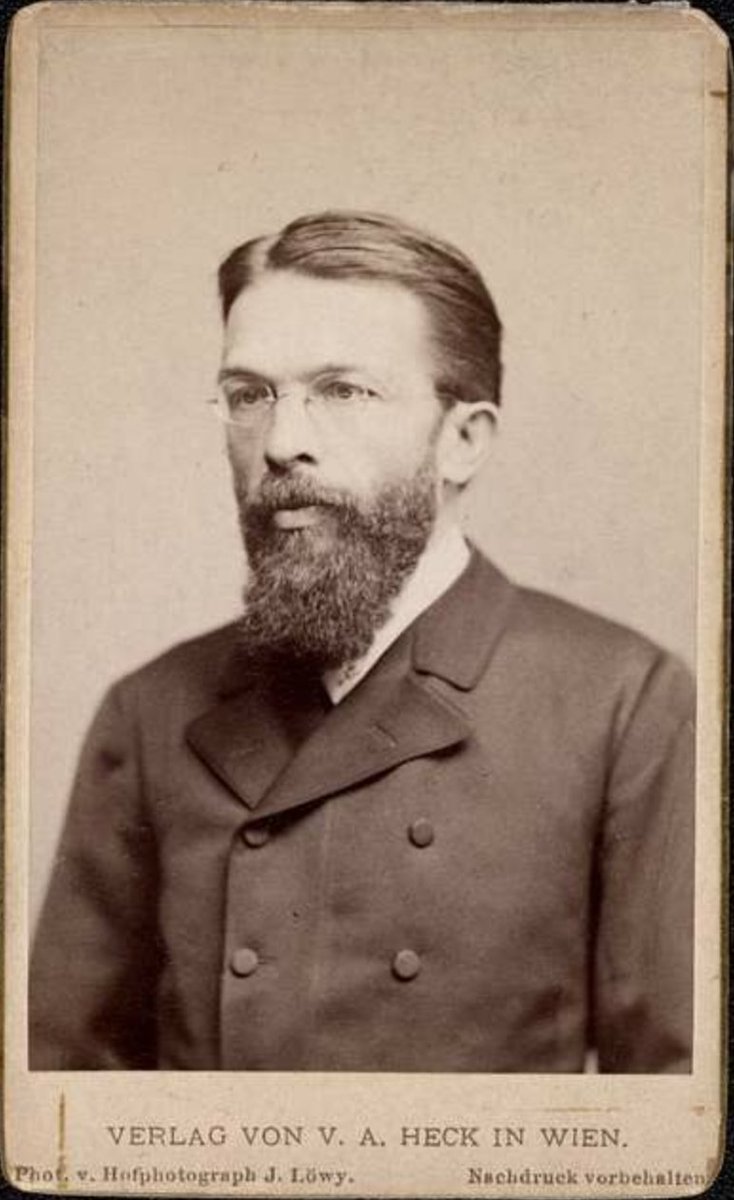
Carl Menger destroyed the labor theory of value in 1871 with a single insight: humans value goods based on their marginal utility, not the labor embedded in them. The same year, William Stanley Jevons in England and Léon Walras in France independently arrived at similar conclusions about marginal utility. Three economists, three countries, one revolutionary idea that shattered Marx's entire framework. Menger's "Principles of Economics" went further than his contemporaries by building economics from individual human action rather than mathematical abstractions. While Jevons and Walras constructed elegant equations, Menger asked the fundamental question: why does anyone value anything at all? His answer traced value back to human needs and the decreasing satisfaction each additional unit provides. The tenth glass of water matters less than the first when you're dying of thirst. The timing wasn't coincidental. By 1871, classical economics had painted itself into a corner with the labor theory of value. If labor determines value, why do diamonds cost more than water? Why do identical goods sell for different prices? Value exists only in the mind of the acting individual. No intrinsic value, no objective measurement, just human preferences ranking scarce goods according to their ability to satisfy wants. Menger's approach created the foundation for the entire Austrian school tradition that followed. Böhm-Bawerk used marginal utility to explain interest rates. Mises extended it to money and the business cycle. Rothbard applied it to ethics and political theory. Every free market economist since 1871 stands on Menger's shoulders. The establishment still teaches economics as if Menger never existed, preferring mathematical models to human action, aggregate demand curves to individual choice, and central planning to market processes.
Handre tweet media
English
106
731
2.2K
97.7K
Gary Lee Gibson retweetledi
Physics & Astronomy Zone
Physics & Astronomy Zone@zone_astronomy·
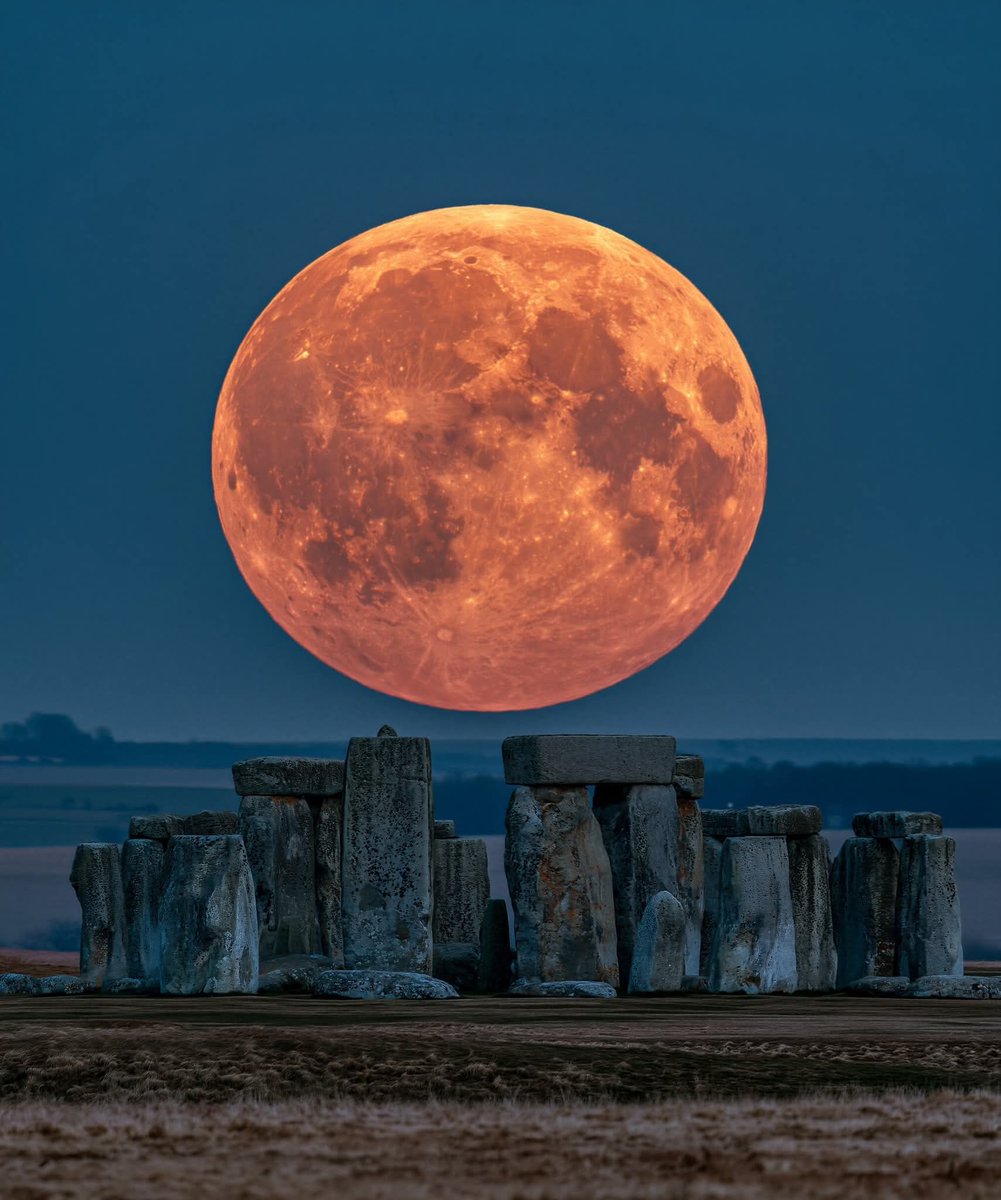
Behold the Full Flower Moon rising in all its glory behind the ancient stones of Stonehenge. 🌕✨ Looks unreal, right? Like something stitched together in Photoshop. But it’s the real deal. That enormous moon isn’t editing trickery—it’s the result of a clever photographic technique. By positioning the camera far from the subject and using an extreme telephoto lens, the distance between Stonehenge and the Moon is visually compressed. The effect makes the Moon appear dramatically larger, towering over the monument. A perfect blend of physics, timing, and a bit of patience—nature and technique working in harmony. 🔭✨
Physics & Astronomy Zone tweet media
English
2
8
37
2.3K
Gary Lee Gibson retweetledi
Black Hole
Black Hole@konstructivizm·
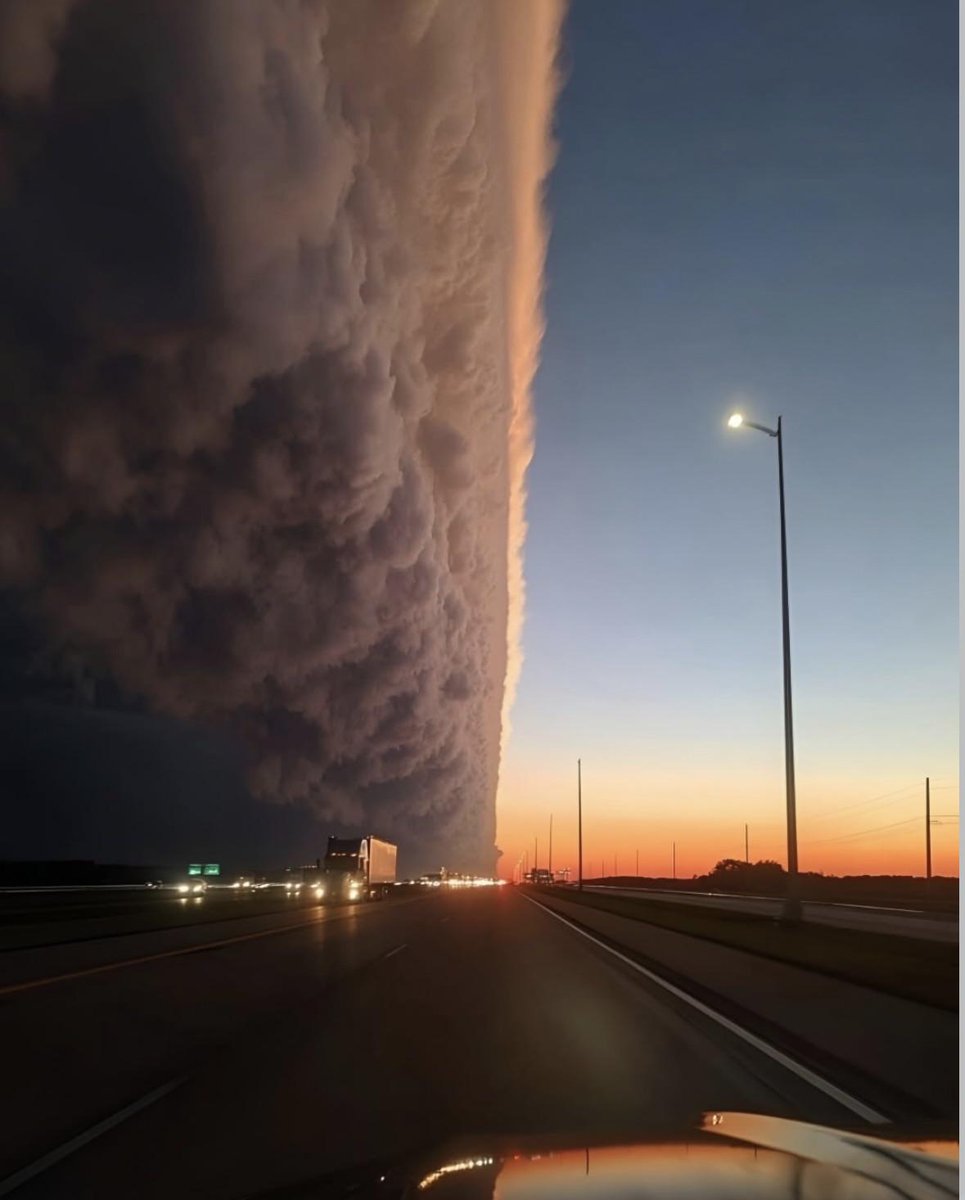
Exoplanet... This striking moment was captured by photographer Gustavo Ramirez, showing a rare shelf cloud formation stretching across the horizon. by stable_genius
Black Hole tweet media
English
38
55
269
11.5K
Gary Lee Gibson retweetledi
Kevin Carpenter
Kevin Carpenter@kejca·
Berkshire Hathaway director Chris Davis: "People matter a lot more than is generally realized. We have a society that believes in equality and is very quick to figure that the people who did well got lucky." "They don't have the same feeling about basketball. Nobody looks at LeBron and thinks, 'I could do that.'" "It is amazing what a difference one person can make at a business." "There is a risk of hero worship, but I hate the opposite more. I hate this proclivity we have to tear down people who have built incredible businesses that employ tens or hundreds of thousands of people that provide services that delight their customers — and then we want to vilify their success. It's crazy."
English
20
159
1.3K
124.8K
Gary Lee Gibson retweetledi
Curiosity
Curiosity@CuriosityonX·
Just a sunrise on Mars through the eyes of the Opportunity rover ☀
Curiosity tweet media
English
26
121
1.4K
44.4K
Gary Lee Gibson retweetledi
Black Hole
Black Hole@konstructivizm·
This incredible photo of the Martian landscape was taken by the Curiosity rover. NASA
Black Hole tweet media
English
15
40
284
10.7K
Gary Lee Gibson retweetledi
Prarie Patriot
Prarie Patriot@russcar10now·
Good morning from Wyoming
Prarie Patriot tweet media
Wyoming, USA 🇺🇸 English
64
52
523
3.6K
Gary Lee Gibson retweetledi
N A T U R E
N A T U R E@Globe32048·
U.S. Route 163 leading into Monument Valley ☁️🌵
N A T U R E tweet media
English
583
6.2K
41.1K
3.4M
Gary Lee Gibson retweetledi
Jaynit
Jaynit@jaynitx·
Charlie Munger saved pilots' lives by asking one question: "How can I kill them?" It’s the same thinking that made him a billionaire. "I have a good mind, but I'm way short of prodigy. And I've had results in life that are prodigious. That came from tricks. I just learned a few basic tricks from people like my grandfather." Someone asks: "What were those tricks?" Munger laughs: "It's too late for you old guys. But there are all kinds of tricks I just got into by accident in life. One: I invert all the time." He shares a story from his time as a weather forecaster in the Air Corps: "Being a weather forecaster is a lot like being a doctor that reads X-rays. It's pretty solitary. You're in the hangar in the middle of the night, drawing weather maps, briefing pilots. The minute I was actually making weather forecasts for real pilots, I said: 'How can I kill these pilots?' That's not the question most people would ask. But I wanted to know what the easiest way to kill them would be, so I could avoid it." Munger explains what he found: "I thought it through in reverse. I figured out there were only two ways I was ever going to kill a pilot. I was going to get him into icing his plane can't handle, and that will kill him. Or I'm going to get him someplace where he's going to run out of gas before he can land because all the airports are sucked in. I just was fanatic about avoiding those two hazards." He adds a sobering note: "If Kobe Bryant had somebody like me, he'd still be with us. It was so stupid to kill yourself that way." Munger traces this back to his grandfather: "My grandfather would say to me when I'm swimming, 'Swim as long as you want, but stay near the shore.' You can laugh, but he was a very wise man." On why inversion works: "It's like a lot of practical problems in algebra. If you invert, you can solve it easily. If you don't, you can't solve it easily. Most people say, 'How can you help India?' I would approach it differently. I'd say, 'What could I do which would most easily hurt India?' And approaching it in reverse that way, I got better results. You look at the vulnerabilities." Munger shares another trick, bracketing: "I was in ROTC in both high school and college. The ROTC taught me to fire mortar shells, one shot over, one shot short, and then kapow. I never shot any damn shells. But I've been using that mental trick all my life. That's how I determine what size to make something. Over and under, and kapow." On thinking in three dimensions: Munger tells a story from his days as a young lawyer: "I had a client who owned a bunch of hilly ranch land on the edge of civilization in Southern California. The Edison Company wanted a new easement through his land. He hired the leading appraiser in Orange County, very pompous, very old, very distinguished. My client thought he should get $250,000 for the easement. The appraiser told him, 'No, I'm sorry, it's only $125,000.'" The client asked Munger to talk sense into the appraiser: "I looked at his problem. What he had done is what he was taught to do in appraisal school; he thought the problem through in two dimensions. He figured out from comparable sales what the value per acre was. He computed the acreage. He added a little bit for the damage the easement would do to the remaining property. But it was all done in two dimensions." Munger saw the real issue: "I said to the appraiser, 'You've got to do this in three dimensions. God gave us three dimensions. If they put big transmission line towers, it's going to freeze the grade. The logical way to develop hilly land is to lop off the top of the hills and put them in the valley. That's how hilly land is developed. They're doing enormous damage by freezing the grade.'" The appraiser wouldn't budge: "He wouldn't change a damn thing. So I said to my elderly client, 'I think you have to fire this twit, and I will hire you an appraiser who can think.' I got him $600,000. It wasn't hard at all, because I was dealing with a bunch of honest engineers at Edison who did think in three dimensions." Munger reflects: "You'd be surprised how many lawyers would screw that one up. People like that appraiser, who didn't know his own business very well because he didn't pay attention to the fundamentals, those people are always with us. If you just have the mental trick of constantly going back to the basics, you'll be fine." On knowing when you have enough information: Someone asks about the Anadarko deal, a big oil company Munger invested in quickly: "Warren and I have been together so long that with just one grunt, we can speak a volume. The Permian Basin is our number one oil reservoir. We don't have another like it. It's perfectly obvious. You have a preferred stock that gives you an advantage over everybody else, plus an upside. We've done this kind of thing before. Of course we did it. It's not very difficult." Munger criticizes excessive due diligence: "You don't need perfect. If you're 96% sure, that's all you're entitled to in many cases. I see these people doing endless due diligence. The weaker they are as thinkers, the more due diligence they do. It's just a way of laying an inner insecurity. And of course, it doesn't work." He gives an example: "In America now, they do these leveraged buyouts and these firms do what they call 'due diligence.' They send armies of young lawyers out at high rates per hour to riffle through all the purchasing orders at a place like ISCAR. You don't have to look through the purchasing orders to know that ISCAR is a good business. I don't think people that are that insecure mentally ought to be in positions of decision-making." Munger summarizes his approach: "I revolve possibilities. I rag problems hard. If they don't yield, I come back. This is just a bag of tricks. It enables a non-prodigy man to get prodigious results."
English
13
85
409
72K
Gary Lee Gibson retweetledi
Walking Warrior
Walking Warrior@roamtheplanet0·
Alberta Canada 🇨🇦
Walking Warrior tweet media
Español
2
32
121
820