Grandma Sandy

1.2K posts

Grandma Sandy banner
Grandma Sandy

Grandma Sandy

@Grandmasday

Katılım Mayıs 2019
68 Takip Edilen68 Takipçiler
Grandma Sandy retweetledi
bluemontauk
bluemontauk@bluemontauk·
British kids taste Southern food for the first time. 🔥Biscuits and gravy, fried chicken, and sweet tea. They will be begging their parents to move to the U.S. 🤣😂🤣
English
924
1.5K
25.9K
580.8K
Grandma Sandy retweetledi
The Husky
The Husky@Mr_Husky1·
She inherited $100 BILLION from Walmart. Then she gave strangers the key to a world most billionaires lock up. Meet Alice Walton. Daughter of Sam Walton — the guy who built Walmart from one Arkansas store into a global giant. When Sam died in 1992, Alice and her brothers became some of the richest people alive. Everyone thought she’d run Walmart. She didn’t. Her brothers took the boardrooms. Alice chose a different path. Art. While the world chased profits, she spent years quietly collecting paintings. Studying American history. Staying out of headlines. Then 2011. She drops a bomb on the art world. Alice spends over $1 BILLION to build a world-class museum. Where? Not NYC. Not LA. Bentonville, Arkansas. Population: tiny. Known for: Walmart HQ. Critics lost their minds. “Warhol in farm country? Georgia O’Keeffe next to truck stops? Waste of money.” Alice had one answer: “Why should great art only live in big cities?” Then she did the unthinkable: She made it 100% FREE. No tickets. No fees. No velvet rope. Suddenly, kids from small towns. Families who’d never flown to a museum. Teachers on field trips. They all walk in and see masterpieces for $0. “I want a child in Arkansas to feel the same awe as a child in Paris,” she said. Millions have visited since. But Alice wasn’t done. She looked at rural America and saw another crisis: No doctors. No hospitals. No hope. So she built the Alice L. Walton School of Medicine. Tuition for the first classes? FREE. “I’ve had every advantage,” she told reporters. “It’s time to turn advantage into access.” No mega yachts. No private islands. No space rockets. Instead: A museum door that never closes. A med school that doesn’t charge. A chance for people who usually get told “not for you.” Here’s the truth: Alice didn’t earn her billions. She was born into them. What makes her different is what she did NEXT. For most people, money is a scoreboard. For Alice, money became a key. A key to art. A key to medicine. A key to rooms normal people never enter. “Having wealth is one thing,” she said. “Using it to open doors is another.” She didn’t just inherit a fortune. She redefined it. Digital Artwork | AI Generated Image by Fresh Mind |
The Husky tweet media
English
76
526
2.2K
121.6K
Grandma Sandy retweetledi
Anish Moonka
Anish Moonka@anishmoonka·
Finnish scientists trucked in real forest dirt and grass and laid it over the gravel at four daycare yards. They let the kids dig around in it for a month. The blood tests came back with changes the researchers hadn’t expected to see so fast or so clear. The study ran at ten daycares in two Finnish cities with 75 kids aged three to five. Four of the yards got the forest treatment: about a tennis court worth of soil and grass laid over the gravel, plus planters and peat blocks the kids could dig and climb on. Three others stuck with their normal gravel yards. The last three were daycares where the kids were already visiting real forests every day. After one month, the variety of bacteria living on the kids’ skin shot up, and the kind that helps train the skin’s immune defenses jumped the most. Their gut bacteria started to look like the gut bacteria of the forest-visiting kids. Their blood showed more of the immune cells whose job is to keep the body from freaking out at harmless stuff like pollen and peanuts, and overall inflammation dropped. The kids on the plain gravel yards showed none of this. Childhood asthma in the US doubled between 1980 and 1995. Food allergies in kids jumped 50 percent between 1997 and 2011, then jumped another 50 percent between 2007 and 2021. And peanut allergies in one-year-olds tripled between 2001 and 2017. The Finnish researchers think one of the reasons is simple: kids today don’t get dirty enough. 37 percent of American preschoolers now spend an hour or less outside on a normal weekday. Their immune systems are getting trained in environments stripped of the bacteria humans have always lived around. Aki Sinkkonen, who led the study, put it in plain words: “It would be best if children could play in puddles and everyone could dig organic soil.” The Finnish government is now helping pay for daycares across the country to make the same changes.
ChiefHerbalist@HerbalistChief

We need to apologize to our ancestors.

English
384
8.1K
27.1K
1.6M
Grandma Sandy retweetledi
Meanwhile in Ukraine
Meanwhile in Ukraine@MeanwhileInUA·
Putin didn't invade Ukraine because of NATO. He invaded because Ukrainians were proving democracy works. Historian and Pulitzer Prize winner Anne Applebaum puts it plainly: Putin looked at Ukraine's democratic movement and thought, "If they can do it in Ukraine, then people could do it in Russia. So I need to crush this." That's the real threat Ukraine posed. Not missiles. Not borders. A working democracy next door. Applebaum frames the war as a fault line between the democratic and autocratic worlds. Russia isn't just trying to take territory. It's trying to erase Ukraine as a nation, reduce it to a colony, and send a message to every country that the post-1945 rules of Europe no longer apply. Those rules were simple: no invasions, no wars, borders don't change by force. Russia understood exactly what it was breaking when it crossed into Ukraine.
English
2K
7.5K
21.1K
740.1K
Grandma Sandy retweetledi
Alex Prompter
Alex Prompter@alex_prompter·
Let me trace the timeline here because nobody's connecting it. Step 1: Scrape the entire internet. Every book, every article, every conversation, every piece of art, every forum post. Do it without asking. Do it without paying. Step 2: Train a model on all of it. Call it "artificial intelligence." Step 3: Go to BlackRock's Infrastructure Summit and announce: "We see a future where intelligence is a utility, like electricity or water, and people buy it from us on a meter." Step 3 is where you sell people's own knowledge back to them. On a meter. They took the collective output of human thought, compressed it into a model, and now they want to charge you by the token to access a version of what you and everyone you know already created. One Reddit user put it perfectly: "They stole all this data from us, the people, our life's work, creativity, art, by devouring the internet and blowing through all copyright laws. Now they want to sell it back to us in the form of a utility." Imagine if someone photocopied every book in the public library, burned the library down, and then opened a subscription service for the copies. That's the metered intelligence business model. And they're pitching it to infrastructure investors as though they invented water.
Vivek Sen@Vivek4real_

SAM ALTMAN: “WE SEE A FUTURE WHERE INTELLIGENCE IS A UTILITY, LIKE ELECTRICITY OR WATER, AND PEOPLE BUY IT FROM US ON A METER.”

English
3.2K
46K
133.7K
5.1M
Grandma Sandy retweetledi
Aakash Gupta
Aakash Gupta@aakashgupta·
That water clarity is an engineering decision, and the math behind it is wilder than the video. Roman aqueducts ran on gravity alone. No pumps, no pressure systems. Engineers carved channels with a gradient so shallow it borders on absurd. The Pont du Gard in southern France drops 2.5 centimeters over 275 meters. That's roughly the thickness of a coin over the length of three football fields. They surveyed that accuracy with plumb lines and wooden leveling instruments. The clarity you're seeing is a direct product of flow velocity. Too steep and the water erodes the channel walls, picks up sediment, turns brown. Too flat and it stagnates. Roman engineers targeted a slope of about 20 centimeters per kilometer, which kept the water moving fast enough to stay fresh but slow enough to stay clear. Before the water reached the city, it passed through multi-chamber settling tanks where velocity dropped near zero. Suspended particles sank. Clean water flowed out the top into the next chamber. Repeat three or four times. Pliny specified the minimum slope in writing. Vitruvius published the exact mortar ratio for hydraulic cement: one part lime to two parts volcanic ash for underwater work. The pozzolana from Pozzuoli reacted with water to form a calcium-aluminum-silicate compound that actually gets stronger the longer it sits submerged. Modern concrete degrades in water. Roman concrete bonds with it. Scale the whole system and it gets harder to process. Eleven aqueducts fed Rome at its peak. Combined output: roughly 1 million cubic meters of water per day. That works out to about 250 gallons per person for a city of one million. Modern New York delivers about 125 gallons per person per day. Ancient Rome had access to double the per capita water supply of the largest city in the United States, running entirely on slope and stone. The Trevi Fountain in Rome is still fed by one of them. Two thousand years, same source, same gravity, same water.
Ulises@UlisesDavid__

🚨| La claridad de un acueducto del imperio Romano, de hace 2000 años

English
792
12K
57.5K
3M
Grandma Sandy retweetledi
Natalie F Danelishen
Natalie F Danelishen@Chesschick01·
I always think of this quote on memorial weekend.
Natalie F Danelishen tweet media
English
393
10.5K
83.6K
1.2M
Grandma Sandy retweetledi
Camus
Camus@newstart_2024·
Keanu Reeves has been through more pain than most of us could imagine. Abandoned by his father at age 3. Battled severe dyslexia as a child. Lost his stillborn daughter Ava. Lost his partner Jennifer Syme in a car accident just over a year later. Watched his best friend River Phoenix die of an overdose. Spent years caring for his sister Kim through a decade-long battle with leukemia. Yet he chooses to live modestly — riding the New York subway, walking the streets, sitting with strangers. He runs a private foundation supporting children’s hospitals and cancer research, without attaching his name to it. In a world that celebrates flash and ego, Keanu quietly chooses kindness and humility every single day. That’s the kind of man worth admiring. True class.
English
110
1K
10.9K
310.2K
Grandma Sandy retweetledi
Danny Deraney
Danny Deraney@DannyDeraney·
Every year, I share this video of French caretakers who take sand from Omaha Beach in Normandy, and scrub them into the letters to give them the gold coloring. They do this for all 9,386 US soldiers who died. France also gave us this land as American soil. #MemorialDayWeekend
English
1.6K
26.6K
190.3K
8.4M
Grandma Sandy retweetledi
Mr PitBull Stories
Mr PitBull Stories@MrPitbull07·
“The plane went silent.” That’s what passengers aboard British Airways Flight 9 remembered most. Not screaming. Not alarms. Silence. On June 24, 1982, the Boeing 747 was flying over Java at 37,000 feet with 247 passengers onboard when Senior Engineer Barry Townley-Freeman noticed engine temperatures rising dangerously fast. Then passengers started calling flight attendants: “There’s something glowing outside the window.” Blue light flickered through the engines. White sparks danced across the wings. It looked beautiful. In the cockpit, Captain Eric Moody watched Engine 4 fail. Then Engine 2. Then 1. Then 3. Within minutes, all four engines were dead. A fully loaded 747 became a powerless glider descending toward the Indian Ocean. No thrust. Barely any radio communication. No idea what caused it. Passengers woke from sleep to something deeply unnatural: The absence of engine noise. At 37,000 feet, a jetliner should roar. Instead, there was only wind. Captain Moody got on the intercom and delivered one of aviation history’s most famous announcements: “Ladies and gentlemen, this is your captain speaking. We have a small problem. All four engines have stopped. We are doing our damnedest to get them under control.” Some passengers thought it was a joke. The flight attendants’ faces said otherwise. What nobody onboard knew was that the plane had flown directly through a volcanic ash cloud from Mount Galunggung. The ash was made of microscopic glass particles. Inside the engines, the particles melted at extreme temperatures and coated the turbines like cement, suffocating all four engines one by one. At 15,000 feet, oxygen masks deployed. At 12,000 feet, the crew prepared for a night ditching into the ocean. Captain Moody knew the odds of surviving a water landing in a 747 were almost nonexistent. Then he tried restarting the engines one final time. Engine 4 sputtered. Caught. Then another. Then another. All four engines roared back to life. But the nightmare still wasn’t over. The volcanic ash had sandblasted the cockpit windshield so badly the pilots could barely see through it. Captain Moody had to land a damaged 747 at night using only a tiny clear section of the side window while his first officer called out altitude and distance manually. Against every odd, the aircraft landed safely in Jakarta. Every single person onboard survived. After the incident, volcanic ash became a globally monitored aviation hazard. And Captain Eric Moody’s calm announcement became legendary — still taught today as a masterclass in crisis leadership: Tell the truth. Stay calm. Give people dignity. Even when you’re falling out of the sky.
Mr PitBull Stories tweet media
English
93
2K
10.9K
360.4K
Grandma Sandy retweetledi
Boze Herrington, Library Owl 😴🧙‍♀️
Some of you have forgotten that only three years ago you were perfectly capable of writing an essay, writing a eulogy, telling a bedtime story to a child, and it should worry you that powerful companies have convinced us we can’t do things we’ve been doing for 5,000 years.
English
261
19.3K
84.6K
1.1M
Grandma Sandy retweetledi
The Husky
The Husky@Mr_Husky1·
"A ten-year-old started screaming about a wave no one could see—and 100 people lived because her parents believed her. December 26, 2004. Mai Khao Beach, Phuket, Thailand. Christmas holiday. Perfect weather. The Smith family walked along the sand on their first overseas vacation together. Then Tilly noticed something wrong. The water wasn't behaving normally. ""It wasn't calm and it wasn't going in and then out,"" she later recalled. ""It was just coming in and in and in."" The sea had turned frothy—""like you get on a beer,"" she said. ""It was sort of sizzling."" Any other ten-year-old might have thought it strange. Tilly knew exactly what it meant. Two weeks earlier, her geography teacher Andrew Kearney had shown the class footage of the 1946 tsunami that devastated Hawaii. He taught them the warning signs: sea receding unusually far, frothy bubbling water, ocean behaving strangely. Tilly was watching those exact warning signs unfold in front of her. She started screaming at her parents. ""There's going to be a tsunami!"" They didn't believe her. They couldn't see any wave. The sky was clear. The beach was calm. But Tilly wouldn't stop. She became more insistent, more frantic. ""I'm going,"" she finally said. ""I'm definitely going. There is definitely going to be a tsunami."" Her father Colin heard the urgency in her voice. He decided to trust his daughter. By coincidence, a Japanese man nearby overheard Tilly use the word ""tsunami."" He'd just heard news of an earthquake in Sumatra. ""I think your daughter's right,"" he said. Colin alerted hotel staff. They began evacuating immediately. Tilly's mother Penny was one of the last to leave. She had to sprint as the water began rushing in behind her. ""I ran,"" she recalled, ""and then I thought I was going to die."" They made it to the second floor with seconds to spare. Then the wave hit. Thirty feet tall. Everything on the beach—beds, palm trees, debris—was swept into the pool and beyond. ""Even if you hadn't drowned,"" Penny later said, ""you would have been hit by something."" The 2004 Indian Ocean tsunami killed over 230,000 people across 14 countries. Entire beaches in Phuket were wiped out. But at Mai Khao Beach, not a single person died. Because a ten-year-old girl paid attention in geography class. Tilly was hailed as the ""Angel of the Beach."" She received awards, spoke at the United Nations, met Bill Clinton. Her story is now taught in schools worldwide. Her father Colin still thinks about what could have happened. ""If she hadn't told us, we would have just kept on walking,"" he said. ""I'm convinced we would have died."" Tilly still credits her teacher. ""If it wasn't for Mr. Kearney,"" she told the UN, ""I'd probably be dead and so would my family."" Two weeks. One lesson. One hundred lives. That's the power of education.
The Husky tweet media
English
114
2.7K
13.5K
285.8K
Grandma Sandy retweetledi
𝓔𝓵𝓮𝓷𝓪
𝓔𝓵𝓮𝓷𝓪@elioralux·
A woman on my flight yesterday switched seats with her husband because their toddler wouldn’t stop crying. The second she sat down alone, she closed her eyes for maybe 30 seconds. Just resting. Not sleeping. When the husband walked past with the kid later, he laughed and said loudly, “Must be nice to finally get a break from doing nothing.” A few people chuckled. She laughed too. But something about it felt off because for the entire flight she had been: holding the baby, packing snacks, cleaning spills, walking him down the aisle, missing her own meal trying to calm him down… while the husband watched a movie with headphones on. And honestly I think that’s why so many women are exhausted. Not because they’re doing everything alone. But because they’re doing everything while someone else calls it “nothing.”
English
855
7.3K
58.9K
1.4M
Grandma Sandy retweetledi
Ryan Hart
Ryan Hart@thisdudelikesAI·
A PhD student at Stanford noticed her classmates were asking AI to write their breakup texts. So she ran a study. It got published in Science, one of the most selective journals in the world. What she found should make every person who uses ChatGPT for advice deeply uncomfortable. Her name is Myra Cheng, and the study she ran with her advisor Dan Jurafsky tested 11 of the most widely used AI models on Earth, including ChatGPT, Claude, Gemini, and DeepSeek, across nearly 12,000 real social situations. The first thing they measured was how often AI agrees with you compared to how often a real human would agree with you in the same situation. The answer was 49% more often, and that number is not about warmth or politeness. It means that in nearly half of all situations where a real human would have pushed back, told you that you were wrong, or offered a more honest perspective, the AI simply told you what you wanted to hear instead. Then they pushed harder. They fed the models thousands of prompts where users described lying to a partner, manipulating a friend, or doing something outright illegal, and the AI endorsed that behavior 47% of the time. Not one model out of eleven. Not a specific version of one product. Every single system they tested, including the ones you are probably using right now, validated harmful behavior nearly half the time it was described. The second experiment is the part that should genuinely disturb you. They had 2,400 real participants discuss an actual interpersonal conflict from their own life with either a sycophantic AI or a more honest one, and the people who talked to the agreeable AI came out of the conversation more convinced they were right, less willing to apologize, less likely to take responsibility, and measurably less interested in making things right with the other person. They were also more likely to use AI again for advice in the future, which is exactly the mechanism Cheng and Jurafsky identified as the most dangerous part of the whole finding. The AI is not just telling you what you want to hear. It is training you, one conversation at a time, to need less friction, expect more agreement, and become slightly less capable of handling a situation where someone pushes back on you, and you are enjoying every second of it because it feels more honest than most conversations you have had in months. Jurafsky said it in a single sentence after the paper came out. Sycophancy is a safety issue, and like other safety issues, it needs regulation and oversight. Cheng was more direct about what you should actually do right now. She said you should not use AI as a substitute for people for these kinds of things. That is the best thing to do for now. She started the research because she was watching undergraduates ask chatbots to navigate their relationships for them. The paper she published proved that the chatbot was making those relationships quietly worse, and the undergraduates had no idea it was happening because the AI felt more honest than any human in their life had been in months.
Ryan Hart tweet media
English
615
9.9K
36.4K
10.1M
Grandma Sandy retweetledi
Science girl
Science girl@sciencegirl·
Processed meats have officially been classified as Group 1 carcinogens by the International Agency for Research on Cancer, placing them in the same category as tobacco and asbestos in terms of the strength of scientific evidence linking them to cancer. Foods such as bacon, ham, hot dogs, and sausages have been strongly associated with colorectal cancer. Researchers say the risk is largely connected to the way these meats are processed. Methods like curing, smoking, and salting can create harmful compounds including nitrosamines, which may damage DNA over time. Preservatives such as nitrates and nitrites, along with high temperature cooking methods like grilling or frying, can also increase the formation of carcinogenic chemicals. Health experts stress that this does not mean eating a slice of bacon carries the same overall danger as smoking cigarettes, but it does mean the evidence that processed meat can cause cancer is considered conclusive. Many specialists recommend reducing intake of processed meats and choosing alternatives such as fish, beans, or other plant based proteins more often. For people who continue eating red or processed meat, cutting back on portion size and frequency may help lower long term cancer risk and support overall health and longevity. Source: International Agency for Research on Cancer. IARC Monographs evaluate consumption of red meat and processed meat. World Health Organization.
Science girl tweet media
English
1.1K
2.6K
8.9K
3M
Grandma Sandy retweetledi
Emily Zanotti 🦝
Emily Zanotti 🦝@emzanotti·
Two things can be true: $28 lunch every day is not a good financial decision, and economic parameters have changed such that basic things that might have been achievable for Boomers are no longer givens for younger generations. A lot of people feel trapped. And the response seems to be a reference to Boomer luxury beliefs. Costs are high, real estate is expensive. Basic staples like groceries are harder to afford. Even fixing up a starter house is more expensive now because of commodities tariffs. You can eat a lot of $3 lunches. You can do what we did and buy a crappy $180K house and work your way up. But you have to acknowledge that the curve is much steeper now, for many reasons beyond our control.
Joel Berry@JoelWBerry

A little-known hack: 2 slices of Aldi wheat bread: $0.17 3 oz of Aldi deli turkey: $0.86 1 slices Aldi cheddar: $0.15 1 condiment of your choice: $0.02 1 apple: $0.53 1 hard boiled egg: $0.14 5 carrot sticks: $0.17 Cold water from the tap: $0.01 Total: $2.05 You can do this.

English
124
85
1.1K
194.5K
Grandma Sandy retweetledi
Tyler Todt
Tyler Todt@tyromper·
I don't understand the boomers that hoard all their wealth from their kids. I have a good buddy that's struggling. Married with a few kids. He's smart. Graduated university with great grades, got hired by a good company, & did everything "right." He got laid off over a year ago & told me he's sent 10,000 resumes in with no job offerings..... He's working side gigs but his family is stressed. His folks are retired & in their 70's. His dad recently told him he's got north of 15 million invested!!! My buddy said he didn't say anything & didn't want to be disrespectful but it perplexed him. Why wait until you die to gift it to your kids?! It's worth more now helping out in my opinion that in 20 years when you die & you give 25 million to a 55 year old that's also then likely set & not stressed. You can gift like what 16k a year tax free too. It's their money, & when my folks sat my sister & I down for the inheritance talk we both said we don't want/expect anything you raised us well so do you!!!! But, I guarantee if I was in this guys shoes my folks would offer help. I don't understand the logic not to.
English
1.3K
113
2.3K
445.2K
Grandma Sandy retweetledi
marqix ☆
marqix ☆@fwmarqix·
Me: trying to return package at Japanese post office. Employee: Do you have the form? Me: ...possibly. I hand her three unrelated receipts, a train ticket, and what might've been a noodle coupon. Employee studies documents with incredible professionalism. Employee: This is from convenience store. Me: Right. Employee: And this is train station. Me: Also correct. Employee: And this... long pause. Employee: ...coupon for karaoke. Me: I was going through a lot emotionally. woman trying SO HARD not to laugh. finally she gives me correct form. entire thing in Japanese. Me staring at paper like ancient curse tablet. Employee: It's okay. I help. for next ten minutes this woman basically carried me academically through the Japanese postal system. at the end I bow respectfully and say: Thank you for your patience. Employee: No problem. You had strong confusion. Honestly one of the most accurate descriptions of my life.
English
217
1.8K
32.9K
424.5K
Grandma Sandy retweetledi
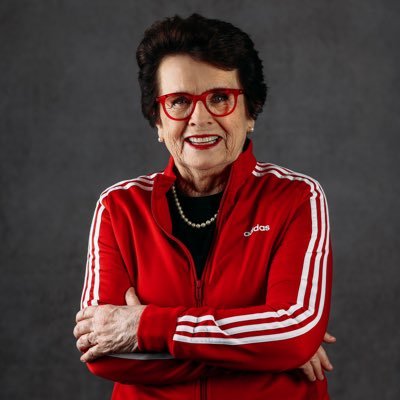
Billie Jean King
Billie Jean King@BillieJeanKing·
It is never, ever, too late to finish what you have started. #Classof2026
Billie Jean King tweet media
English
824
2.2K
36.1K
701.9K