Grfokpr

297 posts

Grfokpr

Grfokpr

@Griefer25

Katılım Mayıs 2010
46 Takip Edilen8 Takipçiler
Grfokpr
Grfokpr@Griefer25·
@Hshshich 6-12 moths always for past 3 years 🤦‍♂️
English
0
0
0
19
Grfokpr
Grfokpr@Griefer25·
@HedgieMarkets Always “two to five years” somewhere in the future. Maybe they should do how many already was displaced?
English
0
0
0
79
Hedgie
Hedgie@HedgieMarkets·
🦔 Tufts University's Fletcher School has released the first American AI Jobs Risk Index, estimating that between 2.7 million and 19.5 million US jobs could be displaced by AI within the next two to five years, with a midpoint of 9.3 million and roughly $757 billion in annual wages at stake. The finding that challenges most assumptions is where the risk sits. Writers face 57 percent displacement risk, computer programmers 55 percent, historians 67 percent. Meanwhile roofers, dishwashers, and orderlies face under 1 percent. The safest jobs right now are overwhelmingly the lowest paid ones. My Take I've been saying for a while that the companies winning with AI are the ones using it as a productivity multiplier rather than a headcount replacement tool, but this index puts numbers to something I think gets underappreciated. The displacement pressure is landing on cognitive and analytical work, the exact jobs that were supposed to be automation-proof. Every narrative about robots taking physical jobs while knowledge workers stayed safe is getting quietly retired by the data. Silicon Valley has a 9.9 percent job risk rate and Washington DC leads all states at 11.3 percent. The people building and regulating AI are among the most exposed to it, which creates a policy dynamic nobody has a clean answer for. The report also notes that for every one percentage point increase in automation, the data projects a 0.75 percentage point loss in jobs, meaning efficiency gains are translating into workforce reductions rather than being absorbed through growth. That relationship is worth understanding before the tipping points arrive. Hedgie🤗
Hedgie tweet media
English
15
32
115
6.7K
total Barça
total Barça@totalBarca·
More goals to come in the second half. I’m sure.
English
5
2
51
4.1K
AndyXAndersen
AndyXAndersen@AndyXAndersen·
@Dr_Gingerballs @karpathy This is harsh. I think skeptics miss how much augmentation by AI will roll out to many jobs as it did for software. Won't be automatic, quick, or cheap. Yet, anywhere where there are patterns and office work, three will be an AI assistant.
English
1
0
1
5.3K
Dr_Gingerballs
Dr_Gingerballs@Dr_Gingerballs·
Guys, it's time to have the conversation that @karpathy might be an idiot.
Kaito | 海斗@_kaitodev

5 minutes ago, @karpathy just dropped karpathy/jobs! he scraped every job in the US economy (342 occupations from BLS), scored each one's AI exposure 0-10 using an LLM, and visualized it as a treemap. if your whole job happens on a screen you're cooked. average score across all jobs is 5.3/10. software devs: 8-9. roofers: 0-1. medical transcriptionists: 10/10 💀 karpathy.ai/jobs


English
83
16
1K
274.8K
Grfokpr
Grfokpr@Griefer25·
@aleattorium @Grady_Booch You just don’t get it .. he witnessed this already and for you it’s a first time , you will get over it for sure
English
0
0
2
50
Jean Lucas Lima
Jean Lucas Lima@aleattorium·
@Griefer25 @Grady_Booch Still doesn't change my point, his original tweet said nothing changed in software engineering. That's not true. I wasn't entirely correct, he made a good point on my tweet. I stand by my original tweet,I don't think nothing changed.
English
1
0
1
147
Jean Lucas Lima
Jean Lucas Lima@aleattorium·
@Grady_Booch Good point, but I still think that the speed code is done is a factor. Saying that nothing changed in software engineering is not correct. It at least introduced more complexity.
English
6
0
2
1K
Burke Holland
Burke Holland@burkeholland·
@giffboake LOL These are mostly things for myself, but one of them I do plan on shipping. I've been working on it for some weeks.
English
1
0
0
630
Grfokpr
Grfokpr@Griefer25·
@milan_milanovic It’s just stupid to do it 100% with it. Small change thank can take minutes can be fixed by hand in seconds.
English
0
0
0
62
Dr Milan Milanović
Dr Milan Milanović@milan_milanovic·
Today, Bad engineers don’t use AI tools Average engineers produce up to 50% code with AI tools Good engineers produce 80% Exceptional engineers produce 100% Yes, it is possible!
English
31
6
70
7.7K
Ray
Ray@RayLiVerified·
@edzitron They're actually not. Even if you use the supposed $3000 in tokens on a $200 sub, their real inference costs have a profit margin of 90% So they're making money off of everyone, even those that use all of their allotment.
English
1
0
3
747
Grfokpr
Grfokpr@Griefer25·
@johncrickett Working now on 2 million lines code base , all in same repo 🤷‍♂️
English
0
0
1
3
John Crickett
John Crickett@johncrickett·
"AI can't handle a multi-million line codebase." I keep hearing this. But I want to challenge something more fundamental. Is there really such a thing as a multi-million line codebase? Every large system I've shipped was broken into smaller, manageable pieces. Services, libraries, modules with clear boundaries. Almost all were a few thousand lines. All could be tested in isolation. So if you're sitting on a massive monolith that isn't properly decomposed, what happened to good software architecture? Separation of concerns, clear boundaries, testability. These aren't new ideas. They're the basics. If your codebase is too large for AI to handle, maybe the problem isn't the AI. Maybe it's the architecture. I speak from experience. I worked on Symbian OS. 40 million lines of code across 450,000 files. Sounds terrifying, right? It wasn't. The parts I worked on were well-defined components with clear interfaces. Rarely more than 10,000 lines, including tests. That's the only way something that large actually works. You don't manage 40 million lines. You manage thousands of small, focused pieces that compose into something bigger. Codebases aren't impressive because they're big. They're impressive because they're well-organised, modular, and maintainable. Stop blaming the tools. Start fixing the foundations. What's the biggest codebase you've worked on, and how was it structured?
English
31
4
37
9.5K
Daniel Foch
Daniel Foch@danielfoch·
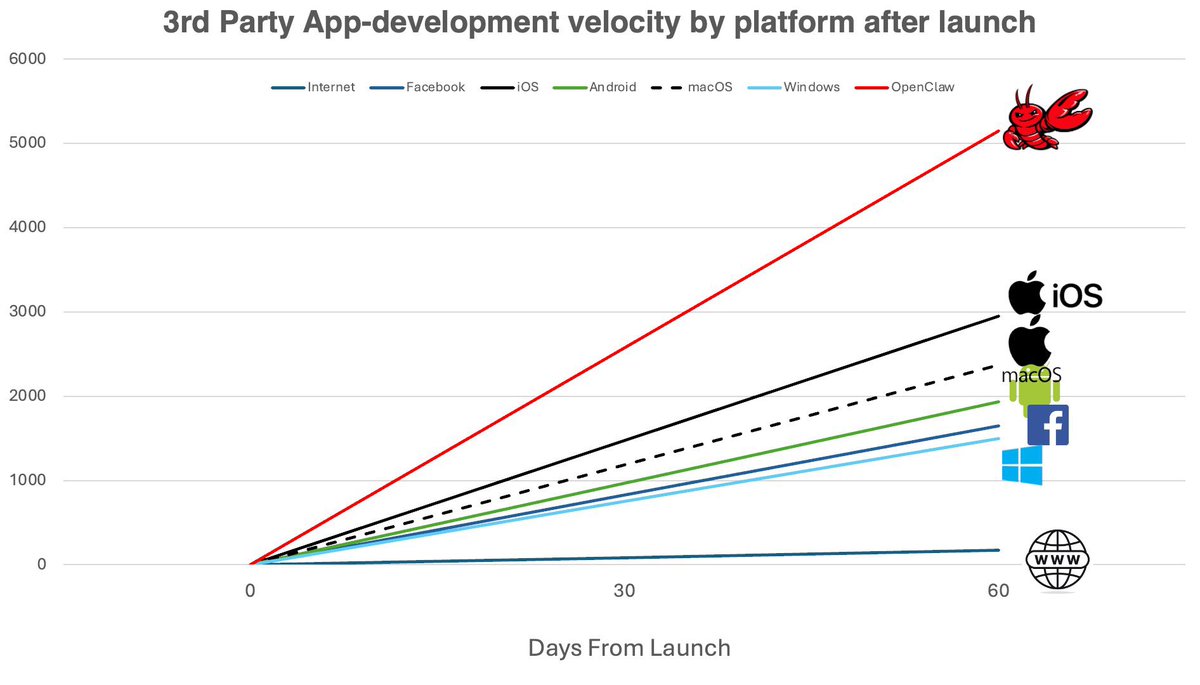
Developers are building for @openclaw faster than any other OS in history This is the next OS
Daniel Foch tweet media
English
236
222
2.2K
722.7K
Grfokpr
Grfokpr@Griefer25·
@0xlelouch_ @kirat_tw Get higher IQ? Nope you can’t , there is zero evidence for that. If you learn something new your IQ is not getting higher
English
0
0
0
8
Abhishek Singh
Abhishek Singh@0xlelouch_·
@kirat_tw If you have a low iq, and don't have any physical brain problems. You can get a higher iq. Ergo, anyone can learn anything.
English
1
0
11
480
Harkirat Singh
Harkirat Singh@kirat_tw·
If you have a moderately high iq you can probably learn anything you want today with ai if you put in the hours
English
153
205
3.9K
82.6K
Luis Garicano 🇪🇺🇺🇦
Luis Garicano 🇪🇺🇺🇦@lugaricano·
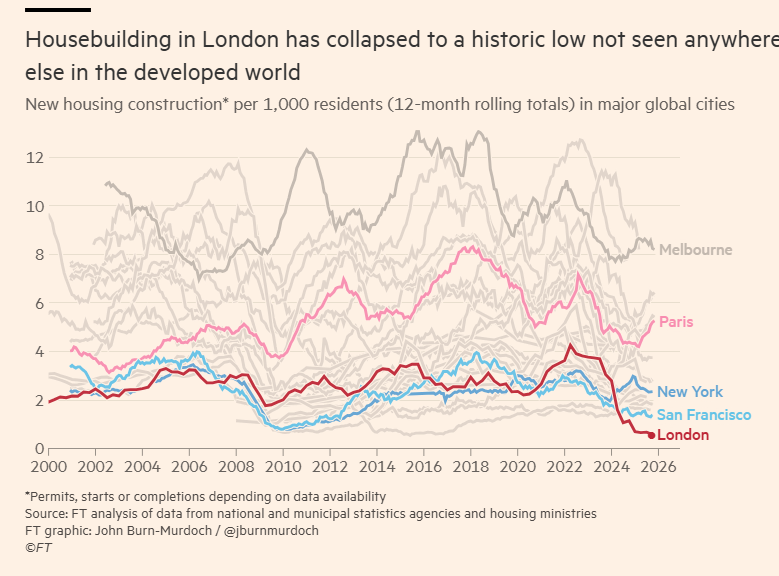
No, the white collar jobs are not going away in 18 months! I was furious with the populist-baiting language (in line with @DarioAmodei 's and @sama's also preferred apocalyptic usage) that Microsoft's @mustafasuleyman used in his FT interview, threatening everyone's jobs: “White-collar work, where you’re sitting down at a computer, either being a lawyer or an accountant or a project manager or a marketing person — most of those tasks will be fully automated by an AI within the next 12 to 18 months.” Not only do I not see the point of this backlash inducing language, I also believe it shows no understanding of the way the labour market and organizations actually works and what people do all day. (My book on this with Jin Li and Yanhui Wu will be out soon.). Don't get me wrong: I believe AI is a huge deal, and will radically change the world. But many white collar jobs are Messy jobs, as our book (and the post linked below) will explain: automating the automatable tasks within them is not near to automating the job. Let me make the point with the attached @jburnmurdoch graph on London. London needs 88,000 new homes per year. In the first nine months of 2025, just 3,248 private homes started construction. Twenty-three of London's thirty-three boroughs recorded zero new housing starts in the first quarter of 2025. Planning permissions have fallen to their lowest level since records began in 2006. Construction of new rental homes fell by 80 percent in a single year. All this is after Starmer declared his government wants to "build, baby, build." Does anyone think AI will fix this? All the technology to design a building exists, and existed pre-AI. The bottleneck in London housing is human. What stops homes from being built in London are environmental and land use regulations and neighbors that weponize them. AI can draft the review, but that is a trivial bit. It cannot convince the environmental group to drop its lawsuit or persuade politicians or negotiate with the neighbors. These obstacles employ people. Suleyman and Amodei imagine that project managers spend their days doing Gantt charts, call their job "sitting down at a computer" and dream of automating them. But the job of the planning guys is not to fill in forms, but to negotiate and coordinate developers, residents, environmental groups, heritage bodies, and elected politicians who all have incompatible interests. At other levels and in other jobs the same is true- radiologists spend only 1/3 of their time reading scans (see this great piece worksinprogress.co/issue/the-algo…). Their job was supposed to be gone in 2017; in fact, the demand for radiologists is booming (employment and wages are sharply up). Many consultants try to elicit the tacit, local, knowledge of what is actually going on in a firm in order to make a recommendation. Yes, if you spend your day just doing PPTs, you will be replaced. But how many people do just that? Organisations/managers resolve conflicts and deal with exceptions. Making a decision stick requires authority: being a person who can be blamed, sued, or fired. The manager resolves disputes about the rules, not just within them. Think of your last renovation in your house. The contractor trying to to get the guy installing the windows and the guys from the floor to show up and do a good job, a mess right? No algorithm does that. AI will make white-collar workers more productive. Some single-task, automatable roles will shrink (doing taxes is an expert system, drafting contracts too), many tasks will be automated. Also, the disruption of career ladders is a real concern. But "most tasks fully automated in 18 months" is not a prediction. It is marketing, designed to sell enterprise subscriptions and justify capital expenditure. The real world is messy. The mess is not a bug. It is what happens when human beings with competing interests try to get things done together. For more on "Messy Jobs", here is my New Years post: siliconcontinent.com/p/a-new-years-…. A book out soon.
Luis Garicano 🇪🇺🇺🇦 tweet media
English
67
274
1.2K
322.7K
Grfokpr
Grfokpr@Griefer25·
@esrtweet @atmoio How do you know about the average if you are too ? 🤷‍♂️
English
1
0
2
223
Eric S. Raymond
Eric S. Raymond@esrtweet·
This is absolutely fucking false. I'm a top 20% SWE, and AI assistance gives me both a tremendous speed boost and better precision (ability to home inaccurately on techniques that achieve the desired goal). AI doesn't seem to work nearly as well for programmers that are closer to the average as it does for me. I think you have this backwards.
English
40
12
439
7.6K
Mo
Mo@atmoio·
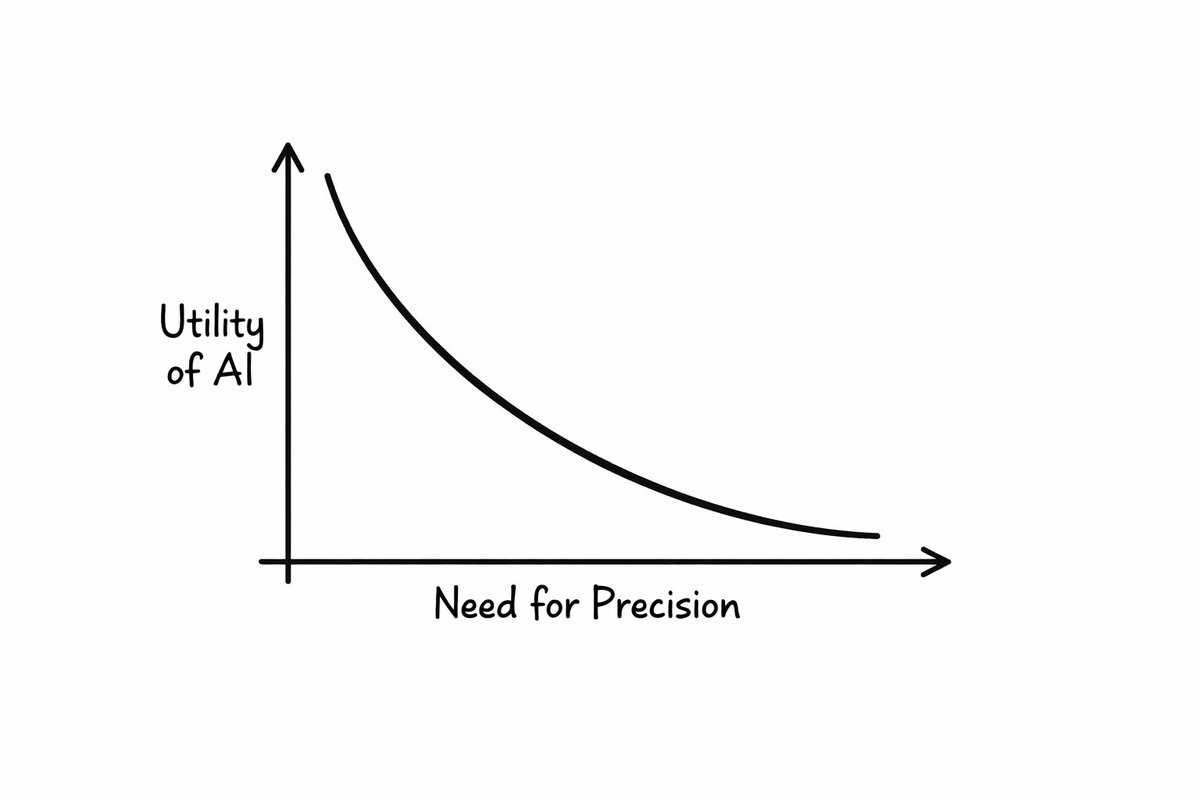
If you're at the top 20% of your craft, AI won’t be a value add. You get a small speedup in exchange for a loss of precision. As the need for precision goes up, the utility of AI goes down.
Mo tweet media
English
92
34
380
23.4K
Grfokpr
Grfokpr@Griefer25·
@0xjoggie @ChombaBupe Indeed that’s why Dario is full of shit with his 6-12 month predictions
English
0
0
1
42
Joggie
Joggie@0xjoggie·
@ChombaBupe "failed at 96% of real world work" measured how? most freelance tasks require context, back-and-forth, and understanding unstated requirements that clients themselves don't know. AI is bad at reading minds. it's great at execution once you clearly define what needs to be done
English
3
0
14
1.1K
Chomba Bupe
Chomba Bupe@ChombaBupe·
This is an example of why reality is the real benchmark for intelligence. Artificial intelligence (AI) models failed at 96% of real world work people actually pay for in freelancing.
Chomba Bupe tweet media
English
58
402
2.2K
54.4K
Ed Zitron
Ed Zitron@edzitron·
i cannot believe how rarely people ask the simple question of "how do they pay for this?" Anthropic lost $5.2bn *after* $4.5bn of revenue in 2025! They're feeding equity to opex again and again, this is literally a test of whether venture capital can keep it alive
TightSpreads@tightspreadz

#Anthropic is targeting ~10 GW of Data Center capacity over the next several years, a scale that implies hundreds of billions in total capex and far exceeds previously disclosed $180B planned server spend through 2029, and $50B Fluidstack partnership disclosed to date. Ambition now rivals OpenAI capacity plans and positioning the company as a hyper-scale infra buyer vs just a cloud tenant. Anthropic reportedly made some big hires here:  Tim Hughes (incoming CDO, ex-Stack Infrastructure), Brett Rogers (ex-GOOGL, led DC construction/design), Winnie Leung (Head of DC Infrastructure, 20+ yrs at Google). Anthropic recently agreed to buy $20B of TPUs from AVGO (co-designed with GOOGL). Tom Wigg

English
15
57
787
65.2K
Jade Cole
Jade Cole@JadeCole2112·
Seems that nobody is immune to AI psychosis.
Jade Cole tweet media
English
12
4
92
3.5K