Lee Labuschagne

2.1K posts

Lee Labuschagne banner
Lee Labuschagne

Lee Labuschagne

@Grinz50

Freelance wordsmith who writes, edits & consults. Big on science, technology & sustainability, astronomy, classical music, books, photography, crafts & cats

Cape Town South Africa Katılım Mart 2009
800 Takip Edilen288 Takipçiler
Lee Labuschagne retweetledi
Physics In History
Physics In History@PhysInHistory·
An expert is someone who knows some of the worst mistakes that can be made in his subject, and how to avoid them. -- Werner Heisenberg
Physics In History tweet media
English
11
123
648
25.9K
Lee Labuschagne retweetledi
World of Science
World of Science@Science_TechTV·
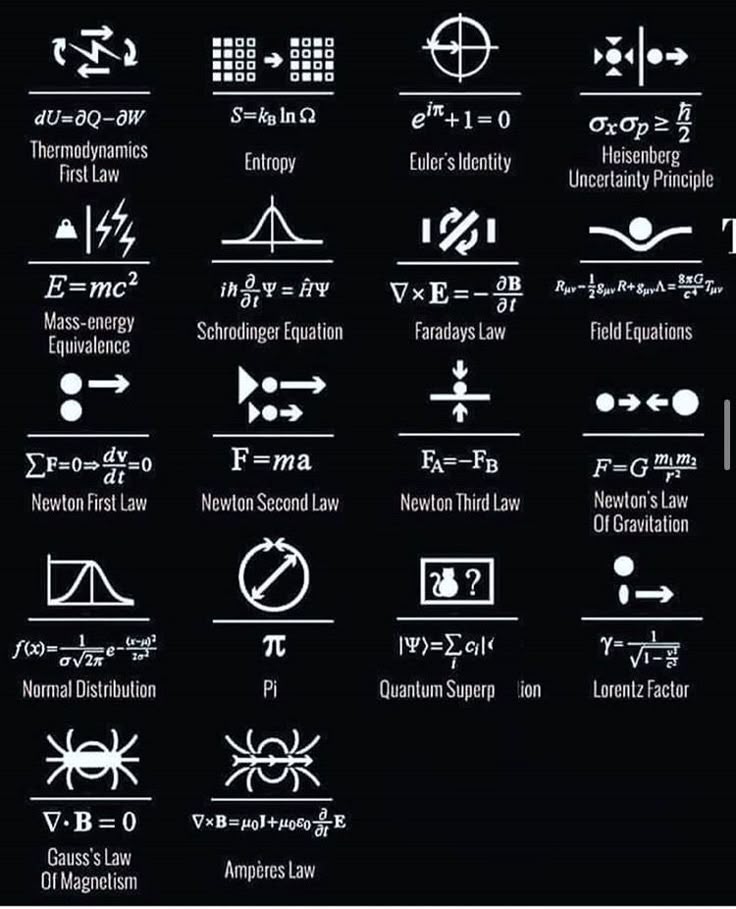
The most important equations in Physics and Mathematics 🧠
World of Science tweet media
English
12
231
974
32.1K
Lee Labuschagne retweetledi
Physics In History
Physics In History@PhysInHistory·
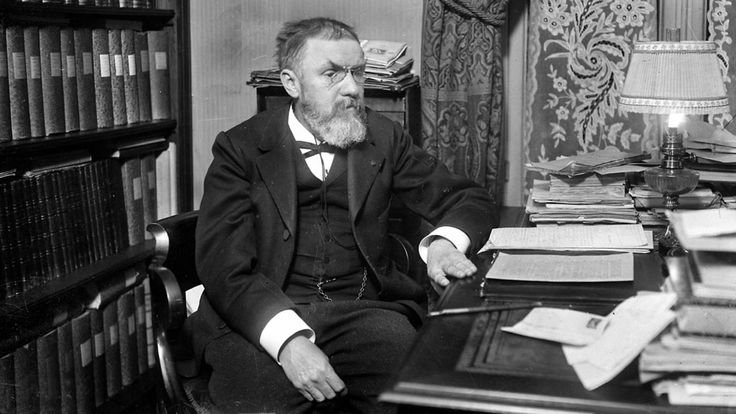
Today marks the birth anniversary of Henri Poincaré (1854–1912), a pioneering French mathematician, physicist, and philosopher of science. Renowned as "The Last Universalist", Poincaré made foundational contributions to celestial mechanics, topology, chaos theory, and the early development of special relativity. His work laid the groundwork for modern mathematical physics and influenced generations of scientists and thinkers.
Physics In History tweet media
English
12
86
401
78.1K
Lee Labuschagne retweetledi
New Scientist
New Scientist@newscientist·
What is consciousness? Is free will an illusion? And how does it manifest in the brain? These are questions that have fascinated scientists and philosophers for centuries. In our latest YouTube livestream, we explore the conscious mind with video stories and expert talks from the archive. Join us now at – youtube.com/live/rRQxLVP4N…
YouTube video
YouTube
New Scientist tweet media
English
11
91
301
15.4K
Lee Labuschagne retweetledi
Physics In History
Physics In History@PhysInHistory·
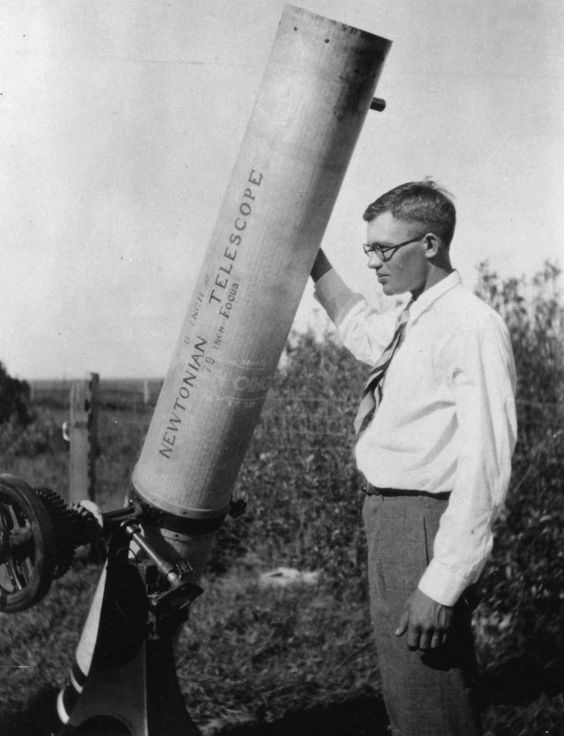
On February 18, 1930, after nearly a year of searching and examining millions of stars, Clyde Tombaugh noticed a tiny object that had moved between photographic plates taken in January of the same year. Further analysis and additional photographs confirmed the movement was consistent with an object orbiting beyond Neptune. This new celestial body was eventually named Pluto, a name suggested by an 11-year-old English schoolgirl, Venetia Burney, which aptly reflected the dark and distant nature of this newfound world. Tombaugh's approach to the search involved using a device known as a blink comparator. He would take pairs of photographs of the night sky several days apart, using a telescope specifically designed for the task. Each pair of photos would cover the same area of the sky. He would then use the blink comparator to rapidly switch back and forth between viewing the two photographs. By doing so, he could easily spot objects that had shifted position against the backdrop of fixed stars. This was a painstaking process, as each shift had to be checked to ensure it was not a star, asteroid, or comet. Tombaugh's discovery was a significant achievement, given the limitations of the technology at the time and the vast area of sky he had to cover. Pluto remained classified as the ninth planet in our solar system until 2006, when it was reclassified as a "dwarf planet" by the International Astronomical Union.
Physics In History tweet media
English
13
91
648
35.3K
University of Pretoria
University of Pretoria@UPTuks·
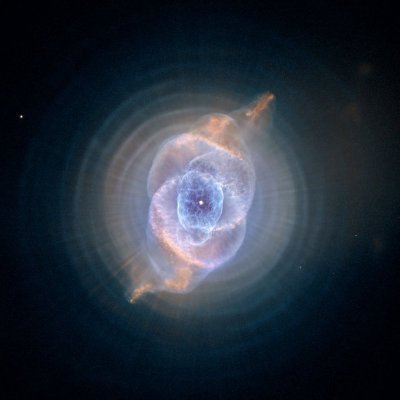
RECORD-BREAKING DETECTION: With the help of the MeerKAT telescope, a UP-led team of South African astronomers has detected the most distant hydroxyl megamaser ever, a natural radio “laser” produced by merging galaxies more than 8 billion light-years away. Read more: ow.ly/AauW50Yhsca Photo credit: South African Radio Astronomy Observatory #UPResearchMatters #MeerKAT
University of Pretoria tweet media
English
11
140
373
11.2K
Lee Labuschagne retweetledi
ScieVision
ScieVision@scievision369·
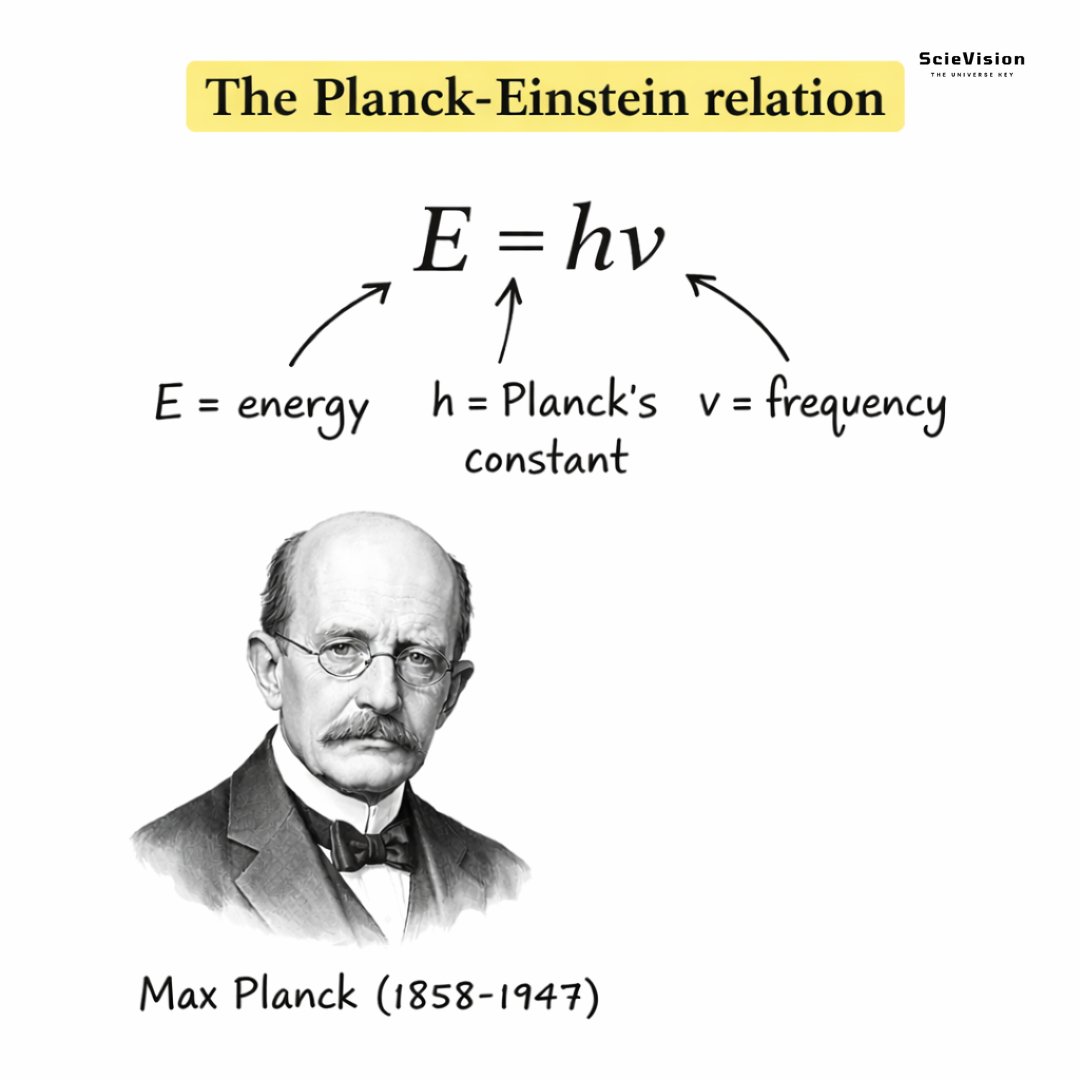
The Planck-Einstein relation ✍️ This equation changed how we understand light. It showed that energy is not a constant flow. Instead, it comes in separate packets. The energy of these packets depends entirely on the light's frequency, or its "color," rather than its brightness. This means that high-frequency radiation, like ultraviolet, has more energy per packet than low-frequency radiation, like infrared. This difference explains why various types of light interact with matter in unique ways. By connecting wave-like and particle-like behavior, this principle demonstrates that light behaves like a stream of photons, with each photon’s strength determined by its speed.
ScieVision tweet media
English
14
53
259
6.7K
Lee Labuschagne retweetledi
Mathonymics
Mathonymics@Mathonymics·
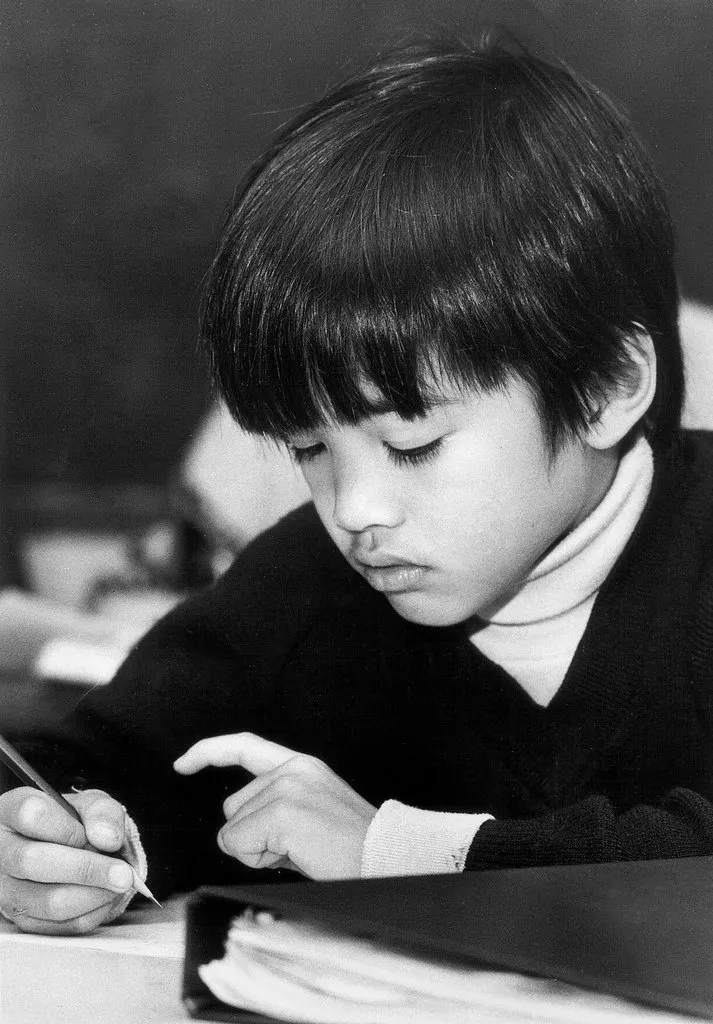
Terence Tao, born in 1975 in Adelaide, is widely regarded as one of the most brilliant mathematicians alive today and arguably the smartest person in the world, with a reported IQ of 230. At age 2, he was teaching 5-year-old children spelling and addition. By age 21, Tao received his Ph.D. from Princeton University. He soon joined UCLA and became a full professor at age 24.
Mathonymics tweet media
English
20
30
304
16.1K
Lee Labuschagne retweetledi
Black Hole
Black Hole@konstructivizm·
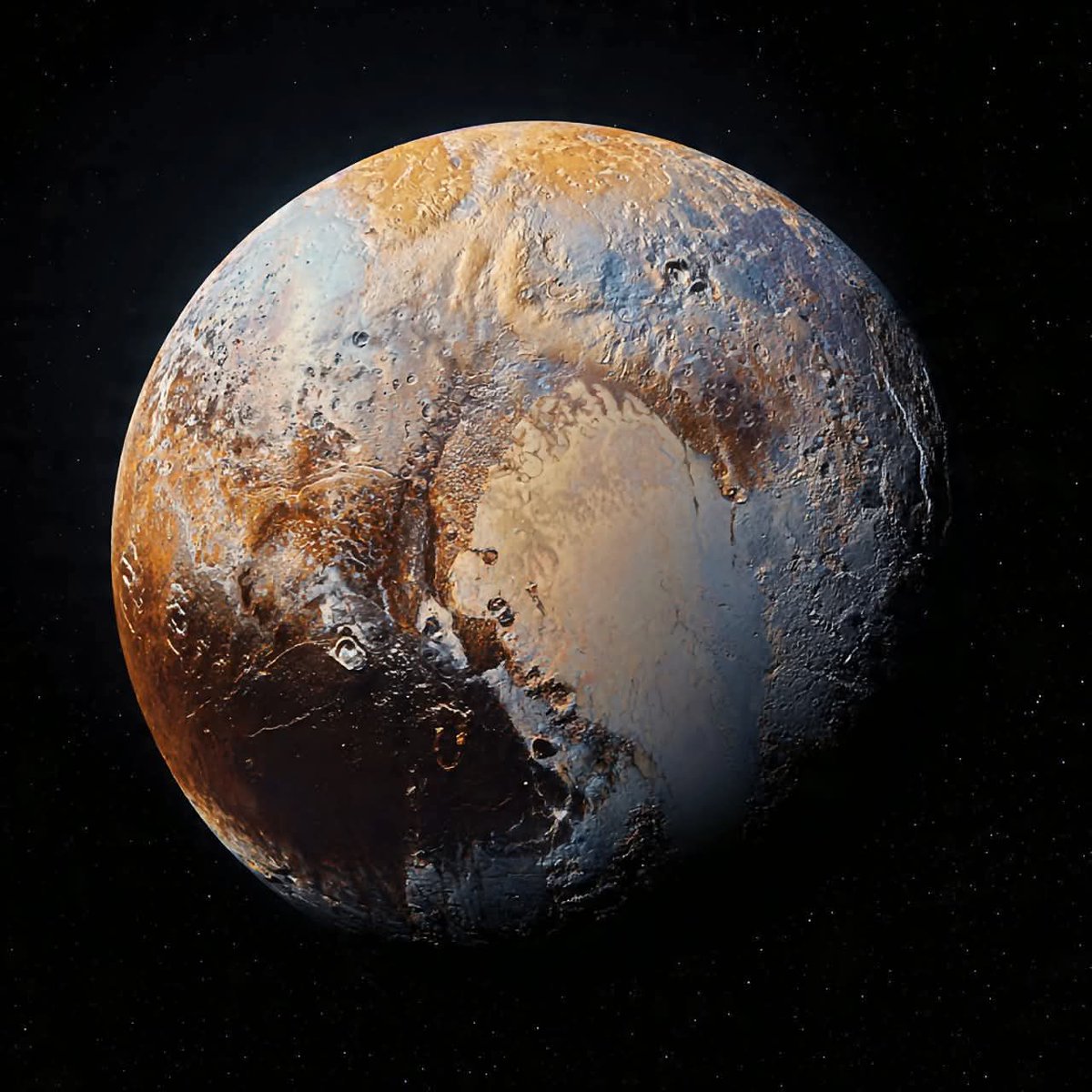
NASA’s New Horizons spacecraft finally reached Pluto and showed us its true face, After traveling for nearly 9 years through deep space and covering about 3 billion miles, a breathtaking icy world with giant mountains, smooth frozen plains, and secrets no one expected.
Black Hole tweet media
English
101
314
1.5K
47.9K
Lee Labuschagne retweetledi
Philosophy Of Physics
Philosophy Of Physics@PhilosophyOfPhy·
Beyond Maths; a collection of fundamental laws, equations, and constants from physics and mathematics.
Philosophy Of Physics tweet media
English
11
194
1.2K
33.9K
Lee Labuschagne retweetledi
Next Science
Next Science@NextScience·
🚨 In a groundbreaking medical breakthrough, scientists have developed a universal antivenom that can protect against 17 different deadly snakebites, potentially revolutionizing emergency treatment in snakebite-prone regions around the world. Traditionally, antivenoms are species-specific, meaning doctors must identify the exact type of snake responsible for a bite before administering the correct antivenom, a challenge that often delays treatment and puts lives at risk. But this new formulation works across multiple venom types, neutralizing a wide range of toxins found in cobras, vipers, mambas, kraits, and other highly venomous snakes. Researchers used a novel approach by identifying shared venom components common proteins and enzymes found across multiple snake species. They then developed synthetic antibodies that target these shared toxins, offering broad protection with a single dose. In preclinical trials, the universal antivenom successfully neutralized venom from snakes found across Africa, Asia, and Latin America, dramatically improving survival rates in animal models. The team is now preparing for human trials, with hopes that the treatment could soon be used in rural clinics, military field kits, and emergency response systems. Beyond its life-saving potential, the new antivenom is also cheaper and easier to produce, since it doesn't rely on traditional methods that involve extracting venom and immunizing animals. This could make antivenom more accessible and affordable for low-income regions where snakebite fatalities remain alarmingly high. With over 100,000 deaths and 400,000 disabilities caused by snakebites each year, this innovation offers real hope and real protection for millions.
Next Science tweet media
English
17
142
474
13.6K
Lee Labuschagne retweetledi
MeidasTouch
MeidasTouch@MeidasTouch·
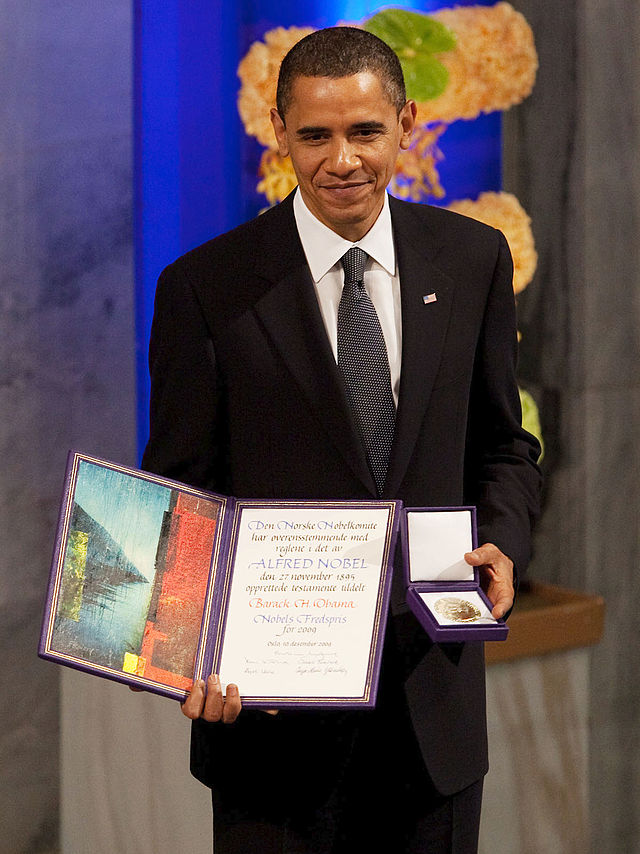
Pictured: Someone who actually won a Nobel Peace Prize
MeidasTouch tweet media
English
17.3K
11.1K
58.5K
5.6M
Lee Labuschagne
Lee Labuschagne@Grinz50·
A reminder about the Nobel Peace Prize medal
Nobel Peace Center@NobelPeaceOslo

The #NobelPeacePrize medal. It measures 6.6 cm in diameter, weighs 196 grams and is struck in gold. On its face, a portrait of Alfred Nobel and on its reverse, three naked men holding around each other’s shoulders as a sign of brotherhood. A design unchanged for 120 years. Did you know that some Nobel Peace Prize medals have been passed on after the award was given? A well‑known case is Dmitry Muratov’s medal, which was auctioned for over USD 100 million to support refugees from the war in Ukraine. And the medal displayed at the Nobel Peace Center is actually on loan and originally belonged to Christian Lous Lange, Norway’s first Peace Prize laureate. But one truth remains. As the Norwegian Nobel Committee states: “Once a Nobel Prize is announced, it cannot be revoked, shared, or transferred to others. The decision is final and stands for all time.” A medal can change owners, but the title of a Nobel Peace Prize laureate cannot.

English
0
0
0
10
Lee Labuschagne
Lee Labuschagne@Grinz50·
The latest book by Prof Letlhokwa Mpedi, Vice Chancellor and Principal of the University of Johannesburg (UJ) is now available. It was published by Tracey McDonald Publishers and I had the honour of editing it. #UJ #leadership #LeadershipInAction
Lee Labuschagne tweet media
English
0
0
1
18
Lee Labuschagne retweetledi
The Nobel Prize
The Nobel Prize@NobelPrize·
In the past year, #NobelPeacePrize laureate Maria Corina Machado has been forced to live in hiding. Despite serious threats against her life she has remained in the country, a choice that has inspired millions of people. When authoritarians seize power, it is crucial to recognise courageous defenders of freedom who rise and resist. Democracy depends on people who refuse to stay silent, who dare to step forward despite grave risk, and who remind us that freedom must never be taken for granted, but must always be defended – with words, with courage and with determination. Read more about the 2025 Nobel Peace Prize: nobelprize.org/prizes/peace/2… #NobelPrize
The Nobel Prize tweet media
English
5.2K
18.3K
59.1K
7.2M