HIGHVIBE NETWORK

3.8K posts

HIGHVIBE NETWORK banner
HIGHVIBE NETWORK

HIGHVIBE NETWORK

@HIGHVIBEnetwork

An emergent digital nation building the wellness economy in Web3 ✨ Join us on Telegram xx🦋

Quantum Field Katılım Mart 2018
3K Takip Edilen26.2K Takipçiler
Sabitlenmiş Tweet
HIGHVIBE NETWORK
HIGHVIBE NETWORK@HIGHVIBEnetwork·
GM to all of our esteemed Elevated Degens 🦁 It is with great honour and reverence that we share this Official Announcement. :: Lion DAO Genesis Collection :: THE CALL TO ADVENTURE ✨ Full details found here👇 mirror.xyz/highvibenetwor…
English

7
8
35
0
HIGHVIBE NETWORK retweetledi
Sahil Bloom
Sahil Bloom@SahilBloom·
Major cheat code for life: Increase your recovery speed. You will get rejected. You will lose money. You will embarrass yourself. The goal isn't to avoid the fall. It's to shorten the time between the fall and the reset. The ultimate life hack is the ability to quickly reset and recover. From a poor decision. From a bad interaction. From a missed workout. From a bad day. You can start over whenever you want. You can't always control what happened, but you can control how long you carry it. Fast recovery compounds.
English
324
1.2K
6.9K
274.4K
HIGHVIBE NETWORK retweetledi
☯️ FLOW
☯️ FLOW@flow1022·
Never quit something with great long term potential just because you can't deal with the stress of the moment. Trust your vision.
English
5
10
53
723
HIGHVIBE NETWORK retweetledi
The Vigilant Fox 🦊
The Vigilant Fox 🦊@VigilantFox·
Dr. Andrew Huberman just confirmed a “wild conspiracy theory” about incandescent lights and LED bulbs. The long wavelengths found in incandescents increase your metabolism and “charge your mitochondria.” Conversely, the LED bulbs that most of you have in your house are “causing disruptions in mitochondrial function.” DR. ANDREW HUBERMAN: “Your mitochondria function better, you increase ATP production, your metabolism increases in the presence of red light, long wavelength light to the skin.” “Shine long wavelength light on somebody, watch blood glucose levels in a blood glucose test, and it’s blunted.” “Now, the LED lights that are commonly used now… that short wavelength light, in the absence of long wavelength light, has been shown to damage the mitochondria.” “This used to be considered crazy. This was like chemtrail crazy, right?” “But now we’re starting to see from animal studies and human studies, from Glenn Jeffreys and others, that people’s vision gets better when they get in front of an incandescent bulb once a day.” “If they get sunlight, which also has long-wavelength light, your vision improves because of improvements in mitochondria.” The Biden administration quietly pushed incandescents out of the market through aggressive energy regulations. But you can still find them online today if you look hard enough. If that health insight stood out to you, there’s a lot more where that came from. (See post below) This page finds the moments they don’t want going viral, with captions that tell you exactly why they matter before you even hit play. See why 2 million already follow: @VigilantFox
The Vigilant Fox 🦊@VigilantFox

Internationally recognized neuroscientist Dr. Andrew Huberman reveals a surprising trick to help you fall back asleep when you wake up in the middle of the night. “I can’t promise, but I’m willing to wager… that within five minutes or so, you’ll be back to sleep.”

English
451
5.3K
18.4K
4.1M
HIGHVIBE NETWORK retweetledi
🧬Craig Brockie
🧬Craig Brockie@CraigBrockie·
If you think processed foods are bad, wait until you see what LED light is doing to you. LED bulbs flood your cells with toxic blue light; making you tired, fat, wrecking your sleep, and aging you faster. The science is disturbing (and the solution is simple): 🧵
🧬Craig Brockie tweet media
English
41
582
1.6K
107.2K
HIGHVIBE NETWORK retweetledi
Rumi
Rumi@rumilyrics·
Life is strange. You arrive with nothing, spend your whole life chasing everything, and still leave with nothing. Make sure your soul gains more than your hands.
English
94
499
2.2K
59.6K
HIGHVIBE NETWORK retweetledi
Bryan Johnson
Bryan Johnson@bryan_johnson·
Finished a seven day social media fast. It feels like the most effective longevity therapy I've done. Everything got better: mood, sleep, energy, presence, judgment, relationships, and optimism. Evidence shows a seven day fast produces a reduction of anxiety (16%), depression (25%) and insomnia (15%). The effects felt bigger. Conversely, dipping back in, I can viscerally feel that my body metabolizes social media similarly to a fast food meal, corrosive relationship, hangover, and sleep deprivation. My body hates it. After the previous fasts (40/hr and 70hr), I wrote that social media is pollution.  Not a vice or guilty pleasure. It’s closer to water toxins, air pollution and microplastics. This time, the major insight was that social media is a form of intoxication. Alcohol is honest intoxication. It clearly tells you what it's taking from you. Social media on the other hand does not disclose itself as an intoxicant. It produces the sensation of being informed, engaged, and connected while quietly evacuating your capacity for depth and independent thought. You don’t feel drunk, you feel current. But evidence shows that it causes your brain to shrink. The impairment is real by you can't feel it. Making it the more dangerous type. If you haven't tried it, I strongly encourage you to try a social media fast. Even if for one day.
English
410
507
7.4K
1.2M
HIGHVIBE NETWORK retweetledi
Lenny Rachitsky
Lenny Rachitsky@lennysan·
I did a whole-house toxin health assessment, where a guy spent half a day testing our house's air quality, water, EMFs, lighting, mold, and household products. So many surprises: - Our Waterdrop reverse-osmosis water filter seems to be introducing a chemical (Dichloromethane) into our drinking water that wasn't in the (whole-house filtered) tap water. Will recheck this to make sure it's not a fluke. - Even though we have air purifiers in many parts of the home, they weren't on the proper setting so our air quality was not great. Turned them all up higher. - Most of our light bulbs have blue light and super high flicker rates which disrupt circadian rhythms. Replacing a bunch of them. - The wifi router in my office is EMF'ing the sh*t out of me. Going to move it to a different part of the room. - The powerstrip under our bed is EMF'ing the sh*t out of us. Getting a grounded power strip that avoids this. - Some of our shampoos and soaps had harmful ingredients. On the plus side, no gas leaks or carbon monoxide 👌 I'm predicting this is going to become the next microplastics-type trend, to test your home for toxins and harmful products.
Lenny Rachitsky tweet media
English
134
120
2.2K
263.7K
HIGHVIBE NETWORK retweetledi
World of Statistics
World of Statistics@stats_feed·
A walk in the forest increases immunity for 30 days. Trees emit phytoncides. By inhaling them for 2 hours, you increase the number and activity of NK cells (cancer and virus killers) in the blood by 50%. The effect lasts for a month. This is the Japanese practice of Shinrin-yoku. (Nippon Medical School).
English
77
574
4.4K
191.7K
HIGHVIBE NETWORK retweetledi
Cooking with Chris
Cooking with Chris@coookwithchris·
NON TOXIC COOKWARE: THE ULTIMATE GUIDE -Which cookware to avoid -Which cookware is safe -When & where to use each -Brands that you can trust (Thread)
Cooking with Chris tweet media
English
10
67
478
78.4K
HIGHVIBE NETWORK retweetledi
Aakash Gupta
Aakash Gupta@aakashgupta·
The average person complains 15 to 30 times per day. Each one is a rep training your brain to stay in threat detection mode. Here’s the mechanism. When you complain, your hypothalamus activates the HPA axis, flooding your system with cortisol. Cortisol in short bursts is fine. Cortisol as a chronic baseline state is neurotoxic. Stanford research found that repeated complaining physically shrinks the hippocampus, the region responsible for memory consolidation and spatial reasoning. Even listening to someone complain for 30 minutes is enough to damage neurons there. The hippocampus has one of the highest concentrations of cortisol receptors in the entire brain, which means it takes the hit first and hardest. But the deeper problem is Hebbian. Neurons that fire together wire together. Every complaint shortens the synaptic gap between your negativity-associated neurons, making that circuit the path of least resistance. Your amygdala becomes hyperactive. Your prefrontal cortex, the part responsible for rational decision making and impulse control, goes quiet. You are literally building hardware for anxiety while dismantling hardware for problem solving. The loop looks like this: complaint → cortisol spike → amygdala activation → prefrontal suppression → reduced ability to reframe → more complaints. The intervention point is at the front of that loop. Gratitude journaling, deliberate reframing, and novel skill acquisition all stimulate new dendritic growth in the hippocampus and restore prefrontal activity. Physical exercise, specifically zone 2 cardio, lowers baseline cortisol more reliably than any cognitive technique alone. Your brain wires around what you repeat. Choose the reps carefully.
GP Q@argosaki

New research reveals that constant complaining does more than annoy those around you—it can actually weaken your brain. Every time you focus on what’s wrong, your body releases stress hormones like cortisol, which interfere with neural function and reduce the brain’s ability to adapt and learn. The impact is not just mental. Elevated cortisol levels can impair memory, decision-making, and problem-solving skills. Over time, a habit of negativity can make your brain less resilient, affecting emotional regulation and overall cognitive performance. Essentially, the more you complain, the harder it becomes for your brain to handle challenges effectively. Shifting your focus from problems to solutions isn’t just good advice—it’s backed by science. Practising gratitude, positive thinking, and constructive problem-solving can lower stress hormones, strengthen neural pathways, and help your brain remain agile and adaptable throughout life. #TheSciencePulse #BrainHealth #PositiveMindset

English
59
827
4.9K
1.2M
HIGHVIBE NETWORK retweetledi
All day Astronomy
All day Astronomy@forallcurious·
BREAKING🚨: Science confirms your cells hear you talk to yourself─ for your cells, telling yourself “I’m a mess” has the same toxic impact as running away from a predator. Meaning ─ YOUR WORDS CAN ALSO MAKE YOU SICK!
All day Astronomy tweet mediaAll day Astronomy tweet media
English
874
7.4K
55.5K
5.7M
HIGHVIBE NETWORK retweetledi
Next Science
Next Science@NextScience·
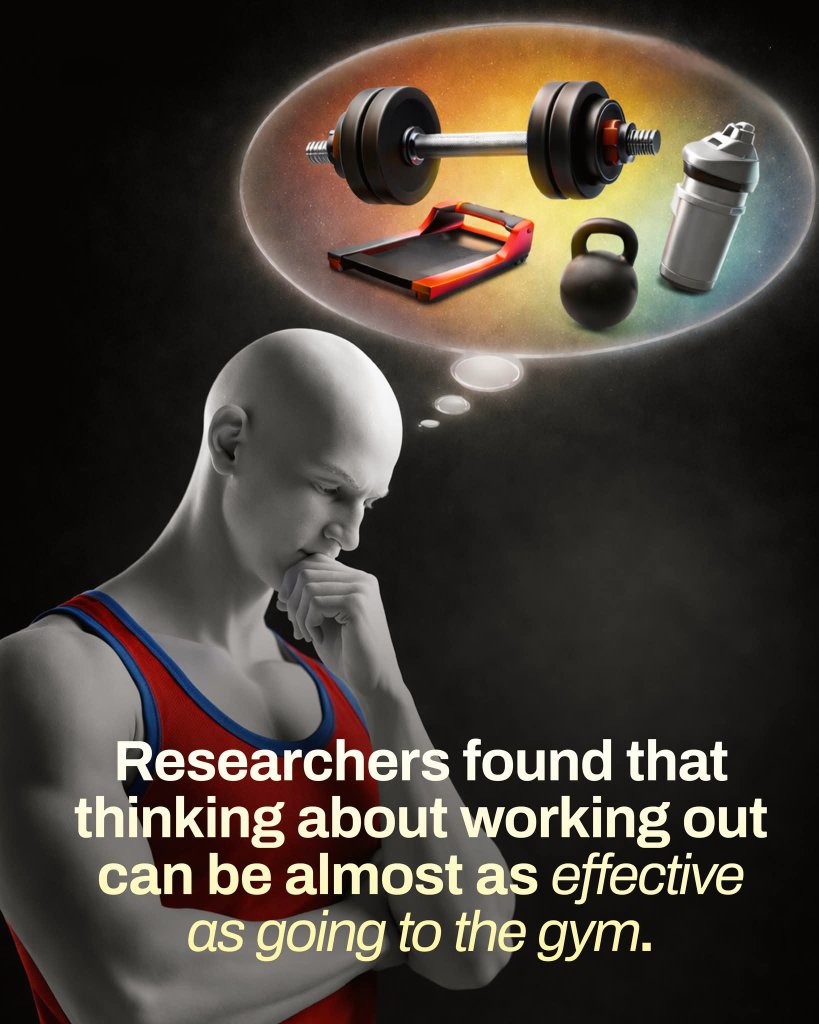
Your Brain Can Build Muscle Without Moving — Seriously 🤯 A surprising study reported by Ohio University suggests that simply imagining yourself exercising can actually make your muscles stronger. No weights. No sweat. Just focused thought. In the experiment, one group of people spent a few minutes a day vividly imagining strong muscle contractions, while another group did absolutely nothing. Four weeks later, the results shocked researchers — the people who only used mental imagery became significantly stronger. This discovery reveals something powerful: muscles don’t work alone. Your brain is deeply involved in controlling strength, and when the brain “practices” movement, the body responds. Scientists believe this could be life-changing for people who can’t exercise normally — the elderly, injured patients, or anyone with limited mobility. Instead of losing muscle over time, they might slow weakness simply by training their mind. It sounds almost unbelievable, but science is catching up with what we’ve always suspected — the mind is not just observing the body, it’s shaping it. One day, “thinking workouts” may become a real tool alongside physical exercise. So next time you imagine lifting, pushing, or moving… your body might be listening more than you think.
Next Science tweet media
English
73
221
1.3K
63.4K
HIGHVIBE NETWORK retweetledi
Bryan Johnson
Bryan Johnson@bryan_johnson·
Kindness is peak human performance and high status. Kindness requires metabolic abundance: the capacity to override primal impulses, regulate emotions, and extend empathy. Meanness is dirty energy: high cortisol, inflammation and an exhausted executive function.
English
504
1.8K
13.6K
581.4K
HIGHVIBE NETWORK retweetledi
Brandon Luu, MD
Brandon Luu, MD@BrandonLuuMD·
Delusional optimism is a secret to success. People who overestimate their chances work harder and persist longer. Even against the odds, that extra persistence turns failures into wins.
Brandon Luu, MD tweet media
English
165
1.7K
12K
587.9K
HIGHVIBE NETWORK retweetledi
Massimo
Massimo@Rainmaker1973·
Your thoughts literally reshape your brain.What you repeatedly focus on doesn't just linger in your mind—it physically changes its structure. By intentionally directing your attention toward the positive, you begin forging and strengthening neural pathways that make it easier to notice and appreciate more good things. This is neuroplasticity at work: your brain's lifelong ability to create new connections in response to your focus, emotions, and habits. Every time you pause to savor a kind act, a small achievement, or a simple moment of beauty, you're reinforcing the neural circuits that help you view the world with greater clarity and calm. With consistent practice, this becomes your brain's new default—automatically tuning in to what's right rather than dwelling on what's wrong. The payoff includes reduced stress, improved emotional stability, and stronger mental resilience against life's challenges.This isn't about denying difficulties; it's about actively training your brain to seek out opportunities and solutions instead of getting trapped by obstacles. The exciting part? You're in control—you can start rewiring these pathways any time you choose.Give it a try: Spot one positive thing today. Tomorrow, look for two. Soon, make it five. And then watch what happens.
Massimo tweet media
English
98
930
4.3K
136.7K
HIGHVIBE NETWORK retweetledi
The Vigilant Fox 🦊
The Vigilant Fox 🦊@VigilantFox·
Neuroscientist Andrew Huberman shares with Bill Maher a surprising trick to help you fall back asleep when you wake up in the middle of the night. “I can’t promise, but I’m willing to wager… that within five minutes or so, you’ll be back to sleep.”
English
299
2.8K
25.2K
5.4M
HIGHVIBE NETWORK retweetledi
Shining Science
Shining Science@ShiningScience·
🚨 Research shows repeated complaining physically rewires your brain to prioritize stress and negativity. The way we speak about our daily challenges does more than just vent frustration; it physically alters the architecture of the brain. When we engage in chronic complaining, we repeatedly activate neural networks responsible for detecting threats and processing stress. Through the biological process of neuroplasticity, these circuits become stronger and more efficient every time they are used. Essentially, the brain learns to become more adept at finding things to be unhappy about, turning a temporary mood into a permanent biological predisposition toward negativity and fear-based thinking. As these negative pathways become the brain's default setting, individuals often experience a measurable increase in baseline stress levels and emotional volatility. This heightened sensitivity means that even minor inconveniences can trigger an intense stress response because the brain has been conditioned to interpret the world through a lens of threat. Findings discussed by the Stanford University School of Medicine emphasize that while this mechanism is powerful, understanding the science of affective neuroscience is the first step in consciously redirecting those pathways toward more resilient emotional patterns. Source: Stanford University School of Medicine. (2023). Neural Plasticity and the Impact of Negative Thought Patterns on Emotional Regulation. Stanford Medicine News.
Shining Science tweet media
English
540
5.2K
28.1K
10.2M
HIGHVIBE NETWORK retweetledi
Ben Smith
Ben Smith@bensmithlive·
3-tier guide to protecting yourself from EMFs: TIER 1 - BEGINNER: - Use speakerphone (never hold to head) - Keep phone on table, not in pocket - Switch to wired headphones TIER 2 - INTERMEDIATE: - Plug laptop into Ethernet, disable WiFi - Use wired keyboard and mouse - Avoid phone use at 1-2 bars signal - Unplug all chargers when not in use TIER 3 - ADVANCED: - EMF-shielding bed canopies ($1,500) - Replace metal bed frames with wood - Dirty electricity filters in every outlet - EMF meters to track exposure You don't need a Faraday cage. Basic distance is 90% of the battle, just keep devices off your body.
Ben Smith@bensmithlive

The US government spent $25M over 10 years and found "clear evidence" that 2G and 3G radiation causes tumors in mice. Our safety laws haven't been updated since 1996. We are using Motorola-era rules for an iPhone world. A rational guide on how to stay safe from EMFs:

English
35
449
2.1K
149K
HIGHVIBE NETWORK retweetledi
blue
blue@bluewmist·
someone told me yesterday that when they feel nervous about trying something new & their heart starts beating really fast, that they call it their “inner applause” because their body is cheering them on, and i think that’s the best narrative adjustment ever.
English
200
16.1K
98K
1.3M