Houda Bahig, MD PhD

560 posts

Houda Bahig, MD PhD banner
Houda Bahig, MD PhD

Houda Bahig, MD PhD

@HoudaBahig

Radiation Oncologist & Clinician Scientist @chumontreal & @CRCHUM 🇨🇦 Views are my own

Montreal Katılım Ekim 2017
893 Takip Edilen791 Takipçiler
Houda Bahig, MD PhD retweetledi
JTO & JTO CRR
JTO & JTO CRR@JTOonline·
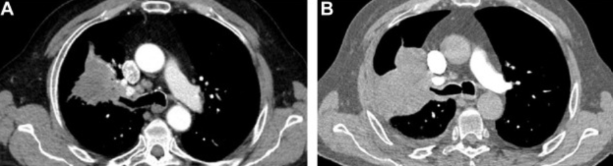
March JTO Editor’s Choice: Zhu et al. Explore a new IASLC review tackling complex, locally advanced #NSCLC scenarios commonly discussed in multidisciplinary tumor boards, offering practical insights for real-world decision-making. Read now: bit.ly/4rPk5sT
JTO & JTO CRR tweet media
English
1
5
9
926
Houda Bahig, MD PhD retweetledi
Jeff Ryckman
Jeff Ryckman@jryckman3·
🧵 Just published in @TheLancet: TORPEdO – the first phase 3 RCT designed specifically to test whether IMPT (proton beam) improves late function & QoL vs modern IMRT in oropharyngeal SCC. Short answer: It doesn’t. Long answer (with the numbers that matter) 👇
English
7
32
79
19.9K
Houda Bahig, MD PhD retweetledi
NEJM
NEJM@NEJM·
Adaptive radiotherapy involves modifying treatment plans to account for changes in anatomical geometry that are not adequately mitigated with changes in alignment. Online adaptive radiotherapy capitalizes on advances in image guidance, real-time tumor tracking, and the enhanced speed of multiple steps in radiotherapy planning and delivery workflows (seen in image). Learn more in the Review Article “Effects of Radiotherapy in Normal Tissue” by @DeborahCitrin, MD, and Robert D. Timmerman, MD (@BobTimmermanMD), from the National Cancer Institute and @UTSWMedCenter: nejm.org/doi/full/10.10…
NEJM tweet media
English
1
58
137
15.3K
Houda Bahig, MD PhD retweetledi
Alexander Rühle
Alexander Rühle@RuehleAlex·
🔥 Hot off the press: "Prognostic Value of Impaired Vocal Cord Mobility in T2N0 Glottic Cancer Treated With IMRT" ➡️In T2N0 glottic cancer, impaired vocal cord mobility is associated with worse LRF (aHR 3.7) and DFS (aHR 2.7) doi.org/10.1002/lary.7… @PMResearch_UHN @UofTDRO
English
4
13
33
5.3K
Houda Bahig, MD PhD retweetledi
Noemi Reguart
Noemi Reguart@NReguart·
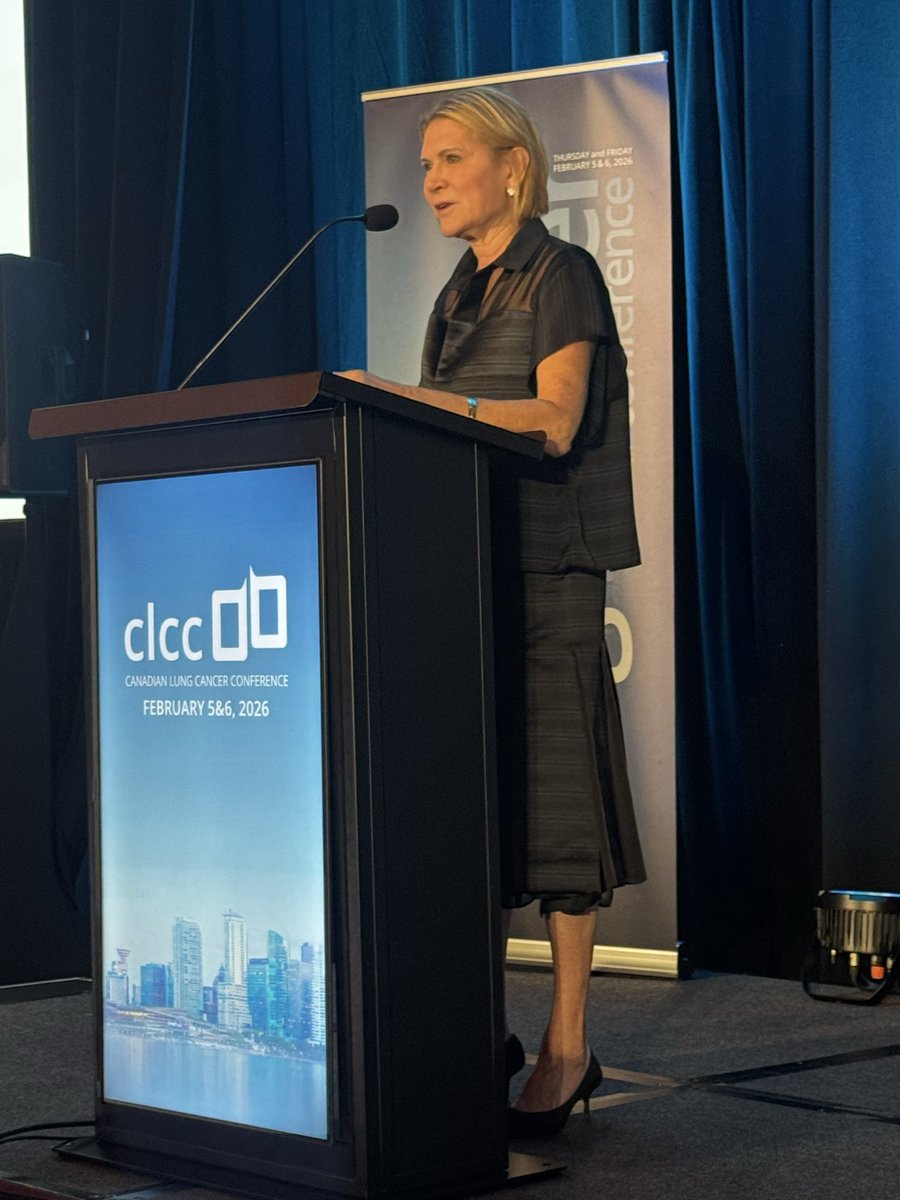
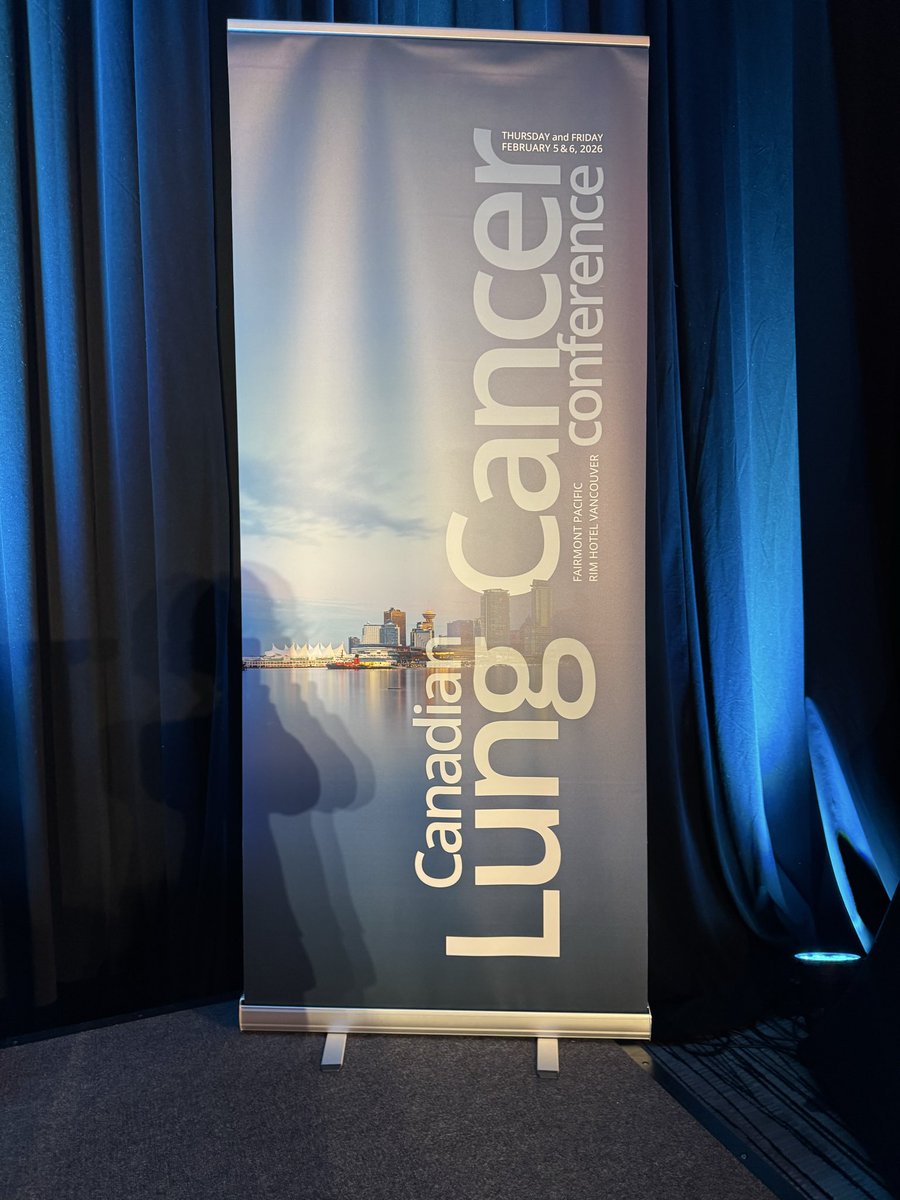
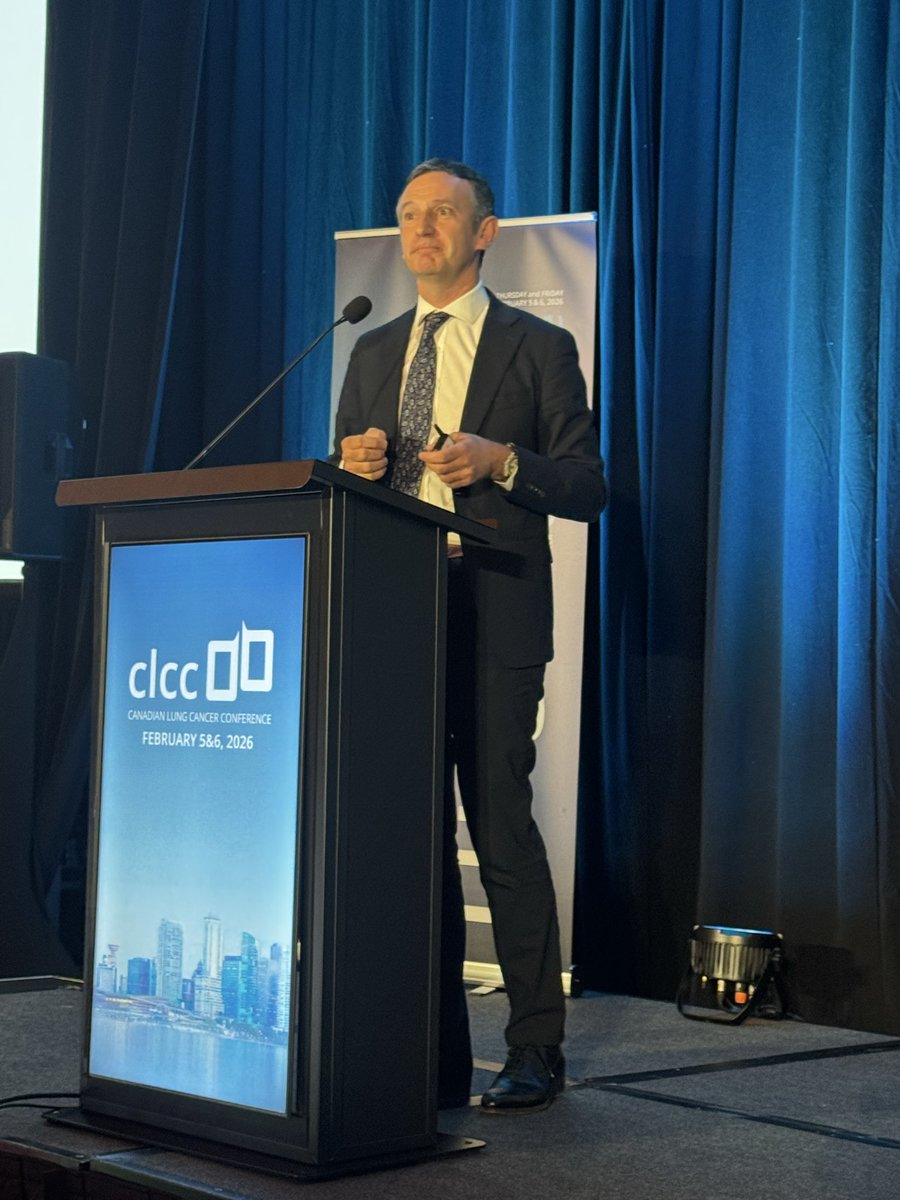
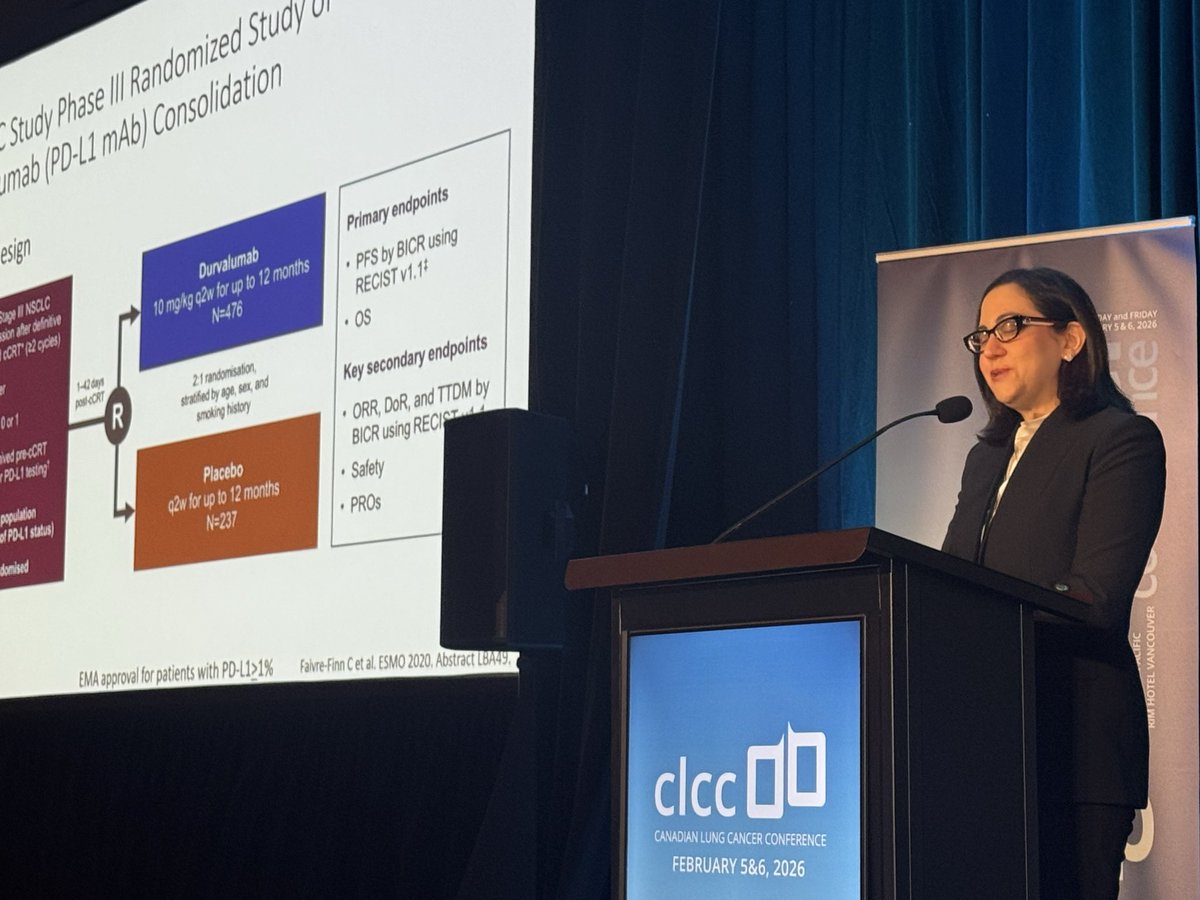
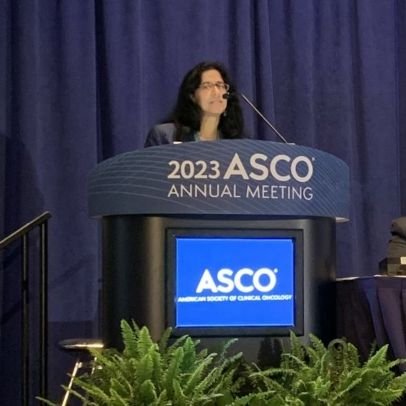
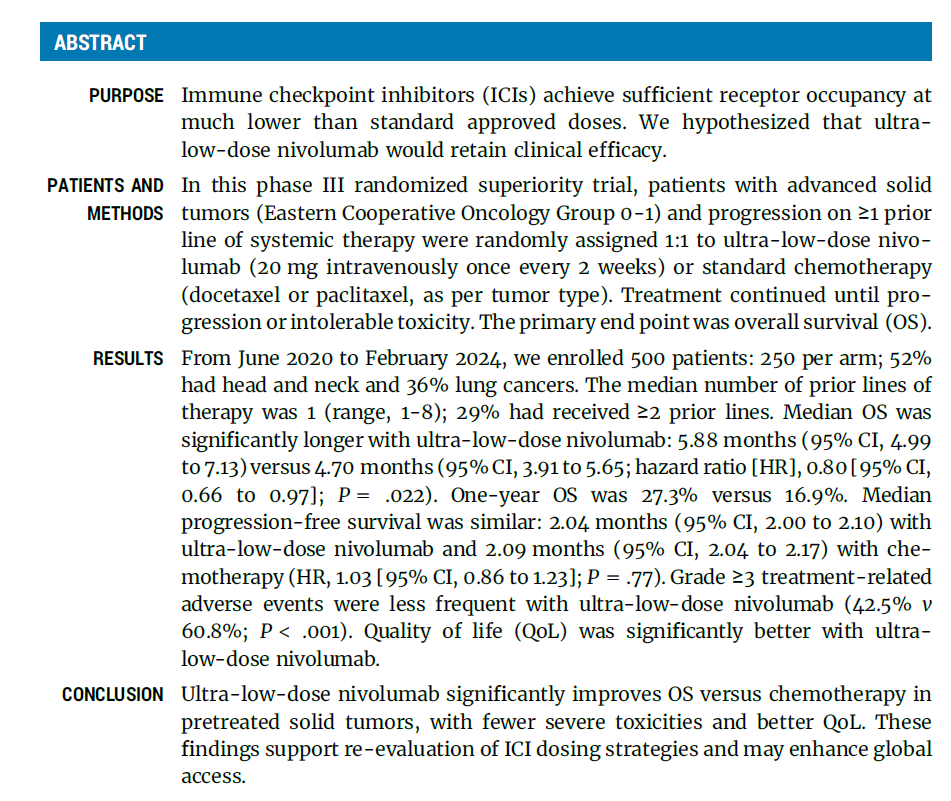
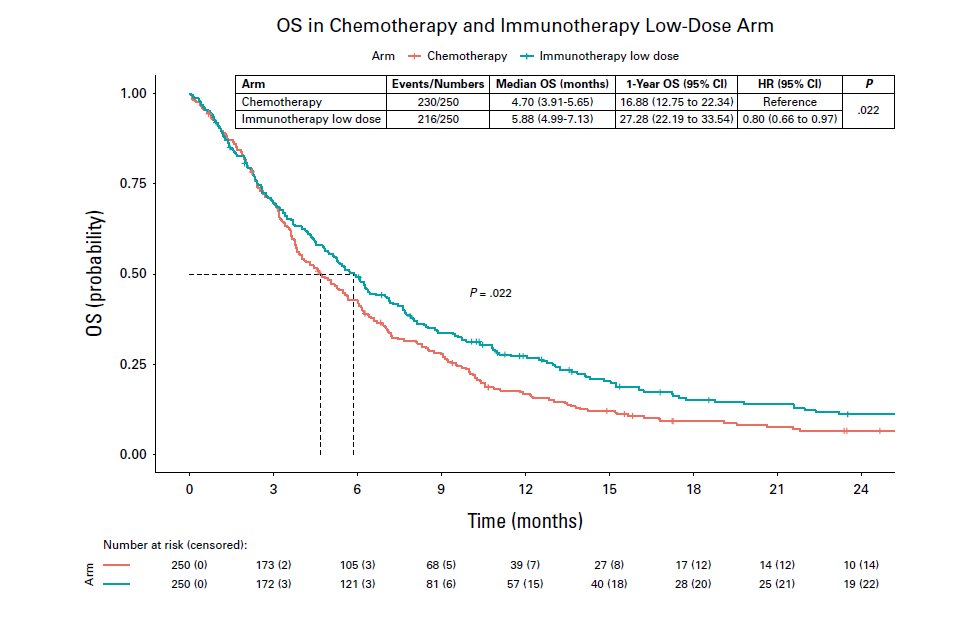
Outstanding Canadian Lung Cancer Conference #CLCCO2026. Congratulations to Barbara Melosky and the whole society. An outstanding opening talk tackling key controversies by @BenjaminBesseMD and excellent overview of evolving radiation treatment in the era of IO by @SalmaJabbour1
Noemi Reguart tweet mediaNoemi Reguart tweet mediaNoemi Reguart tweet mediaNoemi Reguart tweet media
English
0
5
26
1.3K
Houda Bahig, MD PhD retweetledi
Ramy Sedhom, MD, FASCO
Ramy Sedhom, MD, FASCO@ramsedhom·
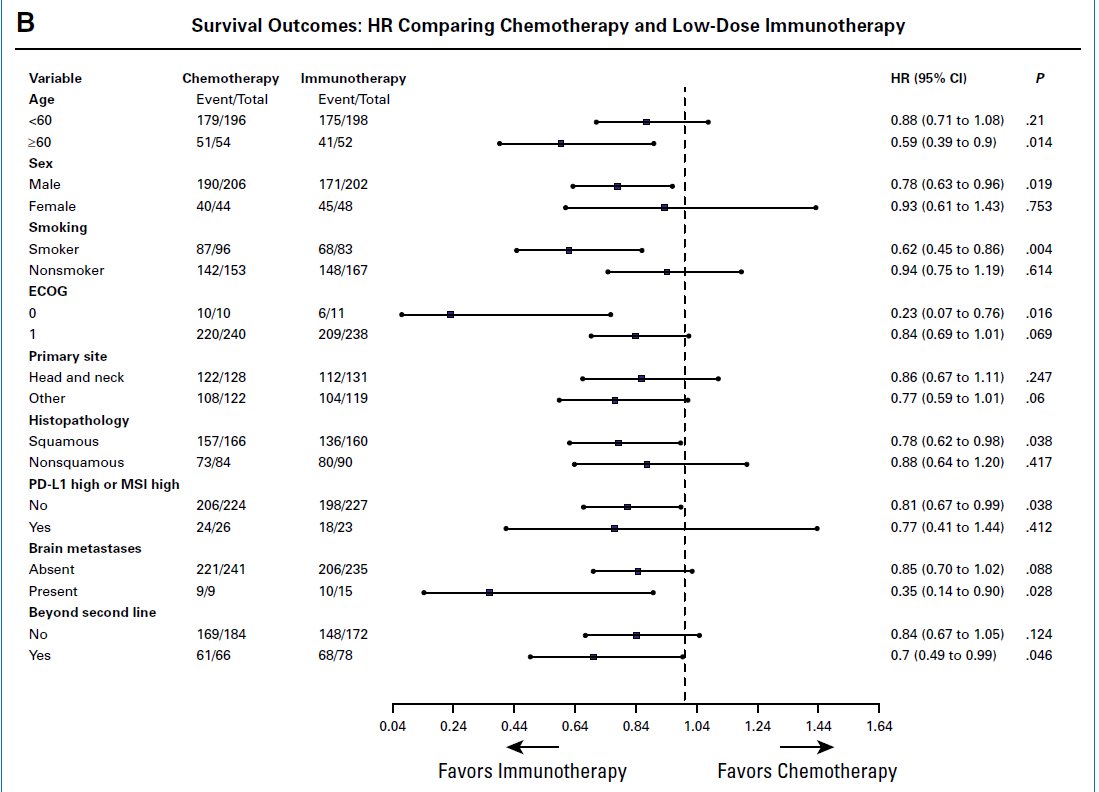
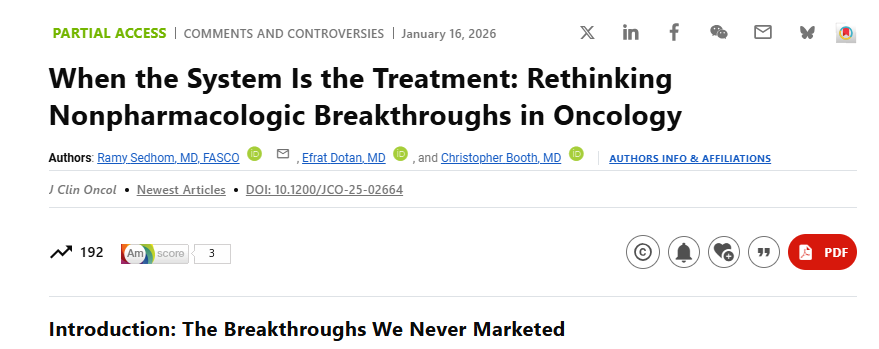
Imagine 4 new anticancer drugs Pallituzumab, Geriatriximab, Symptomab, & Exercizumab hit the market. They should dominate the plenary sessions at ASCO & command billion-dollar revenue. But they don't because they're nonpharmacologic & shame on us. Read our opinion piece in @JCO_ASCO ascopubs.org/doi/full/10.12…
Ramy Sedhom, MD, FASCO tweet media
English
5
35
103
22.6K
Houda Bahig, MD PhD retweetledi
David Sher
David Sher@DavidSherMD·
@Jdcramer has made a critical point below about KEYNOTE-689. The EFS rules in KN-689 require careful review to interpret these results.  A protocol-specific event was determined by blind independent central review (BICR), but if growth in the pre-surgical CT was perceived to be a “flare” (i.e. potential progression), surgery was supposed to proceed unless unresectable (protocol quote below). In order to be considered an event, repeat imaging was required 4-8 weeks later, and obviously if the tumor was still resectable the patient would go to surgery before then. This definition means it was extremely difficult to have an event before surgery, even if the tumor grew and the surgery was more extensive than initially anticipated. Thus some patients may have been harmed by neoadjuvant treatment, but we would not see that in the event data. Thus there is this important disconnect: 82 patients in the pembro arm stopped the drug due to progression (by the investigator, as shown in the CONSORT diagram), even though there were only 69 progression events (by BICR, used for endpoint analyses). Is perioperative immunotherapy doing something favorable and important in a subset of these patients? Yes, and hopefully we can refine its use to the right population and with the right regimen (adding neoadjuvant chemo or RT?). Is it distinctly possible/probable that some patients are progressing on neoadjuvant pembro, leading to a worse outcome in some domain, but we cannot see that in these data? Yes, unfortunately, also true.
David Sher tweet media
John Cramer, MD@Jdcramer

Question for those who’ve dug into KEYNOTE-689: If 43 pts had early ‘clinical progression’ (Table S2B), why isn’t there an early drop in EFS with neoadjuvant pembro? How do you reconcile this?

English
3
11
28
7.5K
Houda Bahig, MD PhD retweetledi
Jonathan Schoenfeld
Jonathan Schoenfeld@jdschoenfeld1·
Excited to share our Phase 2 trial results in the @RedJournal, investigating the combination of SBRT and pembrolizumab for patients with recurrent, or metastatic HNSCC that was refractory to prior PD-1 inhibitor treatment. HNSCC patients progressing on PD-1 inhibitors have poor prognoses. While many systemic therapies are under investigation, our data suggests that comprehensive SBRT+pembrolizumab is an effective strategy for patients with oligoprogression. Key Findings with comprehensive SBRT+pembro to all progressing lesions (Cohort B): 3-Month PFS: 67% (median PFS 5.7 months) OS: Median OS was 10.1 months. Safety: The approach was feasible and safe, even in the re-irradiation setting. Results with comprehensive SBRT in Cohort B were more favorable to Cohort A where only a single lesion was irradiated+pembro. Consistent with other studies, we did not observe abscopal responses. Huge credit to Jonathan So for leading the correlative analyses. Higher baseline CD8+ central memory T cells were correlated with treatment benefit - a starting point for deeper analyses currently ongoing. Full article here: doi.org/10.1016/j.ijro… #HNSCC #RadOnc #Immunotherapy #SBRT Figure 2: Kaplan-Meier analysis demonstrating more favorable PFS and OS for Cohort B (blue, comprehensive SBRT).
Jonathan Schoenfeld tweet media
English
2
13
37
2.3K
Houda Bahig, MD PhD retweetledi
Alison Tree 💙
Alison Tree 💙@alison_tree·
Shocking! Only 1.4% of global cancer spend is used for surgical research and only 2.8% on radiotherapy research. Please help us learn how to cure more patients by funding curative therapies research! #radonc
Richard Sullivan@SullivanProf

The abysmal state of global research funding on key domains such as surgery, radiotherapy and health services. Combined less than 4%. How have research funding organisations managed to get their strategic priorities so wrong? ⁦@cspramesh⁩ ⁦ thelancet.com/journals/lanon…

English
6
65
144
24.3K
Houda Bahig, MD PhD retweetledi
Drew Moghanaki
Drew Moghanaki@DrewMoghanaki·
This is unacceptable. We must make more noise about this and DO SOMETHING to demand a change. Do it for our patients who deserve to have more options than drugs that often don’t work for them.
Alison Tree 💙@alison_tree

Shocking! Only 1.4% of global cancer spend is used for surgical research and only 2.8% on radiotherapy research. Please help us learn how to cure more patients by funding curative therapies research! #radonc

English
2
5
20
2.3K
Houda Bahig, MD PhD retweetledi
Tony Felefly
Tony Felefly@TonyFelefly·
Valuable data from this study by UPenn team! 👇👇 They reviewed the patterns of failure following chemo-RT (with or without Durva) for LA-NSCLC in their institution. They defined primary tumor failure (PTF) as failure inside the 90% isodose line. Recurrences were called on PET-CT; histological confirmation was not required. Isolated PTF rate was only 5.1%!! Synchronous PTF and regional failure rate was 3.7%. PTF + any synchronous distant/regional failure was 16%. @JeffBradleyMD @DrewMoghanaki @drdavidpalma @_ShankarSiva @jryckman3 @adib_elio @5_utr @PercyLeeMD @HoudaBahig @DoctorJSpicer @BrendonStilesMD @ElliotServaisMD redjournal.org/article/S0360-…
English
3
8
19
5.3K
Houda Bahig, MD PhD retweetledi
Shankar Siva
Shankar Siva@_ShankarSiva·
I’m sorry to hear this, great tweetorial below by @HoudaBahig - it is looking harder and harder to find equipoise for oligoprogression trials in #lungcancer when the treatment (SABR/SBRT) arm is available and seems so attractive to clinicians and patients….
Houda Bahig, MD PhD@HoudaBahig

The phase II randomized SUPPRESS-Lung trial evaluating SBRT for oligoprogressive NSCLC was closed today due to accrual challenges, before reaching its target. (NCT04405401) @drdavidpalma @DrAlexLouie @DrewMoghanaki @NormandBlais @_ShankarSiva @CJTsaiMDPhD @jefilion @CRCHUM

English
0
2
11
2K
Houda Bahig, MD PhD
Houda Bahig, MD PhD@HoudaBahig·
@DrewMoghanaki Good point! Perhaps they are too conservative but they did not favour a posteriori power calculation. For what is it worth, interim analysis for futility favoured continuing.. I think at this point, we just have to hope for a large enough effect size 🤞🤞
English
2
0
1
90
Drew Moghanaki
Drew Moghanaki@DrewMoghanaki·
Have you discussed with your biostatistician how much power your study has at this point, given that accrual lasted 5 years instead of the planned 4 years? With 82% enrolled (53/65), you may already have the 80% power the study was originally designed for, depending on the number of actual events. If so, the study can report the results with sufficient power, making the reason for slow accrual irrelevant, unless there was an a priori plan to measure pre-randomization reasons for refusal (very rarely done). I think we can glean a reliable signal here. Can't wait to see the results of the comparison between treatment arms.
English
1
0
2
468