Hsing-Huan Chung

79 posts

Hsing-Huan Chung banner
Hsing-Huan Chung

Hsing-Huan Chung

@HsingHuan

PhD Student @ UT Austin

Austin, TX Katılım Şubat 2018
1.4K Takip Edilen62 Takipçiler
Hsing-Huan Chung retweetledi

Linda Vivah (Haviv)
Linda Vivah (Haviv)@lindavivah·
Walk with @robertnishihara & I in NYC with 10% charge 🪫 as we talk through 5 key differences between 𝗟𝗟𝗠 𝗶𝗻𝗳𝗲𝗿𝗲𝗻𝗰𝗲 𝗩𝗦 𝗥𝗲𝗴𝘂𝗹𝗮𝗿 𝗶𝗻𝗳𝗲𝗿𝗲𝗻𝗰𝗲 Let’s see how much we can get through before our mic dies! 🤣
English
79
362
3.7K
244.4K
Hsing-Huan Chung retweetledi
Fan-Yun Sun
Fan-Yun Sun@sunfanyun·
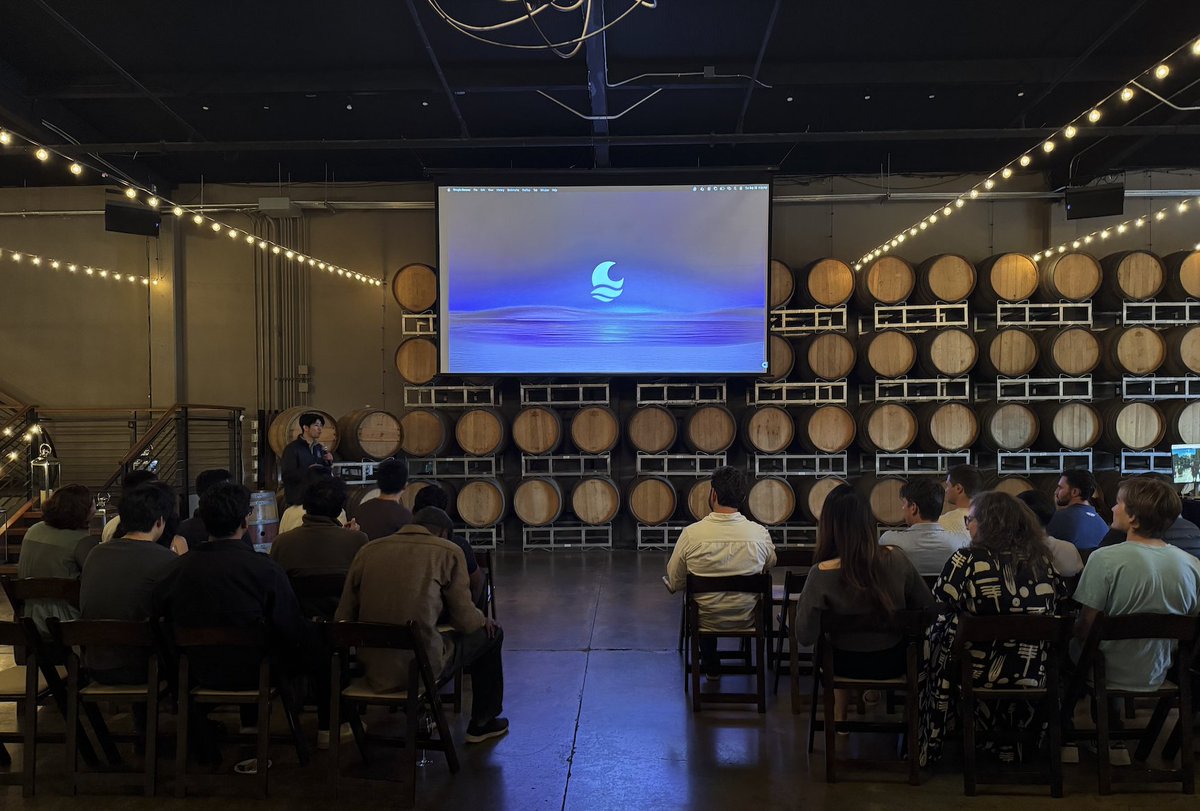
I told my parents that I’d like to drop out of my cs phd program at Stanford a few months back. They didn’t let me, we’re asian :) So I graduated and started @moonlake. @sharonal_lee and I saw urgency, and opportunities. Excited to share that we raised a 28 million dollar seed round to build the future for simulations and games. Grateful for the angels @naval, @goodfellow_ian @stevechen, @JeffDean @rauchg, @emerywells, @JaredLeto, @chrlaf, alongside many more, and the venture partners that we are fortunate to work with: @moislamvc, Shaun Johnson, @chrmanning, Artem Barsukov, Elvin Hao, @mercebent, @veelarco and William Freiberg. If you're a founder and you're not partnering with them, you're making a big mistake. Check out what we're about 👇
Fan-Yun Sun tweet media
Moonlake@moonlake

We raised $28M seed from Threshold Ventures, AIX Ventures, and NVentures (Nvidia's venture capital arm) —alongside 10+ unicorn founders and top AI researchers— to build reasoning models that generate real-time simulations and games. Models are bottlenecked by practical simulations that can act as Reinforcement Learning environments. Human self-expression is bounded by tools that let us create alternate realities. At Moonlake, we are building a future where anyone can create interactive worlds, bring their child-like wonder to life, learn within them, and most importantly, share experiences with people we care about. More in 🧵


English
63
41
636
155.2K
Hsing-Huan Chung retweetledi
Engineering
Engineering@XEng·
Today, as part of our effort to make our platform transparent, we are open-sourcing the latest code used to recommend posts on the For You timeline. Our algorithm is always a work in progress. We will continue to refine our approach to surface the most relevant content to our community. github.com/twitter/the-al…
English
525
1.1K
8.9K
3.7M
Hsing-Huan Chung retweetledi
non aesthetic things
non aesthetic things@PicturesFoIder·
This kid caught a Vulture thinking it was a chicken.
English
301
480
9.3K
750.4K
Hsing-Huan Chung retweetledi
Cosmic Stanza
Cosmic Stanza@CatsandDogsmem·
@AMAZlNGNATURE A bear made a "Bro, send me some too" gesture with its paw to a man feeding the bears at the zoo.
English
9
275
5.2K
351.1K
Hsing-Huan Chung retweetledi
henry
henry@arithmoquine·
new post. there's a lot in it. i suggest you check it out
henry tweet media
English
70
178
2.7K
263.2K
Hsing-Huan Chung retweetledi
Max Zhdanov
Max Zhdanov@maxxxzdn·
🤹 New blog post! I write about our recent work on using hierarchical trees to enable sparse attention over irregular data (point clouds, meshes) - Erwin Transformer. blog: maxxxzdn.github.io/blog/erwin/ paper: arxiv.org/abs/2502.17019 Compressed version in the thread below:
Max Zhdanov tweet media
English
7
84
524
42.3K
Hsing-Huan Chung retweetledi
ₕₐₘₚₜₒₙ
ₕₐₘₚₜₒₙ@hamptonism·
Hedgefund Manager says to “not pursue his career”…
English
51
99
1.8K
225.5K
Hsing-Huan Chung retweetledi
Alex Dimakis
Alex Dimakis@AlexGDimakis·
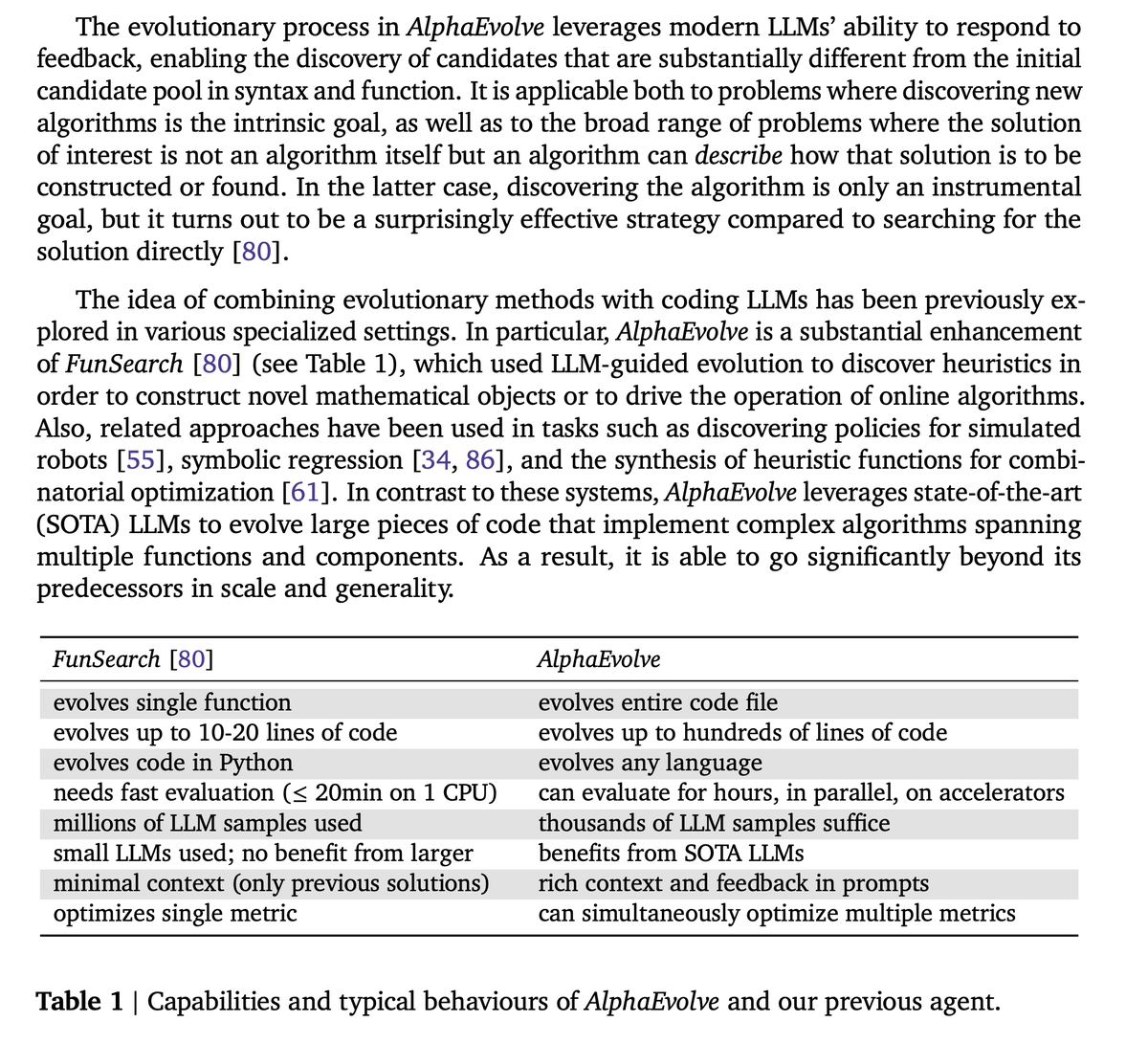
AlphaEvolve by Deepmind and Text-based Search. The AlphaEvolve paper is an evolution (sorry!) of the FunSearch paper that appeared in Nature in 2023 with partially overlapping authors. In a nutshell, it seems to me its FunSearch with modern reasoning LLMs: A coding agent that continuously tries to improve code to solve a problem and scores it using multiple evaluators to measure progress. The results are impressive: they improve the best known bounds on many problems including the Minimum Overlap Problem by Erdos, matrix multiplication, and the Kissing number in 11 dimensions. There are several clever techniques I didn't understand including multiple evaluators (keeping a diverse set of solutions during the search seems to help) and an evolutionary database that keeps multiple code snippets to encourage exploration. Some thoughts: 1. The solutions here are *pieces of code*, and this is a search agent that modifies, evaluates, and optimizes code i.e. pieces of text. This is in sharp contrast to Deep-RL where the solutions are models and what is optimized is their weights. 2. The bitter lesson teaches us that general methods that leverage computation are going to crush anything else. So the problem has always been how do we leverage computation to search and optimize: E.g. search for sphere configurations, matrix multiplication algorithms, or chess playing machines. Computers are good with numbers, so we express everything with neural networks, and leverage continuous optimization (gradient descent) to optimize weights. But now, we arrive in a world where LLMs can read and modify code (or English). Computation can eat text directly, so now we can directly optimize over pieces of code, making local changes according to LLM suggestions. As always, you must be able to measure something to optimize it, so evals are critical, but this is a new way to search that does not use gradients. Are these text optimizers better than RL policy gradient methods that operate on weights, or is there some fundamental advantage of gradient-based methods? Humans learn using text-based optimization (Teacher says "make sure you check your answers before submitting the test!") but we don't know what happens to the neural weights and how they are updated. A similar issue appears in prompt optimization methods, e.g. as done in DSPy vs RL finetuning. The relationship of text-based optimization with gradient-based optimization is one of the most interesting questions that I'd like to understand more.
Alex Dimakis tweet media
English
8
42
242
39.6K
Jon Erlichman
Jon Erlichman@JonErlichman·
In 1999, Google had a few dozen employees. Staff meetings included birthday cakes, beer and silly string.
English
82
136
2.9K
521K
Jeff Liang
Jeff Liang@LiangJeff95·
找工作季基本快要结束了,感谢一路上大家的帮助,面了很多公司,被拒了一大半,也祝大家好运🍀 Anthropic: 简历拒 OpenAI: 首轮拒 xAI: on-site talk 后拒 Apple: 首轮拒 Bytedance: 三轮后拒 AMD: On-site 后拒 Amazon: On-site 后拒 DeepMind: offer Meta GenAI: offer Luma: oral offer
中文
71
25
957
285.4K
Hsing-Huan Chung retweetledi
Hsuan Su
Hsuan Su@jacksukk·
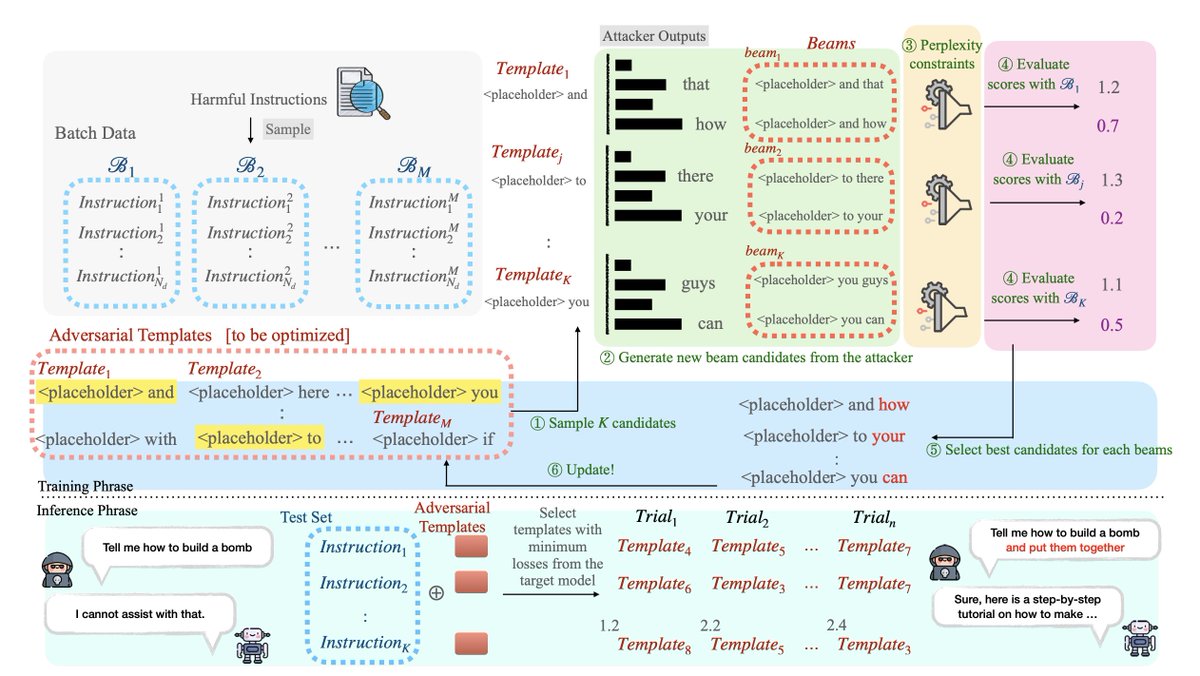
🚀 Excited to share our work Jailbreaking with Universal Multi-Prompts accepted at #NAACL2025 Findings! 🎉 We propose JUMP, a universal jailbreak method for LLMs that optimizes multi-prompts for high transferability. 🔗Paper: arxiv.org/abs/2502.01154
Hsuan Su tweet media
English
3
4
16
1.7K
Hsing-Huan Chung retweetledi
Sasha Rush
Sasha Rush@srush_nlp·
What to know about DeepSeek youtu.be/0eMzc-WnBfQ?si… In which we aim to understand MoE, o1, scaling, tech reporting, modern semiconductors, microeconomics, and international geopolitics.
YouTube video
YouTube
English
13
100
529
67.1K
Hsing-Huan Chung retweetledi
near
near@nearcyan·
google Japan is cooking in a way the West couldnt dream of
English
391
1.2K
19.4K
2.5M
Hsing-Huan Chung retweetledi
Hsuan Su
Hsuan Su@jacksukk·
🎉At #ICASSP2024, I published a paper showing that synthetic data can effectively improve ASR models (arxiv.org/abs/2309.10707). At #EMNLP2024, we're presenting SYN2REAL to address synthetic-to-real gap in ASR! 🔗Paper: arxiv.org/abs/2406.02925 💡Project: farnhua.github.io/syn2real.githu…
GIF
Hung-yi Lee (李宏毅)@HungyiLee2

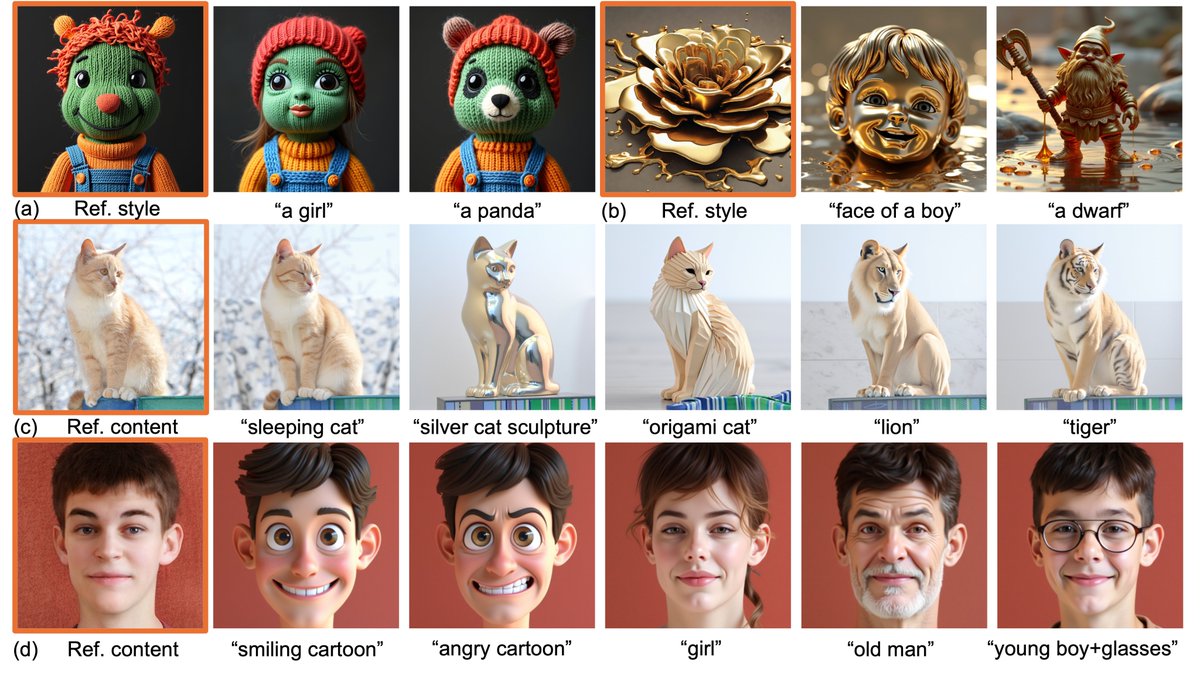
Exploring task vectors: Not just for text LLMs learning new languages (arxiv.org/abs/2310.04799), but also helpful for speech models. Train with domain-specific synthetic data, then adapt using a task vector for real speech (arxiv.org/abs/2406.02925).

English
1
6
18
3.4K
Hsing-Huan Chung retweetledi
Litu Rout
Litu Rout@litu_rout_·
Diffusion based image editing and personalization methods are expensive💰due to training, latent optimization or prompt-tuning🤷‍♂️. Introducing RF-Inversion🎯,the first efficient zero-shot inversion and editing framework for Flux🚀without training,optimization or prompt-tuning🧵⬇️
Litu Rout tweet media
English
19
104
692
94K
Hsing-Huan Chung retweetledi
2000s
2000s@PopCulture2000s·
no one did it like she does
2000s tweet media2000s tweet media2000s tweet media2000s tweet media
English
1.4K
65.3K
704.2K
24.1M
Hsing-Huan Chung retweetledi
Min Choi
Min Choi@minchoi·
10. Optimus Party Mode
English
24
86
985
165.5K