
Sabitlenmiş Tweet
International Crypto Asset Ninja
13K posts


International Crypto Asset Ninja
@ICAN_ICAN_ICAN
I share news & updates regarding the cryptosphere. If u like my content, treat me to coffee by donating here: 🐈🚀🌍
Boss planet Katılım Ocak 2013
629 Takip Edilen317 Takipçiler
International Crypto Asset Ninja retweetledi

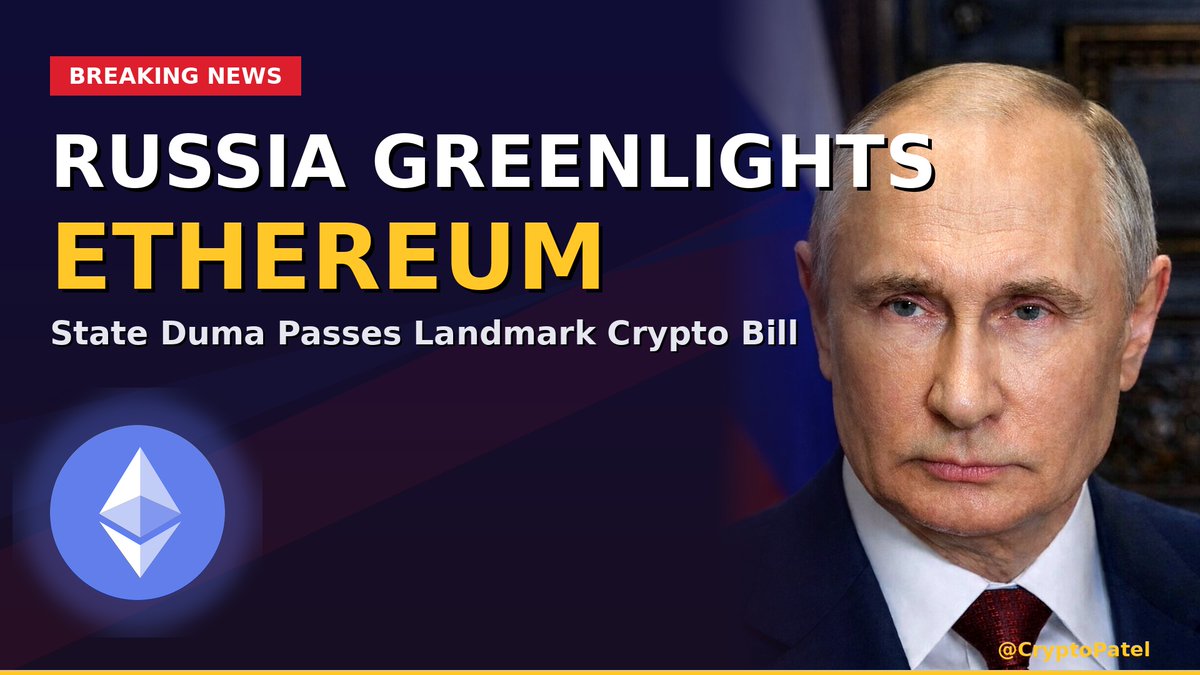
RUSSIA GREENLIGHTS BITCOIN & ETHEREUM 🇷🇺
State Duma passes landmark Crypto Bill in 1st reading, $BTC & $ETH officially whitelisted.
🔹 BTC & ETH approved for legal trading via Central Bank whitelist
🔹 Crypto = "property" (ruble stays sole legal tender)
🔹 Cross-border settlements allowed, bypassing Western sanctions
🔹 Retail cap: 300,000 RUB (~$3,800/yr)
🔹 Qualified investors: No limits
🔹 7 years jail for illegal crypto trading
🔹 Full law by July 1, 2026
Why It Matters:
✅ World's 11th largest economy legitimizes BTC & ETH
✅ Unlocks institutional flows
✅ Boosts top-cap crypto credibility
⚠️ Note: 1st of 3 readings, not final law yet.
English
International Crypto Asset Ninja retweetledi

⚡️ NEW: Mastercard joins the Blockchain Security Standards Council as a charter member.

English
International Crypto Asset Ninja retweetledi

THIS IS MASSIVE FOR CRYPTO
🇷🇺 Russia just "PASSED" the crypto regulation bill to allow businesses and companies to use crypto as payment for cross-border and foreign trade settlements, even under sanctions.
$BTC and $ETH are expected to be the first assets approved under the framework
English
International Crypto Asset Ninja retweetledi

Scott Bessent just told the world that financial infrastructure is a weapon and then 4-star admiral just told Congress what beats it.
Admiral Paparo, head of US Indo-Pacific Command, called Bitcoin "a peer-to-peer, zero trust transfer of value" that supports "all instruments of national power." He said this in a Senate hearing. On the record. Right as the Treasury was openly bragging about engineering currency collapse in Iran as a military strategy.
Operation Economic Fury works because the legacy system runs on trust. Trust that your reserves are safe. Trust that your payment rails stay open. Trust that the correspondent bank holding your nation's wealth doesn't get a strongly worded letter from Washington tomorrow morning. The dollar is a weapon precisely because everyone agreed to depend on it.
Zero trust money breaks that weapon entirely.
Here's where the game theory gets uncomfortable.
Iran already figured this out. Cut off from SWIFT, they built alternatives. They mined Bitcoin at scale. They collected tolls on 20% of the world's oil supply in Bitcoin, settled on-chain before any Western authority could touch it. Your sanctioned adversary is already operating on the network your admiral just called a tool of national power.
The CCP's monetary think tank reached the same conclusion. After Trump announced the Strategic Bitcoin Reserve, they published research on Bitcoin as a strategic asset. The same government that built a surveillance state on financial control is studying the one monetary network that surveillance can't reach.
When your enemies are adopting Bitcoin and your own generals are calling it a power projection tool, you don't get to opt out. You can't sanction your way around it. You can't bomb the network into submission. The only move left is to accumulate faster than your adversary.
Bessent is showing you what the old system can do to you. Paparo is telling you what replaces it. Iran is proving it works in live conditions. And the CCP is taking notes.
Bitcoin doesn't care who's winning the geopolitical argument. It just keeps producing blocks.
The admiral knows it. Iran knows it. The CCP knows it. The senator in that hearing room admitted he couldn't even follow the conversation.
That gap is where everything is decided.
English
International Crypto Asset Ninja retweetledi

JUST IN: Cardano Foundation CEO says "with Archax, we listed a reinsurance product on the Tier-1 London Stock Exchange, ensuring all investors can trust the data, and have access to the same asset classes that only professionals have. Hopefully next time it'll be the NYSE." $ADA
English
International Crypto Asset Ninja retweetledi

CNBC REPORTING $1.5 TRILLION MORGAN STANLEY WILL SOON LAUNCH #BITCOIN BUYING ON E*TRADE
THE ETF WAS JUST THE BEGINNING
WALL STREET IS COMING –– BIG TIME 🔥
English
International Crypto Asset Ninja retweetledi

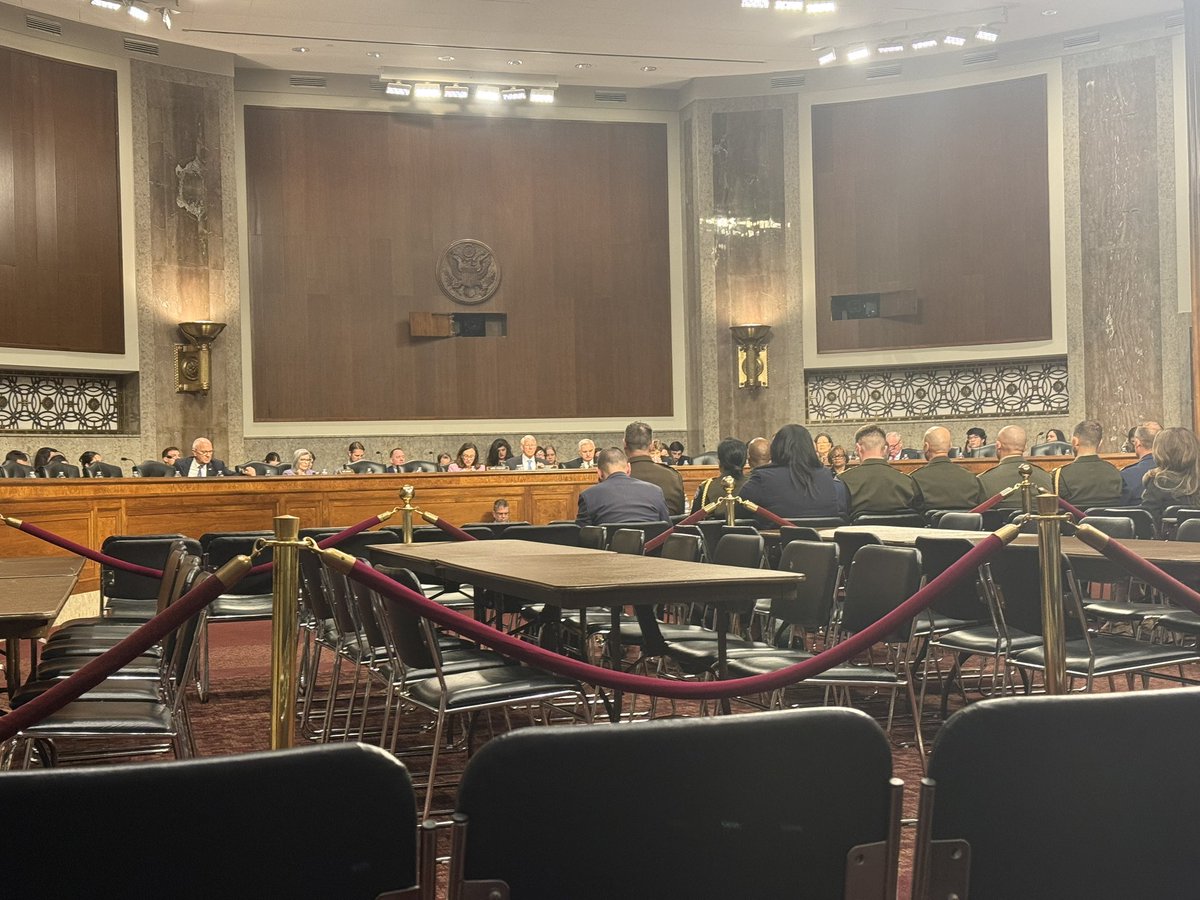
It was the wildest experience to listen (in the room) as the heads of our military explained to Senators why Bitcoin’s proof-of-work is of national security interest.
Thank you @JasonPLowery for all your research which led to this moment.
English
International Crypto Asset Ninja retweetledi
JUST IN: COINBASE JUST ANNOUNCED LIVE ON CNBC IT IS LAUNCHING #BITCOIN AND CRYPTO LOANS IN THE UK
MILLIONS CAN NOW BUY HOMES AND CARS WITHOUT SELLING BTC
ITS 2nd LARGEST MARKET GLOBALLY 🔥
English
International Crypto Asset Ninja retweetledi

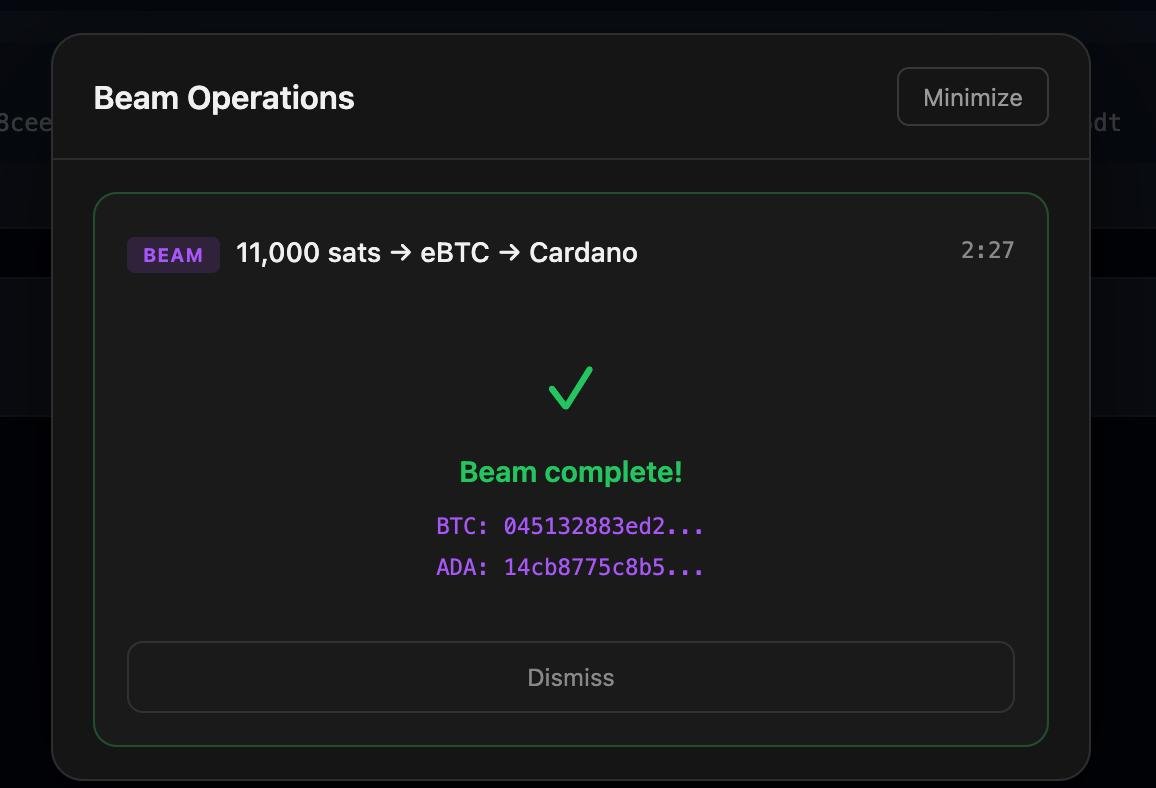
Bridge hacks are the same story every single time, as with KelpDAO and LayerZero.
Almost always some unholy combination of decentralization theatre, North Koreans, and Ethereum.
Through @CharmsDev, Bitcoin and Cardano shall not suffer the same fate.
"Beaming" is imminent.


Coin Bureau@coinbureau
⚠️ LAYERZERO MAY HAVE ENABLED THE LARGEST DEFI EXPLOIT OF 2026 The $290M rsETH drain wasn't a surprise. It was a LayerZero design choice coming due. Worth understanding what LayerZero actually is before assigning blame. LayerZero is the messaging layer that moves value between blockchains. When a token is bridged, LayerZero is what tells the destination chain "yes, this is locked on the other side, release the wrapped version." LayerZero secures those messages through something it calls a Decentralized Verifier Network or DVN. In theory, a DVN is a group of independent nodes that must all attest a cross-chain message is real before it executes. In practice, LayerZero made a design choice: every app gets to pick its own DVN setup, and LayerZero enforces no minimum. An app can require 5-of-7 independent verifiers. Or 2-of-3. Or 1-of-1. KelpDAO picked 1-of-1. That one was LayerZero Labs' own node. Lazarus-linked attackers then did what competent attackers do with a single point of failure. They poisoned the RPC nodes that LayerZero Labs' DVN uses to read blockchain state. Fed it a fake transaction. DDoS'd the clean ones so the DVN had no choice but to trust the poisoned feed. The DVN signed. The message looked real. 116,500 rsETH walked out in one transaction. Now look at the name. Decentralized implies no single party controls it. LayerZero Labs controlled this one. Network implies more than one node. There was one. Verifier implies verification. A single signer isn't verification. It's a signature. "Decentralized Verifier Network" is three words. Zero of them were true.
English
International Crypto Asset Ninja retweetledi

Today on Taking Stock | Stocks fall as U.S.-Iran tensions reignite.
@AmerivetSecs discusses Warsh as Fed Chair, @F_Gregaard of @Cardano_CF on blockchain infrastructure + @cohenandsteers rings the Closing Bell!
@JD_Durkin has more after the close. twitter.com/i/broadcasts/1…
English
International Crypto Asset Ninja retweetledi



International Crypto Asset Ninja retweetledi

LATEST: Frederik Gregaard of Cardano Foundation declares the future of blockchain and crypto will focus on architecture and trust in systems rather than who tokenizes what
English
International Crypto Asset Ninja retweetledi

JUST IN
CARDANO IS ALREADY MAPPED TO TRILLIONS IN TRADFI MARKETS 😱😱😱
The @Cardano_CF CEO revealed that 78% of the $232T–$250T traditional finance market is already covered by LEIs integrated on Cardano.
Adding that this standard is now being expanded to other public blockchains, positioning Cardano at the center of global financial infrastructure.
English
International Crypto Asset Ninja retweetledi

We just submitted our budget proposal: "The Marketing-Powered Demand Engine for Cardano."
Here's what it is, what it costs, and why it matters.
THE PROBLEM
Cardano stands on strong technical foundations. Yet for enterprise decision-makers, it's not an obvious "yes" — not because the technology can't deliver, but because they're missing use-case clarity, proof, and engagement paths. The business world sees Cardano as a respected ecosystem. Not yet as first choice for enterprise infrastructure.
THE SOLUTION
A complete enterprise demand generation system that repositions Cardano as "The Blockchain for Serious Business." The system operates through a three-stage funnel: Attention →Proof → Qualified Leads.
Two recommended blueprint verticals: Institutional DeFi and Supply Chain Traceability — final selection to be validated with the GMC. Three pilot markets: UK, Germany, Switzerland. A central Cardano Hub serves as the evidence and engagement environment.
Directly aligned with the Cardano 2030 Strategy Framework — Pillar 2 (Adoption & Utility) and Pillar 4 (Community & Ecosystem Growth), supporting core KPIs: TVL, monthly transactions, and monthly active users.
THE INVESTMENT
12-month pilot. Four milestone-gated work packages — each one only unlocked when the previous one delivers. WP4 (V2 Supply Chain) is only released after the Q3 KPI checkpoint passes. Total investment: €2,978,738 (53% media, 47% agency — within industry benchmark). ADA surplus gets returned to the Treasury.
WHO WE ARE
Serviceplan Group — the only globally ranked agency that has built live Cardano infrastructure, deployed it in production, and holds a formal Cardano Foundation partnership. Official Intersect member. Masumi Network has been on mainnet since November 2024 with 25,000+ on-chain transactions.
Independent Network of the Year at Cannes Lions 2025 (19 Lions). #1 globally on WARC Creative 100 and Media 100. 6,500 people, 40+ countries, €866M revenue.
Full proposal and brochure in the reply below.👇

English
International Crypto Asset Ninja retweetledi
UPDATE: Cardano Foundation CEO Frederik Gregaard says "this new trust infrastructure leads to what we've been talking about in blockchain for close to 10 years. There's an event, a proof of the event, and a verification of an event." $ADA
English
International Crypto Asset Ninja retweetledi

🇨🇭ADOPTION: 137 SPAR STORES IN SWITZERLAND NOW ACCEPT CARDANO
137 SPAR supermarkets now accept $ADA via DFX .swiss Open Crypto Pay, reducing payment processing fees by up to two-thirds.


English
International Crypto Asset Ninja retweetledi

Alts vs BTC just flashed signals we haven’t seen since 2020...
Right before the Alt Season that printed millionaires and make legends overnight.
This one could be even bigger:
• 5 years of compression → about to resolve
• Macro trendline breakout incoming
• Bullish crossover (first in years)
• 4 straight green monthly candles
What's been missing? The Fed.
In 2020, they injected ~$5T in liquidity and ignited the last cycle.
Since then → QT.
That’s over.
Now they’re pushing billions back into the system - and it’s starting to show.
If this plays out Alt Season 2026 takes it to a whole new level.

English
International Crypto Asset Ninja retweetledi

BITCOIN IS RISING INTO A TRAP.
Bearish rising wedge. Three touches. Textbook structure.
The more it rises inside the wedge, the harder it breaks.
$79K is the last resistance.
$68K is the neckline.
Break $79K: wedge fails, new highs possible.
Lose $68K: $52K measured move activates.
Rising wedges don't resolve upward.
They just look like they might.
English
International Crypto Asset Ninja retweetledi

Countries with 0% Bitcoin Crypto Tax:
🇦🇪 UAE — 0% tax
🇨🇾 Cyprus — 0% tax
🇵🇹 Portugal — 0% tax
🇵🇦 Panama — 0% tax
🇸🇬 Singapore — 0% tax
🇲🇹 Malta — 0% tax
🇧🇧 Barbados — 0% tax
🇧🇲 Bermuda — 0% tax
🇰🇾 Cayman Islands — 0% tax
🇭🇰 Hong Kong — 0% tax
🇲🇺 Mauritius — 0% tax
🇻🇺 Vanuatu — 0% tax
🇬🇮 Gibraltar — 0% tax
🇱🇮 Liechtenstein — 0% tax
🇸🇰 Slovenia — 0% tax
🇨🇭 Switzerland — 0% tax
🇺🇾 Uruguay — 0% tax
🇸🇻 El Salvador — 0% tax
🇵🇷 Puerto Rico — 0% tax
Bookmark 🔖 this tweet to come back later.

English