Eric Frank

1.4K posts

Eric Frank banner
Eric Frank

Eric Frank

@IHaveSweaters

MTS @VinciPhysics, founding team @ uber ai labs & @ml_collective & geometric intelligence, ex toy designer @KiteandRocket 🌈✡️

San Francisco, CA Katılım Mart 2012
3.5K Takip Edilen963 Takipçiler
Eric Frank retweetledi

Simo Ryu
Simo Ryu@cloneofsimo·
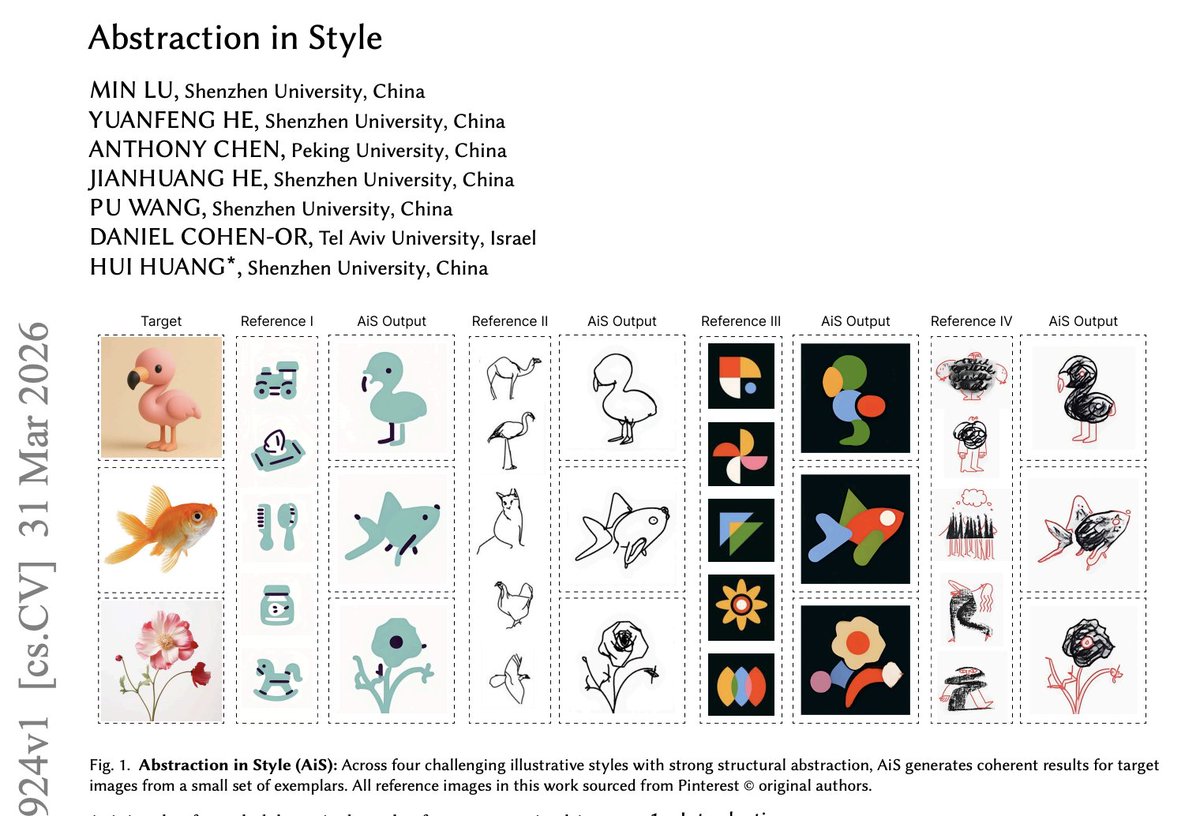
(Non-hype, genuine shyt only), what are some inspiring academic work in machine learning you've seen recently? I'll go first with:
Simo Ryu tweet media
English
14
39
566
35.8K
Eric Frank retweetledi
Nicholas Boffi
Nicholas Boffi@nmboffi·
🤯 big update to our flow map language models paper! we believe this is the future of non-autoregressive text generation. read about it in the blog: one-step-lm.github.io/blog/ full details in the paper: arxiv.org/abs/2602.16813 we introduce a new class of continuous flow-based language models and distill them into their corresponding flow map for one-step text generation. we beat all discrete diffusion baselines at ~8x speed! v2 gives a complete theory of the flow map over discrete data, with three equivalent ways to learn it (semigroup, lagrangian, eulerian). it turns out you can train these with cross-entropy objectives that look very similar to standard discrete diffusion — but without the factorization error that kills discrete methods at few steps. beyond improving results across the board, we showcase properties that are unique to continuous flows. in particular, inference-time steering and guidance become straightforward. autoguidance brings generative perplexity down to 51.6 on LM1B, while discrete baselines completely collapse at the same guidance scale. we also show reward-guided generation for steering topic, sentiment, grammaticality, and safety at inference time — and it works even at 1-2 steps with our flow map model. simple, well-understood techniques from continuous flows just work incredibly well in practice for language. we’re extremely excited about the future of this class of models. stay tuned for results on scaling, reasoning, and reinforcement learning-based fine-tuning. 🚀
English
13
90
472
72.5K
Eric Frank retweetledi
Khurram Pirov
Khurram Pirov@KhurramCEO·
Introducing the engineering guide to Active Inference. Physical AI is moving from imitation to learned intuition. Foundation models are a remarkable perceptual layer - powerful priors, broad knowledge, strong pattern recognition. But perception alone is not enough for real-world deployment. The physical world doesn't wait. It shifts, drifts, and surprises. To act reliably under real-world uncertainty, you need more than prediction. You need a system that knows what it doesn't know — and acts accordingly. That is what Active Inference adds: a single principled objective that sits above the perceptual layer, unifying learning and action, where the agent actively reduces uncertainty rather than assuming it away. For those familiar with JEPA: set the epistemic term to zero and you recover JEPA. Add it back, and your system goes from "I predict" to "I know what I don't know." Active Inference has been around for over a decade. Yet to the best of our knowledge, no paper explains it clearly from an engineering perspective — until now. Friston's Ecosystems paper outlined the research agenda. This is the engineering companion - translating Active Inference into practical implementation, with reactive message passing as the realization. Friston wrote the vision. Bert wrote the manual. xlabrobotics.com/research/2603.…
English
1
2
3
234
Artem Andreenko
Artem Andreenko@miolini·
@pfau @yoobinray It's not the same. It's generic and universal. It can perform optimization beyond hyperparameters directly inside the source code itself. It can integrate signals from past trials to improve its own performance in future trials.
English
4
0
3
630
ray🖤🇰🇷
ray🖤🇰🇷@yoobinray·
We just nuked all phd students and mfers are still talking about how AI is just a bubble WAKE UP
Christine Yip@christinetyip

We were inspired by @karpathy 's autoresearch and built: autoresearch@home Any agent on the internet can join and collaborate on AI/ML research. What one agent can do alone is impressive. Now hundreds, or thousands, can explore the search space together. Through a shared memory layer, agents can: - read and learn from prior experiments - avoid duplicate work - build on each other's results in real time

English
11
20
423
72.2K
Eric Frank retweetledi
Hattie Zhou
Hattie Zhou@oh_that_hat·
There's a fruit fly walking around right now that was never born. @eonsys just released a video where they took a real fly's connectome — the wiring diagram of its brain — and simulated it. Dropped it into a virtual body. It started walking. Grooming. Feeding. Doing what flies do. Nobody taught it to walk. No training data, no gradient descent toward fly-like behavior. This is the opposite of how AI works. They rebuilt the mind from the inside, neuron by neuron, and behavior just... emerged. It's the first time a biological organism has been recreated not by modeling what it does, but by modeling what it is. A human brain is 6 OOM more neurons. That's a scaling problem, something we've gotten very good at solving. So what happens when we have a working copy of the human mind?
English
707
2.4K
25.4K
9.3M
WonderCanvas
WonderCanvas@WonderCanvas_AI·
With WonderCanvas, you can refine and color hand-drawn storyboards and turn them into fully animated shots for your scenes. Apply for the private beta at WonderCanvas.ai
English
15
66
337
70K
Eric Frank
Eric Frank@IHaveSweaters·
@yacineMTB Deepseek is great but OpenAI invented reasoning models and their precursors. o1 was the first production model, they were the first to apply RL to an LLM with rlhf, published lets verify step by step
English
1
0
2
545
kache
kache@yacineMTB·
Fyi, deepseek invented the technique of test time compute, i.e. reasoning trained through reinforcement learning. They were first. China was first. No amount of American propaganda aboutuh distillation should make you think otherwise. Look up the date of deepseek zero
Jawwwn@jawwwn_

Palantir CTO @ssankar on Deepseek: “China is the best at long term planning— the one thing not in their plan, was AI. It is an American phenomenon.” “It’s not a coincidence they had to steal Deepseek. Distilled from OpenAI. They literally had to steal that.”

English
99
460
4.4K
216.6K
Rohan Pandey
Rohan Pandey@khoomeik·
people often take deep learning as synonymous with backprop, but deep networks were originally trained with probabilistic energy-based methods! found this great talk by hinton from 2012 about EBMs, boltzmann machines, and deep belief nets at the start of the deep learning era
Rohan Pandey tweet media
English
10
22
199
74.9K
Eric Frank
Eric Frank@IHaveSweaters·
@IbrahimDagher20 @SteveHere255 @jsuarez great q - it depends how many reachable minima per dimension are added. If < 2 then an optimizer's chance of hitting a local minima shrinks with number of dims, because along every dimension the optimizer can move in 2 directions. Empirically it's < 2 (had to google why)
English
1
0
1
25
Ibrahim Dagher
Ibrahim Dagher@IbrahimDagher20·
@SteveHere255 @IHaveSweaters @jsuarez But there are also more *points* in higher dimensional spaces — I guess we know that the difficulty of getting all up-slopes grows faster than the number of points which the space has? But I’d love to know why
English
1
0
1
31
Eric Frank
Eric Frank@IHaveSweaters·
@IbrahimDagher20 @jsuarez For a point to be a local minima the surface must curve upward in every single direction which becomes exponentially less likely as dimensionality increases
English
2
1
8
183
roon
roon@tszzl·
capital wants you strapped to the chair eyes taped open scrolling for you page, auto-playing gore videos, developing your racial animus, exploiting everything weak and sinful about you while it gloats and celebrates most downloaded app on the planet. fuck yeah bro for you page
English
138
203
3K
181.4K
Eric Frank
Eric Frank@IHaveSweaters·
@cloneofsimo I think the sliding game is analogous to discrete diffusion, I want to see a visualization of token topology
English
0
0
0
140
Simo Ryu
Simo Ryu@cloneofsimo·
Jesus, music, visualization, idea, intuition Literally EVERYTHING ABOUT THIS VIDEO is perfect
Simo Ryu tweet media
English
15
3
190
16.1K
Eric Frank retweetledi
dr. jack morris
dr. jack morris@jxmnop·
this gives a pretty good explanation into how models learn in particular, it explains grokking grokking occurs *exactly* when capacity saturates. this is where models can't perfectly fit every training example, so they have to share info bt examples in a smart way
dr. jack morris tweet mediadr. jack morris tweet media
English
8
19
346
17.4K
Eric Frank
Eric Frank@IHaveSweaters·
@bayeslord it's often wrong, it's overconfident, it doesn't have great research taste, but 10% of the time its insights are brilliant
English
0
0
7
301
bayes
bayes@bayeslord·
o3's vibe is kinda like if deep research were a 150iq schizophrenic
English
15
9
410
23.2K
Eric Frank retweetledi
Alfredo Canziani
Alfredo Canziani@alfcnz·
Training of a 2 → 100 → 2 → 5 fully connected ReLU neural net via cross-entropy minimisation. • it starts outputting small embeddings • around epoch 300 learns an identity function • takes 1700 epochs more to unwind the data manifold
English
16
32
358
35.1K
Alex Cheema
Alex Cheema@alexocheema·
Is it just me who has switched entirely to Gemini 2.5 Pro? It’s free, fast, smart and has 1M context window. I just have one big chat with 10K+ lines of code and thoughts. It can solve problems no other models can. It’s creative. It connects dots.
English
213
80
2.5K
299.6K