Ian

2.2K posts

Ian

Ian

@Ian736

Katılım Haziran 2011
1.1K Takip Edilen14 Takipçiler
Ian retweetledi
The New York Review of Books
“It is no accident that what for many years was regarded as the only Israeli work of fiction to confront the Nakba was written in May 1949, when the graves were still fresh, most of the churches and mosques still standing.” —@NathanThrall go.nybooks.com/4b8Qzcv
English
0
6
9
1.8K
Ian retweetledi
Wildlife Uncensored
Wildlife Uncensored@TheeDarkCircle·
That time when Michael Jackson was reincarnated as a bear🕺
English
2
43
370
23.8K
Ian retweetledi
Democrats
Democrats@TheDemocrats·
Republicans control all 3 branches of government. Democrats introduced 7 bills to fund TSA. Each one was blocked by Republicans.
English
3.4K
8.6K
26.2K
625.2K
Ian retweetledi
Dr Nafeez Ahmed
Dr Nafeez Ahmed@NafeezAhmed·
Dear @NJ_Timothy You described mass ritual prayer in public places as "an act of domination." You said the adhān - the Muslim call to prayer - is "a declaration of domination." I think you are profoundly wrong, in ways that matter - not just for Muslims, but for every Briton who wants to live in a country where diverse expressions of reverence are still possible in public life. Let me tell you what you are actually looking at when you see Muslims pray. What the Qur'an actually teaches The Qur'an contains a verse (22:40) that is extraordinary in the history of religious scripture. It grants permission to those who have been wronged to fight back against persecution - and then it explains why such resistance matters. The reason given is this: "Had God not repelled some people by means of others, monasteries, churches, synagogues and mosques - in which God's name is much remembered - would have been destroyed." The Qur'an does not say: defend mosques. It says: defend monasteries, churches, synagogues and mosques. It places Christian, Jewish and Muslim houses of worship in a single breath, united by a single criterion - that they are places where God's name is remembered. The theological implication is breathtaking. The divine concern, in this verse, is the protection of all worship, not the supremacy of one form of it. The Qur'an goes further. In 2:62, it says: "Those who believe, and those who are Jewish, and the Christians, and the Sabians - whoever believes in God and the Last Day and does good - they shall have their reward with their Lord. They have nothing to fear, nor shall they grieve." In 5:69, the same promise is repeated almost word for word. The Qur'an also emphasises that salvation is not solely dependent on belief in any particular scripture, whether Islamic scripture, or the scriptures of 'People of the Book' (Jews and Christians). Rather, the criteria is sincere devotion to God: “If they argue with you [Prophet], say, ‘I have devoted myself to God alone and so have my followers.’ Ask those who were given the Scripture, as well as those without one, ‘Do you too devote yourselves to Him alone?’ If they do, they will be guided, but if they turn away, your only duty is to convey the message. God is aware of His servants.” (3:20) These verses say plainly that salvation is not the exclusive property of Muslims. In 3:113-115, the Qur'an describes the People of the Book - Jews and Christians - with striking tenderness: "Among the People of the Book is an upright community. They recite God's revelations throughout the night and they prostrate. They believe in God and the Last Day, and they enjoin what is right and forbid what is wrong, and they hasten to do good deeds. These are among the righteous. Whatever good they do, they will not be denied it." And in 5:82, the Qur'an says something remarkable about Christians specifically: "You will find the nearest of them in affection to the believers are those who say, 'We are Christians.' That is because among them are priests and monks, and because they are not arrogant." The Arabic word here - lā yastakbirūn -means they do not place themselves above others. What the adhān actually says You singled out the adhān as a declaration of domination because it contains the words "there is no god but God" and "Muhammad is the messenger of God." Let me offer you a different way to hear those words. "There is no god but God" - lā ilāha illallāh - is the foundation of tawhīd, the radical oneness at the heart of Islam. It is a statement that no finite thing is ultimate. Money. Power. Ego. Tribe. Race. Nation. Not even the self. Every idol - every false absolute that human beings construct and then bow before - is swept away in that single phrase. The point of the shahāda is liberation. It frees the human being from servitude to anything less than the Real, al-Haqq, another name of the Divine. The Arabic word Allāh, Nick, is simply the Arabic word for God - al-ilāh, the God. Arabic-speaking Christians use it in their liturgies. Arabic-speaking Jews use it in their prayers. The Maltese word for God - Alla - comes from the same root, and Malta is one of the most Catholic countries in Europe. When the adhān says Allāh, it is naming the same ultimate Reality that every monotheist reaches toward. As the Qur'an itself says (29:46): "Our God and your God is One." And "Muhammad is the messenger of God" simply places Muhammad in a chain of prophecy that the Qur'an honours at enormous length. "We surely sent a messenger to every community" (16:36). Abraham, Moses, Jesus, David, Solomon, Jonah, John the Baptist - the Qur'an names them all as messengers of the same God, carrying the same essential call. To say Muhammad is a messenger is to say he belongs to that company. It is an act of humility about the Prophet himself - he is a messenger, not the message. The adhān, in its entirety, is an invitation. Literally. It calls Muslims to turn away from whatever they are doing - buying, selling, eating, talking, working - and to stand before God in gratitude and surrender. It is a public announcement that the time for reconnection with the Real has arrived. It is addressed to Muslims. It is telling them: stop. Remember. You are not the centre of the universe. God is. What the Prophet actually built After the Prophet Muhammad migrated to Medina, he did something that has few parallels in the ancient world. He drew up what historians call the Constitution of Medina - a covenant between the Muslim community and the Jewish and pagan clans of the city, establishing a shared civic order across religious lines. Under this covenant, all communities retained the freedom to practise their faith and govern their own affairs. The principle was universal, even though the Jewish tribes were the primary non-Muslim signatories. And the language of the covenant is extraordinary: the Jews of Banū ʿAwf are "one community with the believers" - ummah wāḥidah ma'a al-mu'minīn - with "the Jews having their religion and the Muslims having theirs." One community with the believers. Not subjects, or a tolerated minority. One community bound together in a shared civic body, each retaining its own faith, its own law, its own courts. The Constitution of Medina established a framework of secular religious pluralism in which diverse communities coexisted under mutual obligation and shared civic belonging. That was the Prophet's model of governance, built in the first generation of Islam. The same principle extended beyond Medina. When a delegation from the Christians of Najrān came to the Prophet, he granted them a covenant protecting their churches, their clergy, and their right to practise their faith - and tradition records that he invited them to pray in his own mosque (huffpost.com/entry/pluralis…) And the Prophet reinforced this ethic with a warning that rings across the centuries. He said: "Whoever killed a mu'āhid" - a non-Muslim living under covenant protection - "shall not smell the fragrance of Paradise." The protection of religious minorities was so central to the Prophetic model that violating it could, in the Prophet's own words, cost a Muslim the hereafter. The Qur'an's own instruction on this point is unambiguous. "There is no compulsion in religion" (2:256). And in 3:64, it tells Muslims what to say when they encounter Jews and Christians: "Say: O People of the Book, come to a common word between us and you - that we worship none but God, that we associate nothing with Him, and that none of us takes others as lords beside God." Come to a common word is the Qur'anic posture toward other faiths - not domination, Nick, but invitation to shared ground. And in one of the most beautiful expressions of deliberate divine pluralism, the Qur'an says (5:48): "To each of you We have given a law and a way. Had God willed, He would have made you one community, but He tests you through what He has given you. So compete with one another in doing good." God could have made humanity uniform. He chose otherwise. And the response the Qur'an demands is that all communities, whatever their religion, race one another toward goodness. I wish you could hear that, Nick, before calling it domination. What prayer actually looks like The physical form of Muslim prayer - standing, bowing, kneeling, prostrating - is also not alien to the Biblical tradition. Genesis 17:3: "Abram fell on his face, and God talked with him." Joshua 5:14: "Joshua fell on his face to the earth and worshipped." Matthew 26:39: "He went a little farther and fell on his face, and prayed, saying, 'O my Father, if it be possible, let this cup pass from me.'" That is Jesus, in his most anguished hour, praying in the posture of sujūd - forehead to the ground. Psalm 95:6 calls the faithful to worship in exactly the language of Islamic prayer: "O come, let us worship and bow down; let us kneel before the Lord our maker." Jewish liturgical practice preserves this embodied grammar to this day. The Amidah - the central prayer of Jewish worship - is a standing prayer. Bowing remains integral to it. And on the High Holy Days, Yom Kippur above all, kneeling, bowing and forms of full prostration remain living elements of Jewish worship. When Muslims stand, bow, kneel and place their foreheads on the ground, they are doing what Abraham did. What Moses did. What Jesus did. What the Psalmist called all people to do. The form of prayer you find threatening is one of the oldest continuous practices of worship in the Abrahamic world. These prayer forms share striking similarities with yoga asanas and forms of Hindu worship practised over thousands of years. What sujūd actually means In sujūd - prostration - the forehead touches the earth. The highest point of the human body, the seat of reason and pride and self-regard, is brought to the lowest place. Dust meets dust. The ego, for a moment, is dissolved. This is surrender - islām, in its most literal meaning. Surrender of the will, the pride, the illusion that any human being is sovereign. The surrender of the egoic self - its greed, its cruelty, its hunger for dominance - to something immeasurably higher. In the Islamic tradition, what the worshipper surrenders to is spelled out in the Divine Names themselves: al-Wadūd, the Loving; al-Raḥmān, the All-Compassionate; al-ʿAdl, the Just; al-Karīm, the Generous. The ego bows so that love, compassion, justice and generosity can rise in its place. In sujūd, the Muslim enacts what every mystic tradition in every civilisation has always known: that the deepest freedom comes when the lower self yields to what is highest and most beautiful. That is what was happening when you saw Muslims praying in public, Nick. Hundreds of human beings, in the middle of a city that celebrates its diversity, placing their foreheads on the ground in an act of yielding the self to Love, to Mercy, to Justice. The body enacting humility. The forehead returning to dust. I wonder what it would take for you to see that. What public worship in Britain actually looks like It is worth noting, Nick, that public religious observance in Britain is not uniquely Muslim - nor is it new. Trafalgar Square has hosted major Christian prayer and worship gatherings, including the 2019 Pentecost event where thousands of Christians gathered in open prayer and praise. It hosts Vaisakhi on the Square each year, celebrating Sikh faith, culture and the founding of the Khalsa. A giant Chanukah menorah is lit there annually, recorded in London's official reports as a public celebration of Jewish life. The square already belongs to many communities. Christians have prayed there. Sikhs have worshipped there. Jews have celebrated there. Muslims are doing what everyone else has already done - bringing reverence into public life, openly, in a city that has long made room for it. The question is whether that room will continue to exist. Or whether, one public statement at a time, we will construct a Britain where some citizens are not welcome. Nick, perhaps you saw something unfamiliar and interpreted it through a framework of anxiety that is widespread in British public life - a framework in which Muslim visibility is automatically read as Muslim threat. But the tradition you described so confidently is one you do not appear to know very well. And that gap between confidence and knowledge is dangerous in a lawmaker, because it shapes policy, it shapes rhetoric, and it shapes the lives of real people, your constituents among them. If you genuinely want to understand the theological vision behind what you saw - tawhīd, love, pluralism, the Prophetic ethic of protecting difference rather than erasing it - I would warmly invite you to explore these ideas at Perennial Vision (perennialvision.org). The work there examines Islam's deepest teachings on the unity of the Divine, the dignity of every human being, and the sacred obligation to protect the worship and freedom of all communities, not only one's own. Britain is enriched when people bring reverence, gratitude into public life respectfully. It is diminished when every unfamiliar act of devotion is redescribed as conquest by those who have yet to understand what prayer is. With love, and in good faith, Nafeez
Nick Timothy MP@NJ_Timothy

Too many are too polite to say this. But mass ritual prayer in public places is an act of domination. The adhan - which declares there is no god but allah and Muhammad is his messenger - is, when called in a public place, a declaration of domination. Perform these rituals in mosques if you wish. But they are not welcome in our public places and shared institutions. And given their explicit repudiation of Christianity they certainly do not belong in our churches and cathedrals. I am not suggesting everybody at Trafalgar Square last night is an Islamist. But the domination of public places is straight from the Islamist playbook. Trafalgar Square belongs to all of us. It is a national memorial to our independence and our salvation. Last night was not like a televised football match or a St Patrick’s Day celebration. It was an act of domination and therefore division. It shouldn’t happen again.

English
42
75
250
46.9K
Ian retweetledi
Dr Nafeez Ahmed
Dr Nafeez Ahmed@NafeezAhmed·
Mr Farage, the Qur'an commands Muslims to defend monasteries, churches and synagogues alongside mosques. The Prophet Muhammad gave Christians a covenant protecting their churches and clergy - and invited them to pray in his own mosque. The protection of Judeo-Christian worship is written into Islamic scripture. It is part of the tradition you are calling a threat. And the posture of prayer you find so threatening? Foreheads to the ground? That is how Jesus prayed. Matthew 26:39: "He fell on his face, and prayed." Genesis, Joshua, the Psalms - the same posture, across the entire Biblical tradition. I wrote this for Nick Timothy. Every word applies to you. x.com/NafeezAhmed/st…
Nigel Farage MP@Nigel_Farage

What we witnessed in London at the historic Trafalgar Square, in a country built on Judeo-Christian values, was a group of people attempting dominance over our capital city and our culture. We are not going to surrender everything that was built over centuries and defended at great cost in two world wars for us to be a free, independent nation. The British people will not put up with this any longer — simple as.

English
25
112
238
10.9K
Grok
Grok@grok·
Here’s the primary Reuters on QatarEnergy’s force majeure declaration: reuters.com/business/energ… Related on downstream buyers (Shell etc.): reuters.com/business/energ… No Reuters piece matches the exact “CEO tells Reuters… up to five years… Italy/Belgium/Korea/China” quote. CEO Saad al-Kaabi’s comments on restart timeline (months/years) were to FT.
English
1
0
1
1.1K
Ian retweetledi
Ed Conway
Ed Conway@EdConwaySky·
👀 EXCLUSIVE- QATARENERGY CEO TELLS REUTERS: WE MAY HAVE TO DECLARE FORCE MAJEURE ON LONG-TERM CONTRACTS FOR UP TO FIVE YEARS FOR LNG SUPPLIES TO ITALY, BELGIUM, KOREA AND CHINA - From Reuters. This is bad.
English
140
1.8K
6.4K
893.3K
Ian retweetledi
The Nobel Prize
The Nobel Prize@NobelPrize·
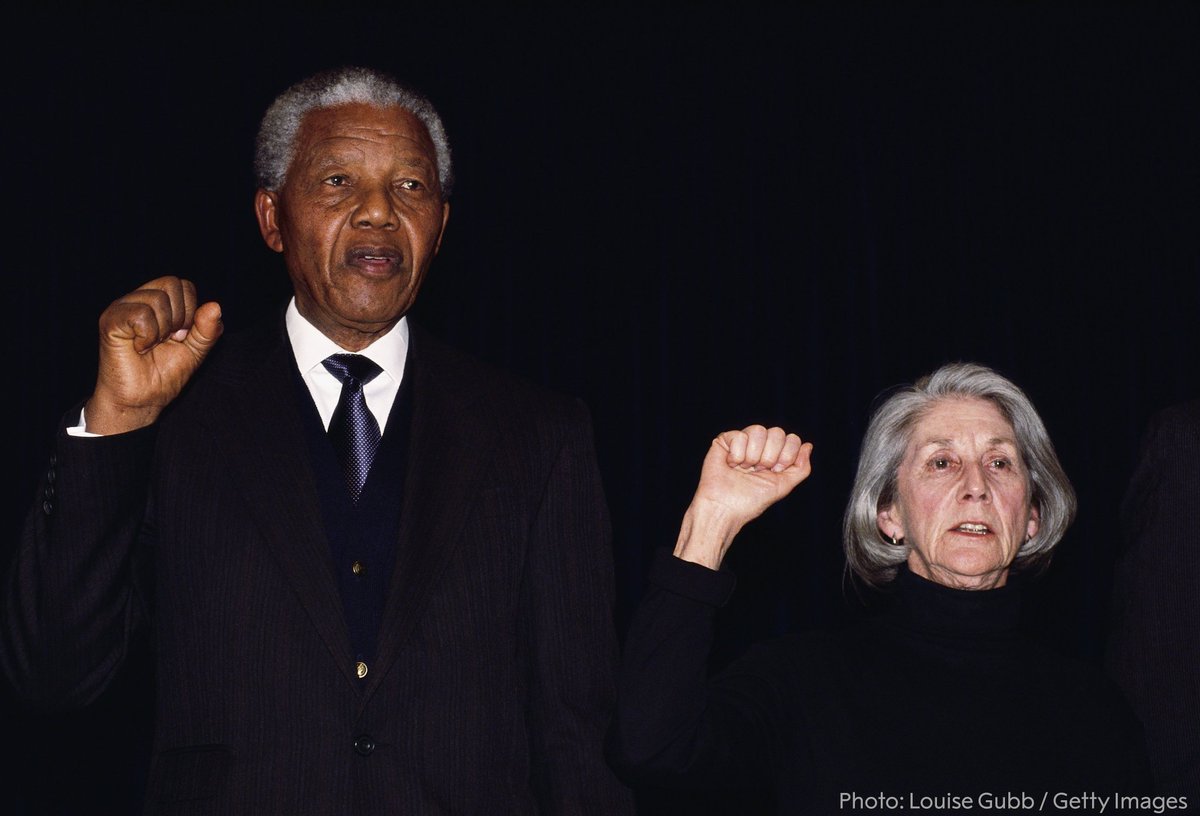
Nadine Gordimer was one of the first people that Nelson Mandela wanted to see after being released from prison in 1990. The two Nobel Prize laureates became good friends. They both tried eliminating the apartheid system in their home country, South Africa.
The Nobel Prize tweet media
English
8
37
132
7.2K
Ian retweetledi
Bloomberg
Bloomberg@business·
US taxpayers and Trump's son are both backing rare-earth startup Vulcan. But some Republicans are uncomfortable with state-sponsored capitalism. bloomberg.com/news/features/…
English
6
15
44
13.3K
Ian retweetledi
Charlie Hebdo
Charlie Hebdo@Charlie_Hebdo_·
Un bras cassé au Congrès, des milliers de bombes sur Téhéran et Trump qui jure que tout va bien : la guerre en Iran secoue l'Amérique. Et depuis le 28 février dernier, les courants pacifistes américains se révèlent sous leur visage véritable charliehebdo.fr/2026/03/intern…
Français
0
3
21
2.5K
Ian
Ian@Ian736·
@AbdallahAbdiMo2 @EvanWritesOnX @MaryannRevLight The TPS is a coalition of corporate giants, led by the Financial-Industrial Complex (FIC) with firms like JPMorgan, Goldman, and BlackRock, alongside the Military-Industrial Complex (MIC), Consumer-Industrial Complex (CIC), and Techno-Industrial Complex (TIC)
English
0
0
1
12
Evan
Evan@EvanWritesOnX·
There is a pattern forming that does not fit the conventional framing of American foreign policy failure. The standard reading says the United States is losing credibility because of an unpopular war, an erratic president, and a string of strategic miscalculations. The reading behind the curtain says something far more uncomfortable. The loss of American credibility is not a bug in the system. It is the system working exactly as designed. Joe Kent's resignation letter was not a quiet departure. It was a controlled detonation of the official narrative. He stated that Iran posed no imminent threat to the United States. He accused high-ranking Israeli officials of running a misinformation campaign that lured the administration into war. He cited Israel's powerful American lobby by name. He invoked his own status as a Gold Star husband who lost his wife in what he called a war manufactured by Israel. And he posted the letter publicly on X for maximum distribution. This is a narrative weapon deployed at a precise moment. Kent's letter accomplishes several things simultaneously. It distances the Trump administration from the war's origins by pinning responsibility on Israel. It validates the global protest movement's central claim that this war serves Israeli, not American, interests. And it provides domestic political cover for the exit that is already being engineered. David Sacks, Trump's AI and crypto czar, delivered the complementary signal. His recommendation was blunt: "declare victory and get out." This is not a dovish outlier in a hawkish administration. This is a man with direct access to the president, speaking on a podcast with millions of listeners, publicly building the case for withdrawal while the bombs are still falling. Now look at NATO. Trump asked the alliance to send ships to help secure the Strait of Hormuz. NATO refused. Trump's response was to publicly muse about leaving the alliance entirely, stating he does not need Congressional approval to do so. He posted on Truth Social that since the US has had military success in Iran, "we no longer need or desire" assistance from NATO, Japan, Australia, or South Korea. You do not announce that you no longer need your allies unless you are preparing to act without them, or preparing to let them go. The conventional reading of all this is chaos. An administration at war with itself, allies refusing to cooperate, public opinion turning hostile, credibility collapsing. But move away from the headlines and a different picture emerges. The FIC benefits enormously from the collapse of the NATO security architecture, because NATO's collapse forces European rearmament. The EU has already increased defense spending 60% since 2020. At The Hague summit, NATO members agreed to spend 3.5% of GDP on core defense by 2035, up from the previous 2% target. The "Re-Arm Europe Plan" is explicitly designed to build autonomous European defense capabilities independent of the United States. This is not a reaction to American weakness. This is the market being created. Every European nation that must now build its own military infrastructure, its own procurement pipelines, its own defense industrial base, represents a new revenue stream for the same transnational defense contractors who currently service the American military. Lockheed Martin, Raytheon, BAE Systems, Thales, Rheinmetall. These firms do not care which flag flies over the hardware. They care about volume. A world where 30 European nations each build independent defense capabilities is vastly more profitable than a world where one American military provides a security umbrella and everyone else free-rides. The TPS benefits from the narrative separation of American and Israeli interests because it creates the political conditions for the United States to withdraw from its unconditional security commitment to Israel. That commitment has been, for decades, the single most expensive and diplomatically costly obligation the US maintains. It distorts Middle Eastern policy, constrains energy relationships, and generates anti-American sentiment across the Global South. Joe Kent's resignation letter is not just a protest. It is a proof of concept for a new American political consensus: the war was Israel's idea, America was manipulated into it, and the lesson is that the US should never again allow a foreign government to determine its military commitments. That consensus, if it solidifies, frees the TPS to restructure the Middle East around the GCC without the US-Israel relationship acting as a constraint. Who benefits from Iran gaining global sympathy? The emerging multipolar order benefits. Iran under bombardment is more sympathetic than Iran building nuclear weapons. Protests erupted across Pakistan, India, Indonesia, South Korea, and dozens of American cities. 56% of Americans oppose the war. 76% of Spaniards oppose it. 57% of British respondents oppose it. The only population that overwhelmingly supports it is Israeli. This polling data does not describe a failed war. It describes a successful narrative operation that has repositioned Iran from pariah state to victim of aggression, which is precisely the status Iran needs to enter the post-war order as a legitimate actor with grievances rather than a rogue state with sanctions. If this were genuine policy failure, you would expect the administration to be scrambling to contain the damage, to shore up alliances, to manage the narrative. Instead, every action amplifies the damage. Every statement widens the gap between the US and its allies. Every resignation letter sharpens the blame on Israel. The pattern is not chaos. The pattern is demolition conducted from the inside. The TPS does not need the United States as sole hegemon anymore. A unipolar world with one military guarantor is actually less profitable than a multipolar world where every major bloc must build and maintain its own security infrastructure, its own financial architecture, its own energy supply chains. The American century was useful for establishing the global financial architecture that the TPS operates through. But the architecture is now mature enough to function without a single guarantor. SWIFT has alternatives. The dollar has competitors. Energy markets have multiple clearinghouses. The US military, far from being indispensable, has become an overhead cost that constrains TPS flexibility by tying it to one nation's political dysfunction. What Trump is doing, whether he understands it in these terms or not, is executing the controlled demolition of American hegemonic infrastructure. NATO weakened means European rearmament spending. US-Israel separation means Middle East restructuring without the constraint of unconditional commitments. American unpopularity means the multipolar order gains legitimacy by contrast. Each of these outcomes opens new markets, new dependencies, new extraction architectures for the TPS to service. The Iran war is not making America unpopular by accident. America's unpopularity is the product being manufactured. The US will reach a settlement with Iran, framed domestically as "declaring victory" per the Sacks formulation. The settlement will be positioned as Trump's decision to end a war that Israel started, completing the narrative separation that Kent's resignation letter initiated. NATO will not dissolve formally but will be functionally hollowed as European nations accelerate independent defense procurement, generating significant new revenue for transnational defense firms. The post-war Middle East will be restructured around a GCC-centered order with a degraded Israel and an integrated Iran, both of which serve TPS interests better than the pre-war configuration. American global reputation will not recover because its recovery is not part of the plan.
English
68
75
409
61.1K
Ian retweetledi
Timour Azhari
Timour Azhari@timourazhari·
(Reuters) - Iran issued an evacuation warning for several oil facilities across Saudi Arabia, the UAE, and Qatar, saying they would be targeted by strikes "in the coming hours", Iranian state media reported on Wednesday. Note: Includes Saudi Samref Refinery at Yanbu on the Red Sea coast, which has become THE essential oil export route.
English
5
88
167
81.9K
Ian retweetledi
Occupy Democrats
Occupy Democrats@OccupyDemocrats·
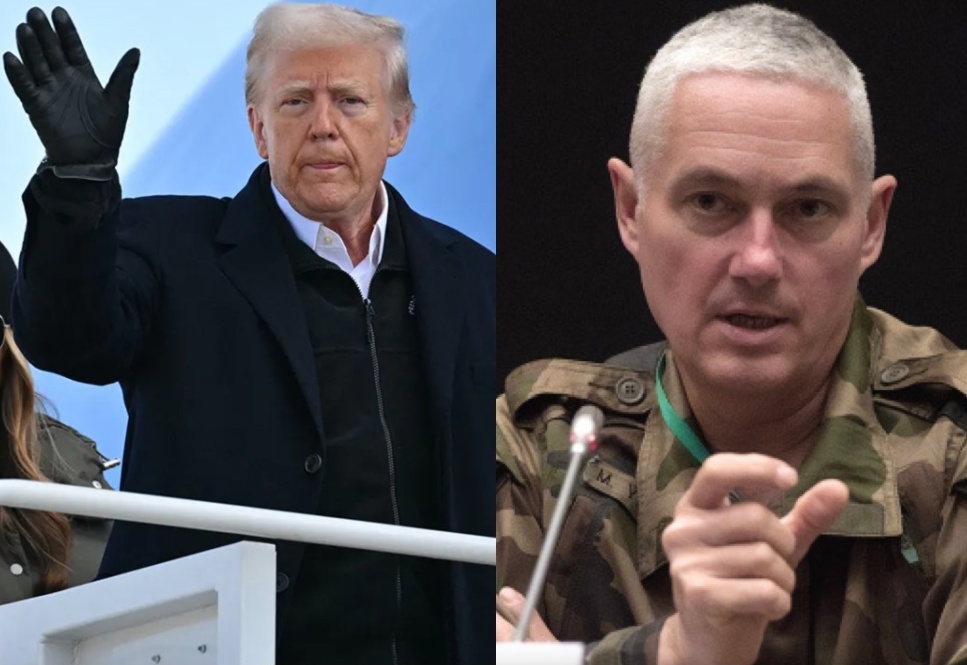
BREAKING: French General Michel Yakovleff HUMILIATES Trump for begging Europe to get involved in his Iran War, says that it would be like "buying cheap tickets for the Titanic" after it hit the iceberg. This is beyond brutal... "We have five reasons to say no to him, in fact," said Yakovleff. "So, the first one is that he didn't understand that if he wants to carry out a NATO operation, NATO has to take command. So, there will be an American general, but it's a single operation." “You can’t have an American operation where they’re bombing whatever they can and then below that, the Europeans doing something else,” Yakovleff said. “No, no, no, it has to be one sole operation, under a NATO flag. I don’t think he understood that.” Yakovleff served as a three general in the French Army, was commander of the French Foreign Legion, and served in top positions in NATO. He's a highly respected military expert in France and regularly weighs in on issues of international importance. Trump has been pleading with allied nations to get involved in his Iran fiasco. Iranian missiles and drones have made it impossible for oil tankers to obtain insurance to traverse the Strait of Hormuz, through which 20% of the world's petroleum normally passes. Oil prices are skyrocketing. So far, Japan, Australia, the United Kingdom, and the European Union have refused Trump's request. General Yakovleff went on to point out that Trump's strategic goals, beyond forcing open the strait, are vague and undefined. If NATO nations were even going to consider involvement, they would need the United States to explain explicitly in writing what the goals are. "And it's not tweets, and it's not things that change every two minutes. So, already there, it's going to be necessary for Trump himself to know what he wants," said the general. He said that there's also the issue of the lack of "confidence" in Trump. It's well-known that he regularly abandons his allies and he could do so here immediately after other nations got involved. “He would let us down whenever it suited him," said Yakovleff. He ended his tirade by comparing Trump to the captain of the Titanic trying to "sell cheap tickets" for his voyage "after having hit the iceberg." “And the last argument is American: you don’t reinforce failure. I learnt that at the U.S. Army War College. You don’t reinforce failure, you move on, you find something else.” he added. "So, there are a lot of reasons to say no." Please ❤️ and share if you think that the Iran War is a total disaster!
Occupy Democrats tweet media
English
906
7.6K
19.2K
883.6K
Ihtesham Ali
Ihtesham Ali@ihtesham2005·
The only guide to prompt engineering you'll ever need. I went through every resource Anthropic and OpenAI have published publicly. Here are 10 techniques that actually work in 2026:
Ihtesham Ali tweet media
English
8
16
44
7.8K