Abhivardhan
82.6K posts

Abhivardhan
@IndusThink
AI Governance @IndicPacific. President @IndianSocietyAI. Posts personal, unrelated to organisations I am affiliated with. My #AI book: https://t.co/IdknPNfVVL


The Centre just split the Housing Ministry into two departments. This changes who controls Delhi's land and metro development New Department of Capital Development now oversees DDA, CPWD, DMRC, Union govt estates, land acquisition and NCR planning Department of Urban Development handles national housing policy: PMAY-U, AMRUT, Swachh Bharat (Urban), PM SVANidhi RERA framework now sits under Urban Development, separate from the body that actually plans Delhi's land and metro projects A structural split, not just a rename


Aashish Chandorkar, a lateral entrant in India’s delegation to World Trade Organization in Geneva, received praise from two major economies, the United States and Japan during the formal proceedings. He brought years of private sector experience into India’s trade policy ecosystem. The public appreciation from both Japan and the United States is likely to be cited by the proponents as evidence that domain specialists can integrate successfully into India’s diplomatic machinery. During the crucial Trade Policy Review (TPR) meetings, Japan, in its statement, said Chandorkar’s prior experience in India’s private sector had “added great depth" to discussions and that he would be “greatly missed" by colleagues. The US delegation echoed the sentiment, describing him as an “excellent counterpart" whose professionalism and thoughtful engagement strengthened bilateral work, while expressing hope of continuing the relationship in the future. Reported by - @madhuparna_N #WTO #India #IndianGovernment #Trade #Japan #UnitedStates #News


I'll use this opportunity to put out some info on the direction change at @SwarajyaMag, our perspective on what we should be doing and why I've pushed the org into these areas. I do think tech sovereignty + material prosperity will be the key driver of an Indian renaissance. It maybe an over used word but let it be. (Other main drivers will be culture and governance) It takes a cultural/mindset shift to consciously work towards tech sovereignty. Our job is to articulate this and the challenges in areas of talent, know-how and building out the industrial muscle required. Of-course we also celebrate the wins. While doing the above we're trying to not look at everything through the lens of govt - there is more than govt to all this - industry, media, overall society's outlook towards hard tech/trade work and manufacturing. Once you snap out of this false belief that every thing you do has to be centered around govt failures/successes you can actually focus on the story - and that works out to be more fair to govt/industry. In this particular instance detailing out the immense challenges in semiconductor space deflates shallow criticism about 'govt failure' - how can govt get all these impossible things done in 5-6yrs? The industrial muscle will have to be built over decades and we could discuss policy support necessary to make it happen. It's a better idea to look at us as an intellectual project that speaks to a kind of Indian who understands what an Indian renaissance means in its entirety (industry, tech, culture, governance, society)


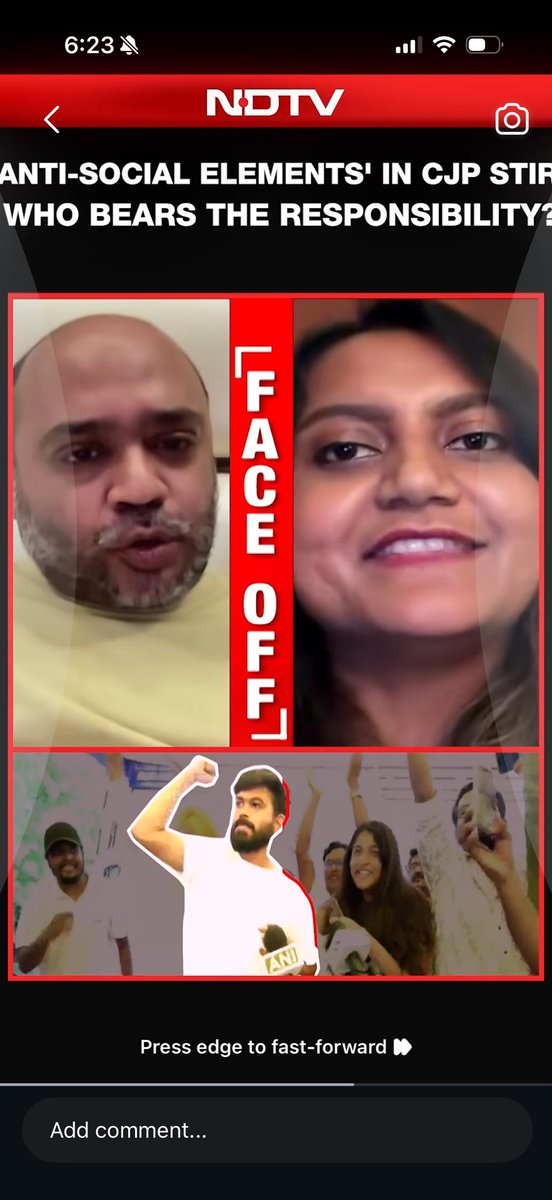
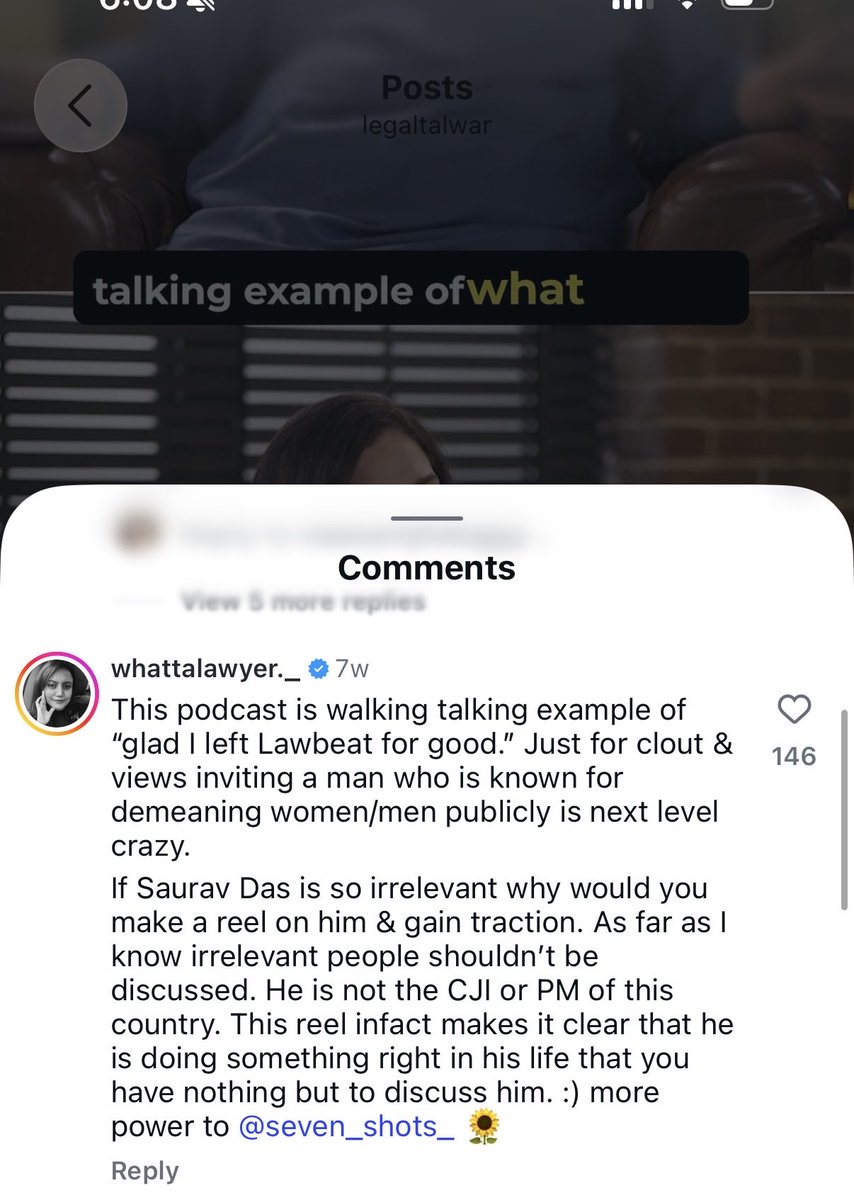
Dear NRIs or Indian people in Amrika, kindly don’t get overexcited on your infatuation or interest in the CJP. If you are outside India, Indians don’t care about your appreciation or criticism of India, trust me. Even if you are an Indian citizen, it doesn’t matter. So kindly don’t overestimate about people you have no knowledge of. You guys look at Indians with a sense of pity and disdain or arrogance as if you are the “Viceroys” and we are just engaged in some infighting towards the oblivion. I would respect the criticisms of an Indian who is working here, still trying their best and has a real understanding of what’s happening. Aap khush raho apni duniya me. I never asked you to represent us. You are not our diplomats either. This people-2-people ties obsession is brilliantly deceptive. @sougat18 @AKLKO1977 @adityajakki

After seeing a post on it yesterday, I’ve looked more deeply into Anthropic’s purchasing and destruction of millions of used books. They spent tens of millions of dollars acquiring and destroying books to train their AI model, Claude. They knew, from the beginning that it would be unpopular. They knew what they were doing, was wrong. An internal memo from 2024 stated: “Project Panama is our effort to destructively scan all the books in the world.” “We don’t want it to be known that we are working on this.” Why used books? Companies like Anthropic and Meta found it impractical to gain permission from authors and publishers to use their work. So instead, they stole their work to train their product through mass purchases of used books and through pirating them from the internet. The authors of these works, didn’t receive a dime for their efforts. These companies stole the hard won literary talent of others to train machines to replace the victims of their theft. Anthropic cofounder Ben Mann personally downloaded countless books for this purpose from LibGen, a book pirating website. When a new book piracy website debuted in 2022, Mann sent an email sharing the link with his employees stating: “just in time!!!” Meta employees were wary about the piracy of books, with one engineer writing, “Torrenting from a corporate laptop doesn’t feel right.” Anthropic purchased millions of books, in batches of tens of thousands from Better World Books and U.K.-based World of Books. They then used a “hydraulic powered cutting machine” to slice off the spines of these books before scanning them. Finally, the remains of these books were picked up for recycling. Feel free to use AI, it’s a free country. But remember that, if you use Claude, that Anthropic has committed a great wrong, and they knew that they were doing it from the beginning. Below is an image, from a court case, of a warehouse full of used books, that instead of being held and read by you and your children, have been destroyed forever. AI is inevitable, but spend your money on the companies who do good, and do not knowingly commit evils. May the most moral company win.


I’ve said this before and I’ll say it again: Using LLMs-written content professionally will spoil your career, especially if you’re in early stages. Everyone worth their salt that I know is hugely aversive to reading slop and despite your smart attempts, they can sense signatures of AI writing (even if they can’t articulate what gave it away). When you delegate writing, you delegate thinking and that delegation takes away from you the very thing you need for your future career advancement: careful thinking. I often hear.. “but my writing is bad”. Well, if you keep on delegating, how will it get better? It’s like complaining that you don’t go to gym because you’re unfit. Write the first damn draft yourself and then take feedback from AI. Do not ask it to rewrite, but rather ask it point errors and suggestions for improvement. Writing using LLMs is analogous to binge watching short videos, or eating junk food. Pleasurable dopamine hits in the short term, but complete dependence in the long term.

Picture a roaring, icy river slicing through the isolated Spiti Valley in 1972. The local villagers are completely cut off by a mountain collapse. The military says a traditional concrete/riveted steel bridge will take yrs to bring heavy machinery up the treacherous cliffs. Then, a young woman steps out onto the frozen mud wearing a hard hat, carrying a set of rolled up blueprints under her arm. She does not have bulldozers. She does not have massive cranes. Instead, she brings trucks loaded with small, lightweight steel components, like a adult-sized structural Lego set. In just 4 months, w/o a single piece of heavy machinery, her team hand-assembles a rock-solid, load-bearing steel bridge across the gorge. Her name was Shakuntala Bhagat & she was changing the rules of civil engineering forever. Born in 1933, Shakuntala was the daughter of S.B. Joshi, a legendary figure known as the "Father of Bridge Engineering in India". While other young girls of the 1940s were expected to follow quiet, traditional paths, Shakuntala spent her childhood staring at bridge trusses & stress diagrams. In 1949, she walked into the classrooms of VJTI in Bombay. The lecture hall went dead silent. Dozens of male students turned to stare at the only woman in the room. In 1953, at just 20 yrs old, she walked out with a degree, making history as India’s 1st female civil engineer. She flew to the United States, earned her Master's in Structural Engineering from Penn & trained across Germany & the UK. When she returned home in the 1960s, she joined IIT Bombay as an Assistant Prof, taking charge as the Head of the Heavy Structures Lab. At IIT Bombay, Prof. Shakuntala was obsessed with a single problem: Why did Indian infra take so long to build?Traditional steel bridges relied on slow, dangerous, on-site welding & heavy riveting. If a flood wiped out a road in Arunachal Pradesh/Kashmir, cut-off communities had to wait yrs for a replacement bridge. In the late 1960s, turning her small Bombay apartment into a late night workshop littered with steel prototypes & stress formulas, Shakuntala & her engineer husband, Anirudh Bhagat, cracked the code. They invented & patented the Quadricon Modular Bridge System & the Bhagat Unishear Connector. Instead of custom-casting a bridge for every river, their system used mass-produced, interchangeable, lightweight steel modules. They could be packed onto small trucks, hauled up narrow mountain tracks & assembled on-site using simple hand tools, reducing bridge construction time from yrs to weeks. Yet, when they took this revolutionary idea to institutional investors & govt departments for R&D funding, they were met with cold skepticism. "If advanced Western nations have not developed a total-system modular steel bridge like this, how can an Indian couple do it?" The establishment refused to back them. She & her husband took massive personal financial risks, mortgaging their own assets to build & test the prototypes themselves. In 1972, the Invention Promotion Board awarded them the highest honor for the Unishear connector. The skeptics were forced to eat their words. Shahkuntala Bhagat went on to design & oversee the construction of 200+ Quadricon steel bridges worldwide, including 69 vital superstructures across India’s most dangerous border terrains, from the high passes of Kashmir to the dense forests of Arunachal Pradesh, as well as projects in the US, the UK & Germany. In 1993, she was named Woman Engineer of the Year. When she passed away in 2012 at the age of 79, she left behind an army of students & a country connected by her steel. We celebrate the famous monuments of concrete and glass in our metros, yet few history books mention the woman in a hard hat who stood on freezing riverbeds to connect India's most forgotten corners. The next time you travel through a remote mountain pass in the Himalayas & your vehicle rolls smoothly over a steel bridge spanning a deadly gorge, look closely at the steel joints beneath you. You are driving across the indestructible genius of Shakuntala Bhagat.