Jason Gray

2.7K posts

Jason Gray banner
Jason Gray

Jason Gray

@Jason_Gray

Reformed/Particular Baptist. Southern Baptist. Florida man in Texas. Gator. 🐊 🇺🇸

Texas Katılım Nisan 2009
504 Takip Edilen787 Takipçiler
Jake Stone
Jake Stone@jake_stone89·
@ColtonYarbro tinysa.com/sermon/5326144… I think it is important to realize that we live in very different contexts. Faithful historians seek to understand their world. What developed into a confessional consensus? This is a lesson I did at church a few weeks ago. Hope it might be helpful!
English
1
0
2
39
Colton Yarbro 🥝
Colton Yarbro 🥝@ColtonYarbro·
“….we must be careful, for the confessors were not arguing for universal religious toleration. Baillie follows this comment by noting that Christopher Blackwood does not call for complete liberty but "does stick a little at Papists, and more at blasphemers and atheists.*2 A lengthy quotation from Blackwood illustrates well the nuanced position held by the early Particular Baptists. The "objection" is the second in a series given in response to his arguments against "compulsion of conscience." Objection 2. Magistrates are to be a terror to evil workers, Rom.13. But heresy is an evil work. Answer. Evil works are of three sorts. 1. Those that are committed against the light of nature and reason, as the setting up of Mahomet, or any other God besides him that is the creator of heaven and earth; Atheism, when any man shall boldly affirm there is no God, Polytheism, when men affirm many gods, blasphemy, murder, adultery, false witness, perjury, theft, disobedience to parents, sedition, sodomy, buggery, drunkenness, tumults against the public peace, &c. These and such like, the Magistrate, whether heathen or Christian, is to be a terror unto. 2. Against the light of Nations; there is no nation in the world, but in it the magistrate will punish those that speak against the God they profess, and against that which they think his Scripture; So if any one rail against Christ, or deny the Scriptures to be his Word, or affirm the Epistles to be only Letters written to particular churches, and no rule for us, and so unsettle our faith; This I take may be punished by the Magistrate, because all or most Nations in the world do it. 3. A third sort of evil works, are those that are committed against the light of faith, as denial of Christ, walking contrary to a man's own principles, presenting ourselves at false worship, pride, covetousness, unbelief, impenitency, rotten communication, heresy, schism; these I suppose, and many such, which are no less evil works, then the other, the Magistrate cannot be a terror unto, but they must be left to the respective Churches, of which the persons offending are members. The Apostle calls the Magistrate a terror to evil works, but not to all evil works, and if he be a terror to all evil works done against light of faith, what need we contend for any government by Ecclesiastical discipline, being the Magistrate hath power in his own hand to punish, therefore evil against the light of faith, may be permitted in the world, though not in the Churches."
Colton Yarbro 🥝 tweet media
English
4
3
28
1.2K
Jason Gray
Jason Gray@Jason_Gray·
@AdamPage85 Exactly. Beth actually highlights the problem well. She would never want to be a pastor…but she wants to function as one. She wants the authority of declaring God’s Word without the responsibility and accountability that the office demands. This is one aspect of the problem.
English
0
0
0
32
pagemasta
pagemasta@AdamPage85·
“I ain’t no pastor yall.” This not only reminds people that there’s what people say and what people do and those voting in June at the SBC need to wise up to the difference, but it reminds us that those few celeb pastors leading the cultural shift need to realize you can’t fight for biblical masculinity as an egalitarian.
Amy Spreeman 🧀🧀🧀🧀@AmyInCheeseLand

Beth Moore preached a Sunday sermon at Josh Howerton’s Lakepointe (SBC) Church on Mother’s Day in May of 2021. She has preached to men many, many times. Don’t let her tweet today fool you into thinking she’s against women preaching to men.

English
3
3
29
2.1K
Jason Gray
Jason Gray@Jason_Gray·
@RyanTBrice I agree. It has been frustrating. Supposedly some of that crowd is going to offer up some friendly amendments to Mohler’s (or an alternative?). I hope that since we all affirm the same theology we can work together to accomplish what is necessary.
English
0
0
1
86
Ryan Brice
Ryan Brice@RyanTBrice·
@Jason_Gray The ones I can't understand are the guys who agree theologically but think it's the wrong way to solve the problem. All they've done for 4 years is speak against Law/Sanchez/Mohler without every offering an alternative solution. This shouldn't be this complicated.
English
1
0
4
120
Jason Gray
Jason Gray@Jason_Gray·
I've seen so many responses to Mohler's proposed amendment that are one of the following: (1) claiming that the whole issue is needless because 'all people are called to 'pastor'" (poor exegesis) (2) straight up egalitarianism (poor theology) (3) misunderstanding of autonomy (poor polity) This is my plea to those who do not make the above mistakes and agree with the theology of what the amendment is seeking to do, but may quibble a bit with the language or think that such an amendment may not be necessary: Do not give power (or cover) to the above mistakes that seek to undermine your own theological and polity convictions. Work to pass the amendment (or something akin to it, if need be).
English
5
2
19
1.3K
Jason Gray
Jason Gray@Jason_Gray·
@JimmyParker87 @jaredcornutt To be fair to Jimmy, I think his view is one that we can have a legitimate discussion about within the SBC and how we apply the BFM. Even if I disagree with him. The views I highlighted above are contradictory to the BFM. So these are not equivalents. Just to be fair.
English
1
0
0
58
Jason Gray
Jason Gray@Jason_Gray·
The responses to Mohler's suggested Amendment is revealing who should be taken seriously and who should be ignored completely.
English
2
0
9
606
Jason Gray retweetledi
Jared Cornutt
Jared Cornutt@jaredcornutt·
@Jason_Gray I don’t read Bird’s article, but obviously that isn’t the conventions consensus and a strange argument. We also have this:
Jimmy Parker@JimmyParker87

@MaryWittTN Lottie Moon and Annie Armstrong are proof positive that the SBC hasn't followed its own beliefs for a long time.

English
2
0
1
116
Jason Gray
Jason Gray@Jason_Gray·
@jaredcornutt We're a long way from quibbling over the best wording or the best way to address this long term when these arguments are being thrown around out there.
English
0
0
0
19
Jason Gray
Jason Gray@Jason_Gray·
@jaredcornutt I've seen so many embrace the "all Christians are called to pastor/shepherd, so this doesn't matter" view, we have Michael Bird and Wade Burleson with straight up egalitarianism, and also the giant misunderstanding from the "autonomy" crowd. It's a mess.
English
2
0
1
112
Jason Gray retweetledi
Doug Ponder
Doug Ponder@dougponder·
@DennyBurk @jonwoodyard Bird also makes the same error as Wade Burleson in a post that @colinsmo recently shared. Namely, both attempt to use “shepherd” or “shepherding” in ways that the Bible does not 👇🏻
Doug Ponder tweet mediaDoug Ponder tweet media
Doug Ponder@dougponder

A friend of mine returned from TGC this past week and said that some of the people he met there were saying that women can "shepherd" disciples in the church. (Many limited this to "shepherding" other women, while others did not. Some even used the word "pastor" as a title for women's ministry in the church.) I have no idea whether this is the official position of those with authority at TGC, but I do know that these sorts of language games are slippery slopes that often precede full-blown egalitarianism, whether those engaging in such language realize this or not. Besides all this, referring to the activity of women (or unordained men) in the church as "shepherding" lacks biblical precedent. The verb ποιμαίνω (to shepherd) is only used 11 times in the NT. It refers to: 1. The ruling activity of Jesus (Matt. 2:6; Rev. 2:27; 7:17; 12:5; 19:15) 2. The literal activity of shepherding literal animals (Luke 17:7; 1 Cor. 9:7) 3. The activity of apostles and elders as overseers of the flock of God (John 21:16; Acts 20:28; 1 Pet. 5:12) 4. The activity of false teachers who feed themselves instead of caring for God's people (Jude 1:12) That's it. Thus, the burden of proof is on those who want to make the case that women can "shepherd" in some sense other than how the Scriptures use the term. The same goes for the noun form of "shepherd" (ποιμήν), which is used 17 times to refer to: 1. Literal shepherds of literal sheep (Luke 2:8, 15, 18, 20) 2. The role of Jesus vis-à-vis the people of God (Matt. 9:36; 25:32; 26:31; Mark 6:34; 14:27; John 10:2, 11, 12, 14, 16; Heb. 13:20; 1 Pet. 2:25) 3. The role of "pastors [shepherds] and teachers" (Eph. 4:11), which shares a single definite article in the Greek [τοὺς δὲ ποιμένας καὶ διδασκάλους], linking the two terms as either being (a) synonymous or (b) related in some categorical fashion. Dan Wallace argues for the latter in his Greek Grammar Beyond the Basics, saying that Paul seems to envision a distinction between pastors who shepherd and pastors who both shepherd and teach with authority (cf. 1 Tim. 5:17). Many people stake their entire argument for "women shepherds" on Ephesians 4:11, but, once again, this goes against the hermeneutical principle of clearer texts interpreting less clear texts. And since the NT never uses the noun or verb forms of "shepherd" to refer to anyone except Jesus, literal shepherds of literal animals, elders/overseers, and false teachers, there is simply no warrant for using the unclear and unhelpful language of women "shepherding" in the church. Why not stick closer to the way the Bible speaks? Why not speak of "teaching what is good" [καλοδιδασκάλους] as Paul does in Titus 2:4, where they "encourage [σωφρονίζωσι] the young women to love their husbands and children, to be self-controlled, pure, working at home, kind, and submissive to their own husbands, that the word of God may not be reviled" (Titus 2:5)? I suspect the reason so many are eager to use biblical words in extra-biblical ways is because they think it will be a pressure-release valve for the mounting pressure conservative churches feel as the Western world moves further and further away from a biblical vision of the sexes. This won't end well, and if you're part of a church that is flirting with this sort of terminology, I'd urge to you reconsider your course before you slide further from how the Scriptures speak about these matters.


English
2
1
11
620
Jason Gray retweetledi
𝐌𝐢𝐜𝐡𝐚𝐞𝐥 𝐂𝐚𝐫𝐥𝐢𝐧𝐨 ⛪︎ 🌲
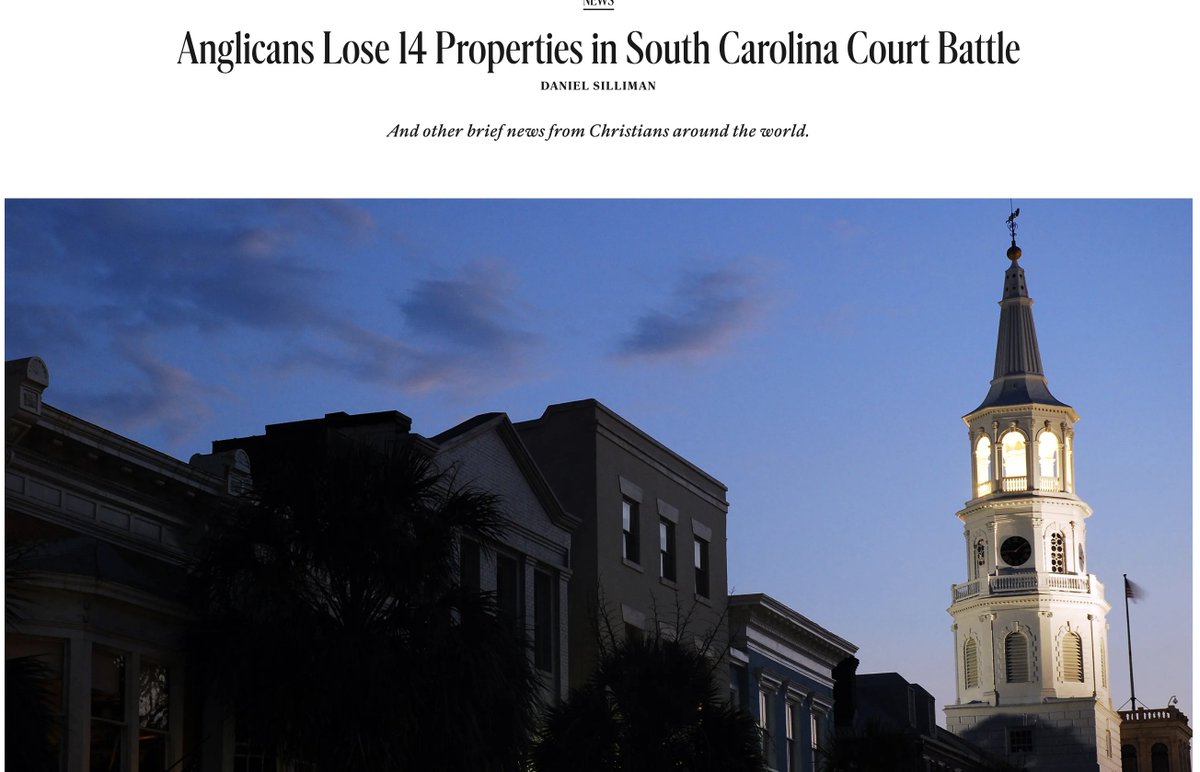
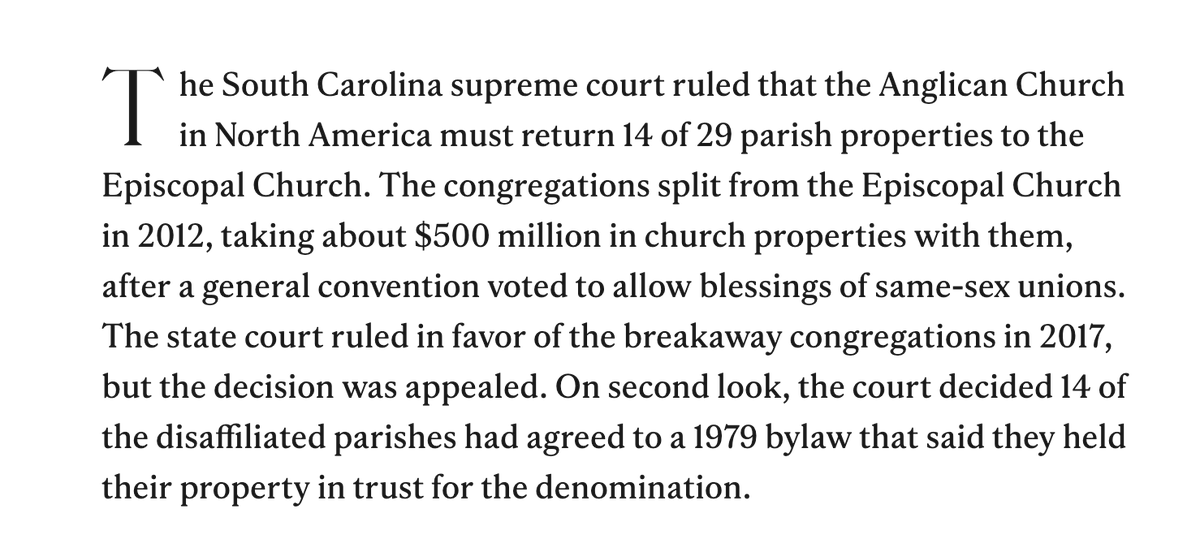
Since our episcopal friends struggle to grasp this: disfellowshipping a church is not telling the congregation whom they may/may not call as a pastor. It is telling them they can't be in friendly cooperation with the SBC and contradict our cooperative standards. When this happens, they get to keep their building, land, etc., unlike what happens when a church decides not to cooperate with the blessing of same-sex unions in Anglican churches.
𝐌𝐢𝐜𝐡𝐚𝐞𝐥 𝐂𝐚𝐫𝐥𝐢𝐧𝐨 ⛪︎ 🌲 tweet media𝐌𝐢𝐜𝐡𝐚𝐞𝐥 𝐂𝐚𝐫𝐥𝐢𝐧𝐨 ⛪︎ 🌲 tweet media
Dr. Michael F. Bird@mbird12

The Purge of Women as Pastors in the SBC Certain groups in the Southern Baptist Convention are pushing forward an amendment to prohibit women from using the title "pastor" for any ministry role—including youth, worship, or pastoral care. I explain why such a proposal is needless and concerning. open.substack.com/pub/michaelfbi…

English
3
6
49
3K
Jason Gray retweetledi
Denny Burk
Denny Burk@DennyBurk·
The attached image is also from Mike Bird’s essay. It’s another false allegation that betrays a basic misunderstanding of Baptist polity. What Mohler said 25 years ago is an absolutely true statement. In fact, you’re not a Baptist if you can’t agree with it. We don’t tell any church what they can or can’t do. If a church wants to have a female pastor, there’s nothing the SBC can do about it. That church is free to have a female pastor. The SBC, however, is also free not to cooperate with that church. Mohler’s statement reflects the reality that churches and conventions are sovereign in their own sphere. This is Baptist Polity 101.
Denny Burk tweet media
English
7
17
118
21.7K
𝐌𝐢𝐜𝐡𝐚𝐞𝐥 𝐂𝐚𝐫𝐥𝐢𝐧𝐨 ⛪︎ 🌲
William Ames on why the many positive elements contained in the fourth commandment by no means makes it a purely positive/ceremonial law, but a positive-moral command: “But the law regarding [the Sabbath] institution and its moral authority is primarily based on the express command in the decalogue. For it is a sure rule, accepted by all the best theologians, that moral precepts were distinguished from ceremonial and judicial ones in their transmittal in that all and only moral laws were publicly proclaimed before the whole people of Israel from Mount Sinai by the voice of God himself and later written, as it were, by the finger of God himself on tablets of stone to declare their perpetual and unchangeable duration. Christ also testifies expressly that not one jot or tittle of this law should perish (Matt. 5:18. 12). The matter of the fourth commandment is not in degree or mode of the same moral nature as that of almost all the other commandments, for it is part of positive law and not natural law. The three previous commandments are negative and forbid the vices to which we are prone because of our depraved nature. This fourth commandment is propounded first affirmatively by declaring and commanding our duty and then negatively by forbidding the things repugnant to our duty. The admonition specially placed before the precept, ‘Remember the sabbath day, or remember to keep this day’ (as explained in Deut. 5:12), also in part illustrates the fact that the commandment belongs to positive law more than other duties which are more natural, since as such it could more easily slip into oblivion. Yet the positive law upon which this ordinance is grounded is divine law and is unchangeable so far as man is concerned. Those who turn the fourth commandment into allegories of cessation from sin or from the troubles of this life and the like, propounding a fourfold or fivefold sabbath, typical of those who play with allegories, attribute to this member of the decalogue nothing which does not as well and even better fit with many jewish ceremonies now abrogated. And those who would make this commandment ceremonial (as they would make the second too, besides being refuted by the arguments above, contradict the express witness of Scripture which affirms that ten words or moral precepts are contained in the decalogue, Exod. 34:28; Deut. 4:13; 10:4. They would have only nine, or even eight. And this is the true reason why the observance of the sabbath is so greatly urged and the breaking of it so severely punished in the Old Testament. In the sabbath there was a common and public profession of the whole of religion. This commandment closes the first table of the law and in summary contains the whole worship of God by setting a certain day for the exercise of it (Isa. 56:2). There are many ceremonies ordained for the observance of the sabbath, but the sabbath was no more made ceremonial by them than it was made judicial or political because of juridical laws which made certain that the sabbath should be celebrated in all sanctity (Exod. 31:14). The accommodation of the fourth commandment to the special state of the Jews (found in the observance of the seventh day from the very beginning) no more makes the precept ceremonial than the promise of the land of Canaan to the people of Israel (Deut. 5:33), ‘That you may live long in the land which the Lord your God giveth you,’ makes the fifth commandment ceremonial; or than the preface (Deut. 5:6), ‘I am the Lord your God which brought you out of the land of Egypt,’ makes all the commandments ceremonial. To be sure, a more strict observance of the sabbath was commanded in those days of tutelage and bondage which is not binding in all ages. Yet this does not prevent the observance from being plainly moral and common to all ages.”
𝐌𝐢𝐜𝐡𝐚𝐞𝐥 𝐂𝐚𝐫𝐥𝐢𝐧𝐨 ⛪︎ 🌲 tweet media
English
3
1
10
674