Joe A Kim 🌽⛳️

8.1K posts

Joe A Kim 🌽⛳️ banner
Joe A Kim 🌽⛳️

Joe A Kim 🌽⛳️

@Joe_A_Kim

Philomath N=1 | Sleep, Exercise, Nutrition | Brain/Gut Health, Neuroscience, Philosophy | Human Behavior Observer | Classical Literature | Music Curator | Stock

St Pete, FL (Nebraska,Indiana) Katılım Haziran 2012
2.5K Takip Edilen728 Takipçiler
Joe A Kim 🌽⛳️
Joe A Kim 🌽⛳️@Joe_A_Kim·
Screens are convenient for schools. They are not equivalent to books for developing brains. The research says one thing; the classroom is doing another. Side note: This connects directly back to handwriting study conversations. The pattern is consistent across age groups — physical, embodied interaction with information (handwriting, physical books, face-to-face reading) activates more brain architecture than the digital equivalent doing the "same" task. The medium is not neutral. It never was.
The Wall Street Journal@WSJ

American public schools’ overreliance on YouTube for educational content runs counter to what is clear in several scientific studies: Learning analog is better than digital. on.wsj.com/3Rmrrat 🧵

English
0
0
0
19
Joe A Kim 🌽⛳️ retweetledi
Mario Tomic
Mario Tomic@mariotomich·
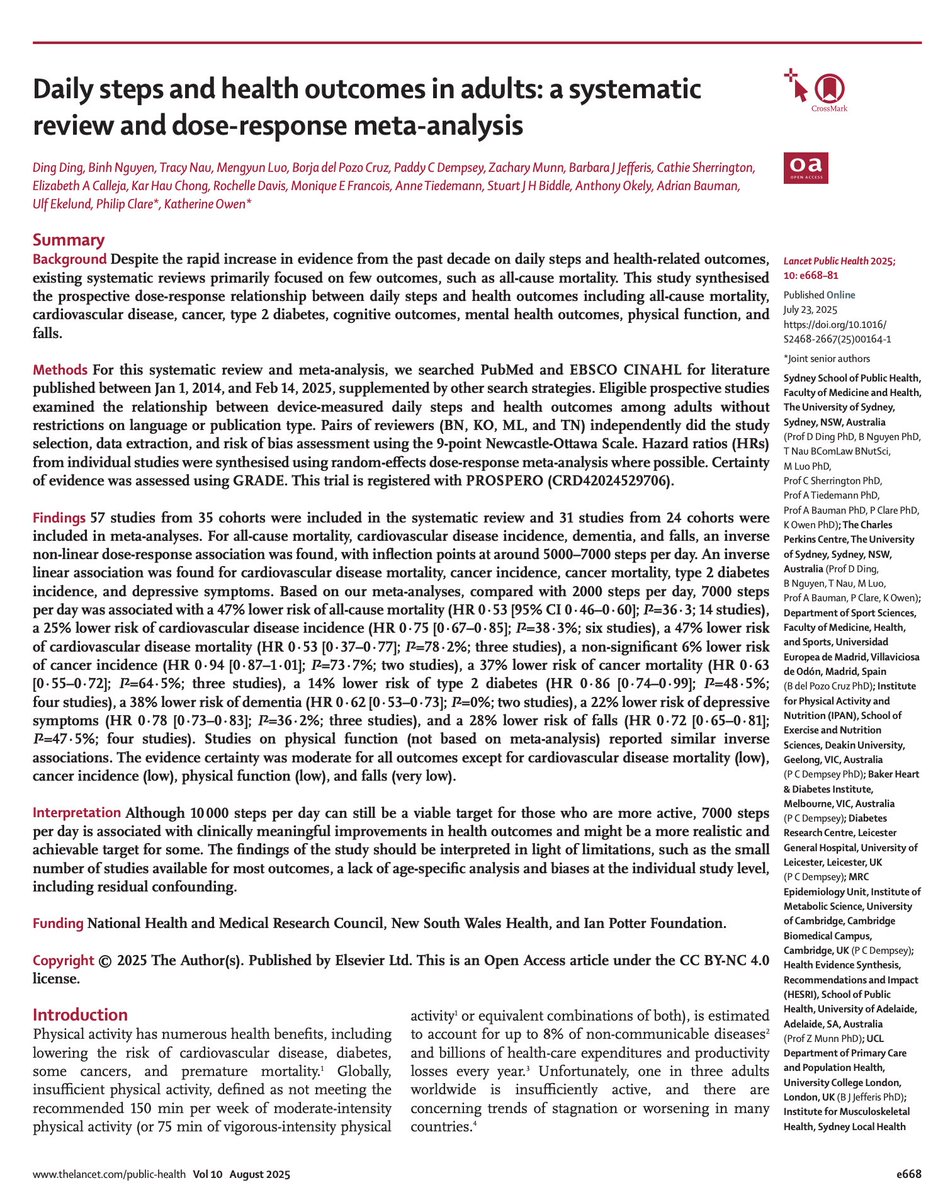
Walking ~7000 steps/day vs. ~2000 steps/day is associated with: - 47% lower all-cause mortality - 47% lower cardiovascular disease mortality - 37% lower cancer mortality - 38% lower dementia risk - 22% lower depression If you care about your health, start walking.
Mario Tomic tweet media
English
29
143
676
436.7K
Joe A Kim 🌽⛳️ retweetledi
Vala Afshar
Vala Afshar@ValaAfshar·
If you are fortunate to be with elderly parents, then this is golden advice
Vala Afshar tweet media
English
19
409
1.7K
53.3K
Joe A Kim 🌽⛳️ retweetledi
TPI
TPI@MyTPI·
Cameron Young’s force and 3D capture at TPI in January. One of the most unique transitions in golf. One of the best tee to green on the PGA TOUR.
English
38
97
2.3K
1.7M
Joe A Kim 🌽⛳️ retweetledi
Eric Topol
Eric Topol@EricTopol·
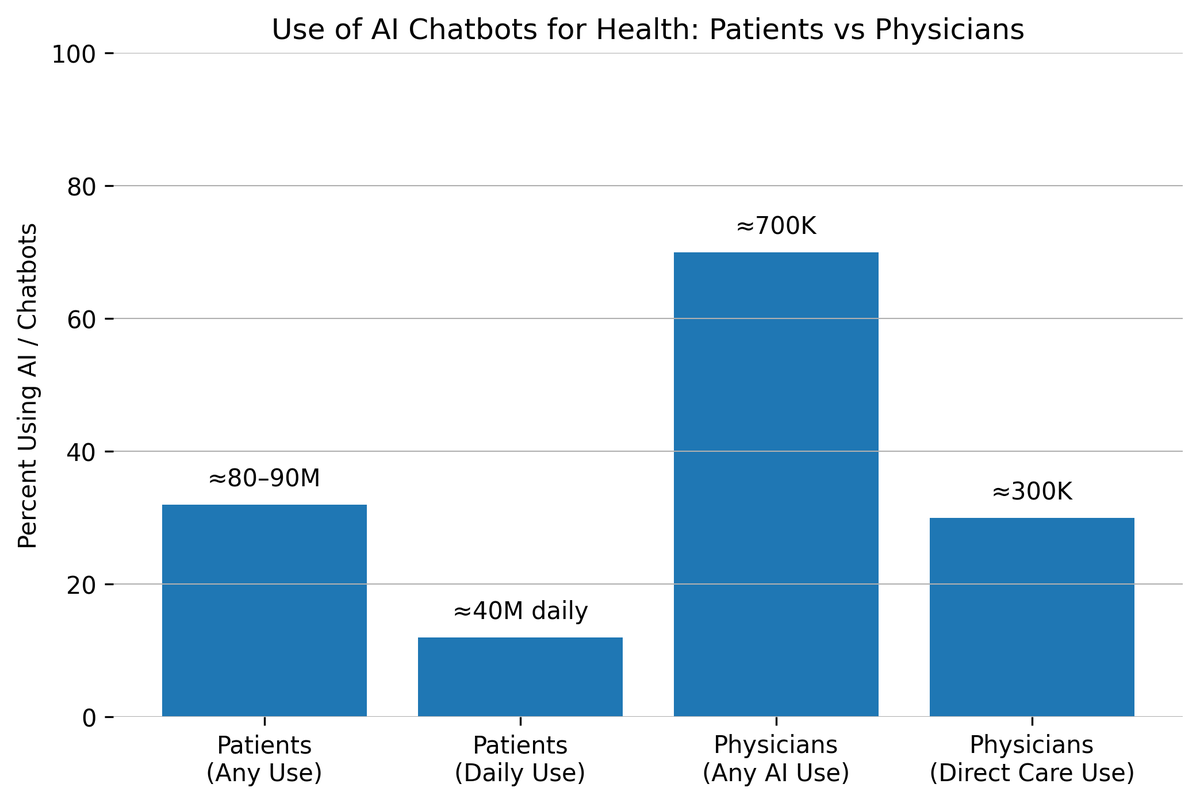
The current use of AI in healthcare by patients and clinicians is not aligned with the evidence. In the new edition of Ground Truths
Eric Topol tweet media
English
10
34
154
16.7K
Joe A Kim 🌽⛳️ retweetledi
William A. Wallace, Ph.D.
William A. Wallace, Ph.D.@WilliamWallace·
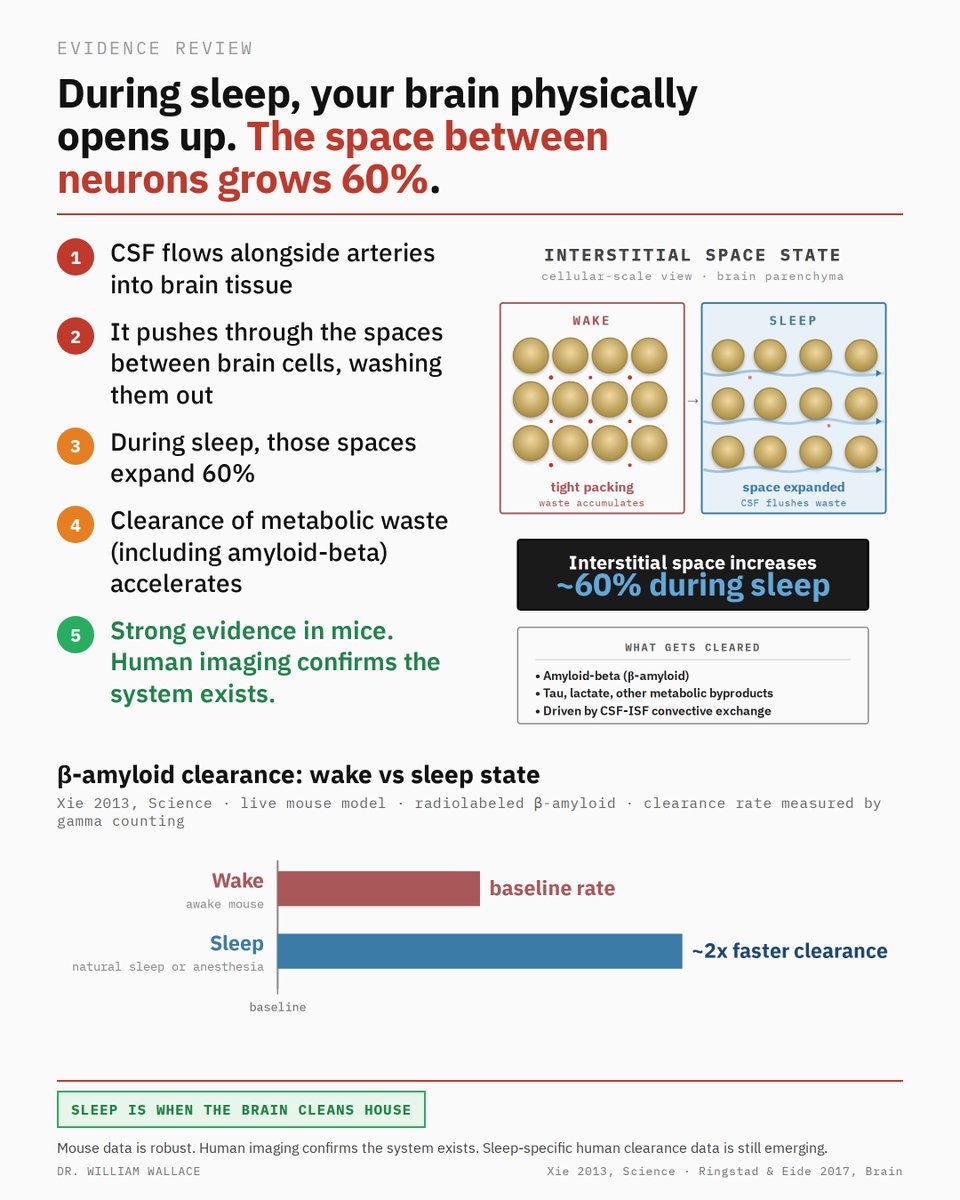
Sleep isn't downtime for your brain. It's a flush cycle. During sleep, the spaces between brain cells expand ~60%. CSF flows through and washes out metabolic waste, including β-amyloid, the peptide that aggregates in Alzheimer's. Clearance is ~2x faster than during wake. Mechanism characterized by Nedergaard's lab in 2013 (Xie et al., Science). Called the glymphatic system. The brain has no conventional lymphatics. This is the workaround. Sleep duration is the lever you actually control. pmc.ncbi.nlm.nih.gov/articles/PMC38…
William A. Wallace, Ph.D. tweet media
English
12
100
360
10.1K
Joe A Kim 🌽⛳️ retweetledi
Scientific American
Nearly a third of all U.S. adults are sleeping fewer than the recommended seven hours per night on average spklr.io/6018EKxsK
English
4
18
43
7.6K
Joe A Kim 🌽⛳️ retweetledi
Love Music
Love Music@khnh80044·
This man in Chile removed the plastic wrapped around a sea lion’s neck, saving its life. The sea lion has never forgotten and continues to visit the beach to interact with its new friend.🥹❤️
English
51
1.1K
13.8K
192.6K
Joe A Kim 🌽⛳️
Joe A Kim 🌽⛳️@Joe_A_Kim·
Handwrite first — thinking happens. Then bring it to AI for validation, pressure-testing, or correction. The sequence is actually ideal. You're not outsourcing the thinking, you're stress-testing conclusions you already reached on your own. That's exactly how the Nature editorial says AI should be used.
Aakash Gupta@aakashgupta

Your brain doesn't form the thought until you write it down. Nature Reviews Bioengineering published the case for that claim last summer in an editorial titled "Writing is thinking." The cited evidence is a 2024 EEG study at the Norwegian University of Science and Technology. 36 students alternated between handwriting and typing the same words. 256-channel sensor array. Cursive on a touchscreen versus keys on a keyboard. Same words both ways. Handwriting produced widespread connectivity across parietal and central brain regions. Typing didn't. The theta and alpha frequency bands the literature ties to memory formation and encoding lit up almost exclusively when the hand was forming the letters. The motor act was producing the cognition. What the editorial extends from that finding is the more uncomfortable claim. Writing a scientific article is the mechanism by which a researcher discovers what their main message actually is. The act of constructing sentences forces the chaotic, non-linear way the mind wanders into a structured, intentional narrative. You sort years of research into a story, and in the sorting, you find out what you believe. Then the line: If writing is thinking, are we not then reading the thoughts of the LLM rather than those of the researchers behind the paper? Nature endorses LLMs for grammar, search, brainstorming, breaking through writer's block. Where the line gets drawn is outsourcing the whole writing process. Because the writing process is the thinking process. Even editing the LLM's draft is harder than writing one from scratch. To restructure someone else's reasoning you have to reconstruct it first, which means doing the cognitive work anyway, with worse leverage and more friction. The time savings on the keyboard turn out to be cognitive savings on the part of the brain you wanted to use. Your first draft was the thinking.

English
0
0
0
18
Joe A Kim 🌽⛳️
Joe A Kim 🌽⛳️@Joe_A_Kim·
Based on reading some of the posts which are informative and filtering through Grok and Claude, I have formed an opinion of @iam_elias1: he's not lying, he's curating. Pro-AI for personal monetization, anti-AI for audience retention. Both simultaneously. That's not hypocrisy — it's a business model. Read his posts at your own risk.
Elias Al@iam_elias1

Two economists just published a mathematical proof that AI will destroy the economy. Not might. Not could. Will — if nothing changes. The paper is called "The AI Layoff Trap." Published March 2, 2026. Wharton School, University of Pennsylvania. Boston University. Peer reviewed. Mathematically modeled. The conclusion is one sentence. "At the limit, firms automate their way to boundless productivity and zero demand." An economy that produces everything. And sells it to nobody. Here is how you get there. A company fires 500 workers and replaces them with AI. A competitor fires 700 to keep up. Another fires 1,000. Every company is behaving rationally. Every company is following the incentives correctly. And every company is building a trap for itself. Because the workers who were fired were also customers. When they lose their jobs faster than the economy can absorb them, they stop spending. Consumer demand falls. Companies respond by cutting costs — which means automating more workers — which means less spending — which means more falling demand — which means more automation. The loop has no natural exit. The researchers tested every proposed solution. Universal basic income. Capital income taxes. Worker equity participation. Upskilling programs. Corporate coordination agreements. Every single one failed in the model. The only intervention that worked: a Pigouvian automation tax — a per-task levy charged every time a company replaces a human with AI, forcing them to price in the demand they are destroying before they pull the trigger. No government has implemented this. No major economy is seriously discussing it. Meanwhile the numbers are already tracking the curve. 100,000 tech workers laid off in 2025. 92,000 more in the first months of 2026. Jack Dorsey fired half of Block's workforce and said publicly: "Within the next year, the majority of companies will reach the same conclusion." Nobody is doing anything wrong. Companies are following their incentives perfectly. That is exactly the problem. Rational behavior. At scale. Simultaneously. With no mechanism to stop it. Two economists built the math. The math leads to one place. Source: Falk & Tsoukalas · Wharton School + Boston University · arxiv.org/pdf/2603.20617

English
0
0
0
20
Joe A Kim 🌽⛳️
Joe A Kim 🌽⛳️@Joe_A_Kim·
Carl Sagan's Demon Haunted World: The most famous "foreboding" passage appears on pages 25–26: "I have a foreboding of an America in my children's or grandchildren's time—when the United States is a service and information economy; when nearly all the key manufacturing industries have slipped away to other countries; when awesome technological powers are in the hands of a very few, and no one representing the public interest can even grasp the issues; when the people have lost the ability to set their own agendas or knowledgeably question those in authority; when, clutching our crystals and nervously consulting our horoscopes, our critical faculties in decline, unable to distinguish between what feels good and what's true, we slide, almost without noticing, back into superstition and darkness."
Saganism@Saganismm

Carl Sagan’s prediction about America, made 31 years ago.

English
0
0
0
12
Joe A Kim 🌽⛳️ retweetledi
William A. Wallace, Ph.D.
William A. Wallace, Ph.D.@WilliamWallace·
A 1-minute tea and a 5-minute tea are different beverages. Same leaf, same water, different chemistry. Caffeine extracts fast. Most of it is in your cup within 1-2 minutes. Catechins (EGCG, the compound driving most green tea health research) extract slower and continue building through 3-5 minutes. Tannins extract last, becoming prominent after 4-5 minutes and producing astringency. The 30-second tea bag dunk is mostly caffeine with minimal catechins. The 8-minute brew adds tannins that make the cup harsh. The 3-5 minute window captures the catechin peak before tannin onset. Separately, tea polyphenols as a class reduce non-heme iron absorption by approximately 60% when consumed with meals (Hurrell 1999). This applies to all brews, not just over-steeped tea. If you have iron status concerns, drink tea between meals rather than with them. Astill, J Agric Food Chem 2001: pubmed.ncbi.nlm.nih.gov/11714326/ Hurrell, Br J Nutr 1999
William A. Wallace, Ph.D. tweet media
English
10
87
338
13.1K
Joe A Kim 🌽⛳️ retweetledi
William A. Wallace, Ph.D.
William A. Wallace, Ph.D.@WilliamWallace·
The olive oil in your pantry is not the same oil it was on the shelf. Rastrelli 2002 (J Agric Food Chem) tracked α-tocopherol in EVOO stored at room temperature for 12 months. It dropped 20% by month 2 and 92% by month 12, with half-empty bottles showing the most pronounced changes. α-tocopherol is the sacrificial antioxidant that protects the polyphenols. Squalene and polyphenols were protected for the first 6-8 months, then declined as the antioxidant defenses ran out. Malheiro 2018 (Food Res Int): even oils still classified as EVOO at 12 months had lost ~50% of phenolic compounds and 57% of oxidative stability. The legal classification stays. The bioactive content doesn't. Di Stefano 2020: at 18 months, oleocanthal and oleacein (the peppery secoiridoids) decreased; tyrosol and hydroxytyrosol increased, partly degradation products of the higher-value compounds breaking down. Three drivers: oxygen exposure, light, time. Half-empty bottles oxidize fastest because of the headspace. The lever: buy smaller bottles, store dark and cool, use within months not years. Treat EVOO as perishable. Rastrelli, JAFC 2002: pubmed.ncbi.nlm.nih.gov/12236680/ Malheiro, Food Res Int 2018: pubmed.ncbi.nlm.nih.gov/29579937/ Di Stefano, Nat Prod Res 2020: pubmed.ncbi.nlm.nih.gov/30896291/
William A. Wallace, Ph.D. tweet media
English
12
78
282
22.2K
Will Compton
Will Compton@_willcompton·
Holy shit man Take two minutes to listen to this
English
290
1.2K
23.4K
2.3M
Joe A Kim 🌽⛳️
Joe A Kim 🌽⛳️@Joe_A_Kim·
Summary There was a theory that eating a lot of protein might make your internal organs (heart, liver, kidneys) grow bigger.But newer real-world data shows:People who eat high protein (even >2.5 g/kg) without drugs do not have enlarged organs Only bodybuilders using anabolic drugs showed organ enlargement So the likely cause is the drugs—not the protein
Brad Schoenfeld, PhD@BradSchoenfeld

Several years ago, a scholarly paper (PMID: 31897480) proposed that consuming high levels of protein (>1.6 g/kg/day) might lead to enlargement of internal organs such as the heart, liver, intestines, and kidneys. The author speculated that protein intake beyond what is needed for muscle-building could instead be redirected toward amino acid metabolism or stimulate growth in these organs. While that reasoning may sound logical, this does not appear to be the case in practice. A new study (PMID: 42044299) examined three groups of young individuals: enhanced bodybuilders, natty bodybuilders, and a control of recreationally active participants. Both groups of bodybuilders consumed high protein intakes (>2.5 g/kg/day), while the control group consumed around 1.4 g/kg/day. As expected, muscle mass was highest in the enhanced group, with natural bodybuilders displaying more muscle mass than controls. However, increased internal organ size was observed only in the enhanced bodybuilders, whereas natural bodybuilders and controls showed similar organ sizes. These findings indicate that a high protein intake alone does not appear to cause enlargement of internal organs in the absence of anabolic drug use. Instead, the observed organ growth is more likely associated with anabolic drug use. It’s important to note that this study is observational, meaning confounding factors cannot be fully ruled out and thus causality cannot necessarily be established. Even so, the results suggest that consuming relatively high amounts of protein does not, by itself, lead to increased internal organ size. pubmed.ncbi.nlm.nih.gov/42044299/

English
0
0
0
38
Joe A Kim 🌽⛳️ retweetledi
Dr. Rhonda Patrick
Dr. Rhonda Patrick@foundmyfitness·
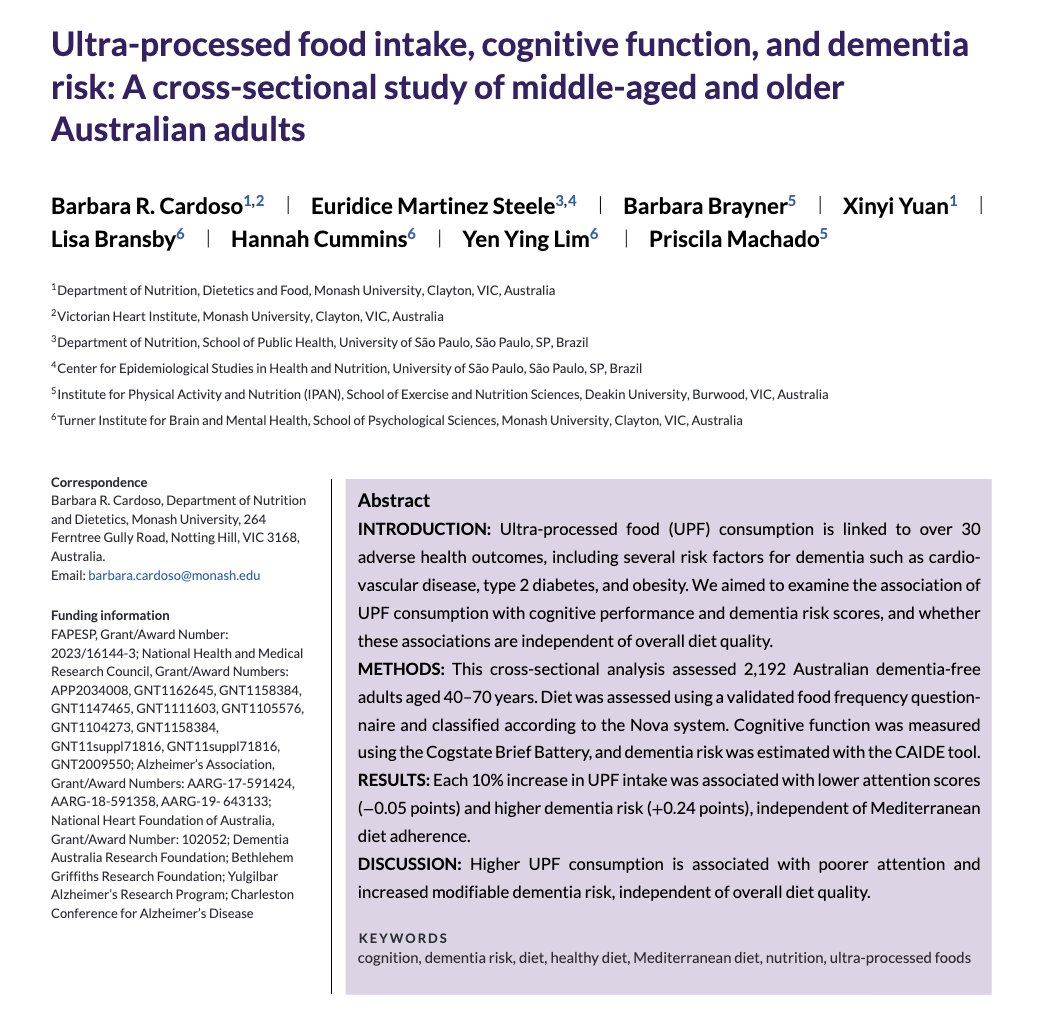
Ultraprocessed foods impair cognitive function and raise dementia risk, even if you eat a "healthy" diet. Among older adults, a 10% increase in UPF intake was linked to lower attention scores and a higher dementia risk. This was true even for adults eating a high-quality diet, and suggests that food processing itself poses unique risks to cognitive health.
Dr. Rhonda Patrick tweet mediaDr. Rhonda Patrick tweet media
English
50
124
742
80.4K
MYGOLFSPY
MYGOLFSPY@MyGolfSpy·
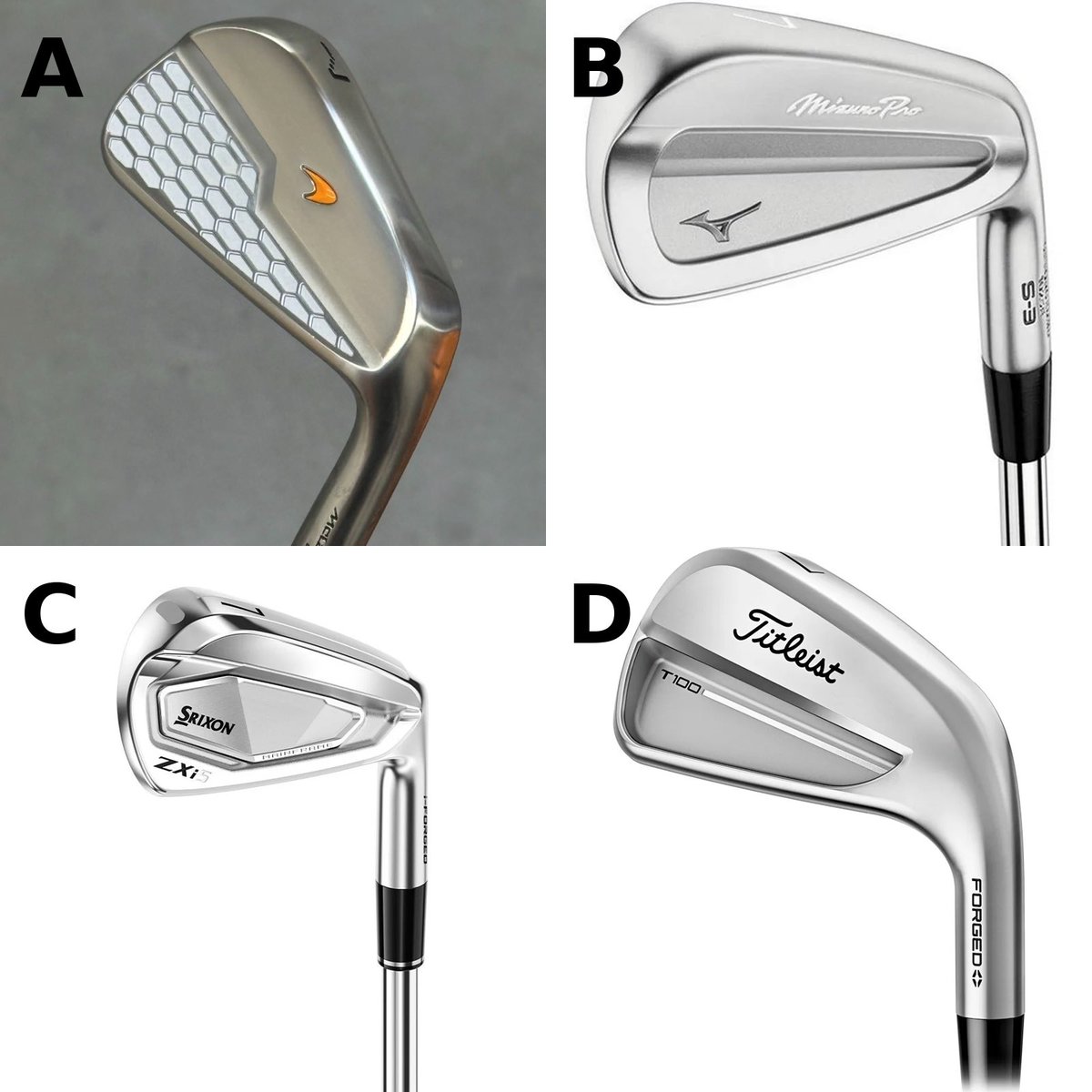
Looks only. No performance. No brand bias. Rank these irons 1 → 4 (best to worst) based purely on how they look. Be honest…which one are you actually proud to pull? 👇 Drop your rankings
MYGOLFSPY tweet media
English
768
13
335
327.8K