Johan Andersson

364 posts

Johan Andersson

Johan Andersson

@JohanTanman

Coach Swedish Triathlon Federation Middle/Long Dist. Coach Tureberg Fk Metabolic Testing&Profiling


Sollentuna, Sverige Katılım Nisan 2014
537 Takip Edilen93 Takipçiler
Johan Andersson
Johan Andersson@JohanTanman·
@ValMThatcher @Alan_Couzens Most often not, when you start working your muscles combust lactate so the lactate in the blood will be lower than resting values. Of your not very bad trained so lactate rises as soon as you start jogging.
English
0
0
1
50
Val
Val@ValMThatcher·
@Alan_Couzens I'm not sure I understand this - when does an activity become training? I'm sure my lowest lactate levels would be at rest.
English
1
0
0
569
Alan Couzens
Alan Couzens@Alan_Couzens·
2 mmol/L is *never* easy. The key is to do the vast majority of training at the *lowest lactate that you can reach* If this is 2mmol/L you've very poor metabolic health 🔴 If this is 1.5 mmol/L you have some work to do 🟡 If this is 1.0 mmol/L, you're on the right track 🟢
i@CtotheI

@Alan_Couzens Hi Allan, thanks for this. Does low intensity always need to be under 1.0mmol/L. Do you consider under 2.00mmol/L low intensity? Or 1.5? Thanks

English
7
5
121
30.8K
Spherie
Spherie@clarityandease·
Thank you Alan. Just did another labtest for lactate and fatmax and VO2. Still waiting for the summarised results but I stayed around 1 mmol until 138 in HR when it rose to 1.3. I have a max heart rate of 187 so that would mean L1 is slightly below 138, which is 74% of max. Seems high, doesn’t it? Is that a bad or good thing?
English
3
0
3
1.3K
Berky
Berky@ykr3bz·
@brady_h best way to find my actual max HR outside of a lab test? Have access to track and treadmill if those are preferred. I just realized recently my max HR was set to 190 on my Garmin but in a 5K this summer I got up to 195.. so thinking I want to test it again.
English
8
0
11
5.9K
Johan Andersson retweetledi
Chris D. Jackson
Chris D. Jackson@ChrisDJackson·
Wow. This post from a Ukrainian soldier says it all.
Chris D. Jackson tweet media
English
9.2K
21.3K
90.4K
5.5M
Johan Andersson
Johan Andersson@JohanTanman·
@MarcoHotspot Självklart är gesten medveten. Ställ dig själv framför spegeln och gör samma gest. Kändes det naturligt och rätt? Varför/Varför inte?
Svenska
9
0
2
2.1K
Marco Strömberg
Marco Strömberg@MarcoHotspot·
Är det mig det är fel på, eller har världen totalt tappat det, när de tolkar Musk gest som en medveten Hitler hälsning? Att folk på allvar bedömer den som en Hitler hälsning tycker jag säger mer om dem än om Musk. Jag kan inte se annat än att detta är ett praktiskt exempel på klassisk confirmation bias.
Svenska
203
128
2.1K
67.5K
Johan Andersson
Johan Andersson@JohanTanman·
@hunterpeaks Were do the 60min come from? Isnt your definition better still since it dont give an exakt time. I like the quasi-steady state definition, a bit blurry but more realistic than 60min all out or 5all out + 20minx0.95.
English
0
0
0
74
Hunter Allen
Hunter Allen@hunterpeaks·
So glad to see Dr. Peter Attia talk about FTP and other definitions with Olav. Great podcast for all those endurance athletes and coaches out there. But....... Ugh. CLOSE but NOT the official definition of FTP. Thank GOODNESS that Olav included the 5-minute blow-out effort BEFORE doing the 20-minute test. At least that will make the "Short-cut" FTP test closer to the ACTUAL power you might/perhaps be able to sustain for about an hour. I created the 20-minute test protocol back in 2002 in order to give cyclists a "Short-cut", so they didn't have to do a 60-minute test every 6-8 weeks. It is NOT the true FTP test. It's a "shortcut". Has been and always will be. As Olav stated, it's critical that if you are going to do the "shortcut" then you must do the 5-minute "All-out/blow-out" effort BEFORE your 20-minute test. Rest 10minutes or less between the two efforts. After you do the 20-minute test, then you take 5% off. This should be a "close approximation" of your average power for the full 60-minute test. It doesn't mean that you will be exactly at the same place in 60-minutes, but close. If you REALLY want to know your FTP, then put on your big boy pants and suffer at your absolute limit for 60-minutes. Here's the definition as Dr. Coggan and I defined it and wrote it back in 2002: "The highest power a rider can maintain in a quasi-steady-state w/o fatiguing. When power exceeds FTP, fatigue will occur much sooner, whereas power just below FTP can be maintained much longer." _ Hunter Allen, Co-author of "Training and Racing with a Power Meter". peterattiamd.com/olavaleksander…
English
6
2
17
2.1K
Jem Arnold
Jem Arnold@jem_arnold·
@JohanTanman @SportsMedicineJ @mskoehle @UBCKin Sorry to hear he's got this issue, but really glad to hear you were able to detect it! Are you able to say more about your testing with mNIRS? Was it specifically screening for a flow limitation or incidental during performance testing? Can DM as well to chat privately. Thanks!
English
1
0
0
87
Jem Arnold
Jem Arnold@jem_arnold·
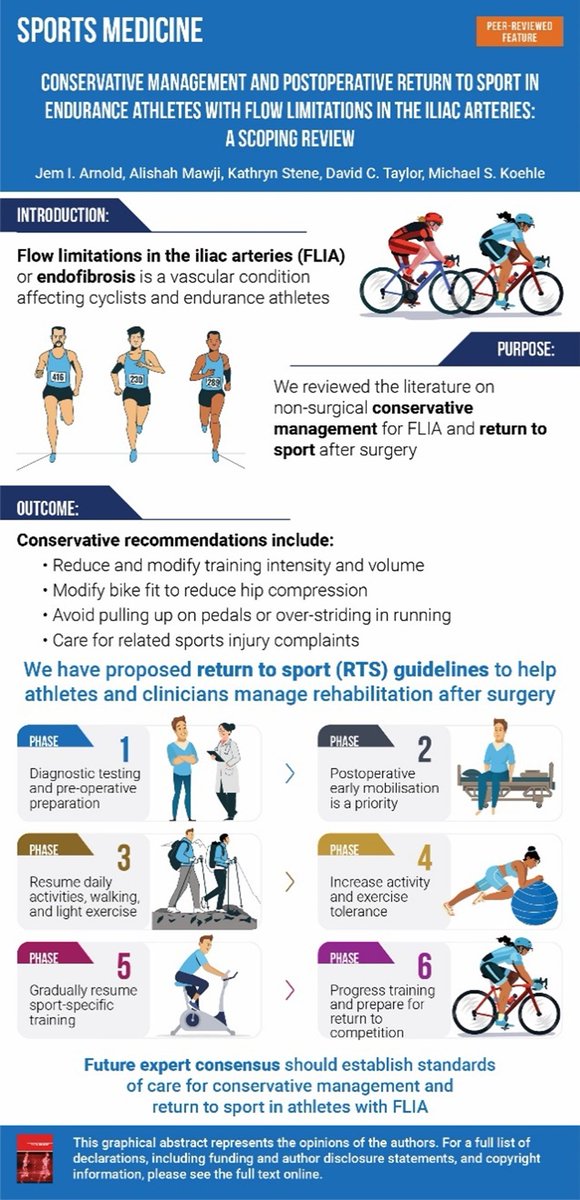
Just published from my (eventual) PhD thesis 🔖 Review of conservative treatment (CTx) for Flow Limitations in the Iliac Arteries (FLIA, endofibrosis) and proposal of Return to Sport (RTS) guidelines after surgery Here is what we learned🧵/14
Jem Arnold tweet media
English
7
20
116
27.8K
Johan Andersson
Johan Andersson@JohanTanman·
@ChrisMasterjohn @brady_h I also struggle with the textbook view that mitochondria is not a limiting factor, if increasing the quantity and/or quality change vo2max up even the slightest its a limiting factor in my view though maybe not the MOST limiting factor.
English
0
0
0
14
Chris Masterjohn
Chris Masterjohn@ChrisMasterjohn·
@brady_h I disagree with the conclusion here. This is totally inconsistent with mitochondria not being limiting. It’s consistent with mitochondria being limiting until they are increased enough that something else becomes limiting. If they weren’t limiting, doubling them would do nothing.
English
1
0
1
140
Brady Holmer
Brady Holmer@Brady_H·
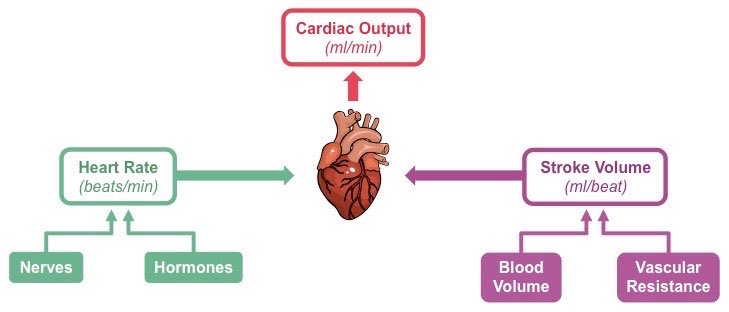
Maximal cardiac output The heart is responsible for pumping oxygen-rich blood to the working muscles during exercise. The amount of blood the heart can pump per minute is called cardiac output, and is the product of heart rate and stroke volume (how much blood our heart pumps with each beat). During exercise, the body's demand for oxygen increases, and the heart has to pump more blood to meet this demand. However, there are limits to how much blood the heart can pump. The primary factor explaining individual differences in VO2 max is maximal stroke volume, or how much blood our heart can pump out with each beat. Hence, the dominant mechanism for the increase in VO2 max with training has been proposed to be an increase in maximal cardiac output due to an increase in stroke volume. The heart becomes stronger and can deliver more blood with each beat.
Brady Holmer tweet media
English
2
1
35
7.1K
Johan Andersson
Johan Andersson@JohanTanman·
@AlmquistNicki Cant get my head around if it was the higher % of Vo2max or the total time spent >90% of Vo2max that gave the greatest improvements? that is not the same thing?
English
1
0
1
168
Jamie Langley
Jamie Langley@Jamie_langley1·
@DrTEHughes Yeah, the big difference here is Pogacar is pushing 280-320W for his "easy" rides. He isn't bumbling along at 100W.
English
1
0
1
558
Tom Hughes 💙
Tom Hughes 💙@DrTEHughes·
I was going to post about this interview. As I've said before, the Z2 training Pog uses (right at the top end, probably creeping into Z3) and doing it for a long long time is VERY different to bimbling along.
Escape Collective@EscapeCycling

Tadej Pogačar raised a few eyebrows when he told author Peter Attia that he does five hour rides at zone 2 which, for him, can be up to 340 watts. Alex Hunt checks in with a look at how that's possible and why Pogi is an outlier among even outliers. escapecollective.com/340-watts-in-z…


English
7
0
27
11.7K
Johan Andersson
Johan Andersson@JohanTanman·
@GBNT1952 @krassenstein Coming from Sweden where we have (almost) all of this the tweet is hilarious, it lists everything that a modern democraty should have/should aim for. Gun control shouldnt be a discussion, why should everyone be able to buy guns? Clean energy, yes that sounds very bad :)
English
0
0
1
48
Green Beret Nap Time
Green Beret Nap Time@GBNT1952·
Um, every single one of his policies are radically left. He believes in gun control, including bans on assault weapons. He believes in a transition to clean energy and was a proponent of the green new deal. He believes in forgiving student debt. He believes in raising the minimum wage. He believes in state run healthcare. He is a radical leftist, which is why you love him.
English
46
3
123
9.4K
Brian Krassenstein
Brian Krassenstein@krassenstein·
A Few things to know about Tim Walz, the possible future Vice President of the United States: - Born in Nebraska. - Married with 2 children. - Command Sergeant Major in the Army National Guard for 24 years. - High School Teacher and Football coach. - 6-Term US Representative. - 2-Term Governor of Minnesota (Re-elected in 2022) - Moderate Democrat Known for his ability to work across the aisle, Walz has a reputation for bipartisan collaboration. - Pro Business, Pro-balanced budget, Pro-farmer. He's the candidate that Trump feared the most because of his moderate policies and appeal to Independent voters in the Midwest.
English
3.9K
5.3K
24.5K
1.8M
Johan Andersson
Johan Andersson@JohanTanman·
@DrTEHughes @nealmcquaid I tend to disagre that its only time that differs :). Z3-work above LT1 in my experience often screws HRV more (than work below) and are for many more mentally taxing so also risks the continuity of training. "Special" thing with zone2 (and z1) is that you could stick with it.
English
1
0
0
57
Tom Hughes 💙
Tom Hughes 💙@DrTEHughes·
@nealmcquaid True. My argument is the difference between Z2 and Z3 in a 7 zone model is just time. The same goal could have easily been achieved with a slight increase in effort and considerably less time. It also adds to the narrative that there is something special about Z2.
English
2
0
3
165
Tom Hughes 💙
Tom Hughes 💙@DrTEHughes·
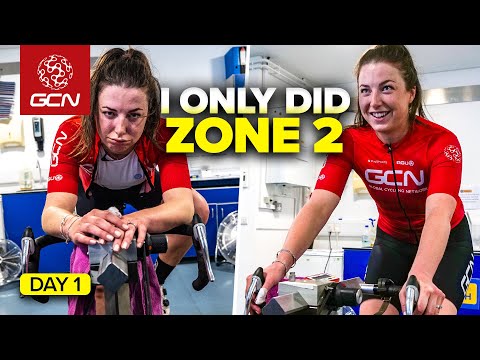
Person increases training volume and increases fitness.... Am I missing something here or is it now a case of tagging everything with Zone 2 for clicks? youtube.com/watch?v=9qFXEn…
YouTube video
YouTube
English
6
0
10
3.1K
Gordo Byrn
Gordo Byrn@feelthebyrn1·
@Alan_Couzens AC, Metcart the only option for the FatOx target or do you have an indirect assessment method for us? Thank you, G
English
3
0
28
23.8K
Jim
Jim@JimIngram·
@Alan_Couzens Alan, Please and Thank you - I like the concept but I just biked 2 1/2 hours for about 1,000 kCal. How long do I have to get the 10,000 kCal done?
English
2
0
3
2.5K
Alan Couzens
Alan Couzens@Alan_Couzens·
General work capacity: The ability to accomplish large amounts of work in a myriad of ways. If I give you a bike 🚴and ask you to do 10,000kCal of work, you can do it. If I give you a pair of shoes 👟, point you towards a mountainous hiking trail and say do 10,000kCal of work, you can do it. If I hand you a shovel and ask you to do 10,000kCal of work moving rocks 🪨, you can do it. That's 👆General Work Capacity.
English
13
7
188
51.5K
Johan Andersson
Johan Andersson@JohanTanman·
@chandlerscottPT I normally use lactate or/and Moxy and cap z2 at lowest lactate +0.3mmol or when smo2 is getring lower than maximal.
English
0
0
2
30
Chandler Scott
Chandler Scott@chandlerscottPT·
The main goal of fitness testing is to define the cap for each of the 5 endurance training zones. • Easy • Steady • Mod-hard • Fast • Max Here's how I test for and define my training zones using 3 tests and a HR monitor: When you first start endurance training you don't really need numbers. You can simply aim for each of the descriptions as a general effort. Once we do some testing, numbers allow us to add caps to each zone for training with HR. My approach to testing is to create an endurance profile using 3 tests: • Ramp test • 20 min FTP or race effort • Steady endurance efforts (to check decoupling) Using these tests we need minimal tech to understand your zones: • GPS watch • HR monitor • App to review data (Intervals is free) With all of this we can understand your triathlon training zones from a HR perspective. (I also use the same approach to dial in power and pace but this essay is going to focus on HR). Let's talk about how you can do the same. The primary goal is to identify the approximate cap of each zone so that you are getting "close enough" to see the benefits. For most athletes I am not concerned with being exact. Getting the overall adaptation from that domain is what I am after. Knowing this, each zone has a rough cap that we can estimate with the tests above: • Easy ➔ Decoupling <3.5% • Steady ➔ Decoupling <5% • Mod-hard ➔ HR at FTP/CP/CS • Fast ➔ HR at VO2max • Max ➔ Unlimited (sprints and strides) My preferred order of testing to find this info: 1. Ramp test 2. Decoupling 3. FTP testing (This post is not going to cover ALL the specifics of running each test - I'll write separate posts for each type of test if you want them). Ramp Test Basics involve slowly increasing the intensity of each stage until you reach a maximum. Try 6 minute stages (since this is best for lactate measures - if and when you decide to add this). What does this gain us? • HR at VO2 max (the last interval you can complete) • The upper range of fast zone • Rough idea where top of steady is (based on any decoupling) Once we have this max we can estimate where the endurance zones should be. This brings me to: Decoupling intervals Based on my last ramp test I assume the top of my endurance zone is around 130 bpm. So I would do 2 different sessions to clarify these zones (these sessions are nothing more than steady zone workouts). The more you repeat these the better the idea of your zones will be. 1. 15 min mini ramps (3x 15 mins with middle target being approx. the HR cap - 120/130/140) 15 min warm up, 15 min cooldown (75min session). 2. Steady session at HR cap (once I narrow down the split I will cap the whole session at that zone). After my workouts I am looking for under 3.5% for easy training and between 3.5-5% for steady training. Now for the upper zones. FTP or races The last number to narrow down is your threshold or the cap of mod-hard zone. This can be done by looking at race data (for distances that are around 60 min efforts) or by performing an FTP test (20 min all-out TT). I use Joe Friel's definitions around FTP for HR threshold and power/pace threshold, which is the average HR for the 20 min FTP test. This sets the cap for mod-hard training. Once you have finished all 3 tests you will now have a "good enough" idea of where your zones will lie. I will continually monitor the decoupling of my easy and steady zones to know when it might be time to retest. Similar to the upper zones. With repeat mod-hard intervals I will monitor if I can make it through all the intervals consistently. Here is a summary of my HR zone caps: • Easy ➔ Decoupling <3.5% • Steady ➔ Decoupling <5% • Mod-hard ➔ HR at FTP/CP/CS • Fast ➔ HR at VO2max • Max ➔ Unlimited (sprints and strides) This is my attempt at simplifying a ton of content and ideas around training zones and intensities. (I am not sure I have it right yet). Anything you would change with this approach?
English
2
1
4
1.1K
Toppfysik
Toppfysik@toppfysik2003·
Vid Toppfysiks kunskapsdelning mellan våra tränare (2024-02-27) gav vi oss på en diskussion om isometrisk maxstyrka utifrån forskningsartikeln "Activation of human quadriceps femoris during isometric, concentric, and eccentric contractions" (pubmed.ncbi.nlm.nih.gov/11717.... ⤵️
Svenska
2
2
2
265
Johan Andersson
Johan Andersson@JohanTanman·
@chandlerscottPT Good easy way of setting zones! I also use decoupling (in distance-coaching). I would cap decoupling even lower for easy though, depending of how you test it (include wu?) but I generelly see in tests no decoupling at all or very low <1% when going as easy as I want easy to be.
English
1
0
1
71