Josh English

1.7K posts

Josh English banner
Josh English

Josh English

@JoshSeriesAI

VP of Eng @ Chronicle Studios | ex-Google

SF Bay Area Katılım Şubat 2024
464 Takip Edilen327 Takipçiler
Sabitlenmiş Tweet
Josh English
Josh English@JoshSeriesAI·
“Was AI involved?” is already the wrong question for games. Modern development does not happen in a clean room. The real questions are where AI entered the pipeline, what shipped, who approved it, and whether the player experience depends on it. The industry does not need a purity test. It needs a vocabulary. @jengas/was-ai-involved-is-the-wrong-question-for-games-3e613619f9a5" target="_blank" rel="nofollow noopener">medium.com/@jengas/was-ai…
English
0
0
0
35
Josh English
Josh English@JoshSeriesAI·
@haider1 I asked it to do something stupid, and it (correctly) refused. I'm very impressed with this model
English
0
0
1
390
Haider.
Haider.@haider1·
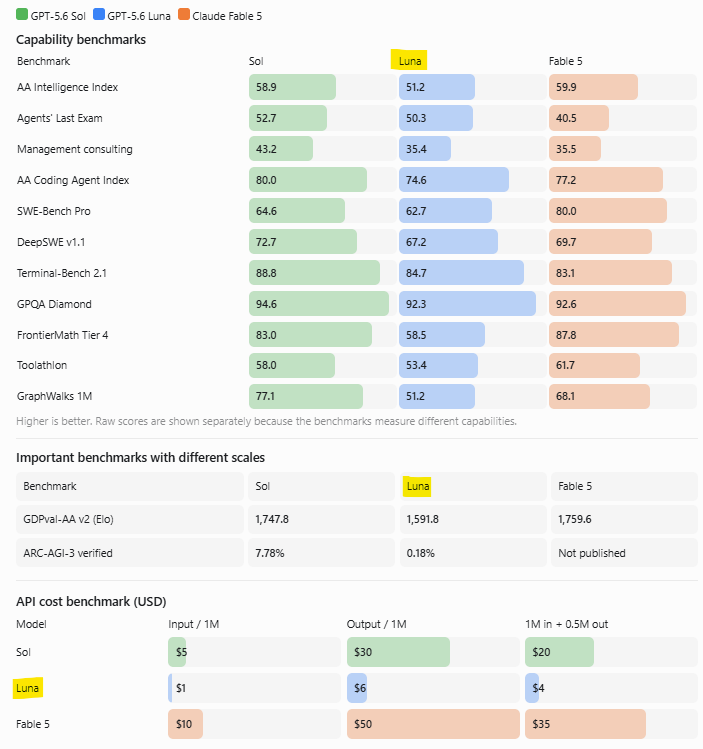
GPT-5.6 Luna deserves far more attention much smarter than 5.5, not a yes-man, and will actually correct you, and a major reason is that 5.6 Sol autonomously post-trained it so it is not just a smaller model, but its training was improved by a more powerful model, not only by human researchers
Haider. tweet media
English
40
32
608
59.8K
Josh English
Josh English@JoshSeriesAI·
@kimmonismus I love this model, but tokens seem to completely evaporate in just a few minutes
English
0
0
0
14
Josh English
Josh English@JoshSeriesAI·
Grok 4.5 dropped, so I gave it my one-shot test: build a self-contained Asteroids game in WebGL. It didn’t just reproduce Asteroids. It turned it into third-person combat around the ring of a gas giant, where you magnetically tether rocks, sling them into each other, and turn their mass into a weapon. The interesting benchmark is no longer whether a frontier model can make a game. It’s if it can find the game inside the prompt.
English
1
0
1
119
Brendan Mulligan
Brendan Mulligan@BrainEngineer·
@JoshSeriesAI @sammysintech Something tells me “let our customers have six beers and sit naked in a co-ed sauna with unrestricted access to the adjacent freezing sea” doesn’t read well on an SF permit
English
1
0
1
58
Sammy
Sammy@sammysintech·
We are going to see a huge rise in sauna experiences and related companies coming to SF. There’s a few in Canada popping up (new) and around the US that I think would do very well here. They are also often fully booked and well funded in the cities they are in. Back to basics and human connection.
English
13
0
42
4.2K
Brendan Mulligan
Brendan Mulligan@BrainEngineer·
@sammysintech Every time I’m drinking a beer at Löyly in Helsinki I think, “I’d kill for this in California” and, “oh my god the insurance costs in California would absolutely destroy this business”
Brendan Mulligan tweet media
English
1
0
4
182
Josh English
Josh English@JoshSeriesAI·
@Nerdrotics If they make less than $600M, it's clearly in loss territory. The question is: will that be counted as a loss?
English
0
0
0
7
Nerdrotic
Nerdrotic@Nerdrotics·
Will the Odyssey FLOP?
English
805
143
1.5K
133.3K
Josh English
Josh English@JoshSeriesAI·
@kimmonismus Optical memory is a cool idea, I haven't seen it really work in a frontier scenario yet
English
0
0
0
88
Chubby♨️
Chubby♨️@kimmonismus·
pxpipe is interesting because it turns dense text context into images to cut Claude Code costs. But the idea is not entirely new: DeepSeek explored something very similar with "optical context compression" end of 2025 (if you remember); rendering text as images so models can process long context more efficiently. DeepSeek treated it as a model/architecture problem. pxpipe treats it as an infrastructure hack: a local proxy that exploits the fact that frontier models can already read images well enough. That makes pxpipe less elegant, more lossy, and probably risky for exact strings, hashes, IDs, or code details. But still a cool idea and i really like the approach.
Michigan TypeScript@MiTypeScript

~60% Fable cost cut by transparently turning the code into an image and having the model OCR it. WILD idea. also hilarious. github.com/teamchong/pxpi…

English
34
19
303
36.8K
Josh English
Josh English@JoshSeriesAI·
@haider1 Is it exponential thinking or simply a lack of abundance mindset?
English
0
0
0
56
Haider.
Haider.@haider1·
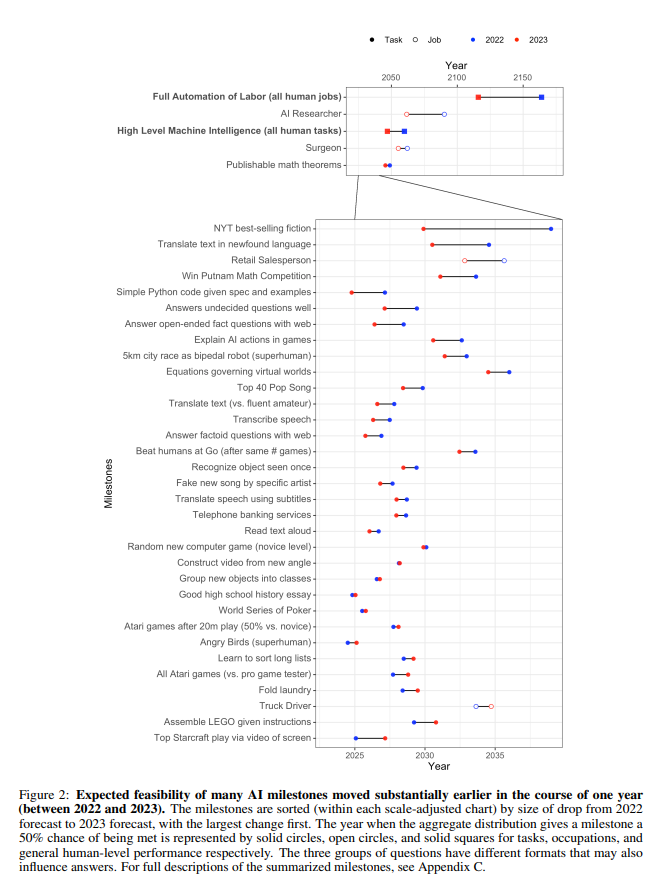
another example of how terrible humans are at understanding exponential progress in 2022, AI experts gave AI a 50% chance of proving publishable math theorems by around 2050 and winning the Putnam math competition by around 2033 LLMs did both this year
Haider. tweet media
English
20
46
353
22.3K
Josh English
Josh English@JoshSeriesAI·
@signulll culture is the arbiter of how technology is used, and X is the jury deliberating it in real time
English
0
0
0
14
signüll
signüll@signulll·
posting about culture is often more important than posting about technology because culture is where people decide what technology means. tech posts often explain what’s possible but culture posts decide what’s desirable, threatening, cringe, inevitable, or worth funding. when you marry the two well, it’s steroids for influence.. combined with this platform it’s the most potent worldview distribution machine ever built.
@levelsio@levelsio

People sometimes say "omg why you complain so much" "just focus on indiehacking bro" "stay in your lane" But X is really influential and people who create policy actually read it, especially if your posts take off You can just shitpost yourself to a better society!

English
31
12
330
45.7K
Bojan Tunguz
Bojan Tunguz@tunguz·
I saw the greatest minds of my generation get one-shotted by the AI psychosis.
English
131
76
1.3K
332.1K
Josh English
Josh English@JoshSeriesAI·
I've been testing frontier model performance with a one-shot Asteroids benchmark. Nate grabbed one of my test results and instantly made it online real-time multiplayer. The question of who can make entertainment with AI is obsolete. Now it's all about who has the best idea, and how fast can they get it playable with real people?
English
1
3
4
243
Josh English
Josh English@JoshSeriesAI·
@Devon_Eriksen_ Approaching the problem from lower in the stack strips away symbolic references (that are useful for humans) and optimizes for performance in a machine-centric way. Fascinating idea, especially given current model's verbosity bias
English
0
0
0
22
Devon Eriksen
Devon Eriksen@Devon_Eriksen_·
Okay, looks like we're going to need some Carmack-to-ordinary-mortal translation. So I'm going to take a few pages to explain what he said in a paragraph. When LLMs read code, they parse it as a linear stream of language nuggets. But computer languages are basically designed to describe a sort of tree-like structure of nested meanings called an "abstract syntax tree". An LLM can emulate an understanding of this by its trained ability to parse specific characteristics of the language, but that only goes so far due to the limitations of the model. Humans, by contrast, have the ability to actually construct pieces of the tree in our heads, giving us a much more exact understanding of code. But we're limited, because we're slower, especially in typing, and because we can remember fewer things at once. Carmack suggests that it might be worthwhile to train an AI type that reads abstract syntax trees directly. Such an AI would first invoke the front end of a language compiler, to parse code into an abstract syntax tree, just as in the process of compiling code to binary. It would then operate on the AST itself, rather than on human-readable code, and then use a reverse-compiler like process to turn its result back into code, for human reading and review. How transformer architectures might work on a tree is a little bit of a head-scratcher. I'd want to play with graph transformer type models, but I'm reluctant to say anything more than that off the cuff, because my knee-jerk approaches to the problem might turn out to be egregiously stupid. Would this be useful? I don't know, but Carmack thinks it might be worth a try. However, it might turn out that linear stream transformers have an emergent "understanding" of tree structure if you throw enough GPU cycles at the problem. A highly correlated question is how human brains code. I haven't looked deeply into this, but Grok claims that fMRI studies show that human coders do not primarily rely on language centers (Broca's area, etc) for coding, but show a lot of deep-brain activation. If it isn't hallucinating, Carmack may well be right.
John Carmack@ID_AA_Carmack

AI may move to directly generating binary code, but I suspect there are still advantages to reasoning in a different representation. Textual code is a flattening of an abstract syntax tree, and while LLMs produce tokens linearly, the prior context is only linearly connected by the relationship of the position embeddings, so I wonder if they could work more effectively if the position embeddings directly represented tree structures. Code could be “parsed” into the context instead of directly entered into it.

English
52
23
588
58.5K
Josh English
Josh English@JoshSeriesAI·
@pmarca the operative term in "...catch up soon" is: soon = several years
English
0
0
0
34
Josh English
Josh English@JoshSeriesAI·
@pmarca So many good things from the 90s aren't around anymore
English
0
0
0
18
Marc Andreessen 🇺🇸
You kids can’t possibly imagine what WIRED Magazine used to be.
Marc Andreessen 🇺🇸 tweet media
English
386
291
10.2K
310.7K
Josh English
Josh English@JoshSeriesAI·
Was AI involved in making this game? Of course it was. Modern game development already happens inside an AI-saturated toolchain: search, email, documents, spreadsheets, code assistants, asset tools, localization pipelines, analytics, and even the game engines themselves. No serious studio is building clean rooms where developers are forbidden from using modern search, productivity software, IDEs, or engine tooling. So tagging a game on Steam does not reflect reality. Instead of asking if AI touched the game, the better question is where AI entered the chain, what it produced, whether that output shipped, who approved it, and whether the player experience depends on it. An AI-assisted workflow is not the same as AI-generated shipped content. AI-generated shipped content is not the same as live AI runtime generation. And live AI runtime generation is not the same as building an entire game around AI as a design pillar. Those are different creative, legal, ethical, and commercial questions. We do not need AI disclosure. Because “was AI involved?” is already obsolete. Of course it was.
English
0
0
3
77
Andrew Curran
Andrew Curran@AndrewCurran_·
@IamEmily2050 If the rumors are true Google has had a version of Veo that could gen 20 sec+ clips with better quality for a very long time now, but didn't want to serve it due to cost. But yes, they intentionally slowed down and it looks like bytedance is going to benefit from it.
English
5
3
109
4.3K
Emily
Emily@IamEmily2050·
The people who decided to slow down the development of image and video models in the West because of Hollywood and backlash from some policymakers will pay the highest price in the generative AI era. History will not be kind to you, and your excuses in the future will not even matter.
English
48
17
288
18.7K
Beff (e/acc)
Beff (e/acc)@beffjezos·
In my experience at big G, nothing will piss off leaders as much as actually shipping something fast.
Justin Poehnelt@JPoehnelt

Two months ago I was fired by Google for creating the Google Workspace CLI. It went viral, hit #1 on Hacker News, gained thousands of GitHub stars and many thousands of actual users in just a couple days. It was an incredible, confusing journey, from directors and leaders asking what they could learn from the tool to getting grilled by legal about why the Google logo and brand colors are on the Google Workspace GitHub code repositories. I think the cause was that Workspace and certain leaders (and projects) were afraid of being disrupted. But the fear wasn't specific to my CLI, it was a broader fear in what agents meant for Workspace. Either way, the irony of my termination was the announcement at Google Cloud Next two days before I was fired that an official Workspace CLI was coming. I want this out there because it is easier for me to explain my story and it is an experience I want to fully own. It's also part of my healing. Nearly 7 years at Google was an incredible opportunity for me and I was fortunate to have wonderful teammates and a manager that fully supported me through these last few months. Thank you.


English
21
16
501
31.6K
Josh English
Josh English@JoshSeriesAI·
@tunguz It directly (out)competed with Google products, q.e.d.
English
0
0
0
290
Bojan Tunguz
Bojan Tunguz@tunguz·
Yeah, Big Tech doesn’t like it when you take initiative. Not one but. And if you tweet about it you are screwed.
Justin Poehnelt@JPoehnelt

Two months ago I was fired by Google for creating the Google Workspace CLI. It went viral, hit #1 on Hacker News, gained thousands of GitHub stars and many thousands of actual users in just a couple days. It was an incredible, confusing journey, from directors and leaders asking what they could learn from the tool to getting grilled by legal about why the Google logo and brand colors are on the Google Workspace GitHub code repositories. I think the cause was that Workspace and certain leaders (and projects) were afraid of being disrupted. But the fear wasn't specific to my CLI, it was a broader fear in what agents meant for Workspace. Either way, the irony of my termination was the announcement at Google Cloud Next two days before I was fired that an official Workspace CLI was coming. I want this out there because it is easier for me to explain my story and it is an experience I want to fully own. It's also part of my healing. Nearly 7 years at Google was an incredible opportunity for me and I was fortunate to have wonderful teammates and a manager that fully supported me through these last few months. Thank you.

English
4
8
355
48.8K