Junmo Kang

92 posts

Junmo Kang

Junmo Kang

@JunmoKang

PhD student @GeorgiaTech working on NLP | Research intern @MITIBMLab

Cambridge, MA Katılım Ekim 2021
185 Takip Edilen211 Takipçiler
Junmo Kang retweetledi
Jungsoo Park
Jungsoo Park@jungsoo___park·
🚨 Just Out Can LLMs extract experimental data about themselves from scientific literature to improve understanding of their behavior? We propose a semi-automated approach for large-scale, continuously updatable meta-analysis to uncover intriguing behaviors in frontier LLMs. 🧵
Jungsoo Park tweet media
English
1
11
41
4.6K
Junmo Kang retweetledi
Mohit Raghavendra
Mohit Raghavendra@mohit_r9a·
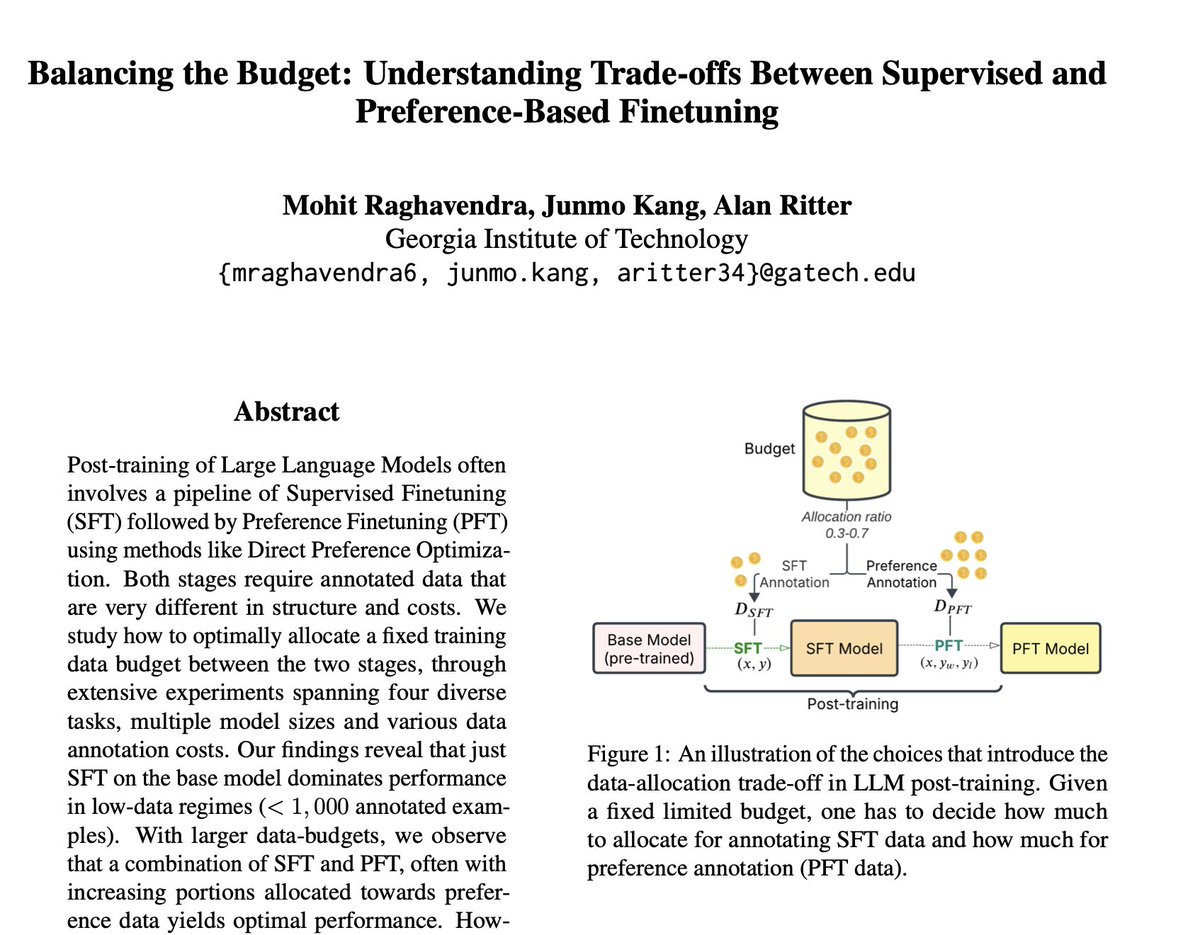
🚨Just out Targeted data curation for SFT and RLHF is a significant cost factor 💰for improving LLM performance during post-training. How should you allocate your data annotation budgets between SFT and Preference Data? We ran 1000+ experiments to find out! 1/7
Mohit Raghavendra tweet media
English
2
30
141
16.7K
Junmo Kang retweetledi
Ruohao Guo
Ruohao Guo@GuoOctavia·
Ever wondered if style lexicons still play a role in the era of LLMs? 🤔 We tested 13 established and 63 novel language styles across different LLMs. 🧠✨ It turns out lexicons are still crucial for style understanding! But how can we better leverage this lexical knowledge? Our approach: meta-tuning LLMs to leverage lexical knowledge for generalizable language style understanding. Check out our latest work at Main of #ACL2024NLP! 🚀 arxiv.org/abs/2305.14592 @mlatgt @ICatGT
Ruohao Guo tweet media
English
1
9
29
6.3K
Stephen Bach
Stephen Bach@stevebach·
We just released Bonito 🐟, an open-source model that converts your raw, unannotated data into synthetic instruction tuning datasets. With it, you can easily create a specialized LLM for your proprietary and private data! (1/n) github.com/BatsResearch/b…
Stephen Bach tweet media
English
52
144
627
77K
Junmo Kang retweetledi
Anna Rogers
Anna Rogers@annargrs·
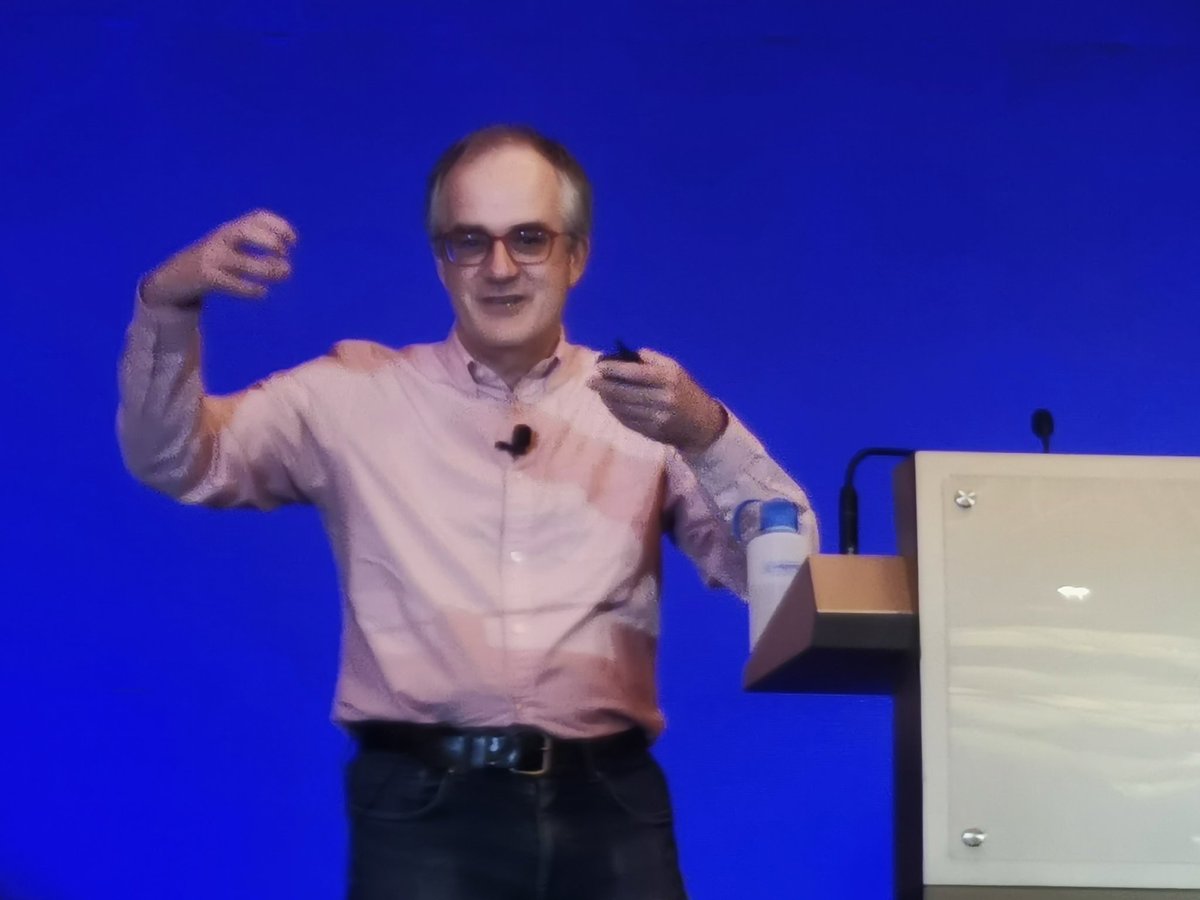
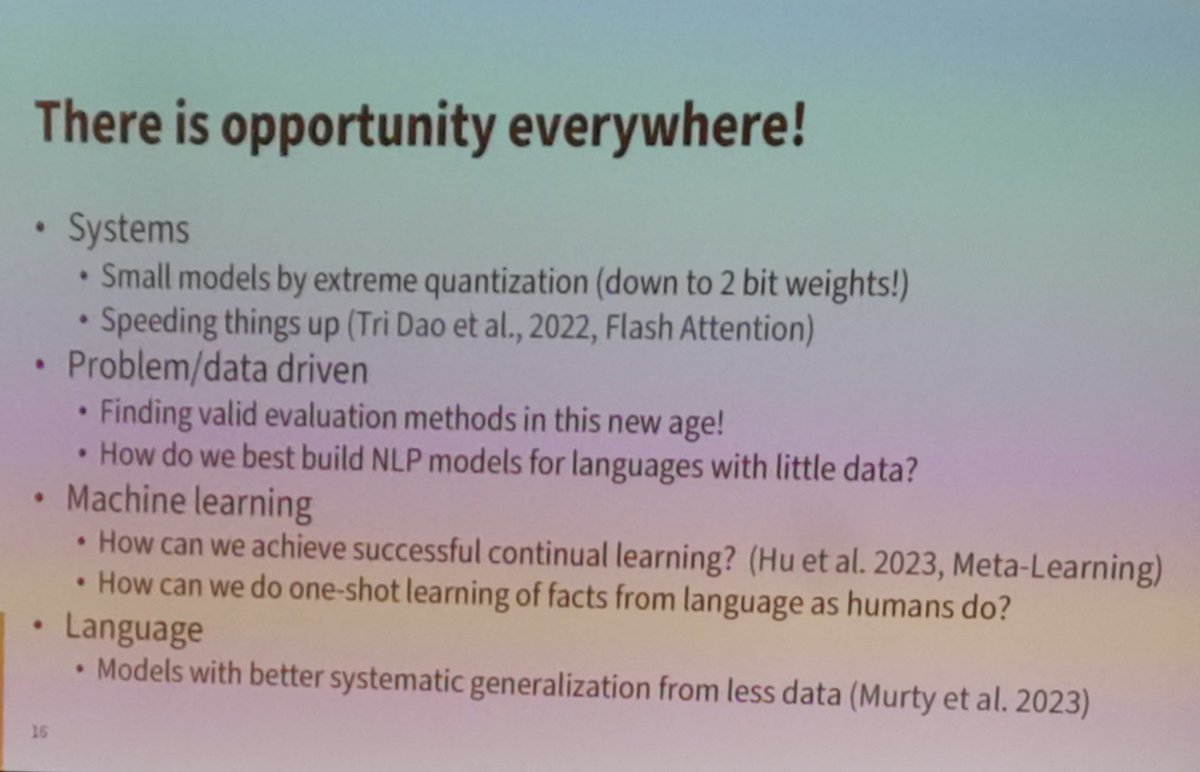
@chrmanning at #EMNLP2023 to #NLProc PhD students, who are having an existential crisis over LLMs: Aeronautics students do not build Boeings for their PhD theses. They do smaller models - and still make meaningful contributions. There's plenty of such opportunities for us too.
Anna Rogers tweet mediaAnna Rogers tweet media
English
4
74
376
45.7K
Junmo Kang retweetledi
Fan Bai
Fan Bai@loadingfan·
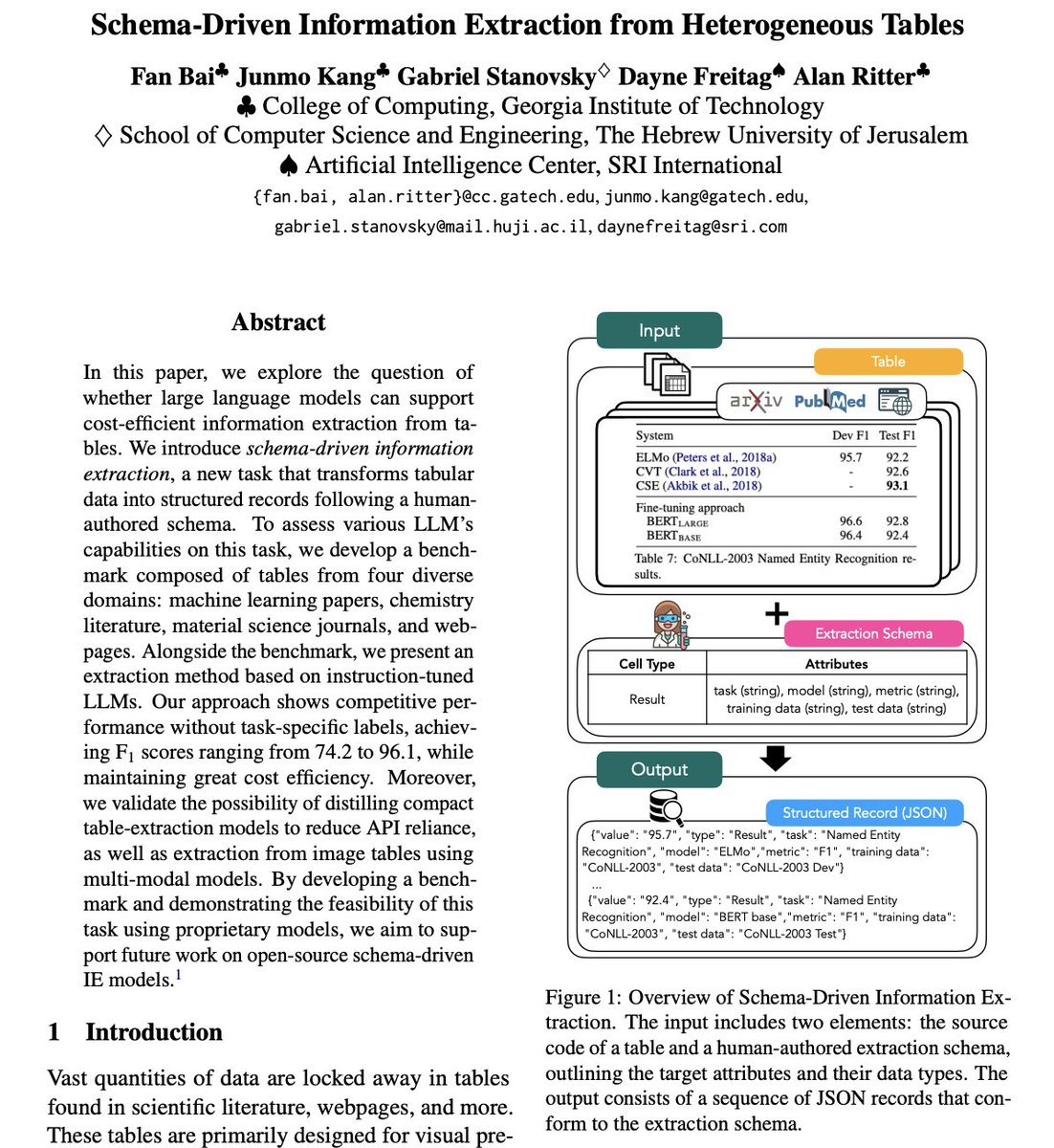
Struggling to sift through endless tables and lengthy webpages for useful information? 👉Checkout our paper “Schema-Driven Information Extraction from Heterogeneous Tables” to see how LLMs are revolutionizing this process! 🔗arXiv: arxiv.org/abs/2305.14336 @ICatGT @mlatgt
Fan Bai tweet media
English
1
8
24
3K
Junmo Kang retweetledi
Yao Dou
Yao Dou@Yaooo01·
Ever wondered “Am I oversharing on social media?”, and worried about privacy risks? In our new paper, we use language models to pinpoint self-disclosures and provide diverse abstractions for users to choose from. All of these are backed and motivated by a real-world user study!
Yao Dou tweet media
English
1
4
38
29.9K
James Smith
James Smith@jamessealesmith·
Defended my PhD today!!! Thank you to everyone who supported me along the way, especially my advisor @zsoltkira for putting up with me trying to sneak pictures of my dog into every publication! I'll be joining @Samsung_RA next month as a research scientist! 🥳
James Smith tweet media
English
17
3
153
10.8K
Junmo Kang retweetledi
Carlos E. Perez
Carlos E. Perez@IntuitMachine·
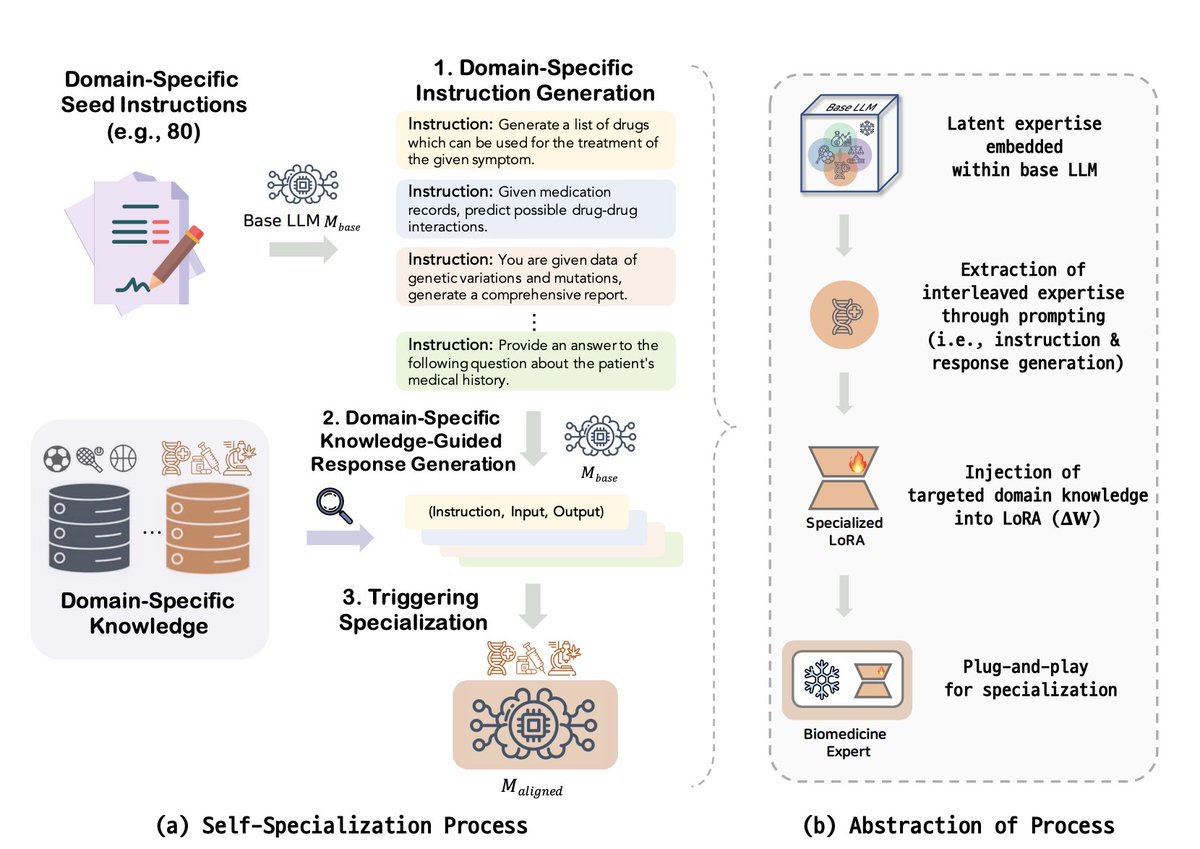
Self-specialization is crucially important for the ongoing development and progress of large language models (LLMs) for the following key reasons: Expertise in Niche Domains - As LLMs are applied to more specialized domains like biomedicine, law, etc., uncovering domain expertise is critical. Self-specialization provides an efficient way to carve out niche expertise from generalist LLMs. Data Efficiency - Acquiring expert annotations is challenging. Self-specialization only needs a handful of seeds, enabling domain specialization with minimal human involvement. This is far more practical than relying solely on manual data. Parameter Efficiency - Compact specialization modules can be overlaid on top of a shared base LLM, avoiding redundant parameters for each domain. This allows serving multiple expert models efficiently. Adaptability - The self-supervised approach inherently adapts the LLM to new domains by generating tailored data. This is more flexible than pre-defined training objectives. Scalability - By having LLMs self-generate data, self-specialization removes the training data bottleneck. This enables scaling to new domains easily without manual data collection. In summary, self-specialization essentially provides a pathway to extract specialized knowledge in an adaptable, scalable, and extremely efficient manner. This will be a critical capability as we push LLMs into more and more expert domains while needing to maintain versatility and avoid exponentially growing data and parameter needs. Unlocking latent domain expertise will be key, and self-specialization offers a highly promising approach to make this feasible.
Carlos E. Perez tweet media
English
6
57
322
105.5K