
Karl Pfleger

5.4K posts

Karl Pfleger

Karl Pfleger

@KarlPfleger

Founder of nonprofit https://t.co/3YFYC8TFCl Investor in rejuvenation startups: portfolio on LinkedIn Organizer of https://t.co/kzltxwwU9p AI/ML Stanford PhD & ex-Google

San Francisco Katılım Mart 2020
260 Takip Edilen5.6K Takipçiler
Sabitlenmiş Tweet
Karl Pfleger
Karl Pfleger@KarlPfleger·
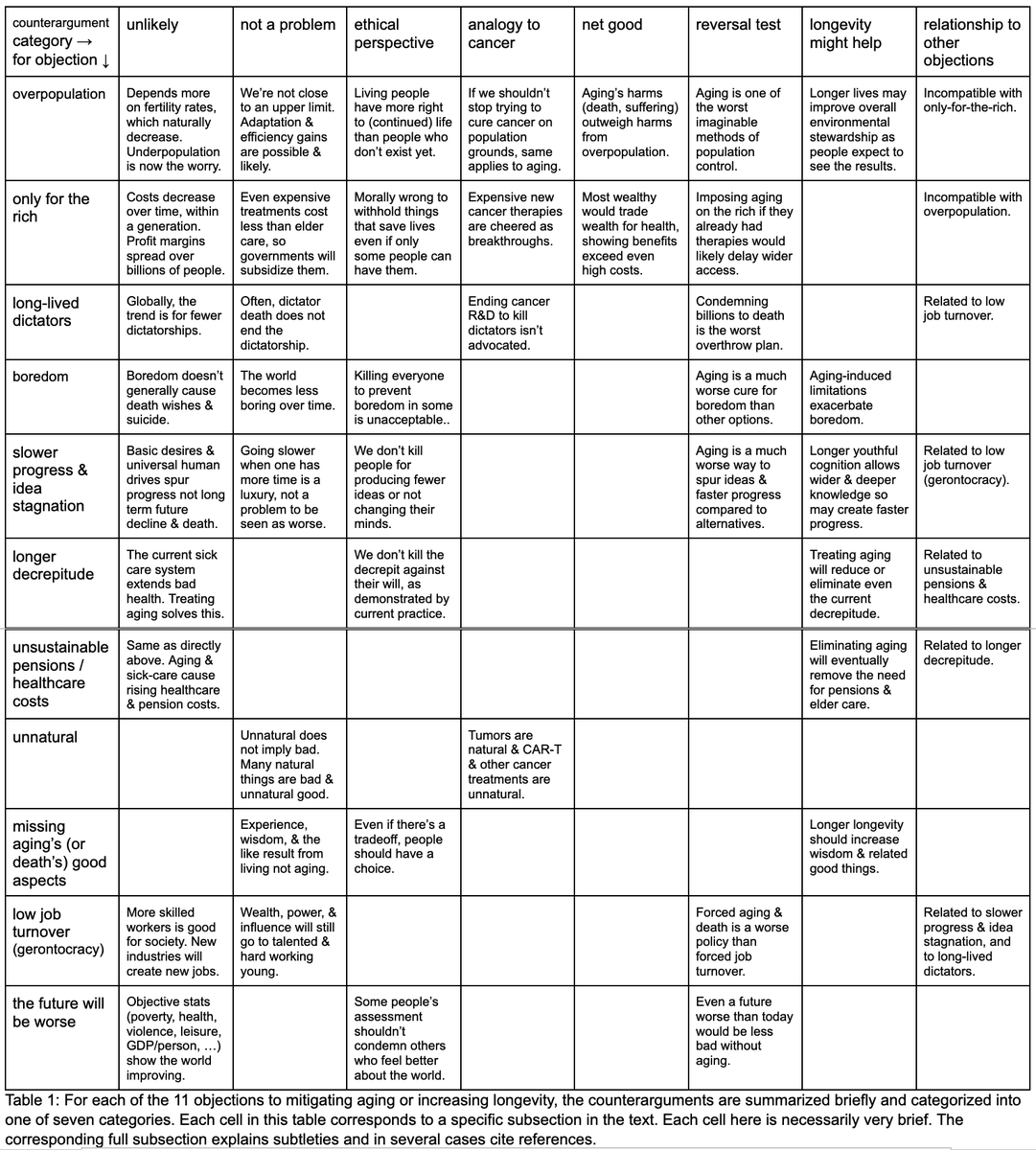
Why is it vital for humanity to fight aging? Why are common longevity worries not big problems? My new review: zenodo.org/records/188830… a preprint of a book chapter for the upcoming radical longevity book that many in the field have contributed to.
Karl Pfleger tweet media
English
9
11
57
9.5K
Karl Pfleger
Karl Pfleger@KarlPfleger·
Agree. A4LI lobbies for both. The multi-disease therapeutic designation (a4li.org/wp-content/upl…) will unlock more VC $ for biotech & trials. The disease burden framework for NIH funding (a4li.org/wp-content/upl…) will help fix the prob that basic science funding isn't aligned with disease burden to society. Write to your lawmakers in the House & Senate advocating for these proposals, explaining why aging is so bad but also feasible to treat, explaining that treatments for aging won't cause other problems in society (ref zenodo.org/records/188830… if you like), & encouraging the lawmaker to join the bipartisan Longevity Science Caucus, & to come to next year's A4LI H-Span summit. Dylan, Brenda, myself, & others are very happy to talk to lawmakers who are interested in knowing more or have questions.
English
0
1
2
139
Nathan of Pennsylvania
Nathan of Pennsylvania@JerichoSionNat·
@KarlPfleger @BrackLab @irat1onal Yes, I chose the wrong term. In any case, I believe that significantly greater funding needs to be allocated, along two parallel tracks: for fundamental research and for ongoing pharmacological studies.
English
1
0
0
38
Ira S. Pastor
Ira S. Pastor@irat1onal·
Where Did the "Moonshot" Go??? Remember when longevity conferences were full of slides about 150-year lifespans? when investors were told aging was the greatest opportunity in medical history? promises about pending "Longevity Escape Velocity?" Fast forward... Now we're celebrating regulatory pathways designed to measure whether an older adult can function a bit better. Again...That's valuable. It's also called GERIATRICS. Somewhere along the way, "curing aging" became "optimizing decline." That's a much smaller ambition...... @kaimicahmills @elimohamad
Longevity Technology@LongevityTech

Standard disease frameworks are meeting their match as pioneers lean on functional metrics and pragmatic stepping stone indications. vist.ly/5aq23 #longevity #geroscience #fda #clinicaltrials #regulation @ARPA_H @xprize

English
5
1
20
1.3K
Karl Pfleger
Karl Pfleger@KarlPfleger·
Vicious circle isn't quite the right phrase. That's usually used for a feedback loop of increasing badness. This is a bootstrapping problem, where an one needs to get a process with positive feedback going. In other fields this was solved by just waiting a long time (eg AI) or misplaced overconfidence/hype (eg cancer) where the government was convinced by unrealistic promises. Here the promise is greater than a cure for cancer and the prospects look better than the reality of how they should have looked for cancer in 1970, so governments should shift massive amounts of money to aging/longevity right away.
English
2
0
0
36
Karl Pfleger
Karl Pfleger@KarlPfleger·
Agree & disagree. Agree: Congrats yes this is the 1st good study I've seen w/ credible evidence of long-lived senescent cells being beneficial in any way & truly being somewhat senescent in some of the normal meaningful ways that make them diff vs just post-mitotic cells. But... (a) Given the context of ongoing debate in the field about intermittent ablation of senescent cells (or subsets of SnCs) in aging organisms (not least inc. skepticism from you in many papers & posts in recent years), it's frustrating that after finding this type of cell & finding evidence they persist into adulthood, the authors decided not to test ablating them in adult organisms (which seems like the obvious study to me) but rather to ablate them in gestation. How is this useful? No one is proposing to ablate SnCs therapeutically during gestation, so what does doing so tell us? Demonstration of harm from ablation during gestation is meaningless w.r.t. modern senolytics research & no reason for caution from ablating them post-adulthood let alone in late adulthood. (b) This is just a targeting issue. These cells are sort of pseudo-senescent. They're specialized and unusually distinct from normal post mitotic cells but also quite distinct from most common SnCs that studies have found to be pathological in aging. Targeting methods to distinguish SnCs from normal cells found so far may not be the ideal targeting methods to spare these useful cells but that doesn't mean ablating the pathological SnCs is misguided. The value of this work is highlighting this targeting issue & suggesting areas to look for negative side effects from senolytics. (c) Studies using even early targeting methods such as both p16ink4 & 3MR transgenic mouse studies and D+Q studies showed meaningful net benefit from periodic ablation despite that they may have killed some of these beneficial cells. No specific blood-CSF barrier harmful effects were noticeable enough to be obvious to the researchers in those studies. Thus suggests that senescent cells are still a good therapeutic target even if there are some long-lived good senescent cells.
English
0
0
2
116
Karl Pfleger
Karl Pfleger@KarlPfleger·
@rlambertII Based on everything so far it seems hard to compute an NNT of how many people would need to get PCSK9i + statins vs (LDL achieved equivalent) PCSK9i alone to prevent 1 death from all causes. Looks like wide confidence interval on any estimates but the #s would be pretty high.
English
0
0
0
23
Karl Pfleger
Karl Pfleger@KarlPfleger·
@rlambertII Cancer take home summary of that papaer seems to be that large RCTs needed before statins are prescribed for cancer treatment or prevention. Lots of caveats to the studies, some evidence of inducing malignancy in addition to reducing cancer. Issue remains controversial.
English
1
0
0
18
Karl Pfleger
Karl Pfleger@KarlPfleger·
What are the best reasons to use a statin in combo w/ PCSK9 drugs instead of PCSK9 only (to same target LDL)? Cost. Oral convenience, partly gone once Enlicitide approved. Longer safety record, but arguably offset by overall data showing more side effects vs ~none. What else?
Karl Pfleger tweet media
English
4
1
9
1.2K
Milan Kohút
Milan Kohút@pactechnologies·
@KarlPfleger @rand_longevity It is not only about overpopulation. If people live dramatically longer without completely redesigning retirement, employment and wealth distribution, who is supposed to support an ever growing population of retirees?
English
1
0
0
13
Milan Kohút
Milan Kohút@pactechnologies·
@rand_longevity Yes, that would be great, right up until you start thinking about what it would do to population size over time.
English
3
0
2
110
Karl Pfleger
Karl Pfleger@KarlPfleger·
Okay, so statin anti-cancer effects is a potential reason to prefer to include them over just PCSK9 drugs. Great, there's a reasonable answer to the original question, but how good of an answer, ie how strong is that reason? Is this "reported to have" quantified by large statistically trustworthy data anywhere? How often are statins prescribed to people with low cholesterol purely for their anti-cancer effects? If never, then why not? If never, then why is a person with low-cholesterol from taking PCSK9 drugs alone different from a person with low-cholesterol from healthy lifestyle?
English
1
0
0
40
Robert W. Lambert
Robert W. Lambert@rlambertII·
@KarlPfleger That article also notes that, "Statins are reported to have anti-inflammatory and antitumor effects (statin-associated pleiotrophy). Basic research suggests that statins cause pro-apoptotic, growth-inhibitory, and pro-differentiation effects in various malignancies."
English
1
0
0
28
Karl Pfleger
Karl Pfleger@KarlPfleger·
@irat1onal PS There are much better examples of dilution of the word longevity away from our shared goals instead of PROSPR. Irksome example of today: "Longevity Real Estate" longevityinvestorsnews.ch/post/longevity… May help some ppl's health degrade a bit slower but not part of speeding achievement of LEV
English
0
0
0
42
Karl Pfleger
Karl Pfleger@KarlPfleger·
@irat1onal We agree compensating for aging w/o fixing underlying aging pathology just to give old people a bit more health/pep is not the goal. It's not ARPA-H's or PROSPR's goal either. IC can still be a useful tool in a long road of steps to speed the field towards our shared LEV goal.
English
1
0
0
49
Karl Pfleger
Karl Pfleger@KarlPfleger·
@irat1onal There's an irony to your partly circular points: 1st post disparaged cheering changing regulatory systems & improving endpoints. Then you worried development/trials take too long. This slowness IS a regulatory & endpoint issue. Those are precisely where change is sorely needed.
English
1
0
2
80
Ira S. Pastor
Ira S. Pastor@irat1onal·
Here's what worries me.... They say Intrinsic Capacity is just the "first indication" and these drugs will eventually be approved for aging itself. Drug development takes years. Label expansion takes years. New Phase III trials take years. Patents expire. Exclusivity disappears. Companies get acquired. Programs get shelved. Management teams change. Investors rotate.....etc. History says most biotech companies never make it to Plan B. So if their first approval is "maintains Intrinsic Capacity" for many companies...that will be their finish line.
English
1
0
0
105
Karl Pfleger retweetledi
Karl Pfleger
Karl Pfleger@KarlPfleger·
My goal is fully curing aging so I share your distaste of settling for tiny improvements that could be labeled geriatrics, but disparaging regulatory changes is wrongheaded. They're one of the highest leverage wins we can try for at the moment to accelerate the field. Detalis: I agree 💯 that too many people are spouting absurdly wimpy goals. Eg I pushed back on @biogerontology when he posted on LinkedIn recently about the goal of 1 extra year of healthspan. That 1 year is in the noise & not good enough. Even 10yrs (eg Retro's oft-repeated goal) is too conservative. That's within the 10-20yr variation in human lifespan due to lifestyle choices. But faster regulatory pathways will unlock vast VC $. That's why @theA4LI is pushing a multi-disease designation to give breakthrough status to therapies that mitigate multiple different diseases. It's the direct regulatory embodiment of the geroscience hypothesis. It makes no sense that today society's regulatory rules don't incentivize therapies that treat multiple diverse diseases. We happen upon them from time to time (eg GLP1s) but the regulatory system should incentivize them. Right now AI sucks a large fraction of the VC money. Partly that's due to clearer paths to profitability via less regulation. This is why many of us just lobbied lawmakers staffers (eg legislative consultants) to add multi-disease framework language to the Prescription Drug User Fee Act (PDUFA) re-authorization that congress will vote on later this year. A4LI whitepaper is here: a4li.org/wp-content/upl… My group (one of many A4LI organized last week) visited the offices of & talked to staffers of 3 senators & 1 member of the US house. This would be a meaningful change but is one of the few things in any area that is actually politically feasible since it requires congress to allocate no money & is not a partisan issue. XPrize doesn't deserve scorn either. Even Aubrey was involved in early designs of what the goals would be. 10 or 20 year reversal across 3 widely different functional areas will not be easy to achieve with just mild geriatrics therapies. cc @j_n_justice And ARPA-H certainly doesn't deserve scorn. PROSPR might be the most important $100+million spent on the way to eventual trustworthy surrogate endpoints that could vastly speed up evaluation of true effects on aging. Our long lifespans is a real barrier to making progress quickly rather than only on generational timeframes. cc @BrackLab And ARPA-H more broadly: thank goodness it exists(!) w/ multiple aging-related programs (& seeking more PMs & programs in the area) in the face of all the NIH cuts & terrible <1% of funding NIH spends on basic aging research. It's true there is some danger that certain evaluation metrics, including maybe intrinsic capacity & maybe the XPrize criteria, create an optimization slope doesn't point straight to full cure for aging, but just getting the vast majority of the public on board with the idea of treating aging itself rather than it's downstream diseases individually would be a huge mental shift that is almost certainly a necessary condition for speeding up real progress. The field is under-resourced by at least a factor of 10 & making this mental shift in the minds of the broader public & thus of lawmakers is the most important thing in the field right now.
English
3
1
18
554
Karl Pfleger
Karl Pfleger@KarlPfleger·
@SimonSikorskiMD Article doesn't discuss 3rd party test sites eg ConsumerLab that test many supplements for purity & label accuracy. Many Creatine products pass their tests. What's wrong w/ those? Agree no long-term data on >~2g/d. I push back on advocates of 5-20g/d: x.com/KarlPfleger/st…
Karl Pfleger@KarlPfleger

@DrJesseMorse Normal creatine intake from diet is 1-2g/day. Vegans make 1-2g/day internally if they don't get it from diet. What data do you think best justifies going 7.5-15x this normal physiological dose? I've only seen data on short-term endpoints, not long-term health endpoints.

English
0
0
0
80
Karl Pfleger
Karl Pfleger@KarlPfleger·
@AmmousMD Article doesn't discuss 3rd party test sites eg ConsumerLab that test many supplements for purity & label accuracy. Many Creatine products pass their tests. What's wrong w/ those? Agree no long-term data on >~2g/d. I push back on advoces of 5-20g/d. Eg: x.com/KarlPfleger/st…
Karl Pfleger@KarlPfleger

@DrJesseMorse Normal creatine intake from diet is 1-2g/day. Vegans make 1-2g/day internally if they don't get it from diet. What data do you think best justifies going 7.5-15x this normal physiological dose? I've only seen data on short-term endpoints, not long-term health endpoints.

English
0
0
2
215
Karl Pfleger
Karl Pfleger@KarlPfleger·
Highlighted part says they reduce stroke & other cardio events but nothing else. The stroke & other events mostly due to the cholesterol lowering. Most big ph3 trials show the LDL lowering explains most of MACE reduction. The PCSK9 drugs give as much LDL lowering as you want. So seems like nothing to see here w.r.t. original question.
English
1
0
0
35
Karl Pfleger
Karl Pfleger@KarlPfleger·
@NodiatisDotCom Who's a statin pusher? The whole point of the post is to suggest that statins can soon be dropped in favor of just using PCSK9 inhibition. It's very clear that oral convenience is a real thing. People want a daily pill more than injections, for LDL lowering, obesity drugs, etc.
English
0
0
1
30
Nodiatis
Nodiatis@NodiatisDotCom·
@KarlPfleger A statin pusher using the phrase "Oral convenience" ...why am I not surprised?
English
1
0
0
50
Karl Pfleger
Karl Pfleger@KarlPfleger·
Hadn't heard the klotho connection before, so glad I asked. Data on klotho is suggestive but this is far from a slam dunk: These studies you cite are in mice only. Need human data showing the connection. Also, more direct ways to upregulate klotho also still only have preclinical data not human efficacy data (no companies pursuing klotho targets have reached phase 3 yet, showing good phase 2 efficacy data). So the possibility of benefit in vivo in humans has to be weighed against statins negative side effects. My guess is we won't have good data in humans on statins having non-cholesterol mediated benefit before some of the companies targeting more direct klotho targeting bring their therapies to market, making it more likely that PCSK9 inhibitors + these more direct klotho therapies will be a better combination for those who need the klotho piece too.
English
0
0
0
39
Stjepan
Stjepan@StjepanZRPavic·
@KarlPfleger @VraserX It's easy to talk here on X ,, but does anyone fund research. Everyone wants to have already done results on the plate , all work done with profit also , nobody wants to invest money into developing. There are many smart people ,but guess what, they need to eat
English
1
0
0
20
VraserX e/acc
VraserX e/acc@VraserX·
Some people genuinely can’t process this: I’m not afraid of death. I’m disgusted by aging. There’s a difference. I want AI and science to cure aging and reverse it. Not to become immortal. To stop pretending decay is noble.
VraserX e/acc tweet media
English
41
19
95
4.7K