

Kevin Jenkins
521 posts
Kevin Jenkins
@KevJenkins1
Whoever learns fastest wins, I love learning
Tampa, FL Katılım Haziran 2012
2.8K Takip Edilen286 Takipçiler

I obviously love crypto and think “alts” will eventually become core pieces of our economy in the future. But the current crypto hedge fund design needs a makeover. There are probably 5 firms with $500m in liquid token strategies. The majority are struggling to raise assets or deliver consistent performance (not just a monthly pop) which is frustrating for all stakeholders (retail, VCs, hedge funds, and LPs).
Become a true hedge fund . Win over allocators with a dynamic multi-asset alpha generating machine. Cross-sell them into a dedicated liquid token strategy when you’ve proven an ability to deliver alpha and the alts market is structurally capable of growth.
This is the way. My alt bags depend on it.
English
Tying this back to liquid token funds.
Liquid token funds have learned their lesson. They are not going to buy alts in this current regime or they are destined for underperformance. Trying to catch emerging narratives in size and with a consideration of liquidity is a losers game. And trying to do things correctly by allocating to projects with good fundamentals won’t work as more often than not these projects fail to catch a sustainable bid unless there is material narrative momentum (aka retail hype).
Better to just hold BTC and SOL as the majority of the portfolio. A SOL ETF creates a new variable here as well to keep an eye on.
Something needs to change for alts to be viable. Maybe turning on the fee switch (aka value accrual + distribution) and proper token regulatory clarity would give institutions comfort to own assets themselves but until then I don’t know where the net-new buyer of alts will come from. Especially with VCs needing to unload their bags thus creating sell pressure.
English
Kevin Jenkins retweetledi

Blockchain adoption is broken. It’s time for a new model.
@santiagoroel is launching a custom Avalanche L1 to bring businesses on-chain—not through speculation, but through acquisition & transformation.
Here’s how @Inversion_Cap is making it happen👇
avax.network/blog/inversion…
English
@elonmusk @realDonaldTrump Already putting the efficiency in DOGE
English

This shows how much your voice matters!
And having a President like @realDonaldTrump means that your voice is finally heard.
Elon Musk@elonmusk
Yesterday’s bill vs today’s bill 😂
English
Kevin Jenkins retweetledi

@vaneckpk @fundstrat Yep, just finished and had the same thought. My first initial thought is memcoins are about to become an even larger portion of the asset class
English

Loved this episode with @fundstrat
Found the section around Gen Z's approach to investing most insightful.
Gen Z, refers to individuals born roughly between 1997 and 2012. They are the first generation to grow up as true digital natives, with internet and mobile technology integrated into their lives from an early age. They are now entering adulthood and the workforce, bringing their unique perspectives to various aspects of life, including investing and finance.
Somethings re Gen Z's investing habits:
1- Fearless attitude: Gen Z investors are described as more fearless compared to previous generations, particularly Millennials.
2- Started in 2020: Many Gen Z investors began investing during the pandemic in 2020.
3- Video game mentality: They approach investing like a video game, showing less fear of market risks.
4- Instant liquidity: Gen Z utilizes instruments that offer instant liquidity, such as options trading.
5- Risk-positive outlook: Unlike Millennials, who were often described as risk-averse, Gen Z is generally more risk-positive in their investment approach.
6- Loss celebration: Interestingly, Gen Z investors sometimes celebrate their losses on social media, even showcasing zeroed-out brokerage balances.
7- Pre-IPO interest: They show interest in investing in companies before they go public.
8-Entrepreneurial spirit: Gen Z also displays a strong desire to start their own companies and businesses.
The Compound@TheCompoundNews
TCAF 159 Just Dropped on YT! Enjoy‼️🆕🔥 🎥 youtu.be/B-B7S34pDd0?si… @fundstrat @Downtown @michaelbatnick
English
Kevin Jenkins retweetledi

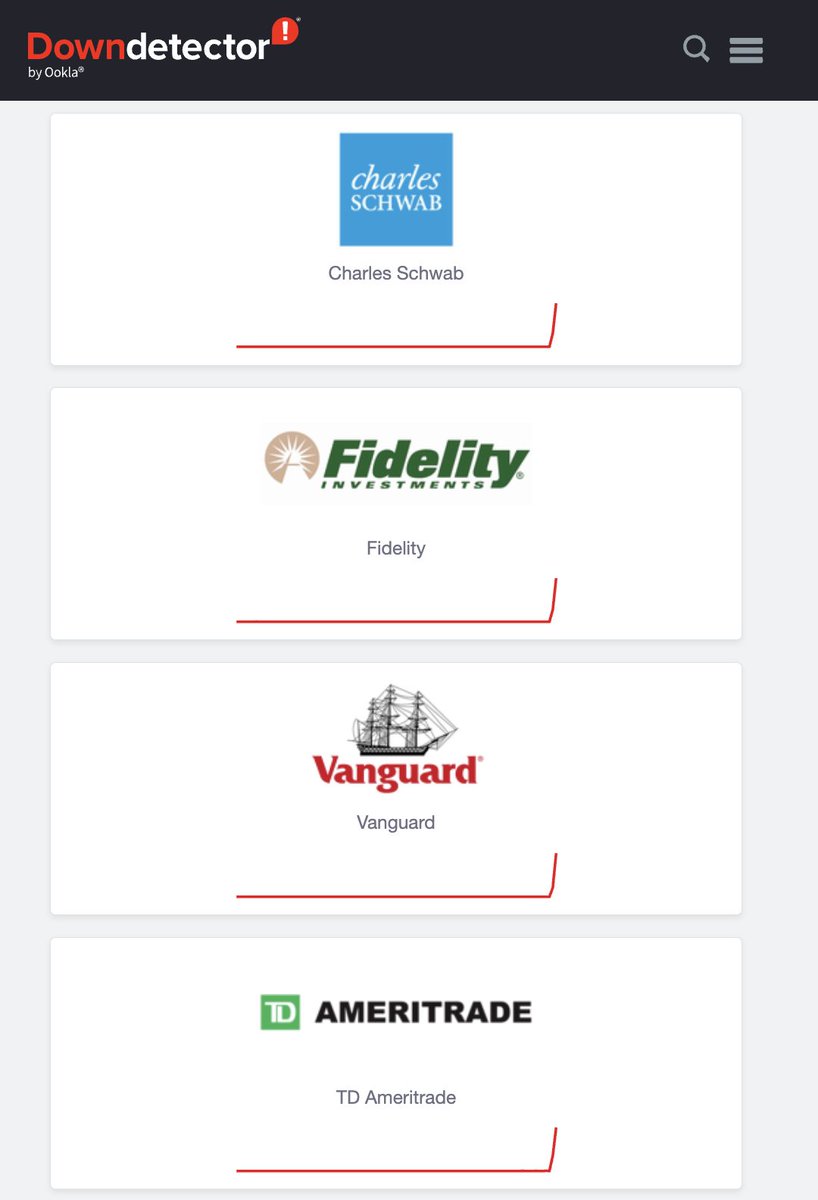
Weird, you can't seem to access your own assets to sell them or to buy more of them.
If only there was a solution to this that didn't require trusting a 3rd party...
downdetector.com
English
Kevin Jenkins retweetledi

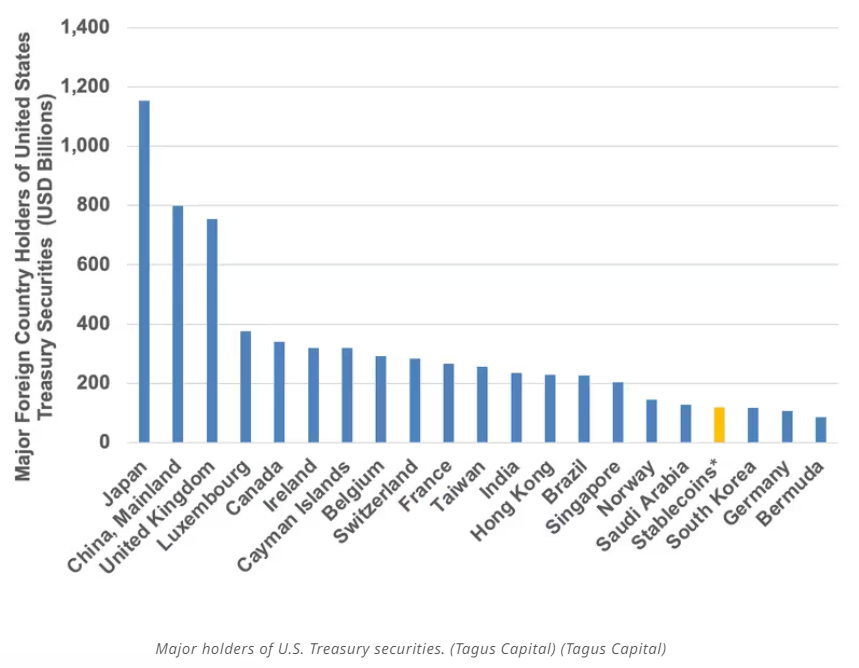
@AustinBarack @helium @Livepeer @akashnet @rendernetwork Forgot 1 - @POKTnetwork + not 1 holder > 10% of supply - what other networks can claim this?
English

🚀
VanEck@vaneck_us
We've raised our 2030 ETH price target to $22K, influenced by ether ETF news, scaling progress, and our read of onchain data. Additionally, we've analyzed how ETH and BTC perform in both traditional and crypto-only portfolios for optimal returns. @Matthew_Sigel @Patrick_Bush_VE 🔗 vaneck.com/us/en/blogs/di…
ART
Kevin Jenkins retweetledi

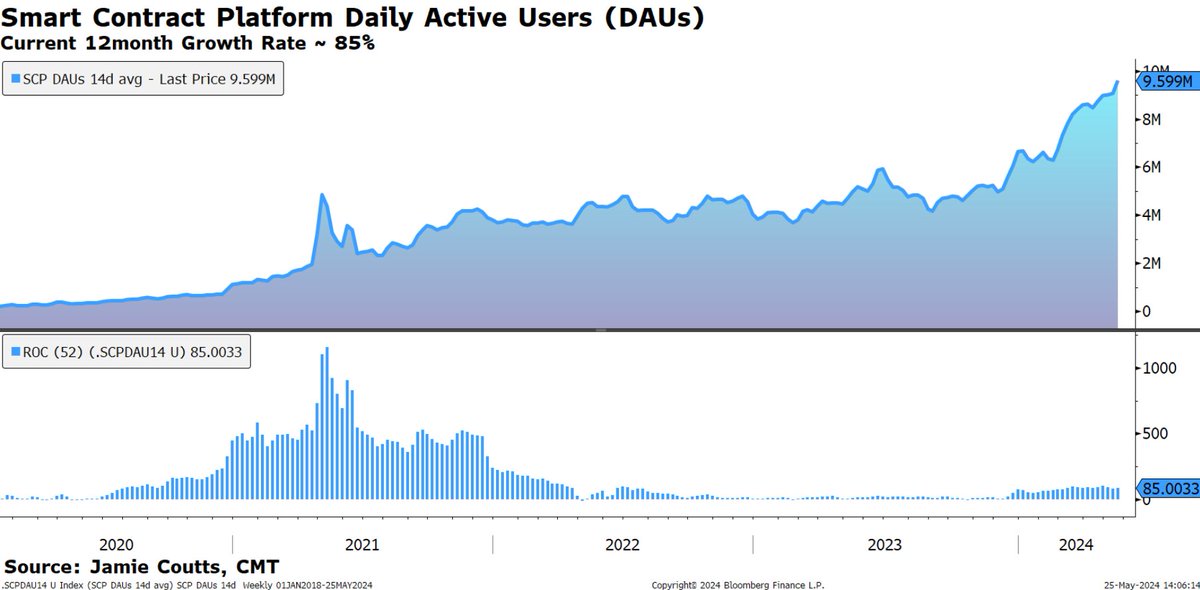
Interesting observation from a pioneer OG #crypto analyst/investor @cburniske on the dApp pipeline. By my estimation, Daily active addresses should reach 20-30 million in 12 months time based on current growth rates. This implies 200-300 million MAUs and potentially 1 billion in total wallet addresses.
Chris Burniske@cburniske
'Crypto apps' that hit next year will spin up users at a rate on par with ChatGPT -- users will onboard in the tens to hundreds of millions, en masse, quickly. We'll go from asking, "Where is the adoption?" to running around with our hair on fire with too much adoption. Dissemination will happen through viral Web2 distribution -- never forget we are the only financialized infrastructure directly intertwined with the social media phenomenon. A few blockchain environments can handle this scale -- prepare to be surprised.
English
Kevin Jenkins retweetledi

Cooking up something things @BuildWithGrove on top of @POKTnetwork.
Check out our call-to-action if you want to get involved: twitter.com/BuildWithGrove…
#DecAI #DecentralizedAI

Grove 🌿@BuildWithGrove
We're looking for pilot partners interested in exploring the intersection of AI and Web3 with POKT Network! Let us know what you're working on at the link below, and join us in building out the future of decentralized AI infrastructure. docs.google.com/forms/d/1VDW2r… #BuildWithGrove
English
Kevin Jenkins retweetledi

If it wasn’t clear before, AI is the single biggest revenue driver in cloud.
Microsoft’s Azure is winning share directly from Amazon. In Feburary, Microsoft grew 2% & Amazon lost 2%. Google is also taking share - 1% in the last year. A one percentage point share shift represents about $750 million of spend or about $5b in market cap.
“We’re fundamentally a share taker there because if you look at it from our perspective, at this point, Azure has become a port of call for pretty much anybody who is doing an AI project”
“More than 65% of the Fortune 500 now use Azure OpenAI service.”
Much of the AI spend is at the enterprise, where a 50% reduction in customer support cost or a 75% increase in engineering capacity filters billions to the bottom line.
“The number of $100 million-plus Azure deals increased over 80% year-over-year, while the number of $10 million-plus deals more than doubled. "
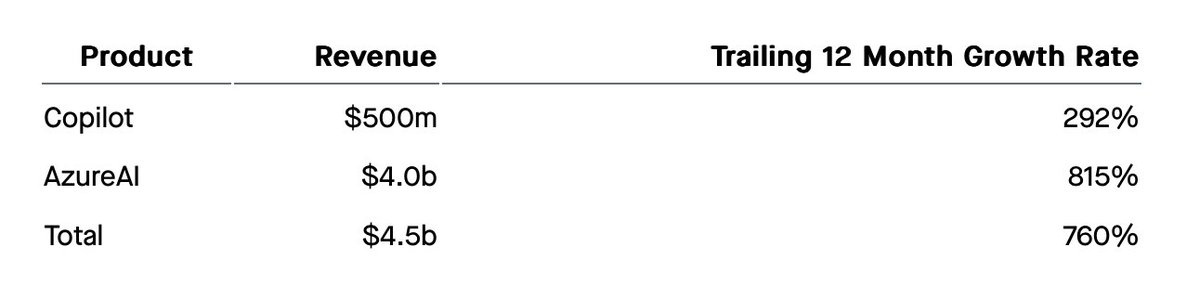
Copilot growth implies about a $500 million ARR product growing 35% QoQ - tripling annually.
“We now have 1.8 million paid subscribers with growth accelerating to over 35% quarter-over-quarter…more than 90% of the Fortune 100 are now GitHub customers, and revenue accelerated over 45% year-over-year. "
The rest of Azure is still growing in a nice clip of 24% annually. But AI added 7 percentage points or $4b to the revenue, a 31% growth rate for a $4b business means adding $1.2b of revenue in a year.
“7 point lift to Azure growth from AI”
Combined with the Copilot business, Microsoft has roughly $4.5b-5b AI product suite.
This trajectory shows no signs of slowing down. The company is investing $50b of capex this year into additional capacity because AI demand exceeds supply.
“Currently, near-term AI demand is a bit higher than our available capacity…In Azure, we expect Q4 revenue growth to be 30% to 31% in constant currency”
Even more impressive, if illusive to measure, is the cross-selling ability of AI across Microsoft customers. The net dollar retention figures must be world class because Microsoft is largely selling to existing customers. NDRs of 300-400% are not unlikely.
Vector databases :
“So AI projects obviously start with calls to AI models, but they also use a vector database. In fact, Azure Search, which is really used by even ChatGPT, is one of the fastest growing services for us. We have Fabric integration to Azure AI and so – Cosmos DB integration.”
The Fabric data platform :
“Fabric now has over 11,000 paid customers, including leaders in every industry from ABB, EDP, Energy Transfer to Equinor, Foot Locker, ITOCHU and Lumen; and we are seeing increased usage intensity.”
AI in other applications:
30,000 Organizations across every industry have used Copilot Studio to customize Copilot for Microsoft 365 or build their own, up 175% quarter-over-quarter.
There’s mention of more within the transcript, but I think the point comes across.
Within the Google transcripts, One of the more interesting data points is that generated search actually increases search volumes :
Most notably, based on our testing, we are encouraged that we are seeing an increase in search usage among people who use the new AI overviews as well as increased user satisfaction with the results.
Also, the company’s reach across consumers is staggering :
We have 6 products with more than 2 billion monthly users, including 3 billion Android devices. 15 products have 0.5 billion users
AI is accelerating growth in a $75b market, 20 year old market. If these growth rates aren’t a sign of anything to come, the amount of market cap creation in front of us will a garguantuan figure.

English
Kevin Jenkins retweetledi
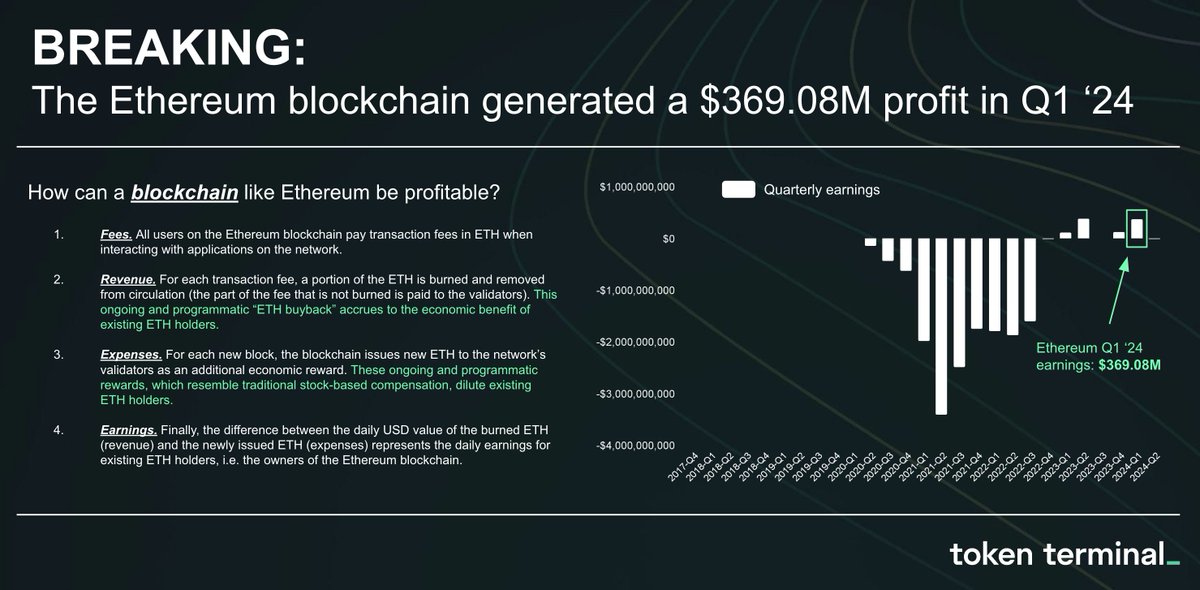
What was the most profitable software company in Q1 2024?
Ethereum.
Ethereum generated $370m in profit on $825m in revenue for about a 45% net income margin.
The chart above shows both the historical performance & also explains how web3 blockchains like Ethereum generate revenue & profits.
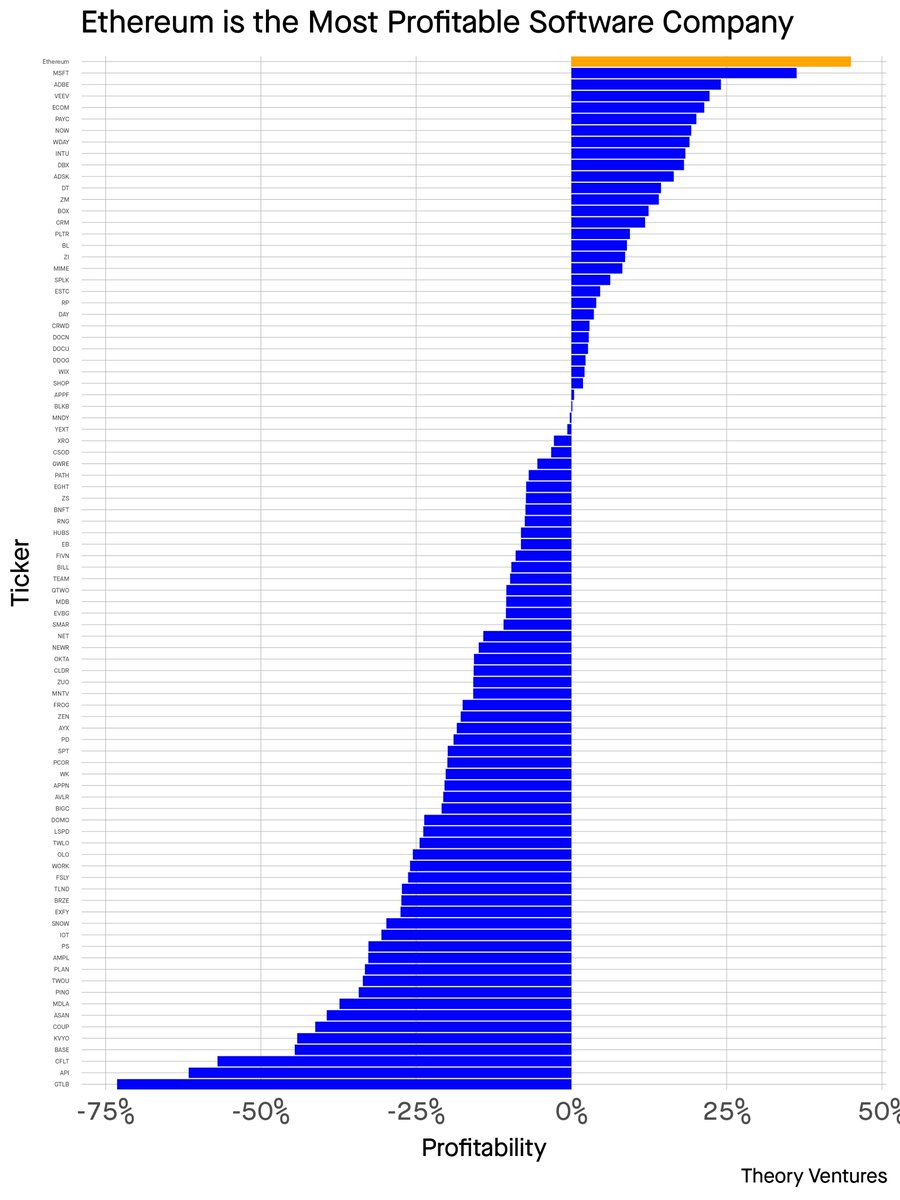
How does Ethereum compare to other software companies?
If Ethereum were to trade on the New York Stock Exchange or the NASDAQ, it would top the net income margin (%) charts, with Microsoft, Adobe and Veeva thereafter.
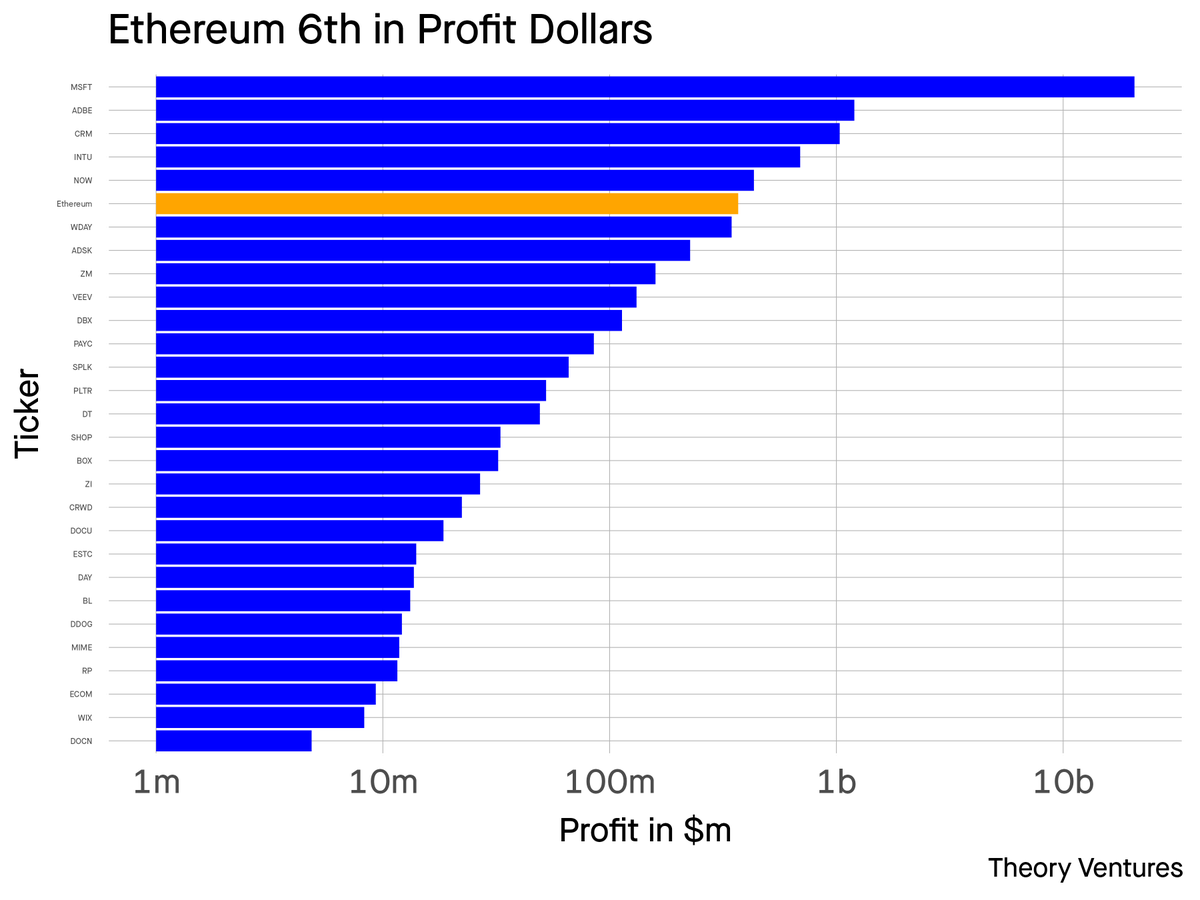
In terms of aggregate dollars across all publicly traded software companies, the Ethereum would be sixth. Note the profit scale in the chart above is logarithmic.
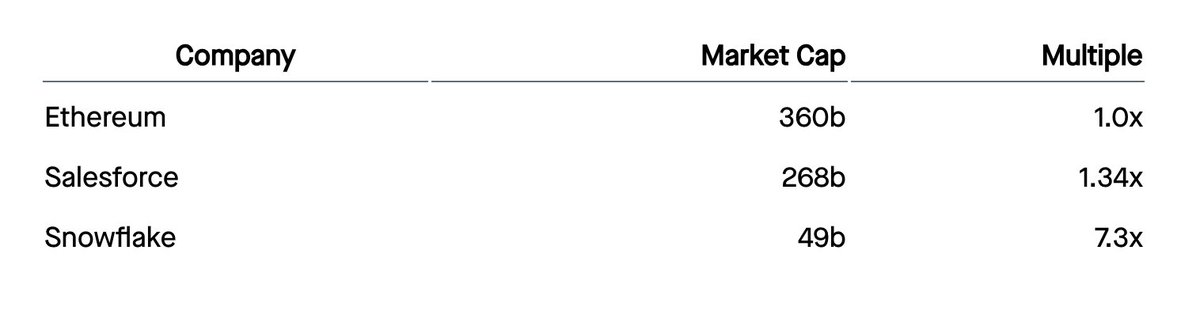
Ethereum’s market cap is roughly $350b today, which is on par with Salesforce & worth 7 Snowflakes.
There are many important caveats here. Ethereum’s historical profitability hasn’t been nearly this strong. The second is Ethereum isn’t organized as a corporation akin to others in this peer set. The third is the Ethereum token is both utility & “equity.” Last, Ethereum trades at 100x revenue compared to 7-17x for Salesforce & Snowflake.
But Ethereum demonstrates the compelling value that web3 blockchains can create.
English
Kevin Jenkins retweetledi

Kevin Jenkins retweetledi

2x better response times than leading provider, Infura, with 0% failed calls.
THIS is why you should under-dePIN your RPC service with POKT Network.
Thanks for the s/o @hmalviya9 !
VD@hmalviya9
The State of RPCs (Based on Last Week Data) - @QuickNode is the fastest RPC Provider with an average response time of 107 ms. - @POKTnetwork have 2x better response time than leading provider @infura_io with 0% failed calls. - @BlockdaemonHQ is the worst performer right now.
English
Kevin Jenkins retweetledi

The State of RPCs (Based on Last Week Data)
- @QuickNode is the fastest RPC Provider with an average response time of 107 ms.
- @POKTnetwork have 2x better response time than leading provider @infura_io with 0% failed calls.
- @BlockdaemonHQ is the worst performer right now.

English