@Variety I have become so outraged by what the Cultural Ascendancy that now controls the means of social reproduction & admin is doing, I have started to disengage.
The chances are that there is a better than 50% chance I'll walk out before the end, angered instead of entertained....
While the majority of classicists are embracing the spectacle of Christopher Nolan’s #TheOdyssey, opinions start to diverge when discussing his adaptation of Homer’s language for the screenplay.
There is no single “original” version of “The Odyssey” in a modern sense — that’s because the poem emerged from an oral tradition.
“‘Homer’s Odyssey’ was already historical fiction, reimagining an ancient past when it was first composed,” says Richard P. Martin, a professor of Greek and Latin literature at Stanford. “Fellow classicists are happy with Nolan’s version because we all recognize it is a version. There is no ‘correct’ treatment, because every generation makes its own version of the poem, either by retranslation or revisualization in various media. All publicity about Homer is good publicity.”
Read the full report on what academics are saying about “The Odyssey”: wp.me/pc8uak-1lHy86
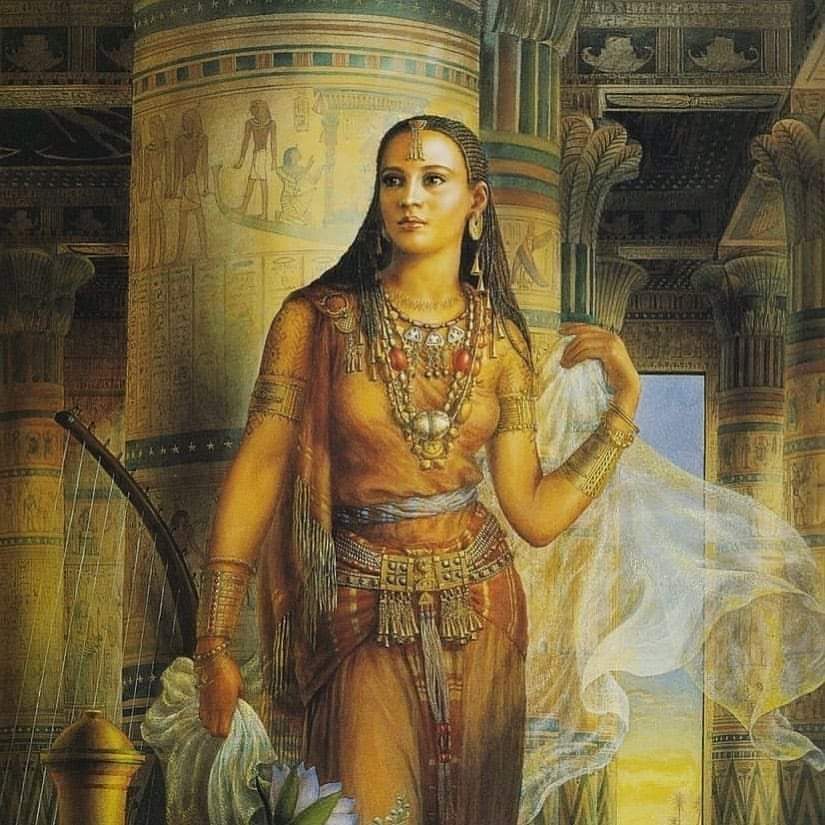
@YasharIsraelite@archeohistories She looks Semite to me.
There was a Nubian line of 'Black Pharoahs' known as the 25th Dynasty, lasting around 100 years from the 8th to the 7th centuries BCE.
@archeohistories More patriarchy pandering propaganda from the peanut gallery. Everyone sees your effort for maintaining HIStory, and frankly we find it embarrassing.
Women in ancient Egypt were regarded as the equals of men in every aspect save that of occupation. It is often assumed that women in the ancient world held little power or influence. However, women in ancient Egypt could become highly influential physicians, political advisors, scribes or even rulers. But like women in many cultures throughout history and today, they had to fight to acquire and hold onto their rights. The man was the head of the household and nation, but women ran the home and contributed to the stability of that nation as artisans, brewers, doctors, musicians, scribes, and many other jobs, sometimes even those involving authority over men.
One of central values of ancient Egyptian civilization, arguably the central value, was ma'at – the concept of harmony and balance in all aspects of one's life. This ideal was the most important duty observed by the pharaoh who, as the mediator between the gods and the people, was supposed to be a role model for how one lived a balanced life. Egyptian art, architecture, religious practices, and even governmental agencies all exhibit a perfect symmetry of balance and this can also be seen in gender roles throughout the history of ancient Egyptian civilization.
Women's social standing, however, depended on the support and approval of men and, in some cases, was denied or challenged. It also seems clear that many women were not aware of their rights and so never exercised them. Even so, the respect accorded to women in ancient Egypt is evident in almost every aspect of the civilization from religious beliefs to social customs. The gods were both male and female, and each had their own equally important areas of expertise. Women could marry who they wanted and divorce those who no longer suited them, could hold what jobs they liked – within limits – and travel as they pleased. The earliest creation myths of the culture all emphasize, to greater or lesser degrees, the value of the feminine principle.
Women in ancient Egypt worked in many jobs traditionally dedicated to them, but they were powerful enough to be independent, have their own workshops producing textiles, jewelry and other goods, and even take an important role in political life, become physicians or scribes. Although, they were underestimated by many historians for centuries, their strong position in the powerful civilization of ancient Egypt could be an inspiration for modern women in many parts of the world.
After thousands of years of equal rights, Ptolemy IV tried to stop the strong tradition of cults of women. He changed the law and canceled many rights that had made women equal to men. It was the beginning of the dark age characteristic for the upcoming dominating beliefs, which had their roots in Rome and Greece. However, Egyptian women didn't want to accept a patriarchal society. Until the power of the Egyptian civilization came to an end, they fought for their rights. Commonly, researchers accept that the end of Egyptian women’s independence arrived with the death of the great scientist Hypatia in 415 AD. Before that event took place, Ancient Egyptian women had thrived in society for more than three millennia.
#archaeohistories
@khamenei_ir A hated, feared & murderous gangster like Torquemada, the first Grand Inquisitor of the Spanish Inquisition who spread torture, grotesque killing & a culture of fear & intimidation in the name of religious conformity, throughout Christendom during the Counter-Reformation.
In the Name of God, the Compassionate, the Merciful
Among the faithful are men who fulfill what they have pledged to Allah: there are some among them who have fulfilled their pledge, and some of them who still wait, and they have not changed in the least (Holy Quran 33:23).
@LuisMartinb8t7@archeohistories The moment anybody at all could sustainably project maritime power into the Far South Pacific, indigenous economic licences would be instantly cancelled, no matter who it was.
Check out the Maori 'solution' to the Aboriginal problem in the Chatham Islands in 1835.
No mercy.
@archeohistories A sad reality of the human condition, I pray that Yeshua Ben Elohim, returns soon and makes all things new.
Seek your redemption while it may still be found. We cannot change the past but we can treat others as we would like to be treated, starting now.
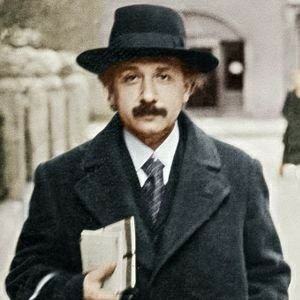
@WittgensteinsF2@PhysInHistory Dear Geoffrey, 98% of all science work is pedestrian, hum drum & routine. And without that, the occasional genius wouldn't have a platform on which to strut their stuff.
Werner Heisenberg’s PhD defense in 1923 at the University of Munich was nearly a disaster. His written thesis had focused mostly on hydrodynamics, leaving him weak on experimental knowledge. During the oral exam, he stumbled badly on practical questions, like how a storage battery worked or the resolving power of a microscope. His examiners, especially Wilhelm Wien, were appalled at his lack of lab skills. Arnold Sommerfeld, his mentor, had to intervene, arguing that while Heisenberg was hopeless with equipment, his theoretical talent was extraordinary. In the end, he scraped through — barely passing — in what became one of the most awkward defenses in physics history.
@habibi_uk Before anything check the atrocity rate inflicted by the Zionist Palestine occupiers first, because their atrocity rate dwarfs all others by orders of magnitude around 20-30 to 1, going back to 1948
1 Zionist death is a tragedy. 2-3 dozen Arab subhuman deaths is pest control.
How did we get here? This terrible, hateful place?
The police are one big reason. For example, this man drawing "inspiration" from the Hamas atrocities at a Leeds PSC protest. Terror law experts say this is clearly an offence.
Well, West Yorkshire Police refused to do anything.
@OzPenguin@archeohistories Correct. When the Romans finally left in 410 AD, Britannia was Romanized & no one was cheering.
Britannia became almost defenseless against raiders & the high quality governance & urban infrastructure as well as the security they had guaranteed, was now lost....
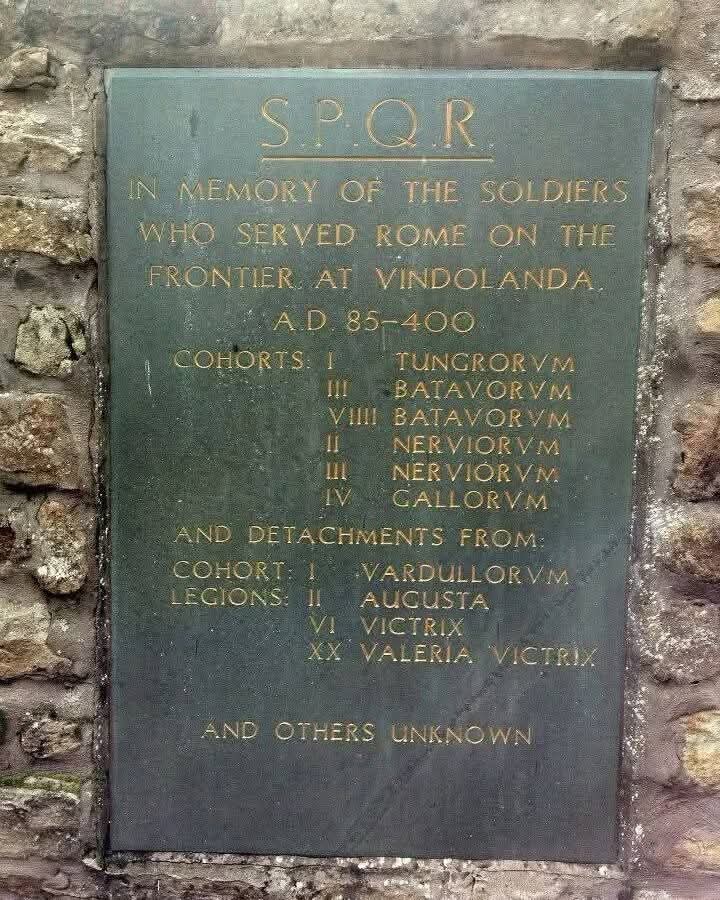
S.P.Q.R — a memorial plaque located at the Roman Vindolanda fort in England 🇬🇧. The plaque commemorates the soldiers who served Rome on northern frontier of Britain between 85-400 AD.
This is a tribute to the Roman soldiers who served at the frontier fort of Vindolanda near Hadrian’s Wall. This memorial lists the units stationed there between 85–400 AD, including:
Cohorts:
I Tungri
III Batavi
VIIII Batavi
I Nervii
III Nervii
IV Gauls
Detachments from:
Cohort I Vardulli
Legio II Augusta
Legio VI Victrix
Legio XX Valeria Victrix
And others unknown.
Vindolanda is one of the most important Roman military sites in Britain; famous for the Vindolanda Tablets, the oldest surviving handwritten documents in Britain, offering a vivid picture of daily life on Rome’s northern frontier.
#archaeohistories
@t_swrld@historyinmemes Yamamoto opposed an attack on the US as he saw that the depth & extent of its industrial power was to great for Japan to contend with on a protracted basis
His voice was overridden by the army & he fell into line, organizing a surprise shock attack aimed at a quick victory.
@historyinmemes This picture of Xi always reminds me of this man. Just like him, Yamamoto had studied in the United States, Harvard to be precise. He even later served as a naval attaché in Washington. And yet, he led Japan's navy against the US. History might repeat itself with Xi Jinping.
Xi Jinping, San Francisco, 1985.
Xi, then a county-level official from Zhengding in China's Hebei Province, made his first visit to the United States, with San Francisco as his initial stop. He was in his early 30s and part of a Chinese delegation studying agricultural and local governance practices.
He then traveled to lowa as part of a delegation studying American agriculture. In Muscatine, Xi and several other Chinese officials were hosted by local residents for a few days to experience small-town life.
Xi stayed in the home of Eleanor and Thomas Dvorchak, where he reportedly slept in their son's room, which still had posters of American rock bands on the wall. Years later, when Xi became China's leader, he invited some of those lowa hosts to Beijing, referring to them as "old friends."
@histories_arch A quick & merciful death. The subject would not have felt a thing.
Military doctors in the ancient world had a similar sort of device to put slowly dying patients out of their misery.
A recent discovery has unveiled a chilling chapter from late antiquity, shedding light on the brutal practices of the time and society's attitudes toward punishment and death.
The presence of an iron nail lodged in a skull suggests a deliberate act, likely meant to serve as a warning and a display of authority, illustrating an era where public executions and the exhibition of corpses were tactics used to instill fear and maintain control.
Such artifacts are rare, making this find significant for archaeologists and historians, as it offers invaluable insights into the beliefs and customs surrounding death, punishment, and the treatment of the deceased during this tumultuous period.
Moreover, the interaction between organic materials and iron poses unique preservation challenges, highlighting the importance of careful excavation and conservation methods in archaeology.
This skull is a haunting reminder of past violence, prompting deep reflection on human nature, societal values, and the ongoing impact of power struggles throughout history.
#archaeohistories
@JanenjanDe@front_ukrainian Ukraine would have lost the war years ago without them. Russia's unprovoked invasion would have succeeded. Ukrainians all sleep a bit better knowing that the Russian orcs have lost the advantage of numbers as a result of deploying drones.
@front_ukrainian Drones are the new poison gas. Kill people on a distance. A drone robot vs. a human being. Murder by a machine. Are you proud to deploy this modern poison gas on human beings. Do you have children? Your victims have or wanted them. Only for €€ and power? How do you sleep?
❗️The international drone coalition, led by the 🇬🇧United Kingdom together with 🇱🇻Latvia, will provide 🇺🇦Ukraine with about 35,000 interceptor drones against the 🇷🇺Russian "Shahed".
@Mylovanov Zaporizhzhia Nuclear plant Europe's largest with Six reactors is critical Thanks to The Ukraine constant shelling Ukraine is totally a dysfunctional unhinged regime Trump needs to analyse with extreme caution
Look at the new Ukrainian sea drone — an unmanned “submarine killer” that runs 1,200 km, carries 500 kg of explosives, and dives to 100 m - The Telegraph
Ex CIA director Gen. Petraeus: scaling such drones, plus Flamingo missiles, and £200bn frozen assets can win the war
1/
Sign the petition: Support Billboard Chris and protect the right to speak freely and practice your beliefs without fear of government censorship in Australia. hrla.org.au/jillian-spence…
Prime Minister Anthony Albanese has addressed Bob Katter’s clash with a 9News reporter, saying:
“He needs to have a look at that footage, take a look at himself, quite frankly, and recognise that’s not what we expect of any Australian, let alone someone in public office.”
@JOKAQARMY1 Supermarket crime has become intolerable. The need for identity checks is a depressing sign of the times, but a necessary response to something that likely will get worse if nothing is done.
If you haven't got ID, you'd better get some.
@NukemWrestling@jk_rowling@AllianceLGB 'The love & Welcome' stops with a thud as it detects opposition & deploys its ideological storm troopers.
Diversity Inclusion & Equity (DIE) stops at the border when it comes to people 'We Don't Approve Of'....who don't wholeheartedly love The Tranzi Way.
@jk_rowling You're welcome to attend one of the many, many Pride events worldwide Joanne. See the love and acceptance of trans people firsthand.
Might make a change of pace from beaming in to brighten up the ever dull @AllianceLGB conference!
Still silence from Sturgeon. The woman whose wrong-headed decision to pursue self ID led directly to this week’s Supreme Court ruling has held her wheesht since Wednesday. She may be busy re-writing her memoir, or she may be too much of a coward to show her face. Whatever her excuse, she owes the women of Scotland an apology
@Obsolesence@PennyRed As a proud TERF, I have neither respect nor even sympathy for people who expect their sexistentialist fantasies (I am my 'sexuality') to be indulged by everyone else.
You & your ideological mates can do whatever you like in the privacy of your own spaces.
You aren't mainstream
@PennyRed "TERFs" don't think, or wish, anyone to be legislated out of existence. Nothing we have done or said suggests this. But, men will be legislated out of toilets, prisons, sports, single-sex clubs, girls school changing rooms, rape crisis centres, breastfeeding support groups...
Turner doesn’t speak for all women, and certainly not for all feminists.
TERFs seem to think this ruling legislates trans people out of existence. It does not.
Trans people will continue to exist. They will continue to deserve dignity and human rights. How is this ‘over’?