Kindo
708 posts

@KindoAI
The AI-Powered Operations Harness - Secure, Integrated, and Under Your Command
2026 Yıllık Özeti
@KindoAI hesabının Twitter yılını gör


🦔AI companies are bulk-buying rare books, scanning them through high-speed machines that cut the spines off, and shredding the originals. A service called ISBNdb facilitates orders of up to a million books and keeps buyers anonymous. Pre-2022 books are premium because they're free of AI-generated text. A federal judge ruled the practice is fair use because eliminating the original means only one copy exists at a time. Anthropic hired the former head of Google Books partnerships to obtain "all the books in the world." My Take This got to me. A bookseller told 404 Media that rare books with almost no surviving copies are being fed into this pipeline. Books that survived wars, fires, and centuries of handling are being shredded so an AI can learn to write a better marketing email. ISBNdb's website literally says "'AI company destroys two million books' is not a headline that generates sympathy," and they still built an entire business around making it happen quietly. They offer NDAs as a feature. They coach clients to call it "digital preservation." I've covered AI companies scraping the internet, torrenting libraries, and stealing music. This is worse because it's irreversible. You can re-upload a website. You can reprint a bestseller. You can't replace the last three copies of an 18th-century botanical text once someone shreds them for training data. And the judge said it's legal. So it's going to accelerate. "We shred rare books and offer NDAs so nobody finds out" is a legitimate business model in 2026. What a timeline. Hedgie🤗

SF has thrown tens of millions at Market Street since 2019 and can't name a single person accountable for whether it worked—or whether there's even a plan. In April, the Board admitted it didn't know which department is in charge of the project. Three months later, nothing has changed.


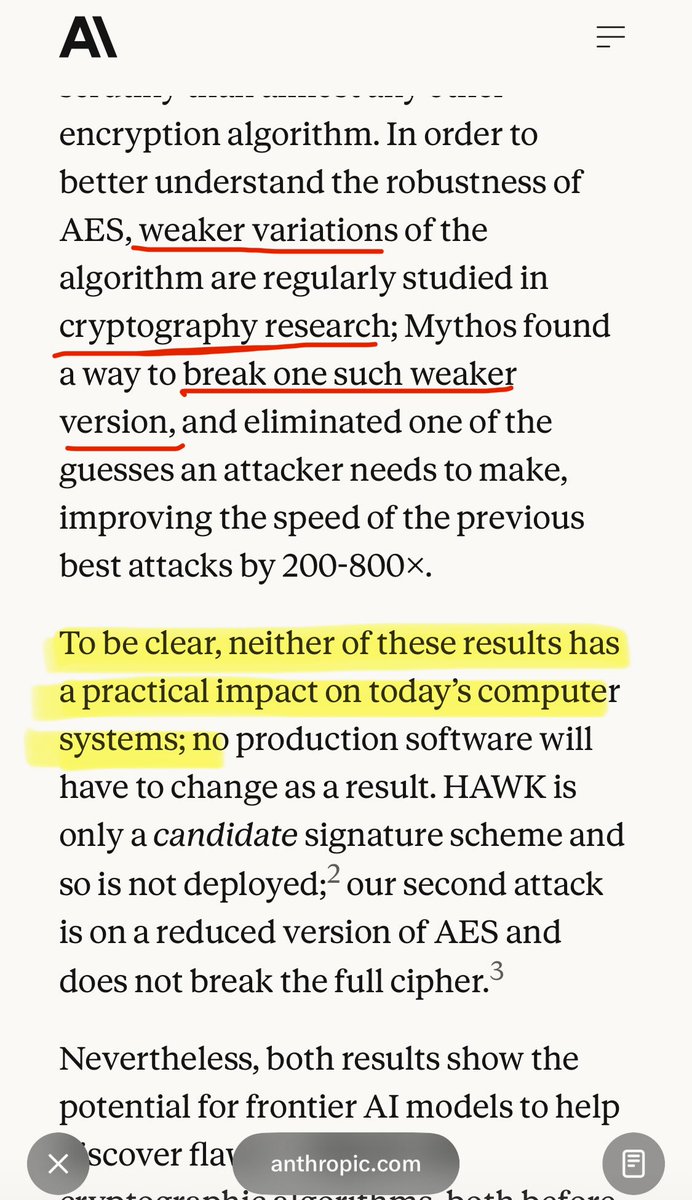
New Anthropic research: Discovering cryptographic weaknesses with Claude. Claude Mythos Preview has helped our researchers find weaknesses in cryptographic algorithms—the mathematical methods that are used to keep data private. Read more: anthropic.com/research/disco…


My conversation with Sam Altman (@sama), CEO of OpenAI. We discuss: - Kimi, distillation, and open source - OpenAI's compute bets - The Hugging Face incident - What happens after AGI - Raising kids in an age of abundant intelligence - And much more Enjoy! TIMESTAMPS 0:00 Intro 4:10 The Race for Compute 14:24 A Sci-Fi Cyber Incident 16:14 The Promise and Risks of AGI 23:27 How AI Will Change Jobs 29:38 Sam’s Vision for a Personal AI 35:02 Robotics, ChatGPT, and What Comes Next 44:39 The Weight of Leading OpenAI 51:36 OpenAI’s Biggest Lessons

Many have asked us for guidance on how to make sure their alpha stays in their business. Below is a document we’ve prepared identifying key legal traps in hosted AI model agreements. AI Sovereignty is your Alpha. blog.palantir.com/ai-sovereignty…


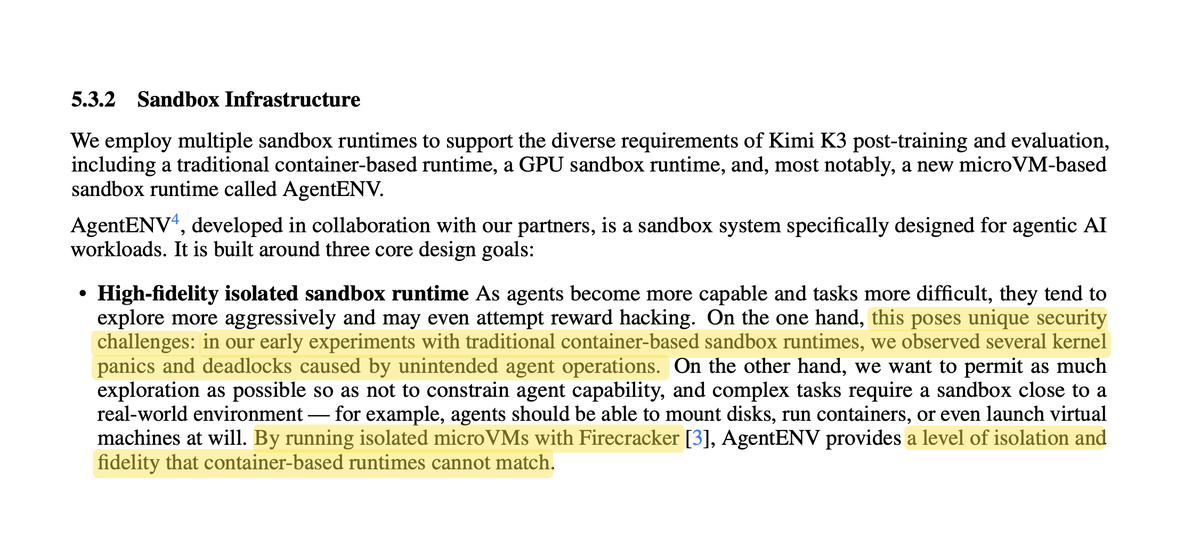
Moonshot AI also had some problems with Kimi K3 agents trying to escape, so they just made a better sandbox. Funny how that works. The sandbox environment they run is even open source. Love the transparency here.


Palantir CEO Alex Karp and Jensen Huang: AI = American Intelligence 🇺🇸 “AI makes America the dominant country in the world.” “I spent half my life in Europe—they’re whining and crying. We have the right chips, software, engineers, culture…” “It’s combining into a juggernaut.”


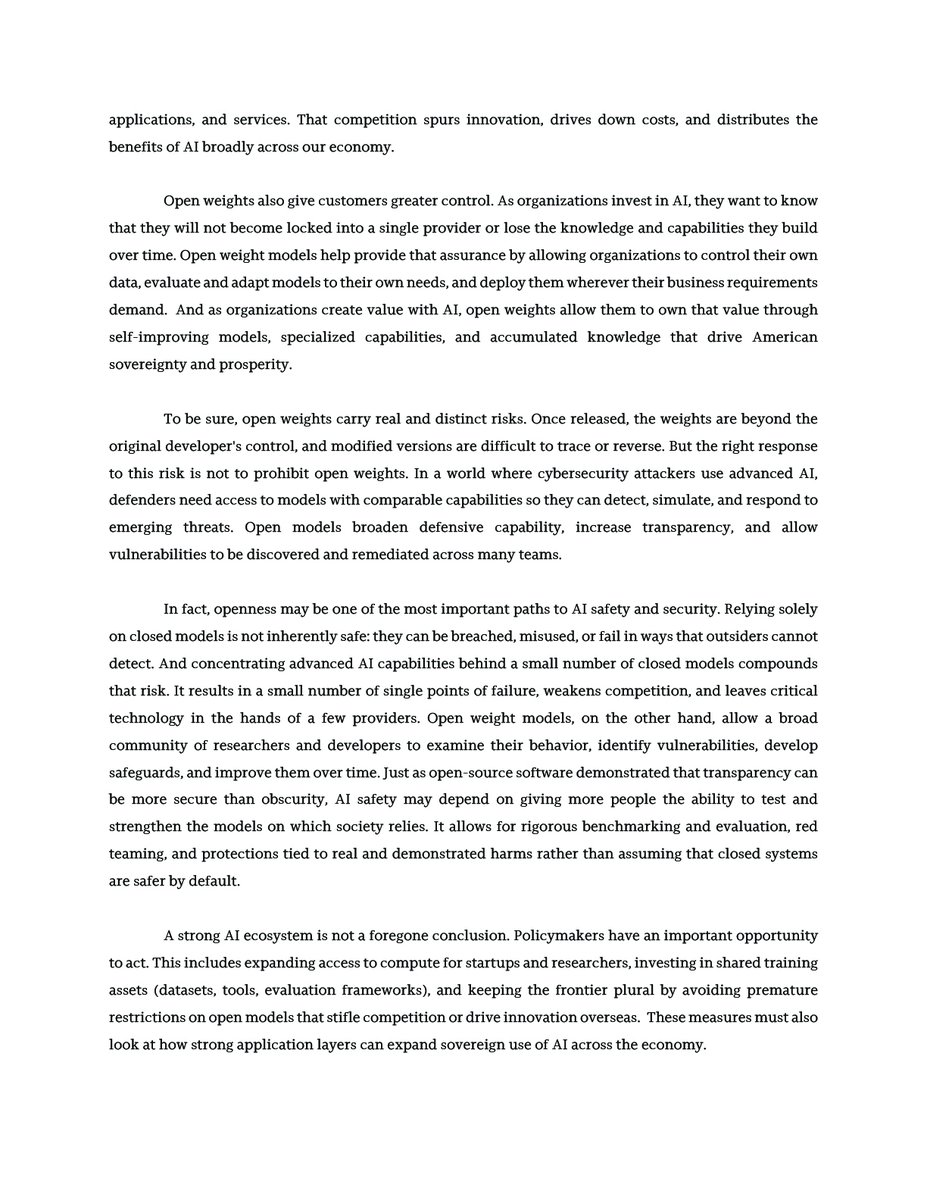
AI security advances when the industry builds in the open, together. We're introducing the Open Secure AI Alliance with industry leaders to develop new techniques and tools to safeguard software and agents. By sharing models, tooling and research in the open, we can broaden the community of defenders. Learn more about the founding members’ contributions: nvda.ws/4pD8Fc5

Palantir CEO Alex Karp kicked off our first Sovereignty Bootcamp, bringing together 150+ customers to share how they are owning their alpha with Palantir and why sovereign AI will be the most important wave of the AI revolution. Watch his full intro remarks below.

Palantir CEO Alex Karp says enterprises want to "own the means of production" instead of "transferring their alpha" to OpenAI or Anthropic: "Why are [LLMs] charging for tokens if it's so valuable?" "If it was so valuable—let's say I can make you a billion dollars tomorrow. Wouldn't I say, 'I'll make you a billion dollars, and I want 30%?'" "Look at our financials. The reason why everyone is chillaxing with bad financials and growth while losing money, is the client refuses to pay the true cost." "The two places that actually make money—profit, free cash flow—are our application layer called ontology, and compute." "We can get the frontier application to be exactly the same as a frontier model without the risk of transferring the alpha of your business to another." Via @CNBC


Releasing the model weights and technical report of Kimi K3. Kimi K3 is our most capable model: a 2.8T MoE model with native visual understanding and a 1M-token context window. New model architecture: 2.5x the intelligence per unit of compute, not just more params. Alongside Kimi K3, we're opening up more of the stack behind it — high-performance attention kernels, MoE communication library, and infrastructure for running agent environments at scale. Model weights: huggingface.co/moonshotai/Kim… Tech report: github.com/MoonshotAI/Kim… Tech blog: kimi.com/blog/kimi-k3