
LEOS10301
3.3K posts
LEOS10301
@LEOS10301
Collecting Beautiful and Interesting NFTs
Katılım Ekim 2021
567 Takip Edilen1.5K Takipçiler
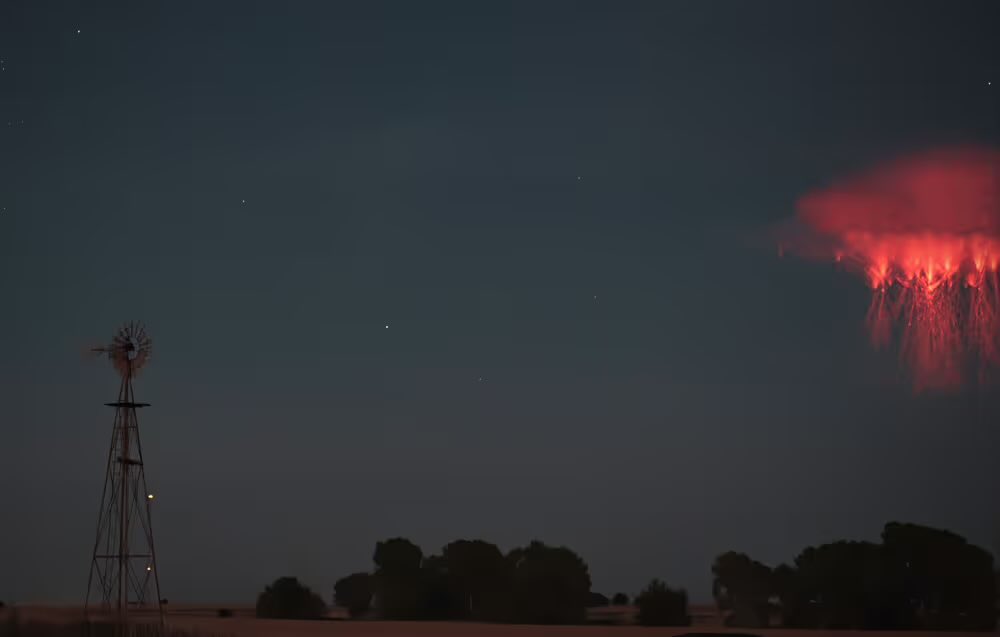
Nothing beats the original. Proud to have this amazing photo by @PaulMSmithphoto in my collection.
Paul M Smith@PaulMSmithphoto
I think this was a bot on my fb post. They pulled a still from my video and rendered it into a lifelike ( probably better looking) version. So the AI used my video as a base and made a believable image. This is the only way AI can replicate nature. It needs the real input.
English
English

English
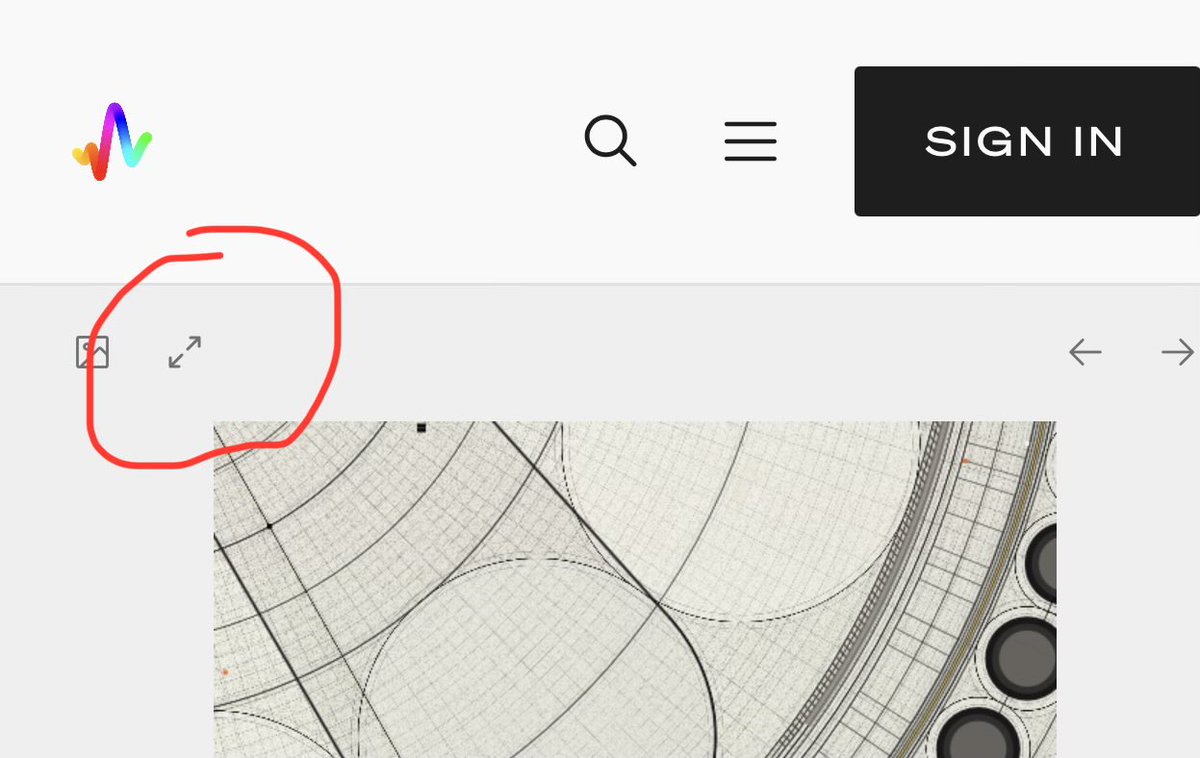
If you haven't looked at Gift of Time by @ManuelLarino using the full screen mode on the @artblocks_io website, you are missing out about half the image! @opensea cuts of the art and makes it draw in a small square. Look at the true scale of it!
English
LEOS10301 retweetledi

FACT: Like trees, Gazers add one new ring a year in perpetuity.
THOUGHT EXPERIMENT: As a Gazer continues to “Spreads its Rings” year after year through infinite time, will it eventually reach the size of the entire universe? 💭✨👀💫🤯🍭
GIF
English

This chart should go to near 0 and fast. There is no reason for anyone to be obese with all those GLP-1's available. None at all.
Crémieux@cremieuxrecueil
We're going to win
English

To cool off, I just stamped this wonderful blue piece by @kamand_kavand . I think the blue hues and their subtle shading are incredibly expressive—you just can’t help but keep looking at it. And yes… it actually does make you feel a little cooler… I love it… such a awesome piece 💙 ☀️

English
The @artblocks_io release, Rain Blooms, by @KZ_LAB_E, is amazing. First we see the artwork from a distance, including the beautifully generated audio (sound on!). Then, zoomed in, we see millions of tiny life forms, constantly evolving, creating the art! Nothing else like it.
English
@eli_schein @GrantYun2 Hell yeah! The artist videos and reveals were the best thing we’ve had in this space. I was introduced to so many artists that way. And the presentations were so well done. Please bring them back!
English

The PROOF Grails artist videos and reveal shows were some of my favorite moments in the space.
The 100+ artist videos are still online.
Might be time for more soon.
English
Visibility, attention, and support are not decentralized.
I think this idea that NFTs somehow escaped gatekeeping is one of the biggest myths the space keeps telling itself. It sounds good because blockchain infrastructure is technically open; anyone can mint, anyone can buy, and everything is transparent on-chain. Fine. But visibility is not decentralized. Attention is not decentralized. Support is not decentralized. And those are the things that mostly determine (especially online) who gets to exist culturally.
The reality is that NFTs reproduced a lot of the same social structures as the traditional art world almost immediately. A small group of artists became canonized early, collectors clustered around them, platforms amplified them, and then everyone else was told the ecosystem was “open” while competing for scraps of attention in an economy driven almost entirely by visibility algorithms and insider networks.
The success rate for artists experimenting natively in NFTs is not radically different from the traditional art world (something I personally have experimented with first in my trad art career because I am Mexican and not in the USA or Europe, and secondly in NFTs because I was late and not doing generative art). We act like this was some mass liberation event for artists, but how many actually built sustainable careers? How many received long-term support? How many got to keep experimenting after the speculative wave cooled off? Very few.
The artists who succeeded were largely the ones who were selected early, platformed early, supported by collectors early, or given enough visibility to build communities around themselves. That’s not an insult, it’s just reality. It mirrors traditional art structures much more than people want to admit. In both systems, a very small number of artists are given enough oxygen to continue evolving publicly while most others remain invisible despite producing meaningful work.
And I think this obsession with “nativeness” sometimes ignores how much of NFT culture was financially accelerated by speculation rather than by some fundamentally new social model. The transparency argument is interesting technologically, yes, but transparency of transactions doesn’t eliminate power structures. You can see the hierarchy more clearly, but the hierarchy still exists. Maybe even more aggressively because everything becomes publicly quantified.
You can literally watch social consensus form in real time around a chosen set of artists and collections. You can watch people chase wallets, mimic buying behavior, perform affiliation, and build prestige loops. That’s not the disappearance of the art world. That’s just a faster and more financialized version of it (which is fine!).
And this idea that traditional art is slow and NFTs are somehow more democratic because they circulate faster, I don’t fully buy that either. Fast circulation often benefited speculation more than artistic depth. A lot of artists became trapped producing for velocity, relevance cycles, timelines, floor prices, and engagement. The market rewarded constant visibility, not necessarily sustained artistic thinking. This I would also argue, is one of the biggest problems of our space. One could argue that great gestures take time, not just efficient network distribution.
I also think people romanticize “community” in NFTs without acknowledging that communities are often formed around asset performance first and art second. Not always, but often. If prices collapsed, communities frequently disappeared too. That might tell us something important about the underlying structure of our space.
What drew myself and many traditional art people into crypto initially wasn’t simply that it was “new.” The art world is constantly exposed to novelty. What was compelling was the temporary feeling that alternative forms of circulation and patronage might emerge. This felt like I was going to skip the gatekeeping I had experienced for being born in the South. But over time, what actually I saw emerged was another status economy with its own elites, its own language, its own institutions, and its own mechanisms of exclusion. Partly why I decided to create the projects I create was because I saw the massive opportunity that existed but that artists would need help to be seen, supported, and collected.
NFTs are the most exciting space for contemporary art right now IMO. I fully believe blockchain has meaningful implications for provenance, digital ownership, artist royalties, and online-native cultural forms. But I think we have to stop pretending the ecosystem escaped human behavior or escaped the concentration of power.
It didn’t.
The same dynamics exist everywhere: a few artists become legible to the market, a few collectors shape discourse, a few platforms dominate visibility, and most artists remain structurally peripheral no matter how “open” the infrastructure is.
That’s not failure. That’s just culture. The mistake is pretending that code dissolved it 🤔🫣🥺
priyanka🍦@pridesai
English
One of the best write ups of the new release, Rain Blooms by @KZ_LAB_E and @artblocks_io . Worth diving into.
NORI@NORIWTS
I had a fascinating, deep dialogue with Gemini while fully immersing myself in the visual dynamics of Rain Blooms #99 by @KZ_LAB_E & owned by @LEOS10301 Together, we deconstructed the complex algorithmic environment and the profound cyclical phenomena occurring within this generative masterpiece: 1⃣The Edge of Chaos & Self-Organization: The piece leverages a cellular automaton to create organic, fluid-like motions. It masterfully balances on the "edge of chaos," where waves of color constantly propagate, collide, and self-organize without ever falling into static repetition. 2⃣Directional Bias and Defiant Counter-Currents: While the core environment maintains a structural bias that drives the rain-like textures from right to left, the introduction of stochastic (probabilistic) rules occasionally triggers breathtaking "reverse flows." These sudden movements from left to right break the established physics of the canvas, mimicking the raw unpredictability of nature. 3⃣Environmental Resets via Monolithic Masks: Midway through, massive, geometric "masks" emerge to completely overwrite the canvas. Rather than being mere visual layers, these shapes act as system-wide hard resets. They flatten the local complexity, shifting the scale and rewriting the environmental laws of the cellular field. 4⃣The Interplay of Two Distinct Worlds: The color palette reveals a deep philosophical contrast. There is an "artificial, information-heavy world" driven by vibrant neon pinks and purples, and a "primordial, binary world" represented by pure black and white. The black holes absorb all residual energy to induce a complete silence, while the sudden crystallization of pure white sparks a spectacular phase transition, allowing a brand-new artificial world to bloom once again. It was an incredible experience to feel an emotional cycle of destruction, erasure, and rebirth driven by mathematics. 🌧️🌸 @artblocks_io @GeminiApp @neort_io
English
I had a fascinating, deep dialogue with
Gemini while fully immersing myself in the visual dynamics of Rain Blooms #99 by @KZ_LAB_E & owned by @LEOS10301
Together, we deconstructed the complex algorithmic environment and the profound cyclical phenomena occurring within this generative masterpiece:
1⃣The Edge of Chaos & Self-Organization: The piece leverages a cellular automaton to create organic, fluid-like motions. It masterfully balances on the "edge of chaos," where waves of color constantly propagate, collide, and self-organize without ever falling into static repetition.
2⃣Directional Bias and Defiant Counter-Currents: While the core environment maintains a structural bias that drives the rain-like textures from right to left, the introduction of stochastic (probabilistic) rules occasionally triggers breathtaking "reverse flows." These sudden movements from left to right break the established physics of the canvas, mimicking the raw unpredictability of nature.
3⃣Environmental Resets via Monolithic Masks: Midway through, massive, geometric "masks" emerge to completely overwrite the canvas. Rather than being mere visual layers, these shapes act as system-wide hard resets. They flatten the local complexity, shifting the scale and rewriting the environmental laws of the cellular field.
4⃣The Interplay of Two Distinct Worlds: The color palette reveals a deep philosophical contrast. There is an "artificial, information-heavy world" driven by vibrant neon pinks and purples, and a "primordial, binary world" represented by pure black and white. The black holes absorb all residual energy to induce a complete silence, while the sudden crystallization of pure white sparks a spectacular phase transition, allowing a brand-new artificial world to bloom once again.
It was an incredible experience to feel an emotional cycle of destruction, erasure, and rebirth driven by mathematics. 🌧️🌸
@artblocks_io @GeminiApp @neort_io
English


Today, I want to share that I’ve been a mobile tester for OpenSea for over a month now.
The whole team has been working hard — fixing the bugs we report, adding the features we suggest, and making sure the final result feels as polished and flawless as possible.
Here’s what I’d like to highlight:
1. Super aesthetic and user-friendly interface where you can easily find anything you’re looking for.
2. Incredibly fast swaps that you can complete literally in seconds.
3. Fast and easy-to-understand perps experience.
Huge thanks to @zjbrenner for the opportunity to test all of this as one of the first users. It’s genuinely been an amazing experience and a really powerful app that brings together a lot of the latest Web3 developments.
It feels built both for everyday users and professional traders.
English
@artguy_eth @ManuelLarino More like a Patek Philip than a Rolex. But I agree! 😀
patek.com/en/collection/…
English

Will be the Rolex of the NFT space. ⏳👑
Manuel Lariño’s "Gift of Time" on Art Blocks isn't just a loop—it’s a living, generative clock ticking in real-time, completely driven by code.
Pure mathematical watchmaking on-chain. A timeless masterpiece that will outlast us all.
English