Legendary

329 posts

Legendary banner
Legendary

Legendary

@LegendaryMonk69

Katılım Mayıs 2025
427 Takip Edilen16 Takipçiler
Legendary
Legendary@LegendaryMonk69·
@DouglasLwangaUg URA doesnt raise taxes it's the people at the ministry (Tax policy dept) that come up with these measures and then Parliament rubber stamps them into law. URA only does enforcement.
English
2
0
6
549
Douglas Lwanga
Douglas Lwanga@DouglasLwangaUg·
If you need to understand the reality more, try opening a small company, get a TIN, register your employees for PAYE, & NSSF. You will understand that being an employer too is another movie. No wonder businesses dont survive year 2 after opening. Dear URA Lets widen the tax base than heavy tax on the same people. @kyamageroandrew
Andrew Kyamagero@kyamageroandrew

🚨 Employees to Lose Up to 40% of Their Salary in Taxes. We don’t have a salary problem. We have a tax problem. Because soon… the more you earn, the more you lose. Let me show you how Uganda’s new tax proposal could quietly take up to 40% of your income. 🧵👇 @mofpedU @URA_CG @URAuganda @rggoobi @KagutaMuseveni 🧵👇

English
53
54
325
38.2K
Legendary
Legendary@LegendaryMonk69·
@StKyamutetera @TumukundeTT Maize Biz and school can all be achieved. Kids go to school in the morning and sale maize in the evening.
English
0
0
3
210
Muhereza Kyamutetera
Muhereza Kyamutetera@StKyamutetera·
@TumukundeTT What if we help capitalise her business but also keep the kids selling maize? They stand higher chances of being billionaires by 20, through trade than schooling in Uganda. We've been lied to and lied ourselves as well on the proper meaning of education! Nways don't mind me!
English
9
1
36
3K
TumukundeTonny(TT)
TumukundeTonny(TT)@TumukundeTT·
At 11:15pm as I drive home around Vienna College, I find Samuel and Elijah (10 & 8) selling maize. I ask them some qns. They inform me they help their mum to collect fees. She sells cooked maize opp Vienna. I promised to visit the her tomorrow and help her collect their fees.
English
65
154
990
40.5K
Legendary
Legendary@LegendaryMonk69·
@pallnandi Men must equally be challenged to rise up and understand that they are the prize. When simps reduce,women will understand they were never that special.
English
0
1
1
36
Nandi 🤍💜🤍
Nandi 🤍💜🤍@pallnandi·
The quality of women out there makes me worry for my son. Modern woman are not built for loyalty, depth or integrity. Too many are out here playing games that leave men drained while pretending they are the prize.
English
70
315
1.4K
29.7K
Legendary retweetledi
Sher
Sher@Sherrytums·
If they wanted a balanced approach, the strongest use of $1.8 million would probably be: •$600k for STEM + digital infrastructure •$400k for dorm/sanitation and student welfare upgrades •$400k for a scholarship endowment •$250k for teacher development •$150k for counseling, career guidance, and leadership programming That would leave behind something far more powerful than a bigger chapel: better access, better teaching, better outcomes, and better life chances. A chapel can shape values. But labs, teachers, scholarships, and student support shape futures.
GIF
Nile Post@nilepostnews

Gayaza Old Girls Launch UGX 7 Billions Drive to Expand School Chapel. #NilePostNews nilepost.co.ug/news/329416/ga…

English
13
46
146
9.4K
Legendary
Legendary@LegendaryMonk69·
@aitajoel Great letter Engineer. This proposal should cut across all sectors like I.T, Mining, Agriculture, Real Estate etc.
English
0
0
2
224
Joel JAFFER Aita
Joel JAFFER Aita@aitajoel·
OPEN LETTER TO HIS EXCELLENCY THE PRESIDENT OF THE REPUBLIC OF UGANDA H.E. GEN. YOWERI KAGUTA MUSEVENI, PRESIDENT OF UGANDA BUILDING LOCAL CONSTRUCTION CAPACITY: A CALL FOR STRUCTURAL REFORMS IN UGANDA'S INFRASTRUCTURE DELIVERY March 2026 Your Excellency, I write to you with deep respect, and with the conviction of a civil engineer who has spent over two decades working in Uganda's infrastructure sector. Serving communities from Kisoro to Kidepo, from Arua to the farthest reaches of our nation. I write not to complain, but to propose. Not to criticize, but to build. And I write because I believe this government has both the will and the ability to transform how Uganda constructs its own future. Uganda is spending billions of dollars most of it borrowed on infrastructure. Roads, water systems, hospitals, energy projects, and urban development are being financed through loans from the AfDB, World Bank, Islamic Development Bank, KfW, UKEF, Saudi Fund, BADEA, OFID, and others. Yet a troubling and persistent pattern continues: the majority of these funds leave Uganda the moment they arrive, carried out in the pockets of foreign construction companies who win our contracts, import their workforce, and repatriate their profits. Uganda builds, but Ugandans do not benefit. This is not a new observation. But the urgency is new. As our national debt grows and as the infrastructure gap widens, we cannot afford to continue financing the development of other nations while our own local construction industry remains weak, underfunded, and structurally excluded from the very projects meant to develop our country. Your Excellency, the solution is not to stop borrowing. The solution is to ensure that borrowed money builds Ugandan capacity permanently. I. THE PROBLEM: FOREIGN DOMINANCE OF UGANDA'S CONSTRUCTION SECTOR Uganda's government construction projects, particularly those financed by international development partners are overwhelmingly awarded to foreign contractors. Chinese, Turkish, Indian, and European construction firms routinely secure the largest and most lucrative contracts, while Ugandan companies are confined to minor subcontracts, if any at all. The reasons are well understood: •Local companies lack the financial muscle to post the performance bonds and advance payment guarantees demanded under international tender requirements. •They lack access to modern plant and equipment, and cannot compete on mobilization capacity. •They are excluded by minimum turnover thresholds and track record requirements set at levels no Ugandan company can meet. •They cannot secure affordable financing from commercial banks whose interest rates range from 20% to 26% making project financing economically impossible. •There is no structured, government-backed system to develop local firms technically or financially. The result is a construction sector that looks busy but delivers very little lasting value to Uganda. When foreign contractors leave, they take their skills, their equipment, and their profits with them. Uganda is left with infrastructure — but without the industrial capacity to maintain it, expand it, or build on it independently. This must change. And it can change with deliberate, courageous policy action. II. PROPOSAL ONE: MANDATORY 30% LOCAL SUBCONTRACTING — THE MALAWI MODEL The first and most immediately actionable reform Your Excellency can direct is the introduction of a mandatory local content requirement for all government-funded construction contracts. I propose that no foreign construction company should be permitted to sign a main construction contract in Uganda unless it has first entered into a formally executed subcontract agreement with a Ugandan-registered and Ugandan-owned construction firm — covering a minimum of 30% of the contract value. The current Law is not followed. This is not a radical idea. It is already working in our region. 🌍 THE MALAWI PRECEDENT: A MODEL FOR UGANDA Malawi has implemented a local content policy in its public infrastructure programmes that requires foreign contractors to formally subcontract a defined percentage of work to locally registered companies (Owned at least 51% by an indigenous Malawian). Critically, the subcontract agreement must be signed BEFORE the foreign contractor can execute the main contract. This single requirement will have transformative effects: •Ugandan companies gain direct exposure to international construction standards and project management disciplines •Technology and skills transfer happen organically, on the job •Local firms build track records that qualify them for larger contracts over time •A portion of contract proceeds is retained within the local economy •Foreign firms are incentivized to partner with and develop local capacity, rather than bypass it "What Malawi has demonstrated is that local content is not charity it is industrial policy." Uganda should codify this into the Public Procurement and Disposal of Public Assets (PPDA) Act as a non-waivable mandatory condition. The 30% threshold should be structured as a floor, not a ceiling. Procurement regulations should incentivize bids that exceed this threshold, with evaluation criteria rewarding higher local content commitments. Sectors such as water and sanitation, urban roads, and social infrastructure — where local firms already have meaningful expertise — should attract mandatory local content requirements of up to 50%. The PPDA, the Ministry of Works and Transport, and other entities should be directed to update standard bidding documents immediately to make subcontract agreements with local firms a mandatory prerequisite for contract award. III. PROPOSAL TWO: A STRUCTURED NATIONAL PROGRAMME FOR LOCAL CONSTRUCTION CAPACITY BUILDING Mandatory local participation alone is not sufficient. For local firms to actually execute their subcontracted works to the required quality, they must be equipped with the skills, systems, and standards to do so. I propose that the Government of Uganda, through the Ministry of Works and Transport in partnership with the Uganda Institution of Professional Engineers (UIPE) and the Engineers Registration Board (ERB), establish a dedicated National Construction Industry Development Programme (NCIDP). This programme should include the following components: 3.1 Technical Skills Development A structured technical training pipeline, targeting middle-level construction managers, site engineers, quantity surveyors, and foremen across Uganda's regions. Partnerships with UIPE, ERB, and Uganda's public universities including Muni University and Makerere should be formalized to deliver industry-relevant curricula aligned with real project requirements. 3.2 Equipment Leasing and Shared Plant Programme One of the greatest barriers facing local contractors is access to plant and equipment. A Government Equipment Leasing Programme similar to what exists in Ghana and Rwanda would make excavators, compactors, pavers, and other heavy machinery available to qualifying local firms at subsidized rental rates. Equipment depots could be established regionally, ensuring firms outside Kampala have access. 3.3 Business Development and Management Training Many local firms fail not because of poor workmanship, but because of poor financial management, contract administration, and business systems. A structured training programme in construction business management, contract law, and quality systems — delivered through institutions like the Joadah Design Institute and other accredited training providers would address this gap directly. 3.4 Technology Transfer Requirements Every major foreign contractor operating in Uganda should be required, as a condition of contract, to deliver a formal technology and skills transfer programme including on-site training for Ugandan staff, documentation of systems and processes, and mentorship of designated Ugandan counterparts. This should be assessed as part of contract performance evaluation. 3.5 A Uganda Contractors Registry with Grading and Development Tracks PPDA and the Ministry of Works should establish a national contractor grading system, classifying local contractors by capacity level. This registry would match firms with appropriately sized opportunities and create a defined pathway from Grade 1 (small community works) to Grade 5 (major national infrastructure). Progression through grades would be tied to demonstrated performance, training completion, and financial capacity benchmarks. IV. PROPOSAL THREE: ESTABLISH A UGANDA INFRASTRUCTURE AND CONSTRUCTION BANK (UICB) Your Excellency, no reform will be sufficient if local contractors cannot access affordable financing. This is the single greatest structural barrier facing Ugandan construction firms today, and it requires a structural not incremental solution. Commercial bank lending rates in Uganda range between 20% and 26% per annum. No construction firm working on projects with typical margins of 8% to 15% can profitably borrow at those rates to finance project mobilization, performance bonds, or working capital. The result is that local firms are perpetually under-capitalized, unable to grow, and structurally incapable of competing. I propose the establishment of the Uganda Infrastructure and Construction Bank (UICB) a government-owned or government-guaranteed development finance institution specifically mandated to serve the construction and infrastructure sector. 🏦 UGANDA INFRASTRUCTURE AND CONSTRUCTION BANK — PROPOSED MANDATE LENDING RATES: Single-digit interest rates (5–9% p.a.) for qualifying local contractors on government-funded projects PRODUCTS: •Performance Bond Guarantee Facility — enabling firms to meet contract requirements •Advance Payment Bridging Finance — covering mobilization costs while advance payments clear •Equipment Acquisition Loans — long-term, low-interest financing for plant and machinery •Working Capital Facilities — revolving credit during project execution ELIGIBILITY: Ugandan-registered, Ugandan-majority-owned firms with valid contracts on public projects GOVERNANCE: Independent board, regulated by Bank of Uganda, capitalized by Government of Uganda and development partner co-financing PRECEDENTS: Rwanda Development Bank (BRD), Ghana Infrastructure Investment Fund, Kenya Mortgage Refinance Company The UICB would not replace commercial banks it would fill the gap that commercial banks have neither the mandate nor the appetite to fill. It would be the financial backbone of a revitalized local construction industry. Initial capitalization could be structured through a combination of Government of Uganda equity, a levy on large foreign construction contracts (for example, 1–2% of contract value paid into the UICB capitalization fund), and concessional co-financing from development partners such as the AfDB Local Currency Solutions initiative, IFC, and the European Investment Bank. This institution would pay for itself. Every shilling lent to a Ugandan contractor on a government project recirculates through the Ugandan economy — in wages, in local material procurement, in taxes, in reinvested profit. The multiplier effect of local construction financing is, by conservative estimates, three to four times greater than equivalent expenditure through foreign contractors. V. WHAT THIS LOOKS LIKE IN PRACTICE: A VISION FOR 2030 Your Excellency, the three proposals above are mutually reinforcing. Together, they create a system: •Mandatory local subcontracting opens the door giving Ugandan firms the contracts they need. •Capacity building provides the skills and systems to walk through that door successfully. •The Government Construction Bank provides the financial fuel to sustain the journey. •Within a decade, Uganda could realistically achieve a construction sector where: •At least 60% of government infrastructure contracts are led or co-led by Ugandan firms. •A new generation of Grade 4 and Grade 5 Ugandan contractors exists, capable of independently delivering projects valued at USD 50 million and above. •Uganda's construction sector contributes meaningfully to formal employment, skills development, and industrial growth. •Infrastructure loan proceeds remain largely within Uganda, multiplying their developmental impact. •Uganda's engineers and construction professionals are recognized as leaders across the East African region. None of this requires Uganda to reinvent the wheel. Malawi, Ghana, Rwanda, Kenya, and South Africa have all implemented versions of these policies. What it requires is political will and coordinated implementation. VI. A CALL TO ACTION: WHAT YOUR EXCELLENCY CAN DIRECT TODAY The following actions can be initiated immediately, without requiring new legislation in the first instance, through executive direction and ministerial circulars: i.Direct the PPDA Authority and Ministry of Works and Transport and other government entities to amend standard bidding documents for all government infrastructure contracts above UGX 10 billion to include a mandatory local subcontracting requirement of not less than 30%. ii.Direct Ministry of Works, the Ministry of Water, and other government implementing agencies to enforce this requirement immediately on all contracts currently under procurement. iii.Commission a feasibility study for the Uganda Infrastructure and Construction Bank, to be completed within six months, with a mandate to present a full business case to Cabinet. iv.Direct UIPE, ERB, and the Ministry of Works to develop a National Contractor Development Programme framework within ninety days, for implementation from the next financial year. v.Engage development partners particularly the World Bank, AfDB, and EU to include local content provisions as a conditionality in infrastructure financing agreements with Uganda. These are not large budgetary commitments. They are policy decisions. And they will have larger long-term returns than virtually any other infrastructure policy measure available to this government. VII. CLOSING REMARKS Your Excellency, Uganda is not short of talent. We have engineers who have designed and supervised projects worth over a billion dollars. We have contractors who have delivered quality works in challenging conditions. We have young professionals hungry for opportunity and capable of excellence when given the chance. What we lack is a system that believes in us enough to invest in us, a system that says, unambiguously, that Ugandan hands will build Uganda. The infrastructure being constructed today will define this nation for the next fifty years. The question is not whether Uganda will build it will. The question is whether Uganda will build its own capacity in the process, or whether we will arrive at a future of gleaming roads and modern hospitals, still unable to construct or maintain them without calling a foreign company. I believe Uganda Can Build. I believe Ugandan engineers and contractors, properly supported and properly empowered, can deliver world-class infrastructure on Ugandan soil. This letter is my contribution to making that belief a reality. With respect, with conviction, and in service of our nation, Joel Aita CEO & Chairman, Joadah Consult Ltd | Entebbe, Uganda Civil Engineer | Entrepreneur | Author — An Entrepreneur's Mind Chairperson, Muni University Council Director, Joadah Design Institute | Director, Joadah Technologies Ltd @KagutaMuseveni
Joel JAFFER Aita tweet media
English
81
112
369
32.4K
Legendary retweetledi
Nandi 🤍💜🤍
Nandi 🤍💜🤍@pallnandi·
Modern women would rather find a new man who doesn’t know their flaws than do the hard work of fixing their character.
English
57
933
3.6K
60.9K
ᗪᖇ. ᒪᗩᗯᖇEᑎᑕE ᗰᑌGᗩᑎGᗩ
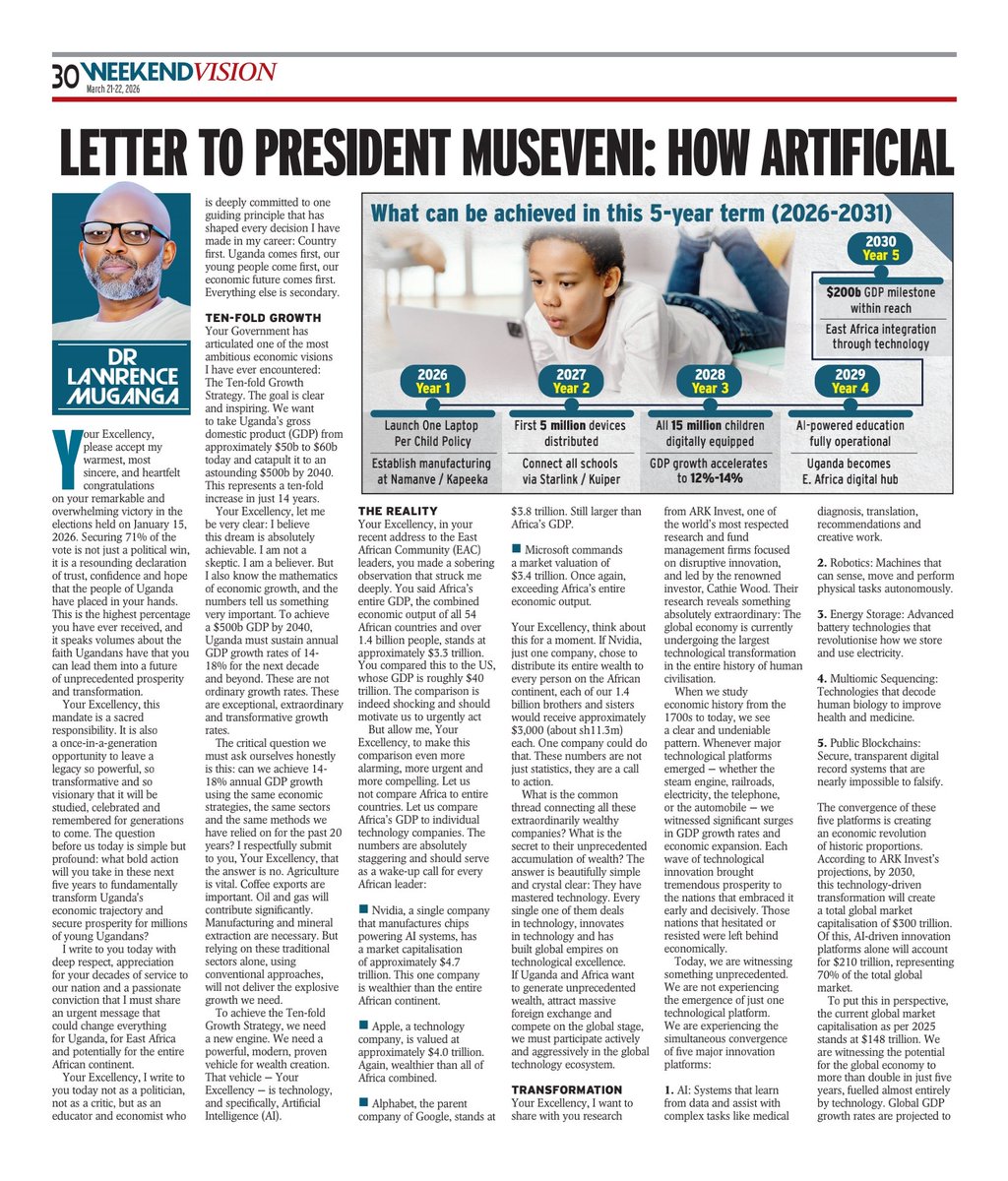
Yesterday, the #WeekendVision graciously published my open letter to H.E. President @KagutaMuseveni. I am attaching a copy here for his kind consideration and for every Ugandan to read. In it, I share my deepest thoughts on how we can collectively accelerate our nation's development, boldly move Uganda toward a $𝟓𝟎𝟎 𝐁𝐢𝐥𝐥𝐢𝐨𝐧 𝐆𝐃𝐏 𝐄𝐜𝐨𝐧𝐨𝐦𝐲, and secure the kind of future our children and grandchildren will inherit with great pride. This letter is born out of nothing else but pure, unapologetic love for our country. One of the key pillars I passionately advocate for in this letter is the 𝐎𝐧𝐞 𝐋𝐚𝐩𝐭𝐨𝐩 𝐏𝐞𝐫 𝐂𝐡𝐢𝐥𝐝 (𝐎𝐋𝐏𝐂) 𝐏𝐨𝐥𝐢𝐜𝐲. If implemented with the seriousness and urgency it deserves, this single transformative policy could revolutionize learning for millions of our children, dramatically reduce the financial burden on parents and guardians, deliver enormous national savings, and most critically, future-proof the education and employment prospects of an entire generation of Ugandans. The numbers make sense. The vision makes sense. Uganda is more than capable of being bold and we must be. Now, I have also noted the rumors making the rounds online suggesting that I am being considered for a cabinet position. I am genuinely humbled by the public's confidence in me. However, I want to respectfully and categorically state that to serve our beloved country, you do not have to be a Minister, a Presidential Advisor, or occupy any government position. Service to Uganda is not a title; it is a calling. My life's work is deeply anchored in the timeless wisdom of Mark 10:43: "𝐖𝐡𝐨𝐞𝐯𝐞𝐫 𝐰𝐚𝐧𝐭𝐬 𝐭𝐨 𝐛𝐞𝐜𝐨𝐦𝐞 𝐠𝐫𝐞𝐚𝐭 𝐚𝐦𝐨𝐧𝐠 𝐲𝐨𝐮 𝐦𝐮𝐬𝐭 𝐛𝐞 𝐲𝐨𝐮𝐫 𝐬𝐞𝐫𝐯𝐚𝐧𝐭." True greatness lies not in the offices we hold, but in how completely we pour ourselves into lifting others up. Furthermore, we are beautifully reminded in 1 Peter 4:10 that "𝐄𝐚𝐜𝐡 𝐨𝐟 𝐲𝐨𝐮 𝐬𝐡𝐨𝐮𝐥𝐝 𝐮𝐬𝐞 𝐰𝐡𝐚𝐭𝐞𝐯𝐞𝐫 𝐠𝐢𝐟𝐭 𝐲𝐨𝐮 𝐡𝐚𝐯𝐞 𝐫𝐞𝐜𝐞𝐢𝐯𝐞𝐝 𝐭𝐨 𝐬𝐞𝐫𝐯𝐞 𝐨𝐭𝐡𝐞𝐫𝐬, 𝐚𝐬 𝐟𝐚𝐢𝐭𝐡𝐟𝐮𝐥 𝐬𝐭𝐞𝐰𝐚𝐫𝐝𝐬 𝐨𝐟 𝐆𝐨𝐝’𝐬 𝐠𝐫𝐚𝐜𝐞 𝐢𝐧 𝐢𝐭𝐬 𝐯𝐚𝐫𝐢𝐨𝐮𝐬 𝐟𝐨𝐫𝐦𝐬." These are not just verses to me; they are the very heartbeat of my service journey. I believe that every talent and opportunity God grants us is a sacred trust, meant to be poured out entirely for the betterment of our people. I am a profoundly happy Vice Chancellor @VUKampala and I thank God every day for this opportunity. I wake up every single day with immense gratitude and pride because this position allows me to do exactly what I love most: creating and innovating an education that prepares our youth to be productive, competitive and future ready. Every student we shape, every innovative program we build, and every parent whose investment in their child's education we honor with real value, that is my service to Uganda. To every single Ugandan reading this today, I want to encourage you with all my heart to embrace the spirit of service beyond self. It does not matter whether you are in government, the private sector, the classroom, the hospital, the farm or the market. What matters is that in every position you occupy and every service you provide, you anchor yourself firmly in the principle of ”𝐂𝐨𝐮𝐧𝐭𝐫𝐲 𝐅𝐢𝐫𝐬𝐭." Let us all strive to leave behind a Uganda that our children, grandchildren and great grandchildren will look at and feel genuinely proud of the generation that built it. Let them say that their parents and grandparents believed in something greater than themselves. Let them walk tall because of the seeds we planted today. The triumph of Uganda rests on all 𝟒𝟔 𝐦𝐢𝐥𝐥𝐢𝐨𝐧 𝐨𝐟 𝐮𝐬. Not on a few offices or a handful of titles. Every one of us has a role to play and together, we shall reach the promised land. 𝐅𝐨𝐫 𝐆𝐨𝐝 𝐚𝐧𝐝 𝐦𝐲 𝐂𝐨𝐮𝐧𝐭𝐫𝐲.
ᗪᖇ. ᒪᗩᗯᖇEᑎᑕE ᗰᑌGᗩᑎGᗩ tweet mediaᗪᖇ. ᒪᗩᗯᖇEᑎᑕE ᗰᑌGᗩᑎGᗩ tweet media
English
89
127
348
30.9K
Legendary
Legendary@LegendaryMonk69·
@ArchitectMwangi How would these look if they were designed out of compressed earth bricks?
English
0
0
0
165
Architect Mwangi
Architect Mwangi@ArchitectMwangi·
My team's working on this amazing proposal for getaway cottages in the countryside 💯 #embu #airbnb
Architect Mwangi tweet mediaArchitect Mwangi tweet mediaArchitect Mwangi tweet media
English
4
30
194
9.3K
SHAV★
SHAV★@shavnyuy·
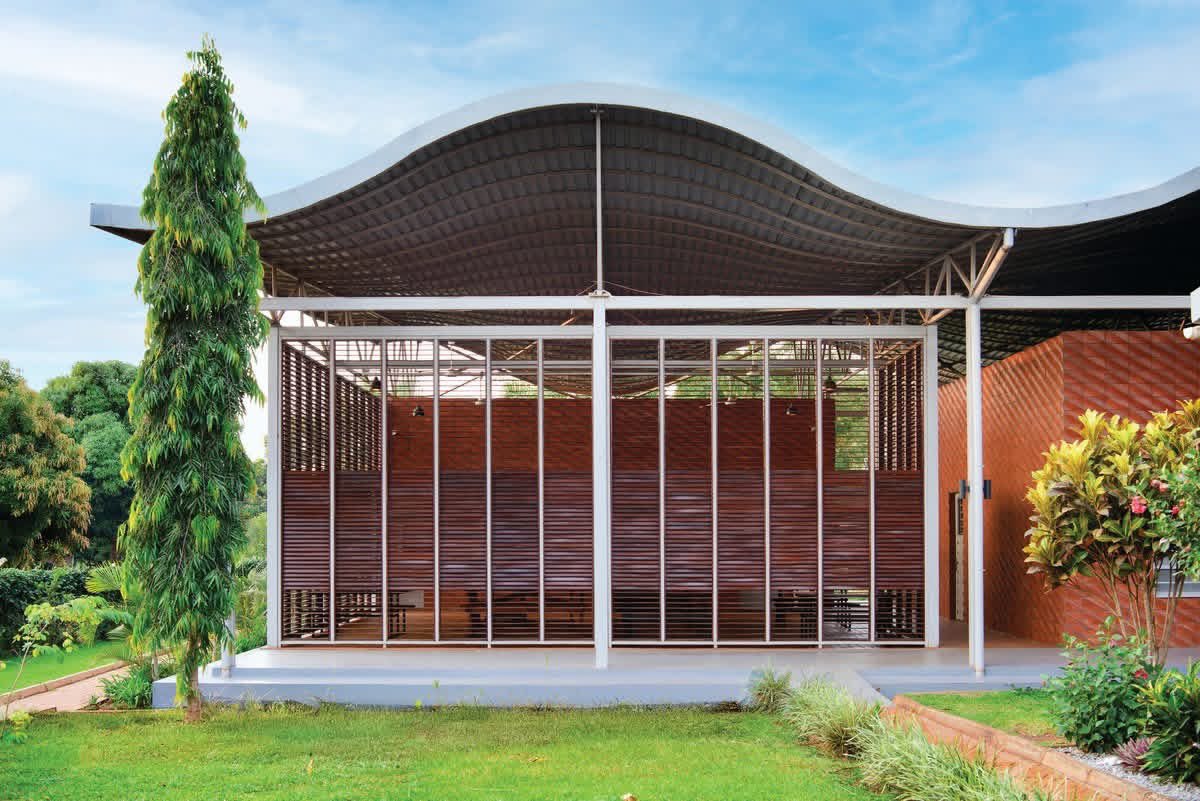
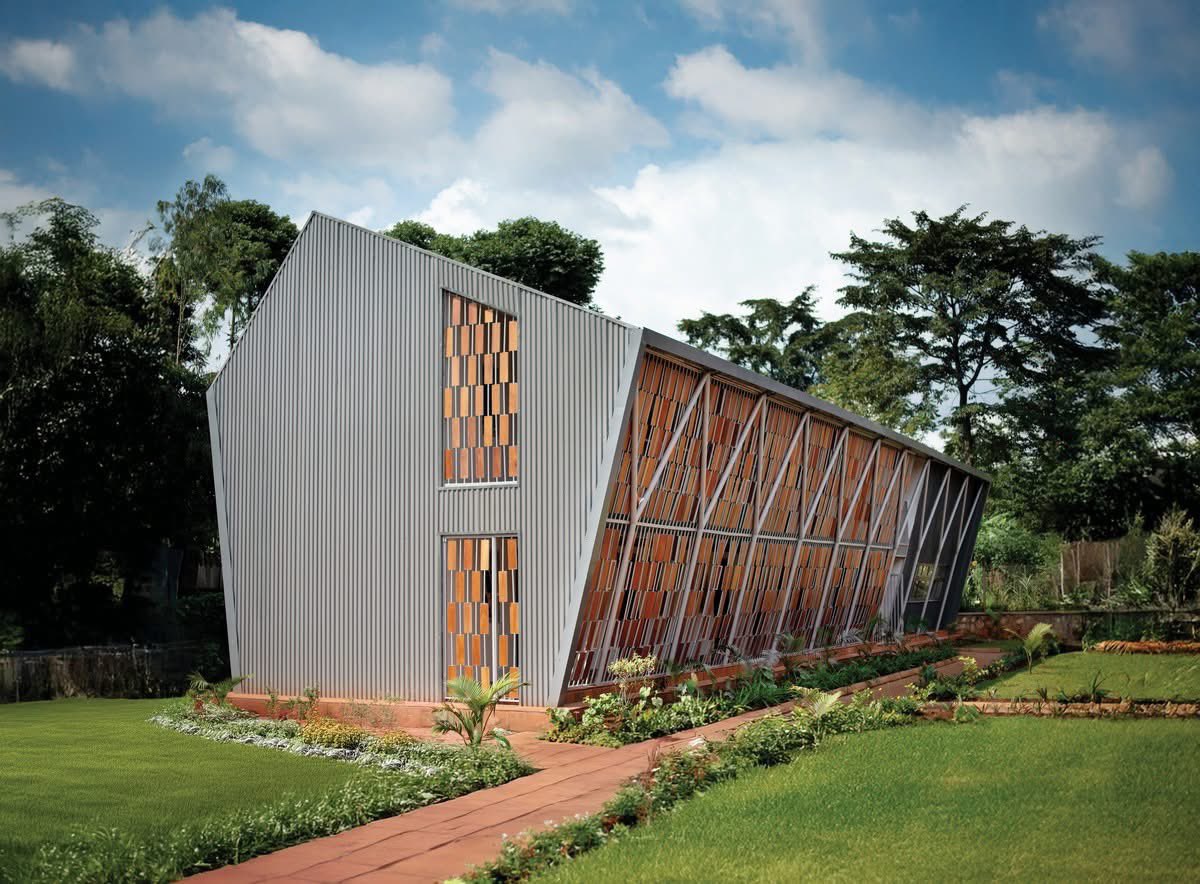
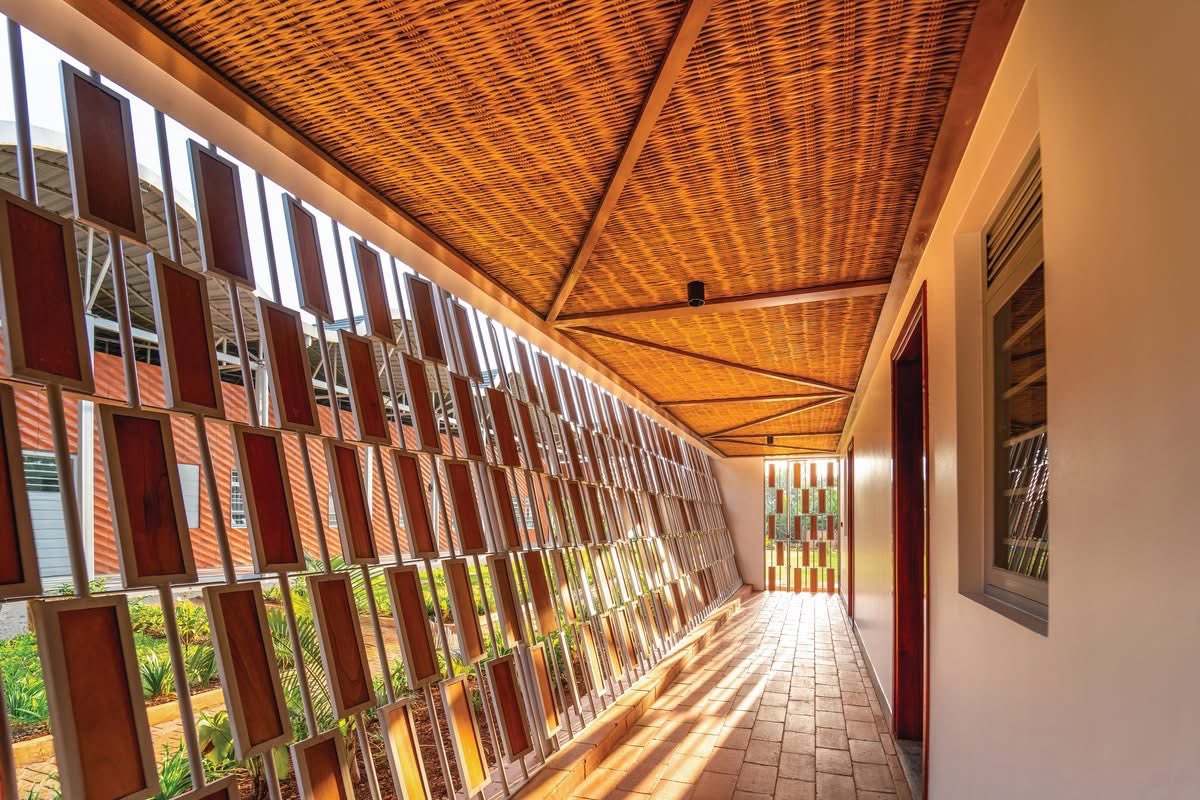
A surgical center in rural Uganda runs entirely off-grid. Solar power. Teak screens, woven Nile reed ceilings, clay tiles made by local potters. This is what African architecture looks like when planned with intention. 📍 Kyabirwa Surgical Center, Uganda Design: George K. George
SHAV★ tweet mediaSHAV★ tweet mediaSHAV★ tweet mediaSHAV★ tweet media
English
35
835
2.7K
81.3K
Legendary
Legendary@LegendaryMonk69·
@FERDINANDIUS The other question wd be how much leverage does Israel have on the US.
English
0
0
0
122
Legendary
Legendary@LegendaryMonk69·
@KakandeAlex In real estate the buyer must think like an investor. How efficient your capital is employed should be of concern.
English
0
0
0
170
Legendary
Legendary@LegendaryMonk69·
@nyaika256 Zuku has bad service & customers care. They might be on a different business plan.
English
0
0
0
140