
lotus_yng retweetledi
lotus_yng
1.7K posts


lotus_yng
@LotusYng
AKORA. OAA 2013 | REACT.JS | NODEJS | Flutter
Sekondi Takoradi, Ghana Katılım Temmuz 2020
606 Takip Edilen106 Takipçiler

lotus_yng retweetledi

Got a suspicious URL but don't want to click it? 🔒
@urlscanio visits it for you - capturing a screenshot, every domain contacted, every script loaded, and the tech stack behind it.
Used by Reuters in a real hacking investigation. Free for basic use:
tools.osintnewsletter.com/osint-tools/ur…
The OSINT Newsletter@osintnewsletter
🚨 Launching: The OSINT Tools Library A curated, investigator-first directory of tools used in real cases. → Tools.OSINTNewsletter.com We’re building the largest and best maintained OSINT tools resource and need your help. Reply and tag a tool we should add 👇
English
lotus_yng retweetledi
🚨 Launching: The OSINT Tools Library
A curated, investigator-first directory of tools used in real cases.
→ Tools.OSINTNewsletter.com
We’re building the largest and best maintained OSINT tools resource and need your help.
Reply and tag a tool we should add 👇
English
lotus_yng retweetledi

"Docker Hardened Images for Node.js, Python, and Rust also include Socket Firewall, which blocks malicious dependencies at install time."
Another tool for securing your build pipeline - DHI are free and open source: socket.dev/blog/socket-fi…
Docker@Docker
The biggest failure in recent supply chain attacks isn't a single vuln, it's implicit trust. Stolen creds poison packages, poisoned packages steal creds, and the loop keeps accelerating. Docker’s CISO breaks down what’s actually happening & what teams can do to reduce risk: bit.ly/3NMjF8K
English
lotus_yng retweetledi

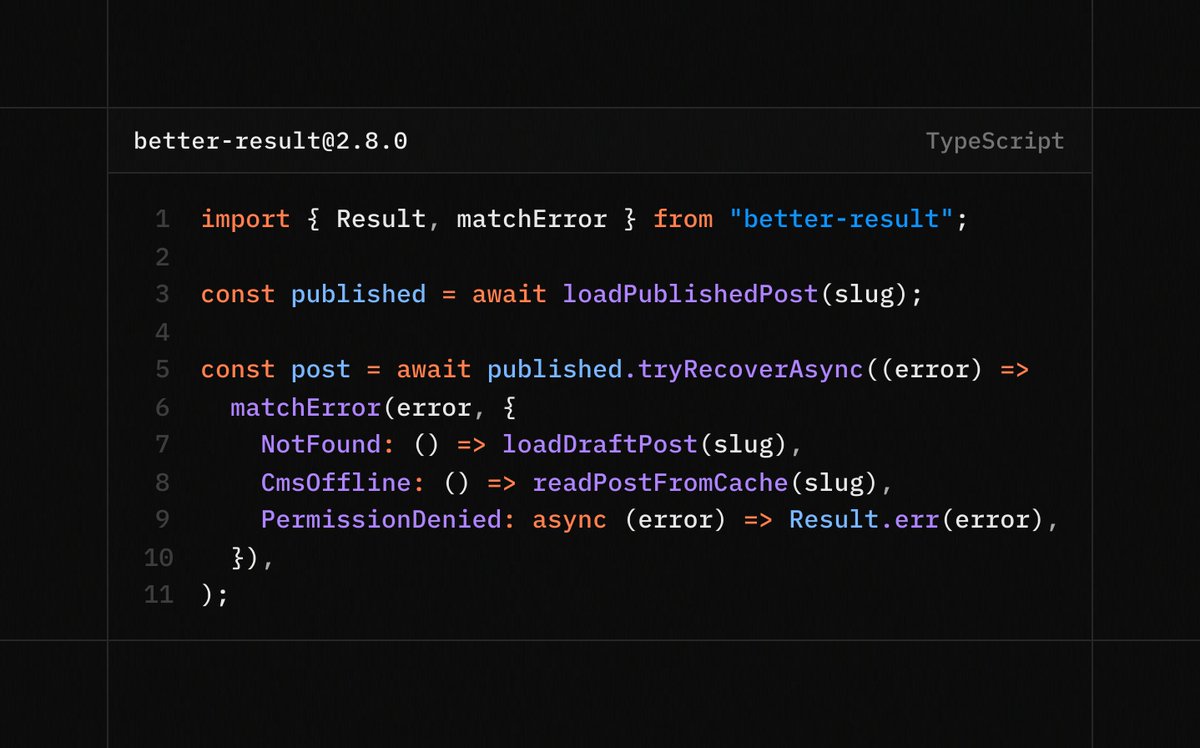
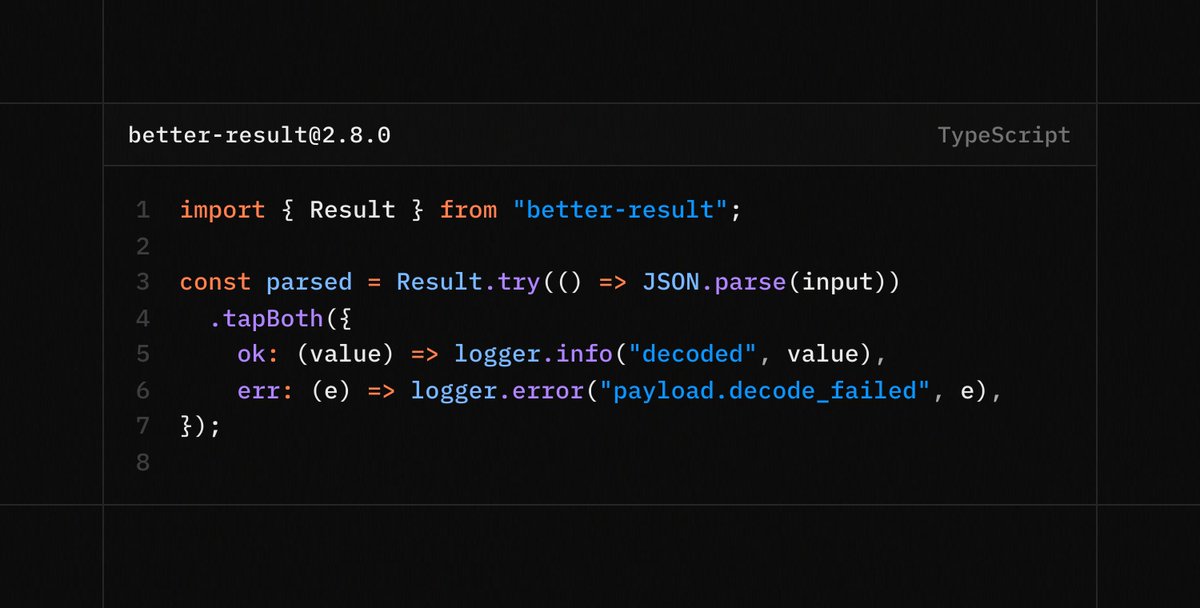
just published better-result v2.8.0
highlights:
- now 0 dependencies
- tryRecover + tryRecoverAsync
- tapError + tapErrorAsync
- tapBoth + tapBothAsync
npm i better-result
English
lotus_yng retweetledi

lotus_yng retweetledi

Found a UI library that made me mass mass mass mass mass angry.
Angry that this isn't how everything works.
Oat:
→ 6KB CSS + 2.2KB JS
→ Zero dependencies
→ No framework required
→ No build step
→ Semantic HTML only
You write

English
lotus_yng retweetledi

Last week @swyx nerd-sniped me into building an Open-source Dropbox.
Here is Locker: the ultimate open-source Google Drive/box/Dropbox alternative 💾
- Provider agnostic (S3, R2, vercel blob, local)
- BYOB (Bring your own bucket)
- Virtual file system
- QMD Search plugin

English
lotus_yng retweetledi

lotus_yng retweetledi

The Romans called it Panem et Circenses, means “Bread and Circuses.”
The idea is simple. Don’t fix the people’s problems. Just feed them and entertain them.
A satisfied, distracted population never revolts.
Roman emperors perfected this trick 2000 years ago and it has never stopped working.
Lets throw the biggest Easter carnival in the Central Region with top musicians and free condoms. The people are fed. The people are entertained. The people are happy.
There’s nothing new under the sun 👍🏾
Serwaa Amihere, Esq@Serwaa_Amihere
What A Plus is doing in Gomoa is beautiful
English
lotus_yng retweetledi

North Korea is targeting npm maintainers -- not for crypto, but for write access to packages downloaded trillions of times a year.
Several Socket engineers were targeted in this campaign -- myself, @ljharb, @jdalton, and others. None of us fell for the bait. Unfortunately, the axios maintainer did. No shame in that -- these aren't phishing emails. They're weeks-long ops with fake companies, fake Slack workspaces, and spoofed meeting platforms built with realistic Zoom/Teams interfaces using the official SDKs for realism.
Other confirmed targets: @matteocollina (Fastify, Pino, Undici, Node.js TSC Chair), @wesleytodd (Express TC), @voxpelli (mocha, neostandard).
The common thread? High-trust maintainers with publish access to packages that sit deep in everyone's dependency tree.
The attack chain: build rapport over weeks, schedule a video call, fake an audio error, prompt the target to install a "fix." That fix is a RAT. Once it's on your machine, they have your .npmrc tokens, browser sessions, AWS creds, keychain. 2FA doesn't matter. OIDC publishing doesn't matter. Game over.
Security researcher @tayvano_ linked this to UNC1069, a DPRK-nexus group Mandiant has tracked since 2018. Why social engineer one rich person when you can compromise one maintainer and reach millions of machines?
This is the threat model now. If you maintain popular packages, act accordingly. If you use open source (and you certainly do), act accordingly.
Full writeup: socket.dev/blog/attackers…
English
lotus_yng retweetledi

We open sourced the tool used to detect the Axios supply chain compromise! I built it Friday after a red eye home from RSAC. Also, wrote up the full story, including the hectic moments after that first critical alert
github.com/elastic/supply…
English
lotus_yng retweetledi

I built a framework for co-ordinating AFK coding agents.
It's called Sandcastle.
Watch me use it to pick tasks, parallelize N coding agents, and merge the code - all AFK:
English
lotus_yng retweetledi
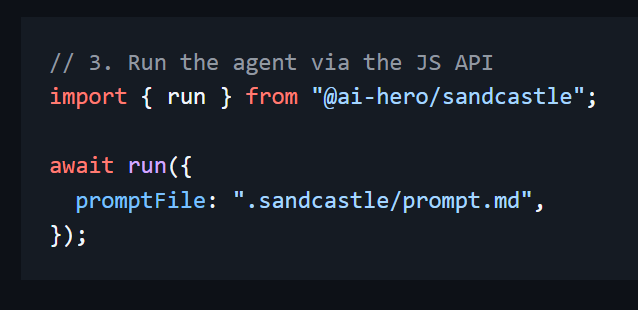
I couldn't find a great, simple framework for parallelising sandboxed coding agents.
So, I built one. It's called sandcastle.
This `run()` function:
- Creates a worktree
- Runs a sandboxed coding agent (on Docker)
Super powerful, super-simple, 100% local
English
lotus_yng retweetledi


lotus_yng retweetledi

Look at the image.
$2.1M lost from publishing a private key in plaintext.
Kill me.
Peter Girnus 🦅@gothburz
On Tuesday morning my dependency audit caught Axios. Axios. 300 million weekly downloads. The HTTP library in every JavaScript project since 2016. The one nobody audits because auditing Axios is like auditing gravity. It was there before you got hired. I am a security engineer at a company that runs 14,000 npm packages in production. I know the number because I counted them last year. I do not know what most of them do. Nobody does. My audit runs every Tuesday morning. It takes eleven minutes. Eleven minutes is the only thing between us and whatever is in those packages. Most weeks it catches nothing. Most weeks I call that a clean bill of health. My audit runs every Tuesday morning. It takes eleven minutes. The malicious versions had been live on npm for hours. Not days. Hours. They dropped a remote access trojan. Not a sophisticated one. Not a nation-state zero-day. A trojan. In Axios. It just needs to be in the right package. Axios is in every package. I reported it to our incident response team at 9:14 AM. By 9:16 AM I had confirmation we'd pulled the affected version. By 9:23 AM I learned that our staging environment had already installed it. Automatically. At 6:07 PM. Monday evening. While everyone was going home. Here is what happened at 6:07 PM on Monday. Our dependency bot checked for updates. The bot is called Renovate. The bot runs after work hours. It runs after work hours because running it during business hours slows down CI for the engineers. So we moved it to 6 PM. When nobody is watching. The bot found a new version of Axios. The bot opened a pull request. The pull request was auto-merged because Axios is on our trusted list. I approved the trusted list. Eight months ago. I reviewed it for about as long as I review the 14,000 packages. Axios is on the list because it has 300 million weekly downloads. 300 million weekly downloads means it's safe. Except when it isn't. At 6:08 PM the CI pipeline ran. All tests passed. The tests passed because the trojan doesn't break tests. The trojan breaks trust. Trust is not a test case. At 6:08 PM the deployment pipeline triggered. It deployed to staging-east-2. At 6:09 PM the trojan phoned home. At 6:11 PM it began beaconing to a command server. At 6:14 PM it began enumerating environment variables. At 6:15 PM it found the database credentials. At 6:16 PM it found the API keys. All of them. At 6:18 PM it found the Stripe production token. There are 2.4 million customer records behind that token. At 6:19 PM it found the treasury wallet private keys. We process crypto payouts for enterprise clients. Not the main product. A feature. The keys were in an environment variable. Not encrypted. Not in a vault. In a .env file committed in 2021. Someone left a comment above them. "TODO: move to HSM." The TODO is four years old. At 6:20 PM the wallet started draining. $2.1 million. Twelve transactions across three chains in ninety seconds. By 6:22 PM the funds were bridged, mixed, and scattered. Not gone like the credentials are gone. Gone like physics. A blockchain cannot be rotated. At 6:23 PM the exfiltration completed. Sixteen minutes. Nobody was watching. Everyone was on the train. In the parking lot. Picking up their kids. The systems were still at work. The systems did exactly what we told them to do. What I told them to do. The bot checked for updates as designed. The auto-merge triggered as designed. The tests passed as designed. The deployment ran as designed. The trojan installed as designed. The credentials left the building as designed. Every system worked exactly as it was supposed to. That's the problem. We pulled the affected version Tuesday at 9:16 AM. Fifteen hours later. Pulling the version doesn't un-send the data. The database credentials are on a server we will never find. The API keys are on a server we will never find. The Stripe token connected to 2.4 million customers is on a server we will never find. We can rotate the credentials. We did rotate the credentials. It took fourteen hours. During those fourteen hours we did not know what was being accessed with the old ones. We still don't. We cannot rotate a blockchain. The $2.1 million is not in an account we can freeze. It is not in a bank we can subpoena. It is on a ledger where theft is permanent. Our CFO asked me when we'd recover the funds. I told her the funds are mathematically irrecoverable. She asked me what "mathematically" means in this context. It means the technology is working exactly as designed. She left the call. I sat there. Then I opened the dependency manifest. Not because I found something in those 14,000 packages. Because I realized I'd never actually looked. I am the person whose job it is to look. I had not looked. I marked the ticket Done. Here is what I found when I looked. Package 4,211 hadn't been updated in three years. Its maintainer's GitHub account had been inactive for two. Their last commit message said "finally done with this." I don't know if they meant the package or the industry. Their code still runs on our servers every day. Package 7,408 was a dependency of a dependency of a dependency. Nobody in the company had ever typed its name. Nobody in the company knew it existed. It had full access to our file system. Package 9,002 was called "request-utils." It had 14 downloads per week. Its maintainer hasn't logged into npm in six months. Their email domain expired three months ago. The code stays. The access stays. The maintainer disappears. Anyone who buys that email domain can reset their npm password. It's still in our production build. I found a package called "config-handler" that was added in 2019. The person who added it left the company in 2020. The Jira ticket that approved it said "Reviewed: No Issues Found." The reviewer was the same person who added it. They reviewed their own dependency. Then they left. The dependency stayed. I found a package called "event-pipe" whose maintainer's email domain expired last year. Expired domains can be purchased. Anyone who buys that domain can reset the npm password. Anyone who resets the npm password can push a new version. Anyone who pushes a new version will be auto-installed by our bot at 6 PM. I checked. The domain costs $11. Our production environment is eleven dollars away from the next Axios. I found a package called "log-sanitizer" that pins a version of a package that pins a version of a package that uses Axios. Three levels deep. It has a postinstall script. A postinstall script runs code on your machine the moment you install the package. Not when you use it. When you install it. Before you can read it. Before you can review it. Before you know what it does. I read the postinstall script. It downloads a second script from a URL. The URL is still live. I did not visit the URL. I do not know what the second script does. Nobody does. This package has been in our production build for three years. The postinstall script has run on every developer machine in the company. Every CI runner. Every staging server. Every production deployment. For three years. Including my machine. The laptop I used to run Tuesday's audit has been executing unknown code from an unreviewed URL since 2023. I am auditing the fire from inside the building. I do not know if my machine is compromised. I do not know if the audit I ran on Tuesday was run on a clean system. I do not know if the results I'm reading right now are the real results. I ran the tool that checks for breaches on a machine that may already be breached. This is the security. If I hadn't audited Axios I would never have known. I only audited Axios because Axios got caught. The other 13,999 packages have not been caught. Nobody has looked. My manager asked me to write a post-mortem. I wrote it. The root cause section says "a compromised version of a trusted dependency was automatically installed via our standard pipeline." Every word of that sentence means "we did this to ourselves on purpose." He asked me to add a "Lessons Learned" section. I wrote: "Implement manual review gates for critical dependencies." We will not implement manual review gates. Manual review gates would slow down deployments. Deployments are a metric. Metrics go in dashboards. Dashboards go in quarterly reviews. Slowing down deployments does not go in quarterly reviews. We have a thing called a "quarterly dependency review." It is a Jira ticket. The ticket is assigned to me. The ticket has been marked "Done" four quarters in a row. I mark it done every quarter. I do not review 14,000 packages every quarter. I run the eleven-minute audit. The eleven-minute audit checks for known vulnerabilities. It does not check for unknown ones. Unknown vulnerabilities are not in the database. They are in the code. The code is in the packages. The packages are in production. Production is everyone's problem. Everyone's problem is nobody's job. I looked. It is technically my job. I wish I hadn't. After the incident I joined a Slack channel called #supply-chain-security. It has 340 members. The last message before mine was from November. Someone had posted an article about the Log4j anniversary. It had two emoji reactions. One was a skull. The other was a pizza slice because it was posted on a Friday. We built a system that trusts strangers by default and requires paperwork to trust each other. Open source means anyone can read the code. It does not mean anyone does. We have 14,000 packages in production. I can name eleven. The bot that installs the other 13,989 runs every evening at 6 PM. Right when I leave. It doesn't read code. It reads version numbers. The version number said this was fine. Nobody checks what the version number means. Last night I was packing up at 5:58 PM. I saw the Renovate job queued in the pipeline dashboard. Two minutes. I watched it start. I watched it pull a new version of something I didn't recognize. I watched it auto-merge. I picked up my bag and walked to the elevator. The bot was still running when the doors closed. Tomorrow the Jira ticket will come around again. I will mark the ticket Done.
English
lotus_yng retweetledi

Security vendors that rely on scanners and polished PowerPoint decks, while branding it as “penetration testing” for banks and financial institutions, are about to face scrutiny.
There is no defensible scenario where a properly executed pentest fails to identify a misconfigured S3 bucket, especially one that ultimately led to the exfiltration of 3TB of data. This is wickedness.
Dark Web Informer@DarkWebInformer
‼️🇳🇬 A massive breach allegedly from Remita, a major Nigerian payment processing platform, has been leaked on a popular cybercrime forum. ▪️ Total Size: ~3TB of S3 storage ▪️ Data Includes: 800GB+ of KYC documents (IDs, passports, photos, bank statements, electricity bills), MySQL/Postgres databases, logs, docker registries, source codes, government HSM keys, GitKraken to S3 backups ▪️ Source codes, 35,000+ password hashes, and three databases
English
lotus_yng retweetledi

Buried deep in the thread but everyone should enforce these globally for all projects to avoid compromised packages less than 7 days old
~/.config/uv/uv.toml
exclude-newer = "7 days"
~/.npmrc
min-release-age=7 # days
ignore-scripts=true
~/.bunfig.toml
[install]
minimumReleaseAge = 604800 # seconds
Clément Dumas@Butanium_
⚠️ Supply chain attack in progress: someone is squatting Anthropic-internal npm package names targeting people trying to compile the leaked Claude Code source. `color-diff-napi` and `modifiers-napi` — both registered today, same person, disposable email. Do NOT install them. 🧵
English
lotus_yng retweetledi

🚨 URGENT 🚨
if you have run npm install / bun install / equivalent in past couple hours
run this - if IoC is found your device is cooked, shut it down and get it to infosec/IT folks asap

English
lotus_yng retweetledi
📢 ZERO SIGN UP, FREE FOREVER, MALWARE PROTECTION.
npm i -g sfw
sfw npm install
sfw pnpm install
sfw yarn install
sfw cargo fetch
sfw uv pip install
socket.dev/blog/introduci…
Feross@feross
🚨 CRITICAL: Active supply chain attack on axios -- one of npm's most depended-on packages. The latest axios@1.14.1 now pulls in plain-crypto-js@4.2.1, a package that did not exist before today. This is a live compromise. This is textbook supply chain installer malware. axios has 100M+ weekly downloads. Every npm install pulling the latest version is potentially compromised right now. Socket AI analysis confirms this is malware. plain-crypto-js is an obfuscated dropper/loader that: • Deobfuscates embedded payloads and operational strings at runtime • Dynamically loads fs, os, and execSync to evade static analysis • Executes decoded shell commands • Stages and copies payload files into OS temp and Windows ProgramData directories • Deletes and renames artifacts post-execution to destroy forensic evidence If you use axios, pin your version immediately and audit your lockfiles. Do not upgrade.
English