Mark Armstrong
1.9K posts
Mark Armstrong
@MarkA1865
Freedom, prosperity and happiness for all people.
Katılım Ekim 2022
95 Takip Edilen28 Takipçiler

On a scale of 1-10, how confident are you that the stock market bounces back within a month?
English
@RepEliCrane @realannapaulina You voted with *all* the Democrats. You’re a traitor.
English
@realannapaulina @SteveScalise You put your priorities ahead of those of the nation. There’s no hiding it. Own it. You want to set the agenda. It’s not yours to set.
English
Here are the facts a lot of people are not sharing… for a reason. Read below. The fact is @SteveScalise controls the floor and sent congress home. They also held POTUS legislation for literally MONTHS. Until this vote. Read note below. Most of republican body most vocal about unconstitutionality all voted by proxy. Irony. I have not. Either way this is really about discharge petitions. For example: Congress has introduced legislation for MANY cycles on term limits and it never comes to the floor. I hope if I do a discharge petition on term limits and it gets 218 signatures they don’t change the rules and send everyone home. 💡

English
Mark Armstrong retweetledi

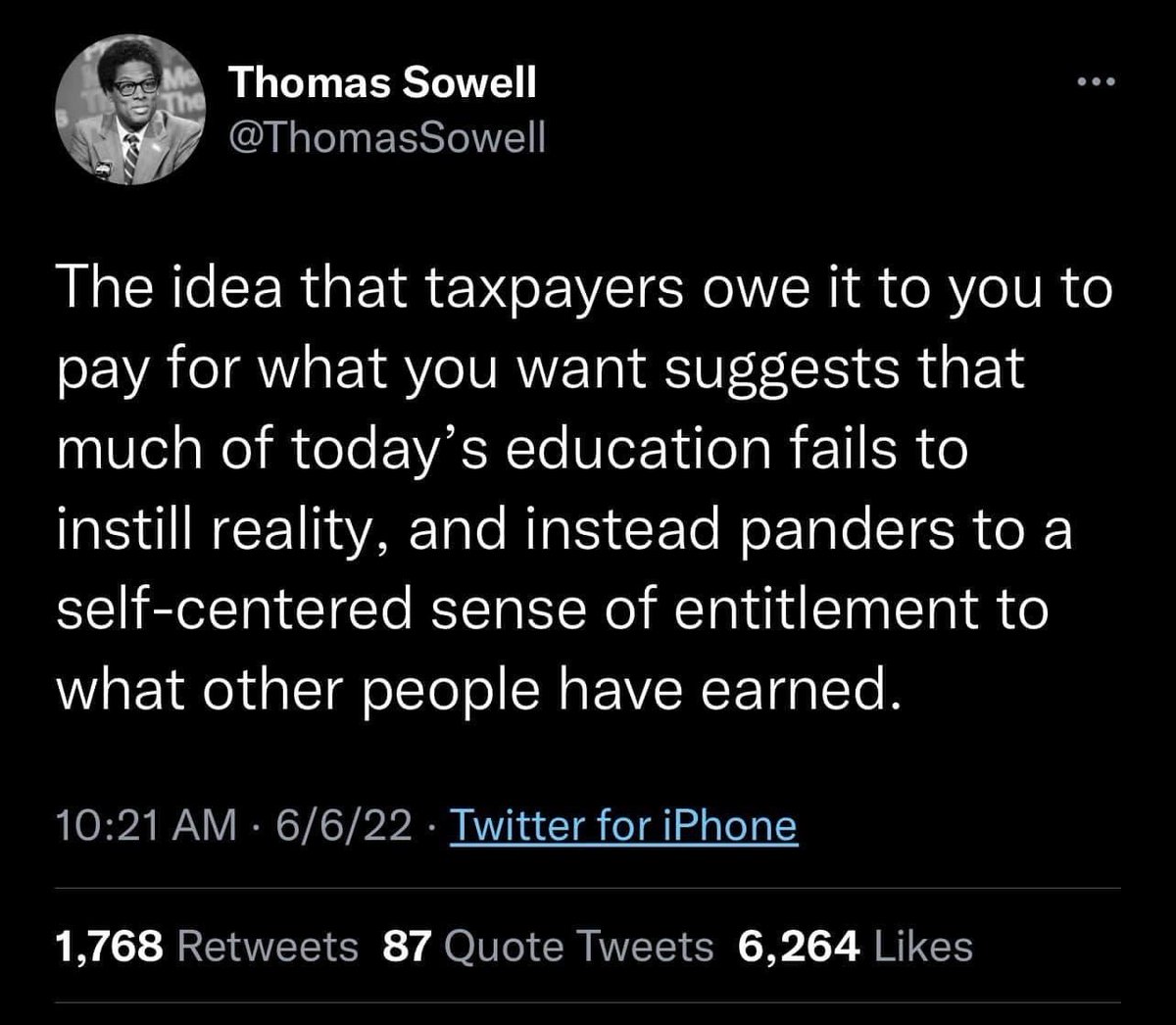
@MissCherryPi So you take it upon yourself to do what you say, God will not do.
English

There is zero tolerance for acts of vandalism against the East India Company. Dumping tea into the harbor is wrong. Period. All Bostonians should condemn it.
Ro Khanna@RoKhanna
There is zero tolerance for acts of vandalism against Tesla. Spraying the words "nazi cars" or lighting fire to dealership and chargers is wrong. Period. All Democrats should condemn it.
English
@MissCherryPi Your theology says you believe everyone is good, but your behavior shows that you think that those who disagree with you politically are evil and should be treated with violence.
English
@MissCherryPi You promote and excuse violence when it suits your purpose.
English
@MarioNawfal Habitat for Humanity is a climate organization? Since when?! They use volunteer labor to build houses for the poor. What does that have to do with climate?
English

🚨 🇺🇸 FBI MOVES TO CRIMINALIZE MAJOR CLIMATE GROUPS UNDER TRUMP
The FBI is targeting major climate organizations like Habitat for Humanity, accusing them of fraud for accepting EPA grants awarded during Biden's presidency.
Citibank court filings show these groups—previously approved to do federally-funded environmental work—are now facing unprecedented legal threats.
Observers claim this tactic comes directly from EPA Administrator Lee Zeldin, who just shut down all Environmental Justice offices nationwide, wiping out protections focused on pollution reduction in vulnerable communities.
Dems will view this as an extraordinary escalation: from climate policy to actively prosecuting its former advocates as criminals.
Source: The New Republic

Mario Nawfal@MarioNawfal
🚨🇺🇸MAJOR ENVIRONMENTAL GROUPS ENDORSE KAMALA FOR PRESIDENT Four major environmental organizations - including the League of Conservation Voters and Sierra Club - have endorsed Harris for president. The groups praised Harris as a "driving force" in delivering historic climate action, saying she's ready to build on those gains as president. The endorsements provide a significant boost to Harris as she seeks to consolidate Democratic support after Biden's exit. Source: CNN
English
@DaddyWri @mitchellvii Goldman has growth projected at over 1.5%. We won’t even get preliminary first quarter growth numbers until well into April. They won’t be refined and finalized until June. If the Fed really believes a 1.5% contraction is coming, they should be slashing interest rates.
English
This is the Atlanta Fed deciding that any cuts to government spending will be catastrophic for GDP. Because GDP includes government spending as a direct number.
Of course, they have to ignore all private sector growth at the same time, which they are clearly doing.
So yes, this is the Deep State trying to create a recession out of thin air.
English

OK THIS IS WEIRD‼️
We went from a projected GDP growth of 3.9% a month ago to now a projected contraction of 1.5%? Over tariffs? WHAT?!!! That is not possible. Something is fishy as hell with these numbers!
Is this the deep state fighting back?
[The Atlanta Federal Reserve is projecting a contraction of the nation’s gross domestic product (GDP) of 1.5 percent in the first quarter, flashing a warning sign for the U.S. economy.
The projection is a significant shift for the Atlanta Fed over the last few weeks that comes a little more than a month after President Trump took office.
The Atlanta Fed last week was predicting 2.3 percent positive growth for the first quarter. A month ago, it was registering 3.9 percent growth.]
English
@AceDoloX1 @CollinRugg It needs to be more than just an apology. Giving somebody a concussion with the baton because they’re passing you…
That’s crazy. You’re talking like it’s nothing because it wasn’t a fractured skull. Concussions are serious – very serious.
Don’t trivialize this
English

@CollinRugg Asking for jail for this is insane lol. As a track runner it’s something that barely ever happens but it does and you get DQ’d and your school sports policy applies. Just like when kids fight in baseball or when you lay a bad hit in football etc.
English

NEW: High school track runner gets attacked with a baton in the middle of a relay at the VSHL Class 3 State Indoor Championships.
Kaelen Tucker was on the second leg of the 4x200m relay at Liberty University in Lynchburg, VA, when she got smacked in the head.
Tucker suffered a concussion and a potential skull fracture.
"When we got to the curve she kept bumping me in my arm and when we got off the curve I finally passed her and that was when she hit me with the baton," Tucker said.
The girl's mother said neither the runner nor the coach apologized for the incident.
It's unclear if Trucker will file charges.
English
@jmart How do you look at yourself in the mirror knowing you’re such a liar? Vance advocated free speech for both the left and the right. You don’t like the fact that the right was included. That says all anyone needs to know about your position.
English

Vance didn’t offer a word of reassurance, skipped over Ukraine almost entirely and instead used his remarks to tell Europe that, actually, their biggest challenge was from within and they should heal thyselves by being more accepting of far-right parties.
Never mind the worst land war here since World War II, Vance seemed to say, and never mind the fascists who began last century’s war. Loosen up and drop the political firewall meant to stymie the rise of latter-day Nazis, he said.
It would have been akin to German Chancellor Olaf Scholz flying to North Carolina last year, as the floodwaters raged, and telling Americans that their real problem was portion size.
English
NEW: My column from Munich and the week when Europe’s fears about Trump seemed to come true
What can be done ?
@alexstubb - the pride of Finland by way of Furman - has an idea
politico.com/news/magazine/…
English
@4HumanUnity @DC_Draino How do you know this? Elon’s team had access to the records - at least until a leftist judge shut him down. It seems like *you* are the one making things up.
English

.@DC_Draino Give me a break. These people are lying to you.
There is zero evidence that $100 billion a year is magically vanishing into the hands of people with no Social Security numbers. None. It’s a made-up number being tossed around like a hot dog at a county fair, and they’re hoping you’ll just swallow it without question.
Here’s the truth: Some legal immigrants and taxpayers without SSNs get benefits they’re entitled to, like veterans, seniors, or workers using ITINs. Meanwhile, undocumented workers pump billions into Social Security and Medicare and never see a dime back. That’s the real “gravy train,” and it’s flowing straight to the government.
But you know what is real? Justifying trillions in tax breaks for billionaires while they gut services for working Americans. That’s the scam. That’s the heist. And these clowns are feeding you conspiracies to keep you distracted while they loot the country. Wake up.
English

Did you catch this part?
Elon said “I was told that there are currently over $100B/year of entitlements payments to individuals with no SSN or even a temporary ID number. If accurate, this is extremely suspicious.”
Over $100 BILLION is being sent every year to people in America with no Social Security number
This may be the biggest money laundering scandal since Ukraine, ActBlue, and all the other globalist scams
This is why Democrats are freaking out - their DC gravy train was just exposed
Elon Musk@elonmusk
To be clear, what the @DOGE team and @USTreasury have jointly agreed makes sense is the following: - Require that all outgoing government payments have a payment categorization code, which is necessary in order to pass financial audits. This is frequently left blank, making audits almost impossible. - All payments must also include a rationale for the payment in the comment field, which is currently left blank. Importantly, we are not yet applying ANY judgment to this rationale, but simply requiring that SOME attempt be made to explain the payment more than NOTHING! - The DO-NOT-PAY list of entities known to be fraudulent or people who are dead or are probable fronts for terrorist organizations or do not match Congressional appropriations must actually be implemented and not ignored. Also, it can currently take up to a year to get on this list, which is far too long. This list should be updated at least weekly, if not daily. The above super obvious and necessary changes are being implemented by existing, long-time career government employees, not anyone from @DOGE. It is ridiculous that these changes didn’t exist already! Yesterday, I was told that there are currently over $100B/year of entitlements payments to individuals with no SSN or even a temporary ID number. If accurate, this is extremely suspicious. When I asked if anyone at Treasury had a rough guess for what percentage of that number is unequivocal and obvious fraud, the consensus in the room was about half, so $50B/year or $1B/week!! This is utterly insane and must be addressed immediately.
English
Mark Armstrong retweetledi
@jeffreymlevy @TristanSnell Tell me you know nothing about economics by posting an idiotic meme. The richest people in the USA did not get rich by taking anything from the poor. They got rich by creating new value that never existed before. In so doing, they increased everyone’s well-being.
English

@TristanSnell It doesn’t end until America is suffering so much you see a revolt by his own cult. They have no idea what pain is coming their way (along with most of us). Our allies will find other trading partners after Trump starts tariffs on them.

English

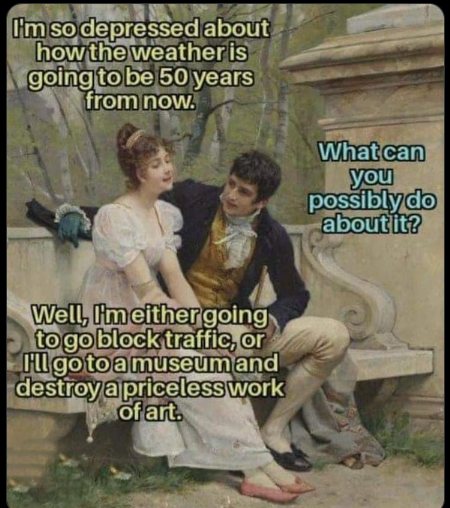
BREAKING: Trump and Republicans aiming to KILL the tax deduction for mortgages -- screwing 86 MILLION American homeowners
The GOP is going to slaughter the middle class
Just so Trump and Musk and other billionaires can get away with paying ZERO
English
Mark Armstrong retweetledi
Mark Armstrong retweetledi
Summary: you don't go to scientists for their political opinions, and you want to be damned sure that their scientific opinion is not informed by their political opinions.
Owen Gregorian@OwenGregorian
Scientists Getting Political on Social Media Could Hurt Their Credibility, New Study Finds | Zaid Jilani, The American Saga Getting political on social media could have its upsides, but the downside is that you can hurt the trust of your audience. The COVID-19 pandemic could have been a unifying moment for Americans — as we all learned to come together to face off with one of the greatest challenges of our lives. But everything about the pandemic quickly became politicized — from who to blame for the deaths we suffered here in the United States to what kind of statement you were making to the world by wearing a face mask or not. Part of that politicization came early on, when many of the same public health officials we were relying on to give us sound advice about how to minimize our risks decided that these risks paled in comparison to the need to protest against racism. Many even urged people to ignore social distancing guidelines to join the demonstrations after the murder of George Floyd. “We should always evaluate the risks and benefits of efforts to control the virus,” Jennifer Nuzzo, a Johns Hopkins epidemiologist, tweeted at the time. “In this moment the public health risks of not protesting to demand an end to systemic racism greatly exceed the harms of the virus.” I’m sure many of the public health advocates and scientists who promoted this stance really believed in what they were doing. They were leveraging their prestige as scientists to advocate for a compelling social cause. But I always wondered whether there was a greater cost they were not factoring into their decision to become so openly political: what if they were harming their credibility among the broader public, who wanted objective scientific advice without a side helping of politics? How the public feels about scientists getting political It turned out that European economists and social scientists Eleonora Alabrese, Francesco Capozza, and Prashant Garg were wondering the same thing. “In Italy during the pandemic, many virologists and experts they were also known to have expressed online their opinion on other stuff — could be redistribution, could be anything political,” Capozzatold me in an interview. He noticed how these political expressions were coloring how other users perceived these scientists. “Twitter users were kind of retweeting or mentioning — yeah you shouldn’t trust this guy because this guy is clearly a left-wing or right-wing or whatever person. So whatever he’s saying about COVID might not be completely neutral or helpful for society because he or she has displayed political bias in other posts So he and his co-authors decided to do an experiment where they exposed both members of the general public and journalists to social media content from scientists to see how it impacted the view of credibility (as measured by how they view their profile and research and how willing they are to read their content). The scientist’s profiles were constructed — meaning they weren’t real people — but were then filled with a range of political content. Some scientists expressed Democratic beliefs, others expressed Republican beliefs, and some expressed themselves in more neutral ways. “What we find basically is that people rate the neutral scientist — the one who doesn’t express any political view — as the most credible. And any political expression in the way that we characterized it is penalized,” Alabrese explained. They illustrated the effect in the following figure. Neutral statements, as you can see, cost the scientists nothing in credibility. But strong expressions of political belief, on the other hand, walloped them: The more extreme the political statement — strong as opposed to moderate — the more your credibility takes a hit. The effect of conservative political expression was particularly strong for how journalists perceived the scientists: Why might that be the case? People in both groups tended to penalize scientists more for disagreeing with themselves — Democrats were more hostile to Republicans and vice versa. But the researchers suggested that one reason this might be is that journalists tend to a left-leaning group. Can we un-ring the bell on scientists getting too political? A similar study to the one I described above was released in 2023. It found that when the scientific journal Nature issued a presidential endorsement for Joe Biden in 2020, it reduced the trust that Donald Trump voters had for the publication while doing little to impact voting intentions. These studies add up the conclusion that being viewed as politically biased can limit the reach that scientists have on the world. According to Pew polling, trust in scientists fell about twenty points from 2019 to 2023 among Republican and Republican-leaning adults. This is a big problem because science is necessary for human thriving. Scientists have to have the trust of the public if they want us to do things that benefit society, like vaccinating our kids. If the general public thinks that scientists are only out to serve their political faction, they look less like neutral authorities and more like referees who are rigging the game. What’s happening among scientist credibility is also not limited to that field. A broad array of American institutions have seen their credibility collapse in recent years, with wide partisan divides opening up all over the place. The center is not holding. Does that mean there’s no reason for a scientist or someone else in a trusted profession to get political? I’d argue that there might be times when someone needs to take off their objective hat and become an activist for a cause they feel strongly about and where they could make a real difference. But the broad politicization of entire fields is also making it so that big chunks of the public just don’t trust them anymore. When public health experts told us that we have to isolate ourselves to protect ourselves from a pandemic but then told us that we should gather by the thousands to protest racism, we had good reason to ask: who’s really speaking now, the objective expert or the impassioned activist? Read more: theamericansaga.com/p/scientists-g…
English
Mark Armstrong retweetledi
Land use requirements (among other thing) will seriously constrain the penetration of wind and solar into the grid, and this analysis doesn't include the additional land requirements for transmission lines. Well done, Chris
Chris Martz@ChrisMartzWX
Do you like math? Do you like making climate activists cry? If so, this post is for you. 🫵 They advertise utility-scale solar photovoltaic (PV) and wind as being “eco-friendly” energy technologies because they emit less CO₂ over their total lifecycle. Emissions is all the “greens” like to jack their sausage holsters about. But, when you point out to them just how land intensive their “green” energy technologies are, they squirm trying to justify being vehemently opposed to nuclear fission — a near-infinite, carbon-free, energy-dense electricity source — and working to destroying the landscape with massive amounts of solar cells and wind farms to save the planet. Let's run the numbers, shall we? 𝐍𝐔𝐂𝐋𝐄𝐀𝐑 𝐅𝐈𝐒𝐒𝐈𝐎𝐍 ⚛️ The standard nuclear reactor has a 1,000-megawatt (MW) rating. This means that each plant is, on average, installed with 1,000 MW of power capacity. A 1,000-MW nuclear facility occupies, on average, just over 1 square mile (640 acres) of land. To figure out just how many homes a single 1,000 MW plant could power, we can start by using the following equation, 𝑬 = 𝑷 × 𝒕, where, • 𝑬 = energy (megawatt hours, MWh) • 𝑷 = power (MW) • 𝒕 = time (hours, hr) If we assume a 1,000 MW nuclear reactor operates at FULL power during an entire calendar year, it will produce ~8.76 terawatt-hours (TWh) of electricity per year. 𝑬 = 1,000 MW × 24 hr (1-day) × 365 [days] (1 yr) = 8.76 million MWh / yr (8.76 TWh / yr) However, reactors do 𝒏𝒐𝒕 operate at full power 100% of the time because they come offline for refueling or to undergo maintenance. Therefore, we must take the capacity factor into consideration in our calculation. According to the U.S. Energy Information Administration (EIA), nuclear power has the highest capacity factor of any electricity generation source in the U.S. at 0.93 in 2023. 🔗eia.gov/electricity/an… What this value means is that nuclear reactors in the U.S. operated at full installed power for about 93% of the calendar year in 2023. So, to figure out how much electricity that each plant produces in a year, we must multiply the previously calculated value of 8.76 TWh by the capacity factor of 0.93. If we do that, we get, 𝑬 = (8.76 TWh / year) × 0.93 ≈ 8.15 TWh / yr Now, to determine just how many homes this powers, we must divide 𝑬 by the average amount of electricity U.S. homeowners purchase in a year. According to the EIA, that number is ~10,500 kilowatt-hours (KWh) or 1.05 × 10⁻⁵ TWh. 🔗eia.gov/energyexplaine… Thus, dividing 8.15 TWh / yr by 1.05 × 10⁻⁵ TWh / yr gives us about 776,190 homes. Therefore, a 1,000 MW nuclear electricity generation station occupying one square mile of land, operating with a capacity factor of 0.93, can power more than 775,000 homes throughout the course of a year based on U.S. data. Now that is pretty energy-dense, eh? Why would any climate activist be opposed to that? Let's now compare nuclear to the greens' preferred solar and wind technologies. 𝐒𝐎𝐋𝐀𝐑 𝐏𝐕 ☀️ A utility-scale solar PV array requires at least 1 MW of installed power. 🔗cleanpower.org/facts/solar-po… A1 MW solar PV array requires about 5-7 acres of land according to the Solar Energy Industries Association (SEIA). 🔗seia.org/initiatives/la… And, according to the EIA, solar had a capacity factor of 0.232 last year in the U.S., by far the 𝒍𝒐𝒘𝒆𝒔𝒕 of any energy source. What this means is that solar PV arrays only operated at full power 23.2% of the year in 2023 due to variable weather conditions and sky cover. By using the same calculations as above, a 1,000 MW solar PV array would occupy some 5,000-7,000 acres of land (mean of ~6,000 acres), all the while powering 193,523 homes, some 582,667 fewer homes than if it were nuclear power. Yikes, that doesn't sound very efficient. 😬 𝐎𝐍𝐒𝐇𝐎𝐑𝐄 𝐖𝐈𝐍𝐃 A single utility-scale wind turbine occupies ~80 acres of land, which each turbine given a 2.5 MW rating. A 1,000 MW onshore wind farm would require about 400 2.5-MW turbines occupying some 32,000 acres of land area. And, according to the EIA, wind had a capacity factor of 0.332 in 2023, meaning that U.S. utility-scale wind farms operated at full power capacity for 33.2% of the year last year. If we employ the same methods as before, we'll find that a 1,000 MW wind farm could power about 277,143 homes for one year. Therefore, a 1,000 MW wind farm would power 499,047 fewer homes than a 1,000 MW nuclear facility while occupying over 50 times as much land area. That's not exactly efficient either, now, is it? 𝐒𝐔𝐌𝐌𝐀𝐑𝐈𝐙𝐈𝐍𝐆 𝐈𝐓 𝐀𝐋𝐋 𝐔𝐏 In order to power the same number of homes that a 1,000 MW nuclear power plant can, it would require either: • For 𝐬𝐨𝐥𝐚𝐫 𝐏𝐕: Approximately 4,000 MW of installed power (equivalent to four nuclear facilities) and 24,000 acres of land (some 37.5 × as much land area than a nuclear plant). • For 𝐨𝐧𝐬𝐡𝐨𝐫𝐞 𝐰𝐢𝐧𝐝: Approximately 2,800 MW of installed power (equivalent to 2.8 nuclear facilities) and 89,600 acres of land (some 140 × as much land area than a nuclear power generation station). But, I should caution you that these estimates are in fact conservative. Why? Because they do 𝒏𝒐𝒕 take into consideration land area required for battery storage due to their intermittency in overcast sky conditions, low wind speed and/or overnight. Based on land requirements alone, if climate activists were serious environmentalists, they would support deployment of more nuclear power. Some of them do, but most I have interacted with don't and find terrible excuses to support massive amounts of solar PV and onshore wind farm construction. Nuclear power represents both continued economic growth and a clean energy future. But, many climate activists don't want continued economic growth. They want to abolish capitalism and overturn western culture.
English
@Roku The app for your iPhone doesn’t work. I tried setting it up for remote control, and I had it working. Then it just stopped.
It can no longer find the Roku stick.
And there is nobody to talk to help me fix it. I look on your app for support or contacts, and I can’t find it
English