Mark O'Sullivan

17.1K posts

Mark O'Sullivan banner
Mark O'Sullivan

Mark O'Sullivan

@MarkOSullivan94

Building a Airbnb alternative called Caza de Casa

Málaga, Spain Katılım Nisan 2009
1.1K Takip Edilen2.3K Takipçiler
Sabitlenmiş Tweet
Mark O'Sullivan
Mark O'Sullivan@MarkOSullivan94·
"I'm tired waiting for someone to do an alternative to Airbnb, I'm just going to start working on this right now" Listen to why I decided to start Caza de Casa and much much more in this conversation I had with @jcrpntr on the @futuresignalxyz podcast
Mark O'Sullivan tweet media
English
4
9
36
113.2K
Mark O'Sullivan
Mark O'Sullivan@MarkOSullivan94·
@hispanicnomad I know a few people who have done that When you're thinking of doing it, send me a message and I'll reach out to them and let you know what they did
English
1
0
1
72
Hispanic Nomad | Remote Work, Travel, Growth
Would you take a 3 months long trip across Europe 🇪🇺 on a van? One of my life long dreams has always been buying a camper and driving around Europe for months on end I’ve seen most of the continent at this point… but when travelling by plane, you miss out on SO many small details So… now that I’m older and want a quieter form of travel… Maybe it’s time
Hispanic Nomad | Remote Work, Travel, Growth tweet media
English
14
1
33
2.2K
Mark O'Sullivan
Mark O'Sullivan@MarkOSullivan94·
@RoadieWolf Thailand Bali is cool place to check out if you have never been before
English
0
0
1
50
J A S O N 🐺 -
J A S O N 🐺 -@RoadieWolf·
Looking at visiting south east asia end of summer. outside of philipines any good places to visit?
English
3
0
1
172
Mark O'Sullivan
Mark O'Sullivan@MarkOSullivan94·
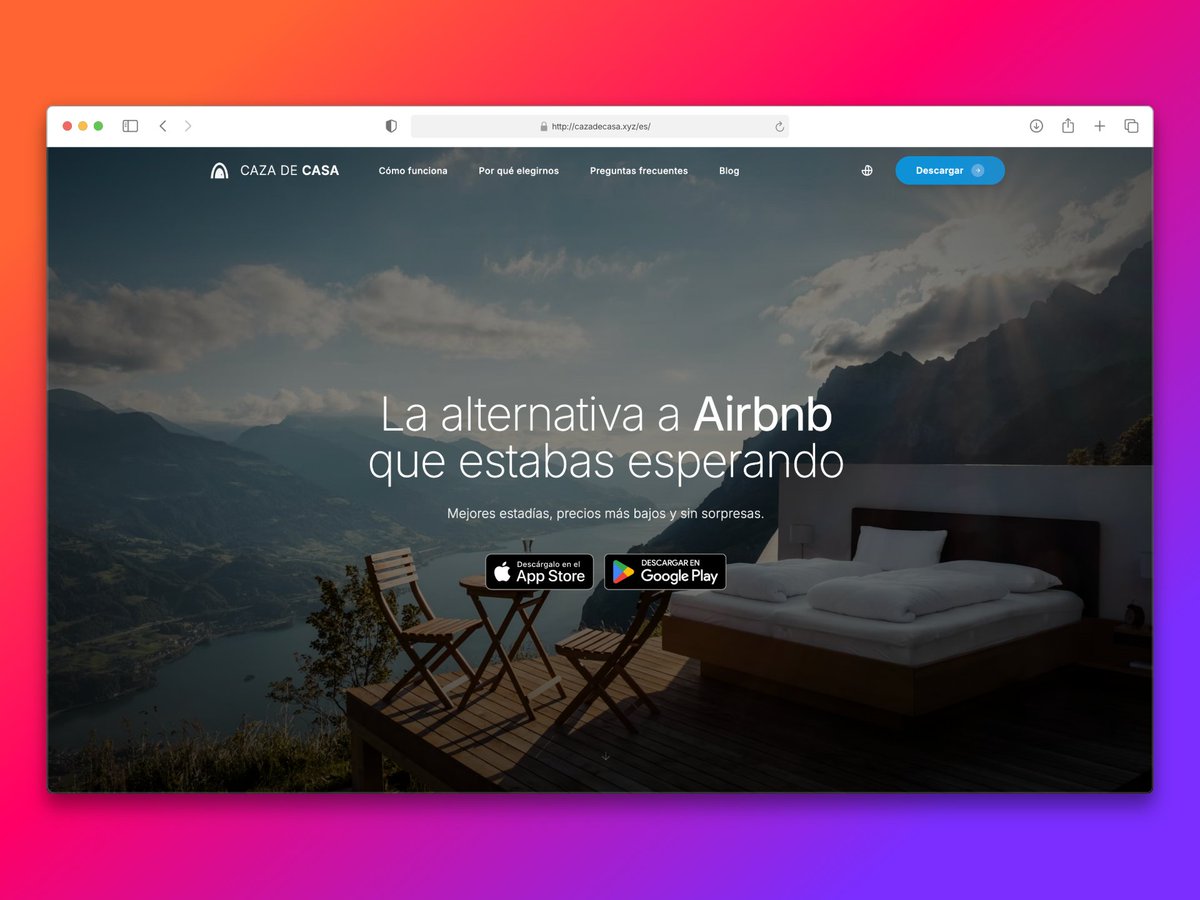
I recently added screenshots of Caza de Casa in to the Spanish app stores. But before I could publish them I needed add a link in the privacy policy page in Spanish. This wasn't possible with the existing setup for the landing page. The landing page was already translated to Spanish but it was not setup with language routes and instead was changed only when the user tapped on the globe icon and selected a language. This used a function to store the language selection and the page content was updated to whatever language was selected. Now we have a /es/ route for all the pages making it easier to share the site with Spanish only speakers.
Mark O'Sullivan tweet media
English
0
0
1
98
Mark O'Sullivan
Mark O'Sullivan@MarkOSullivan94·
@TimurNegru Absolutely. I haven't seen anything to suggest people don't want to do it but I have seen more and more reports of less entry level opportunities and with that there'll be less opportunities which are fully remote.
English
0
0
1
12
Tim
Tim@TimurNegru·
@MarkOSullivan94 True. But do you think the new generation are as eager for digital nomading as ours was?
English
1
0
1
26
Alessio Salvadorini 💙
Alessio Salvadorini 💙@ASalvadorini·
@MarkOSullivan94 I code Flutter so between the two I've always used IntelliJ because it's much lighter as it comes without all the ready made plugins for Android. I can install what I need later on 🤷‍♂️
English
1
0
1
102
Alessio Salvadorini 💙
Alessio Salvadorini 💙@ASalvadorini·
From your machine, you need to remove one IDE between: Antigravity IDE Antigravity 2,0 VS Code Android Studio Intellij Idea XCode Which one you remove and why? #AI #IDE #coding
Alessio Salvadorini 💙 tweet media
English
26
0
12
7.9K
ILIAS ISM
ILIAS ISM@illyism·
RIP
ILIAS ISM tweet media
Zeb Evans@DJ_CURFEW

Today we reduced headcount by 22%. The business is the strongest it's ever been. So I think it's important to be direct about what I'm seeing and why. First, I made this decision and I own it. I did it because the way to operate at the highest level of productivity is changing, and to win the future, ClickUp needs to change with it. Second, this wasn't about cutting costs. Most savings from this change will flow directly back into the people who stay. We'll be introducing million-dollar salary bands. If you create outsized impact using AI, you'll be paid outside of traditional bands. Most importantly, I have the deepest gratitude for those affected. We're doing this from a position of strength specifically so we can take care of people properly. Everyone affected receives a package aimed at honoring their contributions and easing the transition. I only see two options: wait for this to play out gradually in the market or be honest about what I'm seeing and act proactively. THE 100X ORGANIZATION The primary change is that we're restructuring around what I call 100x org. The goal is 100x output. The roles required to build at the highest level are fundamentally different than they were a year ago. Incremental improvements to existing systems won't get us there. We need new ones. That means creating enough disruption to rebuild rather than iterate on what's already broken. The common narrative is that AI makes everyone more productive. It doesn't. Many of the workflows of today, if left unchanged, create bottlenecks in AI systems. These roles will evolve. But waiting for that to happen naturally means falling behind now. The 100x org is actually heavily dependent on people - infinitely more than today. This is only possible with 10x people that have embraced and adopted new ways of working. THE BUILDERS, AGENT MANAGERS, AND FRONT-LINERS — THE BUILDERS: 10X ENGINEERS I don't think most companies have internalized what's actually happening with AI in engineering. The common narrative is that AI makes all engineers more productive. That may be true in isolation, but at an organization level - that is the farthest thing from reality. Here's what we've validated recently at ClickUp: the great engineers, the ones who can orchestrate, architect, and review, are becoming 100x engineers. They're not writing code. They're directing agents that write code. The skill is judgment. AI makes the best engineers wildly more productive, and everyone else using AI slows these engineers down. Think about it - the bottlenecks are (1) orchestration - telling AI what to do, and (2) reviewing - what AI did. Everything is leapfrogged and no longer needed. So who do you want orchestrating and reviewing code? And how do you want your best engineers to spend their time? If your best engineers are spending time reviewing other people's code, then this is inherently an inefficient bottleneck. These engineers can review their agent's code much faster than reviewing human code. The new world is about enabling your 10x engineers to become 100x. The wrong strategy is to push every engineer to use infinite tokens. Companies doing this are celebrating 500% more pull requests. But customer outcomes don't match the volume of code being generated. I call this the great reckoning of AI coding, and every company will face this soon if not already. More code is just another bottleneck to the best engineers, and ultimately to your company's impact as well. — THE BUILDERS: 10X PRODUCT MANAGERS Product management and design roles are merging. Designers that have customer focus, become more like product managers. And product managers that have intuition for UX become more like designers. The bottleneck of user research is gone. It takes us just one mention of an agent to kickoff research and analyze results. The bottleneck of product <> design iteration is also gone. The product builder iterates on their own, along with agents and skills that ensure alignment with quality and strategy. Also controversial today - I believe that the wrong strategy is to have your PMs shipping code - that just introduces another bottleneck that the best engineers will waste their time on. To be clear, PMs should be coding but they should do this in a playground to iterate, validate, and scope. That code should not go to production. Everything outside of managing systems, orchestrating AI, and reviewing output becomes a bottleneck. That's why the other roles that are critical along with these are the systems managers (to reduce bottlenecks) along with a bottleneck you can't replace - customer meeting time. — THE SYSTEM MANAGERS Ironically, the people that automate their jobs with AI will always have a job. They become owners of the AI systems - agent managers. We have many examples of these people at ClickUp. The underlying systems in which we operate are absolutely critical to get right. I think most companies are delusional to think they can iterate on existing systems and compete in this new world. You must create enough disruption so that old systems are deprecated entirely. If there's any definition for 'AI native' that's what it is. — THE FRONT-LINERS In a world that will become saturated with AI communication, the human touch will matter more than anything to customers. This is a bottleneck that you shouldn't replace - even when agents are high enough quality to do video meetings. One-on-one meeting time with customers is something that shouldn't be automated. The systems around the meetings should be - so that front-liners spend nearly 100% of their time with customers. REWARDING 100X IMPACT In a world where companies are able to do so much more with less, where does that excess money go? In our case, much of the savings in this new operating model will flow directly back to those that enabled it. We must reward people that create productivity accordingly. This aligns incentives on both sides. Plus, in a world where your best people create 100x impact, you can't afford to lose them. You should aim to retain these employees for decades. The context they have and their ability to efficiently orchestrate and review will be nearly impossible to replace. Compensation bands of today should be thrown out the door. We're introducing $1 million cash/year salary bands with a path available to nearly everyone in the company if they produce 100x impact by creating or managing AI systems. THE FUTURE Nearly every company will make changes like these. The ones that do it proactively will define what comes next. The future is not fewer people. It's different work, new roles, and better rewards for those who embrace it. We're already seeing entirely new roles emerge, like Agent Managers, that didn't exist a year ago. ClickUp is positioning to lead this shift, not just internally, but for our customers too. I've never been more certain about where we're headed.

16
1
103
31.1K
Zeno Rocha
Zeno Rocha@zenorocha·
someone stole my laptop while I was in a hospital bed in Spain. it ended up becoming the best thing that ever happened to me...
Zeno Rocha tweet media
English
15
3
187
29.5K
Tibo
Tibo@tibo_maker·
I can get you 400+ free backlinks 💥 you just need to register on the right platforms - directories, startup listings, community profiles, review sites, niche aggregators, etc most founders know at most 10 of these they stop at Product Hunt & Crunchbase, and call it done 😬 I have 400+ of these all you need is one focused weekend to get a meaningful DR boost and more chances of getting ranked and mentioned by AI 🚀 comment BACKLINK and I'll send you the full list 👇
Tibo tweet media
English
922
18
503
63.6K
@levelsio
@levelsio@levelsio·
My parents and friends were literally repeatedly robbed there, what are you talking about? What is this then? youtu.be/x7LB7o-lGC8?is… People like you are why Europe is turning to shit, you blindly ignore this stuff due to whatever fucked up politics you believe in You should be deeply ashamed
YouTube video
YouTube
English
37
16
672
16.7K
Khalid Warsame
Khalid Warsame@KhalidWarsa·
Get an under the desk treadmill. Worth it. I average 9,000 steps everyday.
English
3
0
9
1.4K
Hispanic Nomad | Remote Work, Travel, Growth
I just moved into a new Airbnb in Madrid 🇪🇸 Barely any reviews, so I asked the owner why it wasn't listed on the long-term rental market His answer told me everything about where Spain is heading Turns out, he had an inquiokupa before us For those who don't know: an inquiokupa is someone who moves in as a legitimate tenant... Stops paying rent after the first month or two... And then uses Spain's tenant protection laws to stay in the property for 1, 2, sometimes 3 years while the owner gets nothing The owner can't evict them quickly. In fact, he has to pay for their electricity, water and gas bills while they're there, or they go to jail The process of kicking them out is slow, expensive, and the law is written to protect the occupant So what did this owner do? Once he got rid of his squatter, he pulled the flat off the long-term market entirely Now he rents it by the week to tourists and digital nomads He makes more money, has full control of his property, and never has to worry about an inquiokupa again Now multiply this by thousands of landlords across Madrid, Barcelona, Valencia, Seville ❌ Every single one of them doing the same calculation ❌ Every single one of them reaching the same conclusion And the politicians who designed these tenant protection laws are standing in front of cameras pretending to wonder why there are no affordable long-term rentals available Of course, they know they created the exact problem they're pretending to solve ❌ When you make it impossible to remove a bad tenant, landlords stop creating tenants ❌ When landlords stop creating tenants, supply collapses ❌ When supply collapses, prices go up for the honest renters who would have paid all along In fact, the people the law was designed to protect are the ones who suffer most And until someone admits that, Spain will keep losing rental supply one converted Airbnb at a time And tourists will keep getting blamed
Hispanic Nomad | Remote Work, Travel, Growth tweet media
English
97
358
1.7K
196.3K
Mark O'Sullivan retweetledi
Tim
Tim@TimurNegru·
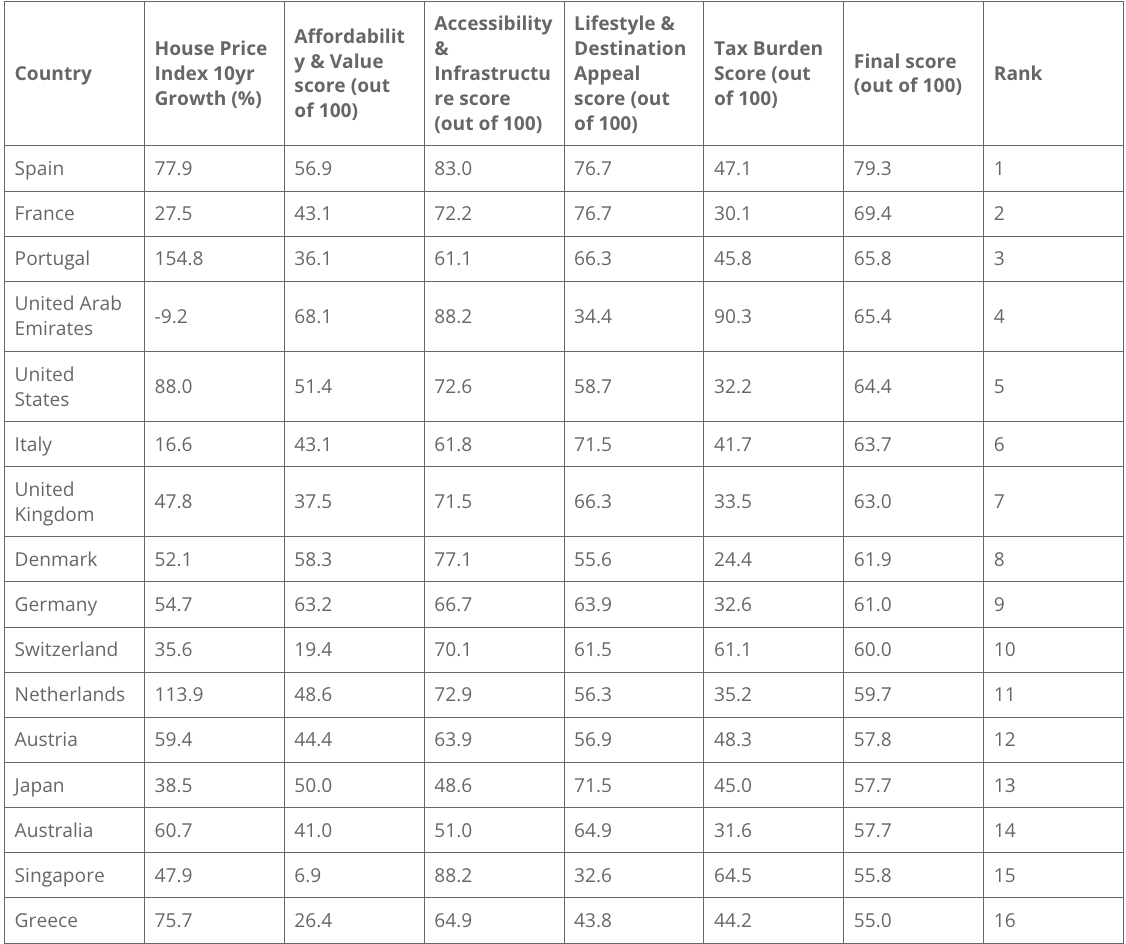
Spanish Hacienda is notoriously aggressive. They go hard, they go public, and they specifically like to target famous people. The problem is, the same approach gets used on people who don't have the resources to fight back The Shakira ruling is positive, and hopefully it'll set a precedent against the kind of overreach we saw here, but as in most such cases, it's not a simple story. Messi, Ronaldo, and Mourinho all accepted plea deals over image rights fraud through offshore structures. Shakira herself accepted a plea deal for 2012 to 2014. None of this excuses how Hacienda operates. But isn't it true that every major tax authority gets aggressive when they think they're owed money? I previously had to deal with the Irish tax system, and oh boy, they'll come after you if they think that you owe them something. In any case, Spain remains the number one vacation home destination in the world, ahead of France, Portugal, and the UAE (source PropertyFinder). And the best thing we can do is get proper local tax advice before you sign anything, anywhere. Curious to hear from people who've dealt with the IRS, HMRC, or other tax authorities. Is Hacienda actually worse?
Tim tweet media
Hispanic Nomad | Remote Work, Travel, Growth@hispanicnomad

Shakira's story tells you everything you need to know about the Spanish 🇪🇸 tax system I had never looked into her case; always thought she had used some sort of shady business structure to avoid paying taxes But reality is way worse than that Turns out, she wasn't really living in Spain the year Hacienda claims she didn't pay her taxes She spent 163 days there. Less than the threshold of 183 days that automatically turns you into a tax resident So, what was Hacienda's claim? She was dating a Spaniard and had a house in Spain... So even if she was not really living there... She had to pay Now the National Audience has decreed that's not how it works, and Hacienda has to pay her back, with interests But this tells you a couple things: - If you're from a Western country and plan on leaving, you need to be VERY careful with how you structure things. Tax authorities will try anything to get your money - Shakira only got her money back because she has the time and resources to fight a legal battle for 10 years. You won't be so lucky - If you're a foreigner, stay away from the Spanish tax system. Yes, our cities and nature are unmatched. But just go there as a tourist

English
6
3
61
25.7K
Mark O'Sullivan
Mark O'Sullivan@MarkOSullivan94·
Spain is has set the golden example when it comes to building cities Sadly since 2006 too many laws have been introduced leading to a housing crisis Developing countries can learn from the example set by Spain but avoid making the same mistake with so many laws
Samuel Hughes@SCP_Hughes

Almost all of the cities of the West sprawl, with high rise cores giving way to mid-rise blocks, to rowhouses, to detached homes, to exurbs and only then to countryside. One country stands out as an exception: Spain. Even today, Spanish cities expand in mid-rise blocks including shops and businesses, served by extensive metros, and structured in traditional courtyard blocks. The style of the facades has changed, but in other respects they are still close to the urbanism of Barcelona’s nineteenth-century Eixample neighbourhood. This is extremely distinctive. Americans often imagine that all European cities are like this, but actually most Europeans switched over to car-dependent suburbia in the twentieth century, much like the American norm. worksinprogress.co/issue/why-spai… Why did Spain diverge? - Spain remained very poor until late in the twentieth century, limiting suburbanisation. By the time Spain was rich enough for suburbs, new urbanist ideals were already beginning to appear. - Traditional Spanish flat-building practices were not decimated by rent controls as they were in France and Germany, avoiding a forcible switch to owner-occupied single-family houses. - The Spanish state still plans street networks like European and American municipalities in the nineteenth century, and Spanish landowners normally pool their land in land readjustment schemes to create a unified landowner. Spain never really had a conscious plan to diverge from international urban norms – the divergence happened partly by accident. But it shows that multiple ways of building cities remain possible in affluent societies. Today, hundreds of Asian cities are near the densities and GDPs of Spain in the 1960s, when the Spanish Divergence began. If they want, they can choose the Spanish path, and grow like modern Madrid (left) rather than modern Alburquerque (right).

English
0
0
0
152
Dermot Wickham
Dermot Wickham@HertsTimelord·
@SCP_Hughes Although the Spanish clearly messed up big time with their tourist developments on the costas in the 1970s & 1980s.
Dermot Wickham tweet media
English
9
0
13
4.5K
Samuel Hughes
Samuel Hughes@SCP_Hughes·
Almost all of the cities of the West sprawl, with high rise cores giving way to mid-rise blocks, to rowhouses, to detached homes, to exurbs and only then to countryside. One country stands out as an exception: Spain. Even today, Spanish cities expand in mid-rise blocks including shops and businesses, served by extensive metros, and structured in traditional courtyard blocks. The style of the facades has changed, but in other respects they are still close to the urbanism of Barcelona’s nineteenth-century Eixample neighbourhood. This is extremely distinctive. Americans often imagine that all European cities are like this, but actually most Europeans switched over to car-dependent suburbia in the twentieth century, much like the American norm. worksinprogress.co/issue/why-spai… Why did Spain diverge? - Spain remained very poor until late in the twentieth century, limiting suburbanisation. By the time Spain was rich enough for suburbs, new urbanist ideals were already beginning to appear. - Traditional Spanish flat-building practices were not decimated by rent controls as they were in France and Germany, avoiding a forcible switch to owner-occupied single-family houses. - The Spanish state still plans street networks like European and American municipalities in the nineteenth century, and Spanish landowners normally pool their land in land readjustment schemes to create a unified landowner. Spain never really had a conscious plan to diverge from international urban norms – the divergence happened partly by accident. But it shows that multiple ways of building cities remain possible in affluent societies. Today, hundreds of Asian cities are near the densities and GDPs of Spain in the 1960s, when the Spanish Divergence began. If they want, they can choose the Spanish path, and grow like modern Madrid (left) rather than modern Alburquerque (right).
Samuel Hughes tweet mediaSamuel Hughes tweet media
English
57
158
1K
307.2K
Mark O'Sullivan
Mark O'Sullivan@MarkOSullivan94·
@floriandarroman I don't think it's a simple as they're afraid to get drunk I think it's a combination of being more expensive, people being more aware of the negative effective on their health and people wanting to look fitter / more athletic
English
0
0
0
23
Florian Darroman
Florian Darroman@floriandarroman·
A friend shared an idea the other day: Gen Z is afraid to get drunk because they might get filmed and go viral on social media. Something previous generations never had to worry about. And it makes a lot of sense. 10-15 years ago you could get wasted in peace. No one would ever share anything online. And if they did, it would never have the same vitality as today. Now, not only the whole school will watch that embarrassing video. But the whole city, maybe the whole world. I can’t imagine how scary this might be.
Grant Bailey@grantjbailey

Huge collapse in drinking among high schoolers 👀

English
17
0
18
6.3K