
Mark Perryman retweetledi
Mark Perryman
17.9K posts


Mark Perryman
@MarkPerryman
Coalition-builder by trade. Latest book 'The Starmer Symptom'. Member Lewes Labour Party. Co-founder Philosophy Football. Supporter Lewes FC.
Lewes, East Sussex, England Katılım Şubat 2009
1.1K Takip Edilen1.9K Takipçiler
Mark Perryman retweetledi

💥In the Makerfield by-election, it's Burnham or bust.
Join one of our campaign days in May and June with friends from across the Labour Party.
Further dates coming soon! 🗓️

English
Mark Perryman retweetledi

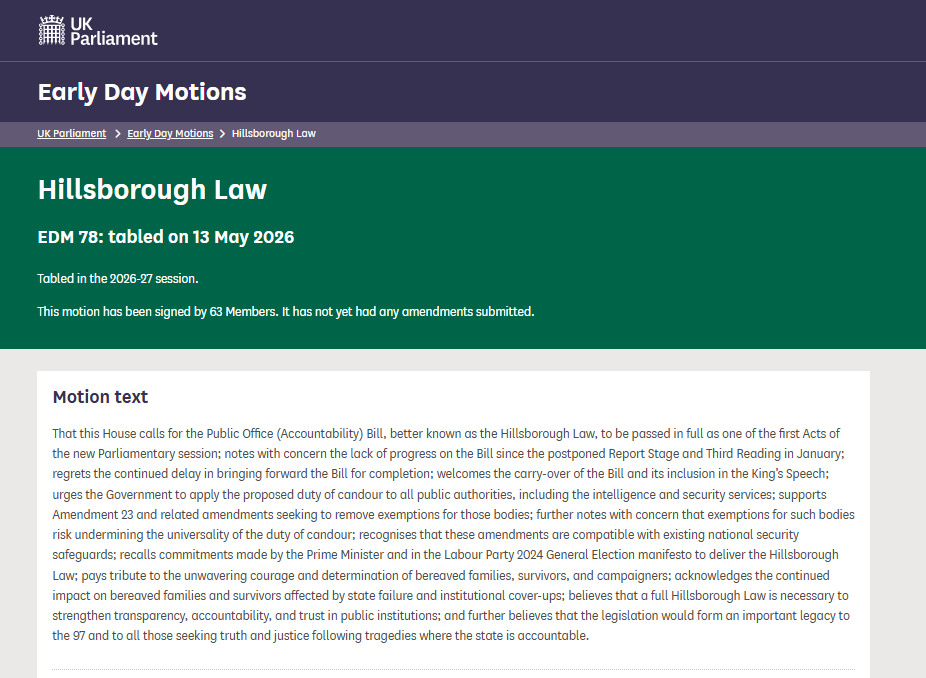
I have signed a parliamentary motion calling on the Government to finally deliver the Hillsborough Law.
For too long, bereaved families and survivors have been denied transparency and accountability.
The Government must now act and fulfil its manifesto commitment to deliver this law.
English
Mark Perryman retweetledi
“The fact that he is known as a vulture capitalist should tell you everything about how inappropriate this deal is [for Thames Water]… these kinds of people are there to suck the lifeblood out of our utilities and public services, and this deal should not be rushed through.”

English
Mark Perryman retweetledi
One of the most devastating assessments of the Starmer government I’ve read.
Not from a politician. Not from an activist.
From one of the country’s finest economic historians, writing with the clarity only historical perspective can bring - @DEHEdgerton
The New Statesman@NewStatesman
"The question is not whether Labour values have been usurped by Starmer’s faction. It is what kind of party could be built out of the corpse of Starmer’s party. One option is clearly a more Blairite party: pro-tech giants, the US, and privatisation. But are there any serious options to create a progressive party, one that dares speak out on the issues of the day, that actually communicates with a progressive electorate? It is hard to see at the moment whether the ambition or capacity exists within it. It is worth noting that Starmer’s Party is only barely the official party of the organised working class. Whereas Labour had affiliated to it nearly every major trade union, today only just over half of union members are in party-affiliated unions. And even then some may leave. This is hardly surprising: as it stands its policies, Starmer’s Party’s political instincts, are far closer to those of the Tories and Reform than to the progressive parties that are eating it up. And that is not accidental, or the result of a lack of vision. It was the whole point." Read @DEHEdgerton's obituary for Starmerism newstatesman.com/politics/labou…
English
Mark Perryman retweetledi
Invigorated by what Andy Burnham is saying about a new
economic settlement?
Want to make sure it’s delivered and not blocked by those that think otherwise?
Then join @mainstreamlbr and let’s make it happen.
Clive Lewis MP@labourlewis
Mainstream is serious about winning a democratic socialist future We stand for the redistribution of power and wealth, the defence of human rights dignity at home and abroad, the creation of a new political economy & much more. Find out more here: mainstreamlabour.org
English
Mark Perryman retweetledi
Mark Perryman retweetledi
Fergal is correct.
Despite a guaranteed return of £22BN in profits by 2030 - private water companies continue to use our rivers as sewage pipes and the sea as a cesspit for sewage.
It’s cheaper & therefore more profitable than spending on infrastructure.
Public ownership now.
Feargal Sharkey@Feargal_Sharkey
“Don't swim' at 12 of 14 river bathing sites, as more locations announced.” Here’s something to wrap your head around. The only stretch of river graded as ‘Good’ is at Friars Meadow, Sudbury yet from 13th March to the 13th April Anglian Water dumped sewage into Friars Meadow nonstop 24 hours a day for 31 days straight. If you went swimming there during the Easter holidays you were probably swimming in human waste but none of it shows in the data because the EA don’t even bother testing until the middle of May. PS the EA don’t actually test any bathing site in the country for most of the year 7 and a half months in fact. You go swimming between 1st Oct one year and 15th May the next you’re on your own. bbc.co.uk/news/articles/…
English
Good sense. Really hope Greens who think likewise make voices heard. I'm a Labour Member I have canvassed for Labour in Worthing West, Crawley and other seats but never in Brighton Pavilion.
#MyFrontIsPopular
@AndrewSimms_uk @meadwaj @philbc3 @CompassLewes @compass_sussex
Caroline Lucas@CarolineLucas
I hope this isn’t true. There are times when it’s more important to put country before party. This is one of them. Burnham’s longstanding commitment to a fairer voting system could transform our democracy & counter dire threat of a Reform UK government theguardian.com/politics/2026/…
English
Mark Perryman retweetledi

I hope this isn’t true. There are times when it’s more important to put country before party. This is one of them. Burnham’s longstanding commitment to a fairer voting system could transform our democracy & counter dire threat of a Reform UK government theguardian.com/politics/2026/…
English
Mark Perryman retweetledi

@labourlewis @MarkPerryman Powerful argument from my former MP - I broadly agree
English
This is a must-read.
@jemgilbert @ProfAFinlayson @LiseRButler
@Neal_Compass @IbrahimAhmedLab @Johnmcternan @JessicaJGarland @philbc3 @FisherAndrew79 @AndrewSimms_uk @dannydorling @leftacademic @y_alibhai
Clive Lewis MP@labourlewis
I know the news Andy Burnham has a route back to Westminster will divide opinion. So, before anything else, I want to speak plainly – to Labour members and voters, to those who have left us, and to anyone on the centre-left, whether you vote Green, Lib Dem, or are simply looking for a politics that hasn't given up on you. Last week's local election results were, for many of us, existential. Not disappointing. Not a setback. Existential. Look across Europe and beyond at what happens to social democratic parties that refuse to step outside the economic orthodoxy of the last forty years – the one that hollowed out our public services, privatised what was ours, drove inequality to indecent levels, and cleared the ground for the authoritarian right to march into. That is the path we are on. Keir Starmer has refused to see it, and the country cannot afford another general election spent finding out the hard way. So let me be direct. The Prime Minister should set out a timeline for an orderly transition. I have said this before. I say it again now because the stakes have changed. Reform is not a protest – it is a project. And it will not be beaten by a Labour Party that mistakes managerial caution for strategy. As regards Andy, I want to set down here that I do not see him as some kind of messiah. Far from it. As someone who has been around frontline politics for more than twenty years, he has made his fair share of mistakes. But for the last ten years he has been a serious, grounded, and effective Mayor of Greater Manchester. The party and the country need their strongest players on the pitch, and he has a great deal to offer at a moment when the national stage has rarely mattered more. I hope the NEC will listen to the overwhelming view of the Cabinet, the PLP, the membership, and the unions, and let Andy stand. And I hope and believe the people of Makerfield will send him back to Parliament. But that is not a given. We know Reform will throw everything at this by-election. We must do the same and then some. Reform have spent a year being told they are inevitable. Makerfield is where we find out whether that is true. Every advance has a limit. This is where we set it. Millions of people, including my constituents in Norwich South, need this government to succeed. They need housing, working public services, secure jobs, water and energy that serves them rather than extracts from them. That work is not finished. But the honest truth is that stopping Reform and rebuilding the country is bigger than any one party. It will take a progressive politics willing to listen, willing to cooperate where the public interest demands it, and willing to drop the tribal habits that got us here. The country is ahead of us on this. It is time we caught up. Makerfield is one of many places where Labour has lost trust. It is an area Andy knows and has lived in for many years. If selected, he will work hard to win that trust back and make the case for a Labour Party worth voting for again. That case has to be made not only to people who once voted Labour, but to everyone who believes the answer to Reform is a serious, democratic, social alternative – not a paler imitation of the politics that created the problem. This by-election is not about one seat. It is a test of whether Labour understands the moment we are in. No single party is going to stop Reform on its own. The progressive majority in this country is real – but it is scattered across Labour, the Greens, the Lib Dems, nationalists, independents, and millions of people who have stopped voting altogether. Our job is not to demand they all come back to us. It is to earn the right to work with them, on shared ground, for a shared future. To former Labour voters: come and talk to us again. To Green and Lib Dem voters: we are not enemies. To Labour members and MPs: this is the fight. Let's get on with it. bbc.co.uk/news/articles/…
English
Mark Perryman retweetledi
I know the news Andy Burnham has a route back to Westminster will divide opinion. So, before anything else, I want to speak plainly – to Labour members and voters, to those who have left us, and to anyone on the centre-left, whether you vote Green, Lib Dem, or are simply looking for a politics that hasn't given up on you.
Last week's local election results were, for many of us, existential. Not disappointing. Not a setback. Existential. Look across Europe and beyond at what happens to social democratic parties that refuse to step outside the economic orthodoxy of the last forty years – the one that hollowed out our public services, privatised what was ours, drove inequality to indecent levels, and cleared the ground for the authoritarian right to march into. That is the path we are on. Keir Starmer has refused to see it, and the country cannot afford another general election spent finding out the hard way.
So let me be direct. The Prime Minister should set out a timeline for an orderly transition. I have said this before. I say it again now because the stakes have changed. Reform is not a protest – it is a project. And it will not be beaten by a Labour Party that mistakes managerial caution for strategy.
As regards Andy, I want to set down here that I do not see him as some kind of messiah. Far from it. As someone who has been around frontline politics for more than twenty years, he has made his fair share of mistakes. But for the last ten years he has been a serious, grounded, and effective Mayor of Greater Manchester. The party and the country need their strongest players on the pitch, and he has a great deal to offer at a moment when the national stage has rarely mattered more. I hope the NEC will listen to the overwhelming view of the Cabinet, the PLP, the membership, and the unions, and let Andy stand. And I hope and believe the people of Makerfield will send him back to Parliament.
But that is not a given. We know Reform will throw everything at this by-election. We must do the same and then some. Reform have spent a year being told they are inevitable. Makerfield is where we find out whether that is true. Every advance has a limit. This is where we set it.
Millions of people, including my constituents in Norwich South, need this government to succeed. They need housing, working public services, secure jobs, water and energy that serves them rather than extracts from them. That work is not finished. But the honest truth is that stopping Reform and rebuilding the country is bigger than any one party. It will take a progressive politics willing to listen, willing to cooperate where the public interest demands it, and willing to drop the tribal habits that got us here. The country is ahead of us on this. It is time we caught up.
Makerfield is one of many places where Labour has lost trust. It is an area Andy knows and has lived in for many years. If selected, he will work hard to win that trust back and make the case for a Labour Party worth voting for again. That case has to be made not only to people who once voted Labour, but to everyone who believes the answer to Reform is a serious, democratic, social alternative – not a paler imitation of the politics that created the problem.
This by-election is not about one seat. It is a test of whether Labour understands the moment we are in. No single party is going to stop Reform on its own. The progressive majority in this country is real – but it is scattered across Labour, the Greens, the Lib Dems, nationalists, independents, and millions of people who have stopped voting altogether. Our job is not to demand they all come back to us. It is to earn the right to work with them, on shared ground, for a shared future.
To former Labour voters: come and talk to us again. To Green and Lib Dem voters: we are not enemies. To Labour members and MPs: this is the fight. Let's get on with it.
bbc.co.uk/news/articles/…
English
Mark Perryman retweetledi

What, one wonders, is the right response to seeing your party's vote halve since the General Election?
Blocking Labour's most popular and charismatic politician from entering parliament?
That was tested to destruction.
Luke Akehurst@lukeakehurst
Nothing that has happened today is remotely proportionate or reasonable behaviour this far out from a General Election scheduled for 2029. This level of internal game playing risks driving us into a General Election within months, as well as causing months of deep political instability that have real world consequences for the economy and national security. I am, to put it mildly, unimpressed.
English
Mark Perryman retweetledi
Westminster may finally be about to have the argument it has spent 40 years avoiding.
If Andy Burnham returns to Parliament, the political class will know how to cover it. A leadership drama. Who is up, who is down, whether Keir Starmer can survive, whether Labour is once again turning inward. The familiar machinery of Westminster psychodrama will whirr into life.
That framing misses the larger point. Burnham’s possible return matters not because of what it says about Labour’s leadership, but because of what it reveals about the British state: what it can still do, what it has forgotten how to do, and what kind of country it must become if it is serious about resilience.
Britain is finally having a more serious conversation about national security. The Strategic Defence Review, the pivot back towards Europe, the recognition that hybrid warfare turns citizens, infrastructure and civic institutions into part of the front line: all of it marks a real shift in how the state thinks about its own survival.
But at the centre of that conversation lies a question that the defence establishment, and most of Westminster, still does not want to answer. What kind of society do you need to be before resilience is possible?
Finland is now the model everyone cites. Comprehensive security. Whole-of-society defence. Civilian preparedness woven into military planning. British strategists admire the Finnish system and ask how it might be copied. But the admiration stops short of the uncomfortable question: why does it work there?
The answer is not geography or history or some mysterious quality of Finnish national character. It is structural. Nearly 80% of Finns say they would defend their country if attacked. In Britain, the figure is closer to 33%. That gap is not an accident. It exists because Finland has spent decades building a society in which people have a genuine stake in what they are being asked to defend. Energy is affordable. Housing is available. Public services function. Institutions command trust. The Nordic welfare state is not a sentimental add-on to Finnish security policy. It is the foundation of it. You cannot ask people to defend a country that does not work for them.
Britain has spent 40 years building the opposite. The privatisation of essentials – energy, water, transport, housing – transferred wealth upwards from households to shareholders while making the basics of everyday life more expensive. The state, stripped of the tools to control costs at source, has been reduced to compensating after the fact.
Out of every pound the Government spends on housing, 88p goes to subsidising private rents. Just 12p goes to building homes. When energy prices spiked in 2022, the Government spent £40bn in a single winter cushioning the blow, not because it had a resilient energy system but because it lacked one. Debt interest now consumes more than £100bn a year. Britain has the highest debt servicing costs in the G7: the compounding price of financing failure rather than eliminating it at source.
This is what bond market dependency actually looks like. It is not an abstract fiscal condition. It is the consequence of a state that has been stripped of the supply-side tools that would let it cure the problems it now pays, indefinitely, to manage. And here is the paradox the Treasury refuses to confront. The countries that borrow most cheaply are often those that have retained the public investment model Britain abandoned. The spread between UK and Dutch borrowing costs has widened sharply not because markets fear public investment, but because they have lost confidence in a model that borrows to subsidise private failure while never addressing its causes.
This is the connection Britain’s defence debate is missing. The familiar framing, that social spending is what must be sacrificed to meet the NATO target, is not merely politically toxic. It is strategically illiterate. Cutting the foundations of social cohesion to fund the hardware of national defence is self-defeating. You end up with planes and no pilots, submarines and no crew, an army that cannot recruit because the society it is meant to protect has stopped believing in itself.
I think Burnham understands this. That is why his programme is more interesting than the leadership gossip suggests. What he has been building in Greater Manchester – public control of transport, expanded social housing, investment in the productive foundations of the city economy – is not a nostalgic rerun of postwar nationalisation. It is a proof of concept for a different kind of state.
The Bee Network is the most visible example, but the argument behind it travels. A state that can shape markets is not condemned to subsidise their failures. A state that produces affordable energy through public generation does not need to spend tens of billions cushioning every price shock. A state with a serious public housebuilding programme does not need housing benefit to rise endlessly in line with private rents. A state that builds institutions people can see, use and trust begins to restore the civic confidence on which resilience depends.
The real constraint on Britain is not money. It is capacity: the workers, institutions, supply chains and public purpose needed to turn national will into national renewal. Britain’s tragedy is not that it has run out of money. It is that after 40 years of hollowing out the state, it has made itself less able to act.
Burnham’s critics will reach for the familiar warning. Borrow more, spend more, spook the gilt markets, repeat the Truss disaster. But this misunderstands both the problem and the opportunity.
Bond markets do not have ideological preferences. They have functional ones. They prefer clarity, credible revenue streams, productive investment, and a state with a plan. What they punish is not public ambition but incoherence. A properly designed productive state programme would not be a leap into fiscal fantasy. It would be an attempt to end the much costlier fantasy that Britain can keep borrowing to compensate for broken markets while refusing to repair them.
The defence conversation and the economic conversation need to become the same conversation. Finland did not build national resilience by choosing between welfare and security. It built resilience by understanding that they are inseparable: that a country in which the basics work, where people trust one another and the institutions around them, is one that can face danger with something more than anxiety.
That is the deeper argument Burnham represents. Westminster will be tempted to treat him as a leadership story. It should resist the temptation. The question is not whether Burnham can return to parliament. It is whether Britain can return to the idea that the state should make life work. Because a country that cannot command the confidence of its people cannot truly defend itself.
English
Mark Perryman retweetledi
An Observation on Angela Rayner and the Labour Government:
One cannot help but feel a measure of sympathy for Angela Rayner. I know her well enough to say that she came into politics for the best of reasons: a desire to serve, a determination to improve the lives of people whose struggles she understood from her own experience.
But the further up the ladder one climbs in politics, the more insistent the temptations become. This is not simply about individual weakness or personal failing. It is structural. Over the past 40 years, Britain has built a society in which consumption, status, and proximity to wealth have become defining features of the political class. The gravitational pull of money is now so great that even those who arrive in Westminster with the clearest sense of purpose find their heads turned.
Angela’s story is not unique. She came from humble beginnings, but the wealth that circles political life today is more concentrated, more brazen, and more intrusive than in the past. The old checks and balances, party rootedness in mass membership, trade union accountability, a press less entangled with oligarchic interests, have all weakened. Where once honour, public service, even a sense of historical duty could command respect, today those values are dimmed in comparison to the pursuit of material position.
The mechanism is subtle but relentless. It is not corruption in the brown-envelope-under-the-table sense. It is the slow, almost invisible turning of heads. You are introduced to those who walked this path before you, former ministers who now sit comfortably in boardrooms or on the payroll of consultancies with six and seven-figure salaries. You are invited to corporate boxes at sporting events, to private dinners, to concerts and premiers. Lavish clothes or spectacles can be “within the rules,” provided they are declared. But by then the damage has been done.
The message is implicit but unmistakable: play the game, listen to us, and you too can enjoy more of this. The logic creeps into your personal life. You stretch to buy the house that can host the right gatherings. You measure your worth by the standards of a world that equates success with possessions and proximity to privilege. And once you are on that path, it is hard to step off.
This is, of course, a simplification of a complex socio-economic and political process. But as someone who came from a council estate myself, I see it all around me in Westminster. And it is not going to be changed by media witch-hunts, the tutting of ethics advisers, or even the occasional burst of public outrage.
As Gladstone once warned, “Nothing that is morally wrong can be politically right.” But in our current system, what is morally questionable is too often normalised, excused, and rebranded as “just the way things are.”
Real change will only come from a collective decision to choose a different path: to stop outsourcing our state to private interests, to end the revolving door between government and corporate boardrooms, to challenge the idea that the role of politics is to serve vast concentrations of wealth.
We can choose differently. We can once again put community, solidarity, and public service at the heart of our political life. We can insist that worth is measured not in the size of one’s house or the company one keeps, but in the contribution one makes to society and the integrity with which one serves.
Until we do, until we decide as a polity to hold up those values rather than the glittering prizes of private gain, hese scandals will not just recur. They will define the very character of our politics.

English
Mark Perryman retweetledi
There’s a lot of delusional “stick with the plan” talk around at the moment. Almost as bad is the idea that “the government needs to change course”.
No. It doesn’t.
The Prime Minister needs to go.
That is not negotiable.
The only thing now in his gift is the nature of the contest that follows. It must be open, fair and legitimate. Everyone who should be part of that process must be allowed to take part.
That means no blocking Andy Burnham. And it means a clear departure date, no later than the autumn.
These results are existential for the Labour Party. Existential.
Anyone still saying we should simply carry on “delivering the plan” has lost touch with political reality, and with the public.
The voters have spoken. It is not for the leadership to pretend they have not.
Clive Lewis MP@labourlewis
The local election results in Norwich - despite the excellent track record of Labour at the City Council - and across the country, make this an existential moment for Labour. This will not be fixed by another speech, another comms reset, or another reshuffle. The problem is now far deeper than that. Labour is losing the very people and places it was created to represent. In provincial England, in towns and cities that should be part of Labour’s political heartland, the party’s base is collapsing. Norwich should be a warning. So should the results we are seeing across the country. We cannot pretend this is a 'bad night', a difficult cycle, or a messaging problem. It is a political crisis, and unless we face it honestly, it risks becoming terminal. The Prime Minister has reached the point where the question is no longer whether he can recover. It is whether, by staying on, he does lasting damage to Labour’s ability to govern, rebuild trust, and stop the advance of the right. That is why a timetable for his departure is now necessary. The longer this is delayed, the greater the damage to the party and the country.
English
Mark Perryman retweetledi
@AbdiDuale_ Mate, you lit the fuse. Thursday's rout was a direct consequence of your vote to bar Andy Burnham. You gave the Greens a seat, credibility, momentum, voters and now seats and councils.
Accepting personal and political responsibility is the least the party can expect of you.
English
Mark Perryman retweetledi

On Wednesdays, I’m hosting a ten-part radio series on English Culture through the mind of Professor Stuart Hall @ResonanceFM
Features never-before-heard recordings from lectures delivered in the mid-1980s - the height of Thatcherism.
11am-midday (BST)
resonancefm.com

English
Mark Perryman retweetledi
@ryan_wain There was a factional project. Which managed to run over the Labour Party before it ran out of fuel.
English