Lisa McKendrick-Calder

560 posts

Lisa McKendrick-Calder

Lisa McKendrick-Calder

@MckendrickLisa

Katılım Haziran 2022
203 Takip Edilen53 Takipçiler
Lisa McKendrick-Calder retweetledi
The Husky
The Husky@Mr_Husky1·
My husband asked me for a paternity test after 26 years. I'm going to give him papers, but they will be for a divorce. I'm really upset about this situation. That pregnancy i went through was high risk and i almost lost my life during the birth to give him a child he so desperately wanted. Now he doubts me because of the snake that is his sister... She claims my son has a different skin tone and doesn't look like him. After 26 years he comes up with this nonsense. He started believing the gossip from my sister in law and my mother in law, who had never really accepted me into the family and have never been supportive. What's hurting me the most is that he has been the only man in my life. Everytime i see him, I feel humiliated and betrayed. Men like him don't deserve to have children, It's a privilege of women and they don't deserve the sacrifice. I feel really sorry for my son, who will have to witness his father’s doubts and suspicions. today, i will give him the paternity test and the divorce papers. I wish i could see the faces of his mother and sister when they see the DNA results. Am i wrong for divorcing him? I will post an update after i gave him the papers. _Anonymous
English
40
3
62
14.9K
Lisa McKendrick-Calder retweetledi
Journal of International Students
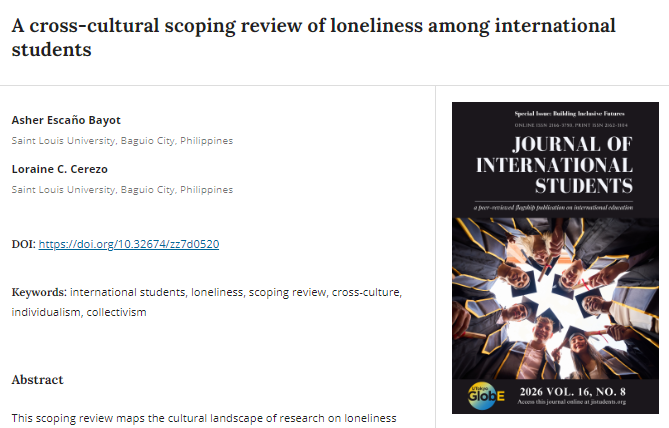
Congratulations to Asher Escaño Bayot and Loraine C. Cerezo on the publication of their new article in the Journal of International Students examining loneliness among international students through a cross-cultural scoping review. Saint Louis University Baguio
Journal of International Students tweet media
English
0
1
1
115
Lisa McKendrick-Calder retweetledi
Matthew LaBosco
Matthew LaBosco@matthew_labosco·
The man who heals what medicine can't: Dr. Gabor Maté. This 80-year-old physician says true healing comes from nervous system regulation, not drugs or meditation. Here are his 7 forgotten laws for ending chronic stress at the root: 🧵
Matthew LaBosco tweet media
English
14
121
751
120.3K
Lisa McKendrick-Calder retweetledi
Clint Jarvis
Clint Jarvis@clinjar·
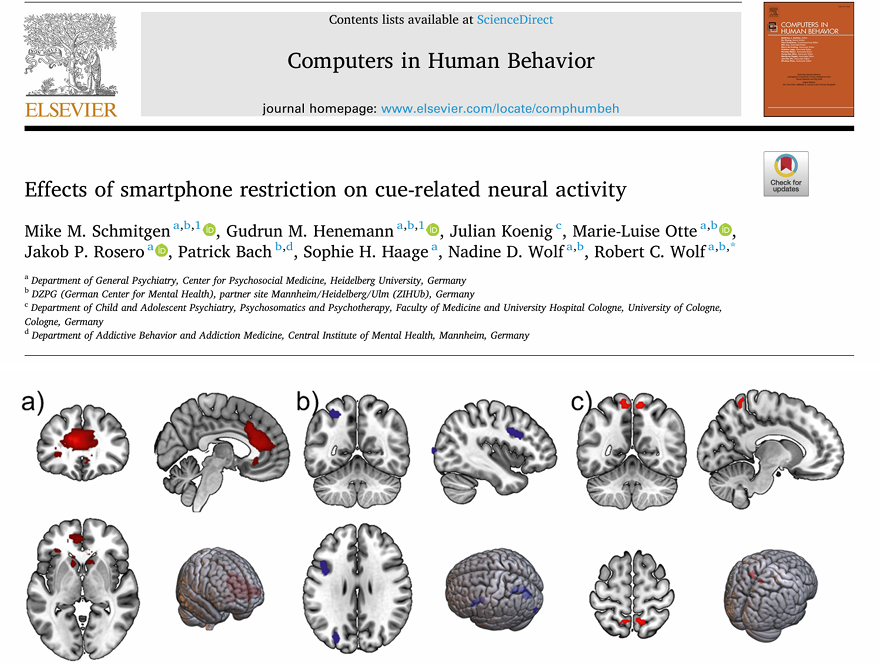
A Heidelberg University study restricted phone use for just 72 hours. Brain scans before. Brain scans after. The researchers were stunned by what they found. Here's what 3 days without your phone actually does to your brain:
Clint Jarvis tweet media
English
86
1.3K
9.3K
2.6M
Lisa McKendrick-Calder retweetledi
Alex Prompter
Alex Prompter@alex_prompter·
🚨 BREAKING: Berkeley just proved that AI doesn’t save you time. It makes you work MORE. Researchers Aruna Ranganathan and Xingqi Maggie Ye from Berkeley’s Haas School of Business spent 8 months embedded inside a 200-person tech company. Twice-weekly observations. 40+ deep interviews across engineering, product, design, and operations. This wasn’t a survey. They watched what actually happens when a company gives everyone AI tools and says “go.” What they found contradicts everything AI vendors have been selling you. Employees worked at a faster pace, took on a broader scope of tasks, and extended work into more hours of the day. Nobody asked them to. The company didn’t even mandate AI use. People just voluntarily did more because AI made “doing more” feel possible. One employee put it perfectly: “You had thought that maybe you save some time, you can work less. But then really, you don’t work less.” That quote should be taped to every monitor running Cursor, Claude, or ChatGPT right now. And a 2024 Upwork study backs it up: 77% of employees using AI said the tools had actually INCREASED their workload. Nearly half didn’t even know how to achieve the productivity gains their employers expected. The researchers found 3 patterns destroying work-life balance. First, task expansion. Product managers started writing code. Researchers took on engineering work. The scope of “my job” widened because AI made everything feel doable. Hiring got postponed because employees absorbed work that would have justified new headcount. Second, blurred boundaries. Workers sent prompts during lunch, before meetings, at 9pm. AI dropped the friction of starting any task to near zero, and natural stopping points in the workday just dissolved. Third, cognitive overload. People ran multiple AI agents simultaneously while reviewing code, drafting docs, and sitting in meetings. Both human and machine constantly in motion. Here’s the cycle that traps you. AI speeds up a task → expectations for speed rise → you rely more on AI → you take on wider scope → workload intensifies → repeat. The researchers call it “workload creep.” No manager told anyone to work harder. The tools just made doing more feel accessible and rewarding. So people kept going until they couldn’t. The most dangerous part: in the moment, it feels amazing. Workers described momentum, expanded capability, the thrill of building things they never could before. But when they stepped back and looked at the full picture, they felt busier, more stretched, unable to disconnect. By month 6 of the study, reports of burnout, anxiety, and decision paralysis had spiked. Short-term momentum. Long-term strain. There’s also a competitive dynamic nobody talks about. When your colleague uses AI to take on extra responsibilities, standing still feels like falling behind. Nobody formally raises expectations. But informal norms shift fast. Within months, doing what AI makes possible becomes what’s expected. The people who set healthy boundaries start looking like underperformers. That’s a toxic dynamic where sustainable work becomes career-limiting. The researchers propose something they call “AI Practice.” Not “use AI more” or “use AI less.” Intentional habits. Structured reflection intervals built into workflows, not “take breaks when you need to” because nobody does. Scheduled reviews where teams assess if AI-enabled expansion has crossed sustainable limits. Clear guidelines on when NOT to use AI and which tasks shouldn’t expand just because they can. I felt this in my own workflow. AI gives you superpowers. But superpowers without discipline just mean you never stop working. The fix isn’t to stop using AI. It’s to stop letting AI decide how much work you do. Set the scope BEFORE you prompt. Define “done” BEFORE the tool makes everything feel possible.
Alex Prompter tweet media
English
119
612
2K
175.1K
Lisa McKendrick-Calder retweetledi
MacEwan University
MacEwan University@MacEwanU·
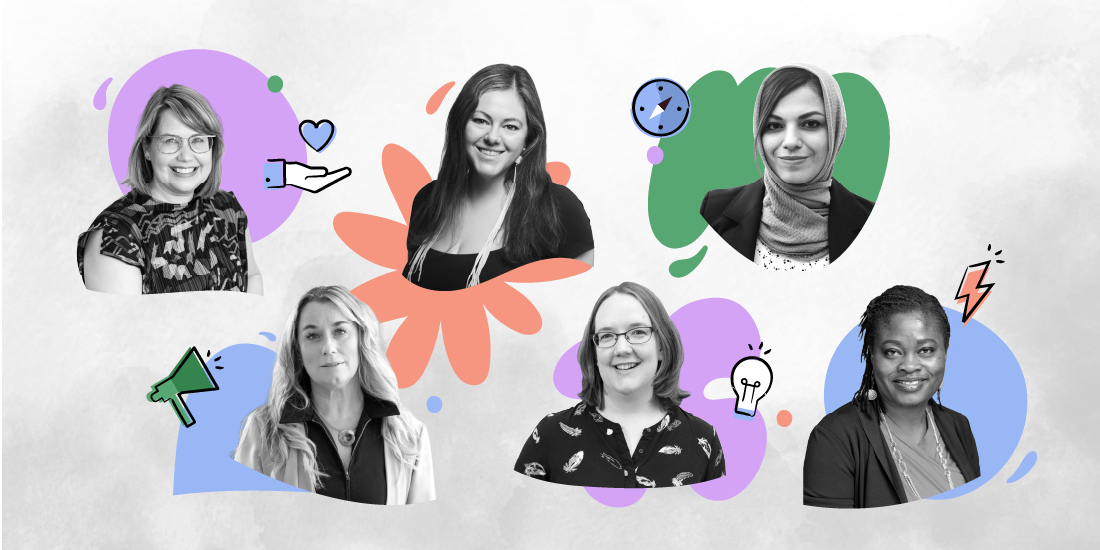
“When one woman thrives, she pulls others with her.” In honour of International Women's Day, six members of the #MacEwanU community share how mentorship, advocacy and visibility can help advance gender equality. Featuring perspectives from: ∙ Dr. Kathryn Holland, assistant professor in the Departments of English and Sociology ∙ Lara McClelland, vice-president, University Relations ∙ Danielle Paradis, journalist and assistant professor in the Department of Communications ∙ Evara ZagRoss, lawyer and sessional instructor in the School of Business ∙ Dr. Kimberley Harcombe, assistant professor and chair of the Department of Biological Sciences ∙ Dr. Theresa Chika-James, associate professor in the Department of Management and Organizations and associate dean in the School of Business Read the full Voices piece → ow.ly/6ORW50Yqxfq @MacEwanBusiness #IWD2026
MacEwan University tweet media
English
0
2
0
138
Lisa McKendrick-Calder retweetledi
CASN/ACESI
CASN/ACESI@CASN43·
We invite you to join our free webinar focused on how emerging technologies, such as artificial intelligence (AI), virtual reality, and educational electronic health records (EHRs) are shaping nursing education and practice. casn.ca/2026/02/digita… #Nursing #VirtualReality #AI
CASN/ACESI tweet media
English
0
1
0
41
Lisa McKendrick-Calder retweetledi
Dr. Raj Sherman
Dr. Raj Sherman@RajSherman·
Dear Fellow Albertans, This letter is written not as a partisan, but as an emergency physician who has cared for more than 100,000 Albertans, a former MLA, and someone who has devoted a working life to this province. Across Alberta, the strain is obvious. Housing is scarce. Emergency rooms are overcrowded. Schools are stretched. The cost of living weighs heavily on families. Anxiety about the future is real and justified. This is not anger. It is concern, because moments like this demand leadership. When people are under pressure, leadership is not just about solutions, but about direction: an honest explanation of what is actually going wrong, and reassurance about who we are as a society while we fix it. In recent weeks, Alberta’s challenges have been framed by the Premier, Danielle Smith, in a way that has left many people angry, not at systems or long-standing policy failures, but at immigrants and other governments. That is deeply troubling. The frustration people feel is understandable. But much of that anger is being misdirected at immigrants. With the exception of Indigenous peoples, all Albertans come from families that arrived here seeking opportunity. Immigrants did not break Alberta’s healthcare system or tear up family doctor contracts. They did not close hospital beds or cancel planned hospital capacity. They did not under build housing, assisted living, long-term care, or schools. They did not dismantle community care. Politicians did. Every day in emergency departments, the consequences are visible: acute-care beds occupied by patients who should be at home or in long-term care; ERs functioning as inpatient wards; and population growth encouraged without matching investments in primary care, continuing care, and hospital capacity. In 1992, Alberta had approximately 11,700 hospital beds. Today, with nearly double the population and a much older demographic, we have roughly 8,800. This is not an Ottawa or immigration problem. It is a planning and capacity problem. Many of the people caring for seniors, staffing hospitals, and holding the healthcare system together today are newcomers themselves. Blaming them delays real solutions and divides communities. That lesson is personal. Growing up as a newcomer involved violence, black eyes and broken bones, and learning early what happens when fear is tolerated and adults look away. Home was not always safe either, shaped by alcoholism and domestic violence. Those experiences leave marks. What mattered most was a mother who taught that anger shrinks a life, while forgiveness, discipline, and service strengthen it, and that opportunity carries an obligation to give back. That belief led to decades in emergency medicine, the training of thousands of doctors, and public service at personal cost. Those experiences lead to a clear conclusion. Albertans deserve leadership that lowers the temperature, not raises it. Leadership that fixes systems, not finds scapegoats. Leadership that takes responsibility for planning failures and invests in capacity to match growth. For these reasons, Alberta needs a change in direction and ultimately, a change in leadership, so the province can unite around practical fixes rather than division. This is not about racism. It is about judgment, competence, and the ability to govern responsibly during difficult times. Alberta needs leadership that brings people together and focuses on solutions, not blame. Premiers Lougheed, Klein and Stelmach have led through very difficult times and would not take our province to this sharp edge. Albertans are much better than this. I am a Canadian, an Albertan and I am an immigrant. God bless Alberta. Dr. Raj Sherman @ABDanielleSmith @nenshi @FreeAlbertaRob @PfParks @NightShiftMD @Alberta_UCP @UCPCaucus @albertaNDP @TheBreakdownAB @ryanjespersen @cspotweet #yeg #yyc #ABleg #cdnpoli
English
522
771
2.3K
401.5K
Lisa McKendrick-Calder retweetledi
Parksy
Parksy@PfParks·
globalnews.ca/news/11605543/… To be very clear 100s of acute care physicians are saying we are in a current state of CRISIS/EMERGENCY. Mitigating actions can be taken with provincial coordination measures that exist, and have been used before province-wide. 1/5
English
11
85
178
6K
Lisa McKendrick-Calder retweetledi
College of Registered Nurses of Alberta - CRNA
Artificial intelligence (AI) is transforming how we live and work. In this evolving landscape, the CRNA has developed ten principles to support registrants in the safe, ethical use of AI — guided by evidence, compassion, and accountability. Learn more: bit.ly/4oj8DUQ
College of Registered Nurses of Alberta - CRNA tweet media
English
0
1
0
58
Lisa McKendrick-Calder retweetledi
Timothy Caulfield
Timothy Caulfield@CaulfieldTim·
Excellent 👇 Rise of anti-science rhetoric has fundamentally changed the relationship btw doctors & patients statnews.com/2025/12/10/ant… by @KrutikaKuppalli "Physicians don’t often talk about the emotional toll of these interactions. But it’s there." "I have held the hands of patients dying from diseases that vaccines could have prevented..." "When patients reject vaccines today, they are rejecting one of the most powerful tools we have to keep them safe..."
English
26
33
81
3.8K
Lisa McKendrick-Calder retweetledi
Zdenek Vrozina
Zdenek Vrozina@ZdenekVrozina·
Soleimani, Kulyk and Sabeti have written one of the best-structured SARS-CoV-2 reviews - a rare paper that maps the virus’s full toolkit in one coherent frame.frontiersin.org/journals/immun…
English
8
150
403
12.8K
Lisa McKendrick-Calder retweetledi
RJR
RJR@RJR364235493902·
@RonChrist1954 @grok does Ron have a point or is healthcare in Canada on the decline, not just Alberta? When will dummies realize we have a health problem that’s compromising the healthcare system? Alcohol abuse, tobacco, pot, overeating, etc..
English
3
1
6
463
Lisa McKendrick-Calder retweetledi
Braden Manns
Braden Manns@BradenMannsYYC·
Interesting to see these figures in print. The over-occupancy rates; patients left without being seen being seen, and extent of viral illness (I won't say COVID as I'll get overrun with toxic tweets) bear out what I'm seeing in hospital this week. thetyee.ca/News/2025/10/2…
English
8
41
101
4.3K
Lisa McKendrick-Calder
Lisa McKendrick-Calder@MckendrickLisa·
Seeking one more linguistically diverse undergraduate nursing student (BScN) in Alberta or Saskatchewan for this research! Ideally this would be someone who finds that their linguistic diversity impacts their nursing education experience.
Lisa McKendrick-Calder tweet media
English
0
0
1
19