Ramsan

1K posts

Ramsan

Ramsan

@MedasanX

Katılım Ağustos 2013
1.8K Takip Edilen58 Takipçiler
Ramsan retweetledi
Mehdi (e/λ)
Mehdi (e/λ)@BetterCallMedhi·
le niveau d’hypocrisie diplomatique mdr décidément on aura tout vu avec la diplomatie française puisque sanctionner cette grosse m€rde de Ben-gvir individuellement c’est l’astuce diplomatique la plus vieille du monde, on désigne le personnage le plus extrême d’un système pour pouvoir continuer à traiter normalement avec le système lui même ce ministre est loin d’être un cas isolé puisque c’est le produit pur et logique du gouv de Netanyahu et de quinze années de politique coloniale assumée, en réalité c’est même le seul qui ose dire publiquement ce que les autres pensent en privé et exécutent froidement sur le terrain depuis des décennies la véritable hypocrisie diplomatique française (ENCORE UNE FOIS) c’est de feindre l’indignation contre un individu pendant qu’on continue à vendre des armes à son gouvernement, à voter contre les résolutions de l’ONU et à protéger israël à chaque vote décisif, isoler ben-gvir c’est juste offrir un fusible médiatique pratique pour ne jamais avoir à nommer la machine institutionnelle qui le produit et qui le protège
Jean-Noël Barrot@jnbarrot

À compter de ce jour, Itamar Ben-Gvir est interdit d'accès au territoire français. Cette décision fait suite à ses agissements inqualifiables à l'égard de citoyens français et européens passagers de la flottille Global Smud. Nous désapprouvons la démarche de cette flottille qui ne produit aucun effet utile et surcharge les services diplomatiques et consulaires, dont je salue le professionnalisme et le dévouement. Mais nous ne pouvons tolérer que des ressortissants français puissent être ainsi menacés, intimidés ou brutalisés, qui plus est par un responsable public. Je relève que ces agissements ont été dénoncés par un grand nombre de responsables gouvernementaux et politiques israéliens. Ils font suite à une longue liste de déclarations et d’actions choquantes, d’incitations à la haine et à la violence à l'encontre des Palestiniens. Comme mon collègue italien, je demande à l'Union européenne de prendre également des sanctions à l’égard d’Itamar Ben-Gvir.

Français
28
299
1.1K
34.5K
Ramsan retweetledi
Hunter Ash
Hunter Ash@ArtemisConsort·
Mussolini’s last words: “shoot me in the chest” Teddy Roosevelt: gave an hour-long campaign speech with an assassin’s bullet still in him Countless Roman generals: fell on their swords in defeat Dork-ass TV writer: “powerful men all turn into pussies like me when threatened”
Hunter Ash@ArtemisConsort

This is “art” made by resentful creatives with no exposure to actual powerful people. In reality, powerful people are generally quite internally strong. That’s how they became powerful. Art should be true.

English
105
493
6.8K
116.1K
Ramsan retweetledi
Ramsan retweetledi
Ramsan retweetledi
BrianAtWork
BrianAtWork@RealBrianAtWork·
@uncledoomer Some people will say it’s AI
English
34
109
1.9K
173.6K
Ramsan
Ramsan@MedasanX·
@SouadH9 Le polytechnicien le plus claqué de sa promo fume l'ETH, le MIT ou Stanford le plus claqué de sa promo. Mais je dirais que le niveau des top 5 % du MIT, de Stanford ou de l'ETH est supérieur au top 5 % de Polytechnique.
Français
1
0
37
11.6K
Math destroy
Math destroy@SouadH9·
"La France gagnerait peut être à supprimer l'Ecole Polytechnique." MDR, même le polytechnicien le plus claqué de la promo fume un ETH/MIT/Stanford..etc.
Français
51
20
566
184.2K
Ramsan retweetledi
Joseph Suarez 🐡
Joseph Suarez 🐡@jsuarez·
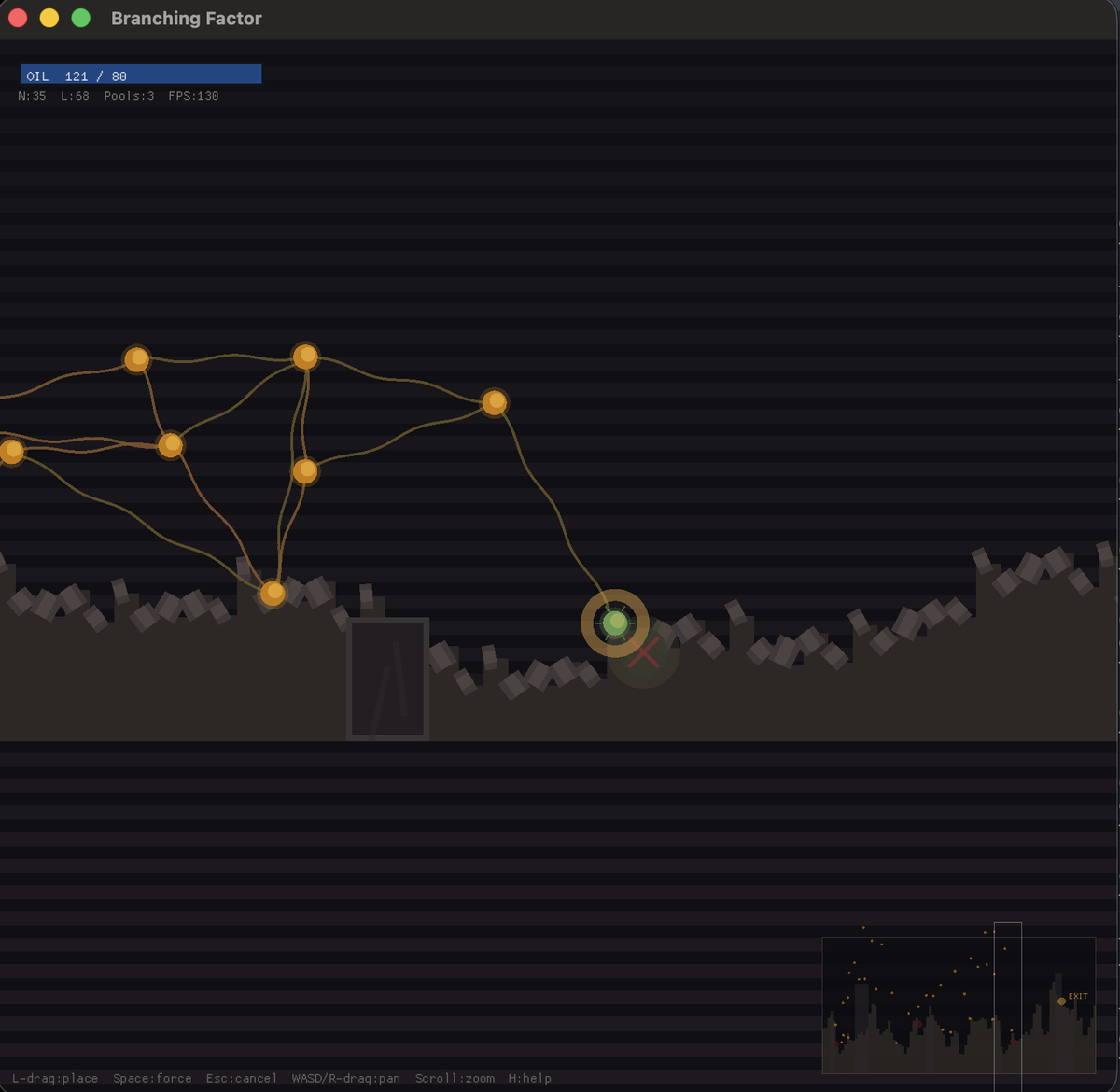
I am attempting to solve curriculum learning in RL in the next 2 weeks. Join me every day for 6-8 hours of livestreamed research, a 10 km run, heavy compounds, and a 1,000 calorie cut. Details + ground rules on day 1!
Joseph Suarez 🐡 tweet media
English
26
26
631
51.7K
Ramsan retweetledi
Ramsan retweetledi
Assal Rad
Assal Rad@AssalRad·
Palestinian victims: They rape us Video: Israeli soldiers raping Palestinian Israeli officials: Rape is legitimate B’Tselem: Pattern of sexual violence in Israeli prisons UN: Israel’s systematic use of sexual violence NYT: Palestinians are raped 🇮🇱: No evidence! BLOOD LIBEL
English
191
6.8K
26.3K
325.5K
Ramsan retweetledi
Ramsan
Ramsan@MedasanX·
@teortaxesTex I agree with you on the core. One of the highest expression of intelligence is coming up with something good nobody have thought about . But it can't be a benchmark since you can't compare or score objectively . (sure something like arena but the evaluation time is way longer)
English
0
0
0
204
Teortaxes▶️ (DeepSeek 推特🐋铁粉 2023 – ∞)
One of the best agentic benchmarks one can have is "build a reasonably NOVEL game from scratch". And it saddens me that people do a "replicate Space Invaders", "Tetris TUI", "voxel pelican" instead of their own daydreams. Agents are GOOD enough for daydreams now.
Teortaxes▶️ (DeepSeek 推特🐋铁粉 2023 – ∞) tweet mediaTeortaxes▶️ (DeepSeek 推特🐋铁粉 2023 – ∞) tweet media
English
5
2
90
4.5K
Ramsan
Ramsan@MedasanX·
@_JasonCorso_ Then how do we measure it? Because we can't and we have to make a proxy. Publication in top conference is a number that is taken into account in most impact indices. No matter how you measure it, CH is ahead of every other country (including the EU) and second to the US
English
1
0
1
273
Jason Corso
Jason Corso@_JasonCorso_·
@MedasanX No number of papers in top conferences is not a proxy for impact.
English
1
0
1
280
Jason Corso
Jason Corso@_JasonCorso_·
Show me the impact not the paper count. Paper mills outputting LPUs are a cancer to the field. And the data seems incomplete. In aggregate what about all of the institutions less than paper threshold here.
ℏεsam@Hesamation

someone analyzed all 5000+ accepted papers at ICLR 2026, and it's a good signal who's pushing the research of AI: > China has surpassed the US with 43.7% of the papers > Europe's contribution is surprisingly small (5.3% including UK)

English
4
2
44
11.9K
Ramsan
Ramsan@MedasanX·
@_JasonCorso_ The papers that get published in those venues are top papers. Usually when measuring "impact", the number of papers published in top conferences is the proxy used. Paper mills don't target or get through the selection process of a conference such as ICML.
English
1
0
0
344
Ramsan
Ramsan@MedasanX·
@ChrisRinvesting @jukan05 What do you think is more likely: The engineers at XAI, many of whom have years of experience building scalable training /inference systems at other top tier companies , didnt think about those problems OR this anime pfp is just spouting nonsense
English
0
0
0
22
Chris R 肯德基
Chris R 肯德基@ChrisRinvesting·
@jukan05 The fact that they didn’t think about these kinds of problems at the start and were instead too busy bragging about the record speed at which they built the cluster speaks volumes.
English
3
0
15
1.2K
Jukan
Jukan@jukan05·
Why did xAI hand over a 220,000-GPU cluster to Anthropic? The technical backdrop to xAI's decision to hand Colossus 1 over to Anthropic in its entirety is more interesting than it appears. xAI deployed more than 220,000 NVIDIA GPUs at its Colossus 1 data center in Memphis. Of these, roughly 150,000 are estimated to be H100s, 50,000 H200s, and 20,000 GB200s. In other words, three different generations of silicon are mixed together inside a single cluster — a "heterogeneous architecture." For distributed training, however, this configuration is close to a disaster, according to engineers familiar with the setup. In distributed training, 100,000 GPUs must finish a single step simultaneously before the cluster can advance to the next one. Even if the GB200s finish their computation first, the remaining 99,999 chips have to wait for the slower H100s — or for any GPU that has hit a stack-related snag — to catch up. This is known as the straggler effect. The 11% GPU utilization rate (MFU: the share of theoretical FLOPs actually realized) at xAI recently reported by The Information can be read as the numerical fallout of this problem. It stands in stark contrast to the 40%-plus MFU figures achieved by Meta and Google. The problem runs deeper still. As discussed earlier, NVIDIA's NCCL has traditionally been optimized for a ring topology. It works beautifully at the 1,000–10,000 GPU scale, but once you push into the 100,000-unit range, the latency of data traversing the ring once around becomes punishingly long. GPUs need to churn through computations rapidly to keep MFU high, but while they sit waiting endlessly for data to arrive over the network fabric, more than half of the silicon falls into idle. Google sidestepped this bottleneck with its own custom topology (Google's OCS: Apollo/Palomar), but xAI, by my read, has not yet reached that stage. Layer Blackwell's (GB200) "power smoothing" issue on top, and the picture comes into focus. According to Zeeshan Patel, formerly in charge of multimodal pre-training at xAI, Blackwell GPUs draw power so aggressively that the chip itself includes a hardware feature for smoothing power delivery. xAI's existing software stack, however, was optimized for Hopper and does not understand the characteristics of the new hardware; when it imposes irregular loads on the chip, the silicon physically destructs — literally melts. That means the modeling stack must be rewritten from scratch, which in turn means scaling is far harder than most of us imagine. Pulling all of this together points to a single conclusion. xAI judged that training frontier models on Colossus 1 simply was not efficient enough to be worthwhile. It therefore moved its own training workloads wholesale onto Colossus 2, built as a 100% Blackwell homogeneous cluster. Colossus 1, on the other hand — whose mixed architecture is far less crippling for inference, which parallelizes more forgivingly — was leased in its entirety to an Anthropic that desperately needed inference capacity. Many observers point to what looks like a contradiction: Elon Musk poured enormous capital into building Colossus, only to hand the core asset over to a direct competitor in Anthropic. Others read it as xAI capitulating because it is a "middling frontier lab." But these are surface-level reads. Look at the numbers and a different picture emerges. xAI today holds roughly 550,000+ GPUs in total (on an H100-equivalent performance basis), and Colossus 1 (220,000 units) accounts for only about 40% of the total available capacity. Colossus 2 — built entirely on Blackwell — is already operational and continuing to expand. Elon kept the all-Blackwell homogeneous cluster (Colossus 2) for himself and leased out the older, mixed-generation Colossus 1. In other words, he handed the pain of rewriting the stack — the MFU-11% debacle — to Anthropic, while keeping his own focus on training the next generation of models. The real point, then, is this. Elon's objective appears to be positioning ahead of the SpaceXAI IPO at a $1.75 trillion valuation, currently floated for as early as June. The narrative SpaceXAI now needs is that xAI — long the "sore finger" — is not merely a research lab burning cash, but a business with a "neo-cloud" model in the mold of AWS, capable of leasing surplus assets at high yields. From a cost-of-capital perspective, an "AGI cash incinerator" is far less attractive to investors than a "data-center landlord generating cash." As noted above, the most important detail of the Colossus 1 lease is that it is for inference, not training. Unlike training, inference requires far less tightly synchronized inter-GPU communication. Even when the chips are heterogeneous, the workload parcels out cleanly across them in parallel. The straggler effect — the chief weakness of a mixed cluster — is essentially neutralized for inference workloads. Furthermore, with Anthropic occupying all 220,000 GPUs as a single tenant, the network-switch jitter (unanticipated latency) that arises under multi-tenancy disappears. The two sides' technical weaknesses end up complementing each other almost exactly. One insight follows. As a training cluster mixing H100/H200/GB200, Colossus 1 was an asset that could only deliver an MFU of 11%. The moment it was handed over to a single inference customer, however, that asset transformed into a cash-flow asset rented out at roughly $2.60 per GPU-hour (a weighted average of the lease rates across GPU types). For xAI, what was a "cluster from hell" for training has become a "golden goose" minting $5–6 billion in annual revenue when redeployed for inference. Elon's genius, I would argue, lies not in the model but in this asset-rotation structure. The weight of that $6 billion becomes clearer when set against xAI's income statement. Annualizing xAI's 1Q26 net loss yields roughly $6 billion in losses per year. The $5–6 billion in annual revenue generated by leasing Colossus 1 to Anthropic, in other words, almost perfectly hedges xAI's loss figure. This single deal effectively pulls xAI to break-even. Heading into the SpaceXAI IPO, this functions as a core line of financial defense. From a cost-of-capital standpoint, if the image shifts from "research lab burning cash" to "infrastructure tollgate stably printing $6 billion a year," the entire tone of the offering can change. (May 8, 2026, Mirae Asset Securities)
Jukan@jukan05

What the SpaceX–Anthropic Deal Means Two weeks ago, we published a note laying out what GPT-5.5's release implied. The conclusion was simple: whoever secures compute first, in greater volume, and with greater reliability ultimately takes the win. With OpenAI's 30GW roadmap dwarfing Anthropic's 7–8GW, we closed by arguing that the structural advantage on compute sat with OpenAI. Less than a fortnight later, that conclusion is being tested. On May 6, Anthropic signed a single-tenant lease for the entirety of Colossus 1 with SpaceXAI — the infrastructure subsidiary that consolidates Elon Musk's xAI and SpaceX. The asset carries more than 220,000 GPUs and 300MW of power, and crucially, is scheduled to come online within this month. It served as the capstone of Anthropic's April blitz, which added 13.8GW of cumulative capacity over the span of a single month. On headline numbers alone, OpenAI took more than a year to stack 18GW; Anthropic has put 13.8GW in the ground in thirty days. The takeaways break down into three. First, the compute pecking order has been redrawn again. Anthropic has now swept up the AWS expansion (5GW, with $100B+ in spend commitments over a decade), Google + Broadcom (3.5GW of TPU), Google Cloud (5GW alongside a $40B investment), and now SpaceXAI's Colossus 1 (0.3GW). Cumulative committed capacity, inclusive of pre-April allocations, sits at 14.8GW. This is still only half of OpenAI's 2030 target of 30GW, but the fact that the SpaceX lease will be live inside a month makes "deliverability" a qualitatively different proposition. Second, Elon Musk is the plaintiff in an active lawsuit against OpenAI — and at the same time, the supplier handing 220,000+ GPUs and 300MW of power, in one block, to OpenAI's most formidable competitor. The timing matters: the deal was struck in the middle of the Musk–Altman trial. We read this as a deliberate pincer with OpenAI in the middle. In the courtroom, Musk works to dismantle the moral legitimacy of OpenAI's leadership; in the market, he arms Anthropic to absorb OpenAI's revenue and user base. Third, the structure is financial-engineering perfection — a clean win-win for both sides. xAI can recognize $6B of annual revenue from a single contract, an amount that almost precisely offsets its Q1 2026 annualized net loss of $6B. It also accelerates the cleanup of SpaceXAI's pre-IPO balance sheet, with the entity now being floated at around $1.75T. Anthropic, on the other side, converts roughly $5B of spend into what it expects to be $15B of ARR via the coming inference-revenue surge. (Mirae Asset Securities, May 8, 2026)

English
202
519
4.2K
1.2M