Mike Kalutkiewicz

386 posts

Mike Kalutkiewicz

Mike Kalutkiewicz

@MikeResoundant

MayoClinic | Resoundant

Washington, DC Katılım Temmuz 2016
368 Takip Edilen1.2K Takipçiler
Mike Kalutkiewicz retweetledi
Resoundant
Resoundant@Resoundant·
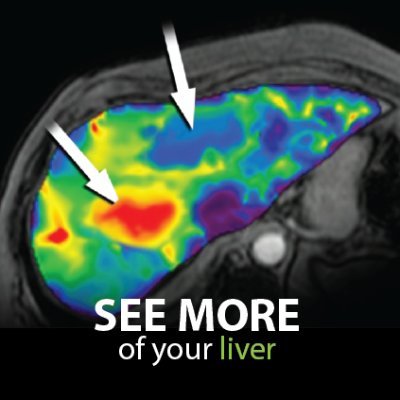
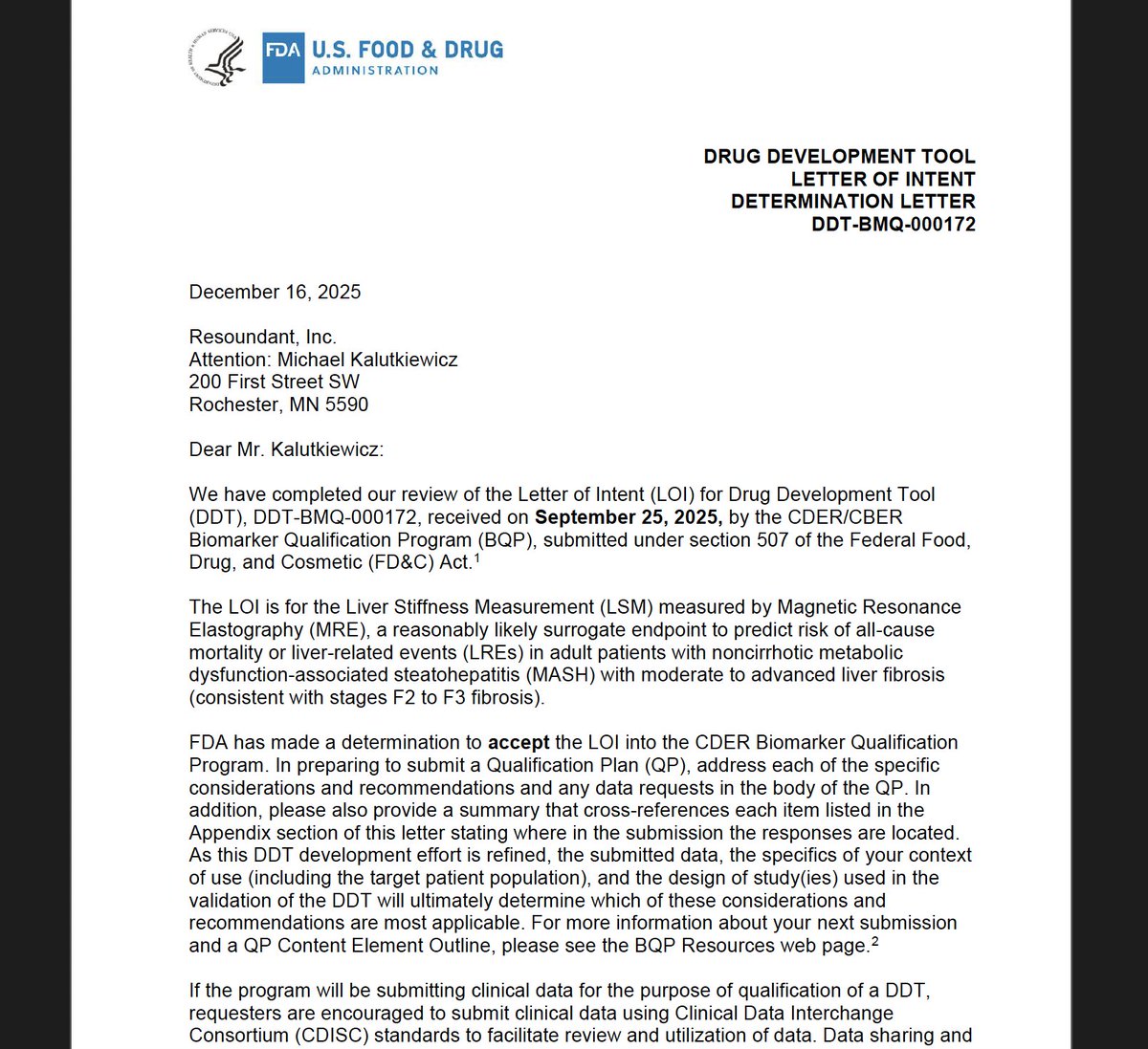
We're excited to report that Resoundant’s MRE Accepted into FDA Biomarker Qualification Program as a Reasonably Likely Surrogate Endpoint (RLSE) in MASH Trials Resoundant, Inc. today announced that the U.S. Food and Drug Administration (FDA) has accepted the company’s Letter of Intent into the FDA’s Biomarker Qualification Program (BQP) for Liver Stiffness Measurement (LSM) by Magnetic Resonance Elastography (MRE) as a Reasonably Likely Surrogate Endpoint (RLSE) in clinical trials for adults with noncirrhotic metabolic dysfunction–associated steatohepatitis (MASH) with moderate to advanced fibrosis (F2–F3). Acceptance into the BQP represents an important step in the FDA’s formal biomarker qualification process and reflects the agency’s openness to outcome-linked, non-invasive tests (NITs) that may improve the efficiency and feasibility of MASH drug development. The proposed context of use positions MRE as a quantitative biomarker intended to support assessment of fibrosis burden and its relationship to the risk of liver-related events and outcomes. Fibrosis progression is the primary driver of adverse clinical outcomes in MASH. However, reliance on liver biopsy in clinical trials presents well-recognized challenges, including procedural risk, sampling variability, reader discordance, high cost, and barriers to patient recruitment and retention. These limitations have contributed to longer timelines and increased development complexity across the field. MRE is an MRI-based technique that directly measures the mechanical properties of liver tissue and provides a continuous and reproducible assessment of fibrosis burden, enabling longitudinal evaluation without repeated invasive procedures. Advancing MRE within the FDA’s biomarker qualification framework has the potential to reduce reliance on biopsy and support more efficient, scalable, and patient-friendly clinical trial designs.
English
0
1
4
99
Mike Kalutkiewicz
Mike Kalutkiewicz@MikeResoundant·
Incredible milestone for Resoundant and Mayo Clinic! The FDA has accepted our LOI into the Biomarker Qualification Program for Liver Stiffness Measurement by MRE for development as a reasonably likely surrogate endpoint (RLSE) in MASH clinical trials. We want to sincerely thank the FDA staff for their thoughtful engagement and guidance, as well as the researchers, clinicians, and study teams around the world whose work over many years has helped build the robust evidence base supporting MRE! Collectively, these efforts now span thousands of patients, enabling rigorous evaluation of fibrosis burden and its relationship to outcomes. Fibrosis remains the key driver of adverse outcomes in MASH, and there is growing alignment across regulators, academia, and industry around the need for non-invasive, quantitative, and scalable tools that can support more efficient and patient-friendly trials.
Mike Kalutkiewicz tweet media
English
0
1
3
120
Mike Kalutkiewicz retweetledi
NEJM
NEJM@NEJM·
The prognosis of liver disease depends on the extent of fibrosis, which is usually staged with the use of liver biopsy. The limitations of biopsy have led to the development of noninvasive tests, which Drs. Laurent Castera, Mary E. Rinella, and Emmanuel A. Tsochatzis review. Learn more: nej.md/4hwZMgj
NEJM tweet media
English
4
345
1.1K
76.7K
Mike Kalutkiewicz
Mike Kalutkiewicz@MikeResoundant·
@scottisaacsmd @Nature Great point - and worth noting that pemvidutide seems promising in terms of better lean muscle preservation. So hopefully there is an option for vulnerable patients soon.
English
0
0
2
386
Scott Isaacs
Scott Isaacs@scottisaacsmd·
Insightful commentary in @Nature about rapid weight loss with GLP-1 meds which can lead to significant muscle loss or even #sarcopenia. Muscle-preserving strategies, exercise, adequate protein (~1.2-1.6 g/kg/d), creatine, and promising new agents like #bimagrumab and myostatin inhibitors. nature.com/articles/s4157…
Scott Isaacs tweet media
English
15
152
511
39.1K
Mike Kalutkiewicz
Mike Kalutkiewicz@MikeResoundant·
All we have to go by right now is the transcript I posted originally, but based on that langauge, it sure sounds like it will be biopsy-free as the primary endpoint. Perhaps they'll require bx for a subpop. The community has been pushing elastography+serum marker as less noisy, cheaper and more patient-friendly.
English
1
0
0
81
Mike Kalutkiewicz
Mike Kalutkiewicz@MikeResoundant·
🚨🚨 Did you catch it? Lilly hinted on their last earnings call that their Phase 3 MASLD trial for tirzepatide and retatrutide may be biopsy-free—using only non-invasive tests like MRE and MRI-PDFF. This could be a watershed moment for metabolic liver disease trials: faster, cheaper, more accurate, and better for patients. The shift from biopsy to NITs in pivotal trials might not be years away - it may already be here.
Mike Kalutkiewicz tweet media
English
2
1
8
1.7K
Mike Kalutkiewicz retweetledi
NEJM
NEJM@NEJM·
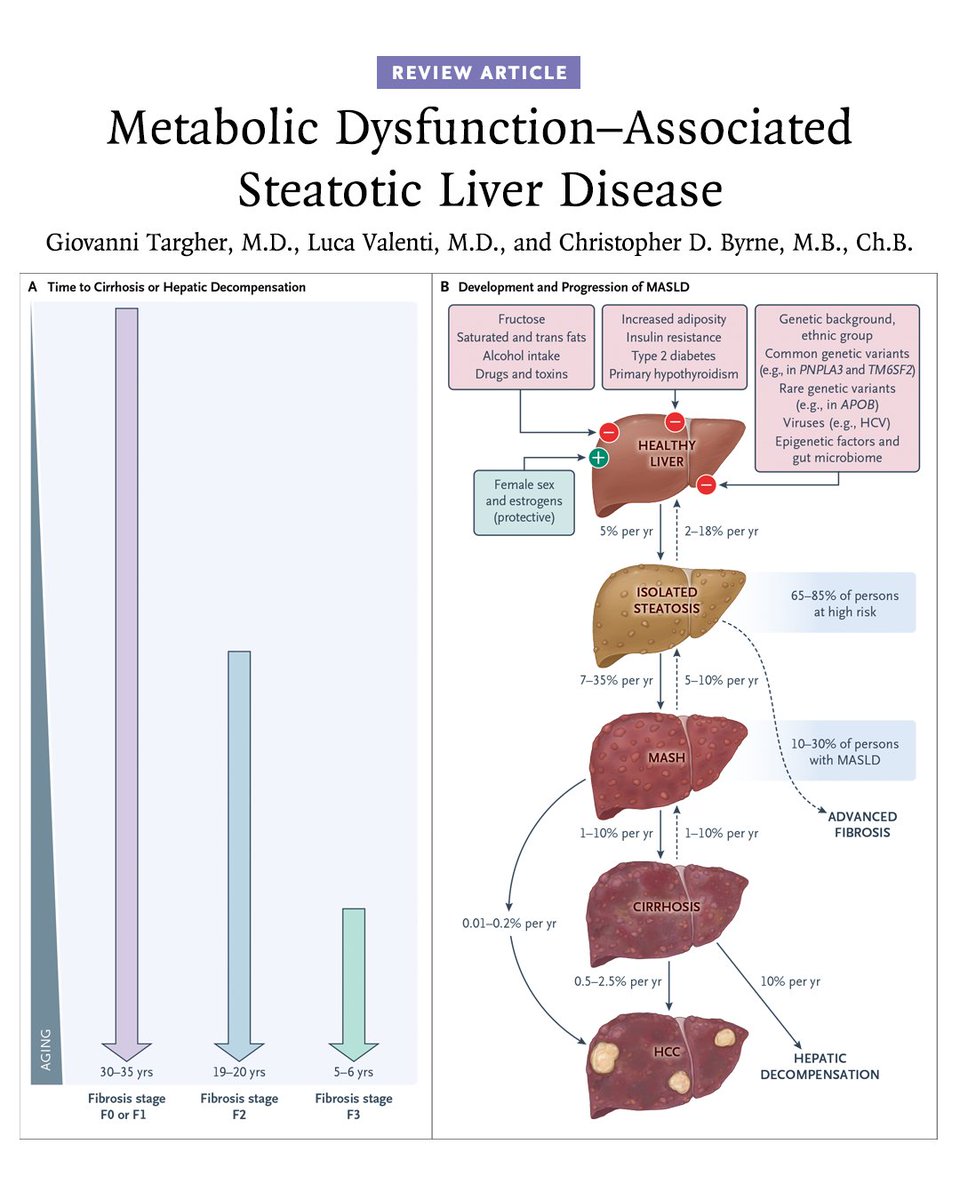
MASLD has become the most common chronic liver disease worldwide. Giovanni Targher, MD, Luca Valenti, MD (@lucavalenti75), and Christopher D. Byrne, MB, ChB, review the features of the disease as well as pharmacotherapies targeting the associated liver and cardiovascular–renal–metabolic issues. Learn more in the Review Article “Metabolic Dysfunction–Associated Steatotic Liver Disease” from @univerona, IRCCS Sacro Cuore Don Calabria Hospital, and elsewhere: nej.md/4lpS4F0
NEJM tweet media
English
4
392
1K
103.1K
Mike Kalutkiewicz
Mike Kalutkiewicz@MikeResoundant·
There have been a couple of trials lately that have shown positive data at W48 or even W24 - Altimmune comes to mind. Histologic endpoints and NITs were positive at W24, with the exception of histologic fibrosis (though the only thing keeping it from being stat sig was the PBO response). I think a W48 NIT trial is feasible with outcomes data being collected post-approval for a few years.
English
1
0
5
225
FlexNP
FlexNP@rn_flex·
@WallStSai @bioinvestor24 @MikeResoundant Oh for sure. Lilly is definitely aggressive in a lot of this stuff so it'll be interesting to see what comes from this because trial needs to at minimum be 72-80 weeks especially if they're looking at MASH Plain MAFLD resolves quickly(24 weeks usually) but MASH needs time....
English
2
0
2
158
Mike Kalutkiewicz
Mike Kalutkiewicz@MikeResoundant·
@bioinvestor24 @rn_flex My read from this is, no, no biopsy needed. This matches the community's discussions with FDA to totally replace biopsy with NITs. Lilly seems like the first to take advantage.
English
0
0
1
22
Mike Kalutkiewicz retweetledi
Elliot Tapper
Elliot Tapper@ebtapper·
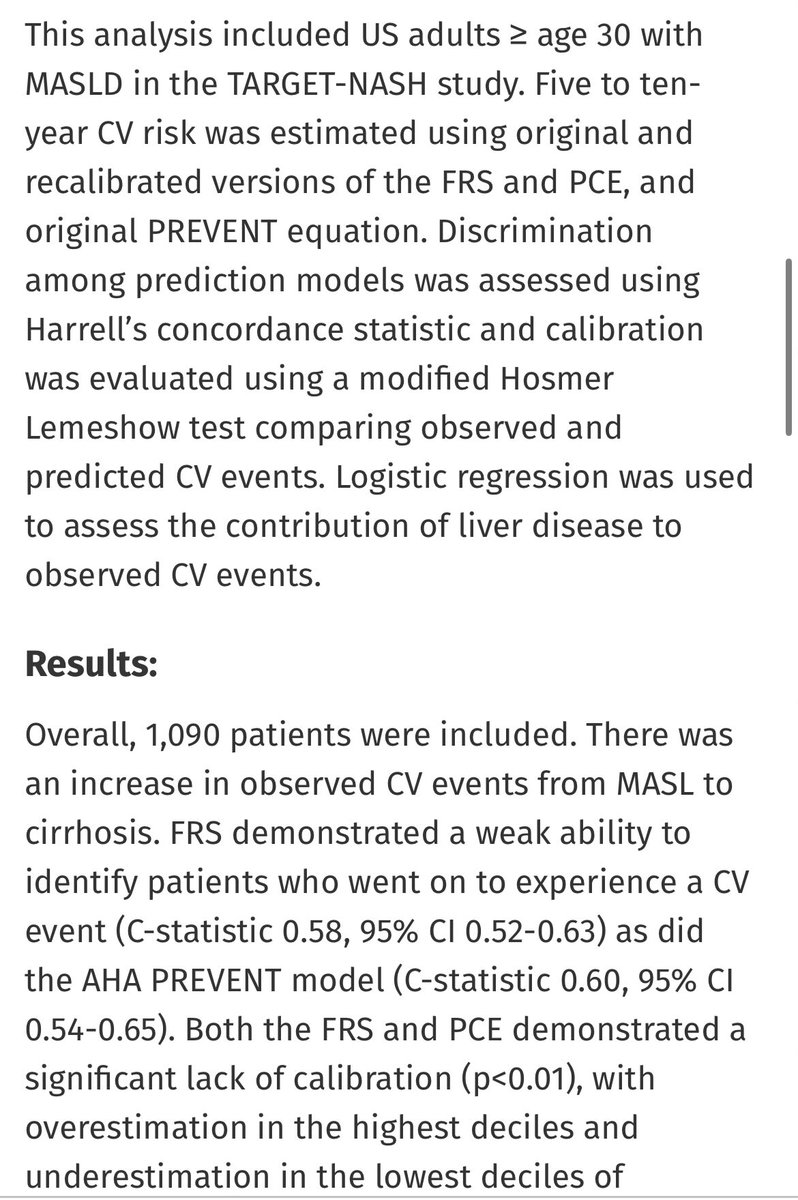
Cardiovascular risk estimates miss the mark in people with MASH Heart disease is the most important risk for patients with MASH but the commonly used risk equations just don’t work New paper in @AmJGastro
Elliot Tapper tweet media
English
1
13
42
4.8K
Mike Kalutkiewicz
Mike Kalutkiewicz@MikeResoundant·
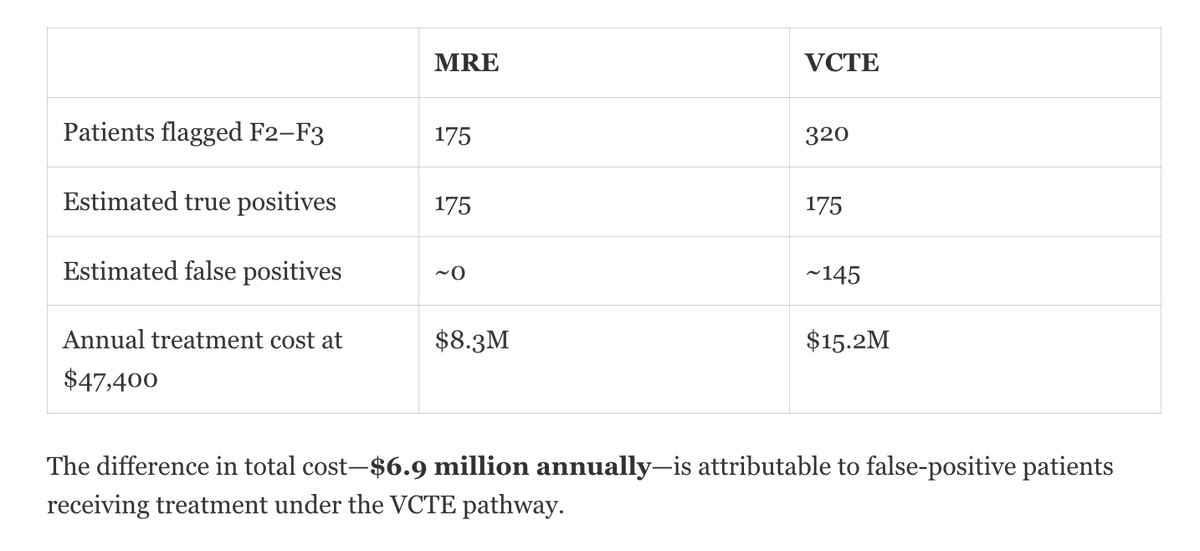
The goal of doubling the diagnostic rate is a great idea! But we have to make sure we have the right test for the right patients. Study after study shows that Fibroscan will have too many false positives in high BMI MASLD/MASH populations. Any call for increased diagnostics must be accompanied by a call to action for countries to increase their rate of MRE availability. If not, these countries will spend significantly more money on false positive treatments - in addition to increasing patient anxiety, fear and confusion. It's critically important for countries to continue to invest in MRE and PDFF to ensure the right patients are diagnosed and treated.
English
0
0
1
54
Mike Kalutkiewicz
Mike Kalutkiewicz@MikeResoundant·
Great piece by a stellar team. I just posted something about the origin of MRE's 19% change - and why it's not set in stone. It is indeed flexible, and nothing replaces clinical judgment. the NIMBLE Consortium just found, using the same methodology as I describe in the post about MRE/19%, that VCTE's repeatability coefficient is 75% - that is, you need a 75% change in VCTE to be sure that the change represents a true biological change, and not just test noise, in real-world clinical settings (different day, different operator, unknown fasting status, different model/software. It would be nice to compare these tests using the same methodologies. MRE change = 19% is the same methodology as VCTE change = 75% VCTE change of 25% (made up number) is the same as MRE change of ~6% Holding one to a different/higher standard is doing patients harm, ultimately. x.com/MikeResoundant…
English
0
0
1
58
Mattias Mandorfer
Mattias Mandorfer@MattiasMandorf1·
Monitoring resmetirom by LSM - asking for the moon? Oftentimes mentioned but even more often forgotten: ❗️Random variation of LSM by VCTE exceeds 25% 👉🔽 LSM >25% often by chance, same for 'unchanged' or increases 👉No substitute for clinical judgement #LiverTwitter 🔗👇
Mattias Mandorfer tweet media
English
6
10
34
3.2K
Mike Kalutkiewicz
Mike Kalutkiewicz@MikeResoundant·
19% Most imaging biomarkers try to prove they’re specific. MRE did the opposite early on - RSNA QIBA experts were working to standardize MRE for *clinical use* first - not just for clinical trials. So the widely cited 19% repeatability coefficient (RC) for MRE wasn’t cherry-picked to look precise. It was designed by QIBA to reflect the worst-case clinical variation (e.g., patient moves to another state before follow-up, is scanned on a different scanner model, software, didn't fast, possibly with an untrained MRE reader). So the MRE repeatability studies that QIBA pulled from had: - Different scanners, sequences, and software - No fasting requirements - Scan intervals up to 30 days - Different operators and software - Even untrained readers(!) These studies together found a within-subject coefficient of variation (wCV) of 7.9% - which then plussed up according to the Repeatability Coefficient formula of RC = 1.96 x √2 x 7.9% = 19%. Voilà! (side note: the RC formula was created to take into the longitudinal variability described above) So even in the messiest environments, if MRE changes ≥19%, you can be 95% confident it's a true biological change. But here’s what many miss: the 95% confidence interval for the 19% RC is roughly 15% to 24%. That means even QIBA’s “conservative” number has some flexibility built in - if the change in MRE is ≥15% (the lower bound of the 95% CI) you can still be 95% certain. But let's switch to clinical trials. In high-profile Phase 2b or 3 studies, we’re not operating in worst-case clinical settings that QIBA took into account. Here we have very tightly controlled settings: - patients usually receive baseline and f/u on the same scanner - no software updates are allowed during the study - expert readers (or our automated software at Mayo) - strict fasting Fortunately, there have been a few well-controlled studies of MRE in similar environments that yielded wCV of 3.8%. That yields an RC of: RC (95%) = 1.96 x √2 x 3.8 = *10.5%* (CI: 8.5% to 14.5%) So in tightly-controlled clinical trial environments, a ≥8.5% change in MRE represents a true biological change with 95% confidence. But you don't have to be locked into the 95% confidence, which is the same as 5% false positives, or 95% specificity. There are virtually no tests that have 95% spec in any context. So what about 90% specificity, aka 90% confidence? That would be RC (90%) = 1.44 x √2 x 3.8 RC at 90% confidence: 8.8% (CI: 7.2% to 11.2%) That means if FDA allows 90% specificity with your monitoring biomarker, a change of MRE of just ≥7.2% would be significant with 90% confidence. I'd love to see resmetirom data re-run with the proportion of patients who experienced a MRE change of ≥8kPa! I bet the data would be even more impressive! And if you're designing a trial, it's critical to understand that 19% change in MRE is probably too conservative given the efforts you've taken to reduce variability.
Mike Kalutkiewicz tweet media
English
0
2
2
170
Mike Kalutkiewicz
Mike Kalutkiewicz@MikeResoundant·
I thought it was a strange way to frame the results. But also, no signal at 36 weeks - and having to wait until 96 weeks to assess response - is difficult clinically. Do patients really want to be on an injectable for 2 years to see if it’s working in about 1/3 of patients? Would a number of no responders are likely to have LREs during that time? It’s nice data but definitely introduces a lot of questions too.
English
1
0
0
56
Pierre Gholam
Pierre Gholam@pgholam·
If you read this post in isolation, you would conclude that this is a negative study. If you read the actual paper, you would conclude that is is a positive study. The moral of the story. Read the paper not the tweet. @EASLnews #easlcongress #livertwitter
NEJM@NEJM

In patients with compensated cirrhosis from metabolic dysfunction–associated steatohepatitis, efruxifermin did not significantly reduce fibrosis at 36 weeks. Full SYMMETRY trial results: nej.md/4kru98f @EASLnews | #EASLCongress

English
1
3
14
1.7K
Ian Rowe
Ian Rowe@IanARowe·
Looking forward to catching up with friends and colleagues @EASLedu But first, cycling for liver health and sustainability. Stage 1 complete, next stage Rotterdam to Amsterdam tomorrow! #EASLCongress
Ian Rowe tweet media
English
1
4
37
2.3K
Mike Kalutkiewicz
Mike Kalutkiewicz@MikeResoundant·
A new study in Nature caught my attention for its innovative approach to a long-standing challenge: noninvasively assessing liver inflammation in MASH. lnkd.in/evmimxGB The team (Vanderbilt Radiology; Xiaoyu Jiang, John Gore et al) introduces MR cytometry - an imaging technique that estimates cell size and density using MRI data. The rationale: 🟢 In healthy livers, large hepatocytes dominate. 🟠 In MASH, inflammatory processes bring in smaller immune cells (like lymphocytes and macrophages), increasing cell density and decreasing average cell size. By setting thresholds (cell size <10 μm and density >30 x 10⁴/mm³) the authors quantify inflammation-related changes across the liver. The key result (Fig. 7) is below - and I've never seen such clean stratification using any biomarker (serum, imaging, etc) in MASH. MASH patients had a significantly higher percentage of liver voxels matching this inflammatory signature compared to healthy controls - measured noninvasively on practically any standard 1.5T or 3T MRI scanner, in under 12 minutes. Because this is a direct method for assessing cellular characteristics of the liver, MRI cytometry would be a very welcome tool for clinical trials in terms of quantifying inflammatory reductions alone. "This technique holds promise as a complementary tool to existing noninvasive methods, such as PDFF and MRE, contributing to the development of a comprehensive, noninvasive diagnostic approach for MASH." It's still early work, but this is worth following closely.
Mike Kalutkiewicz tweet media
English
0
1
1
130
Mike Kalutkiewicz
Mike Kalutkiewicz@MikeResoundant·
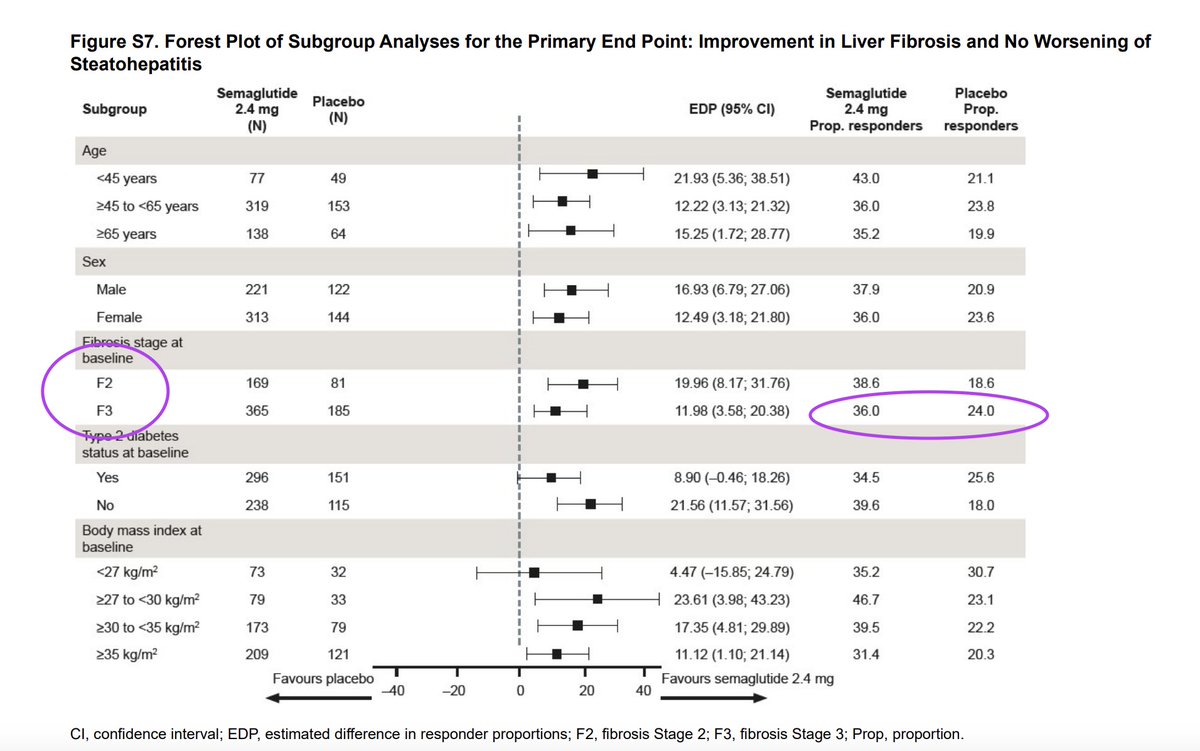
Surpirsing to see a very modest treatment effect in F3. Going from F2 -> F1 via histology is more likely to be effected by sampling error than F3 -> F2 - so I'd discount the higher response rate in the smaller F2 cohort a bit. So does this mean that the anti-fibrotic effects here are fairly marginal? Compare that to something like FASN/denifanstat, which showed large effects on F3 cohort alone. So this study, taken as a whole - coupled with the large PBO effects - means that MASH-specific drugs will be needed IMO
Mike Kalutkiewicz tweet media
English
1
0
1
216
Elliot Tapper
Elliot Tapper@ebtapper·
Semaglutide improved inflammation and fibrosis in people with MASH / NASH 1. Generalizable gem: 10% body weight loss is the target to reverse fibrosis 2. Monkey on the back: inflammation endpoints with huge placebo effect nejm.org/doi/full/10.10…
Elliot Tapper tweet media
English
8
68
210
21.6K