The Mumbai Grind

625 posts

The Mumbai Grind banner
The Mumbai Grind

The Mumbai Grind

@MumbaiGrind

It was always Mumbai!

Mumbai, India Katılım Ekim 2022
316 Takip Edilen27 Takipçiler
The Mumbai Grind
The Mumbai Grind@MumbaiGrind·
You’d have save them the challenge and opted for a tunnel for pedestrians. This would have saved costs and pedestrians would have to climb fewer steps. If Mumbai can make 33.5km of tunnels for line 3 and other tunnels, surely @MMRDAOfficial can make a 60m one…
Dr. Sanjay Mukherjee@DrSanMukherjee

Proud moment for #MMRDA! Kudos to our dedicated team of 60+ engineers & staff for this outstanding engineering feat — successfully erecting four massive 59.63m, 252-tonne steel girders for the new Foot Over Bridge connecting Brahmand Junction to Tikuji Ni Wadi Metro Station. Executed with precision under the existing metro viaduct above busy Ghodbunder Road, this will greatly enhance pedestrian safety and connectivity for Thane citizens. Together, building a safer, smarter Mumbai #MumbaiInMinutes #EngineeringExcellence #MMRDAMovesMumbai #RebootingMumbai #ReshapingMMR #ReimaginingMMR

English
0
0
0
17
The Mumbai Grind
The Mumbai Grind@MumbaiGrind·
@zoru75 We had a much deeper blue sky in Mumbai while growing up in the 1970s when most Mumbaikars used public transport… Sigh. As long as #flyoverFadnavis focuses on moving Mumbaicars and not Mumbaikars, we are doomed.
English
0
0
3
41
The Mumbai Grind
The Mumbai Grind@MumbaiGrind·
Will @CNN now report on India’s not so hot May? Obviously not since it doesn’t fit its narrative and doesn’t make a sensational headline…
CSEINDIA@CSEINDIA

Why India’s summer isn’t as hot as expected? India was expected to face an intense heatwave summer in 2026. Instead, many regions are seeing cooler temperatures, thunderstorms, hailstorms, and excess rainfall. What caused this dramatic shift? In this video, Down To Earth's @bluewrit explains the multiple weather systems shaping India’s unusual summer: from western disturbances and cyclonic circulations to the possible influence of El Niño and the approaching monsoon. Watch the full video now: youtu.be/eA5RQkITa3M

English
0
0
0
15
The Mumbai Grind
The Mumbai Grind@MumbaiGrind·
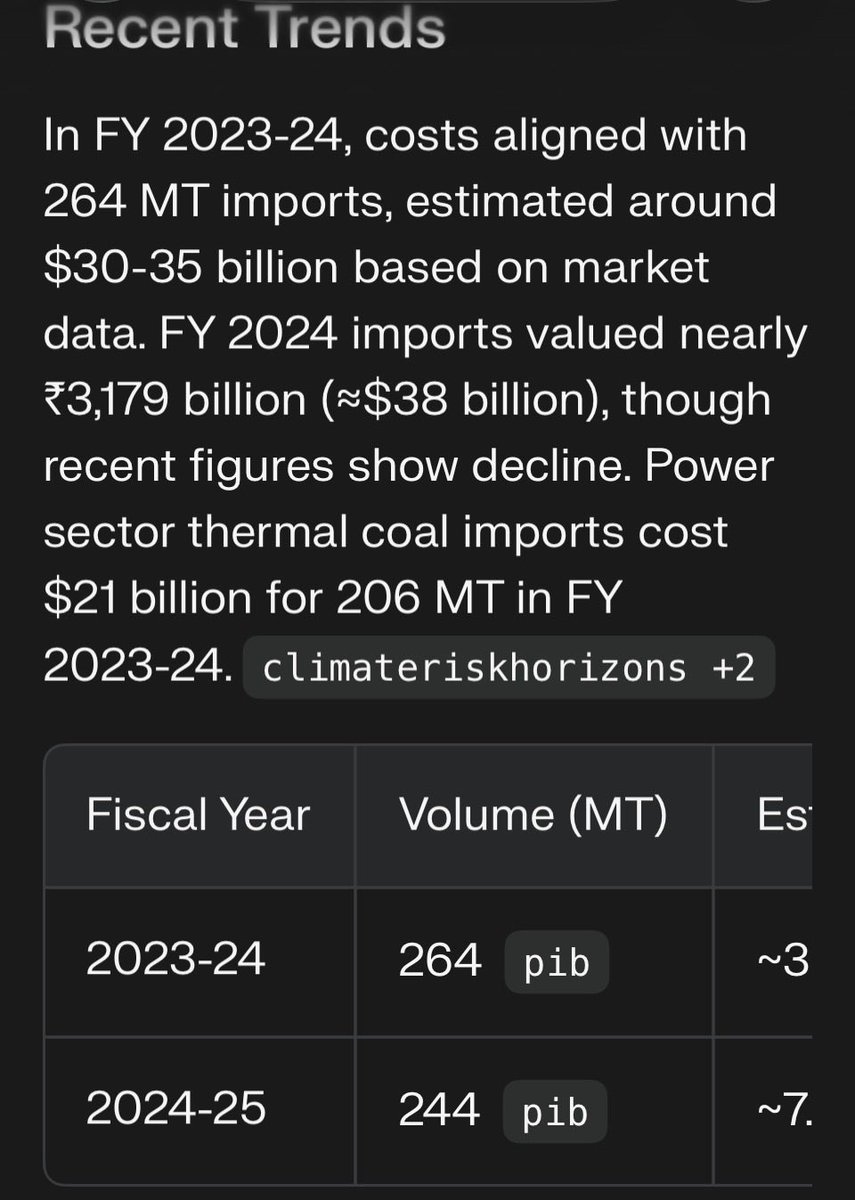
What import substitution when India imports $30bn worth of coal every year?
The Mumbai Grind tweet media
Raghav Wadhwa@raghavwadhwa

Coal Gasification. India's largest import substitution plays since solar. The Cabinet just approved a ₹37,500 crore scheme to back it. The headline number is not the real number. The real number is ₹2.77 lakh crore. That's what India paid last year importing LNG, urea, ammonia, methanol and ammonium nitrate. Every product on that list can be made from coal. Almost nobody is asking who is already building this. So, I went and pulled the order book. First, what coal gasification actually is. It converts coal into syngas, a mix of carbon monoxide and hydrogen. Syngas then becomes methanol, ammonia, urea, ammonium nitrate, Synthetic Natural Gas, hydrogen and industrial fuels. So instead of paying foreign suppliers in dollars, India pays domestic miners in rupees. The scheme: 🔹 Outlay: ₹37,500 crore 🔹 Target: gasify 75 MT of coal (national goal 100 MT by 2030) 🔹 Investment expected: ₹2.5 lakh crore to ₹3 lakh crore 🔹 Subsidy: up to 20% of plant and machinery cost 🔹 Cap per project: ₹5,000 crore 🔹 Cap per product (except SNG and urea): ₹9,000 crore 🔹 Cap per entity group: ₹12,000 crore 🔹 Coal linkage extended to 30 years The 30-year linkage is the line most analysts will miss. Coal gasification plants are ₹10,000 crore plus capex. No board commits that without feedstock certainty for the full asset life. This is what de-risks the entire scheme. The order book is not theoretical. The new ₹37,500 crore outlay builds on the ₹8,500 crore scheme from January 2024 under which 8 projects worth ₹6,233 crore are already in execution. The pipeline has been quietly building for 18 months. The value chain has four layers. Here is who is already in. 👉Layer 1, coal owners: 🔹 Coal India: parent of BCGCL (JV with BHEL for coal-to-ammonium nitrate, ₹11,782 crore at Jharsuguda) and CGIL (JV with GAIL for coal-to-SNG at Sonepur Bazari, ₹13,052 crore). Plus, a standalone ₹12,214 crore coal-to-SNG project in Maharashtra. ₹1,350 crore incentive already received per project. 🔹 NLC India, NTPC: lignite and coal-linked optionality. 👉Layer 2, technology and EPC: 🔹 BHEL: 49% equity in BCGCL. Won LSTK-1 (gasification + air separation + steam) and LSTK-2 (raw gas purification) of the BCGCL project. Uses its own indigenous Pressurised Fluidised Bed Gasifier technology. The only Indian company with a commercial coal gasification tech stack. 🔹 Larsen & Toubro: won LSTK-3 (ammonia synthesis) and LSTK-4 (nitric acid + ammonium nitrate + prilling) of the same BCGCL project. Both booked as "large" orders by L&T Energy Hydrocarbon Onshore. 🔹 Thermax, ISGEC Heavy Engineering, Triveni Turbine: second-order exposure on boilers, steam systems, turbines and auxiliaries. 👉Layer 3, downstream chemicals and fertilisers: 🔹 GAIL: equity in Talcher Talcher Fertilizers Ltd and CGIL plus offtake economics on coal-to-SNG. 🔹 RCF, NFL, GNFC, GSFC, Chambal, Coromandel, Tata Chemicals: long-cycle demand and feedstock optionality. 👉Layer 4, ammonium nitrate, methanol and explosives users: 🔹 Deepak Fertilisers and Petrochemicals: 40% market share in Technical Ammonium Nitrate. 587 KTPA current capacity. Building 376 KTPA expansion at Gopalpur for Q1 FY27 that takes total past 1 MMTPA. Backward integrated via 500 KTPA ammonia plant at Taloja that cut India's ammonia imports by roughly 20%. Also, one of India's five major methanol producers. 🔹 Solar Industries: India's largest industrial explosives player. Heavy AN user. Margin sensitive to domestic AN economics. 🔹 GNFC: methanol, formic acid, acetic acid. Signed 50-50 JV with INEOS in November 2024 for a 600 KTPA acetic acid plant at Bharuch. 🔹 Petronet LNG, Gujarat Gas, IGL, MGL: substitution-risk angle over a decade as coal-to-SNG scales. So, who makes money first? Order book visibility is highest today for BHEL and L&T. Both have already converted BCGCL into hard orders. The ₹37,500 crore outlay expands the addressable pipeline by roughly 9x to 10x over the previous scheme. EPC and gasification equipment is the cleanest near-term play. Coal India benefits two ways. Direct equity in three gasification projects with ₹1,350 crore per project already received. Indirect: 1.3 MT annual captive coal offtake into BCGCL alone is the kind of long-tail thermal coal demand that protects against the secular decline narrative. Deepak Fertilisers benefits through market structure. BCGCL's 0.66 MMTPA eventually competes, but India today still imports ammonium nitrate from Russia. The near-term effect is domestic AN scaling without import dependence, lining up with Deepak's own 1 MMTPA expansion. Most policy announcements fade in one news cycle. This one looks like a 5–10 year industrial buildout. India is trying to convert its largest domestic resource into a substitute for its biggest import vulnerabilities. First-order winners: coal owners and EPC giants. Second-order winners: chemicals, fertilisers and industrial explosives. Long-term pressure point: gas-import-linked margins. 📌Disclaimer: For educational purposes only. Not a buy or sell recommendation.

English
0
0
0
46
The Mumbai Grind
The Mumbai Grind@MumbaiGrind·
How many battery gigafactories could be made in the same investment of ₹277 lakh crores… Ok we may need to import lithium but that’s a once in 8 year cycle and India still imports $30bn worth of coal every year
The Mumbai Grind tweet media
Raghav Wadhwa@raghavwadhwa

Coal Gasification. India's largest import substitution plays since solar. The Cabinet just approved a ₹37,500 crore scheme to back it. The headline number is not the real number. The real number is ₹2.77 lakh crore. That's what India paid last year importing LNG, urea, ammonia, methanol and ammonium nitrate. Every product on that list can be made from coal. Almost nobody is asking who is already building this. So, I went and pulled the order book. First, what coal gasification actually is. It converts coal into syngas, a mix of carbon monoxide and hydrogen. Syngas then becomes methanol, ammonia, urea, ammonium nitrate, Synthetic Natural Gas, hydrogen and industrial fuels. So instead of paying foreign suppliers in dollars, India pays domestic miners in rupees. The scheme: 🔹 Outlay: ₹37,500 crore 🔹 Target: gasify 75 MT of coal (national goal 100 MT by 2030) 🔹 Investment expected: ₹2.5 lakh crore to ₹3 lakh crore 🔹 Subsidy: up to 20% of plant and machinery cost 🔹 Cap per project: ₹5,000 crore 🔹 Cap per product (except SNG and urea): ₹9,000 crore 🔹 Cap per entity group: ₹12,000 crore 🔹 Coal linkage extended to 30 years The 30-year linkage is the line most analysts will miss. Coal gasification plants are ₹10,000 crore plus capex. No board commits that without feedstock certainty for the full asset life. This is what de-risks the entire scheme. The order book is not theoretical. The new ₹37,500 crore outlay builds on the ₹8,500 crore scheme from January 2024 under which 8 projects worth ₹6,233 crore are already in execution. The pipeline has been quietly building for 18 months. The value chain has four layers. Here is who is already in. 👉Layer 1, coal owners: 🔹 Coal India: parent of BCGCL (JV with BHEL for coal-to-ammonium nitrate, ₹11,782 crore at Jharsuguda) and CGIL (JV with GAIL for coal-to-SNG at Sonepur Bazari, ₹13,052 crore). Plus, a standalone ₹12,214 crore coal-to-SNG project in Maharashtra. ₹1,350 crore incentive already received per project. 🔹 NLC India, NTPC: lignite and coal-linked optionality. 👉Layer 2, technology and EPC: 🔹 BHEL: 49% equity in BCGCL. Won LSTK-1 (gasification + air separation + steam) and LSTK-2 (raw gas purification) of the BCGCL project. Uses its own indigenous Pressurised Fluidised Bed Gasifier technology. The only Indian company with a commercial coal gasification tech stack. 🔹 Larsen & Toubro: won LSTK-3 (ammonia synthesis) and LSTK-4 (nitric acid + ammonium nitrate + prilling) of the same BCGCL project. Both booked as "large" orders by L&T Energy Hydrocarbon Onshore. 🔹 Thermax, ISGEC Heavy Engineering, Triveni Turbine: second-order exposure on boilers, steam systems, turbines and auxiliaries. 👉Layer 3, downstream chemicals and fertilisers: 🔹 GAIL: equity in Talcher Talcher Fertilizers Ltd and CGIL plus offtake economics on coal-to-SNG. 🔹 RCF, NFL, GNFC, GSFC, Chambal, Coromandel, Tata Chemicals: long-cycle demand and feedstock optionality. 👉Layer 4, ammonium nitrate, methanol and explosives users: 🔹 Deepak Fertilisers and Petrochemicals: 40% market share in Technical Ammonium Nitrate. 587 KTPA current capacity. Building 376 KTPA expansion at Gopalpur for Q1 FY27 that takes total past 1 MMTPA. Backward integrated via 500 KTPA ammonia plant at Taloja that cut India's ammonia imports by roughly 20%. Also, one of India's five major methanol producers. 🔹 Solar Industries: India's largest industrial explosives player. Heavy AN user. Margin sensitive to domestic AN economics. 🔹 GNFC: methanol, formic acid, acetic acid. Signed 50-50 JV with INEOS in November 2024 for a 600 KTPA acetic acid plant at Bharuch. 🔹 Petronet LNG, Gujarat Gas, IGL, MGL: substitution-risk angle over a decade as coal-to-SNG scales. So, who makes money first? Order book visibility is highest today for BHEL and L&T. Both have already converted BCGCL into hard orders. The ₹37,500 crore outlay expands the addressable pipeline by roughly 9x to 10x over the previous scheme. EPC and gasification equipment is the cleanest near-term play. Coal India benefits two ways. Direct equity in three gasification projects with ₹1,350 crore per project already received. Indirect: 1.3 MT annual captive coal offtake into BCGCL alone is the kind of long-tail thermal coal demand that protects against the secular decline narrative. Deepak Fertilisers benefits through market structure. BCGCL's 0.66 MMTPA eventually competes, but India today still imports ammonium nitrate from Russia. The near-term effect is domestic AN scaling without import dependence, lining up with Deepak's own 1 MMTPA expansion. Most policy announcements fade in one news cycle. This one looks like a 5–10 year industrial buildout. India is trying to convert its largest domestic resource into a substitute for its biggest import vulnerabilities. First-order winners: coal owners and EPC giants. Second-order winners: chemicals, fertilisers and industrial explosives. Long-term pressure point: gas-import-linked margins. 📌Disclaimer: For educational purposes only. Not a buy or sell recommendation.

English
0
0
0
37
The Mumbai Grind
The Mumbai Grind@MumbaiGrind·
That’s fine. At least the RBI won’t have to provide dollars for buying and smuggling that gold… Imagine waiting for the elections to get over before increasing the customs duty. Shame on @PMOIndia
Deepak Shenoy@deepakshenoy

I hope this is temporary. 1 kg of gold is 1.5 cr and 15% is 22 lakh. 1 kg of gold is tiny tiny. The last time we saw amazing stories of how everyone including an ips officers daughter were smuggling gold in. And probably a lot more that didn't get caught. Welcome to a repeat.

English
0
0
0
27
The Mumbai Grind
The Mumbai Grind@MumbaiGrind·
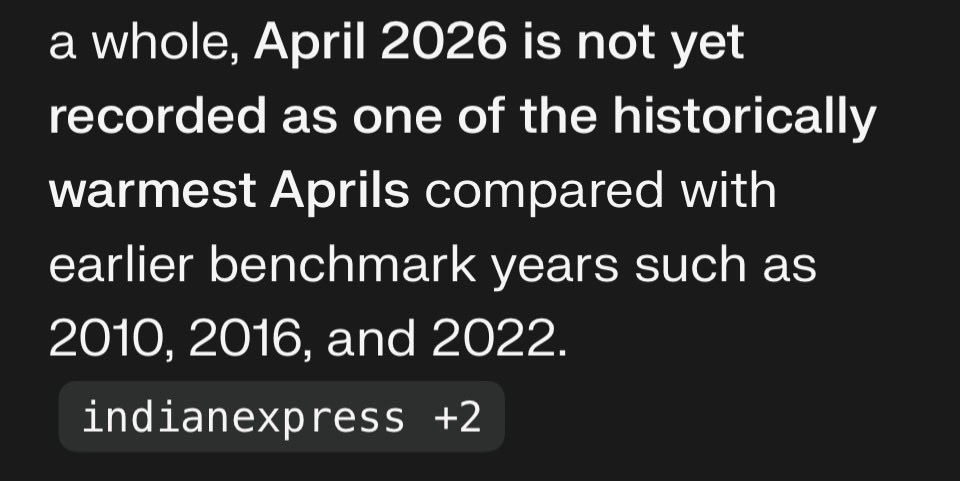
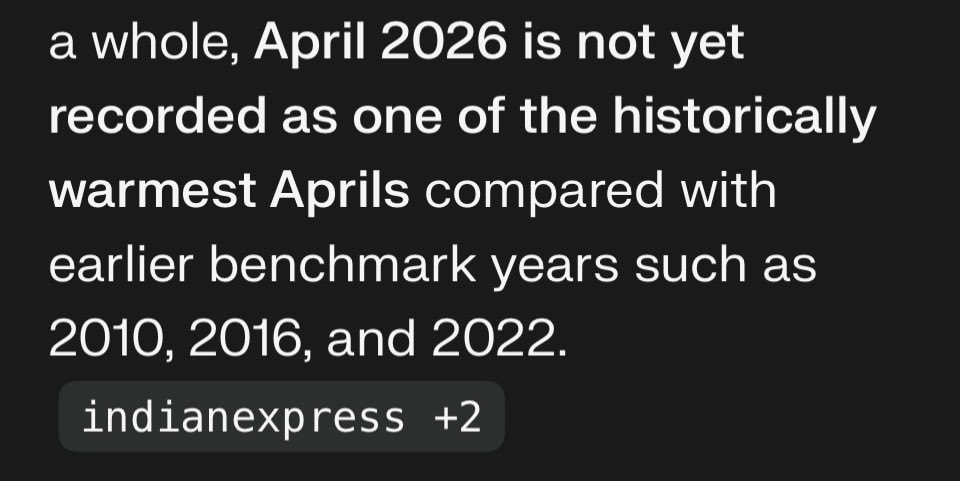
@sanchak74 2010, 2016, 2022 - India had a hotter April month. Is @CNN saying that the rest of the not so hot cities are cooling?
The Mumbai Grind tweet media
English
1
0
1
38
The Mumbai Grind
The Mumbai Grind@MumbaiGrind·
@zoru75 ₹7000cr cost escalation to boot… No money for BEST buses.
English
0
0
1
155
Zoru Bhathena
Zoru Bhathena@zoru75·
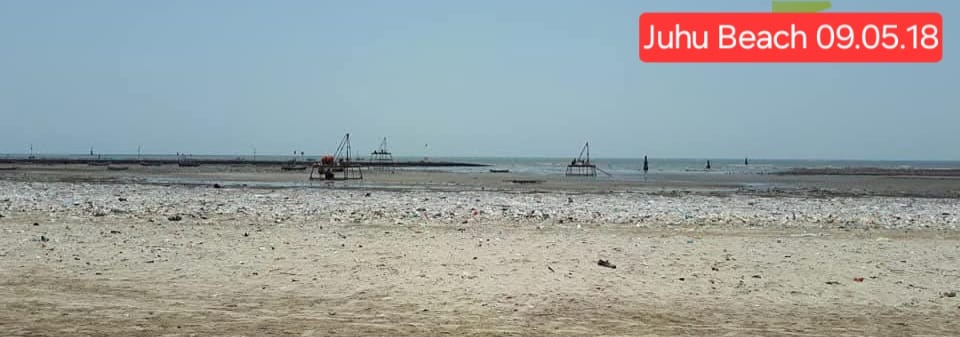
Versova Bandra Sea Link VBSL Juhu Koliwada Exit Work started - May 2018 Work is progress - May 2026 My Sea Link Seeing rapid progress over 8 years
Zoru Bhathena tweet mediaZoru Bhathena tweet media
English
16
21
133
9K
The Mumbai Grind retweetledi
InfraStory
InfraStory@marinebharat·
It’s an utter disgrace that despite months since Navi Mumbai International Airport being operational and Years since MTHL being open… there isn’t a single BEST bus operational on this route. .@AmeetSatam .@TawdeRitu .@myBESTBus
English
27
51
440
10.8K
The Mumbai Grind
The Mumbai Grind@MumbaiGrind·
@zoru75 It’s for Mumbaikars and not like the coastal road which is for MumbaiCars and gets priority…
English
1
0
2
183
Zoru Bhathena
Zoru Bhathena@zoru75·
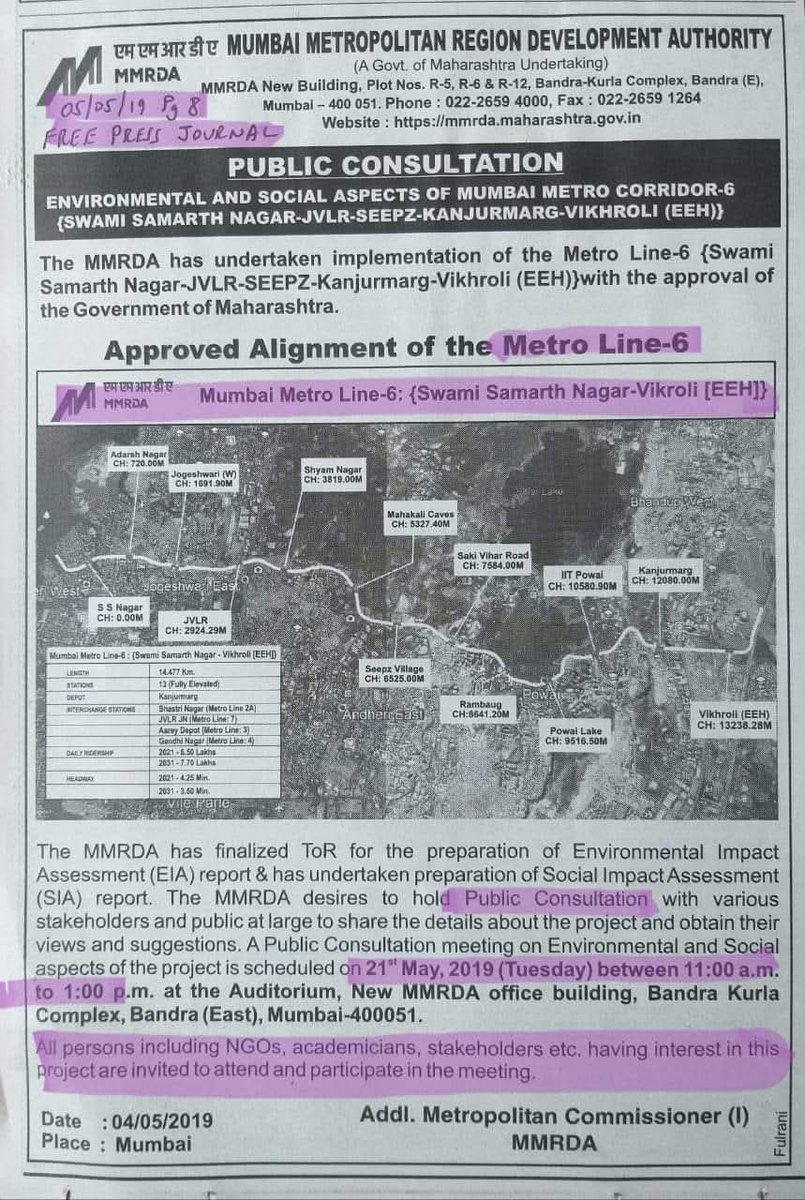
Happy 7th Anniversary To the Start of the Metro6 Line (Versova, Andheri W to Kanjur/Vikhroli)
Zoru Bhathena tweet media
English
13
14
83
4.2K
The Mumbai Grind retweetledi
Gareeb Scientist
Gareeb Scientist@gareebscientist·
I visited OLA's Cell factory, saw how the cell is made and interview/converse their Factory manufacturing lead, cell R&D lead and COO with tech questions .... the conversation was pretty interesting to say the least. You can make your own opinion. I was impressed. Link below.
English
179
358
2.3K
149.8K