Neotank Nabs

13.7K posts

Neotank Nabs banner
Neotank Nabs

Neotank Nabs

@NBmzk

🚀 Passionate about Web3 technology, I share my discoveries, tips and insights to help democratize this innovation. Who am I without others?

anywhere betw. N 55° and S 55° Katılım Mart 2020
1.7K Takip Edilen225 Takipçiler
Sabitlenmiş Tweet
Neotank Nabs
Neotank Nabs@NBmzk·
👋 Welcome to Eth Denver 2023, the biggest Ethereum conference of the year! 🚀 Follow this thread to discover all the exciting videos from this event, where blockchain experts and enthusiasts share their knowledge and experiences on the Ethereum platform. #EthDenver
English

5
2
9
1.5K
Neotank Nabs retweetledi
etherscan.eth
etherscan.eth@etherscan·
🆕 Etherscan API V2: Multichain (Beta) Access data from leading EVM chains with a single Etherscan API key Say goodbye to managing multiple API keys for different chains 👋
etherscan.eth tweet media
English
528
505
1.5K
135.9K
Neotank Nabs retweetledi
terence
terence@terencechain·
I wrote up some preliminary results on Prysm and Geth using the "get-blobs" optimization: @ttsao/get-blobs-early-results" target="_blank" rel="nofollow noopener">hackmd.io/@ttsao/get-blo… Summary: - Good hit rate on retrieving blobs from the EL mempool - Good reduction in block import time - Observed fewer p2p msgs over the wire - Reduced download bandwidth, but upload increased. Results still inconclusive due to network asymmetric as few nodes are running. See report for more details.
English
6
75
83
9.7K
Neotank Nabs retweetledi
Eugene
Eugene@e_chybisov·
🚀 Introducing Bigmi: Reactive Primitives for Bitcoin Apps! 🧩 1) What is Bigmi? Bigmi (short for Bitcoin Is Gonna Make It) is a new TypeScript library focused on providing reactive primitives for building Bitcoin/UTXO applications. github.com/lifinance/bigmi thread 🧵
English
7
12
51
18.5K
Neotank Nabs retweetledi
z80.wei 👌☀️👌
I present you: Puff, a Huff compiler in Racket it’s still very early, and only the most basic features are supported, but I know lots of you are curious what a lisp project looks like excited to share more soon github.com/z80dev/puff
English
8
6
87
6.5K
Neotank Nabs retweetledi
ambient
ambient@ambient_finance·
The Ambient Finance domain has been secured from hijacker control. Site is currently offline pending final investigation by registrar. We expect resolution shortly A secure frontend has been deployed at croc.finance. Refrain from ambient[.]finance until all clear
English
1
21
126
79.3K
Neotank Nabs retweetledi
Radiant Capital
Radiant Capital@RDNTCapital·
On October 16, 2024, Radiant Capital experienced a highly sophisticated security breach that resulted in the loss of $50 million USD. The attackers exploited multiple developers' hardware wallets through a highly advanced malware injection. The devices were compromised in such a way that the front-end of @safe{Wallet} (f.k.a. Gnosis Safe) displayed legitimate transaction data while poisoned transactions were signed and executed in the background. This breach occurred during a routine multi-signature emissions adjustment process, which takes place periodically to adapt to market conditions and utilization rates. The DAO contributors strictly adhered to many industry standard operating procedures throughout the process. Each transaction was simulated for accuracy on Tenderly and individually reviewed by multiple developers at each signature stage. Front-end checks in both Tenderly and Safe showed no anomalies during these reviews. To underscore the significance of this point, the compromise was completely undetectable during the manual review of the Gnosis Safe UI and Tenderly simulation stages of the routine transaction. This has been confirmed by external security teams, including @_SEAL_Org and @HypernativeLabs. Radiant Capital has been working very closely with Seal911 and Hypernative and has since implemented stronger multisig controls. The U.S. law enforcement and @zeroshadow_io are fully informed of the breach and are actively working to freeze all stolen assets. The DAO is deeply devastated by this attack and will continue to work tirelessly with the respective agencies to identify the exploiter and recover the stolen funds as quickly as possible. For the full post-mortem, see: @RadiantCapital/fecd6cd38081" target="_blank" rel="nofollow noopener">medium.com/@RadiantCapita
English
0
106
661
558.2K
Neotank Nabs retweetledi
ethresearchbot
ethresearchbot@ethresearchbot·
thResear.ch! Hermes: a monitoring light node for Ethereum's Gossipsub network By: - yiannisbot 🔗 ethresear.ch/t/20639 Highlights: - Hermes is a light-node tool designed to monitor and trace the GossipSub protocol in libp2p-based networks, primarily for Ethereum. - It requires a trusted local node to provide accurate chain state information and an event consumer to store the data it collects. - Hermes can connect to various data consumers like AWS Kinesis and Xatu, facilitating integration with analytics tools. - The tool gathers detailed data on network interactions, including connections, control messages, and protocol RPCs, which are crucial for analyzing network health. - Hermes has been instrumental in studying the Ethereum network's GossipSub protocol, uncovering bugs, and suggesting improvements. ELI5: Hermes is a tool that acts like a small helper in a network, specifically for Ethereum. It listens to and tracks messages being sent around, helping developers understand how well the network is working. It connects to other nodes, gathers data, and sends it to places where it can be analyzed. This helps in making the network more efficient and secure.
English
1
4
18
1.5K
Neotank Nabs retweetledi
DCo
DCo@Decentralisedco·
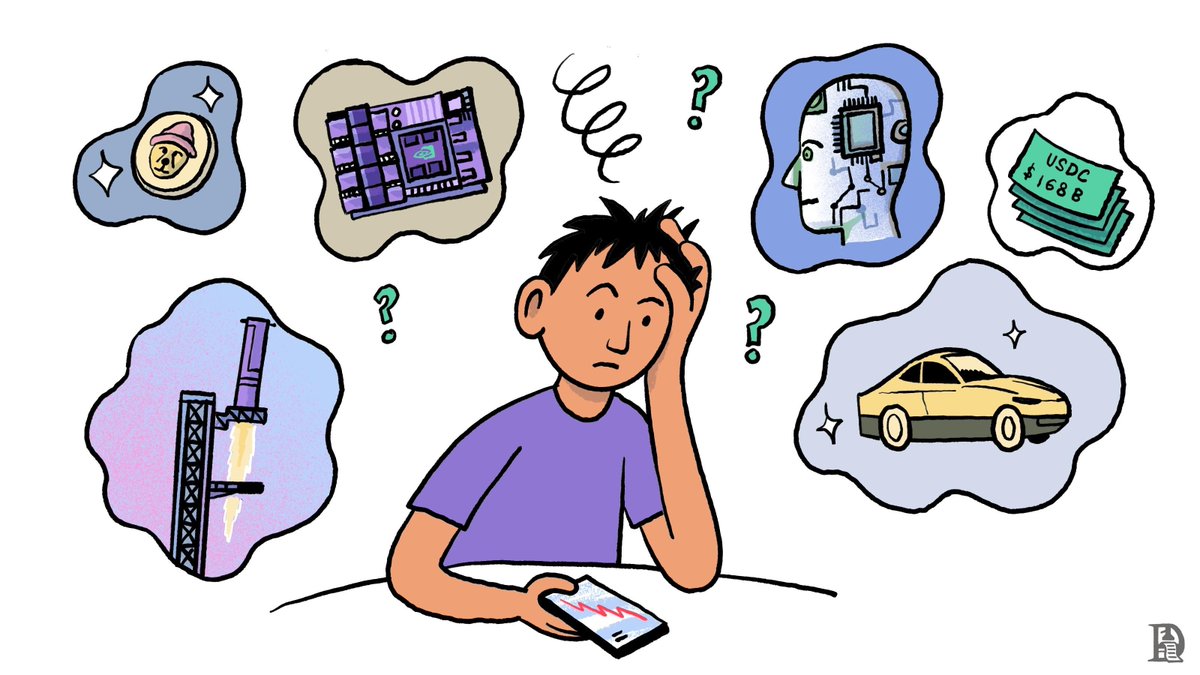
Crypto will not change the world. Not in the way most expect it to, anyway. In a week where SpaceX is using metal chopsticks to catch 250-ton rocket boosters and the creators of AI algorithms are winning Nobel prizes, CT has been discussing memecoins and “north stars” for L1s. If you’re an ambitious participant in the industry, you might be questioning why, in the face of all other technological progress, crypto matters at all. But should we even be comparing crypto to AI or rockets in the first place? In this article, @shloked collaborates with @michael_lwy from @monad_xyz to evaluate different historical technology trends by the nature of their impact and provide a framework for understanding where blockchains fit. This might just be the dose of crypto-optimism you’re seeking. Link in reply!
DCo tweet media
English
2
5
34
11.9K
Neotank Nabs retweetledi
david phelps
david phelps@divine_economy·
The Fat App Thesis (a mini-essay): The damage from the “Fat Protocol Thesis” on this space has been immense and set us back years. The thing is—I actually love the Fat Protocol Thesis, and if you haven’t read it, you should. I’ll include a link below. The simple version of the thesis is that protocols (ie chains) will capture more value than the apps built on them. Why? Well partly crypto apps have weak moats (they can be forked). But mainly, the success of apps will drive users to accumulate protocol tokens to use them, generating network effects for chains as every app drives up the token price of whatever chain it’s built on. This was, in 2016, an extremely prescient argument. And I’d add my own argument for why protocols can have far greater value than apps too: protocol tokens operate like national currencies for a digital nation, underlying transactions within an ecosystem both as a medium of exchange as well as a representation of a legal order (smart contracts) that will guarantee the transaction’s validity, all while collecting tax for that ecosystem. Apps, meanwhile, are plain-old businesses generating revenue. Of course, the market cap of a currency, which largely correlates to the GDP of everything built on top of it, tends to be much greater than the market cap of a company. This is why, I think, protocols have tended to be much more valuable than apps. Which is the point. The past ten years have in many ways vindicated the “Fat Protocol Thesis,” reaching its culmination in the past year. Everyone knows this: the market cap of chains has crushed the market cap of apps. Protocols consistently raise at valuations of hundreds of millions of dollars pre-product, while apps with dedicated users struggle to raise at all. To judge how much the market has bought into the Fat Protocol Thesis—to the point of complete irrationality—you just have to look at the valuations of many of the latest interchangeable, random L2s. These L2s don’t fulfill any of the requirements of the Fat Protocol Thesis since their tokens don’t need to be used in transactions at all—in fact, these L2s often don’t even need to have a token in the first place. But narrative is often stronger than sense in crypto, and many of these L2s have comfortably reached 9-figure valuations while apps have struggled to get any kind of valuation in the first place. (There are, I think, some L2s that will be genuinely valuable, like @mega_eth and @movementlabsxyz, but that’s a story for another time. My bags, my bags!) There is, of course, a very simple explanation for why all this Chain Supremacy shit is problematic that we’ve all heard ad nauseam: a chain is only valuable if it has valuable apps. You’ll hear this from the chains themselves as they tout their massive performance improvements. “Of course we need to scale blockspace,” they say, “because the next top apps will need it.” But in a world where apps have failed for a full decade, only the insane among us actually want to build or fund more apps. That’s great and all. But unfortunately, the logic that we need to fund apps in order for chains to be successful is never going to be compelling enough to get VCs to fund a whole category they still think will lose. It’s compelling to think that apps will help chains to become valuable, but it’s not compelling enough if nobody thinks that apps themselves have value of their own. So I want to counter that with what I’m calling the “Fat App Thesis.” And I want to claim something that’s been true for the duration of the internet to the point that I think it should be boring to claim. *Actually, most of the value to be found in crypto today is to be found in apps.* There’s three reasons for this, in ascending order of importance. 1. The first, most speculative reason, is simply historical cycles. Apps are massively undervalued and protocols are massively overvalued for the reasons above. The internet tends to shift between decade-long infra and app cycles, and we’re reaching the tailend of a massive infra boom in which we’ve created extraordinary tech that finally works (which was not the case even two years ago). It’s apps’ time to shine, and they’ve never been more undervalued than now. 2. The second reason, more compelling reason, is that apps and protocols have switched places since the “Fat Protocol Thesis” was coined in 2016. And that point, apps were all largely interchangeable forks of each other’s trading tools, while chains were walled gardens with massive liquidity moats. But oh, how things have changed. Today apps have all failed to fully fork each other (see: Sushiswap) because their real moat is users. Chains, meanwhile, don’t even need much liquidity to power the future of social apps unless they’re targeting DeFi apps that require it (like @berachain). But more importantly, liquidity itself is collapsing as a moat for most chains as interop solutions and chain abstraction enable users to use apps and bridge between ecosystems seamlessly without even knowing what chain they’re on. It’s the chains, today, that are largely interchangeable—not the apps. But this leads to the third, most important reason for why most of the value to be found in crypto today is to be found in apps. 3. When liquidity isn’t the moat, the user is. Uses spend their time where other users spend their time. And this is why only a few apps ever win—because users will ultimately all draw each other to a few distinct cities on the internet. This is also, paradoxically, why I suspect everyone (in and out of crypto) is so bearish on apps today: a few apps won a decade ago, and it’s been impossible to compete with their users’ attention ever since. Honestly, it’s been *hard* for anyone to come up with new ideas for apps within the limits of web2 constraints—namely app store fees, closed APIs, and the inability to spend money in a tap. But onchain rails enable entire new types of app experiences with financial and reputational upside that was never possible before: they get rid of the app store fees, open the API on public blockchains, and let users spend and store money easily. So this is my theory. A few of these, too, will win. And as always in the history of the internet, they will become mega-apps that consume the majority of blockspace. I could be wrong, very wrong. This era could be different. We could see the flourishing of millions of mini-apps, like all the apps in telegram, and I’d be thrilled about that. But I suspect we’re in an ephemeral app era because the design space for new apps has only opened up in the past two years—and because crypto apps built entirely on token-price-going-up will ultimately collapse as token-price-goes-down. We don’t talk about it enough, but we have every sign now that that era is ending. The really exciting thing about the state of crypto apps today is that the next generation of prediction markets, contests, nfc chips, depin, and even vapes does not depend on token price going up as the use case. For the first time, crypto is the means, not the end. What I mean is that apps can actually win longterm and start claiming all that blockspace we’ve been generating for years. And what happens then? Well, these apps can do novel things. They can return money to users rather than to the Apple app store to incentivize their growth. They can collect revenue from every tap. And they can, ultimately, generate vast revenue, of which only a tiny fraction will go to the chain. I said before that chain’s don’t need vast revenue to receive vast valuations since they should be valued on something like GDP. But when most of that GDP is being generated by a few apps, it is worth asking: who really is the fattest of the stack? Is it still the chain? Or is it, far more likely, the app? Let me end by saying that I’m not pessimistic on chains—at all. Many chains are *not* interchangeable, alternately because of unique VMs or opcodes (like @solana @irys_xyz @movementlabsxyz @eclipsefnd), native incentives (@berachain), high-level performance in familiar VMs (@mega_eth @monad_xyz), or enabling specific permissioning (@repyhlabs @celestiaorg). Apps built on these chains could only be possible on these chains. And ultimately, even if just a few apps win market share, investing in a chain is by far the best way to index on all the apps that will be built on top. We like to think that infra and apps are at war with each other as they fight for funding from private markets. But there’s no real war for value between the two—each builds the value for the other and could not survive without each other. Besides, most apps will, I suspect, operate like protocols themselves for others to build on. Still, though, we’ve behaved not only as though there’s a war, but as though infra has won. We’re realizing that’s deadly to infra. But what we need to realize is that it’s also a huge missed opportunity. The next major wave of value will go to apps, and only a very few people in this ecosystem are willing to take the slightest risk to try to capture it.
English
46
64
414
110.1K