

NHI
76 posts
NHI
@NHIquality
NIWARA Healthcare Improvement (NHI)- Your partner in healthcare quality excellence.
Delhi, India Katılım Ağustos 2025
25 Takip Edilen19 Takipçiler
NHI retweetledi

La mesure de la qualité des soins dans les hôpitaux progresse mais reste lacunaire et pas suffisamment centrée sur les résultats effectifs, épingle la Cour des comptes. Malgré l'obligation légale, les accidents médicaux graves restent sous déclarés.
➡️ l.whatsupdoc-lemag.fr/dyA

Français
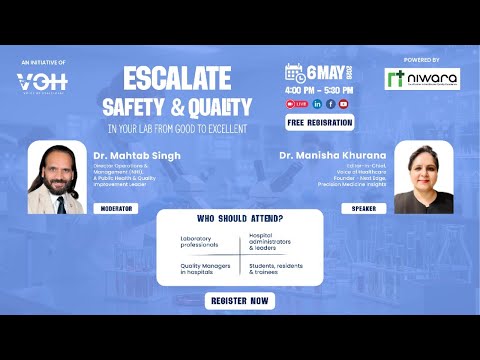
Ensuring accuracy, reliability, and excellence in laboratory practices is no longer optional—it’s essential.
Join this insightful webinar to explore how you can elevate lab safety standards and drive quality improvements that directly impact patient outcomes. Gain practical insights, expert perspectives, and actionable strategies to transform your lab from good to excellent.
Date: 6th May 2026
Time: 4:00 PM – 5:30 PM
Register for free here:
lnkd.in/gAE3fMZB?trk=p…

English
NHI retweetledi

The Health outcome is directly proportionate to multiple of Utilization & Quality so if your quality is 0, the health outcome is also 0 automatically.
NHI@NHIquality
Meaningful access to healthcare services requires a commitment to quality to ensure that services are both reachable and effective. Providing access without ensuring quality is ineffective, wasteful, and unethical, as it fails to produce meaningful health outcomes. Poor quality care causes 5 million deaths annually in low- and middle-income countries (LMICs), while 3.6 million deaths are due to insufficient access.
English
Meaningful access to healthcare services requires a commitment to quality to ensure that services are both reachable and effective. Providing access without ensuring quality is ineffective, wasteful, and unethical, as it fails to produce meaningful health outcomes.
Poor quality care causes 5 million deaths annually in low- and middle-income countries (LMICs), while 3.6 million deaths are due to insufficient access.

English
NHI retweetledi
𝐍𝐮𝐫𝐬𝐞𝐬 𝐚𝐫𝐞 𝐜𝐞𝐧𝐭𝐫𝐚𝐥 𝐭𝐨 𝐭𝐡𝐞 𝐝𝐞𝐥𝐢𝐯𝐞𝐫𝐲 𝐨𝐟 𝐬𝐚𝐟𝐞 𝐚𝐧𝐝 𝐭𝐢𝐦𝐞𝐥𝐲 𝐜𝐚𝐫𝐞 𝐚𝐜𝐫𝐨𝐬𝐬 𝐚𝐥𝐥 𝐡𝐞𝐚𝐥𝐭𝐡 𝐬𝐲𝐬𝐭𝐞𝐦𝐬.
However, increasing pressure and limited support continue to affect their ability to respond effectively. Global workforce gaps further intensify this challenge, with a projected shortage of 𝟒.𝟓 𝐦𝐢𝐥𝐥𝐢𝐨𝐧 𝐧𝐮𝐫𝐬𝐞𝐬 𝐛𝐲 𝟐𝟎𝟑𝟎 (𝐖𝐨𝐫𝐥𝐝 𝐇𝐞𝐚𝐥𝐭𝐡 𝐎𝐫𝐠𝐚𝐧𝐢𝐳𝐚𝐭𝐢𝐨𝐧).
At the same time, sustained investment in the health workforce remains essential for strengthening health systems and ensuring reliable care delivery (Frontline Health Workers Coalition).
𝐹𝑟𝑜𝑚 𝑎 𝑝𝑎𝑡𝑖𝑒𝑛𝑡 𝑝𝑒𝑟𝑠𝑝𝑒𝑐𝑡𝑖𝑣𝑒, 𝑡ℎ𝑖𝑠 𝑖𝑠 𝑐𝑟𝑖𝑡𝑖𝑐𝑎𝑙.
When nurses are adequately supported, they are better positioned to deliver safe, consistent, and timely care. Evidence also shows that staffing pressures directly affect patient safety and quality of care (𝐈𝐧𝐭𝐞𝐫𝐧𝐚𝐭𝐢𝐨𝐧𝐚𝐥 𝐂𝐨𝐮𝐧𝐜𝐢𝐥 𝐨𝐟 𝐍𝐮𝐫𝐬𝐞𝐬).
Through its Heart of 𝐇𝐞𝐚𝐥𝐭𝐡𝐜𝐚𝐫𝐞: 𝐂𝐞𝐥𝐞𝐛𝐫𝐚𝐭𝐢𝐧𝐠 𝐎𝐮𝐫 𝐍𝐮𝐫𝐬𝐞𝐬 𝐜𝐚𝐦𝐩𝐚𝐢𝐠𝐧, the 𝐖𝐨𝐫𝐥𝐝 𝐏𝐚𝐭𝐢𝐞𝐧𝐭𝐬 𝐀𝐥𝐥𝐢𝐚𝐧𝐜𝐞 is advancing global awareness on the role of nurses in patient safety and calling for sustained investment in nursing workforce support.
Investing in nurses is not only a workforce priority. It is a patient safety imperative.
#HeartOfHealthcare #PatientSafety #SupportNurses #HealthSystems #NursingWorkforce
@WHOAFRO
@WHO_Europe
@UN
@UNICEF
@WorldBankGroup
@OECD
@SigmaNursing
@ghc_global
@IHF_FIH
@ISQua
@TheIHI
@PLAN4ZERO
@GlobalFund
@NursingNow2020
@HWAlliance2
@PHealthupdate
@HIMSS
@ICNurses
@HowardCatton
@JHUNursing
@NurseStandard
@AAN_Nursing
@YaleNursing
@AmbCareNursing
@DarlingtonUnion
@ANANursingWorld
@FHWCoalition
English
NHI retweetledi

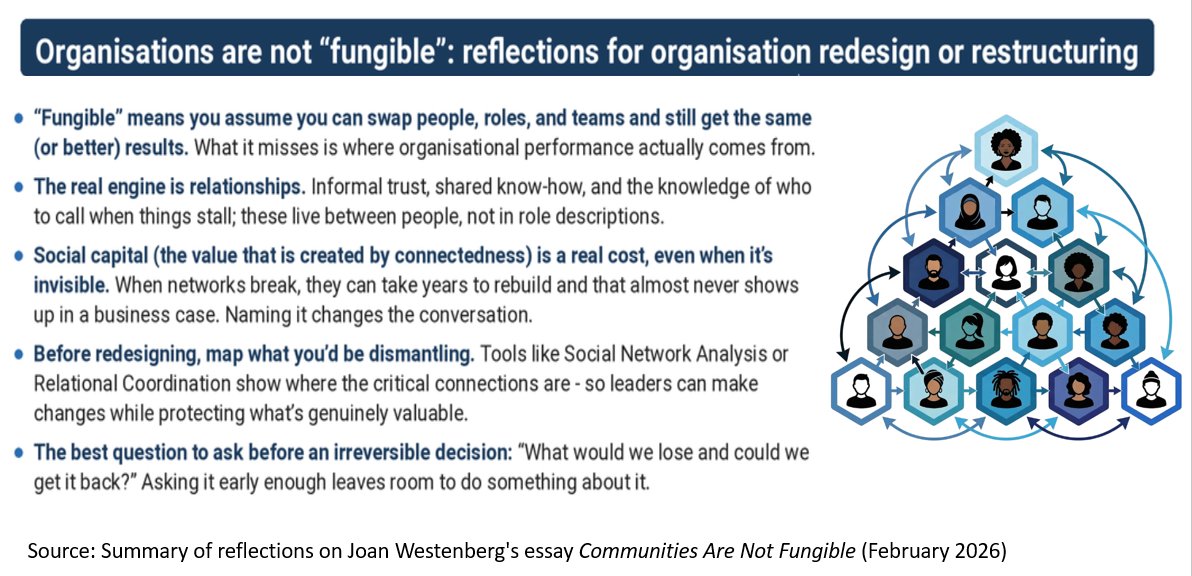
Organisations are not "fungible".
“Fungibility” is an assumption that if you redesign an organisation & replace one set of people with a different set, you will still get equivalent outputs. This mistaken belief underlies many organisational restructures: that you can redistribute roles, reporting lines & teams without meaningful loss.
I've been reading "Communities Are Not Fungible", a recent essay by @JoanWesten7568. She examines 1960s urban renewal, when planners believed demolishing old neighbourhoods & rehousing residents would allow communities to reform. They didn't. The residents moved. The community did not. A community is not a set of people: it is a historically produced web of relationships between them. Destroy the web, & you have strangers in a building. The parallel to organisational life is uncomfortable.
When we restructure, we may preserve many of the people but destroy the relational infrastructure that made them effective. The informal trust that lets someone ask for help. The shared knowledge of who to call when a process stalls. The accumulated understanding of each other's judgment. These live in relationships, not individuals. Redrawing an org chart doesn't transfer them.
Research backs this up. Tacit knowledge - the "knowing how" driving real-world performance - depends on trust to flow. Break those relationships & you block the transfer. Studies show informal networks persist along old lines long after formal structures change, creating tension between old loyalties & new mandates. Social capital is the value created by connectedness. It can be destroyed in restructuring & take years to rebuild — a cost that almost never appears in a business case.
What leaders can do to protect collective value:
1. Audit informal networks before redesigning formal structures. Use, eg., System Network Analysis or Relational Coordination. Breaking key network nodes causes capability losses no productivity model captures.
2. Treat relational capital as a real cost. Business cases for restructuring rarely account for social capital destruction. Making it visible leads to better decisions & stronger cases for change.
3. Design around high-value relationships. Identify relationships carrying the most trust & history & actively design the new structure to protect them while enabling necessary change.
4. Invest deliberately in building new relationships. Create conditions for them to form through shared work, peer learning & social connection.
5. Give explicit attention to belonging & psychological safety for everyone (not just those who lose or change roles): This creates conditions for the discretionary effort that makes new structures succeed.
6. Slow down at the point of irreversibility. Ask not only "what do we gain?" but "what do we lose - & can we recover it?"
The value of an organisation is not the sum of its people's individual capabilities. It is the web of relationships between them. That web is not fungible.
Link to Joan Westenberg's essay: joanwestenberg.com/communities-ar…. Thanks to @charlie_psych who sent me the essay.
English
NHI retweetledi

YouTube
English
NHI retweetledi

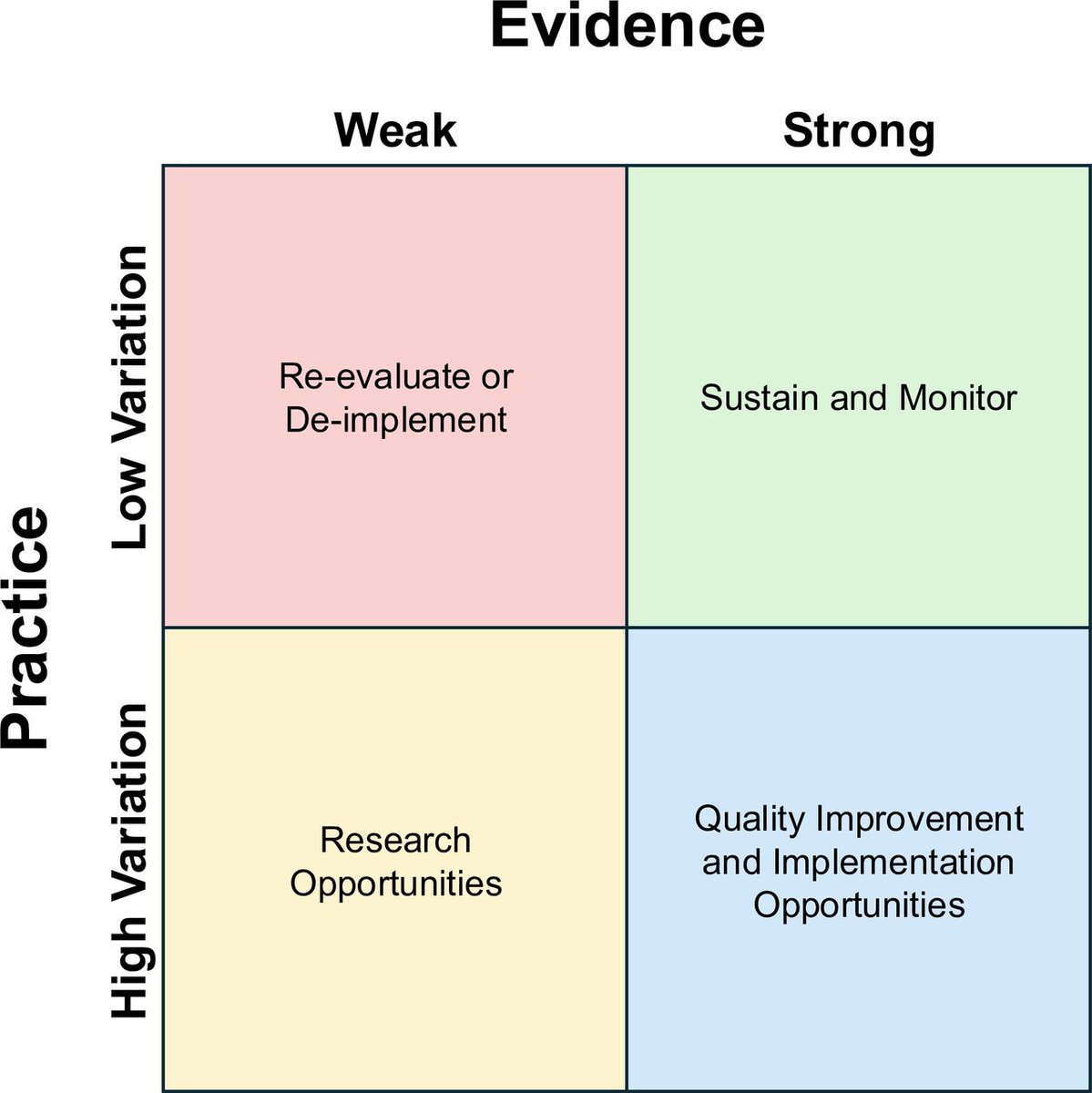
🎯 This Viewpoint argues that recognising specific association between the conduct of clinical practice and the quality of scientific evidence is a critical step to effectively improving healthcare quality.
A new framework maps clinical scenarios across 2 key dimensions: evidence strength (weak→strong) & practice variation (low→high) with each quadrant requiring a different improvement strategy
The message: match your improvement strategy to the specific evidence-practice relationship you're facing. Work smarter, not harder 💡
bit.ly/3NmYzxe
English
NHI retweetledi

NABH at AI Bharat Expo 2026 | 𝗔𝗜 𝗥𝘅: 𝗥𝗲𝗶𝗺𝗮𝗴𝗶𝗻𝗶𝗻𝗴 𝗜𝗻𝗱𝗶𝗮'𝘀 𝗛𝗲𝗮𝗹𝘁𝗵𝗰𝗮𝗿𝗲 & 𝗣𝗵𝗮𝗿𝗺𝗮 𝗙𝘂𝘁𝘂𝗿𝗲
NABH marked its presence at AI Bharat Expo 2026, with Mr. Avinash Pandey, Group Leader – Digital Health, NABH, joining as a panel speaker on the evolving role of artificial intelligence in healthcare.
He emphasised the importance of NABH Digital Health Standards as a foundational framework for enabling safe, reliable, and trustworthy digital systems—critical for the responsible adoption of tech & AI in healthcare.
NABH continues to focus on three key pillars:
1. Data Quality – Accurate, standardised data
2. System Reliability & Validation – Consistent, validated system performance
3. Patient Safety & Accountability – Patient-centric care with clear accountability
As healthcare advances digitally, NABH is strengthening quality frameworks through its standards—not only for healthcare organisations, but also for the digital systems that support them. Building trust through robust standards, certification, and continuous monitoring remains essential for scaling AI in India.
#DigitalHealthStandards #AIinHealthcare #HealthTech #PatientSafety #QualityCare #AIBharatExpo #NABH
@jaxayshah l @rizwankoita l @ct_kannan
@QualityCouncil



English
NHI retweetledi

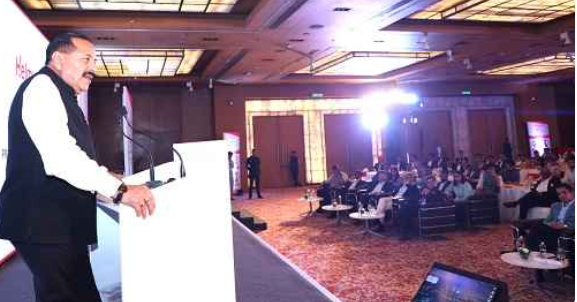
India advancing as a global hub of affordable, quality healthcare solutions: Dr Jitendra Singh
medicarepharmabusiness.com/india-advancin…
English
NHI retweetledi
Does Confidence = Competence in Medicine? 🤔
We often assume a clinician’s certainty reflects diagnostic accuracy. It doesn’t.
A systematic review of 77 studies shows that confidence and accuracy are driven by different factors and miscalibration directly affects patient care.
🔴 Overconfidence → missed diagnoses, ignored cues, resistance to correction
🔵 Underconfidence → unnecessary tests, delayed treatment, reluctance to escalate
Diagnostic confidence is frequently misaligned with true accuracy, shaping decisions around testing, prescribing, and referrals.
🧠 What doesn’t predict accuracy:
- Time spent deciding
- Volume of information considered
- Clinician mood or personality
✅ What does help:
- Strong medical knowledge
- High-quality information gathering
- Feedback on diagnostic outcomes
The review proposes a 3-level model to support better calibration through education, cognitive tools, and targeted system-level interventions.
Read the full systematic review to learn how clinicians, educators & health systems can improve diagnostic confidence here: bit.ly/3NmYfi0

English
NHI retweetledi
The truth is out, and it’s sobering. According to the 𝐖𝐇𝐎 𝐄𝐮𝐫𝐨𝐩𝐞: 𝐇𝐞𝐚𝐥𝐢𝐧𝐠 𝐇𝐚𝐧𝐝𝐬 – 𝐇𝐮𝐫𝐭𝐢𝐧𝐠 𝐌𝐢𝐧𝐝𝐬 (𝟐𝟎𝟐𝟓) 𝐫𝐞𝐩𝐨𝐫𝐭, the very people keeping our healthcare systems alive are at a breaking point.
Over 𝟓𝟎% 𝐨𝐟 𝐧𝐮𝐫𝐬𝐞𝐬 are reporting symptoms of anxiety and burnout. We aren’t just facing a "𝐬𝐭𝐚𝐟𝐟𝐢𝐧𝐠 𝐬𝐡𝐨𝐫𝐭𝐚𝐠𝐞", we are witnessing the rise of "𝐍𝐮𝐫𝐬𝐢𝐧𝐠 𝐃𝐞𝐬𝐞𝐫𝐭𝐬," where entire communities are losing access to the care they need to survive.
At the 𝐖𝐨𝐫𝐥𝐝 𝐏𝐚𝐭𝐢𝐞𝐧𝐭𝐬 𝐀𝐥𝐥𝐢𝐚𝐧𝐜𝐞, we know that you cannot have Patient Safety without Nurse Well-being. When the "𝐇𝐞𝐚𝐫𝐭 𝐨𝐟 𝐇𝐞𝐚𝐥𝐭𝐡𝐜𝐚𝐫𝐞" is hurting, the entire system is at risk.
It’s time to move beyond the applause.
𝑊𝑒 𝑛𝑒𝑒𝑑:
Safe staffing ratios that prevent exhaustion.
Fair, livable wages that reflect their expertise.
Real mental health support for frontline workers.
We are taking this data to the global stage, but we need your voice.
𝐒𝐇𝐀𝐑𝐄 𝐭𝐡𝐢𝐬 𝐩𝐨𝐬𝐭 𝐭𝐨 𝐛𝐫𝐞𝐚𝐤 𝐭𝐡𝐞 𝐬𝐢𝐥𝐞𝐧𝐜𝐞 𝐨𝐧 𝐭𝐡𝐞 𝐡𝐞𝐚𝐥𝐭𝐡𝐜𝐚𝐫𝐞 𝐜𝐫𝐢𝐬𝐢𝐬.
𝐓𝐀𝐆 𝐚 𝐡𝐞𝐚𝐥𝐭𝐡𝐜𝐚𝐫𝐞 𝐰𝐨𝐫𝐤𝐞𝐫 who deserves more than just a "𝐭𝐡𝐚𝐧𝐤 𝐲𝐨𝐮" today.
𝐃𝐚𝐭𝐚 𝐒𝐨𝐮𝐫𝐜𝐞: 𝐖𝐇𝐎 𝐄𝐮𝐫𝐨𝐩𝐞 (𝟐𝟎𝟐𝟓). Healing hands – hurting minds: Survey on the mental health of health and care workers.
#WorldPatientsAlliance #HeartOfHealthcare #NurseBurnout
@WHOAFRO
@WHO_Europe
@UN
@UNICEF
@WorldBankGroup
@OECD
@SigmaNursing
@ghc_global
@IHF_FIH
@ISQua
@TheIHI
@PLAN4ZERO
@GlobalFund
@NursingNow2020
@HWALLIANCE
@mentalhealth
@PublicHealth
@HIMSS
@ICNurses
@HowardCatton
@JHUNursing
@NurseStandard
@AAN_Nursing
@YaleNursing
@AmbCareNursing
@DarlingtonUnion
@ANANursingWorld
English
@HelenBevan @SessionLab This si something people should consider while conducting chain of trainings or workshops without proper handholding mechanisms.
Thanks for sharing Helen.
English
Most organisations are investing significantly in workshop and change facilitation and have very little idea whether it's working.
That’s the uncomfortable truth at the heart of the recently published “State of Facilitation 2026” report from @SessionLab. At a time when every hour spent away from operational demands must earn its place, we have to pay serious attention to the impact of facilitated change sessions.
Here is the core tension: facilitation is widely described as powerful and transformative, yet the practices needed to prove that (upfront goal-setting, structured follow-up, rigorous evaluation etc) are not routine. Only 1 in 3 facilitators agree measurable performance indicators with the people who commission their change sessions upfront. Without outcomes defined at this stage, impact assessment becomes retrospective and unreliable.
The report distinguishes three types of "impact" that are routinely conflated: (1) facilitator performance and in-room engagement; (2) participant experience and perceived value; and (3) actual organisational outcomes (sustained behaviour change and measurable results). Facilitation practitioners often “focus mainly on satisfaction,” even though “there is no correlation between satisfaction and application" (Alliger & Janak, 1989). As leaders, we often accept (1) & (2) as evidence of success. We need to invest significantly in (3).
43.5% of respondents identify lack of follow-up as the main barrier to impact. Sessions are evaluated on what happens in the room, but impact depends on what happens afterwards. As one contributor notes: "After the session, participants go back to a work environment and systems which weren't designed to support the changes explored." Leaders across every sector can recognise that pattern.
51.4% of facilitators rely primarily on word of mouth to communicate their impact, and only 4.5% contribute to research or published writing on outcomes. The impact is often real, but it doesn't travel. Where evidence shapes strategy and investment, this invisibility has consequences.
Three things leaders can do differently:
1) Treat facilitation as a strategic capability, not a tactical event: Bring facilitators in early, define the outcomes you care about, and make impact expectations explicit at the outset.
2) Invest in the before and after: Commit to proper scoping, co-design, and systematic follow-up — not just satisfaction surveys at the end of the session.
3) Make the invisible visible: Ask for impact stories, behavioural indicators and links to organisational outcomes. Sponsor the translation of facilitation results into the language of strategy, risk and value.
Facilitation as a one-off event changes little. Facilitation as a sustained, evidence-informed capability transforms performance.
The “State of Facilitation 2026” report: #toc" target="_blank" rel="nofollow noopener">sessionlab.com/state-of-facil….

English
Dear all,
We have very limited slots for this webinar please register and confirm your spot at the earliest.
NHI@NHIquality
Register to join us for our 'Tea-Time QI webinar' on 19th March 2026 to learn how to do process flow mapping in healthcare facilities. Click the link below or scan the QR code:- nhi.org.in/tea-time-q-i-a…
English
NHI retweetledi

drive.google.com/file/d/1Mcz02l…
Extremely excited and proud to announce the publication of our very important and perspective changing article on Control of gram negative sepsis outbreak in NICU !
@PeterLachman @HelenBevan @NHIquality @katebhilton @nqocnindia

English
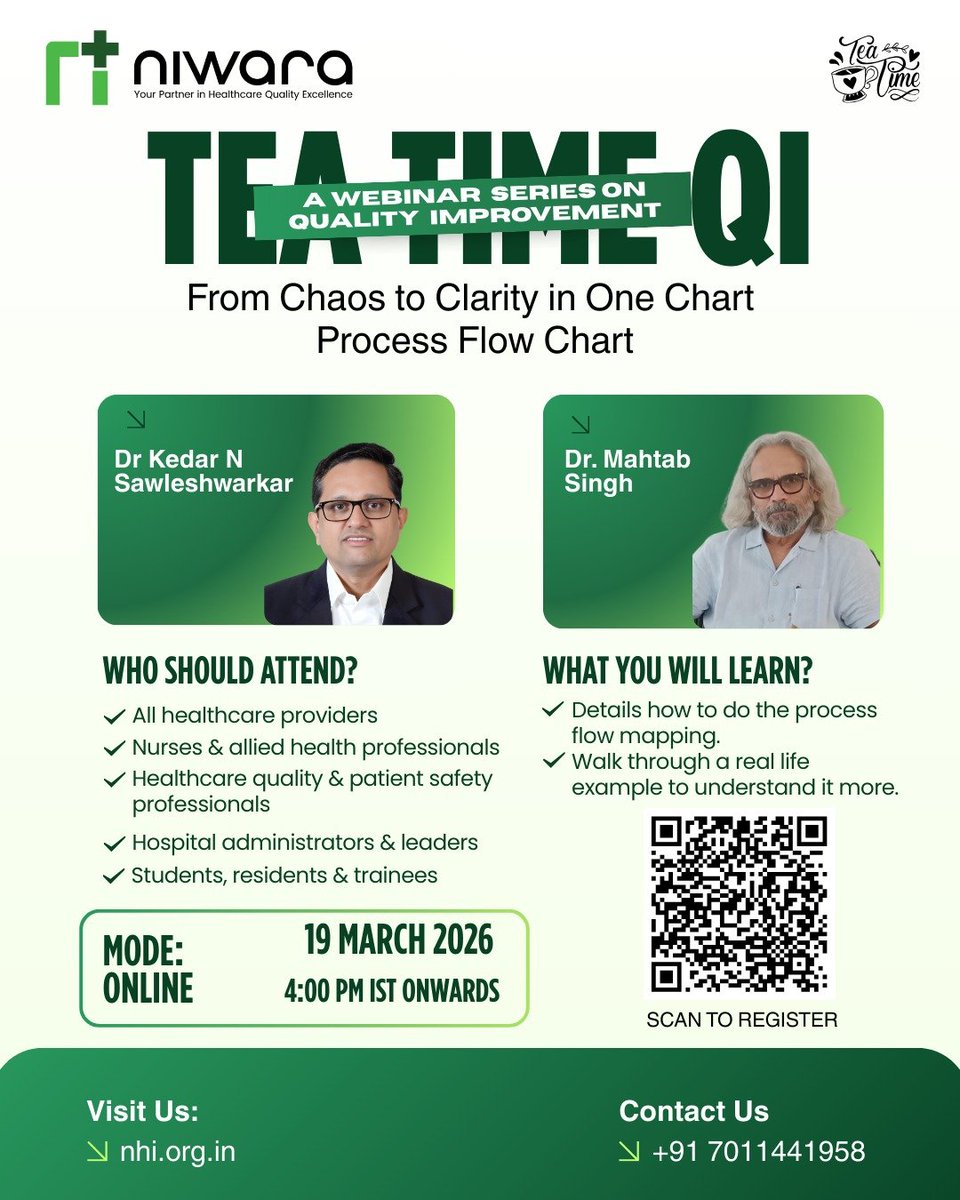
"Turn Messy Processes into Crystal-Clear Flowcharts"
Register to join us for our 'Tea-Time QI webinar' on 19th March 2026 to learn how to do process flow mapping in healthcare facilities. Click the link below or scan the QR code:-
nhi.org.in/tea-time-q-i-a…
English
Very important topic and work. Kedar
KEDAR SAWLESHWARKAR@kedarpriya1
drive.google.com/file/d/1Mcz02l… Extremely excited and proud to announce the publication of our very important and perspective changing article on Control of gram negative sepsis outbreak in NICU ! @PeterLachman @HelenBevan @NHIquality @katebhilton @nqocnindia
English
Register to join us for our 'Tea-Time QI webinar' on 19th March 2026 to learn how to do process flow mapping in healthcare facilities.
Click the link below or scan the QR code:-
nhi.org.in/tea-time-q-i-a…

English