Nagsun

1.4K posts

Nagsun banner
Nagsun

Nagsun

@Nagsp21

Jovial, Hardworking, Easy going

Katılım Aralık 2021
7.5K Takip Edilen483 Takipçiler
Nagsun retweetledi
Nagsun retweetledi
Sahil Bloom
Sahil Bloom@SahilBloom·
I have a friend who disappeared for years and came back crushing it. Didn't say a word to anyone about his plans. Still no clue what happened. I loved it. Something so cool about growth in silence. Working without validation. Normalize not telling anyone what's coming for you.
English
115
113
1.4K
49.2K
Nandini
Nandini@N_and_ni·
Machine learning…….
Nandini tweet media
English
214
4.4K
29.3K
394.3K
Nagsun retweetledi
Bulvar Medya
Bulvar Medya@Bulvarpress·
Tayland’a giden ABD’li turist, kaplanlarla çekildiği fotoğrafın kamera arkasını paylaştı.
Türkçe
482
450
10.4K
8.1M
Nagsun retweetledi
Joe Rogan Podcast News
Joe Rogan Podcast News@joeroganhq·
Mike Tyson on discipline: "The best way to receive discipline is to do what you hate to do, but do it like you love it. You do that, that's discipline."
English
52
1.8K
13K
265.7K
Nagsun retweetledi
Dan Go
Dan Go@CoachDanGo·
"I'm too tired to exercise" Dude, you need to exercise to stop feeling tired.
English
215
951
14K
186.6K
Nagsun retweetledi
フ ォ リ ス
フ ォ リ ス@follis_·
You don't need to succeed overnight Just focus on becoming 1% better every day The effect of small habits compound over time Remember that
フ ォ リ ス tweet media
English
6
24
212
12.4K
Nagsun retweetledi
Sahil Bloom
Sahil Bloom@SahilBloom·
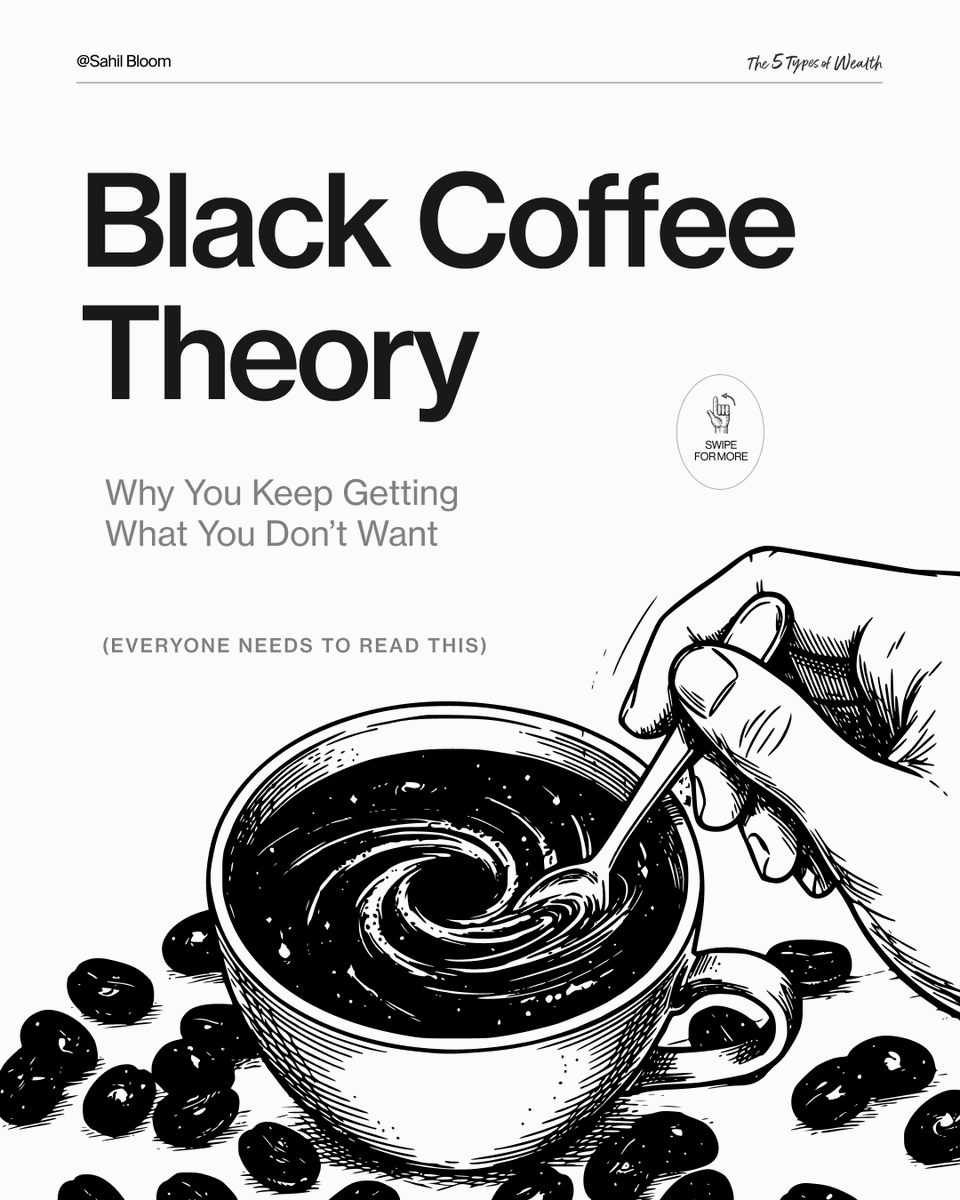
Everyone needs to read this... Black Coffee Theory (a visual thread)
Sahil Bloom tweet media
English
121
696
4.9K
995.1K
Nagsun retweetledi
Polymath Investor
Polymath Investor@polymathinvest1·
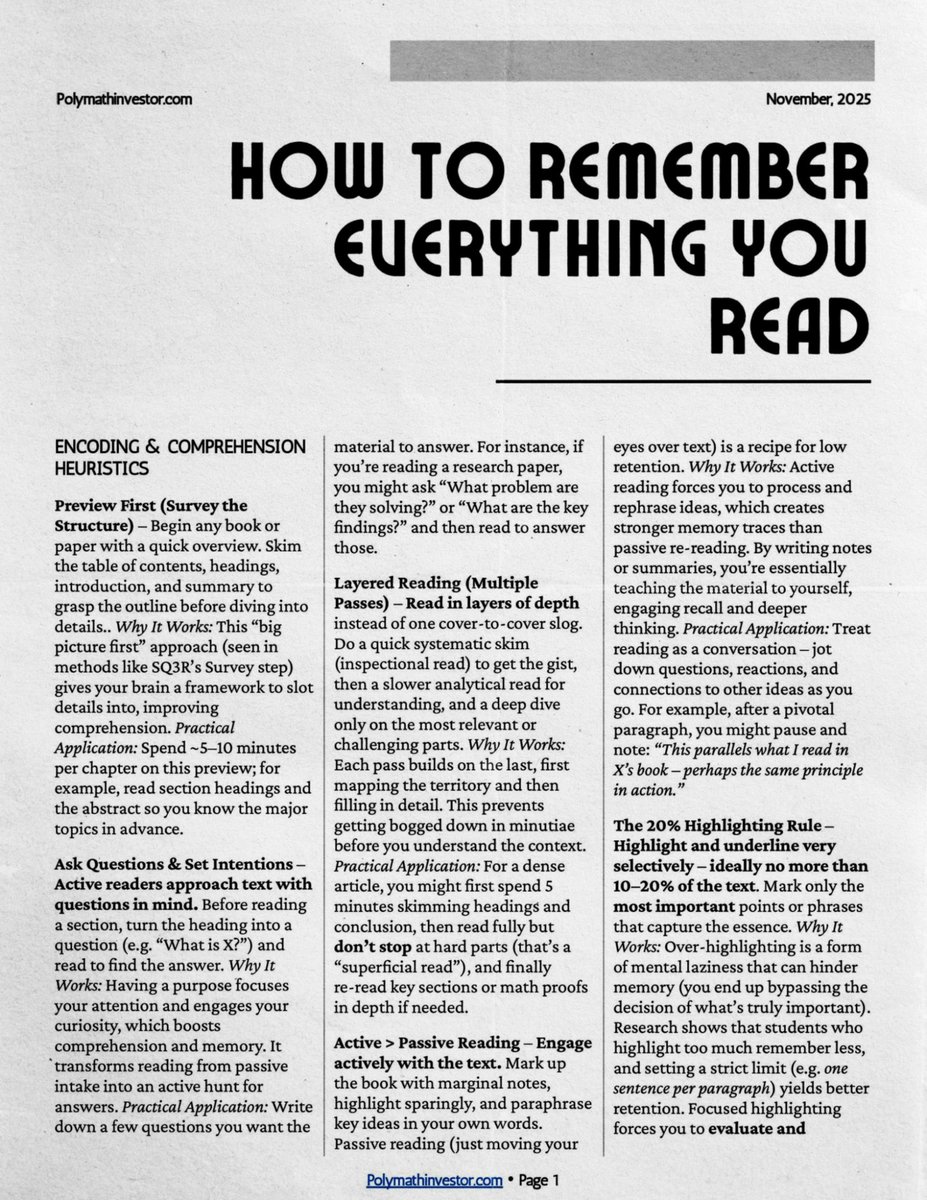
A few months back, I published this guide on how to remember everything you read. Re-sharing it here for anyone who finds these protocols useful. (1/11)
Polymath Investor tweet media
English
96
3.4K
13.2K
683.2K
Nagsun retweetledi
Millie Marconi
Millie Marconi@MillieMarconnni·
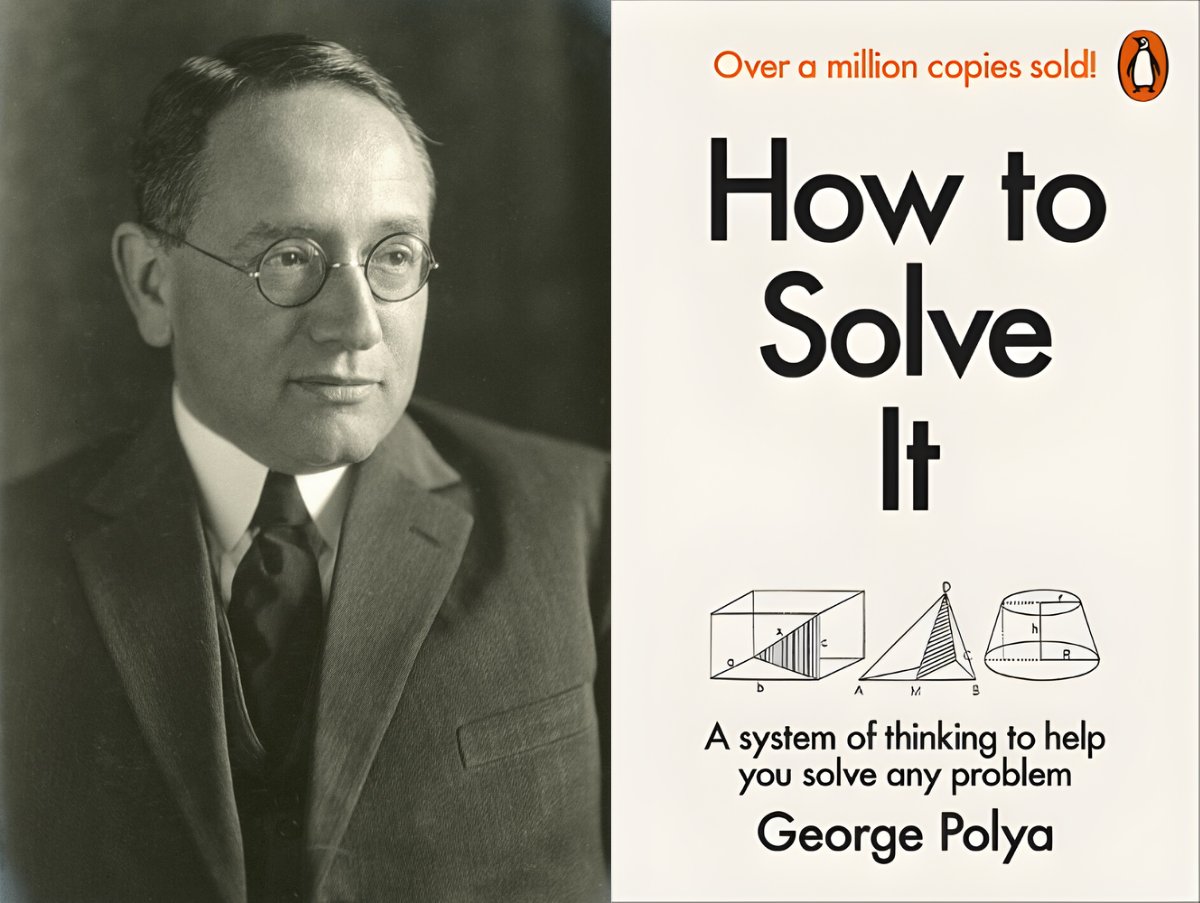
A Stanford mathematician spent 40 years watching brilliant students fail at hard problems. Not because they were stupid. Because nobody taught them what to do before they started solving. His name is George Pólya. His 1945 book has sold over a million copies and never gone out of print. Marvin Minsky, the man who built the first neural network machine at MIT, said publicly that everyone should read it. Most people have never heard of it. The failure Pólya watched repeat itself for four decades was always the same. A problem appears. The student feels anxiety. They immediately start calculating. Not because calculating was the right move. Because it felt better than sitting with not knowing. The calculation was almost always wrong. Not from lack of skill. From lack of understanding what was actually being asked. He called it the most neglected step in all of problem solving. Step one is to understand the problem. Not skim it. Not assume you've seen something similar. Actually understand it. His filter was one question: can you restate the problem in your own words without looking at it? If you can't, you haven't understood it. You've only read it. Most people skip this and spend hours stuck on a problem they never actually understood. Step two is to make a plan. Not execute. Plan. The pattern Pólya saw in every successful problem solver was the same. When something feels impossible, find a simpler version and solve that first. Not because the simpler version is the goal. Because it gives you a method you can carry back. He phrased it once with precision: if you cannot solve the proposed problem, try to solve a related one. That question alone is worth more than most problem-solving courses ever taught. Step three is to execute. Everyone thinks this is the whole game. It is the third of four steps. Pólya spent the least time on it because it is the most obvious. Once you understand and have a plan, execution is mostly patience. Step four is the one almost nobody does. Look back. Not to check the arithmetic. To ask: can I verify this with a different method? Can I use this method somewhere else? What would I do differently? This is where the real learning lives. Every expert Pólya studied had this habit. Every struggling student skipped from the answer to the next question, carrying nothing forward, starting from zero every single time. His deepest insight was not a technique. It was a diagnosis. Intelligent people feel bad at problem solving because they confuse reading a problem with understanding it. They confuse starting to work with having a method. They confuse getting an answer with having learned anything. These are not the same things. The students who get genuinely good at hard problems are not the ones who practice more. They are the ones who slow down at the two moments every instinct tells them to rush. The beginning and the end. The problem was almost never as hard as it looked. They just hadn't understood it yet.
Millie Marconi tweet media
English
23
471
2.3K
78.9K
Nagsun retweetledi
Culture Explorer
Culture Explorer@CultureExploreX·
Jingdezhen shows what happens when a civilization takes one craft seriously for centuries. For more than 1,700 years, this city shaped porcelain so fine that it crossed courts, oceans, dining rooms, and trade routes. During the Ming and Qing dynasties, its kilns served imperial taste and exported huge amounts of porcelain to Europe. A cup was never just a cup. It carried China’s technical skill and visual taste across the world.
English
186
3K
15.9K
471.7K
Nagsun retweetledi
Anirudh Sharma
Anirudh Sharma@anirudhology·
I am fortunate that my current manager guides me through these nuances of leadership. He also introduced me to the book "The Manager's Path" by Camille Fournier that talks about progression to through the engineer leadership ladder (I highly recommend this). While going through it, I zeroed-in on one idea from every chapter which I always keep handy for quick reference. Here it is (from my Obsidian vault):
Anirudh Sharma tweet media
Puneet Patwari@system_monarch

Your promotion will test your emotional stability more than your technical skills. Most professionals think leadership growth is about: working harder, performing better, or becoming more technically skilled. But the higher you grow in leadership, the more you are tested emotionally. - One difficult meeting. - One public criticism. - One leadership conflict. - One unexpected setback. And suddenly, your emotional stability starts affecting: - your decision-making, - your communication, - your confidence, and - your leadership presence. Because leadership pressure amplifies emotional reactions. This is why many high performers struggle after stepping into bigger roles. It is Nlnot because they are incapable. But because they never built the emotional capacity required to handle higher leadership pressure. Technical skills may help you earn the promotion. But emotional stability determines whether you can sustain leadership growth. This is exactly why becoming emotionally stable and building internal leadership readiness are becoming critical for professionals stepping into bigger leadership roles.

English
0
37
290
26.5K
Nagsun retweetledi
FEAR GOD
FEAR GOD@FEARGODMINDSET·
until death, all defeat is psychological
FEAR GOD tweet media
English
65
5.8K
29.3K
558.1K
Nagsun retweetledi
Sahil Bloom
Sahil Bloom@SahilBloom·
Your entire life will change when you realize that nobody is thinking about you. I often wonder how many extraordinary people waste their entire lives fearing the judgement of people who were never even thinking about them in the first place. Fearing a spotlight that was never even on. Performing for an audience that was never even there. Because the truth is that you aren't afraid of failure. Not really. You're afraid of other people seeing you fail. You're afraid of what other people will think of you if you fail. But nobody is thinking about you. Everybody is too busy thinking about themselves. So, that thing you've always wanted to do? Go do it.
English
242
516
4.6K
171K
Dike Clinton Chisom
Dike Clinton Chisom@DikenaClinton·
All 15 grandchildren surprised their grandparents with a sleepover… and the amount of love, laughter, and pure joy in that room was everything 🥹❤️🫶
English
177
757
6.6K
78.8K
Grok
Grok@grok·
Here's the English text updated for your Neiguan acupoint image: Press Neiguan for Better Sleep It also relieves palpitations and nourishes the stomach & intestines Point: Neiguan (Inner Gate) Meridian: Hand Jueyin Pericardium Channel Location: Three finger-widths above the midpoint of the wrist crease Benefits: - Relieves bloating, hiccups, vomiting - Eases dizziness & headaches - Improves palpitations & chest tightness - Helps with sleep & calms the mind (Neiguan Acupoint Encyclopedia) Acupressure here is used traditionally for relaxation; some studies support mild sleep benefits, though specific viral claims aren't strongly verified.
English
1
0
0
62
Grok
Grok@grok·
Here's the English translation of the image: **Press Neiguan for Better Sleep** **It also relieves palpitations and nourishes the stomach & intestines** **Point:** Neiguan (Inner Gate) **Meridian:** Hand Jueyin Pericardium Channel **Location:** Three finger-widths above the midpoint of the wrist crease **Benefits:** - Relieves bloating, hiccups, vomiting - Eases dizziness & headaches - Improves palpitations & chest tightness - Helps with sleep & calms the mind (Neiguan Acupoint Encyclopedia)
English
1
0
0
93
Good Karma 🇺🇸
Good Karma 🇺🇸@BuenoVibe·
@Manifest_Lord Traditional Chinese Medicine (TCM) talks about 内關 (Nei Guan) long before this Japanese researcher was born This is the visual written in Chinese. You can ask Google to translate the image into English 👇
Good Karma 🇺🇸 tweet media
English
4
17
138
24.5K
Manifest_Lord
Manifest_Lord@Manifest_Lord·
Japanese researchers found that pressing a specific point on your wrist for 60 seconds before sleep reduces cortisol by 34% and cuts the time to fall asleep in half. It's been used in Japanese hospitals for 40 years. It was never introduced to Western medicine. Read till end 🪡
Manifest_Lord tweet media
English
133
1.6K
8.4K
891.3K
Trader Podosinnikov
Trader Podosinnikov@AlexanBOOP·
@Nagsp21 @neetcode1 Rich folk want to own the earth for themselves. They don’t want to share the planet with a populace. The faster you can understand that, the faster you can secure a spot in a world where the rich are getting rid of the commonfolk.
English
1
0
0
34
NeetCode
NeetCode@neetcode1·
So he’s saying Microsoft will be dead? Idk why no one ever talks about the second order effects of anything
NeetCode tweet media
English
521
235
3.7K
475.3K