Nick Monaco

25 posts

Nick Monaco

Nick Monaco

@NickMonaco99

Wellcome Optical Biology PhD @ UCL

Katılım Nisan 2018
512 Takip Edilen56 Takipçiler
Nick Monaco retweetledi
Michael 英泉 Eisen
Michael 英泉 Eisen@mbeisen·
Another great example of how scientists, science journals and science journalists willfully distort science for clout and profit. Compare the much-hyped paper that just came out on the genetics of response to GLP1 receptor agonists to the press release about the paper. The paper itself is fine. nature.com/articles/s4158… While it's not particularly surprising that variants in GLP1R and GIPR would be linked to drug efficacy and side-effects, it's useful to have the specifics documented in a study with a large sample size However, as the paper reports, the effect sizes are pretty small, and even when you fold the genetics into a model with a host of non-genetic factors, the amount of the variance it explains remains small (and if past experience is a guide, is likely an overestimate). But then you turn to Nature's own press-release, which tends to guide how the story is covered, and you get a sensationalist headline that does not accurately reflect the results in the paper: "Why obesity drugs work better for some people: these genes hold clues". nature.com/articles/d4158… And now that's the story everybody's going to remember, even though the article actually reports the exact opposite of this result. This doesn't help science - all it does is engender distrust. Obviously, science is dealing with a lot of challenges these days, but this one is entirely of our own creation, and it's really disgraceful that we collectively let this kind of journal propaganda dominate the way that science is portrayed to the public.
English
14
53
255
28.2K
Nick Monaco
Nick Monaco@NickMonaco99·
@MitoPsychoBio GFRAL neurons in the Area Postrema are a subset of the GLP1R neurons responsible for anorexigenic effects of semaglutide ( ozempic ). Do you think repeated activation of brainstem GFRAL neurons by sema could also have risks of interfering with GDF15 based energy sensing ?
English
1
0
0
74
Martin Picard
Martin Picard@MitoPsychoBio·
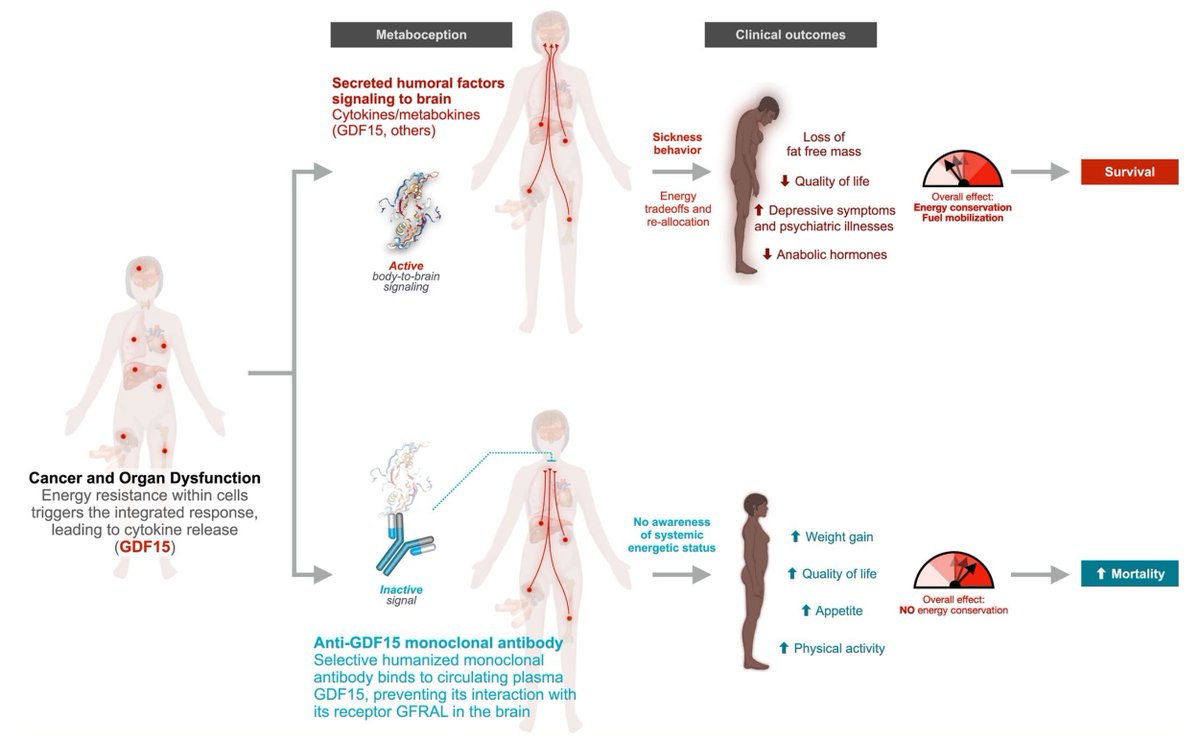
Energetic stress indexed by GDF15 is associated with many acute and chronic illnesses, where high GDF15 is linked to poor outcomes and mortality. Thinking about this reductively, it made sense to try to inhibit GDF15 signaling from the body to the brain, where it triggers sickness behavior, reduced appetite, and appears to trigger malaise and fatigue. A paper published in the New England Journal of Medicine at the end of 2023 showed that blocking GDF15 with an antibody reduced weight loss in patients with cancer cachexia... so it seemed promising in terms of preventing weight loss, but it also seemed to increase mortality. In a new perspective with @cohenaginglab we discuss the risks of inhibiting GDF15-based brain energy sensing.
Martin Picard tweet media
English
8
17
66
7.4K
Nick Monaco retweetledi
Doris Tsao
Doris Tsao@doristsao·
My thoughts on connectomics and upload: 1) there is zero question connectomes are invaluable, and we need to get them for mouse, monkey, and human 2) the human, or even monkey, connectome seems a long ways off given costs (roughly $1/neuron). The projectome (map of all the axons) seems eminently reachable and should be a top priority imho 3) but even having the full connectome would only tell you numbers of synapses, not actual synaptic weights, and the two can be hugely divergent (eg only 5% of synapses onto V1 layer 4 neurons come from thalamus, even though this is the major driving input) 4) given #2 & #3, I think we can get to upload in the sense of building a functionally equivalent organism much faster through understanding the algorithms of the primate brain than through blind copying 5) in putting together something as complex as the human brain we would definitely want to check that the various pieces work as we go, which we can only do if we understand these pieces 6) I don't think upload in the sense of blindly creating a digital copy is the path to the abundant transhumanist future--actual understanding of brain structures so we can intelligently interface with them, and emulate their function in code without copying all the details, is. All to say, we need functional understanding to go hand in hand with anatomical mapping!
Adam Marblestone@AdamMarblestone

You may have noticed some "holy $%@#" tweets on fly brain emulation. So is this a game-changer or a nothing-burger? Read on to find out...

English
24
48
311
59.6K
Nick Monaco
Nick Monaco@NickMonaco99·
@dileeplearning @AsteraInstitute Do we think completely reverse-engineering the cortex will bring us AGI? Don’t we also need to reverse-engineer the brainstem, hypothalamus —the regions that give us meaning and motivation, not just pure computation? That’s something LLMs already appear to be good at
English
0
1
3
1.1K
Nick Monaco retweetledi
SWC
SWC@SWC_Neuro·
Studies using fruit flies by University of Oxford researchers @RafSarnataro & Dr Peter Hasenhuetl are providing new insights into how sleep is controlled. As two winners of the Emerging Neuroscientist Seminar Series 2025, they recently spoke at SWC ⤵️ sainsburywellcome.org/blog/what-frui…
SWC tweet media
English
0
4
7
731
Nick Monaco retweetledi
Derya Unutmaz, MD
Derya Unutmaz, MD@DeryaTR_·
This is so inspiring. I recommend everyone read this. In the near future, almost everyone will be able to go into founder mode for their health and personalize it thanks to AI advances. This won't require gadzillions or teams of experts. But we must break down the gatekeeping.
Sid Sijbrandij@sytses

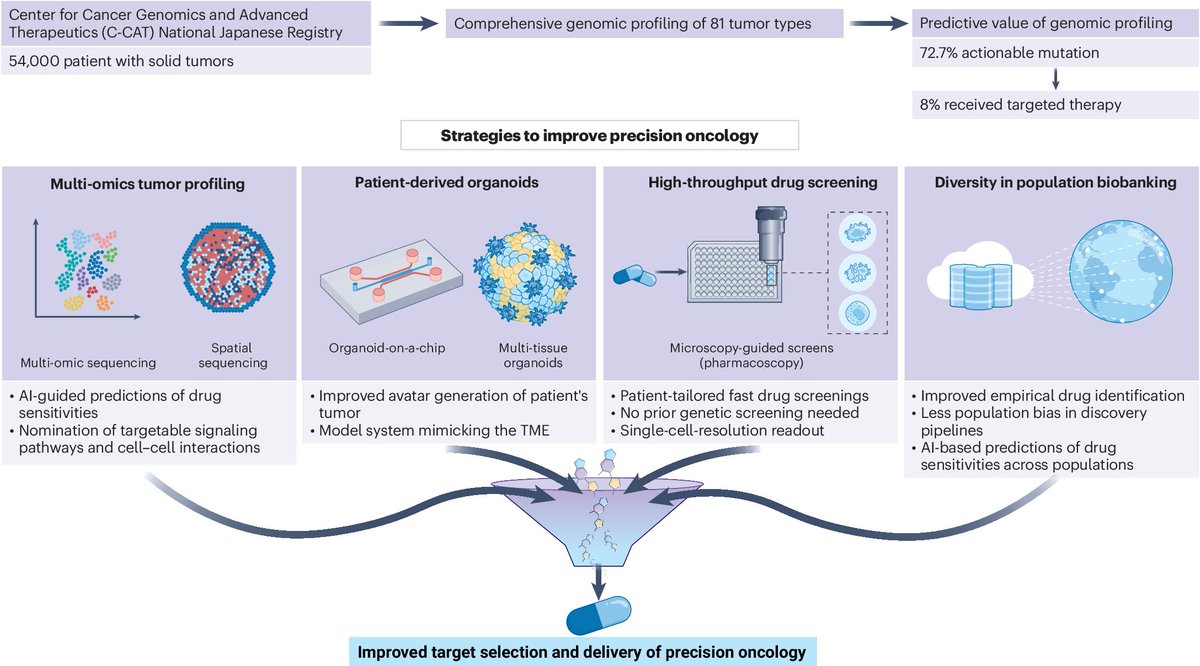
I’m going Founder Mode on my cancer. Below is Elliot Hershberg’s article about my cancer journey. It gave language to something I’d been doing instinctively over the past year: managing my health in Founder Mode. Manager mode assumes that existing systems will surface the best options. When I was first diagnosed with cancer in 2022, I delegated the crucial analyses and decisions about my care to others. In late 2024, when my cancer reappeared and my doctors told me I had exhausted the standard of care and there were no trials for my situation, I realized that assumption might, quite literally, kill me. Founder Mode was my only option. Founder Mode meant going deep on every diagnostic and treatment option. It meant assembling a team of physicians and scientists to work from first principles to understand what was possible beyond standard protocols. Together, we paved new roads to access the very cutting edge of science and technology. Today, thanks to the efforts of many people around the world and the support of my wife Karen, I currently have no evidence of disease. But my fight with cancer is far from over. My team and I continue to develop treatments and strategies in case it returns. More importantly, I now understand firsthand the challenges patients face in order to secure their own data and necessary treatments, particularly personalized medicines. I increasingly see my role as removing structural barriers—breaking down walls that prevent data, treatments, and technologies from flowing where they’re needed. One of the core principles of the first company I founded, GitLab, was radical transparency, and it’s a principle I am bringing to my cancer care. To that end, I am going to be sharing more about my experiences, my treatments, my data, and what I am building to make the path that I’ve been on easier for others to follow. Please subscribe to my mailing list on sytse.com to stay updated. Lastly, I want to thank those who have been on this journey with me. There have been too many to all thank here but I appreciate every one of you. I did want to mention Jacob Stern, Alfredo Gonzalez, and Jeremiah Wala; the amazing teams at Private Health Management (shoutout to Jenn and Eva) and Willy Hoos and Pathfinder Oncology; Nima Afshar and Private Medical; Sant Chawla and the Sarcoma Oncology Center; John Connolly and his team at the Parker Institute; Will Hudson at Baylor College of Medicine; Kamil Slowikowski for his work on osteosarc.com; and Jeff Tsao, Will Gibson, Ali Samiei, Scott McConnell and the rest of the team at the Briger Foundation for Oncology Research.
English
4
8
166
22.4K
Nick Monaco retweetledi
Rutger Bregman
Rutger Bregman@rcbregman·
It's that magical time of year when private jets descend on a Swiss mountain village to discuss climate change and poverty! Anyway, here's my annual reminder. I'll stop posting this when they stop avoiding the real issue: their own massive tax avoidance 💰
English
306
8.3K
25.7K
1.1M
Nick Monaco retweetledi
Jeffrey West
Jeffrey West@mathoncbro·
Another great short essay, by Paul Nurse, 2021: "Theorizing should be encouraged, and theories should be included in experimental papers to put data in context."
Jeffrey West tweet media
English
18
210
968
50.1K
Nick Monaco retweetledi
Alex Prompter
Alex Prompter@alex_prompter·
This paper from Harvard and MIT quietly answers the most important AI question nobody benchmarks properly: Can LLMs actually discover science, or are they just good at talking about it? The paper is called “Evaluating Large Language Models in Scientific Discovery”, and instead of asking models trivia questions, it tests something much harder: Can models form hypotheses, design experiments, interpret results, and update beliefs like real scientists? Here’s what the authors did differently 👇 • They evaluate LLMs across the full discovery loop hypothesis → experiment → observation → revision • Tasks span biology, chemistry, and physics, not toy puzzles • Models must work with incomplete data, noisy results, and false leads • Success is measured by scientific progress, not fluency or confidence What they found is sobering. LLMs are decent at suggesting hypotheses, but brittle at everything that follows. ✓ They overfit to surface patterns ✓ They struggle to abandon bad hypotheses even when evidence contradicts them ✓ They confuse correlation for causation ✓ They hallucinate explanations when experiments fail ✓ They optimize for plausibility, not truth Most striking result: `High benchmark scores do not correlate with scientific discovery ability.` Some top models that dominate standard reasoning tests completely fail when forced to run iterative experiments and update theories. Why this matters: Real science is not one-shot reasoning. It’s feedback, failure, revision, and restraint. LLMs today: • Talk like scientists • Write like scientists • But don’t think like scientists yet The paper’s core takeaway: Scientific intelligence is not language intelligence. It requires memory, hypothesis tracking, causal reasoning, and the ability to say “I was wrong.” Until models can reliably do that, claims about “AI scientists” are mostly premature. This paper doesn’t hype AI. It defines the gap we still need to close. And that’s exactly why it’s important.
Alex Prompter tweet media
English
380
2.1K
8.2K
1.2M
Nick Monaco retweetledi
Jun Nagai
Jun Nagai@JunNagaiLab·
Just out! “The astrocytic ensemble acts as a multiday trace to stabilize memory.” We identified astrocytic ensembles that link experiences across days to stabilize memory nature.com/articles/s4158…. New astrocyte tools are openly available at Addgene: addgene.org/Jun_Nagai/. 1/8
English
24
172
566
48.8K
Nick Monaco retweetledi
Olivier George
Olivier George@brainaddiction·
Really interesting papers, confirming and extending what many believed true for a while. The last 20 years gave us the illusion of super hyper specialization of brain regions thanks to opto/chemogenetics. Turns out we were just under a lamppost. We're in a "neo-Lashley" era. Brain functions are mostly spread out throughout the brain, not in one spot. If you’re not already looking elsewhere than under the lamppost, you should.
International Brain Laboratory@IntlBrainLab

Two flagship papers from the International Brain Laboratory, now out in @Nature: 🧠 Brain-wide map of neural activity during complex behaviour → doi.org/10.1038/s41586… 🧠  Brain-wide representations of prior information in mouse decision-making → doi.org/10.1038/s41586… +
English
0
15
48
5.3K
Nick Monaco retweetledi
Manolis Kellis
Manolis Kellis@manoliskellis·
MIT Course announcement: Machine Learning for Computational Biology #MLCB25 Fall'24 Lecture Videos: tinyurl.com/MLCBlectures Fall'24 Lecture Notes: tinyurl.com/MLCB24notes (a) Genomes: Statistical genomics, gene regulation, genome language models, chromatin structure, 3D genome topology, epigenomics, regulatory networks. (b) Proteins: Protein language models, structure and folding, protein design, cryo-EM, AlphaFold2, transformers, multimodal joint representation learning. (c) Therapeutics: Chemical landscapes, small-molecule representation, docking, structure-function embeddings, agentic drug discovery, disease circuitry, and target identification. (d) Patients: Electronic health records, medical genomics, genetic variation, comparative genomics, evolutionary evidence, patient latent representation, AI-driven systems biology. Foundations and frontiers of computational biology, combining theory with practice. Generative AI, foundation models, machine learning, algorithm design, influential problems and techniques, analysis of large-scale biological datasets, applications to human disease and drug discovery.  First Lecture: Thu Sept 4 at 1pm in 32-144 With: Prof. Manolis Kellis @manoliskellis, Prof. Eric Alm @ejalm, TAs: Ananth Shyamal, Shitong Luo @luost26 Course website: compbio.mit.edu/mlcb @MIT @MITEECS @MITdeptofBE @MITCSBPhD @MIT_CSAIL @Harvard @HarvardMed @BroadInstitute
Manolis Kellis tweet mediaManolis Kellis tweet mediaManolis Kellis tweet mediaManolis Kellis tweet media
Manolis Kellis@manoliskellis

Today was my last lecture for @MIT #ComputationalBiology: #Genomes, #Networks, #Evolution, #Health. I recorded each and immediately posted online here: youtube.com/playlist?list=… Please do share, and let me know which topics need more explanations, clarifications, and corrections!

English
21
473
2.2K
252.3K
Nick Monaco retweetledi
Martin Picard
Martin Picard@MitoPsychoBio·
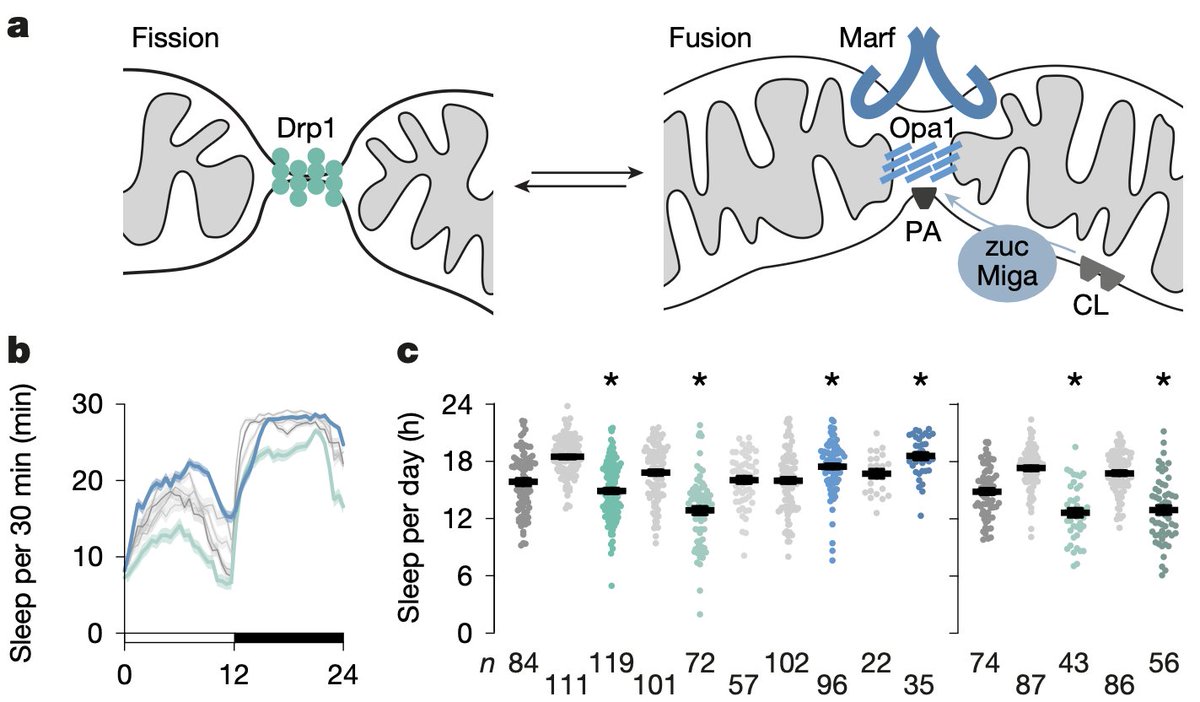
Why do we sleep? What happens in our cells that make us feel the need to go to bed? New study in flies showing that as energy flows with more energy resistance (éR) in our mitochondria--producing "reductive stress"-- the pressure to sleep increases Manipulating mitochondrial fusion and fission dynamics also changed the flies' daily need for sleep, connecting mitochondrial energetics and dynamics with sleep behavior nature.com/articles/s4158…
Martin Picard tweet media
English
14
84
388
28.3K
Nick Monaco retweetledi
nature
nature@Nature·
Nature research paper: Mitochondrial origins of the pressure to sleep go.nature.com/40nFRZM
English
5
59
252
32.3K
Nick Monaco
Nick Monaco@NickMonaco99·
Breakdown of our paper out in Nature on sleep homeostasis and mitochondria in flies!! Couldn't have asked for a better mentor & human being in @RafSarnataro, truly learnt from the very best in the game...
Raffaele Sarnataro@RafSarnataro

1/ 🚨 Our new paper is online in @Nature ! As its first author, I’m enthusiastic to finally share it with you all!🎉 🧠 We discovered a mechanistic link between cellular energy metabolism and the control of the need to sleep 💤 👉 nature.com/articles/s4158… @OxfordDPAG 🧵👇

English
1
1
3
166
Nick Monaco retweetledi
Ishaan Kapoor
Ishaan Kapoor@ishaankapoor31·
@ScottishWaddell and I bring you a quick Christmas read that absolutely no one asked for! 🪰 We show how flies prioritise recently acquired memories by inhibiting associations formed farther in the past 1/5 biorxiv.org/content/10.110…
English
1
10
29
2.2K