Noel Cabral

373 posts

Noel Cabral banner
Noel Cabral

Noel Cabral

@NoelCabralBlog

Business developer and blogger who found my passion in writing about business, AI technology and finance following a rewarding career in the U.S. Navy.

Pennsylvania Katılım Mayıs 2023
694 Takip Edilen754 Takipçiler
Noel Cabral
Noel Cabral@NoelCabralBlog·
exactly. speed is how you test whether your taste is right. ship fast, watch what resonates, then double down on the things people actually care about. the mistake is treating every project like it needs to be perfect before anyone sees it. how's applewise coming along? job search tools are such a crowded space, curious what angle is working for you
English
0
0
0
2
Daniel Glejzner
Daniel Glejzner@DanielGlejzner·
It’s always so refreshing to see someone sooooo deep in the AI Bubble business but level headed and experienced enough to point out major AI downsides. Speed of producing code is not the moat that you are looking for. Unless you are an Indie hacker who drops a new app everyday.
dax@thdxr

sent this to the team today everything great comes from being able to delay gratification for as long as possible and it feels like we're collectively losing our ability to do that

English
5
0
14
1.8K
Noel Cabral
Noel Cabral@NoelCabralBlog·
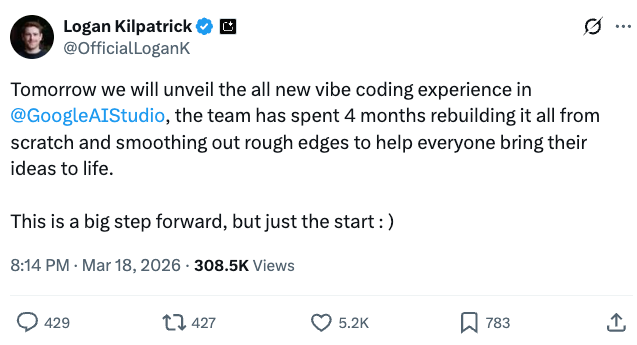
google just launched a full stack vibe coding platform inside ai studio and nobody is talking about the real implication. every major tech company now wants to own your entire dev workflow. google has your email, docs, maps, calendar, and now your IDE. microsoft has github, copilot, azure, and vscode. apple just started blocking vibe coded apps from the app store the same week.the pattern is clear. the companies that control where you build will control what you build. auto provisioned databases, one click deploys, integrated auth. it feels like magic until you try to leave.the devs who will come out ahead aren't picking the shiniest platform. they're keeping their skills portable. learn the fundamentals behind the abstractions. understand what firebase is actually doing so you can swap it for supabase or a raw postgres setup when the pricing changes.the best time to think about vendor lock in is before you need 10,000 users to migrate.
English
1
0
1
36
Noel Cabral retweetledi
Chris Tate
Chris Tate@ctatedev·
Introducing Generative UI for MCP Apps One server. Infinite interfaces. Instead of building views, define a component catalog. The AI assembles the right UI based on your API, CLI or MCP server tools. Works in Claude, ChatGPT, VS Code, Cursor and more
English
105
114
1.6K
156.5K
Noel Cabral retweetledi
klöss
klöss@kloss_xyz·
do you understand what just happened? > google just dropped its own full stack vibe coding system with multiplayer, databases, auth, and firebase baked in. > detects when your app needs a database and provisions it for you.  > remembers full project structure and chat history across sessions. > close out, come back tomorrow, and it picks up right where you left off like nothing happened. > antigravity auto installs libraries without you asking. it reads your project and decides what’s missing. > ai studio added api key management for payments, maps, and databases. > google owns your calendar, your email, your docs, your maps, and now they own your IDE too. > one button to deploy to production. > now google may actually compete with claude code and codex with even more of google’s ecosystem behind it > they shipped playable demos with multiplayer laser tag, 3D physics in games, live Google Maps data, and all of these are built from one shot prompts > apple also decided to block vibe coding apps from updating in the app store the same week google made vibe coding production grade??? anyone else find that coincidental? if you’re not following me already, you’re finding out about this all 48 hours late from someone who read my post​​​​​​​​​​​​​​​​.
Google AI Studio@GoogleAIStudio

x.com/i/article/2034…

English
87
178
2.9K
617.9K
Noel Cabral
Noel Cabral@NoelCabralBlog·
google rebuilding ai studio from scratch instead of just patching tells you a lot. the vibe coding space is moving so fast that the tool you built 4 months ago is already outdated. competition between lovable, replit, cursor and now google is amazing for devs though. every week the bar goes up.
English
0
0
0
26
Noel Cabral
Noel Cabral@NoelCabralBlog·
@om_patel5 you're missing stage 9: see someone else ship the exact same idea two weeks later, watch it blow up, and realize the problem wasn't the code. it was quitting too early. the vibe coding graveyard is full of projects that were one iteration away from working.
English
0
0
1
70
Om Patel
Om Patel@om_patel5·
the 8 stages of vibe coding: > super pumped about an idea > "let's build this thing" > ship it in one weekend > bugs start rolling in > "wait was this even a good idea" > existential crisis at 2am > questioning every life decision > "i will never escape the underclass" > quietly bury the project and never speak of it again
English
38
15
195
21.2K
Noel Cabral
Noel Cabral@NoelCabralBlog·
this is the part people keep missing. the code quality debate is irrelevant when the real bottleneck was always validation speed. you went from idea to $1k/day in 3 months because you skipped the part where most devs spend 6 months perfecting architecture nobody will ever use. curious what your distribution looked like, was it all organic or did you run ads?
English
0
0
0
4
Modest Mitkus
Modest Mitkus@ModestMitkus·
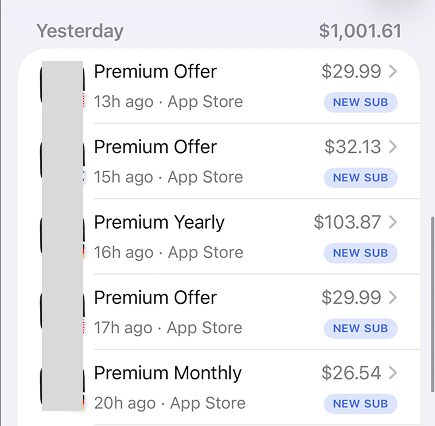
My vibe-coded app just hit $1,000 in a single day. Three months ago, I didn't know how to build an iOS app. I still barely do. People joke about vibe coding, saying that it writes slop code (as if junior-mid code is any better). Many people miss the point that some actually take it seriously and achieve pretty nice results. I didn't have technical skills, but I always wanted to build things. Not some random Notion templates as I did before (and still reached $30k/month xD), but real functional products written in code. Vibe coding literally gave me a cheat code that I can use in real life. I can turn all my ideas into functional products and make money from them. It literally changed my life and now I can't stop. For some AI is here to take their jobs, for some it's life changing opportunity and massive leverage.
Modest Mitkus tweet media
English
176
30
864
91.7K
Noel Cabral
Noel Cabral@NoelCabralBlog·
the cost of shipping a full saas as a solo dev in 2026 is approaching zero. domain, a vps, and whichever ai coding tool you prefer. that's it.but here's what nobody talks about. the gap between "idea" and "working product" is maybe 2 weekends now. the gap between "working product" and "product people actually use" is still massive.distribution hasn't gotten cheaper. if anything it's harder because everyone else can ship just as fast as you can.the new bottleneck isn't building. it's getting noticed. the solo devs winning right now spend maybe 30% of their time coding and 70% on distribution, content, and talking to users.if you're still optimizing your build speed but haven't posted about your product once, you're solving the wrong problem.
English
1
0
1
12
Noel Cabral
Noel Cabral@NoelCabralBlog·
the biggest unlock for me was realizing cowork is for the messy thinking phase. like when you're still figuring out what to build, cowork keeps up with the back and forth. then you switch to code once you actually know what you want. most people try to do both in chat and wonder why it falls apart.
English
0
0
1
400
Ruben Hassid
Ruben Hassid@rubenhassid·
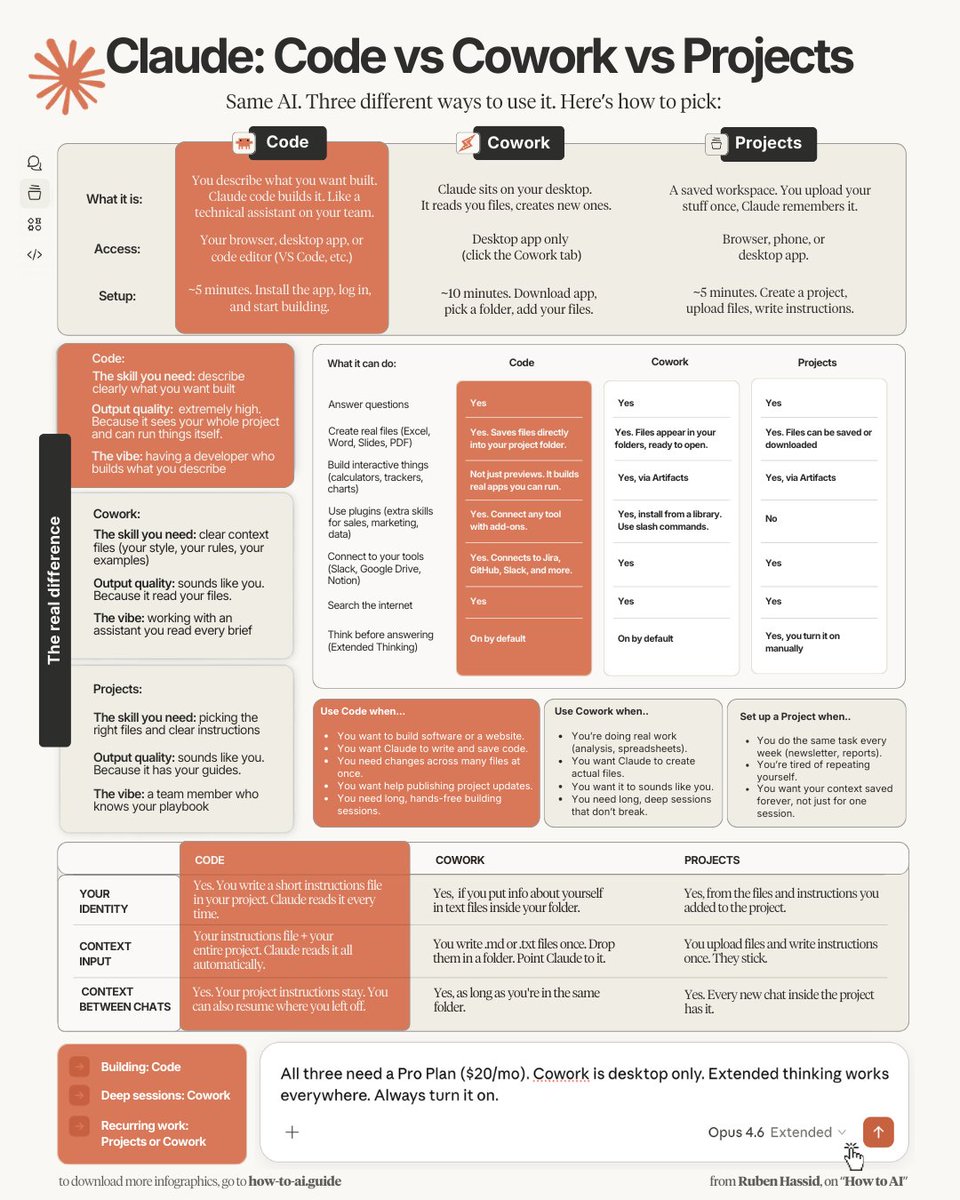
How to pick the right Claude for the job: (because there are 3 now, and you're only using 1) 1 - Download this infographic. Send it to your team. 2 - Stop defaulting to Chat for everything. 3 - Pro tip: Use Code when you're building. Cowork when you're working. Projects when you're repeating. I just wrote my full Claude Code breakdown. It covers setup, real examples, and the mistakes I see everyone making. Read it here, below. To download all of my Claude infographics: Step 1. Go to how-to-ai.guide. Step 2. Subscribe for free. Don't pay anything. Step 3. Open my welcome email (most skip this). Step 4. Hit the automatic reply button inside. Step 5. Download my infographics from my Notion. ♻️ RT this to save your team 10 hours a week.
Ruben Hassid tweet media
Ruben Hassid@rubenhassid

x.com/i/article/2034…

English
32
156
1.1K
183.8K
Noel Cabral
Noel Cabral@NoelCabralBlog·
the review mining approach is solid. one thing i'd add is using ai to speed up the analysis part. you can dump hundreds of reviews into a local llm and have it cluster the complaints by theme. saves hours and you catch patterns you might miss skimming manually. what's your stack for the build?
English
0
0
0
4
Prajwal Tomar
Prajwal Tomar@PrajwalTomar_·
Here's the exact approach I used to finalize my SaaS idea. I call it the validated market strategy: → Find a product already doing $1M+ ARR → Read every 1-star and 2-star review you can find → Look for the same complaint repeated 50+ times → Build specifically for that underserved segment This is way less risky than starting from scratch. You're not guessing if people want the product. The demand is already proven. You're just building for the people the original product is ignoring. For ThinkBoard, I spent 2 hours digging through Reddit threads, G2 reviews about Poppy AI. Here's what kept showing up: "Love the tool but $399/year with no trial is insane" "Just want to try it for one month, why is that impossible" "Pricing killed this for me immediately" "Tool looks amazing but I'm not committing $400 blind" Same frustration over and over. That's your product roadmap right there. The framework works for any niche. Find what's working. Find who's being ignored. Build for them. Next up: Locking the MVP feature set and starting the build.
Prajwal Tomar@PrajwalTomar_

Day 1 of building my SaaS in public. The idea: ThinkBoard, a dialed-down alternative to Poppy AI. First, let me say this: I'm a Poppy user myself and I absolutely love it. Been using it across multiple parts of my business for months. The tool is genuinely incredible and does exactly what it promises. But here's the thing. Poppy is doing $6M ARR with a massive user base, but they're leaving an entire market behind: → $399/year minimum → No free trial → No monthly plan I spent hours reading reviews on Reddit, G2, and review sites. Same complaint everywhere: "Love the concept but hate the commitment" "Want to try it for a month first" "Not dropping $400 without testing it" "Pricing killed this immediately for me" These aren't people who don't want the product. They're people getting priced out before they even start. So I'm building ThinkBoard for everyone who clicked on Poppy and immediately left when they saw the pricing. Same core value: → Free trial (no credit card) → Monthly option → Affordable annual plan This is an underserved segment with proven demand. The market already exists. I'm just building the version they're actually asking for. Next step: Finalizing the core features. I'm NOT building a clone. Just a lean version that solves the main problem without all the enterprise bloat. Documenting everything here. Follow along.

English
4
4
20
2.6K
Noel Cabral
Noel Cabral@NoelCabralBlog·
@MillieMarconnni the 4.4x conversion stat is wild. makes sense though, when someone asks an ai 'what tool does x' and gets your name, the intent is way more specific than a google search. curious how fast this shifts, like within a year do we see most devs optimizing for ai crawlers first?
English
0
0
1
1.5K
Millie Marconi
Millie Marconi@MillieMarconnni·
Holy shit...AI search is eating Google's traffic and most websites have zero idea why they're invisible to ChatGPT and Perplexity. A developer just built geo-seo-claude to fix that. Point it at any URL. It runs a full GEO audit, scores your AI citation readiness, checks which AI crawlers can even access your site, and generates a client-ready PDF report. AI-referred traffic converts 4.4x higher than organic. Traditional SEO agencies haven't figured this out yet. This repo has. 100% Opensource. MIT License. Link in comments.
Millie Marconi tweet media
English
62
143
1.8K
223.9K
Noel Cabral
Noel Cabral@NoelCabralBlog·
152 tests on fulfillment is no joke, that's the kind of coverage where you actually trust the ai to make changes without hand holding every diff. the race condition catch is the perfect example too because those are exactly the bugs that slip past manual review when you're tired. how long did it take you to get to the point where you trusted it on the critical paths like carrier routing? that's always the hardest leap.
English
0
0
0
4
Chua
Chua@chuachonghuan·
That shift from autocomplete to teammate is real. I've got 152 tests on my fulfillment backend — carrier routing, customs flagging, the boring stuff that breaks at 2am. Claude caught a race condition last month that would've bricked a 200-unit batch. Production trust takes time, but when it catches what you'd miss on no sleep? That's when it stops being a toy.
English
1
0
0
13
Noel Cabral
Noel Cabral@NoelCabralBlog·
solo devs and indie hackers are sleeping on claude code as a full stack teammate.i used to think of it as autocomplete on steroids. now i use it to scaffold entire projects from scratch. database schema, api routes, frontend components, tests, deployment configs. all in one session.the trick that makes it work for real projects instead of toy demos:• start with a clear CLAUDE.md that describes your stack and conventions• use plan mode to map out the architecture before writing any code• break the build into small, testable chunks instead of asking for everything at once• let claude run the tests after each chunk so bugs get caught immediatelythe difference between a throwaway prototype and something you can actually ship comes down to how you structure the conversation. give it the same context you'd give a freelancer on day one and it performs like one who already knows your codebase.i shipped a browser automation tool, a scheduling system, and a content pipeline in the last week. all solo. all claude code. the leverage is unreal if you set it up right.
English
1
0
0
82
Noel Cabral
Noel Cabral@NoelCabralBlog·
unpopular take: the devs who will struggle most in the next 2 years aren't the ones who refuse to use ai. it's the ones who use it but never learned to review what it generates. i've seen junior devs ship ai generated code that looks clean, passes basic tests, but has subtle issues that only show up under load or edge cases. the ai doesn't tell you what it skipped. it doesn't flag the tradeoffs it made. it just gives you something that works for the happy path. the new essential skill isn't prompting. it's reading code you didn't write with enough depth to catch what the model optimized away. if you can generate code fast but can't review it critically, you're just shipping bugs faster.
English
0
0
0
15
Noel Cabral retweetledi
Todd Saunders
Todd Saunders@toddsaunders·
I know Silicon Valley startups don't want to hear this..... But the combination of someone in the trades with deep domain expertise and Claude Code will run circles around your generic software. I talked to Cory LaChance this morning, a mechanical engineer in industrial piping construction in Houston. He normally works with chemical plants and refineries, but now he also works with the terminal He reached out in a DM a few days ago and I was so fired up by his story, I asked him if we could record the conversation and share it. He built a full application that industrial contractors are using every day. It reads piping isometric drawings and automatically extracts every weld count, every material spec, every commodity code. Work that took 10 minutes per drawing now takes 60 seconds. It can do 100 drawings in five minutes, saving days of time. His co-workers are all mind blown, and when he talks to them, it's like they are speaking different languages. His fabrication shop uses it daily, and he built the entire thing in 8 weeks. During those 8 weeks he also had to learn everything about Claude Code, the terminal, VS Code, everything. My favorite quote from him was when he said, "I literally did this with zero outside help other than the AI. My favorite tools are screenshots, step by step instructions and asking Claude to explain things like I'm five." Every trades worker with deep expertise and a willingness to sit down with Claude Code for a few weekends is now a potential software founder. I can't wait to meet more people like Cory.
English
330
663
7K
881.9K
Noel Cabral
Noel Cabral@NoelCabralBlog·
the hugging face course is solid because it actually makes you build from scratch instead of just wrapping api calls. the smolagents section is especially good for understanding how tool use works under the hood. once you see how an agent decides which tool to call and parses the result, the magic disappears and you start building more reliable systems. the langraph module is worth doing too if you need agents that handle branching logic without falling apart.
English
0
0
3
395
0xMarioNawfal
0xMarioNawfal@RoundtableSpace·
EVERYONE KNOWS ABOUT ANTHROPIC'S COURSE BUT THERE'S THIS AI AGENTS COURSE ON BUILDING AGENTS FROM SCRATCH BY HUGGING FACE WITH CERTIFICATION. * 100% Free * Build Agents from scratch * SmolAgents, Llamaindex, LanGraph Compete on a leaderboard & earn a certificate. Link: huggingface.co/learn/agents-c…
English
27
73
476
68.3K
Noel Cabral
Noel Cabral@NoelCabralBlog·
the multiplayer vs single player framing is the key insight here. right now most vibe coding tools optimize for one person going fast. but the moment you have two people touching the same project, everything breaks because there's no shared context layer. replit owning the full stack means they can solve that coordination problem at the infrastructure level instead of bolting it on later. the churn question in the replies is the real test though. speed tools have notoriously high churn because users build one thing and leave. collaboration tools retain because the team keeps coming back.
English
0
0
0
8
Aakash Gupta
Aakash Gupta@aakashgupta·
Everyone's comparing vibe coding tools on speed. Replit is playing a completely different game. Lovable just crossed $400M ARR. Cursor passed $2B. Both optimized for the same variable: how fast can one person ship software alone? Agent 4 is a bet that solo building hits a ceiling. Look at the feature list: infinite canvas for generating design variants, parallel agents working different parts of the same project, real-time team collaboration baked into the core loop. Every other vibe coding tool treats building as a single-player game. Replit is building the multiplayer version. This tells you exactly how Amjad views the next phase. When AI handles execution, the hard problem becomes "which version should we build and why?" Lovable shipping 100,000 projects per day means 100,000 projects per day that nobody reviewed, designed intentionally, or pressure-tested before going live. Speed without coordination produces volume. Speed with coordination produces products. The vertical integration makes this bet possible in a way competitors can't replicate quickly. Replit owns the entire stack: design canvas, build agents, database, auth, hosting, deployment. Cursor needs you to deploy somewhere else. Lovable hands off to GitHub for anything complex. Replit keeps the whole workflow inside one environment, which is the only architecture where "parallel agents on the same project" actually works without breaking everything. 85% of Fortune 500 already have teams on Replit. At $240M revenue with 150,000 paying customers, the average customer spends roughly $1,600/year. The $1B target for 2026 means either tripling customer count or tripling spend per customer. Enterprise teams do both simultaneously, which is exactly why Agent 4 leads with collaboration instead of raw speed. Individual builders pick the fastest tool. Teams pick the most integrated one. Replit is betting the market moves toward teams. And if AI makes everyone a builder, the number of teams that need coordination tools goes vertical.
Amjad Masad@amasad

Software isn’t merely technical work anymore. It’s creative. Introducing Replit Agent 4. The first AI built for creative collaboration between humans and agents. Design on an infinite canvas, work with your team, run parallel agents, and ship working apps, sites, slides & more.

English
20
8
124
34.8K
Noel Cabral
Noel Cabral@NoelCabralBlog·
this is the exact pattern everyone building with mcp runs into eventually. the tool returns data in a format the model interprets differently than you expect, and the agent quietly does something creative instead of failing loudly. your fix of moving to a deterministic script for the retrieval layer is the right call. the sweet spot seems to be letting the agent handle the reasoning and decision making but wrapping all the data access in deterministic code that returns clean, unambiguous results.
English
0
0
0
3
Santiago
Santiago@svpino·
I have an agent taking every new Stripe payment and inserting the information into a spreadsheet. It uses an MCP server to access the spreadsheet and determine the first empty row to write the new payment. Everything was working fine until this morning. When checking the contents of a spreadsheet column, the MCP server returns something like this: [$1000, $1500, $1200, null, null, $100, $235, , , , , , ,] Notice the null and the empty values (I'm not sure why there is a difference, but in the spreadsheet, both represent empty cells). Today, my agent decided that `null` cells meant they weren't empty (they are). Here is the funny part: When the agent didn't find any empty cells within the hardcoded range I gave it to write new values, it expanded its search to the next set of rows. I hardcoded: "Look for empty values within B2:B100". The agent didn't find empty values, so it asked the MCP to return any cells that weren't null between B100:B200. Two huge problems: 1. It violated my requirements. 2. It made a mistake in the filter (non-null cells include cells with data!) The agent overwrote existing data in the spreadsheet. I realize this happened because I don't trust it. I didn't lose any data because Google Spreadsheets keeps a history of every change. This is where we are right now.
English
62
19
209
38.6K
Noel Cabral
Noel Cabral@NoelCabralBlog·
there are now more ai agent platforms than there are people who have actually shipped a useful agent. every week a new one launches promising you can build agents in plain english with zero code. here's what i've learned after testing a bunch of them. the ones that actually work give you visibility into what the agent is doing at each step. the ones that don't just show you a loading spinner and a final output you can't debug. if you can't see the reasoning chain, you can't fix it when it breaks. and it will break. the best agent builders i know don't use the fanciest platform. they use whichever one lets them inspect, iterate, and recover from failures fastest.
English
0
0
0
13
Noel Cabral
Noel Cabral@NoelCabralBlog·
point 7 is the one most people skip and it's the most important. everyone obsesses over prompt engineering when the real leverage is just giving the agent enough context about your project upfront. a mediocre prompt with great context outperforms a perfect prompt with zero context every time. the mcp point is underrated too, once you connect real tools the agent goes from a fancy chatbot to something that actually does work.
English
0
0
0
99
GREG ISENBERG
GREG ISENBERG@gregisenberg·
AI AGENTS 101 (58 minute free masterclass) send this to anyone who wants to understand ai agents, claude skills, md files, how to get the most out of AI etc in plain english: 1. chat vs agents - chat models answer questions in a back and forth while agents take a goal, figure out the steps, and deliver a result 2. agents don’t stop after one response. they keep running until the task is actually finishedno babysitting required 3. everything runs on a loop. they gather context, decide what to do, take an action, then repeat until done 4. the loop is the system. they look at files, tools, and the internet. decide the next step. execute and then feed that back into the next step. over and over until completion 5. the model is just one piece. gpt, claude, gemini are the reasoning layer. the key is model + loop + tools + context 6. mcp is how agents use tools. it connects things like browser, code, apis, and your internal software. once connected, the agent decides when to use them to get the job done 7. context beats prompt all day. you don't need to write perfect prompts. load your agent with context about your business, style, and goals and then simple instructions work 8. claude.md or agents.md is the onboarding doc it tells the agent who it is, how to behave, what it knows, and what tools it can use. this gets loaded every time before it starts 9. memory.md is how it improves. agents don’t remember by default. this file stores preferences, corrections, and patterns you tell the agent to update it, and it gets better over time 10. skills + harnesses make it usable. skills are reusable tasks like writing, research, analysis the harness is the environment like claude code or openclaw that runs everything. basiclaly, different interfaces, same system underneath this episode with remy on @startupideaspod was one of the clearest ways of understanding a lot of the core concepts of ai agents could be the best beginners course for ai agents 58 mins. all free. no advertisers. i just want to see you build cool stuff. im rooting for you. send to a friend watch
English
109
259
2.2K
254.8K
Noel Cabral
Noel Cabral@NoelCabralBlog·
the deduplication on structural patterns is the smart part. most swipefiles just become an endless dump of screenshots you never open again. filtering by pattern type means you end up with maybe 20 to 30 distinct structures instead of 500 random examples. one thing i'd add is tagging each template by content format too, like thread opener vs single post vs quote tweet, since the same hook pattern performs very differently depending on format.
English
0
0
2
73
Ole Lehmann
Ole Lehmann@itsolelehmann·
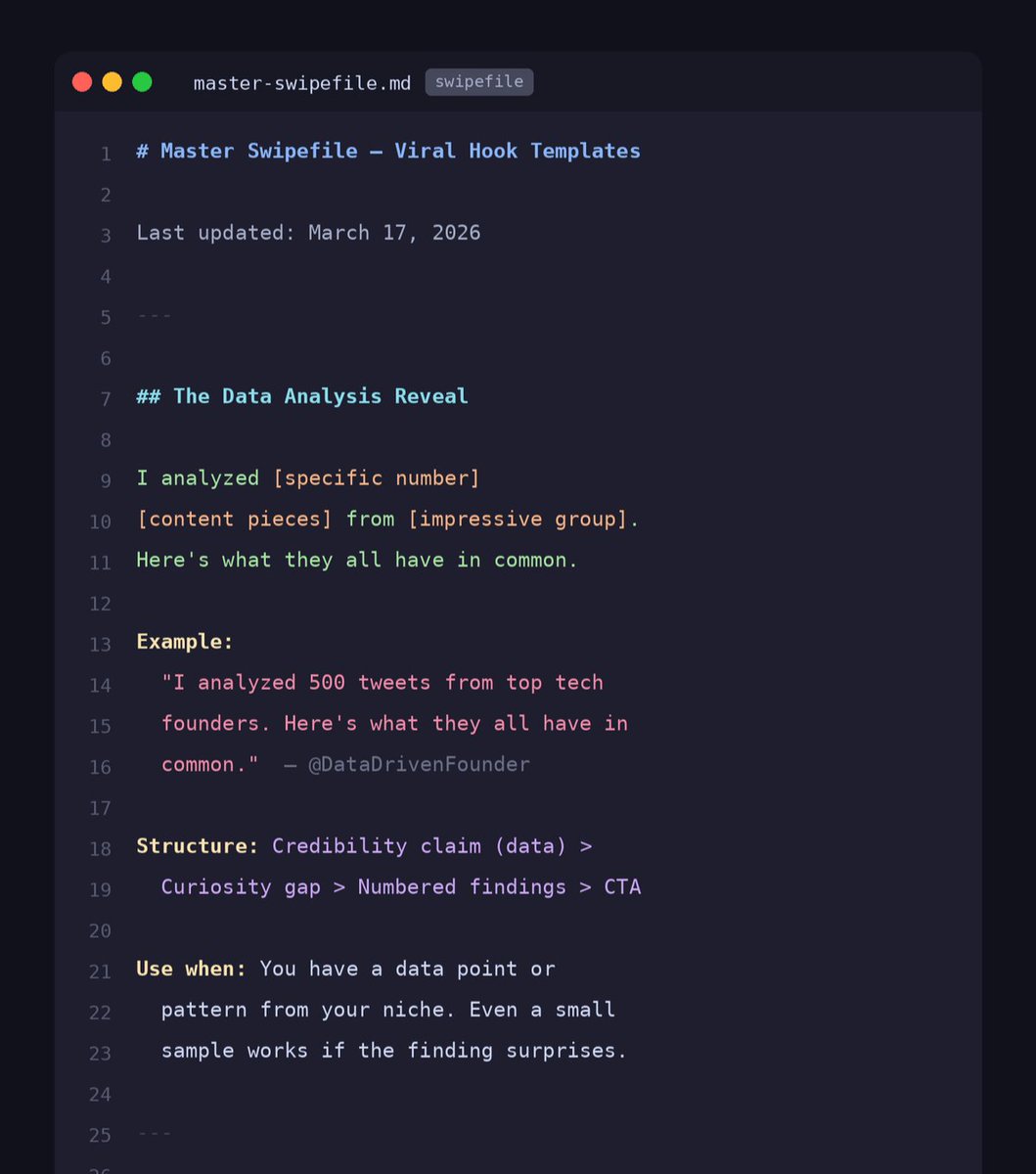
my new favorite thing to check every morning: the results from my viral content research agent that ran while i slept 1. it searches x for the highest-performing posts in my niche from the last 24 hours 2. extracts the hooks 3. and turns each one into a fill-in-the-blank template i can adapt to any topic all of it gets added to a growing swipefile (a collection of proven hooks and post structures pulled from posts that already went viral) and i have claude reference this file everytime i sit down to write here's how to set it up (takes about 15 minutes): open adaptive (an ai agent platform where you describe what you want in plain english and it builds the whole system) and paste this prompt: "every morning, search the web for the top 5-10 highest-engagement posts on x from the last 24 hours in [YOUR NICHE]. for each post: extract the opening hook, rewrite it as a fill-in-the-blank template i can adapt to any topic, break down the structural pattern (ex: 'bold claim > numbered proof points > call to action'), and note why it likely went viral in one sentence. save a daily brief as a markdown file (a plain text doc that's easy to read and search). then append any new unique templates to a running master swipefile. skip duplicates" replace [YOUR NICHE] with whatever you're posting about (i use "ai and solopreneurs") adaptive builds the workflow, sets the schedule to 8am, and gives you two bookmark links: 1) one for the daily brief 2) one for the master swipefile. both urls stay the same and just keep getting updated every morning that's it here's what one entry from the swipefile looks like: —— the before/after transformation template: "[time period] ago i had [humble starting point]. today i'm at [impressive result]. here's exactly how i did it using [specific method or tool]" example: "3 months ago i had 0 followers. today i'm at 211k. i'm gonna tell you exactly how i did it using ai tools that cost me $0" structure: before/after proof > timeframe contrast > specific promise > step-by-step breakdown use when: you have a measurable result that you can contrast with a humble starting point —— every template comes with: - the fill-in-the-blank hook - a real example that actually performed - the structure broken down - and a note on when to use it the swipefile filters duplicates automatically so the same structural pattern only shows up once the file always stays clean as it grows when i sit down to write i just: 1: open the swipefile 2: find the 2-3 templates that fit my topic 3: and draft against a proven structure instead of starting from scratch if you're posting on x and still collecting hooks by hand, copy the prompt above and set it up.
Ole Lehmann tweet media
English
29
9
260
23.1K