Pacific Orient 🇧🇲 🇲🇭 🇳🇴 🇬🇷

2.9K posts

Pacific Orient 🇧🇲 🇲🇭 🇳🇴 🇬🇷 banner
Pacific Orient 🇧🇲 🇲🇭 🇳🇴 🇬🇷

Pacific Orient 🇧🇲 🇲🇭 🇳🇴 🇬🇷

@PacificOrient88

Asia 20+ yrs. It is all about cash flow and risk/reward. Nothing to prove to anyone. Hear it and forget it; Read it and be informed; Do it and understand.

Tahiti Katılım Kasım 2013
2.2K Takip Edilen604 Takipçiler
Francesco | Outpile
Francesco | Outpile@FrancescoBuilds·
@PacificOrient88 Thank you! I will look for info about him. Is he well known in Norway or elsewhere ? Like is he a figure for the public?
English
1
0
0
23
Francesco | Outpile
Francesco | Outpile@FrancescoBuilds·
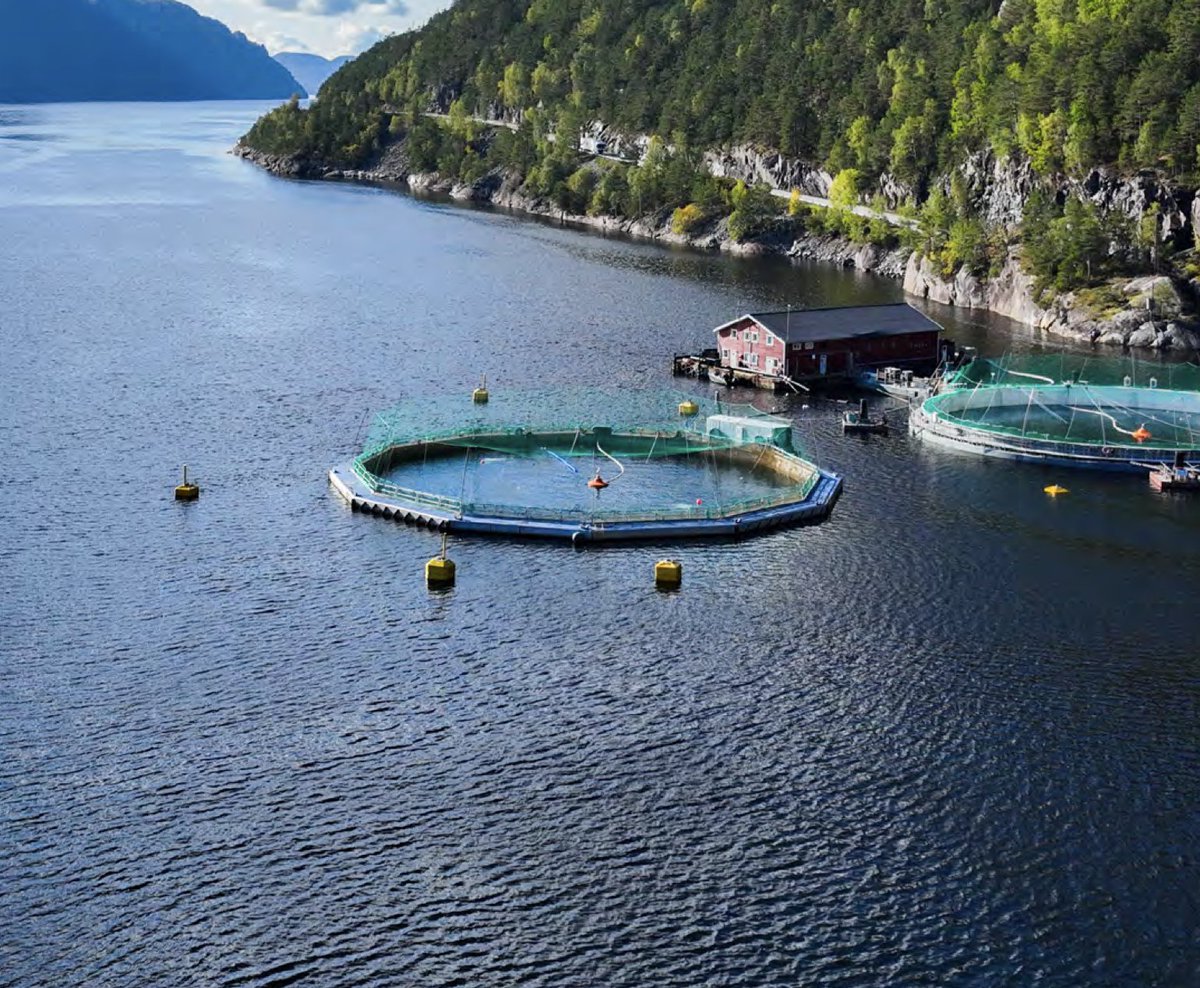
Two days ago I had never heard of Mowi. Which is exactly the kind of thing that keeps me writing here. The Norwegian company has been farming Atlantic salmon since 1964, when a handful of pioneers began experimenting in the fjords of western Norway. Norsk Hydro, the industrial giant, came in as an early backer. Decades of quiet consolidation followed, and by the mid-2000s Mowi (then called Marine Harvest) had merged its way to the top of a global industry most consumers never think about, even though most of them eat its product regularly. What makes Mowi interesting is the degree of control it has built over its product. The company breeds its own fish, produces its own feed, runs its own processing facilities, and sells directly to supermarkets under its own brand. That level of integration, built over sixty years, is not easy to replicate. The company is not without complications. Norway introduced a resource rent tax on aquaculture in 2023 that hit the industry hard. Sea lice, fish escapes, and environmental pressure from regulators and NGOs are recurring issues. And salmon prices are volatile enough that a bad year on the spot market can erase a lot of operational efficiency. But the basic story is simple: the world is eating more protein, farmed salmon is one of the most resource-efficient ways to produce it, and Mowi farms more of it than anyone else on the planet. Mowi is listed on the Oslo Stock Exchange (MOWI). This is not investment advice, just something I came across and thought was worth sharing. My goal here is simple: discover companies I didn't know existed, not necessarily buy them, but at least know they're out there and keep an eye on them. Photo: Mowi
Francesco | Outpile tweet mediaFrancesco | Outpile tweet media
English
1
0
4
214
Pacific Orient 🇧🇲 🇲🇭 🇳🇴 🇬🇷 retweetledi
UP-Indices.com
UP-Indices.com@IndicesUp·
Flex LNG – Announces contract extensions and fleet update The Company has received notice from the charterer, a supermajor, of the vessels Flex Resolute and Flex Courageous, Flex Constellation commenced the 15-year time charter contract in March 2026.
UP-Indices.com tweet media
English
0
1
3
179
Pacific Orient 🇧🇲 🇲🇭 🇳🇴 🇬🇷 retweetledi
Radigan Carter
Radigan Carter@radigancarter·
Got the wife evacuated, so have time to drink a tea and think about the Strait of Hormuz. I've sailed through the it a few times years ago and done antipiracy operations in the Strait of Malacca. Maps can be deceiving. The best way to think about the Strait of Hormuz is a four lane highway, with two lanes per direction for the largest ships like crude carriers, cargo vessels, and warships in the center of the channel where it is deepest and free of obstacles. Then on the outside of those lanes, you have medium sized ships, going Jebel Ali to other regional ports like Sohar, since a lot of international cargo goes direct to Jebel Ali then is cross loaded across the region. On the outside of those lanes, along both coasts, are dhow fishing boats and all manner of local, smaller craft. Maritime trade crisscrossing this region goes back hundreds of years. The Portugese wrote how disappointing it was to find a tight network of trade already established in the region when they arrived in the 15th century. It is hard to describe how crowded these waters are. You sometimes wonder if you could walk to Iran across the decks of ships and not get your feet wet. The amount of traffic makes distinguishing between normal traffic and a threat incredibly difficult. Is that dhow fishing, transiting between coasts, laying mines, gathering intelligence, or a tender for surface drones? Hard to discern while sailing ducks in a row escorting a lumbering tanker or cargo ship. Operation Prosperity Guardian in the Red Sea proved to be a Houthi victory when a land power with no navy to speak of fought the most powerful navy on earth to an agreement. The Hormuz problem is harder now the Iranians have proved they have the will to fight, no matter how much pain is leveled at them from afar. The shipping lanes in the Strait of Hormuz go around the Musandam penninsula. This turn exposes ships to 270 degree of fire control in layered systems from Qeshm, the surrounding high ground, to further inland, with surface drones now added to the mix. Iran doesn't need to mine the entire strait. Iran just needs to turn that main shipping lanes around Musandam into a kill box and divert approved ships past Qeshm, out of the main shipping lanes like a watery weigh station. It has started doing this. The U.S. has created a hard problem for itself. NATO understandably wants nothing to do with this. If the most powerful navy in the world can't solve this, what difference does European navies make. With the watery weigh station past Qeshm, Iran isn't closing the strait to global commerce. It is simply doing what the U.S. does with the dollar, exerting power over the chokepoint it controls. Understandably the U.S. doesn't like this, so why can't the U.S. just send warships to escort ships through? Well, when you escort a ship through a strait, you tend to stay ducks in a row. So if warships are sent to escort tankers, they are now just another target in the strait. Even if the warships could maneuver through local traffic to screen ships, lets go back to the 270 degree turn around the penninsula. The warships would be receiving layered waves of fire likely worse than they faced off with in the Red Sea against the Houthis from essentially three directions while having the longer route to run to protect the tankers around the peninsula. As the Hormuz Crisis drags on, anything less than breaking Iran's control of the strait will be seen as a loss for the U.S., much like the Battle of the Red Sea was against the Houthis.
English
146
1K
4.3K
707.1K
Pacific Orient 🇧🇲 🇲🇭 🇳🇴 🇬🇷 retweetledi
Sparta
Sparta@SpartaCommo·
The biggest supply disruption in oil market history may just be starting. Our CEO Felipe Elink Schuurman analyses: • A potential 5–8 mb/d crude deficit • Why SPR releases only delay the problem • The Russia sanctions paradox • Why diesel, jet and LPG are the real vulnerability Read the full breakdown: linkedin.com/posts/felipe-e… #OOTT
English
1
5
23
2.8K
Pacific Orient 🇧🇲 🇲🇭 🇳🇴 🇬🇷 retweetledi
Odfjell
Odfjell@Odfjell_SE·
CEO Harald Fotland joined @ChrisVonheim's podcast and shared insights on: ⚓ Innovation as DNA ⚓ The first deep-sea green corridor ⚓ Market complexity ⚓ How liquid chemicals are vital for modern life ⚓ Fleet growth ⚓ Leadership philosophy and career advice Tune in:
⏱Christopher Vonheim@ChrisVonheim

Want to learn about $ODF and how the chemical tanker market works? My new episode with CEO Harald Fotland out👇🏽 open.spotify.com/episode/3QgSNX…

English
1
3
8
697
Pacific Orient 🇧🇲 🇲🇭 🇳🇴 🇬🇷
•Singapore - record highs in 2025, handling 44.66 million shipping containers, an 8.6% increase from 2024, and vessel arrivals rose 3.5%… •Bunker sales hit a record of 56.77 million tonnes, driven by alternative fuels like biofuel blends, LNG and methanol sales also grew.
The Straits Times@straits_times

2025 another record year for S’pore’s port, as containers handled, vessel arrivals hit new highs bit.ly/4suB458
English
0
0
0
75
Pacific Orient 🇧🇲 🇲🇭 🇳🇴 🇬🇷 retweetledi
Bart 🌊⚓️
Bart 🌊⚓️@BartGonnissen·
Inside a Mark III cargo tank of an LNG carrier...
English
6
15
118
7.7K
Air Safety #OTD by Francisco Cunha
This has been "gone viral". It isn´t recent, happened in 2022. "China Airlines cargo plane sustained serious damage during a taxiing crash at O'Hare". No one was hurt
English
2
1
30
32.9K
Pacific Orient 🇧🇲 🇲🇭 🇳🇴 🇬🇷 retweetledi
Mercy Ships
Mercy Ships@MercyShips·
'Tis the season to celebrate the birth of Jesus and the miracles unfolding through acts of love and generosity. Because of you, children like Armella are not just looking up… they’re looking ahead! From all of us at Mercy Ships, Merry Christmas! #HopeAndHealing
English
0
3
12
351
Pacific Orient 🇧🇲 🇲🇭 🇳🇴 🇬🇷 retweetledi
Michelle Wiese Bockmann
Michelle Wiese Bockmann@Michellewb_·
so we now have a (partial) explanation as to how Panama allowed the US to seize a Panama-flagged tanker (Centuries). From the brief explanation given by the Panama government in this story, it appears that Panama deleted the tanker from its registry after it loaded in Venezuela while spoofing its location. It was "not following the rules". Thus the tanker was effectively flagless and stateless after it sailed, allowing the US to intercept and interdict. Reading between the lines, Panama is cooperating with the US. Such swift and immediate detection of spoofing and fast-track deletion when you have a registry of 9000-plus ships is highly unusual in my experience of tracking flag states and their response to deceptive shipping practices. Normally flag states (and insurers) will get in touch with the owners, await an explanation, with deletion a last resort. (and normally there's a 30-90 day notice period). What does this mean? Any tanker, whether it is sanctioned or not, that is calling at Venezuela to load crude without a licence is clearly at risk. If that tanker deploys deceptive shipping practices (and most are), and is flagged in a jurisdiction that will cooperate with the US (and most will) then once on the high seas, they could find themselves flagless -- and vulnerable. reuters.com/world/americas…
English
38
352
1.2K
77.3K