Peter Ndirangu™

14.3K posts

Peter Ndirangu™ banner
Peter Ndirangu™

Peter Ndirangu™

@Peternd49

EastAfrica Katılım Mayıs 2013
6.2K Takip Edilen8.6K Takipçiler
Peter Ndirangu™ retweetledi

Linda Raschke
Linda Raschke@LindaRaschke·
Learned this rule on the floor 45 years ago and it still holds true 90% of the time (or so it seems): "If a stock does not trade into its GAP area the next 4 days, it can continue in the direction of the gap for 2 weeks. can see how this worked perfecetly the past two months on big blue!
Linda Raschke tweet media
English
16
308
2.6K
154.1K
Peter Ndirangu™ retweetledi
Machiavelli Bot
Machiavelli Bot@UnmodernmanBot·
The average man is too honest in places where he should be strategic, and too dishonest in places where he should be accountable. He reveals his plans to strangers, but lies to himself about his habits. Power begins when you reverse this. Be private with the world. Be mercilessly honest with yourself.
English
15
332
1.9K
33.1K
Peter Ndirangu™
Peter Ndirangu™@Peternd49·
Curse of want - Poverty undoes man #story" target="_blank" rel="nofollow noopener">nation.africa/kenya/blogs-op…
English
0
0
0
37
Peter Ndirangu™ retweetledi
Сarm1ne
Сarm1ne@carm1nee·
Jim Simons: "I told him if you lose 30% - stop. if you multiply by 10x - stop. 9 months later he multiplied our money by 10" this is the man behind 66% annual returns explaining how he actually trades this is him explaining how he went from knowing nothing about investing to building the most profitable trading system in history - and the rules he followed from day one "I told him: if you lose 30% you stop. if you multiply our money by 10 - you stop. 9 months later he had multiplied our money by a factor of 10. $100,000 became a million" "we had a tremendous amount of data. a guy would think 'maybe this is a predictive signal', cook it up, back-test it for 10 years. if it was statistically significant it went into the system" bookmark & watch the full conversation ↓
Сarm1ne@carm1nee

David Magerman spent 24 years at Renaissance Technologies and revealed how the fund actually makes 66% a year: "we don't look at news, all we look at is price and volume. any news you see, someone bigger already knows it" this is the man who built the most profitable trading system in history explaining how it actually works - why the system crashed every 30 minutes, and why positive news means a stock will fall • "when we built our original trading system in 1995 it crashed every 30 minutes. the only way to restart fast enough to keep making money was to hand-edit the files" • "positive news about a stock may actually be a sign it's going to fall. human beings think a certain way - you want to get ahead of them not with information but by gaming their psychology" • "Renaissance lost 20 times more than it ever lost in its history. if it went on for another week we would have gone out of business" • "I don't own any publicly traded stocks. less than 1% of my net worth. I understand from my experience at Renaissance that stock prices sometimes have nothing to do with the value of a company" Magerman said the edge is in price and volume, not news, try it with AI to backtest strategies ↓

English
12
136
1.1K
250.4K
Peter Ndirangu™ retweetledi
Le Contemplateur
Le Contemplateur@LeContempIateur·
🫨 Si les vibrations peuvent faire cela à l'eau, imaginez ce qu'elles peuvent faire à notre corps, sachant que nous sommes composés à environ 70 % d'eau... 💦 📹 Vibrational.Aesthetics
Français
346
897
9.3K
6.3M
Peter Ndirangu™ retweetledi
Morgan Housel
Morgan Housel@morganhousel·
“The best math you can learn is how to calculate the future cost of current decisions.”
English
198
3.3K
15.6K
349.9K
Peter Ndirangu™ retweetledi
Millie Marconi
Millie Marconi@MillieMarconnni·
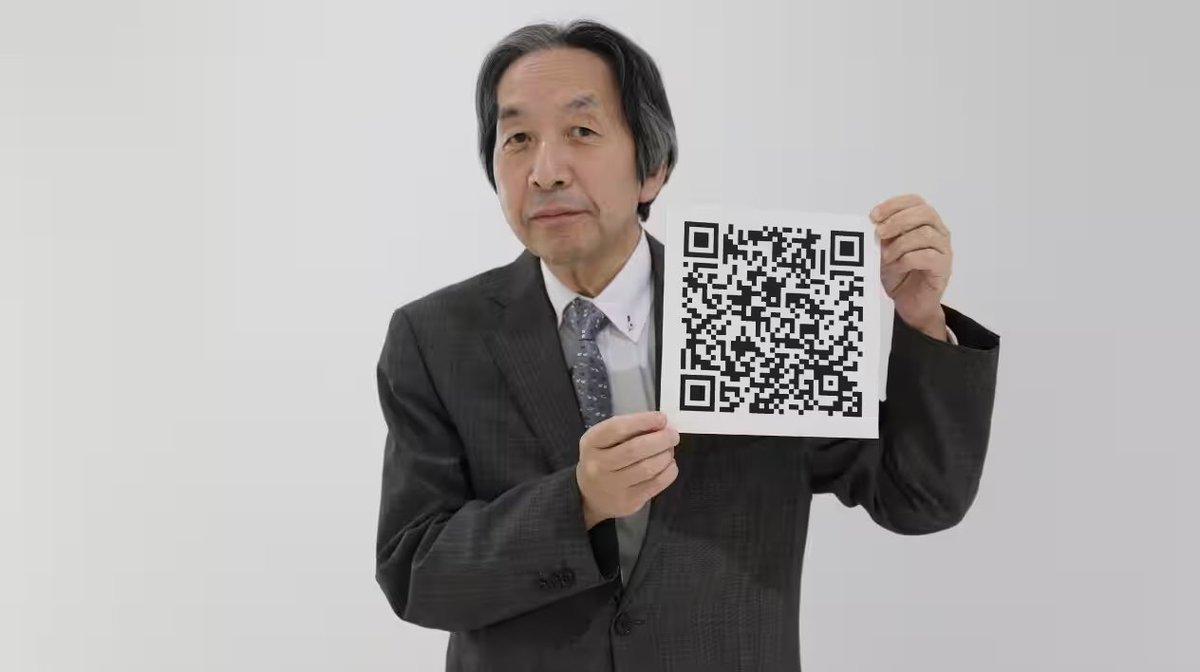
A Japanese engineer invented the QR code for one job, tracking car parts on a Toyota line, then his company chose to give the patent away for free, which is the only reason it ended up on every restaurant table on Earth. His name is Masahiro Hara. The company was Denso Wave, a parts supplier owned by Toyota. In 1992 the problem landed on his desk, and it was not glamorous. Workers on the factory floor were drowning. Every car part had a barcode, but a barcode can only hold about twenty characters, so to track one component they had to stick five or ten barcodes on it. A worker would stand there scanning a single part ten times in a row. Some of them were scanning close to a thousand barcodes a day. The job had stopped being about building cars and turned into pointing a scanner at stickers all day long. And there was a second problem nobody upstairs cared about. This was a factory. Oil got on everything. A smudge of grease across a barcode and the whole thing became unreadable, and the line stopped. Hara was asked to make the scanner faster. He looked at it for a while and realized the scanner was not the problem. The barcode itself was the ceiling. A line of black bars can only hold information going one direction, left to right. He decided to build something that held information in two directions, up and down as well as across, so it could store hundreds of times more in the same little square. Then came the part that sounds made up but is not. Hara played Go on his lunch breaks, the old board game with black and white stones sitting on a grid. He was staring at the board one day and it clicked. The grid of black and white stones was already a way to store information in two directions. That was the shape of his code. But building the code was the easy half. The hard problem was speed, because the whole point was to be fast, and a scanner wastes most of its time just trying to figure out where the code is and which way it is turned. The fix came to him on a train. He was looking out the window at buildings, and one building stood out from all the others because of its shape against the sky. That was the idea. He put three little square targets in three corners of the code. The moment a scanner sees those three squares, it knows instantly where the code is and how it is rotated, even upside down, even at an angle. Now here is the detail that shows how far he was willing to go. Those three corner squares only work if nothing else on the page looks like them. If a magazine ad or a cardboard box happened to have the same black and white pattern nearby, the scanner would get confused and grab the wrong thing. So Hara and his tiny two-person team went and surveyed printed material. Magazines. Flyers. Cardboard boxes. Piles of it, for days, reducing every picture down to its ratio of black to white area, hunting for the one ratio that almost never shows up in print anywhere. They found it. One to one to three to one to one. That exact rhythm of black and white is baked into every corner square of every QR code on Earth, and it is there because it is the pattern the printed world almost never produces by accident. Then he solved the oil. He built the code so it carries a backup of its own information, spread mathematically across the whole square. You can tear off, smudge, or scratch out up to thirty percent of a QR code and it still scans perfectly, because the code rebuilds the missing piece from the copy it kept of itself. A worker could get grease on a third of the label and the line would keep moving. This is the same math that lets a scratched CD still play and lets a spacecraft send data back across the solar system without asking to repeat itself. He finished in 1994. He named it Quick Response, after what it does for the person using it, not after what it is. And then Denso made the decision that actually mattered. They held the patent. They could have charged a fee on every single scan, and given how many billions happen now, that would have made someone unimaginably rich. Instead they announced they would not enforce their rights to collect royalties, and they published the specification openly so anyone could use it. Hara later said it was not even a big argument inside the company. That one choice is the whole story. A code that costs nothing to use is a code everyone builds on. Airlines put it on tickets. Phone makers built readers into cameras. Then a pandemic hit and the world needed a way to hand someone information without touching anything, and the free little square that a Toyota engineer built for greasy factory workers was suddenly on every menu, every payment, every door. Hara still works there. He has said, more than once, that he never imagined it would spread this far, and that the part he is proudest of is that it got used to keep people safe. The man built it to survive oil on a factory floor. It ended up surviving everything else too. You have scanned his work a hundred times this year. Now you know whose it was.
Millie Marconi tweet media
English
144
3K
10.7K
422.6K
Peter Ndirangu™ retweetledi
Rossst.03
Rossst.03@Rossst_03·
Harry Markowitz, the Nobel laureate who invented modern portfolio theory: "Every fund from Bridgewater to Citadel runs on one equation I wrote as a 25-year-old grad student. Wall Street pays quants $500K to use it. It's free." the thread above teaches you to build a portfolio the real way, with the mathematics of capital allocation. every line of it traces back to one paper markowitz wrote in 1952. before him, "don't put all your eggs in one basket" was folklore. he turned it into algebra. he proved a portfolio's risk isn't the average of its parts, it's driven by how the parts move together, the covariance. combine assets that don't move in lockstep and you cut risk without giving up return. that is the closest thing to a free lunch in all of finance, and he wrote the exact equation for how much of it you get. that single insight, mean-variance optimization, is the engine under every serious fund on earth. renaissance, bridgewater, citadel, your pension, all of them size risk with markowitz's math. he published it in 1952, won the nobel in 1990, and it sits in every textbook and this free lecture. same story i keep telling: the math that runs the trillion-dollar machine has been public and free for seventy years. here is the part markowitz himself warned about. the equation is only as good as the numbers you feed it, your estimates of return and covariance. feed it garbage and the "optimal" portfolio it hands back is confidently, precisely wrong, and it detonates in the exact crisis it was built to survive. the optimizer is free. estimating the future honestly, and knowing when to distrust your own inputs, is the entire job.
Ruuj@RuujSs

x.com/i/article/2076…

English
16
77
379
41.4K
Peter Ndirangu™ retweetledi
Theprolificthobby
Theprolificthobby@TobiAjayi15·
For those who underestimate what a half plot of land can accommodate, watch this video. This isn't even up to a standard half plot of land.
English
194
1.7K
9.7K
969.5K
Peter Ndirangu™ retweetledi
Brian Maierhofer
Brian Maierhofer@brianmaierhofer·
Your nervous system knows when a chapter of your life has ended before your mind has fully accepted it. That's why you feel disconnected from certain people people, old passions no longer light you up, and there's a growing gap between who you feel yourself to be and what your life looks like on the outside.
English
8
125
1.3K
43.6K
Peter Ndirangu™ retweetledi
Michael Dunne
Michael Dunne@dunne_insights·
Never before in a hundred years of automobile history has one country’s exports exploded like this. China Car Exports: 2020: 1 million 2022: 3.1 million 2024: 7.9 million 2026: 12 million (f) > Japan’s highest export number ever was 6 million. > 12 million is more than the US annual production (10m) > Global car demand flat since 2020 so China export gain is others’ pain. > VW plans layoffs of up to 100,000 employees as sales tank.
English
149
254
1.2K
168.8K
Peter Ndirangu™ retweetledi
Weapons Daily
Weapons Daily@WeaponsVault·
Great for home defense especially when your home is in a different zip code
English
183
578
17.7K
1.1M
Peter Ndirangu™ retweetledi
Ray Dalio
Ray Dalio@RayDalio·
In order to be successful, you have to do five things. There’s a sequence to it. 1. Have (audacious) goals. 2. Identify and don't tolerate problems. 3. Diagnose the problems to get at their root causes. 4. Design a path to fix those things. 5. Push through to results. This is what I call looping. Go for your goals, identify your problems, get to the root cause, design a path, and push through. Life is basically just doing that over and over again. If you do that, you'll make the advances. #Principles #RayDalio #PersonalGrowth
English
90
679
3.8K
338.7K
Peter Ndirangu™ retweetledi
Machiavelli Bot
Machiavelli Bot@UnmodernmanBot·
Luck is a mathematical equation. You increase your odds by putting yourself in places where rare opportunities can find you, by repeating high-upside actions long enough for variance to work in your favour, by building skills that make you useful when the door opens, by staying healthy enough to keep playing, and by taking enough intelligent risks that one of them eventually compounds.
English
7
160
914
18.7K
Peter Ndirangu™ retweetledi
Mwariama
Mwariama@genieBeta·
@XivTroy Imagine having to go to town and walking into 10 stores looking to buy 5 items. You can now walk into china square and buy hardware items and underwear if you like at a go, cheaper than stores in cbd. This is the biggest problem I see them solving actually
English
2
1
28
3.2K
Peter Ndirangu™ retweetledi
Gaurab Chakrabarti
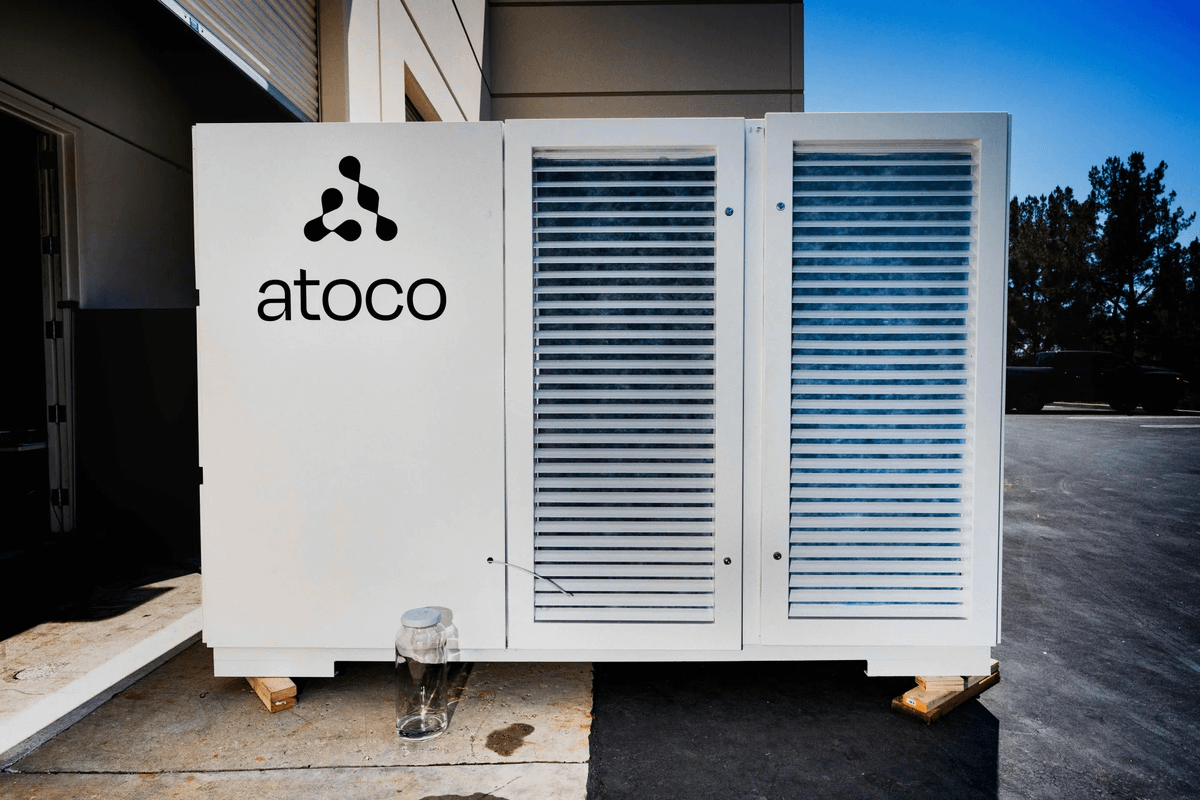
One kilogram of crystal pulls up to 2.8 liters of drinking water out of dry desert air every day, powered by nothing but sunlight. It's called MOF-801, and the chemistry behind it shared the 2025 Nobel Prize. I build chemical plants. MOF-801 is zirconium nodes linked by fumarate molecules, with pores sized to catch single water molecules. Omar Yaghi's company Atoco is building container-scale units for 1,000 liters of clean water a day, off-grid. Prototypes have already run in the California desert. In Dune they were called wind traps. They remained science fiction for 60 years. The bottleneck has moved from chemistry to manufacturing. Growing these frameworks by the ton, pressing the powder into forms that survive years of use, and building the systems around them cheaply enough to matter.
Gaurab Chakrabarti tweet media
English
22
161
1.1K
49.3K
Peter Ndirangu™ retweetledi
Stellan
Stellan@Stellan628605·
The Insane Reason Nobody Can Copy American Jet Engines
English
349
1.1K
8K
655.6K
Peter Ndirangu™ retweetledi
Object Zero
Object Zero@Object_Zero_·
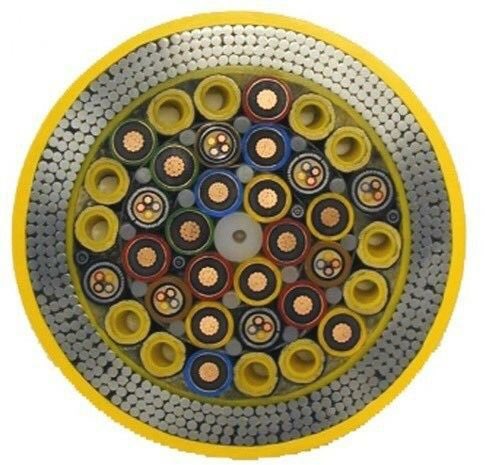
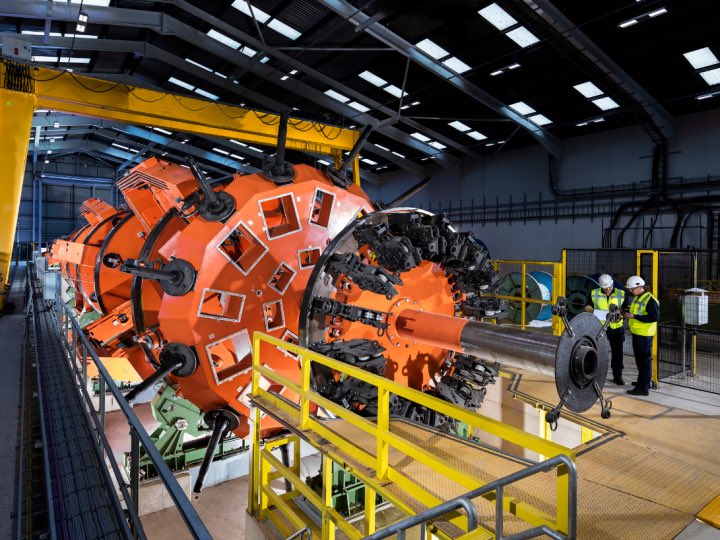
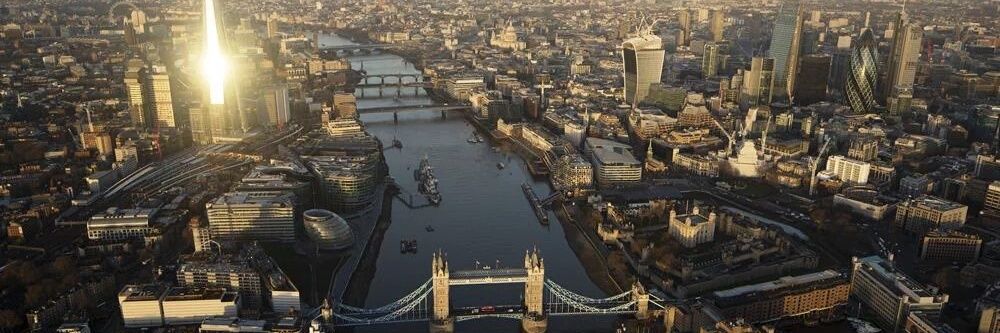
Subsea Cables These are much larger and much more sophisticated than people appreciate. In Europe there is a multitude of subsea cables including telecom fiber optic data cables and HVDC power interconnectors. The cables are heavily armoured with large steel wire and can contain many channels (data) or conductors (power). What is also cool is the machines that make the cables and spool them onto huge reels so they can be lifted onto cable lay ships and installed across the sea. The machines that make them look decidedly sci-fi, and I guess it is sci-fi to install a 40,000 tonne cable that is 100s of miles long and is laid across the seabed. The world record depth at the moment for a subsea power cable is about 2,500 meters (8,200ft), whilst telecom cables have been installed at full ocean depth. The biggest cables are around 24” diameter and might weight 160kg / meter.
Object Zero tweet mediaObject Zero tweet mediaObject Zero tweet mediaObject Zero tweet media
English
12
48
335
17.5K
Peter Ndirangu™ retweetledi
Random World Ψ
Random World Ψ@randomworldke·
20 years in Germany: One of the worst mistakes Kenyans make abroad is to go with same Kenyan mentality. There is a reason Germans have 1 to 2 kids. If you continue like that, you better be ready to retire their with nothing. 4 children is not a joke abroad 😳.
English
382
713
4.2K
981.4K
Peter Ndirangu™ retweetledi
Vaibhav Sisinty
Vaibhav Sisinty@VaibhavSisinty·
Satya Nadella just warned every company using AI: you are paying twice. Once with money. Again with something far more valuable. He published an article introducing something called the Reverse Information Paradox. And it changes how you think about every AI tool your company uses. Nobel laureate Kenneth Arrow described the original paradox: a seller risks giving away knowledge just to sell it. Nadella says AI flips this completely. In the AI age, the buyer gives away knowledge just to use what they bought. Every time your team uses Claude or GPT at work, every prompt reveals what you are building. Every correction teaches the model what good looks like inside your company. Every eval shows what you value. Every trace exposes your workflow. The model provider learns more about you with every interaction. You learn almost nothing about what they are learning in return. Your corrections are distilled institutional know-how. The kind a competitor could never buy. And it leaks trace by trace, correction by correction, without you noticing. His line: "You can offload a task. You can offload a job. But you can never offload your learning." If the model provider disappears tomorrow, do you still own the intelligence your team built on top of it? Your evals. Your memory. Your traces. Your workflows. Or did all of that compound inside someone else's infrastructure? In the cloud era, companies accumulated data. In the AI era, they accumulate learning. Right now, most of that learning is compounding inside the model provider. Not inside the company paying for it. The CEO pushing AI harder than anyone just told you to protect your knowledge from the very tools he is selling you. That should tell you everything.
Satya Nadella@satyanadella

x.com/i/article/2076…

English
84
414
2.7K
1.3M