Philip Pages

4.3K posts

Philip Pages banner
Philip Pages

Philip Pages

@PhilipPages

Sold my eCommerce brand for 7-figures | Now building https://t.co/FO0kCHpiX2 | Recover more failed payments on Stripe. Only pay when we increase your recovery rate

Austin, TX Katılım Ağustos 2016
506 Takip Edilen1.6K Takipçiler
Sabitlenmiş Tweet
Philip Pages
Philip Pages@PhilipPages·
Here is my journey as an entrepreneur so far: 2006 (7 years old) — Cut coconuts off trees and sold them for $.25 each 2010 (12 years old) — Bought my first stock and started daytrading 2016 (17 years old) — Came up with the idea of selling tactical gear online. Launched with $188 and shipped orders from my bedroom 2017 (18 years old) — Started 2 new companies. Rollerblade wheels for office chairs and curated party supply kits. Both failed 2018 (19 years old) — Skipped college to go all in on the tactical brand. Did $1.5m in revenue and thought I was untouchable 2019 (20 years old) — Overhired, overbought inventory and almost went bankrupt. Booked a $100,000 loss. 2020 (21 years old) — Covid hit and online sales boomed. Hit multiple 7-figures in revenue 2021 (22 years old) — Started an electric toothbrush brand. The Kickstarter raised $10,000 but ultimately failed 2022 (23 years old) — Launched a B2B SaaS and co-founded a private founders community 2023 (24/25 years old) — Sold the B2B SaaS for 5-figures, sold the tactical gear brand for 7-figures 2024/25 (26 years old) — Became obsessed with failed payments and launched a B2B SaaS to solve them The truth is, entrepreneurship is hard. It’s a rollercoaster of setbacks and breakthroughs. But I wouldn’t trade it for anything. Every lesson shaped who I’ve become. Every failure made the next success possible. I hope sharing this inspires someone to stop waiting for perfect and just launch. Because the real magic only happens once you start.
English
1
0
23
3.9K
Philip Pages
Philip Pages@PhilipPages·
Stop protecting a brand no one knows about. My friend, I say this with love: No one knows who you are, and no one gives a shit about your business. All that time you spent doing 100 revisions on your latest marketing to make it juuust right? The 6 months you delayed launch to fine-tune a feature? It's time your competitors are spending launching, testing, iterating and moving past you. This has always been the case to an extent. Now with AI brands can move with the speed of light. "But I'm scared we will get it wrong." The brands succeeding are testing 100 different ads and getting it wrong 99 times, then scaling the perfect 1. While your Google Doc is filled with a zoo full of Anonymous Pandas arguing about comma placement. To me, this is freeing. It opens you up to try different things with lower stakes. Embrace and leverage anonymity while you can.
English
0
0
1
20
Philip Pages
Philip Pages@PhilipPages·
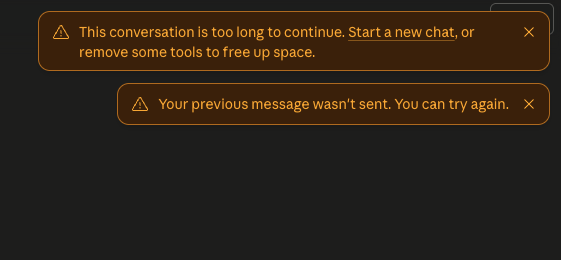
what's going on with Claude lately? this convo only had like 3 back and forths but i'm getting this error. seems like they're nerfing it
Philip Pages tweet media
English
0
0
2
108
Philip Pages
Philip Pages@PhilipPages·
I made over $3M from my Shopify store and they kicked me off. One day out of the blue I got an email saying I had a month before they'd take me offline forever. We sold some firearm accessories and got caught up in a blanket ban of all gun-related items in 2018. I ended up having to pay $20k to build a solution on a platform that objectively sucked and made my business worse. That's the game you play when you are reliant on a big company: *Meta can ban your account and bankrupt you overnight *Your payment processor can freeze your funds and bankrupt you overnight *Apple can kick you off the App Store and bankrupt you overnight Of course the solution everyone mentions is to build up your owned audience so you're not reliant on another company. Realistically that is easier said than done. So it's important to try and build relationships with people at the platforms you rely on as best you can. Get a rep and stay close. Do what you can to stay in their good graces. Perhaps most importantly: Get yourself a 2nd payment processor - or else you risk significant downtime, which is what happened to me. Chances are you won't need it. But you'll be thankful you have it once it saves your ass.
Philip Pages tweet media
English
2
0
6
584
Philip Pages
Philip Pages@PhilipPages·
@athcanft This is a false binary. You can solve retention and also optimize top of funnel. No large app has ever grown by ignoring retention.
English
2
0
2
148
Philip Pages
Philip Pages@PhilipPages·
Great podcast. One thing that was glossed over though was involuntary (delinquent) churn. Ie failed payments, expired credit card, insufficient funds, etc… It can make up 40% of all churn and is the easiest/most mechanical type of churn to fix. It’s also the most ignored (“payment failures” isn’t as sexy as new user activation, annual plan pricing or new product expansion) The brands mentioned (Canva, Duolingo, figma) literally spend millions per year to fix it because it’s so valuable to solve. But it’s a hidden problem founders don’t know they can solve
Sabba Keynejad@sab8a

We recorded the world’s LONGEST podcast on churn. Everything I learned building an 8-figure ARR company. Full 1 hour ep. 👉 bit.ly/churn-pod

English
0
0
2
50
Philip Pages
Philip Pages@PhilipPages·
@sab8a I really enjoyed them episode! Loved how nitty gritty you guys got
English
0
0
1
27
Sabba Keynejad
Sabba Keynejad@sab8a·
We recorded the world’s LONGEST podcast on churn. Everything I learned building an 8-figure ARR company. Full 1 hour ep. 👉 bit.ly/churn-pod
English
7
1
33
5.6K
Philip Pages
Philip Pages@PhilipPages·
If you have a subscription churn rate of 10%, you can probably get it down to 8.5% or 9% without changing anything. – Within churn is a subgroup of people whose payments didn't go through –––> Within that subgroup is a smaller group of people who want to pay but got thwarted by a payment fail ––––> And within THAT subgroup is all the people your payment processor (i.e. Stripe) couldn't reach Once you run the audits you discover that the last group that fell through the cracks is 5% to 15% of your overall churn. Just sitting there. Wanting to pay you, but they can't. A $1.6M MRR brand we work with had $240k in failed payments in a single month. Stripe caught some. We pulled an additional $33k that would have churned otherwise. And because those customers stay for an average of 5 more months once their payment is restored, the real LTV impact is closer to $165k. From one month of recovery alone. Brands don't willfully ignore this; they don't know what they don't know. So I'm trying to bring this kind of Invisible Churn into the light.
English
0
0
1
72
Philip Pages
Philip Pages@PhilipPages·
@zzwitz IAP is so archaic compared to the rest of the subscription industry
English
0
0
1
23
Gabriel
Gabriel@gabriel_mlx·
Web2app is truly the wild west when it comes to payments Slowly realising native in-app checkout is severely limited when it comes to LTVmaxxing tactics lol
English
3
0
17
2.1K
Philip Pages
Philip Pages@PhilipPages·
Exactly one year ago Apple killed its 30% tax on app purchases. Or so we thought. Because here we are a year later and almost all app developers are still giving Apple its 30% cut for iOS purchases. A mere 5% of U.S. app revenue now comes via the web, where developers can bypass the Apple tax. Most of that money is coming from a handful of mega-apps. Only 15% of mid-sized app companies have even set up a web checkout, according to @RevenueCat. There's a lot to unpack. To catch you up (skip this part if you know the history): 1. For 10+ years, anyone buying stuff in iPhone apps had to go through the App Store, where Apple got 30% of the revenue and the app developer kept 70%. But last year's ruling in the Epic Games vs Apple lawsuit changed that: Now apps could direct users to their website and keep 97% of the revenue (with Stripe getting 3%). 2. Except Apple wound up charging a 27% commission when iPhone users followed those web links, and also launched a scary pop-up warning users that paying outside the App Store could cause them problems. 3. A judge recently held Apple in contempt for this. Apple then appealed to the U.S. Supreme Court, which last week declined to take up the case. __ So the reality has been: *Big developers like Patreon, Kindle, and Spotify that have their own brand have pushed app users to pay on their own site (called App2Web). Of the big app developers, 41% now have some kind of web revenue. *Everyone else who relies on the App Store has stayed and done things Apple's way, including virtually all very small apps, who get a discounted 15% commission rate. Basically companies have done the math: Is it worth pissing Apple off to get rid of that 30%? If yes, they've gone for web payments If not, they've stayed put There's also the fear that iPhone users won't pay on an external site. But when @Superwall looked at apps that started offering external payment options in the early days after the ruling, they found: *Conversions initially dropped 12% *Overall net proceeds increased 20% In other words, ditching the Apple tax was worth the drop in customers. Here's that math in real numbers, for an app with 100k users paying $10 each *With App Store: $1 million in revenue, app keeps $700k *With external checkout: $880k in revenue, app keeps $850k _ P.S. There's a whole other layer of this story, where apps like Spotify try to get people to pay on their website *before* downloading the app (called Web2App). That's another post for another day.
Philip Pages tweet media
English
1
0
1
111
Philip Pages
Philip Pages@PhilipPages·
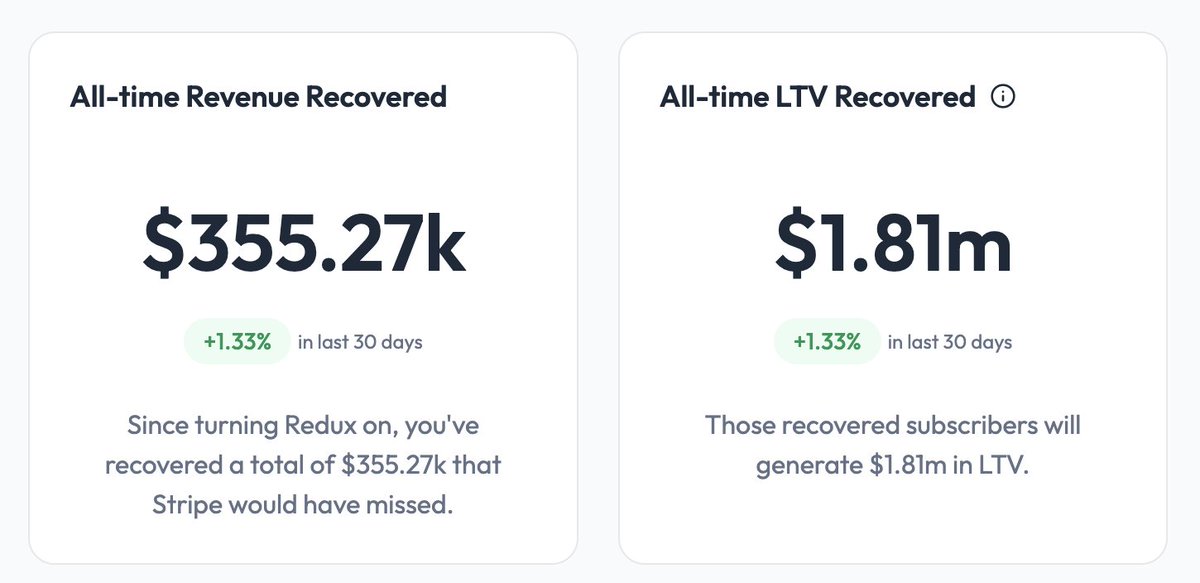
When you fix a customer's failed payment, they stay on for an average of 5.1 more billing cycles. So if you charge $20 a month and lose a subscriber due to a failed payment, getting them back gets you $102 in lifetime value. Yeah, we've done tens of thousands of these and that's what our internal data shows. It's surprising to some founders because "failed payment" subscribers are seen as lost causes who aren't interested in paying. Otherwise they would have fixed their payment problem, right? Turns out a lot of people simply have no idea their payment failed and need to be reminded. Or have it fixed for them by retrying the card at a better time. Or they opted out because the failed payment created a log-in error and they gave up. They fell through the cracks and want to give you 5 months more revenue. Let them.
Philip Pages tweet media
English
1
0
1
35
Philip Pages
Philip Pages@PhilipPages·
@gabriel_mlx It’s because the space is extremely early although growing quickly
English
0
0
0
47
Gabriel
Gabriel@gabriel_mlx·
I find it interesting how there are much fewer web2app providers compared to MMP options Even the web2app providers available have all been started somewhat recently I understand this is likely because of the negative connotations web2app used to have previously But surely with web2app’s rising popularity the landscape for options with greatly change. Keen to see its evolution over the coming years
English
3
0
4
885
Gabriel
Gabriel@gabriel_mlx·
What web2app funnel provider is most popular atm? Had a call with Funnelfox, however their pricing is too high to start without validating the web funnel first I heard Appfunnel is also great, web2wave seems popular too. Curious if there are any others I missed
English
10
0
16
3K
Philip Pages
Philip Pages@PhilipPages·
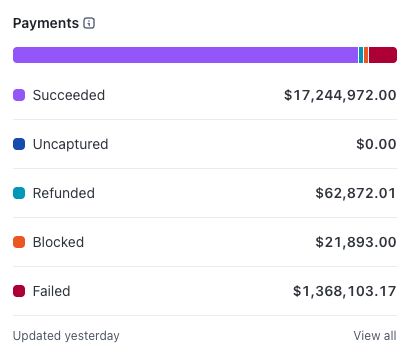
It drives me crazy to see subscription companies ignore the reality that 48% of churn - yes, almost half - has nothing to do with your services. It comes from failed payments. "Oh but Stripe handles that." Are you sure about that? Take a look at your dashboard. See how many failed payments Stripe actually cannot recover. It's a big red bar. It's a lot. A ton. Then multiply that by your average Customer Lifetime Value. $100 missed payment X average customer staying 9 months = $900 down the drain. "OK but there's nothing I can do about that." The truth is there are hundreds of error codes that cause a declined payment. And Stripe's algorithm is geared toward fixing common payment fail errors that affect millions of businesses - not the unique failed payment issues that subscription companies face. For instance: You try processing a payment at 7 p.m. in LA. But the customer lives in London, where it's 1 a.m. Their UK bank's fraud detectors flag and shut down the payment. All you'd need to do is retry it during normal London business hours and the payment will go through. Suddenly a dead customer is revived. When you look across all these different error codes, you can boost ARR by 8% on average just by getting into the weeds, which is what the big brands like Netflix and Disney do. They pay a lot for their payment recovery services because it's a huge profit center. I am sitting here begging you to re-think how to solve churn by looking closer at failed transactions.
Philip Pages tweet media
English
2
0
2
129
Philip Pages
Philip Pages@PhilipPages·
It's truly mind-boggling to see $20M ARR brands spend millions on ads then throw a bunch of that work down the drain. You acquire a customer for your subscription package, they buy from you for 2 months, then their payment card fails on month 3, and they disappear forever. Every mega-subscription business (think Amazon, Netflix) is spending millions of dollars every year going to the ends of the Earth to fix those payment issues, often using advanced machine learning to narrow down custom solutions for each customer one-by-one. They need to because there are hundreds of reasons for card decline. But your typical B2C brand is fighting this battle with a plastic fork. This stuff is opaque and confusing on purpose, and you only get minimal help from your payment processor (i.e. Stripe). So most brands either have no clue this issue exists or give up because it's so hard to figure out. A simple way to start is to take a deep dive into your churn: How many are due to failed payments, and how does that compare to your peers?
English
1
0
2
95
RevenueCat
RevenueCat@RevenueCat·
Apple launched monthly subscriptions with a 12-month commitment. But before you switch your entire pricing strategy, this isn’t a magic bullet 🪄 Yes, breaking an annual subscription into monthly payments lowers the upfront barrier, but it doesn’t fix retention problems.
English
4
1
17
5.1K
Philip Pages
Philip Pages@PhilipPages·
In SF for Stripe Sessions. First stop after landing: ramen. If you’re around, let’s grab coffee!
Philip Pages tweet mediaPhilip Pages tweet media
English
0
0
1
82
Philip Pages
Philip Pages@PhilipPages·
@zzwitz not a consumer founder but in town for stripe sessions
English
0
0
0
88
Zach Witzel
Zach Witzel@zzwitz·
any consumer founders in sf for stripe sessions? need a place to work? have some hotdesks at helium penthouse hq's — dm if you want an invite
English
2
0
4
348
Jake Mor
Jake Mor@jakemor·
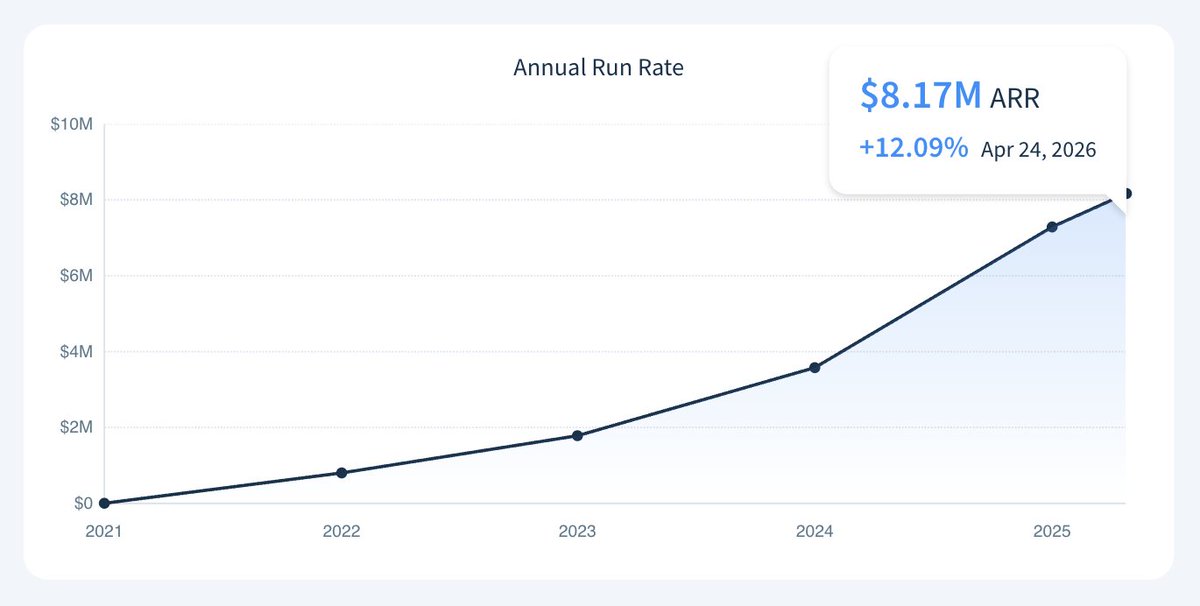
~1 year later @Superwall metrics: $8,170,00 ARR (🔼2.35x) 8,771 apps (🔼3.86x) ~$275k profit in Q1 ...and getting started has never been easier. Go build an app and live your dream life before the AI overlords take everything away from us: Choose one of your passions. Think of an app you'd use. Add the Superwall skill to claude. Tell it to build your app. Post about your journey on tiktok. Validate your market with engagement. Find a repeatable viral format. Hire creators to post for you. Validate your product with retention. Optimize your paywall. Build in public. Share your insights. Attract talent - hire well. Rinse → repeat.
Jake Mor tweet media
Jake Mor@jakemor

Another super month for @Superwall - $3,480,600 ARR 2,273 apps You have no excuses. Go make an app. Charge for it. Post it on tiktok. Learn to sell a story. Collect feedback. Iterate ♾️ You don’t need to “quit your job”. You don’t need to wager anything but free time. 2 employees literally use SW to make more money from their side projects than from SW 😭 Just go make something people buy. It takes time, grit, focus and determination. It doesn’t take smarts anymore, It doesn’t take money anymore, It doesn’t take connections anymore. It only takes a spark of inspiration and the balls to act on it 🚀

English
16
5
144
13.8K