Xerberus@xerberus
Sprint Recap – WebApp V3.5.0
This sprint brings the Systemic Risk Graph, giving every dendrogram page a new way to visualise how risk connects across assets, pools, protocols, and organisations. We’ve also added a new Overview tab, improved dispute handling, and onboarded a large wave of new entities.
Key Updates:
1/7 - Systemic Risk Graph
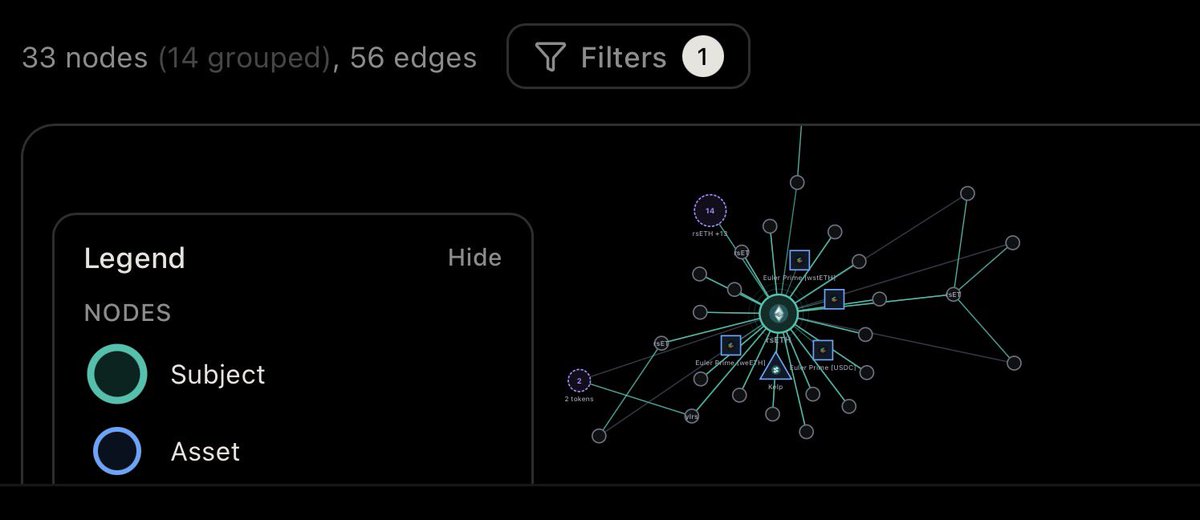
> New systemic map view toggle on asset, pool, and protocol dendrogram pages
> Force-directed graph showing every entity reachable from the selected subject
> Rated nodes stay visible, while unrated leaf nodes cluster by strongest neighbour
> Depth controls, hover tooltips, redesigned legend, and copy-address buttons
> Dedicated side panel for inspecting individual nodes and clusters
> Clearer visual markers, including triangle markers for protocols
2/7 - Entity Overview
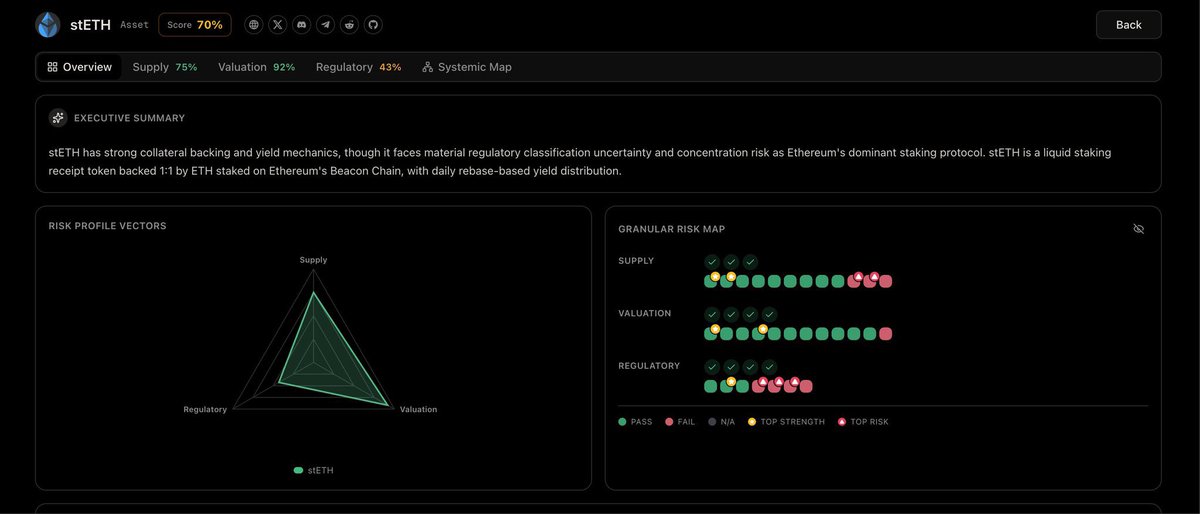
> New Overview tab with modular risk surfaces and an executive summary
> Per-domain LLM summaries across Full Analysis and individual domain tabs
> Titled highlights and granular-map markers throughout the overview
> Tooltip explaining how the Market Median benchmark is calculated
> Added new Protocol Cross Chain domain with website links on dendrogram pages
3/7 - Disputes
> Rejected disputes can now be reopened from dispute cards and the resolution panel
> Disputes are more resilient during infrastructure issues, with better recovery and escalation when LLM providers fail
4/7 - Ratings & Pools
> Multi-select chain filter added to the Pools table
> Chain identity now shown on every Pool row
> Asset count remains visible on the ratings table
> Chain, platform, and curator filters now persist in the URL
5/7 - Improvements
> Edit-profile shortcut added next to user identity on the dashboard
> XP and leaderboard footers aligned with shared paging
> XP history can now be filtered by event type
> Branded SVG logos added for Ethereum and Arbitrum Gnosis and Monad chains registered with logos and title-case fallback
> Pruned domains hidden from the risk profile vector chart
> Metadata chips consolidated into a single FilterSummaryBar
> Improved wording on the Systemic Map “no rating yet” tooltip
6/7 - Fixes
> Systemic graph connection fixes so graphs stay connected
> Domain tabs restored on Organisation pages
> Broken optimised images now fall back to source images
> Pre-v2 summary responses render empty instead of crashing
> XP table pagination now keeps the first page filled
> Fixed systemic graph blank-canvas issue
> Individual systemic graph nodes capped at 30, with the rest clustered
> Clicking the risk feed now auto-switches to the relevant dendrogram tab
7/7 - Integrations
> 50+ new pools
> 50+ new assets
> 20+ new organisations
> 7 new protocols
What’s Next?
> Authoring - enabling the community to contribute towards subscores and mechanisms,
> Backend clean-up — making the app faster and smoother
> MCP — expanding how agents and tools connect into the platform
> Quantitative subscores — deeper data-driven subscores